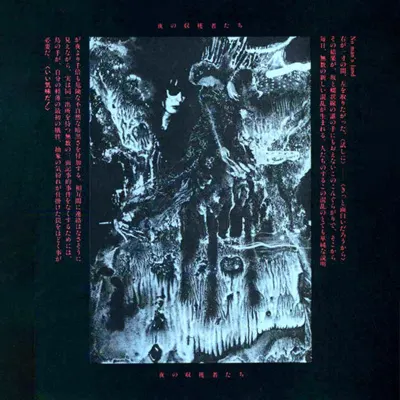
Les Rallizes Dénudés were a pioneer of the psychedelic drone rock sound, but no one knows about them. With the help of our friend Zach, we get into their history and try to figure out what happened to derail this bands career.
Hosted by Liam, Abram, and Zach.
Japrocksampler, by Julian Cope
Destiny: The Secret Operations of the Yodogō Exiles, by Kōji Takazawa
Transcript
Welcome, Zach
And we're back with another episode of Gladio Free Europe. I'm Abram, and today I'm joined by Liam.
Hey!
And special guest, Zach.
Hey.
And today we're going to talk about music.
Noise music.
Experimental noise music.
Marxist experimental noise music.
Japanese Marxist experimental noise music.
So if you're on Last.fm, tag this podcast with under 100 listeners because this is as micro as genres get.
We are going to be bringing you some post-avant Dreamcore today.
We're not going to talk about just music. We'll head on some other subjects like communism, terrorism, Japan, North Korea, all that shit.
Boris
But before we get into that, let's talk about Boris. Experimental drone noise band from Japan. I've listened to some of their albums. I've listened to Flood. They're pretty good. I was always more into Earth, but you know, Boris is quite good as well. But our good friend here, Zach, is a fan of Boris. Seen them live a few times in Asia and in the United States. So, Zach, for the unfamiliar listeners, who are Boris and, you know, what does their particular style of music sound like?
Yeah. Well, anyone that's listened to Boris a lot can tell you that's a difficult thing to answer. One of the most common things that is mentioned in articles about them is that they are impossible to pin down. And even in interviews with them, they'll say they like purposely buck a given genre trend. I first got acquainted with them when I listened to, I think you're supposed to say Absolutego or Absolute Go. I'm not sure. Which is an album-length single-track. It's very, I think it's percussionless and very heavy on noise.
And we should probably add, they were probably the first to do that. Like, this is, you know, one band that has a little bit of overlap, Sleep. Their most famous album is this single track, but that this was like four or five years before them. I think the single track for an album was a thing in the prog rock era.
I think it's more that that kind of basically fell out of fashion by the end of the 70s. Just like prog rock completely fell out of fashion.
Yeah, album-oriented rock in general.
Yeah, in the 90s, it sort of came back, especially with prog metal.
In prog metal, they don't do like the album-length single-track.
No.
But they frequently do like 25-30-minute long Boris are a three-piece. I think a long time ago, they had a fourth member, but basically, through their whole life, they've just been Atsuo, Wata, and Takeshi. Atsuo is the drummer. The other two both play guitar, and Takeshi, at least as long as I've known about them, generally uses a double neck combination guitar and bass.
Most famously displayed on that one album. What's it called?
Akuma no Uta, which is kind of famous because, yeah, it's just a recreation of that famous cover.
Yeah, Nick Drake cover.
Yes.
But the album sounds absolutely nothing like Nick Drake.
No, no, no, no.
I think that one was probably my favorite of theirs.
Yeah. It's really good. Yeah.
That's like the classic Mew Corp Boris album, the one that all the American kids listen to first.
Yeah, meaning Devil's Song. So their earliest work, like Absolutego and then Amplifier Worship and a couple others, are very, very low-tempo, chugging, almost like ambient music. I mean, Absolutego is definitely on the like ambient end. They're using a lot of effects and also very, very overdriven, powerful guitar amps to produce that sound.
Sunn amps and drone
That's something characteristic of them and also Sunn. So Boris also use Sunn amps, at least Takeshi does, which you'll see written as Sunn and then O with three closed parentheses after it. But Sunn is the name of the company. And Sunn actually were an amplifier company from the 60s that aimed at producing extremely loud, very clean amplifiers back when tube amps were the only technology that existed. And only much later did people realize, like, oh, if you just turn these up like incredibly loud, then they do start to distort. And the distortion has this very particular kind of pleasant harmonic to it. And if you combine that with the input of like a down-tuned guitar or bass, then you get a really sort of unique sound. That sound, I feel, is the defining aspect of the bands in the Boris Sunn orbit. Obviously, you say Boris's sound is hard to pin down because all their albums kind of sound different.
You know, some are much more psychedelic, others are much more drony. Yeah, they even have one album that's like pretty much straight up J-Rock, except it's still using their sort of like characteristic sound. Yeah, but I would say that drony sound really is the sound most associated with them, if you had to pick one.
Absolutely.
For sure.
And something else is that Atsuo, the drummer, he uses a very large cymbal as one of his main symbols and just generally like big drums to get a low, kind of reverberant and low tone. And he also has a gong, which is always really easy to tell in like photos of their live act. He'll have a gong behind him, and some of their tracks feature him wailing away on the gong.
The Pacific Northwest scene
I'm from Seattle, which a lot of the like western grunge scene came from, you know, which had its moment in the sun with Nirvana, obviously, but like Nirvana, I think a lot of people aren't really aware of, is part of this whole like lineage of Pacific Northwest bands.
Oh, I'm sure, yeah.
Earth and Melvins are, you know, the two big ones, but like there's a lot of other, a lot of other bands got born out of that. I guess like what's probably lately, probably the most famous Northwest band, or not maybe not most famous, but in certain circles, Agalloch. They're kind of black metal inspired, but like not really. They're very similar to that group, Deafheaven, but they were around earlier. They started in like 2002 or something.
They're from Portland, yeah. And actually, Sunn, Sunn is also from the Northwest, I believe.
Oh, really? I didn't know that. I wasn't sure where they were from. That's cool.
Yeah, from Seattle.
Yeah, and there was definitely a lot of cultural cross-pollination, I would say, between that scene of the kind of grunge and proto-drone metal of the Pacific Northwest and some of those Japanese bands.
Huh, cool, cool. Yeah.
Boris is named after an early Melvins track. And they've done a yes, yeah, they've done a lot of collaborations over the years between like, you know, Boris and Sunn, Boris and Earth. There's the album Altar, that's like basically a super collab of a bunch of those artists. That's primarily a Boris and Sunn release, but it also has some of the musicians from Earth appearing on it on different tracks and others as well.
Les Rallizes Denudes
So we're not actually going to talk about Boris for this entire episode. Instead, what we're going to talk about is the history of Japanese rock. And specifically, I got interested recently in this old Japanese rock band called Les Rallizes Denudes. And I was reading this book, which just, you know, talks about bands from the 1960s in Japan. And the author of this book basically says that this band is the missing link between Andy Warhol and the Velvet Underground and Nico and Sunn, because the author of the book is somebody who is a big fan of Sunn and has done, you know, like many documentaries about Les Rallizes Denudes and Sunn. So it got me interested in the band and I listened to their music and then I listened back to Boris and I'm just like, yeah, I can definitely see the resemblance.
Obviously, this is stuff that was from the 60s, it's poorly mixed, a lot of it's just live material, so it's like poorly recorded. But I can definitely tell that what this band is trying to achieve sonically is what Boris eventually achieved sonically like in the decades later. It's a very good book.
The entire book is available for free online and I'll have a link to that in the podcast description. But I'm just going to start reading from this book.
The world in 1968
So before I get into the music, I kind of want to just set up the music scene that these bands come out of. You know, the 1960s Japanese rock scene. So the 60s were a very chaotic time for the world, of course. By 1968, there were riots in Paris, Warsaw, Beijing, Prague, Mexico City. Basically, literally every city, every capital city in the world, and every city with like a big black population here in America because, you know, the civil rights movement was popping off. And in particular, the aftermath, the Martin Luther King assassination in 1968. The height of the Vietnam protests.
This would have been the rise of the Black Panthers in a lot of cities in the late 60s. This was also when you had events like the unrest in Jordan, where the Palestinian Liberation Organization tried to get a foothold in that country. Of course, the infamous massacres in Mexico during the protests and lead up to the Olympics.
Yeah, let's actually just go through these one by one because there's so many of them. In Hong Kong in 1967, communist radicals were bombing capitalist institutions and killing media figures because they wanted to recreate what was happening in China in Hong Kong. And then in Japan in 1967, there was the October 8th Haneda struggle, which was a protest by students opposing the Vietnam War. They tried to cut off a bridge leading to Haneda airport, so the prime minister at the time couldn't leave the country for South Vietnam. But riot police shut them down, one student was killed. One of the many, many things that will happen in Japan in this period.
Wow, I didn't know about that. And then, you know, 68, when Jimi Hendrix put out Electric Ladyland, when the Beatles put out the White Album, the year started with the notorious Tet Offensive in Vietnam, which was this really major offensive by the Viet Cong against American forces. And it really showed a lot of Americans, it showed right-wing Americans that the war probably couldn't be won, and it showed left-wingers globally that the American Empire was able to bleed.
I mean, 68, there was a lot of things happening. Obviously, I mentioned Warsaw Poland. 3,000 Polish university students were protesting through the streets and, you know, turned into a bit of riot. And then, you know, police had shut them down. 200 of them were injured. Like 11 universities had to be shut down temporarily. In 68, of course, Baltimore, DC, Chicago, LA.
Absolutely. The aftermath of the reaction to the Martin Luther King assassination.
In Germany, there was like an attempt to assassinate a guy named Rudi Dutschke, who was the head of a Marxist student movement. And this was just like some right-wing nut job. But that caused a lot of protests because it was the right-wing media was like painting a target on his back, basically. And then next to Germany in France, you had protests over like police brutality. It got so bad that Charles de Gaulle, the president at the time, had to leave the country and hide out in Germany. And the protests actually evolved into a national strike. So the entire country was like shut down for a little bit. And some French people will insist that it was the closest any Western country ever came to a communist revolution because of the role that a lot of left-wing forces played in that movement. We mentioned Mexico City.
Yeah, the Mexico City Olympics was scheduled to happen in 68. But there was a protest a few weeks before the Olympics where just thousands of students gathered to just, you know, protest the usual things like social injustice. And they wanted to just walk peacefully through the streets. But the military surrounded them and fucking massacred them, killing 200 people.
Notorious.
And it turns out that happened because the CIA was afraid of these protests happening right next to the Olympic village. So they funneled military equipment, you know, riot gear and weapons to the Mexican military. And the Mexican military immediately just used that to like murder these people.
Yeah, this was this famous, pretty early display of, you know, black power and black self-affirmation, where John Carlos and Tommie Smith were these two African-American athletes who won the gold and silver medal in track and field at the Olympics in Mexico City. And famously, they both wore a black glove and each raised a single black power fist, which was this, you know, this very proud affirmation of black humanity. But at the time, the reaction, not just in the United States, but across the Western world, was just vicious against this display.
The assassination of Asanuma
I know it's a bit longer ago, but do you know about the assassination of Inejiro Asanuma?
Oh, of course, yeah. That was in 1960. But yeah, he was the leader of the Japan Socialist Party and assassinated by an ultra-nationalist teenager on stage. There's video of it. I think if anything, so this is a little bit earlier than we're going to be talking about. But what I think that notorious event shows, you know, this notorious event, which has now been memorialized in dozens of memes created by modern-day right-wing fanatics, I think what this event shows is that the tenor of Japanese politics in the earlier 1960s was just unbelievably hostile toward left-wing organization. And that Inejiro was essentially, you know, a potential reformer. I'm sorry, Asanuma, his surname, was a potential reformer who thought that maybe America, maybe Japan should step away from its role as an American Cold War proxy. And I don't know much about his assassination, but it seems pretty clear that his intention to step away from the United States is what led to his assassination by this radical.
And this is all to just give you a little sampler of what was going on in the world so you can get a clear understanding of what was in the minds of Japanese people and Japanese government officials.
Japanese hippies
Yeah, we're gonna read now from this 1967 article from the New York Times. Japanese hippies take over a park in Tokyo. Members of Crazy Tribe spend 16 hours a day dancing and napping.
Sounds like a good time, honestly.
Japanese call them Futenzoku, which means crazy tribe. Judging by their appearance, Americans would classify them as hippies. Some call them beggars, others say they're drug addicts. Whatever they are, they're the current sensation of the Japanese social scene.
Yeah, so what we're seeing is that the hippie movement, that was obviously a big thing in the United States around this time, late 60s, had traveled its way to Japan, although it took a different tenor, as we'll see. But just interesting that this rock movement is going to be born out of a hippie movement that is very similar to what was happening here. Part of the interest in the Futenzoku comes from the fact that several million commuters pass by them every day at the Shinjuku Transportation Hub. The bearded, unkempt Futenzoku males and their mini-skirted girl companions are frequent patrons of the Shinjuku coffee shops, which stay open all night and feature continuous rock and roll music. Yeah, so obviously, exact same thing. Hippies into rock music. And, you know, later in this article, they talk about how they get high all the time. But what's interesting here is that they're getting high off sleeping pills and like huffing paint, you know, like stuff that's legal.
Because I guess, you know, by this time, marijuana was completely illegal in Japan because of the United States.
Yeah, as soon as World War II ended, I understand it.
But yeah, what's really interesting here is because they're just like in the middle of a city, they're obviously not going to risk getting high off an illicit substance when like millions of commuters are passing them every day. So they were getting high off, you know, legal substances and just walking around like dazed and confused.
Right.
How do the Futenzoku live? Their girlfriends go to work periodically as waitresses and share the proceeds with the boys, a male member of the clan said.
Oh my god, living the dream. So you're just like getting high, running around fucking Tokyo. Just lamping in the park, and your cute girlfriend goes and works as a waitress or whatever and gives you some of the money.
That kind of reminds me of that. There's this like a notorious example of how there were this group called the Diggers, which were kind of like an American version of this in the 60s. I know in our last episode, I think that we mentioned that they were named after this British group from the English Civil War. But anyways, I'm only bringing this up because they were these radicals in San Francisco and they were like trying to create some kind of anarchist collective. But they're also famous because while the men in this group would do all like the theorizing and they would write their treatises, the women in like 60 San Francisco, they would be the ones actually going to work and like actually digging through garbage so they could feed themselves.
Oh my god.
It seems like a kind of funny parallel here, all the way so many thousands of miles away.
Oh god, all hippies are exactly the same every single country.
I like how it says like like hippies, they describe themselves as dropouts of working society, but they differ in rejecting any kind of group philosophy or mission of influence. I mean to me that doesn't sound like they really differ that much.
Yeah, I mean I hippies were about like flower power, changing the world, being more kind to each other. These guys were very explicit in that, no, we just want to get high unless it's music, man.
Yeah, it's nihilistic, right? I mean, I guess nihilistic kind of has like a negative implication, but I yes, basically.
Understanding the youth
Probably wondering why this is allowed to go on in Japan of all places. Japan back then was like a very, very strict, conservative society. So why are these like rugged out hippies like allowed to walk around like in the middle of like a very busy city? And that's because the government recently implemented a thing called understanding the youth, which was a thing that forced authorities to accommodate these hippies because they were aware of the stuff we just talked about previously that was happening in Europe and America and university campuses. And they decided that we're going to implement this understanding youth program so things do not get out of hand like they got a hand in those other places. We're just going to give it a light touch. And if we just approach these young people with understanding, they probably won't protest or riot and there won't be like headlines about us accidentally like murdering like 100 protesters, right?
I guess perhaps the other events of the age had made them a bit scared of like coming down too hard on these guys and setting off physically making themselves look bad abroad.
Yeah, setting off an international incident. You don't want like headlines about something going on in Japan on the front page of a paper in New York.
Yeah.
So, you know, around this time, part of this movement, you know, understand the youth, was universities set up rock concerts because, you know, rock music was the music of the age of these, you know, young hippies. So they were going to set up rock concerts to attract these hippies and, you know, hopefully pacify them, I guess.
Try and indoctrinate them into academia.
Yeah, exactly. Literally, yeah.
Doshisha University
Doshisha University, they had one called Barricades a Go-Go, go, which featured like, you know, local bands, Mustafa, Wax, Mustang, and Les Rallizes Denudes, whose members were actually university students. And those other bands don't matter. We're just going to focus on Les Rallizes Denudes because, as I said, they are the band that sonically mirrors what was going to happen in the 90s, but they were doing it in like the late 60s and 70s. And they're also a band that basically disappeared from the cultural consciousness because they're not a band that records and releases records. They only do live performances. And, you know, when we get to the live performances, you'll understand why these similarities are very apt, but no, we'll get there. So let's rewind a little bit to see how this all starts. Kyoto's Doshisha University is one of the oldest in Japan and is known as a living testament to the courage of the human spirit.
And the university was founded by a former samurai who eventually went by the name of Joseph Hardy Neesima, who stowed away on American trade ship at a time when if you were a Japanese person, leaving the country was not allowed. You weren't allowed to leave the country without explicit government permission. So he was a stowaway on an American ship and he traveled to America and returned to Japan 11 years later as the first Japanese man with a bachelor's degree. And with a newfound love for Western freedom, he founded Doshisha University on the values of liberal democracy and questioning authority. And then in 1967, a man named Takashi Mizutani went on to join that university to study sociology and French literature and eventually found the band Les Rallizes Denudes. So like a lot of people in the post-war era, he was somebody who rejected the all-consuming American culture that was taken over the country and just favored the French culture.
Japan after the war
You know, a lot of people were very dissatisfied with the fact that American brands were just showing up like in advertising all over Tokyo at this point. I think, Zach, you said it. We're just dissatisfied with the fact that Japan has become a satellite state for the United States by this point.
Yes, pretty much since the end of World War II, they gave over a lot of their independence. And I know the U.S. state kind of tried to basically recreate the Japanese government, you know, more or less in the image of American democracy. And they kind of kept the emperor on as a figurehead just because they figured that would be good for national morale. But they educated him with a Western, you know, they brought over like a Western teacher to educate him. Yeah, they were just like they turned it into a constitutional monarchy where yeah, he's there. He's like the figurehead. He's like the queen of England.
He's technically not supposed to do anything. He's just kind of there to show up at official events, you know, shake the American president's hand whenever he comes over, but that's basically it. And there's still a lot of like cultural respect for the monarchy. They associate given reigns with eras. So people will talk a lot about in Japan, people will talk a lot about the different eras. And I was actually living there when they had the era change to the current era, Reiwa. And like even announcing the name Reiwa of the new era was like a massive deal.
Yeah, how long are eras typically?
It really depends. Some of them are very short. So the Showa was from 1926 to 89. And then Heisei, the one that followed, lasted not as long. It was 89 until 2019. So basically, about as long as Shinzo Abe was in power.
Pretty much.
Yes, it was the reign of Emperor Akihito. And I believe it was kind of unusual that he actually abdicated the throne rather than relinquishing it by dying.
Oh, yeah, I remember that. That was a big deal. It was like how, you know, when the Pope retires rather than just like dies in office.
Yes. And so dates are usually written according to the era. There's a mapping, right? You know, 2019 is Reiwa 1, but like, because I had to fill out a lot of paperwork there, you know, like putting in your birthday, you want to know in Japanese years, like when you were born or what the current year is.
Group sounds and folk rock
Anyway, so back to Doshisha University. Around this time in 67, they had a, you know, like a light music group where people who were interested in music would come together and talk about Japan's folk rock scene. And this is the folk rock scene is distinct from Japan's group sound scene. Group sound being the predominant sound of rock bands at this time. It was sort of like a fusion between Western rock inspired by the Beatles and the Japanese kayokyoku sound.
Yeah, it's like kayokyoku.
Yeah, so what's happening was, you know, you had these American records coming over, or, you know, American Amberish records coming over. And, you know, it had a particular sound, and there was just kind of like a trying to imitate that, and we're just fusing a little bit with like traditional Japanese pop music from like the 40s and 50s. And that was the main sound of Japanese rock music at this time. But it was also something that a lot of the people who were rejecting the American influence on Japanese culture at this time also rejected because they just saw it as like another example of like Americanism taking over this country.
A Japanese sound
I know one thing you've argued, Abram, which I think is kind of interesting, is that Japan, maybe more so than any country, does sort of have a distinctive sound irrespective of genre. That you can listen to a lot of different Japanese artists and think, oh yeah, this is Japanese.
Yeah, and Zach, maybe you can chime in here. For one thing, obviously Japanese musicians usually use traditional Japanese woodwind instruments or just like wood percussion instruments and incorporate that in their music. But there's also like a lot of Japanese electronic music. Like I'm thinking of like doujin music, just like a Touhou fan song or whatever, and just like listen to it and has like a very distinct sound. It sort of feels like Japanese musicians are sort of have the same well of samples that they're using and kind of gives all Japanese music a very similar but very distinct Japanese sound.
Yeah, definitely if you're talking about the genres of either like, yeah, like doujin music, like Touhou, or like J-Rock, I think it's more like the structures and probably chord progressions that you see. Like everyone is aping each other a lot. Obviously everybody's aping each other a lot over here as well. It's just remarkable that we're aping each other and they're aping each other and there isn't like a huge overlap in the way that, you know, in South Korea, they're all aping each other, but they're also aping us. So there is like a huge overlap. Whereas, like, you know, a K-rock or K-pop song sounds, you know, K-pop, K-rock-y, but it also sounds sort of Western, sort of, you know, European rock or American pop.
Yeah. Yeah, and I think that especially in production styles, I think that K-pop sounds a lot more recognizably American than J-pop does. And that's like a way to instantly tell if a song is Korean or Japanese, regardless if you have any understanding of language.
I always find it really funny to listen to K-pop with the Japanese lyrics, because you know, it's really popular in Japan, and they usually release dubbed, well, I don't know about dubbed, but versions that have Japanese lyrics. And so, like, I'm really used to listening to K-pop and like not understanding what they're saying at all. So, if I listen to K-pop with the Japanese lyrics, it's like recognizably not Japanese, but you know, they're speaking Japanese. It always sounds really strange to me.
Jacks
Anyway, so one of the bands around this time is a band named Jacks. You know, they were a psychedelic folk group. They sound sort of like psychedelic music sound in America, but still fairly distinctly different. They had an album called Vacant World that came out in 1968, which was like a, you know, sold very well. It was a big deal in Japan. The band only existed for like four years. They broke up very quickly. But a few years ago, one of the band members performed at the University of Chicago. And this is what the University of Chicago press had to say. The band's dark poetic lyrics and psychedelic sound captured the existential angst of the Japanese youth in the turbulent 1960s. Between 1968 and 1969, every university in Japan was shut down by student occupation.
Very based.
There was a rebellious youth movement that was frustrated by the education system and the corporate structure of Japanese society. Jacks music, with its themes of depression, alienation, really spoke to the youth culture. And yeah, we're not going to get into it too much, but there's a thing called the 68-69 University protests, where at a certain point, hundreds of universities in Japan were occupied. Literally, hundreds were occupied by hundreds of students each. So it was like a huge national thing. In an interview, the original bassist for Les Rallizes Denudes, a man named Wakabayashi, said he wasn't really into Japanese bands at the time, but he was definitely into Jacks. Mizutani, on the other hand, said he wasn't into Jacks at all. He was listening to Bob Dylan, the Velvet Underground and Nico. Quoting from a 1991 interview now, he says, At the time, most of my friends were more like painters, poets, photographers than musicians.
We hung out in modern jazz place. If I was influenced by anything, it was from the music playing there at the time. The music, we always listened to like Coltrane, Miles Davis, Coleman, the usual stuff. The two biggest names you can come up with. The main guy from Jacks in one of the album covers, he has long hair, he has dark sunglasses, and in interviews, he would never answer questions. The other guys would answer the questions, but you know, they wanted to ask a lead guy and he would just never answer anything. With Les Rallizes Denudes, the main guy, Mizutani, he grows out his hair, he always wears dark sunglasses, and he would never answer questions in interviews. You look and act exactly like this guy that you're saying has absolutely no influence on you.
Influences and denials
My guess is because the interviewer just asked him straight up: I listened to your stuff at the time, and it sounded a lot like what Jacks was playing at the time. And Mizutani just had to basically shut that shit down, you know, for vanity's sake and not just admit that I was also into the music that was very popular amongst everybody at the time.
That is very funny. Before we were recording, spoke about like a pitchfork interview with MC Ride of Death Grips fame.
Yeah, it's this famous pitchfork interviewer, MC Ride, who, if you aren't familiar, has this incredibly aggressive persona in ways that you can only really describe by watching him perform or hearing his music. But then in this interview, he's actually really soft-spoken. And when they ask him who his influences are, he just says, like, oh, you know, man, I'm not really inspired by people. Because clearly, he just didn't want to admit that he's connected to other artists. He wanted to position himself as, like, completely outside the mainstream.
You know, very simple question. Hey, you're a musician. You listen to music. What kind of music are you into? And for some reason, like, a lot of outsider artists cannot just answer that with a straight face. Because, yeah, it's like to admit that I'm into like the Beatles would be to admit that, like, Eat McDonald's, right? But yeah, so he did say he was inspired by The Velvet Underground and Nico.
The Exploding Plastic Inevitable
And that's obviously true, as we'll find out, because Andy Warhol did this thing called the Exploding Plastic Inevitable, which was a performance by The Velvet Underground on stage, surrounded by dancers, and in front of like this screen projection of Warhol's short films. And there was like, you know, various lighting effects. So it was like lots of lights, you know, moving pictures in the background, a lot of backup dancers on stage, and you know, this band performing. So it's like a full-on like audiovisual experience, right? And when people talk about how so many people were inspired by The Velvet Underground at this time, this is like one of the things because Mizutani wanted to basically do exactly that. Just, just you know, up the ante.
Where the name came from
One day during a rehearsal with Les Rallizes Denudes, they meet with this theater troupe called Gendai Gekiko, which is like an underground theater company, Kenya'uto University, and they eventually just like got them to perform on stage. You know, these guys were like young radicals, you know, and they were also people who spoke in Frankenese. Basically, they spoke in Japanese, but they would always just drop French words into like sentences.
Isn't Frankenese one of the things that the three wise men gave to Jesus?
This like left a big impression on Mizutani because this is where the band's name comes from. These guys basically had fake French slang because, you know, they just like would say French words as like slang terms for other words. So it wasn't like real French slang. It was like their own slang, just using French words. So they had a French term, valise denudee, which means empty suitcase. When they said it, they meant people who are high of sleeping pills. You know, the futenzoku that we mentioned earlier. Valise denudee becomes rallizes denudes. Les Rallizes Denudes. And that is the name of the band. It's basically the band's name. It's an inside joke.
Ah, that's pretty funny. I see they had another name.
They were also known as Hadaka no Rallizes, like naked rallies. One of their promoters was just like, nobody knows what the fuck this name is. Can you like come up with a different one? And that's the name that they came up with. For whatever reason, they were insistent on the name being complete nonsense.
Loud, live, unrecorded
Maybe they picked rallies because like it's a it's a loanword that most people would recognize, but it sounds a lot like Raïs. So I mentioned this band sounds like Boris, and what I mean by that is that they're loud and they're bass-heavy, and there's like a lot of feedback and distortion. So when I say, you know, he wanted to recreate the anti-warhole thing where you have like all these dancers performing on stage, they tried doing that, but they very quickly like stopped because the dancers just felt sick to their stomach from all this feedback blasting at them on the stage. They gave up immediately. But the theater troupe also had like light experts and like smoke machines. So from then on, every single live performance they had would always have like this big elaborate light show and like these smoke machines, as well as this like feedback, bass heavy music, but they wouldn't have the dancers.
Yeah, and Zach, you've been to like a Boris show. Can you describe what that feedback is like?
Yeah, I was actually looking at my notes from over the years and I've seen them nine times in total. Always a lot of smoke machines. Yeah, that's a really common feature of them and other like artists in this genre. Seeing both them and Sunn and other bands that are heavy on this very, very kind of you know loud, oppressive, feedback heavy, bassy guitar and bass tone, it's like a physical experience, you know. You can't really get the same thing out of listening to their recordings, especially not on headphones. You know, you, anyone who's like been to a live show probably knows, you know, highly amplified bass drum, you know, you feel it in your gut a bit, but like this is on, you know, it's another level of like, it can kind of make the air feel thick, you know, or it's like hard to move just because of the like the power of like sonic vibration that is going on in the room.
So, yeah, imagine trying to dance on stage in front of those speakers while that's going on.
Yeah.
And also, imagine doing it without earplugs because at first these guys didn't realize they needed earplugs to do this.
Yes, that sounds like it would make you sick and dizzy and like you would your head would be ringing for days after doing that. And again, you know, this is the first band that does this, so you know, the fact that they didn't understand to use earplugs, you know, this is what pioneers of the genre go through.
Losing your hearing for the sake of art.
And even as you say, you're not going to be able to experience this from headphones. That's the reason why this is basically a live band. They tried to record in a studio, but one, they didn't know how to mix vocals. They didn't know how to fix instruments in general. So the vocals were like not placed in the mix correctly and like everything just kind of sounded terrible. And obviously it just, it couldn't replicate the sound. So they made the decision to never record in the studio ever again and just be a live band for the rest of their lives.
And we should add that all of the records from what I understand are live compilations that were released in the last like 20 years.
Yeah.
The most famous is the, I think released in 2002, Heavier Than a Death in the Family, which is the mysterious front man, just a cool photo of him.
Yeah, super posterized.
And wearing lipstick, which, well, we can talk about that. Yeah.
Oh, here's the thing. At this point, when they're trying to like form the look for the band, they went shopping and wanted to buy like women's blouses. You know, they were, this was like basically proto-punk. They just wanted to like be completely different in like any way possible. That never went anywhere because like, oh, these shirts don't really fit right. Again, you know, pioneers of the genre. These are growing pains.
That is interesting, actually, now that I'm thinking about maybe there's more to the lineage between these guys and Boris that I hadn't had never thought about before.
So, yeah, in the 60s, around 69, they kind of perfected the sound of, you know, this is, you know, they tried the dancers, that didn't work out. They tried recording in studio, that didn't work out, but they had a good live performance sound, where it was that, yeah, it was like a psychedelic, feedback-heavy, very drony, you know, something you feel in your chest kind of sound. And a lot of people were into it.
Members come and go
At a certain point, you know, like the original band members kind of left. The drummer left because he wanted to like be in a band that recorded stuff. Because, you know, that's like a thing a lot of musicians aspire to, to have like an actual album.
Yes, probably makes more money too.
Yeah. The bassist Wakabayashi got involved in like, you know, student activism because, you know, that was what's going on in like 68, 69. So he left too. So it was just Mizutani and just whoever wanted to fill in playing guitars and bass for that like live performance basically. But yeah, they were on a good trajectory. I can't really describe this music because one, I don't really know how it sounds firsthand because I've only listened to the music on YouTube and Spotify and that's a recording. So you know, this is something you have to observe in person. And that's probably never going to happen because they kind of stopped doing live performances around the mid-90s.
And we should add that these guys are also probably in their 70s now.
Yeah. Mizutani and Wakabayashi are still alive. But yeah, all the people that like fill in, they were kind of just like hired musicians. They weren't really like invested in the band. And yeah, so like when Mizutani eventually decided to retire from public life, the band disappears forever. He's still alive though. You know, people check up on him every once in a while and just like friends who are musicians who will just occasionally tweet out every few years that, like, oh, yeah, I met up with Mizutani the other day. He's doing well.
It's kind of like how, like, Sid Barrett, you know, the first guitarist for Pink Floyd, had his breakdown and then was sort of never heard from again after like 1970. But every few years, you know, the band members would just check if he was alive or not.
The hijacking
Wakabayashi is interesting because remember that Haneda Airport protests I mentioned? So Haneda Airport's back in the news because on March 31st, 1970, there was another incident. Japanese communist terrorist group, Red Army Faction, hijacked a Boeing 727 and took it from Haneda Airport and the 129 passengers on board hostage. The bassist, Wakabayashi, was one of the Red Army Faction members. And the hostages were eventually, you know, let go, unharmed, in exchange for the plane to be flown to North Korea. And Wakabayashi is still alive and living in Pyongyang to this very day. He lives in a Japanese village right outside of Pyongyang. And also, you know, he's on Twitter. So you can tweet at him if you like.
That is pretty wild.
This was a big deal at the time. Japanese government wasn't happy about this. In the rest of the world, people were still talking about the Piazza Fontana bombing, which happened in December of 1969. That bombing, we know now, was right-wing extremists as part of Operation Gladio.
Where have I heard that word before?
But at the time, people thought it was left-wing anarchists. So just three months after that, a plane hijacking involving left-wing radicals wasn't something Japan wanted on the front page. Again, this is going to be something that's on the front page in like the New York Times. And of course, it was terrible news for Mizutani because Wakabayashi was on all the flyers and in the magazine interviews. And like people knew who the fuck he was and that he was part of the band. Not great optics for your band.
Under surveillance
The mood in Japan changed after this because yeah, the government gave up on that whole understanding of the youth thing. Like just done. No more of that shit. The mood in the rock scene kind of shifted too because a lot of the guys in the band surrounding like Les Rallizes Denudes also considered themselves like radicals, but they weren't actually serious. In the police investigations about this, you know, investigating the hijackers and their motives, they found out that most of these hijackers were like openly talking about this shit of like their friends and like whoever wouldn't listen.
But everybody around them just assumed it was, you know, shit talking. Friends of the band that knew Wakabayashi knew he was like into this radical communist stuff, but they figured because he was from old money, you know, he had something to lose, that he wouldn't actually do something. But it turns out that he left material wealth behind and flowed to North Korea forever. Incident also meant that everybody who was associated with the hijackers was now being closely monitored by the police for like years to come. The Public Security Intelligence Agency, which is Japan's equivalent of the FBI, was tasked with monitoring Red Army activists at this time. They just had like agents following everybody around. So they were following Mizutani around everywhere. They never did anything to him, but they made sure he knew they were following them around. Naturally, this made all the other like higher band members at the time to just like quit and never like see him ever again.
Like this band is forever associated with this crime.
It kind of reminds me of in our first episode, we talked about Yegor Letov and how he was like arrested by the KGB. And then when he got out like nobody wanted to have anything to do with him because they didn't want the KGB following them around everywhere.
Also, a fun fact, this incident is also what got the CIA heavily involved in Japan. Before this, CIA mostly stuck to funding right-wing politicians in the Liberal Democrat Party, which is Japan's conservative party that's been ruling Japan since the 50s. And, you know, also like funneling money to Yakuza and like various organized crime people. And the thought process was: just by giving them money and letting them do what they were going to do anyway, our interests in Japan will be secure. But then this happens, and they're like, okay, we gotta recalculate this because this was never supposed to happen. So they actually like fly agents into Japan and they begin monitoring Mizutani as well. So they were like following him around and like occasionally just like stopping him, interrogating him on the street and shit.
So you're saying previous to this, the CIA adopted more of a hands-off approach?
They were just like, okay, well, we'll just give whoever we identify as right-wingers money.
Because I know about the like the whole Lockheed incident. It really depended country by country.
You know, most infamously in the mid-60s, there was very heavy CIA involvement in the massacres in Indonesia. Prior to that, the. Well, remember, the U.S. military had an existing presence, of course, in Korea and Japan. But it seems like this was really the event that led to American intelligence agencies, like the groups involved in the 65 Indonesian massacres, getting involved in Japan.
Yeah, they were thinking was like the Japanese government, we're on the same page with them. So they're just going to do this stuff for us. And then this is just like, oh, they fucked up. They can't handle this stuff on their own. So we have to actually fly in agents to assist them.
Almost like if you install a government that's kind of designed to get nothing done and then it proves to be incompetent, then, well, I don't know what you expected.
This was really traumatic for Mizutani. Like I said before, he doesn't answer questions in interviews, right? And now all of a sudden, he's like got local police and international police basically just like grabbing him and demanding he answer questions. And if he doesn't, they're gonna throw him in jail. So, not something he ever wanted to have to deal with in his entire lifetime. A lot of people who were into the band were loving the shit out of this. This is so, so great. For people who were just fans of the band, they were equally kind of radical. You know, they believed in like radical music, radical politics. You know, they were Marxists as well. They were communists. Or they were just like, you know, punks, proto-punks. They just believed in radicalism without any like real direction. So, you know, listening to a band where one of the members hijacks a plane, that's just like the most punk thing ever.
You know, this is great. I'm loving this. You know, again, mirrors Yegor Letov in our first episode, where he got more popular because he got arrested by the KGB. This provides a level of authenticity to the music. Just like, you know, these guys aren't just posers. These are the real deal. They're willing to like go the extra mile for their art. Just makes them even more popular.
Well, you know, a comparison on the opposite end of the political spectrum is how a lot of black metal bands, especially in the 90s in Scandinavia, were involved in these just horrific, basically acts of terror. And I know that one argument has been raised that these guys weren't just involved in murders and burnings because they were such violent and hateful people, but because within this scene in this particular time, performing these like acts of unspeakable cruelty was a way to get cred.
Yeah, it's like I think hip-hop's a very similar comparison.
Yeah, hip-hop during the early days, yeah, just getting shot or being involved in like some kind of organized crime is how you get street cred. And then eventually people realize that, oh, we can just lie about this stuff. We don't actually have to like do it.
Yeah, or if like you're a 2000s indie rocker going to a fancy prep school, it's what gets you street cred.
Textual kinds.
The 1968-69 university protests
Yeah, so we talked about Mizutani's perspective. Yeah, he was like traumatized by this. At this point, Wakabayashi had like left the band, so he didn't know this was going to happen to him. But Wakabayashi, for him, this really started in the 68-69 protests. So that was, as I said, it's like a protest against unpaid internships at the University of Tokyo, which led to an occupation by students by like the Japanese New Left and the Japanese Communist Party. And because of like a long-standing tradition against police on campus, tens of thousands of students were able to occupy these university buildings for months, like all over the country. Something like 162 college campuses had protests going on during that year-long period. So this was a thing that was happening all over the country. Everybody was aware of it, but eventually ended in 1969 because the government was just like, you gotta give up this tradition and let the police in so they can clear these people out.
And that is eventually what happened. This is very funny to me because it's just like Japanese people are like that into tradition that they're allowing like these university buildings to be occupied by protesters for months just because they don't want police to get in there because that would break tradition. Wow, yeah.
What about Doshisha?
Yeah, it was there were demonstrations, but there were never a real occupation at Doshisha University because they held a rock concert and the local bands were playing, what the fuck more do you want?
Right. Do not occupy this building.
You know, it's also funny how like, I'll say the university is an arm of the state in this case, but it's funny how the state is able to pacify the left-wing radicals by just like letting them play their music. We can't read too much of this specific event, especially considering how radical these guys were. But it does seem like in a lot of ways in the 60s, there were these very radical demands arising very quickly among a very lot of people, among a very large group of people, but it really didn't take a lot to placate them. Like, you know, as soon as the Vietnam War ended, you had a generation of American radicals basically, you know, turning their caps. It was like, oh, the war's over. We won. That's what we wanted anyway.
Yeah, it's funny how these university protests were like global. Every single country had them. And I can only assume it's like a domino effect where just by reading in a newspaper that such and such student movement occupied this university, you know, across the globe, people in that country were like, we should do this as well. And that's what instigated it. But it is very interesting to me that all these student movements were happening in the 60s. And they were all student movements. You know, they were all like university students. So I'm not sure what made them do the thing. You know, what was it that actually pushed them over the edge to actually go ahead with us?
Why students rebelled
Well, like you said, part of it is the kind of street cred thing. And I think that another part of it is that much more so than American radicals, and I would say more so than European radicals, I think that a lot of Japanese radicals had a uniquely personal opposition to imperialism. Because Japan has a very particular role in the kind of, you know, global Western imperial hierarchy. While on one hand, the Japanese government are incredibly willing participants in the kind of global imperial network. In some ways, Japan is an imperialized country. Japan is occupied by the United States. And that I think that there's a long resentment of the deep American influence on Japanese politics, culture, and economy that I think lends itself to these more radical acts of anti-imperial rebellion.
Yeah, I mean, just to give you an example, Mizutani, his thing was he was really into French culture. Obviously, he was a more left-wing person, so, you know, we can't look back into Japan because obviously Japan just had this Second World War, and Japan was not on the right side on that war, you know, as he understood it. No. But at the same time, you know, this Americanism is taking over the country and is just so commercialized, just like so hollow, and there's like a resentment there. So you can't look backwards into Japan's history. You can't look to the east, to the United States, so you have to look to the west to France. This is a country that's not involved in, you know, what's happening to Japan, but also has like a rich well of history.
And I think, you know, we should probably mention that France had a very strong radical movement at this time. We mentioned the 68 protests. And I think it's also interesting that another country that these Japanese radicals were looking at was, of course, China, and that there was a very deep fascination on the French left with the Chinese communist project. There was that whole, you know, one of the most famous movies by Godard, La Chinoise from 67, is basically about these French kids obsessed with China in the late 60s. And I think that there might have been some kind of back and forth between Japanese and French radicals in the way they understood what was happening in China.
Another part of it, I think, is just the war or the wars in general that were happening. Obviously, you had World War II, and these people were the first generation, like born after World War II.
Right.
These students at that time would have been born around the middle to the end of the war. You know, they were born in the time when Japan was rebuilding. You know, they saw Japan rebuild their entire lives. But obviously, you also have like the Korean War, but what was happening in China with the Chinese Revolution. Cambodia, Laos, you had like all these neighboring countries. Indonesia, you had all these neighbor countries embroiled in war. So you kind of just look at that and look at all these young people actually fighting for their lives. Look back to your own history and how many people your age were fighting for their lives in World War II. It's like, well, what are we doing if we're not doing that too?
Yeah, exactly.
Whereas, like, you kind of get a sense that they understood that they were at the age when they should be fighting for their lives for something they believed in. But, you know, they weren't particularly sure what that something should be. So I think that's really why, you know, these student protests were happening, you know, basically all over the world. You know, again, were happening in Europe as well. And Europe, the same thing. You know, they were the first generation born after the war. They were rebuilding their countries. You know, they were rebuilding Warsaw Poland. They were rebuilding Germany and France. So it's like, yeah, you understood that you're finding this age where you should be like fighting for something. Yeah.
It's obviously hard to make broad generalizations about something like that.
It's also just hard because we are millennials and we are so far removed from like so many generations removed from that thought process.
Yeah, it's hard to imagine being someone who was, you know, brought up when, you know, when you were born, it's like the country you live in has just been basically annihilated. Yeah, absolutely.
Yeah. And you're at that age where it's time for you to be doing that annihilation.
Yeah, there's definitely in Japan, you know, more of a sense of closeness to the kind of tumult in Asia. You know, even nowadays, I think there's definitely more of like a concrete worry about what's going on with North Korea. You know, like Americans worrying about like getting nuked by North Korea or whatever. That's like, it's pretty far off, right? It's kind of, I think it's easy to either not think about it or like, you know, anyone who is getting really worried about it seems rather silly, right?
Nuclear fears
You know, Jujusta, yeah, just a frame of reference for what things were like in the late 50s, early 60s, when there were much more present fears of nuclear war. JFK gave a speech in 1961 telling Americans to build a bunker, which is insane. I know that the American Council of Rabbis, this is Rick Perlstein wrote about this. They insisted that every single synagogue for a few years, new synagogue be built with a built-in bunker. And you even had, Rick Perlstein writes, you had some American pastors were recommending that Americans, these are men of the church, were recommending that Americans install machine guns in their homes so that they can defend their own bunkers from any vagrants who try to get in.
Oh my God.
There's some parallels with that nowadays, huh? With people's kind of fantasies about defending their compounds from.
Yeah, yeah. Oh yeah, I know this is getting really far afield here, but I think that American reaction basically begins with modern American reaction essentially has its start with Cold War anti-communism. And that anti-communism, of course, was very prevalent in Japan as well. That's what led to the assassination of Asanuma by that 17-year-old psycho.
Yeah, and if you go and look like the video, you know, it was because it was at a conference and it was taped, you know, you can go and look at it on YouTube. And there is no shortage of like, you know, right-wing Japanese sentiment, even today, you know, English speakers as well, obviously, you know, being like, oh, that kid's a hero. You know, this was like the greatest thing that ever happened in Japan.
Today's own crop, our own crop today of right-wing psychos, they love that kid.
And Japanese, there are, there are definitely those in Japan, too.
I believe actually that whatever the name of the assassin was, there are even some Japanese right-wingers who like put flowers on his grave every year. Like these are nationalist organizations will do this, yeah.
Yeah, oh, I could believe it for sure. You saying that does remind me, you know, this is kind of a random aside, but the building that I went to elementary school in, you know, was constructed like back then. And I remember the basement of it or like the ground floor, it was, it's like a big concrete structure, you know, and it had signs up saying like this is, you know, this area is like a nuclear shelter. You don't see that anymore.
What you're saying about the comments on the YouTube video make me think that maybe a big part of reaction is just that they never grew out of that mindset that the people like the radicals in the 60s were living in. But for right-wing reactionaries, for whatever reason, they still think like, oh, I'm a young adult now. I should be like fighting for something that I believe in. And obviously, a lot of them are like pussies. They're LARPers. They're not actually going to like fight for their lives or anything. But they have that idea in their minds. And I think, you know, part of it is just a lot of reactionaries just enjoy media that discusses war. You know, these guys are my age. They're fighting for their lives. They're fighting for their country. And it's like, what am I doing?
I think they also maybe feel that like not having that feeling is somehow like a you know a sign of a degenerating culture, right?
Oh, yeah, I know they think it's natural.
They love, who's that German writer who wrote Storm of Steel? Because they think that it shows that like war is the highest expression of manliness.
Militant aesthetics
One thing I just want to add that I find really interesting is that one of the biggest differences between modern-day left-wing radicals and radicals of the 60s and 70s is that socialists today have really no bloodlust at all, which maybe is a good thing. But in the late 60s and 70s, in this revolutionary period, pretty much every left-wing organization had some kind of air of militancy. They had names like the Japanese Red Army. They had names like the Red Army faction in Germany. Many of their members would wear military uniforms and call themselves commander and lieutenant. The Black Panthers, even though they were essentially non-violent, they would openly carry weapons to show their power and show their, you know, to defy white American authority. And I think that's something that that's something that's basically been completely lost, especially American radicals that try to kind of revive those militant aesthetics and that militant outlook today.
It just rings incredibly hollow.
What? You don't like socialist gun girls?
It just seems either incredibly astroturfed or it seems like some kind of weird plot by the feds to get dumb socialist kids to incriminate themselves.
Oh yeah, well, I think many decades of that, what you just said, being the case, you know, probably kind of scares people off.
Yeah, it's like trying to harken back to a previous generation, but we're so far removed from those generations. It's been so long that it just rings hollow to everybody.
Talking about Japan, too, they definitely have a very strong sense of pacifism. I think most Japanese would be proud to say that, like, their culture is pacifistic. You know, anyone who's not kind of on that right-wing fringe.
Yeah.
The Red Army Faction's plan
I mean, Liam, you mentioned the bloodlust at this time. I'm just gonna read a quote from the Red Army faction, you know, the Japanese Red Army faction, the ones that hijacked this plane. But I'll just read this quote from 1970. The methods used until now are inadequate for the 1970 campaign. Passive class struggle theory is useless. We need an active offensive class struggle. We must organize people's military units immediately and carry out an armed uprising with guns and bombs. We predict that the autumn campaign will be the initial stage of a genuine armed uprising. And of course, the autumn campaign is the plane hijacking. So, as I said before, the Public Security Intelligence Agency was closely monitoring the Red Army activities. And a lot of these guys get arrested over nothing. The police would do stuff, like arrest one of them in a restaurant, and then went on their station, you know, they give their fingerprints or, you know, just like give their name, information, and then the person would ask, okay, what am I under arrest for?
Just like running out on the restaurant bill, just kind of doing whatever shit they need to do, just give them in the system. But that sort of thing only hardened like the determination of the would-be hijackers because guys getting arrested left and right, we've got to do something fast before they get like all of us, right?
A false start
Yeah.
Originally, the plan was to hijack on March 27th, but not everybody made it onto the plane on time, so they had to call it off. And this was kind of bad because they didn't carry money on them for like the return flight because they assumed they would be in control of the plane by now. So they had to like borrow money to take a train ride back home, which is kind of embarrassing for a would-be hijacker.
Sorry, they had to borrow money to make their train fare.
Yeah, they were trying to hijack a domestic flight. So, you know, flew out of Tokyo, and then up in the air, like, not enough of us are here to carry out this hijacking. So they just land in another city and like they don't have enough money to buy a plane ticket back. So they have to like borrow money from like strangers so they can take the train back and try again like a few days later.
Yeah, that's a little that shows a lack of planning. Like, even though these revolutionaries they styled themselves as like best professionals, they were just these kids trying to pull off this pretty crazy terroristic action. And it kind of reminds you of other acts of terror by other groups that are similarly like just not very well organized. Like think how often like bombings get foiled because they're just done by some dumb kids. These guys had like a better cause worth fighting for, but at the end of the day, they still were totally out of their depth.
Most of them were about 20, 22, 23, but like some of them were as young as 16. So they were very young and stupid.
Well, like the same with the Black Panthers. So many of the Black Panthers were high schoolers. I don't know. You need like an internship straight out of high school. This is what you got.
Well, they were protesting against unpaid internships, right?
Yeah, exactly.
What goal did they have in mind? Did they have like a clear set of demands when they made this hijacking of like they just wanted to send a message. They just wanted to.
I read in the quote is just the autumn campaign will be the initial stage of a genuine armed uprising. This is supposed to be the first bullet shot in a battle, right? We're going to do this, and then everybody else in the country is going to see this and also rise up and do something like us. So that was their entire thinking. They weren't thinking, like, what are we going to do with this, like, after this? You know, they weren't thinking, like, okay, what are our lives gonna be like immediately after doing this? They were just thinking, we're just gonna do this, and then, you know, communism is gonna happen a few weeks later. Let's do it and be legends. So yeah, they sheepishly took the train back home, Tokyo, and tried four days later. Enough people showed up, not everybody showed up, but enough people showed up on the plane that they actually like went through with it.
The day after the newspapers ran with a photo of like three of the hijackers boarding the airport, and the caption for the photo attributed to like a casual observer at the airport. But it turns out the photo was taken by like police that were tasked to follow the Red Army members. They managed to hide what they were doing well enough that even the police that were tasked with closely monitoring their activities didn't know what they were about to do, they just thought they were like boarding a plane. Yeah, and it was a domestic flight, so you can kind of speculate here, like, oh, maybe the government allowed them to go along with this so they would have an excuse to like clamp down on Red Army members. But honestly, I'm on the side that the cops just like didn't realize what was about to happen.
Yeah, I would go with Occam's razor there.
Swords on the plane
So, when the plane was in the air, they pulled out samurai swords from their bags and rushed the cockpit.
Hell yeah.
We are the Red Army faction. You will fly to Pyongyang, North Korea. We have bombs. We'll blow up this plane if you don't fly to North Korea. And they also shouted, like, we are Ashita no Joe, which is like a reference to like a boxing manga that was popular at the time.
That's hilarious.
I'm gonna read this from Wikipedia right now. The manga was very popular, having sold over 20 million copies after its initial serialization. Also, during its serialization, it was particularly popular with working-class people and college students who were involved in the new left, who sold themselves likewise, struggling against the system like Joe Yabuki did and revered him as an icon. Members of the Japanese Communist League Red Army faction, who took part in the Yodogo hijacking in 1970, compared themselves to Joe as they saw a revolutionary message in the manga. So, just like imagine that situation for a second. It's 1970. You're a middle-aged Japanese man or woman, you know, on a domestic Japanese flight, and all of a sudden, these like young guys, long hair, pull out swords and just say, taking this plane to North Korea. And if you try to stop them, they'll blow the whole plane up.
And they're also like shouting references to a manga, but you have no idea what the fuck they're talking about. They're just like nonsense words. They're shouting at you.
Yeah. No, the American equivalent would be like a bunch of, you know, DSA kids getting on an Acela train and then shouting out like just awful Twitter memes to each other while they hold you hostage.
Simpsons jokes, Sopranos stuff.
Or like Helter Skelter, what the Mansons were saying.
Oh, yeah, yeah, how they had those weird, yeah, 60s rock influences. I guess because they were all children, they were really into this manga like a few years ago and like it stuck in their brain. And just a sign of like how young and immature they were that they're, you know, it could be like referencing Lenin or like referencing Mao Zedong, which are referencing like a manga.
That does sound really surreal if you were just a normal person on that flight. I this is a work. I'm on a work trip. I'm gonna be late for my meeting if this skips up. How am I gonna explain this to my boss? And why do they have such long hair?
I assume this was 100% men.
Well, the thing is, like, just like we mentioned the groups before, the Japanese groups and the diggers, there was still a pretty big gender gap in radicalism in the 60s. And when women did participate in these movements, like The Weather Underground or the Baader-Meinhof in Germany, that was always the headline: like, girls with guns. That was always part of like the big shocker to suburban audiences.
The fake Pyongyang
Yeah. But miraculously, the South Korean, Japanese, and American governments managed to like coordinate this in a way that they got the plane to actually land in South Korea and they got like people just like shout out in the loudspeaker when the plane landed is like, Welcome to North Korea, shit like that, just to like try to trick them.
Yeah, it's hilarious. Really, really one of the funniest things to have ever happened. The gag they pulled there.
And did it work? Did the revolutionaries think that they had properly landed in North Korea, not South Korea?
Not really. They immediately suspected something and then they asked somebody, like one of the bus drivers, like outside. Like one of them just ran outside and it's like, this is Seoul, isn't it? And then the driver just like, yes, you didn't get them. I knew it. Somebody on the radio, like at the airport, was just like saying, no, no, no, this is Pyongyang, this is Pyongyang, whatever. One of the hijackers had the good idea, just like, in that case, bring us a picture of Kim Il-sung. It was like, you know, easy. Obviously, like, somebody in like North Korean airport could like provide that immediately. But, you know, South Korea, not so much. So, yeah, they figured it out. But, you know, eventually they came to an agreement and just let go of all the passengers and just like kept the pilot and like some Japanese ministers aboard.
And then they flew the plane to North Korea, but all the passengers got away safely. So that was nice.
Nobody actually got harmed.
Wakabayashi in North Korea
It's very interesting.
I mean, like I said before, one of them has a Twitter account now. That's really funny. There's like YouTube documentaries about them. The guy, Wakabayashi, like does interviews frequently. He had an interview in 2012 where there was like a FIFA game, like North Korea versus Japan, just playing in North Korea. So who are you rooting for? And just like, well, I try to root for North Korea, but in my heart, I'm always rooting for Japan. He's just there. He's just like a regular citizen. A few years later, somebody interviews him again, asks him, like, what kind of music he's into these days. And he says he's really into Babymetal. Really? Yeah. It's so funny. All right, there you go. Not only did they get Babymetal in North Korea, but yeah, this guy's listening to it regularly. I mean, obviously, like, there's like a lot of Western perceptions about what North Korea is, but this is a guy, and he's living in the country, and he's listening to Japanese music that he has access to somehow. So.
Now I'm curious if they perform music in North Korea. Is there any like link we can make between the kind of music that's made in North Korea and you know Les Rallizes Denudes?
No, Wakabayashi basically quit music immediately. I don't remember what his job was, but he got like a very typical job in North Korea. In 1984, they were fully integrated into like North Korean life at some point. But Wakabayashi went to Libya as like a part of a cultural exchange between North Korea and the Gaddafi government. So he was like allowed to leave the country at some point. He just didn't want to. But yeah, I mean, he's still living there. There's like photos of his house on the internet that you can see. It's like a very just standard like brick building, but they have like multiple satellite dishes. Watch Japanese TV or like they have access to the internet, even though it's like satellite internet, no, it's so slow. But yeah, like he has access to the internet. He has a Twitter account. Like, yeah, he's just living a very normal life.
What that makes me think of is that there's, you know, that awful vice doc about North Korea from like 2011 or whatever, but in the climax of the dock, the guy tries to sing a punk rock song at some karaoke place, and he's like, oh my god, these people in Korea, they don't even know what punk rock is. So I think it's very funny that actually a lot of people in North Korea have everyday encounters with one of the most avant-garde kind of proto-punk rock musicians of all time.
Yeah. The thing about North Korea is, for whatever reason, the Western media would never frame this this way, but it is what it is. North Korea is the most boring place on earth. Yeah, for good and for bad. Just think about South Korea and just like how much fucked up shit happens in South Korea like at any given day, politically or socially, just like, just like any kind of like bad thing happens in South Korea in a given day. North Korea cannot match that in a single year. Like it is a very dull country.
I guess some people would just characterize that as the North Korean government just being so repressive that these people are, you know, just completely like dead inside.
I mean, it is true to a certain extent because the North Korean government does limit what kind of things are allowed to happen. But to me, if you're an American and you are the kind of American that looks fondly towards advertising from the 1950s, you know, a dad and a mom and like two kids and a dog and like a house and a picket fence and just like that good simple life, the North Korean government, their main goal is to make sure every single North Korean citizen has that life. And for most people like me, that is a very dull life, and I wouldn't want that. But for a lot of people, even in America, that is an ideal. And maybe it's not all that bad. One last thing. This is funny to me. I read a book about this hijacking. One of the hijackers say when they finally land in North Korea is that they're kind of afraid, but sort of excited because, you know, North Korea is a democracy, and Japan is a constitutional monarchy.
So, you know, they upgraded, right?
That's a very, very funny way to look at it, yeah.
Mizutani's later years
But back to Mizutani, he basically just, one, he never wanted to record his music in the first place, but two, this incident basically ensured he is never allowed in a studio ever again. He was never ever gonna get a music contract ever again. Like, nobody wanted to touch that. So, he was allowed to like continue performing live shows. That was sort of okay. But yeah, he largely is out of the public eye. He doesn't do interviews. He only does live shows, you know, like a handful every single year since the 1970s, up until the 1980s when he stopped. At some point, he sort of tried to record some stuff with one of the bassists from the Jimi Hendrix experience when he was like living in France for a while. And, you know, again, didn't go anywhere. You just can't capture the sound on CD.
And so he just gave up on it. So this missing link between, you know, the Japanese rock of the 60s and the Japanese rock of the 90s is basically completely forgotten about because it was just down to this one guy and he said, you can't capture this music on CD, so we're just not even going to bother. So all that stuff is kind of just like lost in time.
Boris in Japan and America
Anyway, Zach, you say you've been to Boris shows. Are Boris a big thing in Japan?
I would not say so. So I've seen them once in Osaka, twice in Tokyo, and then a bunch of times in Seattle. And they can consistently get larger venues in Seattle and, you know, sell out. Definitely. They're a bigger act here for sure. It's got to be partially due to their connection with, you know, their kind of strong connection with Western artists. But also, I just think that that kind of music and even going to those kinds of shows is not very popular in Japan. Like the venue that I saw them at in Osaka was like literally a, you know, dingy concrete basement. In Tokyo, it was a bit larger. Two different places have seen them, but still like pretty small. You know, these are commercial venues, you know, and it's a bar with a stage and an audience area, but like they have a little bit more of the feel of like going to a house show or like, you know, an illicit music venue in the States compared to like, you know, in the U.S., they, you know, they're getting the same venues that like, you know, basically anyone who's not getting like a stadium is going to.
Yeah, I mean, that kind of interesting to me because with Les Rallizes Denudes, you know, we say there's this missing link, and the reason they're a missing link partially is because they weren't like a big deal in Japan, you know.
Yeah, they didn't really make it big, right?
Obviously, bars is basically very similar sonically and in style, and also they never made it big in Japan. They made it much bigger in the United States. So I'm curious what it is about that style that just never really caught on in Japan in that way.
Yeah, I have to feel, I mean, it's easy to kind of make some stereotypes, you know, Japanese people, if you just think about like what do they listen to? Oh, well, they all listen to J-pop, or they like, you know, the nerds like, they like Vocaloid or like Touhou music or something, or like, you know, video game music or, or whatever, right? You know, it doesn't feel like there's that big of a culture of like, you know, alternative rock acts. It's like either, you know, it's either pop or like the rock that's popular, you know, bands like Bump of Chicken or whatever are pretty, you know, they have a certain style, right? And their music is pretty positive and accessible.
Yeah, something I know about Japan is that they have like stadiums filled with people with just performances of all the JoJo's Bizarre Adventure theme songs in a row.
Right. Yeah. Oh, yeah. Yeah.
I mean, game, game music or whatever, you know, you can sell out big venues for that. Obviously, there's also like the, you know, AKB 48 and other groups like that.
These industrial world groups.
Yeah, yeah, yeah. Like, you know, idol factories or other idol groups that are smaller that have, you know, more like well-known individual members.
Yeah, like the Black Mages, Nobuo Uematsu's group, you know, who was the composer for Final Fantasy Games, like always has like huge venues. And that stuff is also like J-rock, J metal, like has that distinctive sound. But yeah.
Yeah, for sure. And there's kind of cross-pollination there, I think, even between like commercial music and game music to a greater degree than like there would be in the US. But yeah, I just would say that like having like a, you know, sort of punk or alternative persona, you know, maybe it's not that popular there, right? Or it's like the sort of person who would go and willingly sit through a Merzbow show. It's not that common in Japan, I guess.
I wonder if it's just down to the physical discomfort of being at a live show for one of those groups, where just for whatever reason, Japanese people are less eager to put themselves through that physical discomfort than Americans are.
I do wonder because, I mean, Japanese people obviously put themselves through tons of physical discomfort in their everyday life, you know, compared to Americans. They're not used to like living in extremely large domiciles or driving their car everywhere. You know, they're much more willing to kind of exist around a lot of other people and make some sacrifices for that. You know, they walk a lot every day to like take the train.
Yeah, so they're not willing to put their entertainment time.
Maybe that's so, yes. I guess I would say, you know, if you're Japanese, it's like probably not that likely that you would like know anyone who is into this stuff. And at this point, you know, bands like Boris have been around for a long time. You know, I guess there's probably a perception that like those artists are a little old. And I would say that like at the shows I've been to in Japan, a good portion of the audience is foreigners, you know, probably either people on vacation or people who live there.
Yeah, yeah. No, I have a hunch that there's a lot of overlap between the types of Americans who move to Japan and the types of Americans who are into that kind of music.
Yeah. And I mean, I even remember talking to an Australian guy at one of the Boris shows I went to there who, you know, was on vacation, on vacation up from Australia.
Does he call it Boris?
Ah, yes, Boris. But, you know, among the Japanese people, like, if I had to think about it, they're not that young usually, you know, not a lot of people in their like teens and 20s. Whereas like, you know, in the U.S., there's like a pretty, at least, you know, in Seattle where I'm used to seeing them, there's a pretty big set, right, of like guys wearing beanies, you know, who maybe have like piercings or tattoos or whatever, who, you know, there's definitely enough of them around to like fill up a venue reliably and sell out a Boris show or one of these other acts.
Cult bands
I was good. When a band enters kind of the cult space, it becomes, in a sense, timeless. It gains this like, you know, core group of fans that might not always be as into it. A classic example of this that's kind of regrettable is that even though jazz music and the blues were just completely pioneered by black artists, these days there isn't much popular support for jazz among black audiences. And it's basically seen as like a white people scene because it's become this, it's no longer popular music. It's become this kind of cult artifact that has a following among a different group of people. And I think that a kind of interesting flip side of this that's kind of a cool little parallel to the popularity of Boris in the West is that I don't know if you guys know this, but a couple of years ago, one of the like top 20 hits in Japan was the Dinosaur Jr.
song from 30 years ago. Because for some reason, this song from like 1990 was really popular on Japanese social media. It was being shared all over, and it even made its way back into the radio airwaves 30 years later, which I just think is very funny.
Yeah, I mean, it's a total cliche to say, but Japanese people, like, culturally, really want to go along with what everyone else is doing, which I guess that would be an easy way to kind of attribute the fact that small niche artists tend to either, you know, stay very, very small and niche, you know, and are getting like really small venues and maybe not even selling them out. Whereas, you know, in the US, they can kind of sort of snowball very slowly a group of people who are willing to just like, you know, check out this music, even if they don't know a single person who's ever heard of it.
Conformity
I'm going to read something from the Twitter blog, which is on Saturday, August 3rd in Japan, people watched an airing of Castle in the Sky, and at one moment they took to Twitter so much that we hit a one-second peak, 140,000 tweets per second.
Oh my god. All of a sudden, 140,000 Japanese people tweeted the exact same thing at the exact same time because they were all watching Castle in the Sky together on TV. That's so funny.
Conformist isn't even the correct word to describe it. It's just for whatever reason, they are all on the same wavelength when it comes to things like this.
Yeah, and I know I've read articles talking about, you know, the experience of, you know, being a long-term foreigner in Japan. More generally, like, you get this feeling of like almost pathological desire to make sure that what you think or what you want to do is the same as everyone else. And so, like, you know, with a group of people trying to like make a decision or like a business, you know, co-workers trying to make a decision, like, everyone is sort of like nervously looking towards everyone else to kind of try and figure out what they should do.
Yeah, so it kind of makes sense why Les Rallizes Denudes didn't make it big there because they were the exact opposite. They wanted to do everything differently, like even down to the name. They wanted the name to be like French nonsense. And even when people tried to make them change it to something easier to put on like a banner, they wouldn't do it because they wanted to be as diverse as possible. You know, they wanted to be as avant-garde, as different as possible. And, you know, the Japanese public largely rejected that. Obviously, they had a good amount of like cult fans. You know, when I was researching, one of the things I found was a Japanese blog that had scans of basically literally every Les Rallizes Denudes flyer from, you know, the various decades.
Ah, awesome. I want to see that. Yeah.
So, you know, obviously there are cult fans who are, you know, like trying to make sure this band is you know archived for you know generations to come. But for the most part, Japanese public were no thank you. Not everybody was a Futenzoku.
I wonder whether some of that kind of like ostentatious presentation and love of noise and like spectacle might have worked its way into the mainstream with visual kei? Because that's another example of much more popular like Japanese rock music where the male artists are dressing in a really like androgynous way and like putting on heavy stage makeup and stuff.
Yeah, that came after the hair metal days in the United States, right? Okay, so I guess that was more of the inspiration there. My thinking is when this is like something that's socially acceptable somewhere else, it's sort of okay to import it into Japan, right? Whereas if it's just like something completely unique and different that is wholly original and born in Japan, that's like much easier to reject.
Yeah. Yeah.
Wrapping up
No, good band. Good story.
Oh, yeah, really, really one of the best. I think that they might actually have the best lore of like any damn. It's kind of hard to beat that.
Yeah, that's really fascinating. I knew about them since forever ago when I was looking into all kinds of, you know, Japanese noise rock and stuff, but I did not know about all of these connections to like left-wing activism and certainly not about the hijacking.
You know, obviously our first episode was about Yegor Letov and the National Bolshevik Party, which if you haven't listened to, go to listen to that after this. But that guy was somebody who was also like part of the punk movement and then eventually got wrapped into real-world politics and then eventually lived to regret it, you know, fairly quickly. And this is kind of the same thing here where Mizutani didn't wrap himself up in real-world politics, what Wakabayashi did, and he regretted basically immediately. Obviously, he lived a comfortable life in North Korea, but he did obviously regret his actions. Once it was over, and he realized that, oh, this isn't starting a world revolution, then kind of just look back on it in those eyes like, oh, this is a very stupid and selfish act that I did, and I probably shouldn't have like put all those people's lives in danger in the way that I did.
But yeah, it's always interesting when these kind of radical bands actually venture into like truly radical acts.
Yeah, and I can't think-I can't think of, you know, among the more modern set of artists that we were talking about that there's really any explicit, you know, political connection with them. You know, obviously, if you go on the Twitter page of like Stephen O'Malley or whoever, he's voicing his opinions on stuff, but it's not the same deal.
Yeah, I mean, I guess, like we keep saying, just we're so far removed from that generation of war and protest. Now we just think like being political is expressing an opinion about a particular thing that's in the news that week. That's the extent of our politics. But yeah, final question for both of you. And are you a Mizutani or are you a Wakabayashi? Are you a poser who's just trying to have a good time, or are you somebody who's really gonna get down and dirty and do the radical politics thing?
I think honestly, this is-I hate to say it, but I think this is a moment where we are all posers.
Yeah, I'm definitely a Mizutani.
Yeah, I think that we're right now. We are, I would say, perhaps a globe of Misutanis.
Sadly, I think everybody listening to this is also a Mizutani, but that's not real bad. You know, you can just chill out, get high on sleeping pills, talk some French nonsense with your pals, and listen to Gladio Free Europe.
Ultimately, Wakabayashi also ended up living a quiet life, right?
So that's true, yeah, yeah.
Oh, that is true.
Anyway, this was Gladio Free Europe. I'm Abram. I was joined by Liam and our special guest, Zach, and we're signing off. Bye.
Goodbye.
The show is also on Apple Podcasts, Overcast, Pocket Casts, Podcast Addict, YouTube, RSS and Patreon.