23
Global Americanization
In progressOnly two of us this week to discuss the American experience, from hip hop, suburbs, jeans, to burgers, and how that’s been exported and adopted all over the world.
Transcript
Welcome
And we're back with another episode of Gladio Free Europe. I'm Abram. Today I'm joined by my friend and co-host, Halal Sam.
Hello. And today we're going to talk about Americanization. How America, by being the largest economic force in the world after World War II, and how those, you know, lesser economic powers just modernized by copying America, has basically turned the world into America to a certain extent.
And right here I should say, I'm American.
We both are.
I grew up in New Jersey, fairly suburban part of New Jersey.
I moved here from New Zealand when I was 16. So I do have some understanding of what the process of Americanization looks like from the outside world. I'll try to give the outside perspective and Sam just brings his own inside perspective. Sam, you know a little bit about Israel.
I do, unfortunately.
Hopefully you can bring a few tidbits about how Israel is copying America too.
Consumer culture
Oh yeah, no, it's there's a lot of similarities with these two different settler colonies on different ends of the world that are very intertwined.
But before we do, let's just define terms here, so we're all on the same page. America is a consumer culture and an atomized culture. Consumer culture basically means our culture is defined by what we buy, right? A couple of ways this can happen is, you know, technological advancement. So advancements in computer chips, lithium batteries, cell phone towers combine to make smartphones. Then we as consumers buy smartphones, smartphones reshape the ways we communicate, relate to each other, and then, you know, we as a culture buy something en masse, and that thing redefines who we are as a culture.
Got it.
Another way is fashion. Usually, there's like big movie or music video or like a character on TV show, and they wear something specific or like have a particular look, and people want it. And then that sends a signal to like clothing retailers to make more clothes that look like that, which results in more people buying those clothes, which results in more of us dressing that way. So, soon enough, you have millions of people dressing like a guy in a movie from five years ago. And just one more, even simpler example, just to really hammer this in. People buy Starbucks, Starbucks gets more money, Starbucks builds more locations, more people buy Starbucks.
Got it.
Simple. Okay.
Atomized culture
Now, atomized culture. Basically, because a lot of American adults live in a suburb with no communal spaces or any sense of community. They only really interact with people at work or their family at home. And they get together with friends on the weekends or something, or maybe church or whatever. But generally, weeknights are spent alone. Usually, what happens is you have a TV in your house that's just like on for like white noise or whatever. There's a commercial break every five minutes showcasing some great products you can buy to help alleviate that boredom. And then, you know, TV really is the glue that binds consumerism and atomization in America.
Absolutely.
Americanization in New Zealand
So while we're on the topic of TV, as I said, I grew up in New Zealand. The thing about New Zealand is it's a small country, but it's an English-speaking country. So while there isn't enough people making shows and music to like fill a whole day of television or a whole day of radio, there's a lot of English-speaking content that you can just import, right? So there was a lot of stuff from Australia and UK, but a lot of it was just from America. The real split is that stuff that wasn't expensive, we'd get a lot from Australia. Like soap operas or like a police drama or something, that's sort of much cheaper to make. So there's like a lot of Australian versions of those. Things that don't demand high production values. But things that do demand high production values, like movies, all of those are American.
Whenever there's like a movie on TV, it's just an American movie. So yeah, in terms of like what this does to New Zealand culture, you know, it just sort of redefines like what we think is cool, like what we think is fashionable, sort of redefines what you think success means, reprograms New Zealanders to be much more consumeristic and stuff like that.
Americanization in Israel
How is it in Israel?
Israel is unique among countries in that not only is it Americanized because a lot of Israelis like American products and American ideas and stuff like that, but because they have to cater to actual Americans. Both the steady stream of Americans, mostly American Jews, coming in for tourism or just for vacation or whatever, and also American Jews who make aliyah and move to Israel to be part of that political project. You can move from say suburban Long Island to a suburb in the West Bank fairly seamlessly and recreate your life. There's a lot of settlers there are from those places. Even some prominent Israeli politicians like obviously Meir Kahane was an American from New York.
And of course Netanyahu was from Philadelphia.
Yes he was, yes he was. And when he speaks English he still speaks it with a Philly accent. A friend of my mom's actually knew him in high school I think. Apparently he was a huge asshole then too. But basically as a country they have to cater to Americans both as visitors and as permanent residents and potential citizens. And because of that, you have a very intentional effort to replicate the American suburban existence. The other reason for that is because Israel, much like America, is a settlement and New Zealand, and Australia, is a settler colony. But it was done a lot later than those two countries. The mass ethnic cleansing of Palestinians happened in the 40s. Obviously, a lot more after that, still ongoing. But you had large amounts of land cleared of its indigenous people by brutal force and left open for a building of new suburbs for Jews only.
And they did just that. They built actual suburbs, American-style suburbs, intentionally. And you can go to a suburb in Israel, you can speak English, speak American English, watch American television, and go nearby to some like Big Apple Pizza and buy some pizza there. That's American New York pizza.
I think a big difference about New Zealand and Israel is that while there is a lot of consumption of American, you know, American products, whether they just be like physical goods or just media, music, TV shows, movies, I wouldn't say there's like a lot of affinity towards America and Americans the way that there is in Israel.
Yeah, no, Israelis like Americans.
Well, it's complicated. They do. Israelis like America. They like Americans generally. A lot of them now think American Jews are a bit too wishy-washy and liberal or left-wing in their view, but that's another thing. But for the most part, you've got a group of people who genuinely like American culture and stuff and think it's cool and want to be like that and live that life with their little tract of suburban land and all that.
And of course, you know, their idea of what America is is obviously shaped by just like importing American TV shows and movies.
From World War II to 9/11
Let me just back up right here. This is a history podcast. So a lot of the stuff we're talking about is like American culture between World War II and 9-11, right? That period.
Yeah, this all begins with World War II. You do not have the mass suburbanization of America before that.
Yeah, or like the mass consumer culture before that. So, you know, really what we're talking about is like World War II happens. A lot of Europe is decimated. Japan is decimated. Those countries are rebuilding and they're rebuilding using the American model. And of course, at that time, because those two markets were kind of taken out as competition, America had the means to become a much more consumer culture where everybody had a much higher standard of living than ever before. And that sort of changes after 9-11.
Yeah, and I would also add the economic crises of the 70s also and the neoliberalization and all that.
Yeah, and also like the economic crisis in 2008.
Yes.
And the internet really changes like American culture in a big way. But for now, we're talking about specifically from the 50s to the 2000s.
Importing TV
As I say, in New Zealand, a lot of media is imported, but there's like a gatekeeper. They are importing very specific things. It's usually just based on popularity. There isn't any kind of ideology behind it.
I wonder how that is in Israel. I mean, I guess there isn't any kind of obscenely anti-Israeli or like pro-Palestinian TV on America. So I don't know what they would be censoring.
That's what I was about to say, is that there's really not much to censor. There are occasionally things that they find objectionable in that it doesn't depict Israel well enough. They do occasionally get mad about stuff like that, but for the most part, they don't have to contend with... They're not contending with a hostile culture. There's not a lot of anti-Israel messaging in American popular media. And when there is, it's mostly imagined on their part, or it's very faint liberal criticism.
Just, yeah, import directly, over-dub it in Hebrew. And then are they even playing shows just like Australian English? Because there are obviously a lot of native English speakers in Israel.
That I don't know, to be honest, but yeah, they have a few Russian language channels for Russian speakers who are a big block there, too. So I'm assuming they have some English stuff too, as well.
T-shirts and jeans
So let's just go back straight after the Second World War and kind of like pick apart just a couple of examples of what happened in America at that time. So I'm wearing a t-shirt. Sam, I can't see you right now because we're doing this over a Discord voice call, but I'm guessing you're also wearing a t-shirt right now.
I am indeed.
This is something that's honestly hard for me to like wrap my head around because basically all men all over the world basically dress like Americans these days, wearing t-shirts and jeans. It's what I'm wearing right now. And that wasn't like a thing that long ago. Well, a t-shirt is basically a tunic, and a tunic is something that humans were wearing since ancient times. But the modern t-shirt design is something that came about in America in the 1800s, usually just like as an undershirt. Either you wear it underneath a button down or you're wearing it underneath overalls if you're like a farmer or like some kind of laborer, railroad worker or like coal miner or something. And it wasn't really until the 1950s that it became fashionable to just wear a t-shirt by itself. Same with jeans, jeans were like a thing invented in the mid-1800s in America.
Denim, the fabric, is originally French, but you know, denim jeans were invented in America basically just as a way to like have something that was robust. So if you're a farmer or a coal miner or railroad worker, you have like pairs of pants that just wouldn't rip constantly.
Yeah, you can hop a train with jeans and they'll probably be fine.
And they, again, they weren't really fashionable. They were just like a thing you wore for work up until like after the Second World War. Real inflection point is Marlon Brando in that movie, A Streetcar Named Desire. And then the entire movie is just wearing a t-shirt and jeans. And you know, it was kind of cool before then. Like the reason he wore that because it was fashionable beforehand. But a lot of people basically saw that movie or saw the poster and were like, that guy looks cool. I'm going to dress like that from now on. And then that's sort of what happens. And then by, I want to say like the 80s, basically every American man is wearing a t-shirt and jeans if it's just being casual, right?
Yep, exactly. It's not unusual at all. It's just what you wear. It's the default uniform of being an American man.
Yeah, and then by the 90s, basically every like Western European nation, they were wearing that.
Yeah, that goes to the fact that this is also material. Part of this is the textile market catering to Americans and also local textile industries being destroyed and replaced by cheaper ones in other countries. And the biggest market is the American market, so you're going to make for them. And also other people want to dress like them, so you're going to make for them too. You're going to have everyone wearing jeans from Moscow to Johannesburg to Rio.
So obviously, American brands want to sell overseas because that's another market that you can sell jeans when. So you have brands like Levi's starting selling jeans in Western Europe, and then Western Europe retailers see that, hey, people are buying these much more expensive Levi's because they're being imported. Let's just make jeans domestically. They'll be cheaper. They'll undercut Levi's. And then all of a sudden you have all these new retailers making the exact same thing. Yeah, so if you're just like some guy in Dusseldorf and you want to buy a pair of pants, you go to the store and there's just like all these different brands of jeans. And obviously, we are younger people. We are millennials. So we don't remember a time when t-shirts and jeans wasn't the default male uniform. I'm just trying to imagine, like, if this didn't happen, if you know, we didn't Americanize the world in the fashion this way, how would people be dressing in, like, I don't know, like in Japan or Germany or something?
What would the alternative be?
Yeah, it's it's kind of unthinkable now. This is just how the world is.
Yeah.
Suits
I mean, suits are the same way. Obviously, like, you know, if you see like a politician in any country, like a male politician, they're wearing the same suit. And if they're not wearing that, it's to make a point, usually a point about national identity and such. Like, Modi doesn't wear suits usually. Usually, like, a lot of countries will have like a ceremonial dress that you wear sometimes, but for the most times, you're just wearing a suit and tie.
Exactly.
Like, when Muhammad bin Salman came to America, he wore like a Western business suit. Yeah.
Hippies and rock music
Well, jeans actually brings me to another point, because jeans in America were sort of associated with hippies in the 70s. In the 60s, I guess, yeah, 60s and 70s, where it was like a lot of young hippies were basically just nomads, so they only had like a backpack. And so the pair of pants you're wearing is the only pair of pants you own, because you can't really fit a lot of clothes in a backpack. So of course they wore jeans because jeans are workers' pants, and workers' pants means they aren't going to rip easily. So you can just like travel the country hitchhiking with only one pair of pants and you can know that it will be dependable. But of course, hippies makes me think of rock music and rock and roll, which is also like, you know, music is heavily tied to fashion because a lot of people want to emulate musicians.
And one way to emulate musicians is to dress like them. But obviously, yeah, a lot of rock musicians wore jeans here and in Europe. And also rock music became like the default music fairly quickly on in the world. Something that is funny to think about is, let's give Japan as an example. Say you're like a young person, like a teenager in 1960s Japan, and you hear rock music. Most likely you understand this is foreign music, right? Because it's probably just like an English language song that's being played, because there weren't like a lot of Japanese rock bands at that time. But the next generation, like if you're a teenager in, I don't know, the 1980s, 1990s, and you hear rock music, it's probably a Japanese rock band. You just turn on the radio and there's just like rock music. So it would never really occur to you that this is foreign music.
Yeah. Yeah, it's no longer a uniquely American form of art.
Yeah, the genre just took over. Like it became the default genre for music. Obviously it was like uniquely American and was imported and you know copied and all that stuff. With some local changes of course, etc., you know. But you know, just that rock instrumental became the default like background for a lot of music.
Yeah, absolutely. That's definitely the norm.
The Beatles in German
Have you ever heard the recordings that the Beatles did in German?
No, tell me about them.
It's they sound awful. What essentially happened is that they got a German to rewrite Come Give Me Your Hand and She Loves You, which became Sie liebt dich. I'm probably butchering that. And Komm, gib mir deine Hand or something like that. And the Beatles are just singing in phonetic German, just, you know, German and English phonetics written out. They don't know the language, they're just singing what this translator has laid out for them. And it sounds very unnatural and did not do that well. This is something that a few other musicians did. Johnny Cash also did that. You can hear a version of I Walk the Line. I think it's Wer kennt den Weg is the German version of I Walk the Line. This stuff didn't really go. It turns out that most people in Germany or in other markets like that wanted to hear the music as it was intended.
Oh, you got a...
Also, David Bowie did that too. He also did that with French. But it it didn't last. They stopped doing that after the 60s, maybe early 70s, because it just wasn't what people wanted. If they want to listen to a French song, they listen to an actual French song by a French singer who can actually speak French.
Music in other languages
Yeah, well, this is a thing that I've noticed when I listen to, say, like a J-pop or K-pop song or like, you know, some kind of European pop song that's in like French or something, is I don't really care that I don't understand the lyrics because me not knowing what the person's saying is fine. At that point, the vocal track becomes like another instrumental. Like it's just a pleasant sound. It doesn't matter that I don't know what he's saying, right?
Yeah.
The instrumentation is nice. It's it's it's it's good music. You don't have to understand it.
Most Americans who listen to BTS don't know what the fuck they're saying at all.
Because we are human. We understand like the emotion somebody is like singing or rapping and just from their inflection, even if we don't know the language at all, right?
Exactly. Like BTS, their albums are like on the Billboard charts. There are not that many Korean Americans who speak Korean. There's no way that more than like a small percentage of the people buying those know Korean. And they still couldn't connect with it on some level.
Products as culture
Here's the thing about American culture. I say like American culture is like super culture. So Americans wear t-shirts and jeans. They eat hamburgers. They drink Coca-Cola. They live in suburban houses. They drive pickup trucks, RVs, and you know, and just like basically just like go through a list of all like the major products. Eventually you are just like describing the American experience because the American experience is just like buying these products. When people say like America doesn't have culture, it's like America does have culture, but like a lot of it really is just defined by like the products that we buy.
Yeah, and that also informs our identities more broadly, even on a political level. Like you know, in the 2000s when having a Prius was a statement, as you as identifying you as, you know, a liberal, usually.
Yeah, it was like having a MacBook in like 2005 before they were like everywhere. It was like, oh, look, look at me. I have like a very specific taste.
Oh, no, tech is absolutely fashioned. I mean, the design of the iPhone changes every two, three years in accordance with whatever is fashionable in tech. They might claim that they're the ones who make those trends, but it's not really how it works.
Anyway, I mean, I keep going back to TV, because Americans really only know what products exist by watching television. So much of our culture is just defined to us by like the media we consume because, you know, for the most part, your understanding of like what it is to be an American, how I want to dress, or even like what kind of hobby I want to pick up, or like what's kind of subculture I want to be a part of really is just defined by, you know, the media we consume.
Yeah, that's how it's all informed. The way you dress and stuff like that is often informed by media.
It usually is.
Subcultures on TV
Yeah, it's like, where did goths come from? Like goth, where did that come from? Right? Like, how is it that people in Iowa know what a goth is?
Why do they have goths in Israel?
Or even just like other subcultures like skaters or like surfers. There's people who sort of like identify with a surfer subculture like in a landlocked state. You know, they've never surfed in their life, but they just think, I'm going to live my life this way because this is what's cool to me.
It's an aesthetic.
One that they can shop for. Another good one is like breakdancing. Because yeah, breakdancing is obviously like very tied to like the hip-hop subculture. And you know, I saw it on TV and I saw plenty of like teenagers like get really into it. And of course, they picked it up because they saw it on TV. It's like, yeah, these are how these American subcultures or just like American aesthetics, just like hobbies or whatever are spread through the world. We put them in our TV shows and we put them in our TV shows because these are things that exist in our culture. But then those TV shows are exported to the rest of the world. And even though those subcultures or hobbies or like ways of living do not exist in those countries, all of a sudden they do because people saw it and people want to emulate it.
Hip-hop in Israel
I'd like to talk a bit about more about hip-hop and how that has been exported to Israel. Because Israel, I've harped this a lot, but Israel, like America, is a settler colony, and that's important. But it's also a country that is very consciously nationalistic. And a lot of Americans are nationalistic, obviously, or patriotic or whatever they want to call it. But they know their country's on top, to some degree, at least. They may think it's in decline, but they know that we're the dominant empire in the world. The sense of agreement is different than it is in Israel or in other countries that are a little less significant. And in Israel, you have something that you really could not have in America, which is nationalist hip-hop. You have Israeli Jews rapping about how much they love the army, how many Arabs they want to kill, really vile shit like that, how tough Israel is.
There was even one guy, HaTzel, the Shadow, who joined the Likud Party. There's a great photo of him shaking hands with a Likud MK. And you couldn't really have that in America.
Yeah, I should stress right here is that these guys are white Jews, right? They are white people.
Mostly. There are some who are Mizrahi. There are quite a few who are Mizrahi, but still, they are from the dominant group, even if they're Mizrahi. They are the dominant group in Israel without question, because they're Jews. And you really couldn't have that in America because hip-hop and rap, it's so associated with black people. And most people who are nationalistic Americans don't really like black people very much. They despise them and don't want to be associated with that art form.
Yeah, I mean, there's plenty of black people who like America for certain things, but the way they love America is very different than the way our conception of a right-wing nationalist loves America.
Yeah, no, there are right-wing black people. Like, Farrakhan is right-wing, but he's America isn't his thing. It's black Americans specifically.
What I mean specifically is, like, you can love America and not be right-wing. Like, there are plenty of people who just, like, love America because, you know, like, if you're a black rapper and you make it in America, then you probably are going to love America for like giving you that opportunity.
Yeah, no, there are definitely some who are like that. There are quite a few. You see that with some athletes as well. Michael Jordan absolutely loves America.
Yeah, no, that's true. Very true.
But also, you do have another group, which are Palestinian rappers in Israel-Palestine, who come from a very different tradition and see themselves more in line with the black American tradition of being this underclass, this caste of... I mean, obviously, they're not just, you know, historically oppressed. They also were just kicked out of the country and had their homes taken from them. But a lot of Palestine rappers do believe that there's a kinship between themselves and black Americans. And a lot of Palestinians believe that more broadly, actually. We saw that especially after From Ferguson to Palestine became a huge chant here. There's a lot of knowledge of all this stuff.
No, there are like Muslim American rappers. Like Mos Def, Yasiin Bey, is Muslim, right?
Yeah.
You could put a sample of PLO Style in here if you want. Yeah, like PLO Style by Method Man, you know, there is like a sort of affinity for the Palestinian struggle in American rap.
Yeah. The struggle of the global oppressed. Oh, God, yeah, I know. There are some very obvious. There's some deep ties there. There's a lot of parallels.
Yeah, but with the white Israeli rappers, it really is just about style. It's an aesthetic. There's definitely some masculinity stuff in there too, but that's a whole other thing.
A lot of rap does have a lot of violent lyrics, and obviously a lot of Israeli rap also.
Yeah, Israel is just a very. The fact that they have an actual population of Americans makes it such an interesting case here. That there are a steady supply of Americans who move there. American Jews specifically, who move there. And mostly from a few states, because American Jews are pretty much clustered in like six states. New Jersey, New York, Connecticut, Florida, California, Massachusetts. And those are the people who move to Israel mostly. You're not having a lot of Iowans move to the West Bank.
Food
You know, like, everybody knows Americans are fat and eat burgers. We get it, right? Burgers and hot dogs are German, but because like German immigrants basically just integrated seamlessly into American life.
Especially after World War I and two.
Yeah, just like we don't think of those foods as German. Like we just think of them as American.
Yeah, well we we still think of like pasta as Italian to some degree at least, but even that's questionable. But no one thinks I'm gonna have some German food when they get pretzels and beer or a hot dog.
Or even like Jewish food. Like nobody thinks gonna have some Jewish foods when they order like a pastrami sandwich from the deli.
Exactly, exactly. Or a bagel. For the most part, these are thought of, these have become parts of the American cult of American culture more broadly.
When I was in New Zealand, New Zealand McDonald's had a thing which was basically like a breakfast burger, right? But the the bread was a bagel. And for the ad, they just went to America and like interviewed Americans like eating this burger. It wasn't like a a thing that existed in America. It was just like New Zealand McDonald's invented it just to like, this is what American food is like and it is a bagel.
That sounds pretty awful as a bagel purist, an annoying Jew from New Jersey. That does sound awful to me. There's a lot of interesting takes out there on like fake American cult, like things people think of as American in the world. Like there's this weird... There's a video I watched on this once. There's like hot dogs with all these weird toppings on top that they have in South America that no American would actually eat, but they are fine having and think of as American. There's a lot of stuff like that.
Who invented the burger?
If you like if you go on the Wikipedia page for like history of burgers, there's like five different people, like Americans, who say they invented the hamburger. None of it is true. Burgers are German, and I'll explain why. But a burger is like you cut a piece of bread and you put some meat inside. And that's like people have been eating a meat sandwich since bread was a thing, since like ancient times. The only real innovation of a burger is the Kaiser roll. And the Kaiser roll comes from like Austria in 1750, which is just like a round piece of bread with like sesame seeds on it. And it was just like very quickly like, okay, you have the Kaiser roll. What's the first thing you're going to do? Is like cut it open and make a sandwich and like sandwich of like meat.
Yeah, it's not exactly the most deep, brilliant thing to invent. It's one of those basic things like noodles that other cultures have something variation of.
Now they just have burgers. A lot of people in like other countries think they're American as well because their understanding of what a burger is, the modern burger, is just American retail chains like McDonald's in Japan or like watching American TV shows where American characters eat burgers. You just sort of have that association in your mind that these are American, even though this is just something that people have been eating all over the world since ancient times.
Exactly, and thanks to the dominance of all those American chains, this is the dominant thing. In a lot of countries, they think pizza is American because their exposure to pizza was through like Pizza Hut coming to their country.
Yeah, like the biggest pizza, one of the biggest pizza chains in Israel is Big Apple Pizza, like the Big Apple in New York. Like, it's very clearly being identified with America there.
Andrew Cuomo went there, and there's a picture of him on Twitter eating at Big Apple Pizza, and it looks just like any other American pizza place in New York. The only difference is that, like, a few more guys in Kippas than you'd usually find at American Pizzeria. But they're having like American-style pizza at what looks like, you know, like an American restaurant inside with the red chairs and everything with like Coke and other sodas and bottled water on the table. It's very American, but this is in Jerusalem. And it was founded by an American.
Fast food and processed food
It isn't so much that we're exporting like American cuisine. We're exporting like American forms of like food manufacturing.
Yeah, the process itself.
Yeah, we're exporting like fast food or like processed food or like prepared meals. Like we're exporting that. And like other countries are like cooking less and relying on processed food more because that is, you know.
God, that's awful. That's way, honestly, way worse than everyone trying to sound like a rock star or a rapper.
Yeah, because like that shit's harmless, right?
Yeah, that's fine.
Even the cuisine, like the cuisine doesn't matter. Like, okay, everybody is eating burgers, or everybody's eating hot dogs. Like, those are fine. You can have like a good burger. It's okay. But it's the fact that everybody is eating like processed meat.
Just garbage.
Yeah, the processed meat or the processed cheese, white bread. I think that's the one, that's the biggest one. Is the fact that, you know, you go to a grocery store anywhere in the world and you see like a loaf of sliced white bread like we have, which is just like straight sugar. Like it is just straight garbage.
Absolutely, absolutely. God, there's so much that can be done if like getting to specific countries like the impact of American food on Mexico, for example. It's now a very obese country. Local farmers have been really fucked since NAFTA, part of that it's also part of the reason why they grow drugs instead. It's profitable. That's all that's like, you can grow sugar. You can grow a lot of things in America and Mexico. You can only grow opium you can't grow opium in, you know, Pennsylvania.
Probably the worst thing is probably like frozen foods. You know, chips are kind of bad. Like, pay the chips and white bread. That shit is just, like, stuck in the gaps of your teeth and, like, rotting your teeth all day if you don't brush immediately. And it's like, yeah, good job in America on not only destroying Americans' teeth, but, you know, destroying the teeth of like people of the world all over.
Oh, absolutely. Absolutely. God, there's a lot of stuff like that that's just really bad for people. Although, soda's it. I don't know if you would have soda could have come out of another place, because I'm pretty sure it doesn't it popularity have thought to do with the local prohibition efforts?
It really only became successful because of like a particular American craze for the cure-all tonics. Oh, it's like an aphrodisiac or it'll cure headaches or you know, it'll do all these things for you. So that is why like a lot of people just bought this stuff. And the fact that it's also like tastes very good, and it tastes good because it is full with sugar and like people are very attracted to like the taste of sugar.
Exactly.
American chains
I guess this isn't that bad, but it kind of just is disappointing is how many American brands just end up buying local brands. So, you know, a simple one is like in New Zealand, the local New Zealand cuisine was the meat pie, the small meat pie that like fits in the palm of your hand. It's about the size of a cheeseburger, basically. If all Americans eat hamburgers, all Kiwis eat meat pies. But there was a chain of meat pie restaurants, but you know, they went out of business in the 90s, I believe, because you know, they couldn't compete with American chains that were popping up. New Zealand's a small market, and these American chains are like backed by like, you know, very wealthy global corporation at this point. So they could very easily just expand into new markets the way that a domestic chain couldn't. Is that really an example of American cuisine taking out local cuisine? I don't know.
But it is still kind of like, you know, these American brands are taking over.
Oh, absolutely. You see that a lot in Europe too. Just this wave of consolidation of all that shit. It's very worrying. And I honestly, I understand the French attitude of trying to regulate all that very, very strictly. It goes a little far sometimes, but it's understandable.
I mean, for one thing, just like a pure economic standpoint, you know, if like a McDonald's chain in Paris is doing well, like a lot of that money is just falling back to McDonald's corporate in America.
Exactly.
But, you know, also, kind of a cultural thing, I'm just like wanting French cuisine to be the thing French people are eating.
Yeah. There's a drive, they want to keep themselves distinct, and I totally understand that, and I support it, honestly. Yeah, they're pretentious about it, but it must be distressing to see, you know, local bakeries and things like that just kind of dry up.
Also, this is like something that we already had to reckon with in America, like in the 80s and 90s. These big chains, whether they're like Walmart or McDonald's, just destroyed like local small businesses and then just sort of made everything much more homogenous. So, you know, we say bakery, yeah, there aren't really any individual bakeries anymore. Like a bakery is like a part of a grocery store and that grocery store is like a major chain.
Yeah, I'm very lucky in that I come from a partnership where there are still some like individual bakeries and stuff, but even that's changing, especially after COVID has wiped out a lot of small businesses. And we're going to see more of this.
Local pizza and delis
Yeah, just something I do like about some parts of America is that in New York and the New York area, like the tri-state, is there's a lot of locally owned pizza places and locally owned delis that there just aren't any like in other parts of the country. You know, even if you're living in a suburb in like central New Jersey or Westchester, New York, there's like a locally owned pizza place that you can go to and just get a slice of buffalo chicken. You can't do that in like Texas or like California or something. Like that really is just something because of you know, like Italian immigration into the tri-state.
Absolutely. Absolutely. That is something that I do honestly love about this place.
Oh, yeah, like, I mean, there's there are places in New York, especially in Manhattan, bagel places that are famous in the city or even beyond the city. Like, every time my parents come into the city, they'll almost always go to Zabar's to get their bagels. Other people go to Murray's, places like that. Those places are kind of institutions and are places that people will even come to the city for. Like, a New York bagel is a specific thing and is something that people put a value on. And one of the reasons I just could not see myself somewhere like California. I've been to the West Coast, I've been to California, I've been to Texas now. There are some things that I like about it, but it's just so spread out, and the lifestyle there is so reliant on driving, which is something that I don't enjoy.
I guess in California, there's like taco burrito place equivalents.
Yeah. You do get a few East Coast transplants in like LA and stuff who would like open a pizza place and stuff. But for the most part, yeah, the trade-off is good Mexican food in the West Coast, good Italian food in the East.
Yeah, good diners in the Midwest.
Diners
There are good diners still in the Northeast, I would say.
My grandpa, for like at least once a week, would go to the same diner, Raceway Diner, in Yonkers, every fucking week. Just owned by like some old Greek immigrant couple.
The diner as like a communal space for like suburbanites is being replaced by like coffee shops and specifically like coffee chains like Starbucks or like a McDonald's. Where I used to work, I used to work next to a McDonald's and you know I would go there occasionally for lunch. And whenever I went there, there was the same group of like retired people just like sitting in the same corner every day just like drinking coffee at lunch. Yeah, this is as close to a communal space that you can have in like the area where we live.
Yeah, no, there you also see this with like sandwich places like subways are replacing a lot of independent sandwich shops. Yeah, Starbucks is a big one. There's a lot of stuff like that. Just it's very depressing because it means that any there is something nice to going to a different place and finding another unique local diner. And yeah, they'll have the same kind of stuff there, but it'll be distinct and the waiters and waitresses will be a little different and it'll have a different atmosphere, a different vibe and it'll be different. But if it's all just a fucking Denny's, it's depressing.
Yeah, it's just like you want variety to exist in your neighborhood.
What's the point of travel?
I've always wondered like what is tourism going to be in the future? Because you know going around the Northeast corridor, like you would never like tour that because basically every single place is exactly the same. Like you know I'm sorry, but like you know like Richmond, Atlanta, Charlotte, like all these like decently sized cities, you know, they have like a couple of things that are like unique, but for the most part it is just like at this point, it's just so hollowed out and replaced by chains. If that keeps continuing overseas, it's like what's the fucking point of like going to Germany then? Like if it's just gonna be like another America.
Yeah, no, it's very depressing. It's that is honestly a very good point.
Which, you know, good thing that France is actually actively fighting that because it means that France will remain a place for tourists to go to because it'll be like an actually unique country unlike the rest of the world.
Yeah, absolutely. No, they like have subsidies for traditional almost of the French countryside, wine production, etc., you know, to make keep them economically viable. I mean, we do that here to some degree too, with farm subsidies, I guess. But still, I honestly appreciate and respect their dedication to not becoming America.
Because almost every country in the world, except like North Korea, is American in some level. Like, either their food that they eat is American now, the television they watch is American, or some combination of it.
Oh, God, like, so much Spanish-language radio music sounds just so similar to what you'd hear on the English stations in American with American music. It's just so boring.
Obviously, I'm very glad that most of the world did not adopt American suburbia. France will, at least architecturally, continue to look uniquely French.
American suburbs
Can you talk about your definition of American suburbs and how highways work with them?
Just historically, the reason why American suburbs are the way they are is, you know, a couple of things. One is just there was a lot of crime in American cities, like in the 40s and 50s when we were coming out of the Great Depression. And even after the Great Depression, there was still like a lot of crime in the cities. So, you know, city planners basically said the reason there's a lot of crime in the cities is because people are just like so packed into each other. The only way people get around is basically like walking to the store, walking to and home from work. The tried example is like an old lady walking home from the store at night and then she gets mugged. And the reason that happens is because, you know, like she has to walk in the street. So the way they design suburbs is like, okay, let's just spread everything out and let's not even have sidewalks.
Because, you know, car ownership was also becoming a big thing at this time. Another reason is just segregation. Around this time is also when like desegregation was happening, like busing was happening. You know, a lot of fairly racist white people just did not want their kids going to school with black kids. And the only way to get around that was to move to an area where there weren't any black kids in the district, so they would be going to an all-white school. And that really played a big role. But another thing is, you know, again, to avoid having crime or black people coming to the neighborhood, is that American suburbs they're built along the side of highways. So you have this big highway, maybe four, eight lane highway, and then, you know, on the side, you have like your strip malls, you know, that's where your grocery store is or we're going to Starbucks.
And then you have like this housing development that, you know, where you can only get into the housing development through the highway and you can only leave to go to work or go to the store by getting out of the housing development and getting onto the highway. So it is very segregated from like the rest of, you know, the kinds of industry that exists.
Suburbs elsewhere
And it's by design. Yeah, and this is very striking to me growing up in New Zealand because if you just like look at a picture of a New Zealand house and look at an American house, they look basically the same, right? This is just what houses look like if they were built in like the 1970s, right, whatever. But the way houses built are in New Zealand, I'll just give you an example from a city I lived in. I lived in a city called Palmerston North and the roads are just laid out in a square grid. In the center of the city, you have the downtown. You know, that's where your mall is and a lot of stores. You know, that's where your like office buildings are. And then there's just houses built around the perimeter of that downtown. And then just keep building, you know, as more people move in the city, you build more houses around the perimeter.
What that means is that you can just walk from downtown to your house or you can just like bike or whatever, right? Like it's very easy to navigate if you don't have a car. Obviously, as the city gets bigger, it gets much more difficult and you do need a car, but it isn't necessarily designed to like restrict you in the way that a highway really is designed to not allow you to walk into the housing development. You have to get there through a car.
You know, I lived in Westchester in New York, and in Westchester, New York, most streets, most suburban streets, do not even have a sidewalk. They're just like a narrow street. There's no sidewalk. Like, you have to have a car to navigate the place, or you just have to walk on the side of the road and hope nobody speeds around the corner and runs you over.
And there aren't really any suburbs like that anywhere else in the world. You know, basic examples would be like, okay, Germany and Japan got decimated in World War II. They were rebuilding around the same time America was building its suburbs, you know, the 1950s. So you would think, oh, there's probably like American-style suburbs in Japan and Germany, right? You know, they look to America for like a lot of other things. So they probably saw, okay, this is how houses are being built now. Let's build houses like this. But that didn't really happen. The reason it didn't happen is because Japan and Germany, they didn't have like an ethnic minority they were very purposefully trying to exclude from coming to their neighborhood.
No, in Germany, they killed them.
Yes. Well, yeah, so this was the perfect time to like follow the American model, and they didn't follow the American model because they recognized like this is designed specifically to be anti-social.
Levittown
Side note, is that William Levitt quote about no man who owns his own house can be a communist? Is that accurate? Is that something he actually said? It's a really good quote, though. I would like it to be true.
I was reading a book fairly recently, and it was a book about how, you know, the suburbs fueled the new American right. It is an environment that is built to reinforce privacy, individual property rights, home ownership, and isolation at the expense of public space and town centers that could have created a sense of public and community responsibility. So, you know, a lot of suburbs, they might have like a small park to like walk your dog, but for the most part, they don't have like any communal spaces other than a church.
Yeah, church is like the communal space in a lot of American suburbs.
This book that I was reading is basically like about you know the 1960s and it's about like how churches were being used to like launder right-wing talking points. That's the reason why a lot of white suburbanites became like right-wing psychos around that time.
Yeah, like the whole moral majority, you know, part of that was a reaction to the order to desegregate schools and desegregate private religious schools too.
Yeah, okay, Germany and Japan don't have an ethnic minority.
Roads in the West Bank
They were trying to purposefully like keep out. But in the West Bank, things are a little different, right?
Yes, very different. You have the road as a means of apartheid in the same way as America, really, an even more blunt way than America, in that there are roads that literally only Israeli Jews can access, which is the most blatant apartheid that you can imagine. Just, nope, no Palestinians in this road, sorry.
In America, a lot of highways have like these giant walls next to them, right? And those walls are there to like, so like deer don't run onto the highway.
And there's giant walls around highways in Israel too, but they're to keep something else out. They're to keep Palestinians out. Every Palestinian is a potential terrorist in the eyes of Israelis. You gotta keep them out. That's why there's checkpoints. That's why there's walls. That's why there's very intentional segregation. And they'll say it. Like, if you buy a house in the Israeli, if you're an Israeli Jew who buys a house in the West Bank settlements in like Modi'in Illit or whatever, you know that you're going to be near Palestinians because there are still Palestinians in the West Bank, obviously, who live under brutal military occupation. But you know that you'll be safe from them, much like American suburbanites are safe from scary black people, because there's the military to give you, like, there is the military right there to make sure that they can't come near you, that they can't even come near you in their cars if they have cars, that you are going to be able to have this perfect suburban existence, unbothered by the natives who are a potential nuisance to you. Yeah.
Guns and bomb shelters
Also, like, gun ownership is, like, turned up to 11 in the West Bank compared to, like, American suburbs. And also, like, they're very blunt about, like, what these guns are for. I remember watching a video of, you know, the IDF does, like, tours or, like, you know, Americans can come and like learn how to handle a gun or whatever.
Yeah, Jerry Seinfeld did that in Israel.
Yeah, and even, like, like, children go up to learn these classes. And I remember just watching one. It was like a kid, like, maybe like 11 years old, learning how to handle a gun or like doing self-defense. The scenario the instructor gave him is like, okay, you're in the synagogue and a suicide bomber has just come in. What do you do? Gotta teach these kids is, oh, there's gonna be a suicide bomber coming to your synagogue at any moment, and you gotta be prepared.
They have suburban psychos just like we do, but they were a little turned up. Yeah, they even have bomb shelters. It's like pretty regular to own a bomb shelter in Israel, in a lot of parts of Israel, to have like a fallout shelter in your building if you live in like Tel Aviv in an apartment, or to have one on your property if you're in like Sderot, which is by the Gaza fence. You have like a warning system, you have shelters that you can run into, you've got guns in there, maybe food. Israel even has a whole prepper subculture, just like America. This is probably part of the reason why that exists. It's psychotic, and it turns people into psychopaths.
Cities in Asia
China's like another example, again, of like a country that's like developed recently and just didn't adopt American suburbs. I figure, you know, naively, right, you would probably assume they would, right?
Yeah, they have the land for it, God knows.
Yeah, it's like they have the land, you know, enough land, and they're like developing economically. They might just do the exact same thing America was doing when give all these people like a plot of land where they can have like their own individual house, right? But they didn't really do that. There's basically just like the rest of the world. Okay, you have Shanghai, right? And Shanghai is a city that does not look like an American city, right? Shanghai looks like Seoul, looks like Tokyo, looks like Kuala Lumpur, looks like Singapore. It does not look like Atlanta or LA.
No. And that's deliberate.
Yeah, they understood that we should probably adopt the model that our neighbors have developed rather than adopt the American model where everything's spread out and there's absolutely zero sense of community. Exactly. Something I think is interesting and instructive is the fact that Germany and Japan both have very big and very prominent car cultures, but just like America does, and you know, big highways and all those infrastructure projects, but they also have train cultures and very good trains because they're not as spread out. And it makes sense to have for people to take the train. And people can do that. You can have those things coexist in a culture like that where everything isn't spread out into these little suburban plots. And America just isn't built like that.
The banlieues
In France, they have things that are, you know, sometimes translated into English as suburbs, like the banlieues, which are, you know, suburbs of Paris or of other major cities, but they're not organized the way American cities are. And they're not, most importantly, they don't house the same people. Like, the banlieues are mostly, from what I understand, associated with poor people and especially the immigrant communities and children of immigrants, North Africans, West Africans, people who aren't white French people and are basically trapped there. Kind of an inverse of what happens with America, where the city center is where the city is where, you know, in the 70s the black people stayed and the white people fled from.
Sports
Let's change topics kind of drastically and talk about a little bit about sports. So sports in America is the main three are like basketball, baseball, and football. And we'll say the big one is football, right? Biggest sport in America is football. No other country in the world plays football. We managed to export everything else. We managed to export our TV shows and movies, and a lot of movies are about sports. People are watching those movies, they're enjoying those movies overseas, but somehow it is not translating into them wanting to play football in large numbers, which is always, you know, fascinating to me.
Exactly. Like, aside from maybe Canada, there's nowhere else that plays American football. It's just not something that other people in the world are interested in or play on any kind of scale. Like, even baseball is mostly an American game, but you still find baseball still popular in like Japan, South Korea, the Caribbean. There's nowhere where American football has a stronghold outside of the US and Canada. And if we're being honest, those two countries are culturally basically one unit.
Yeah, and basketball is like big in like Eastern Europe. Obviously, we import a lot of basketball players from like there.
Serbia.
Yeah, a lot of talented basketball players from America end up playing there professionally for a few years. You know, so we do have like a back and forth there. But there isn't like, yeah, basketball isn't like a huge international phenomenon.
The rest of the world still plays soccer. Even Israel plays soccer, a country which is very similar to America in so many ways. It has a mostly European-style soccer culture.
Yeah, I'm going to put my cards on the table here and say I do like basketball quite a bit, and I do not like football at all. And the reason why is obvious to me, which is in basketball, it's like constant movement and like constantly racking up points, whereas in like football, it's constantly stop and go. To me, basketball is really fun and exciting to watch, and football is just like just endless commercials, too. Just very boring.
I'm not really, yeah, I never was very into football. And so I don't really know much about it, frankly. My dad likes two sports, basketball and tennis. Odd combination, but what can you do? So those are the sports that I grew up seeing, pretty much. And I never, yeah, I never really got into football, but it is fascinating that it is just such an American game.
So yeah, really baseball is the only one. And even baseball is like very limited to, yeah, the Caribbean and South Korea and Japan.
Which are all tied into America culturally in a lot of ways.
I think Taiwan also has baseball.
Japan's cultural exports
Yeah, no, they do.
While we're on the topic of Japan and South Korea, let's talk about their influence, because they're like cultural powerhouses too, right?
Yes, absolutely. Especially over the past 10, 20 years.
Yeah, I mean, if you've watched Blade Runner, it's like Blade Runner's thesis was like Japan's going to take over. That was playing not necessarily fears of like a Japanese invasion, but just like this idea that these Japanese brands were becoming ascendant. That you had Americans preferring Toyotas and Hondas and preferring Sony and Panasonic over their domestic equivalents.
Yeah, this was when the post-war boom had really run its course. It kind of finally died in the 70s, the post-war economic boom that began after World War II and after America had established itself as the global hegemon and the reserve currency of the world. And this is finally when Japan and West Germany too had really started to catch up. And so, as a result, you started seeing a lot of Japanese brands and flow into the rest of the world.
You started seeing Australians, for example, drive Japanese cars.
And I mean, Trump used to talk all about. Trump used to talk about Japan all the time in like the 80s and 90s. He only shifted it to China in the 2010s.
Yeah, because China took over Japan as the Asian.
Although not in terms of cultural exports at all.
Yeah, I mean, this is the big difference between China and Japan. With Japan, obviously, you want to export domestic products, right? Like, you want to export, like, you know, all those very standard Japanese electronics products. China is doing the same thing these days, where, you know, they do want to export like Huawei goods or like Xiaomi, but they don't really care about culture in the way that Japan cared. And the big one is Japan exported a lot of anime, anime and video games, especially in the 80s and 90s. To the extent that in the 90s, you know, you had three video game consoles on the market: Nintendo, Sony PlayStation, and you had Sega. Because Atari, the only American manufacturer, had basically stopped. And Microsoft would obviously do Xbox, but that wasn't until the 2000s. So that entire decade was just like defined by Japanese dominance in the video game industry.
Yeah, exactly. And it created a generation of weebs, a generation of people who are very interested in Japanese culture and stuff like that. Which you, there aren't really many China boos here.
The best example of like Japanese cultural exports, okay, you know, say anime, was the biggest anime. It's probably his Pokemon, right? Pokemon was like a worldwide phenomenon. We're talking like 99, 2000, 2001 is when it was like really big all over the world, right?
Pokemon Go
A few years ago, summer of 2016, the game Pokemon Go comes out. You remember when that was a big thing, right?
Yes, I do. Yes, I do. That was all everyone could talk. I mean, it spawned that infamous, you know, Pokemon Go to the polls moment that we all know and love. That, of course, clinched Hillary's election.
I remember seeing a photo in 2016 of Israeli president playing Pokemon Go. It posted on Facebook.
Reuven Rivlin?
Yeah, and okay, back up. Let me just explain what this game is, because I'm sure a lot of people didn't play it. Basically, you open the game and there's a map, and it's the map of the physical world that you're in, and then there's points on the map where like a Pokemon is. And if you walk to that place on the map, you can catch a Pokemon, whatever. At a certain point, a Vaporeon, which is a rare Pokemon, appeared in Central Park, and there's a video, there was a very viral video in summer 2016 of just like thousands, genuinely thousands of people running into Central Park at the exact same time. It's nuts. I mean, if you want an example of like a Japanese cultural export having a huge influence in American culture, there's no better example than that.
Yep. It's just, it's, it's pretty wild. I mean, and yeah, I would say that it's gotten to the point where anime is very mainstream. Like, it's very common to see an anime, like a t-shirt with an anime character or whatever, like, even in real life or in a music theater or something. You know, rappers, rock musicians, like anime now. It's very mainstream. I mean, we were even seeing like anime is getting adapted into live action films and stuff, like Cowboy Bebop and all that shit.
Korea
Yeah, I mean, but I think really what happened is, you know, when we talk about Koreanification, you know, K-pop and like K-dramas, is that Japan really paved the way for that because, you know, Japan was the country that was producing content that was, you know, accessible, like, just like broad audience content that people in America wanted to watch, and they were willing to just like read subtitles to watch it. Obviously, there's like European art films, but only movie nerds were watching European films.
Yeah.
You know, like JoJo's Bizarre Adventure. There's like no European equivalent to JoJo's Bizarre Adventure that just like American teenagers are just gonna like watch and like read the subtitles too.
Exactly.
That of course primes young Americans to be like, reading subtitles is okay. Or like listening to a J-pop song or not understanding lyrics, that's okay.
Yeah, that's how most people consume English music in the world.
And then once Korea develops their economy and decides to also get in on the media exportation game and, you know, export K-pop music to the rest of the world or export movies like Parasite or TV shows like Squid Game.
And this is a government policy, to be clear. Like this is actually state policy.
Yeah. But of course, you know, the only reason Americans are like okay with watching subtitles is because they were probably primed to watch subtitles from like watching anime as like younger people.
Exactly. Again, very obvious rational economic policy, which is we are a country that has a good amount of money, so we can fund these cultural products to be like, you know, fairly good in quality. Mid-budget American movie equivalent. And, you know, once you have that amount of money domestically to like make really quality art, it's natural instinct to just be like, let's just export this to other countries where it can make even more money for us.
And, you know, Korea is not like, there isn't like Koreanification the way that there is Americanization, right? Just because we're listening to K-pop doesn't mean we're becoming culturally more Korean.
No, we're taking it in on our terms, certainly.
Yeah, but also, I mean, this is the real fuck part, is they are only capable of like exporting products to us. It's because we turned their country into a consumer culture like ours.
Oh, God, we very much turn a cons Korean into a consumer culture. Like, household debt is a big problem in South Korea, from what I understand, and that is something that's also a big problem here. We very much exported that lifestyle there.
Yeah, we're such a terrible country. What the hell is wrong with this? We're just like ruining the entire world.
Absolutely. No, I mean, being the imperial hegemon for this long is gonna fuck gonna make you just deranged. And also being a settler colony. But it's we're a deranged country.
Who decided this?
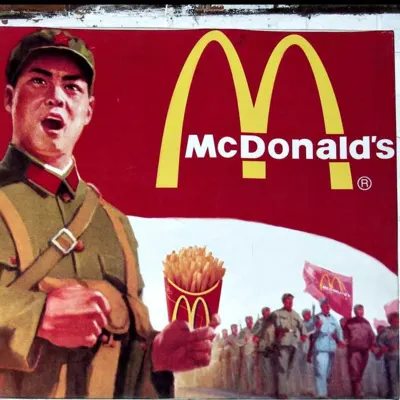
Yeah, reshaped in America's image. You know, the reason McDonald's goes so big is because we all ate McDonald's. Fine, whatever. But we actually came down to it and we just like asked ourselves, is this what we want to do? I don't think we would have voted to go along with it.
No, certainly not. And especially when it comes to things that actually affect our lives. All that stuff is out of our hands for the most part and operated on a. I mean, not to be an annoying communist about this, but it's all the real stuff that's important does not happen at a level that we are allowed to interfere with.
And also, like, because we're young people, we understand that, like, a lot of these decisions were made by, like, market forces that existed before we were born, right?
Sure.
You know, it's like, if I want to buy a house, I'm probably going to buy a suburban house, right? Because those are the houses that were made. And, you know, this is just the style of American house now. And obviously, like, I might think, no, I don't want to live in a suburban house. I want to live in a place with like an actual community. But, like, those places don't really exist because, you know, people in the 50s and 60s decided they want to live in suburban houses and that's just what exists now.
Protecting local culture
Yeah, no, you're all like actually buying a piece of property in like a city is insanely expensive.
Thankfully, there's like, you know, we mentioned France, but there are other countries that are like very deliberately trying to stop this shit from, you know, rewriting their culture and like their society. Simple examples, like France, their rule is half of everything on TV. Like it has to be like pure native, like French content. So it gives you like a shitload of room to like import things.
Yeah.
Just like in New Zealand, basically every movie, every movie import is basically American because that is where movies are made. And you know, like Canada is the same way, especially Quebec.
Yeah, and France also, like, they have a native hip-hop industry. For example, like, French rap is very distinct and very much its own thing. But back to Canada, Canada has some pretty interesting regulations to this stuff. I think radio has to be 40% Canadian, and television has to be about 50% Canadian. For CBC, which is like their public broadcaster, it's even more. It has to be Canadian content. And some Canadians have made fun of this because it does mean you get a lot of stuff like stuff that's just a rip-off of an American show and is not as good and no one really wants it. They just want the real thing. But it also means that you keep this industry alive. You keep people employed in this and they don't just go to the US. Like there are so many Canadian actors who are just in Hollywood because that's where movies are made.
You go to America if you were an actor and you're an English speaker. But there is still, like, there is still Canadian music, television, and those industries aren't entirely just absorbed by this behemoth below them. And I think that's honestly, I think that makes sense.
Yeah, and it does mean there's like actually Canadian movie industry or like movie and TV industry. Because obviously a lot of TV, American TV shows are shot in Vancouver. And when you ever have like need a minor role, you just like grab an actor that exists there. So provides opportunities for a lot of actors to like have like roles. You know, obviously that means like American Hollywood money is coming into this area to develop this movie industry. And because now there's like that money slushing around in the Canadian movie industry, you actually have the ability to make even more things. So yeah, it is very smart of them. It isn't just like there's like a 30% rule and then everything that exists to satisfy that 30% is crap. No, no, no. Like a lot of it does end up being very good. Yeah, like and some of it is successful in America.
Like Degrassi is the obvious example of a show that was very successful. It's a Canadian show and was successful in America and Canada. Enough to propel Drake to stardom also. There is stuff that breaks through.
Yeah, I'm thinking of like just cartoons I used to watch as a kid, like ReBoot. That's like a Canadian TV show and it was sold all over the world.
China's film market
You know, I mentioned that China doesn't really export content, but obviously they have like their own domestic market.
Yeah, it's a huge one.
Yeah, and they're very like protective of it. You know, only like 20 foreign movies are allowed to play per year. Something like that.
Yeah.
What that means is, you know, Chinese people are watching foreign movies. They're just like watching it on like bootlegs, like bootleg DVDs that are handed out.
Or streaming, yeah.
Yeah, so Chinese people are watching like foreign movies, but that money isn't going to Hollywood. You know, that money is going to like, you know, the guys who just like download a torrent and print it on a CD and like hand that out. You know, they don't keep, they don't care if you use a VPN to watch The Office. It doesn't really hurt them. Yeah, really what they want to do is they're making sure that Hollywood isn't making money off this stuff. They don't care if like average Chinese people are consuming the content, just as long as that their money isn't going off to Hollywood.
Exactly, which is very smart.
The English-language internet
One final note before we end up here is I just want to talk about like the present day. Just, you know, while I was thinking about this topic, I was thinking there isn't really an American internet.
No.
The way that there is like a Russian internet, there's very much a Russian internet, and it's not just Russia. It also goes like Kazakhstan and Ukraine and stuff. And there's definitely like there's definitely a Spanish-speaking internet or a Portuguese-speaking internet. But yeah, there's not really anything like that for America.
Yeah, I mean, you said it there, just there. There's a Spanish-speaking internet and there's an English-speaking internet. There isn't an American internet.
Yeah, the memes are shared. We're on Twitter, we're on like Facebook or Instagram, whatever. You know, the stuff that we share, this, like, the people that we interact with, we're not interacting with them because they're American. We're interacting with them because their posts are in English and we read English. Which means that all these people from other English-speaking countries participating, right? A lot of British people, Australians, Canadians. But also, there's a lot of people who just know English as a second language. Like, if you're from Estonia, like, there isn't really an Estonian internet for you to participate in because there's just so few people.
No.
Like, at some point, you're just going to have to suck it up and learn English if you want to be able to consume content on the internet. So, you know, the internet is obviously driving more people to learn English. But once they do, they are participating in this English-language internet, which means that they're shaping the discourses or the memes or whatever that we're consuming as Americans, which is like a very modern phenomenon, right? Like, you never before the internet had American discourse that could be shaped by people in other countries.
Not really, no. Yeah, you had, like, there, I mean, there were cross-cultural things, obviously, like, rock and roll between the UK and US, but nothing like what we have now at all. You could not be, for example, an Australian woman who spends all day talking about American politics on Twitter. You could not do that.
Yeah, and you, you know, if you're one of those Eastern Europeans who are really into basketball, like, you can stream American basketball games and you can like participate in like basketball Twitter. And, you know, if you're like specifically funny and like basketball Twitter, it doesn't matter if you're like Serbian. Your tweets will still be popular and people will still, you know, be into you.
Exactly.
What's next?
So, what's next? You know, now that the whole world is America, but America is no longer in charge, you know, where do we go from here?
Yeah, I really don't have a good answer to that, to be honest. I wish I did. I guess just like it's pretty impossible to know where things are going, but my guess is just that it'll be worse.
I do think it's good that there's some challenge to Americanization. There's some resistance. There's still like there are, you know, policies against it in some places. And also, there's places like Korea that are up and coming and can flex their muscles a bit culturally. But overall, I do see a lot of homogenization and Americanization on the horizon.
Trying to think, what will happen next? I guess I don't know, but I'm very interested to happen because if every country is a consumer culture, that means the only real input is just like what you buy, which, you know, pretty awful way to define a culture.
Wrapping up
But thank you for listening. I have a personal request, which is that if you like this episode or any other episode, just tweet at Liam or tweet at Halal Sam here.
Or to the podcast account itself.
Just tell us what you think. This was Gladio Free Europe. I'm Abram. I was joined by Halal Sam. And I'm saying peace out for today. Good night.
The show is also on Apple Podcasts, Overcast, Pocket Casts, Podcast Addict, YouTube, RSS and Patreon.