Japanese-occupied China was a place of immense violence and constant intrigues. We invited Carl Zha to talk about the 2007 film Lust, Caution and the real-life events that inspired the movie. We glide through the history of Sino-Japanese relations, the reasons for China’s pitiable situation at the turn of the 20th century, and the greatest real life version of “you either die a hero, or live long enough to see yourself become a villain” of the 20th century, the ill-fated story of Wang Jingwei and his collaborationist regime.
Check out Carl’s podcast,
Hosted by Russian Sam,
Halal Sam, and
Transcript
Welcome, Carl
And we're back with another episode of Gladio Free Europe. I'm Russian Sam and I am joined by my co-host Halal Sam.
Hello.
And today we have the great privilege of having with us poster extraordinaire Carl Zha. How are you, Carl?
Yeah, thank you. I have to refrain from saying welcome to my podcast. Normally I'm the host.
Yeah, well this time we're the boss.
Yeah, so how's Bali treating you?
It's still hot. We are in the rainy season right now, so it's been rainy non-stop. This is actually one of the rare days that's actually sunny outside, but I am inside my studio recording with you guys.
Well, hopefully you can enjoy the sun for a bit after we're done with you.
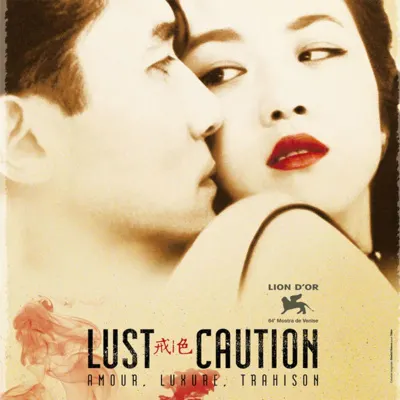
Lust, Caution
But today we brought Carl on to discuss a 2007 movie called Lust, Caution, which is based on a novella of the same name written in 1979 by Eileen Chang. It's a very short novella. It's only around 60 pages, and the story was significantly expanded in the film itself. It was directed by Ang Lee, who is a Taiwanese director who has some very eclectic choices in terms of directing. Like he's famous for Chinese films like Eat, Drink, Man, Woman, and The Wedding Banquet, but also Brokeback Mountain and Hulk.
Carl's verdict
So Carl, how would you summarize this movie?
I have very mixed feelings. Actually, I don't have mixed feelings. I'm not a fan. Not a fan. I actually know a little bit about the novel the movie was based on. You know, after watching the movie, I mean, artistically, it's very artfully executed, all the cinematography and everything. And the actor's actress, they're great. I mean, the actress Tang Wei and actor Tony Leung, they're both very great actors, but I have a problem with the execution of the movie. Mainly the plot.
The plot
Maybe you should tell the audience what the plot was.
So basically, the TLDR version is that the central female protagonist is a young woman named Wang Jiazhi, who is a young Chinese woman who flees to Hong Kong after the war begins in 1937, and she's unable to go to England where her father is because of the war. So she decides to go to university in Hong Kong where she befriends this theater troupe who put on patriotic plays to motivate the Hong Kong people to resist Japanese aggression. And in the process, these students who have no idea what they're doing, if we're being honest, they decide that they're going to assassinate a certain man named Mr. Yi who is visiting Hong Kong to recruit others to work for what was going to become the Wang Jingwei government. The collaborationist government. Yeah, she disguises herself as the wife of a traitor and she seduces Yi. The first plot fails, the one that takes place in 1938, but afterwards, the movie goes to the future to Shanghai in 1942 and they resume operations once again.
As I've said, the movie is based on a novel by Eileen Chang. And Eileen Chang was basing the events of the novel both on her own life, as well as the life of a Chinese resistance hero named Zheng Pingru, who is more similar to the protagonist of this movie, I'd say.
Eileen Chang
So, Carl, what do you know about Eileen Chang?
So, Eileen Chang is a famous Chinese novelist, but I don't know if you guys heard about this. So, she moved to Hong Kong and then later United States. But while she was in Hong Kong, this was after the communist takeover. Actually, this was after World War II of 1945. And her novels start to get sponsorship by the CIA program. The program is not specifically sponsoring explicit anti-communist material, but the aim was to encourage the trend in the novel fiction writer community to focus more on personal, to focus more on interpersonal stories rather than explicitly political. So, it's trying, the whole purpose of the CIA program is to depoliticize kind of the writers' community and to move away from writing about politics. But Eileen Chang has a very interesting biography because she grew up in Shanghai and she was while during the Japanese occupation period, she became involved with a famous collaborator, you know, collaborate.
Yeah, Hu Lancheng.
And so, that's why the book she wrote on which the film is based is partly, you know, kind of autobiographical. You know, it's kind of partly based on her own experience.
The ending
But I'd like to point out there's an important discrepancy between the novel and the film ending.
Sorry, can we do film spoilers?
Absolutely.
Yeah, totally fine.
Yeah, it's hard not to do the spoiler when we're discussing the theme of the movie. Okay, so in the end, the plot to assassinate the basically tried to honeypot the collaborator in the movie. But in the final crucial moment when they're set up the trap and about to assassinate the collaborator, which they have been working toward for like all these years, the protagonist, she had a change of heart. I mean, she had a weak spot. She had a weak, basically a moment of sympathy for the guy they're supposed to assassinate. So she alerted him of their plot, and then they were all arrested. The collaborator escapes. The entire team got rounded up, arrested, and executed. But there is a very important discrepancy between the novel and the movie. Because in the novel, the collaborator, after his one-time lover, the protagonist, was executed, he goes back to his house, he lights up a cigarette, and he was pretty proud of himself for, you know, oh, this having this young woman willing to sacrifice herself for him.
And he thought, yeah, he still got it. You know, he was pretty, there was no remorse. He didn't really show remorse, regret over the death of this young woman. But he was more proud of, you know, yeah, he still got it. That was totally changed in the movie because the movie made him more sympathetic. And so, that this is a real problem I have with this movie because it didn't even stay faithful to the novel. I mean, I understand, you know, Tony Leung is a very talented actor, have many fans, but that's no reason to change the character he was portraying to be in a more sympathetic light. I mean, I don't know what Ang Lee is trying to do here.
I feel like, yes, in some respect, it is problematic, but I think that Ang Lee did a great job of really fleshing out the story. But again, yes, there is the question of why is this Mr. Yi, who is a total monster, someone who just takes life without batting an eyelash, why is he this more sympathetic?
Zheng Pingru
This Mr. Yi, he was actually based on a real personality. And the second element that really inspired the story is the life of a woman named Zheng Pingru, who was born in 1918. And she was born to a Chinese revolutionary father and a Japanese mother in Shanghai. So she was fluent in Japanese. And because of this, she was a very valuable asset for the nationalists to recruit her to seduce this man named Ding Mocun, who was the secret police chief in Shanghai. And she had known him briefly because he was the principal of her school at one point. So she seduces him. And finally, in December 1939, she took Ding to a shop, ostensibly to buy a coat. And there were agents in place, assassins, to kill him. But he noticed the men loitering and he just ran to his car before he could be killed.
He realized that Zheng was part of the resistance and had her arrested. She was executed in 1940, and Ding Mocun would himself be executed as a collaborator in 1947. Me personally, I think that it's a very masterfully done film, even though it is very sexually graphic. Spoiler alert, if you do decide to watch this, please note that there is a very graphic rape scene.
Reception in China
But yeah, this movie was first released in China to great fanfare. There was a big promotional campaign, but the Chinese media board actually took issue with it because there were these graphic sex scenes, and so advertisements and promotions were halted. And the actress who played Wang Jiazhi, Tang Wei, she ended up not working in movies for several years because they had not approved of her. But the larger issue was the portrayal of Zheng Pingru.
We actually found a story from the time. Sam, if you would like to read this.
Sure. The real story behind Lust, Caution revealed, September 14th, 2007. Zhang Jingzi, apologies for terrible pronunciation, an old woman of 80 plus currently lives in Los Angeles. She is Zheng Pingru's younger sister. Zheng stated that in the film that the film diverts too far from the actual life of Zheng Pingru. Zheng said that she could understand how art exaggerates and distorts real life, according to the artist's imagination, but she couldn't accept the fact that the film, film viewers, would relate to her sister as a heroine who indulged in lustful acts. She stated that such a portrayal was disrespectful to a person who had sacrificed her life for her country. After the assassination plot failed, the Japanese puppet regime agreed that if her father would work for them, they would set Zheng Pingru free. Although he clearly loved his daughter, Jeng Jung Yu refused their request.
Zhang Jingzi said that although she was only 12 or 13 years old at the time, she could still certainly remember everything.
Eileen Chang's own story
Yes, and I get the impression that this was a very common sentiment within China itself that, like, it sullies the name of this martyr to the Chinese resistance. But if I may play Devil's Advocate a little bit here, I feel like although clearly there is inspiration from the life of Zheng Pingru, as well as Eileen Chang's own life, this isn't really meant to be an accurate telling of a story. Rather, the sense that I got is that this was Eileen Chang trying to come to terms with the fact that she was married to someone who had collaborated with the regime. And so, she, in a way, I feel like she was trying to imagine herself as having been braver, as someone who was more along the lines of Zheng Pingru herself, rather than someone who meekly supported her collaborator husband from the sidelines.
I like that interpretation, actually. And like I said, if you read the novel, the collaborator is not a sympathetic character. I mean, especially if you read that to the end. But the movie changed that. So that's my biggest gripe with the movie. I said the movie was very artfully executed. Cinematography was great. The storytelling is great. But I just don't know what Ang Lee is trying to. You know, what is the main thing of the story Ang Lee is trying to convey here? Because by changing that ending, by humanizing this monster, it's almost like Ang Lee is turning this whole story into like a love story, like a tragic love tale, which wasn't really, I don't think that was the original intent of Eileen Chang even when she wrote the novel.
Absolutely not.
Why collaborate?
But regardless of Ang Lee's intentions, I kind of have to praise him for the effort because I felt like this film also explores the reasons why certain Chinese felt that they should collaborate with the Japanese. And of course, they should be morally condemned for doing so, but at the same time, I really wanted to get at what made these people tick. Why did they decide that this was the right decision to be made? And I'm uncomfortable with the framing of them as being purely Japanese puppets, if that makes sense. I think that these were personalities who had their own complex reasons. Not that we should make excuses for them, but we should try to understand how they came to that conclusion. And that's a very wild story in and of itself.
Isn't that ultimately what they became though, Japanese puppets?
So I think there are different levels of collaboration, right? I mean, like, there were a lot of people who served in the Japanese puppet regime during World War II, and there are different people, like you said, different people get in for different reasons. You know, some people had to do it because they were forced to. Some people took a pro more proactive role in collaborating with Japanese. For example, in the Japanese occupied North China, a lot of the Japanese basically made all the occupied area, all the village head, effectively their collaborator by forcing them to collect taxes and enforcing the Japanese imposed rules. But at the same time, some of these village heads also collaborated with the underground resistance, both the KMT and the Communist. So some of them were playing the both sides, of course. I mean, and some of them are trying to stay in power.
Some of them are just trying to stay alive. So, yes, there are various motivations. You know, we shouldn't deny the human agency of these actors. But at the same time, I think there is definitely a degree of collaboration. There are people who willingly collaborated with Japanese for the sake of, you know, power or monetary gains.
Yes, exactly.
Early Sino-Japanese relations
But before we get into that, I thought it would be nice to give a quick overview of the history of Sino-Japanese relations. So Japan first appears in the Hou Hanshu, which was the book of Later Han, in an entry from the first century CE. They are described as Wa, which is quite a funny word because it basically means dwarf barbarian. And they're also mentioned in the Weizhi, which was the chronicles of the state of Wei. And they were one of many, many different barbarian peoples who had fallen into the Chinese orbit.
So the character for Wa, some people say is, you know, it means dwarf barbarian, but I think that's a term that became, acquired that meaning over the years later. Because Wa is the sound Wa is actually what the Japanese call their state themselves. But then how Wa is transliterated into the Chinese character, you know, into Wa initially with just a straight phonetic transliteration. But over the years, because the more recent history, I think the Wa did acquire the derogatory meaning as a dwarf pirate.
Wa was one of Chiang Kai-shek's favorite terms. He would constantly refer to the Japanese as Wa. So that term really stuck around for a long time.
The Wa is like kind of the ancient name, the Japanese for Japan themselves. But later, when they also become aware of the derogatory term that evolved, they switched to Yamato. So, yeah.
Which is still the name for the Japanese people themselves. Yeah, so this is from the Chronicles of the State of Wei. Leaving the Queen's land and crossing the sea to the east, after a voyage of 1,000 li, the country of Gounu guo, which translates to country of dog slaves, is reached. The people of which are of the same race as the Wa. They are not the Queen's subjects, however. 4,000 Li away to the south of the Queen's land, the dwarf's country is reached. Its inhabitants are three to four feet in height. Just found that a bit humorous, especially the term applied. Gounu guo, which again, country of dog slaves. These old Chinese sources, they are clearly very demeaning towards many of these peoples whom they considered to be barbarians.
Seals of legitimacy
But there's also another very interesting aspect to this, namely seals, not the animal, just like seals that like you seal letters shut with. They were an important part of Chinese kingship as symbols of legitimacy. The most famous example is the jade seal of Qin Shihuang, which was very valued and was basically seen to like give the mandate of heaven, but it was lost sometime after the Tang dynasty. And so what the Chinese would do in the Han period is they would gift seals to the kings of tributary states to show that you guys are the kings of your own states. There's a rather interesting passage in the book of later Han, which states that in 57 CE, the Na state of Wa sent an envoy with tribute. The envoy introduced himself as a high official. The state lies to the south of Wa. Emperor Guangwu bestowed upon him a seal.
And what's interesting about this precisely is that in 1784, what might have been the seal is found. Granted, some have argued that it might have been a late medieval forgery, but it is kind of similar to other Chinese seals which are known to be legitimate.
So, Carl, when would you say Japan really started to enter the Chinese sphere, not just as a vassal, but as a state that looked up to Chinese values and literature and architecture and things like that?
Well, I think it's important to note that you talk about the granting the seal story. It's actually quite similar to how the Roman Empire handles relations with periphery states and people, you know, by granting titles and gifts.
Yeah, placed within the system.
Exactly. And this is also for the Chinese themselves kind of confirmed their belief that their empire is at the center of civilization. At the same time, by granting titles, it offers confers privilege to the people who receive them among their own people. So the chiefs and the kings who receive these seals, you know, use it as a symbol of legitimacy among their own subjects. But this is, as you mentioned, this early contact happened very early on, you know, during the later Han and later Three Kingdoms period. But because Japan is so far, the mention of direct contact are far and few in between. Most of the time, Japan actually received the Chinese culture via intermediary on the Korean peninsula. So like the different Korean states of like Baekje, for example. But until I think it's only during the Tang Dynasty, we're talking about the 7th century, that when Japan finally started like a massive scale of cultural exchange program where they would send emissaries to the Tang Dynasty capital to learn everything about China, the laws, culture, religion, and then bring them wholesale back to Japan.
So that's, I think, that's when the really kind of the more intensive cultural exchange happened. And mostly it was one way. It was mostly from China to Japan.
Yeah, it was very one-sided. Basically, the Japanese imported architectural styles, classical Chinese literature, the writing system. They didn't have a writing system before the Tang Dynasty, really, as well as Buddhism. And basically, like China and everything China inspired would be called Kangaku, Chinese studies over there. So Japan would sort of have an on-again, off-again relationship as a tributary of China, not really unproblematically. So for example, around the same time as they're sending these emissaries to the Tang Dynasty, they're also fighting against Chinese troops on the Korean peninsula around 660-ish because the kingdom that they had been allied to was fighting a war against the kingdom that was allied with China. So Japanese troops and Chinese troops were fighting each other a very long time ago.
Wars and pirates
But there were also other contacts. So for example, the Mongol Yuan dynasty made two very famous disastrous attempts to capture Japan, but they were repelled by the so-called kamikaze, divine winds, both times. So their fleets just were not able to actually reach the mainland.
Benefits of being an island.
Yes, yes. But the main standoff between Japan and China really happened in the 1590s when Toyotomi Hideyoshi launched a massive invasion of the Korean peninsula and even had plans to capture Chinese territory. And we're talking about massive numbers of troops on both sides here. The Japanese went with something like 200,000 soldiers. And they made quite a bit of progress on the Korean Peninsula itself before they finally ran into Chinese troops. But in addition to these formal acts of state, there was also the problem of so-called Japanese pirates.
Were they not all actually Japanese?
No, many of them were not actually Japanese. They were just operating out of Japan. Many of them were Chinese themselves. Some were Japanese, some were Malaccan. It was a mix of people. And these people caused a lot of problems for Ming maritime activity as well as the coastal areas, which some scholars think had something to do with why the Ming dynasty decided to close its more maritime.
Yeah, it's actually specifically because closing of the borders actually was specifically responding to two raids by the Japanese pirates in the vicinity of Ningbo on the China's east coast. And so from then on, Japan was forbidden to directly trade with China. That actually prompted Satsuma clan to take over a Ryukyu Kingdom on Okinawa because Ryukyu Kingdom at the time was a tributary state of China and so it's allowed to trade with China. So they found a back door way to trade with China by subjugating the Ryukyu Kingdom in Okinawa. Japan and China being one of the largest economy in East Asia, there was a lot of trade between these two, especially because China at the time was switched back to a silver currency and there's not enough silver inside China, but a huge silver mine was discovered in Japan. So there was a lot of demand for silver in China, and there's a lot of demand for Chinese silk.
So there's a lot of, because of forbidden of the direct trade between China and Japan, there was a lot of smuggling going on carried on by these so-called Japanese pirates. I mean, there's always a fine line between pirates and merchants anyway in those times.
Oh, absolutely.
And this adds not just something exclusive to East Asia. That's also something you see in Europe and Mediterranean. Yeah, once you're out of the side of the shore, you pretty much a free for all on the high seas.
Kokugaku
Exactly. So going back to Kangaku, Chinese studies, around the middle of the 18th century, in response to a bunch of domestic crises faced by the Tokugawa shogunate, there was a rise in something called Kokugaku, which was national studies, which was basically the belief that Chinese ways were detrimental to the Japanese spirits and ways of living. It was basically a very xenophobic conception of the Japanese people. And Kokugaku, it was sort of popular on again, off again, but it really took off around the time of the Meiji Restoration.
The Meiji Restoration
Yeah, you know, everyone knows the whole thing about Commodore Perry coming in. But basically, after his intimidation campaign in 1853 to open up Japan to American trade, Japan was just flung into a crisis and it ended up with the Meiji Restoration, which was the basically the emperor and the people around him and his allies, sponsored, I believe, by the British, taking over the government from the shogunate system. The shogunate system was replaced and the emperor actually reigned again. Feudal institutions were done away with. The military was reformed and modernized. Education, economic, all that. Everything was modernized in a Western way, I suppose.
I was just going to say, there was actually a thought at the time, a slogan, if you will, called Leaving Asia, joining Europe in Japan. The idea is that the Asian East Asian way has become decadent and corrupt, and Japan should cast off the shell of kind of the East Asian culture and joining the modern civilization of Europe.
Which is an easy sell if you already believe that you're better than these people.
You're right, of course. And to couple with that belief, is that countries like China and Korea has been corrupted in their ways. And they're the ones that hopelessly mire in the past. But Japan is different. Japan is modern and forward-looking. Like, Japan should not consider be the peer of, you know, likes of China and Korea, but among the modern nations of the Europe.
Yeah, they wanted their peers not to be China or Korea. They wanted their peers to be Britain and France. Yeah, but at the same time, ultimately, the majority of people didn't really want to become Europeans per se. They wanted to hold on to Japanese institutions and Japanese religion. So, for example, Shinto at this period was made into a state religion. So, basically, they wanted to create a synthesis between this pure Japanese way of living as well as the technologies which would allow Japan to rise above its neighbors.
I think at the time of Meiji Restoration, there's a lot of intellectual ferment. There's all kinds of ideas going around, right? I mean, there's one idea is leaving Asia, joining Europe. But later, especially later on, when they realize that the European nations are hopelessly racist, they will never accept Japan as equal partners, there's more focus turning inward to kind of emphasises on kind of the quintessential Japanese superiority. There's more emphasis placing on the uniqueness of the Japanese culture and how it is superior to everything else.
Yes, but again, this idea was also present during the Meiji Restoration under the slogan of sonno joi, which translates to expel the barbarians, promote the emperor. So, yeah, it was a very intellectually interesting place with many different currents of thought. It didn't necessarily have to turn out the way that it did, is basically the point.
Well, it did. And it set Japan on a collision course with a lot of its neighbors.
Well, not a collision course, of course, for invasion.
It's interesting, they started out as a reaction to the foreign encroachment, particularly Commodore Perry's forced opening of Japan, because the Daimyos, the feudal lords of Satsuma and Choshu, particularly saw that Tokugawa shogunate were weak to resist Western imperialism. So their rally cry was exactly sonno joi, support the emperor, expel the barbarians. But curiously, what happened after they actually succeeded to replace the shogun government is that the reformist wing took power, and then all the reactionary elements that wanted to return to a past where foreigners are expelled and Japan goes back to living an isolationist world, those people were pushed out of the power. It's the reformists who took power in the new Meiji era and pushed full-on modernization program in Japan. So there's like kind of different currents battling at the time. Like, yeah, there's a lot of intellectual ferment, there's a lot of different ideas, there's a lot of changing course of the Japanese society itself.
The First Sino-Japanese War
Yes, and ultimately, this change in course would result in the Sino-Japanese War of 1894 to 1895, which was basically fought to put Korea into the Japanese sphere of influence, as well as making Taiwan into a Japanese colony. And this would really serve as a blow to the idea of Chinese primacy in Asia, because again, for thousands of years, China had been the top dog. There was no question that anyone could be superior. And suddenly, Japan, which was supposed to be like this little tributary state that's ultimately derivative of China, suddenly defeats them. And this had a very, very demoralizing effect. And this would only continue. Japan would be the only non-European power to invade China in 1900 during the Boxer Rebellion.
The Russo-Japanese War.
Yes, exactly. The Russo-Japanese War. Finally, in 1905, Japan went to war against Russia, basically over the future of Korea as well as Manchuria.
Most of the battle is fought in Chinese territory, by the way. Especially most of the land battles are fought in Manchuria. But in the end, Japan, Korea becomes a Japanese protectorate.
Yeah, yeah, the Sino-Japanese War was basically about putting Korea into a more Japanese orbit rather than a Chinese one. And then finally, when the Russo-Japanese War happens, they finally cement protectorate status over the Korean Peninsula itself, as well as in Manchuria and at the Liaodong Peninsula, which was where the Kwantung Army would be stationed, ostensibly to protect Japanese railroads and business interests. But let's just say that the heads of the Kwantung Army took some rather bold initiatives.
Chinese students in Japan
Well, I just like to point out that even after the first Sino-Japanese War, where the Japanese decisively defeated the Qing government, there was a shock in China in that China was defeated. But it didn't necessarily result in anti-Japanese sentiment in China because after that flood of Chinese students went to Japan to study because they saw Japan as like the successful Asian nation that successfully modernized. And because the Japanese, you know, they still use the same Chinese writing system. So it's a lot easier for the Chinese students to absorb all these kind of basically the Western concept, but via a Japanese lens.
What was the Japanese government's stance on this influx of Chinese students?
Oh, they initially encouraged it because they thought that they will help these Chinese students to come away with more pro-Japan views. So they encouraged the Chinese students to come to Japan and study. It was also encouraged by the Qing government itself. You know, Qing government actually sponsored many of these Chinese students to go study in the hope of they will bring back the knowledge to modernize China itself. That's why a lot of these also early revolutionaries would base themselves in Japan like Sun Yat-sen. And Sun Yat-sen himself received many support from interestingly ultra-nationalist Japanese organization like the Black Dragon Society. And because, you know, at the time, this Black Dragon Society is still pushing ostensibly pan-Asianist ideas that, you know, all the Asians need to work together to push the European out. Of course, ultimately, that was to serve kind of the Japanese imperial aim. But it just so happened at the time it matched the needs of the Chinese revolutionary to overthrow the Qing government.
And so the two sides worked together. And that's why Chiang Kai-shek himself was also educated in Japan in a Qing government-sponsored program to have young prospective officers to train in the Japanese military academy.
I mean, even Zhou Enlai, if I'm not mistaken, was a student in Japan for some time.
Yes. Zhou Enlai, Lu Xun, everyone.
Why China declined
So going back to China, let's first talk about what happened to cause China to decline so precipitously.
This is a big time. I didn't realize we were talking about it.
This is its own episode, frankly.
Okay, okay.
I'll offer my two cents. I mean, China basically became the victim of its own success because China enjoyed a long period of peace during the so-called High Qing, the 18th century. From the Kangxi Emperor to the Qianlong Emperor, the reign of three emperors, there's almost more than 100 years between them. China enjoyed unprecedented peace and stability. That allowed the population to triple from 100 million to 300 million towards the end of Qianlong's reign. That actually created a Malthusian problem on China because the land was nearing its carrying capacity when suddenly, you know, there's 300 million souls need to be fed. You know, this created all kinds of ecological problems, which Europe, you know, had the benefit of, you know, Europe was facing a similar population pressure, but Europe had the benefit of having huge overseas colonies, especially North America, after the, especially the natives of the Americas got wiped out by epidemics and disease.
And so these are the kind of the ecological constraints faced by China. At the same time, the Chinese government at the time was actually a lot more decentralized and you would say less effective than the Western government because throughout Napoleonic War, all the Western states are in the constant competition, constant war. That forced the Western government to develop financial system, the modern bank system. Also, forced the different states to continue to innovate. That was lacking in China because remember, China was at peace at this time. At the same time, the Chinese governance problem became more acute because even though there were more people now, but there are the same number of official posts, right? It just means that one governor now has to administer to more number of people, but with the same budget he had before. And so there's a lot of governance problem in China.
There's a lot of the Malthusian problem, ecological problem. And to compound that, you know, then you have what made really propelled Europe decisively over China was the Industrial Revolution. And the Industrial Revolution happened in England for various, for a host of reasons. I recommend people to read the book, The Great Divergence by Kenneth Pomeranz, which really explains the great divergence between China and Europe at this time. But the result of the Industrial Revolution is that now there's a qualitative difference between the power of the British Empire versus the Chinese Empire. That's why China was defeated in the two opium wars and many other wars after. And that, you know, foreign depredation plus the opium pandemic that brought on by the British only just compounded the worsening problem in China itself. And also, China had a massive civil war. That's the Taiping Rebellion. That's the bloodiest conflict in the 19th century.
You know, I see an estimate between like anywhere between 20 million to 100 million people died. I think 100 million is way too high, too unrealistic.
We could get so deep into the weeds in the Taiping Rebellion. Hong Xiuquan is just such an amazing character, and it's such a wild moment in history.
Exactly, exactly. So contrast China and Japan. Japan, the Boshin War, which was a war to overthrow the Shogun government, was relatively brief. It happened very quickly. Whereas, you know, the Taiping Rebellion was drawn out. Tens of millions of people died. Most of the China's most richest area, the Yangtze Delta, was totally devastated. And so China had to recover from that with a much weaker government for all the reasons I listed before, you know, because, you know, but China did launch its own modernization program at around the same time, Japan's Meiji Restoration. So, so, but China's self-re-strengthening program was handicapped in the case that the reformist faction in the Chinese court always have to butt their heads against a conservative faction who didn't want any change. Whereas Japan, the conservative faction got done away with basically in a revolution. And the reformist faction took control, and that's why they were able to push through this whole top-down modernization program.
But in China, this was, you know, the reformist faction did not control the court. They have to contend with all these conservatives who are resistant to change. So, in a way, the Chinese self-strengthening program was kind of half-hearted, especially compared to Japan. And that became increasingly obvious by the end of this first Sino-Japanese War when those states who were in the modernization program, it showed basically the superiority of the Japanese program in the end, you know, on the battlefield.
Yeah, Japan, because of the fact that it had a civil war and revolution, had done away with these systems that were holding China back and limited and limiting the scope of its reform program. My own personal assessment is that the problem goes back to the reign of the Kangxi Emperor in the early 18th century, who had believed that the reforms had made China so prosperous that taxes would never need to be raised again. The amount of revenue remained constant, even as the population of China ballooned and the size of the bureaucracy also remained the same. And so, because of this, this is really the root of all of these compounding problems, I would say.
Yeah, I remember somebody did a study comparison between kind of the tax rate in China versus other nations like Japan and England. China had the lowest taxes at the time. I mean, like, China was basically a libertarian's paradise in the 19th century, but it didn't work out, as you can see.
Reform and revolution
Yeah. So, yes, you had a bunch of these attempts to reform China. You had the famous 100 days reform period in 1897, but that was cut short by the court, which was run by Cixi, who is another figure you could do an entire episode on. But as a result of this humiliating defeat of China, the blame wasn't put at Japan's feet for having instigated this war, but rather on the Manchu-Qing emperors who were, you know, foreigners. Yeah, in case people don't know, the Qing dynasty was not ethnically Han, or the emperors were not Han. Although I'm pretty sure they were fairly similar.
So, Japan actually helped in this, that during the first Sino-Japanese War, they actively propagated the idea that China has strayed from this ancient heritage because it got corrupted by these conquering barbarians like the Manchus. And it also supported, you know, the revolutionaries like Sun Yat-sen, who kind of centered their revolution on anti-Manchu Han nationalism. That Japan is actually trying to get rid of China's Manchu rulers. They're not waging war against China and Chinese, per se. They're waging war against Manchus. That's the Japanese propaganda, of course. But, you know, some people apparently bought into it. And at the time, the Qing government did try to reform after the Boxer Rebellion, very lately, you know, after 1900. So a lot of the reforms of the reformist agenda that was first put forth under the 100 Days Reform were later implemented in 1902 under the new reform of the Qing government.
But one, it's too late. And two, the reform also stirred up a lot of discontent. And at the time, revolutionaries like Sun Yat-sen, they found out the best way to rally the support against the Qing government is still the anti-Manchu slogan. So they focused on that, made that the major platform of overthrowing Qing government is based on the Han nationalism.
Yes, there were many different revolutionaries, some of whom had links to Japan, others who didn't. But of course, the most prominent of these was Sun Yat-sen, who was a revolutionary who was forced into exile after launching a failed uprising in Guangdong in 1895. And he would spend many years all over the world, primarily Japan. So Japan, around this time, after the Sino-Japanese War had become a nesting ground for Chinese student revolutionaries, the Japanese were interested in stoking this basic feeling of pan-Asianism, which I mean, it technically was pan-Asianism, but pan-Asianism under whose tutelage is the question. But yeah, so tens of thousands of Chinese students went to Japan to receive an education over there. And in 1905, Sun Yat-sen, with the support of the Japanese government, founded the Tongmenghui, which was a fusion of a number of Chinese student revolutionary societies.
Wang Jingwei
And among the earliest disciples of Sun Yat-sen was a man named Wang Jingwei, who would ultimately become the head of the Chinese collaborationist government with Japan.
Yeah, Wang Jingwei is this is when you this is why you you need to choose when you sh when you should die. If Wang Jingwei had died in the in the early 1900s, he would have died a hero. You know, one of the famous acts of one Wang Jingwei during the Qing dynasty era is he went to assassinate at the time the regent because the Empress Cixi died and on his order he had the emperor also poisoned so that way the only the throne get passed down to like a child, a baby, Puyi. But of course Puyi can't rule China. It's done by Puyi's father, the regent. So what Wang Jingwei did, he went to assassinate the imperial regent and he failed. And more surprisingly, regent spared his life because he also knows at the time there's a lot of discontent in China, a lot of the revolution is brooding in the air.
So he wanted to show his magnanimity by sparing the man's assassin's life. So Wang Jingwei was spared of being a martyr. You know, if he got killed, he would have been a martyr at that moment. But unfortunately, he lived on.
Yeah, so Wang was very handsome. He was a very gifted orator. He had a knack for poetry. And he was very successful in creating this image of himself as a selfless man who was ready to give his life for China. Wang wrote poetry that burnished his own image as a patriot willing to die to save China from the dynasty which oppressed it. To explain his turn to violence, Wang referred to the newspaper editorials he wrote as a young man studying in Japan. These articles were written in ink, declared Wang. I wanted to translate them into blood. The combination of melodrama and commitment was typical of the man. Driven, ambitious, vain, and also shaped by a streak of recklessness, Wang's willingness to throw the dice when the odds were long, would ship when the odds were long would shape his political life all the way into wartime.
Yeah, so they decided not to execute him, even though he had come very close to killing Prince Chun. But luckily for him, a year after this happened, the Xinhai Revolution was launched and the Qing government was overthrown.
Yuan Shikai
And in fact, Wang had such a mystique around him that Yuan Shikai, who would become the first president of China.
He is a first president of the Republic of China.
Yes, initially he wanted to make Wang the premier, but Wang turned him down. And despite very high hopes for this Republican government, it just didn't really go anywhere. Yuan Shikai ultimately was not a fan of the whole democracy thing, and he decided to make himself the new emperor, basically. And as a result of that, although he was forced out of power very quickly, nevertheless, China had become fractured by this point. And this is when the era of the warlords really begins. As the opening line of Romance of the Three Kingdoms says, a kingdom long divided must unite, a kingdom long united must divide. And so this is a recurring theme in Chinese history, and this is exactly what happens right now.
The warlord era
We already explained all the problem with the Qing government, but after the Taiping Rebellion, more power was devolved from the center to regional governors who had to who were called upon to suppress the rebellion. So, the warlordism had its roots at the end of the Taiping Rebellion. And after the collapse of Qing government, that became more rooted. Different regional governors have their own armies and they control the revenue within their own provincial borders. And with Yuan Shikai's death, the whole country was becoming just imagine China as a larger version of Afghanistan from 1916, Yuan Shikai's death to about the 1930s. And there's different factions of warlords fighting over control. There's warlords in Manchuria, warlords controlling northern China, warlords controlling Yangtze Delta, warlords controlling Canton. There's like warlords in every province.
Carl's great-grandmother
And for my own personal anecdotal story, if I may tell it, my great-grandmother was a concubine of an officer in the Yunnanese warlord army. And they came to Chongqing because Yunnanese, this was during the time when Yuan Shikai declared himself emperor. So the Yunnan warlord Cai E became the first to take up arms against the Yuan Shikai government. So he took the Yunnanese army into Sichuan. And the Yunnanese army occupied most of the Sichuanese cities, including Chongqing. But then in the 1920s, the Sichuanese warlords got their act together. They defeated the Yunnanese army, pushed them out of Sichuan. But that's when my great-grandmother got stranded all alone in Chongqing. And that's when she agreed to marry my great-great-grandpa. So that's how I come to be during this kind of incessant warfare in China at the time. And then these different warlords are also backed by different imperial powers.
There's like the British-backed warlords. Mostly British-American interests are mostly aligned. So there's British-American-backed warlords, and there's also Japanese-backed warlords in Manchuria, particularly Zhang Zuolin. Zhang Zuolin was a bandit during the Russo-Japanese War, and he became a Qing official when he went legit. And then after the collapse of the Qing Empire, he basically carved himself a huge fiefdom of all Manchuria with the financial backing of the Japanese who expect him to do their bidding. And at that time, Japan already had a lot of influence in Manchuria. You know, after the Russo-Japanese War, they gained control of the Southern Manchurian Railway. And as per treaty specified in the 1900 Boxer Rebellion, Japan was entitled to post their military all along this railroad from Port Arthur, which was first leased to Russia, but now leased to Japan because after the Russo-Japanese War, basically a Japanese colony, and then all grounds all the way through to the city of Changchun.
So all along the Southern Manchurian Railway, the Japanese post their own Kwantung Army to quote-unquote safeguard it. And Zhang Zuolin, the warlord in Manchuria, was Japan's man.
The Soviets and Sun Yat-sen
So at this time, 1918, 19, we know the Russian Revolution broke out. And after the establishment of Soviet Russia, because Soviet Russia was besieged on all sides by the so-called allied powers, allied powers even sent an intervention into the Far East, into Siberia. And he even included the British American-backed Chinese warlord forces. They had a quite tense standoff in Vladivostok with the Japanese because the Japanese sent the largest contingent into Siberia. But, you know, at the time, the tension between Japan and China was already quite high. At one point, the Chinese warship threatened to bombard the Japanese army position in Vladivostok.
Yeah, even though they're ostensibly allies on paper.
And then, so the Soviet ally, Russia, wanted to break out through their diplomatic isolation. And what they did is they tried to support all these nationalist movements all around the world. First, with Kemal Ataturk in Turkey. They also tried to do the same thing in China. And they decided to support Sun Yat-sen. Because at this time, Sun Yat-sen went to Guangdong and set up his own government in Guangzhou, or at the time also called Canton in English. And Sun Yat-sen's can, so the Soviet gave money, weapons to Sun Yat-sen to set up his government base in Guangdong in southern China. And so, Soviet Soviet actually told Sun Yat-sen, you know, you know what your problem is? Your problem is you don't have your own army. That's why you have to rely on all these different Chinese warlords, and they always constantly backstab you. But don't worry, we will help you.
We will help you train a KMT army. So, the Soviet advisor helped set up the Whampoa Military Academy in Guangzhou. And Sun Yat-sen, with the caveat, of course, that Sun Yat-sen's KMT must form an alliance with the Chinese communists. So, the Soviet advisor set up Whampoa Military Academy, and Sun Yat-sen set one of his right-hand men, Chiang Kai-shek, to be the commandant or the principal of the Whampoa Military Academy. And the political director of the Whampoa Military Academy is a Chinese communist, Zhou Enlai.
The Northern Expedition
And with this joint CPC KMT project, the Canton government in 1927 started a northern expedition against Chinese warlords backed by other imperialist powers. And the northern expedition was a resounding success because they soon pushed from Guangdong north into the Yangtze River Valley. And that's where Chiang Kai-shek decided to make a split with the communists. When the communist trade unions staged an insurrection to take over Shanghai from the warlords and welcome the KMT army to come to Shanghai, Chiang Kai-shek allied with the Shanghai triads, the underworld green gang, to massacre the opium and heroin traffickers. At that time, China was because after the opium war, the British forced China to legalize opium trade. So the Chinese official then said, okay, if we're going to legalize opium trade, we're going to legalize everything. That, like, why let the foreigners make all the money importing Indian opium? We should allow the Chinese farmers to plant opium themselves.
And then in a couple of decades, the Chinese opium surpassed Indian opium and became the largest opium-producing region in the world. And then heroin was discovered to become, people learned how to extract morphine from opium than from morphine to make heroin. So Green Gang in Shanghai would transport raw opium from Sichuan, my home province, where it's grown, put them on boats, ship down the Yangtze River to Shanghai, where they have secret factories in Shanghai, process them into heroin, and export them to the United States to the West Coast. And all over the world, actually. And the Green Gang was in close alliance with Chiang Kai-shek. So they did the massacre of the communists in Shanghai in 1927. But the Northern Expedition continued. They swept away most of the Chinese warlord. But the warlord I mentioned earlier in Manchuria, Zhang Zuolin, who was backed by the Japanese, he vacated Beijing.
He went back to Manchuria.
Manchuria
And Japanese Kwantung Army considered him a failure. So they decided to kill him. They assassinated him by blowing up his train, going back to Manchuria. I think in an attempt to kind of take a more direct control of Manchuria. But the son of Zhang Zuolin, Zhang Xueliang, decided, you know what? If the Japanese is going to go against me, I'm going to go with a KMT. So he publicly swore allegiance to Chiang Kai-shek. He met Chiang Kai-shek. He actually swore brotherhood with Chiang Kai-shek. And he ordered his Manchurian army to change their flag and switch to the KMT colors. So officially, by 1928, officially, China was united. But that's only on the surface. Beneath that, warlords still control different provinces in China. They just became part of the apparatus. Exactly. They just, you know, nominally swear allegiance to the KMT, but in reality, they still control the reality on the ground.
What happened to the other Japanese warlords after the expedition? Did they flee the Japanese lines? Did they join the KMT?
Well, the main one is the Manchurian warlord Zhang Xueliang, right? Because after his father got killed, he decided to go over KMT. There are a couple others, but the famous one is Zhang Zongchang. Some internet meme like him because they call him the based Chinese general for some reason. But he...
Oh, is he the Dogmeat General?
Dogmeat General, yes. He was dead long before then. He was dead very soon afterwards. So that's why the Japanese would decide to take matter, especially the Kwantung Army officers, would decide to take matter into their own hand in 1931.
The Central Plains War
So this, again, like China was not really united because the different warlords will soon fight a big battle called the Central Plains War. So the anti-Chiang Kai-shek alliance between the Shanxi warlord Yan Xishan and Feng Yuxiang, they decided to battle out the KMT or the Chiang Kai-shek's KMT. They're all KMT. They're just different KMT. So they battle out Chiang Kai-shek's forces. You know, like over a million men were involved in central China. At that time, the Manchurian warlord Zhang Xueliang decided, okay, this is my chance to reassert ourselves. So he took the bulk of the Manchurian army, crossed the Great Wall into Beijing, and he came down on the side of Chiang Kai-shek, and that helped the Chiang Kai-shek to achieve a victory over the other warlords.
The Mukden Incident
But at the same time, the Kwantung Army, the Japanese Kwantung Army, seized the opportunity to launch the Mukden Incident in 1931.
They blow the false flags.
Yes, they claim that their soldiers was missing. The Southern Manchurian railway was attacked, blown up. They blow it up themselves and they blame the Chinese. And they then launched the Mukden Incident to attack the Manchurian garrisons. And then Zhang Xueliang at this point, he still enjoyed a very close association with a lot of the Japanese politicians. And through his contact, he knew that what the Kwantung Army did was an unauthorized operation. You know, it was done by the Kwantung Army officers. It wasn't authorized by the Japanese government. So he thought he could solve the problem diplomatically. So he ordered his troops to stand down and do not resist the Japanese because he thought he could, you know, like he was sure his Japanese politician buddies will calm the Kwantung Army down and tell them to go back to the barracks. But that didn't happen because the Japanese Kwantung Army at the time was totally out of the control.
The Japanese militarists basically hijacked their government policy at this point. So the no-resistance policy by Zhang Xueliang basically made their job much easier. They effectively took over all Manchuria in 1931. And Manchuria became a Japanese colony, basically. And they founded the first puppet government in Manchuria on their so-called Manchukuo with the head, the puppet head. They shipped the last emperor, Puyi, out of Tianjin to Manchuria to become the puppet emperor of Manchukuo. And that's like the first collaborationist regime in China.
Wang Jingwei and Chiang Kai-shek
Before we continue, I would like to rewind a little bit to our boy Wang Jingwei.
Oh, yes, yes. So let me add a little bit more background story. So Sun Yat-sen's pro-Soviet policy was orchestrated by Sun Yat-sen's trusted confidant, the leader of left-wing KMT, Liao Zhongkai. But after Sun Yat-sen's death, Liao, being the senior KMT leader, was expected to take over. But Liao has many enemies, especially because he is an architect of the KMT-Soviet alliance. And then Liao was assassinated shortly after Sun Yat-sen's death. So that left a power vacuum. And at the time, there's the right-wing KMT who wanted to take over, but they are the prime suspect in Liao's assassination. So Wang Jing-wei then became the acceptable kind of candidate to all sides. Wang Jing-wei became officially the head of the Canton government, even though he was very young. But the military power is controlled in the hands of Chiang Kai-shek by the fact that he was a commandant of the Whampoa Military Academy.
So he basically controlled the KMT army. So there's a kind of unease tension between the Wang Jingwei and Chiang Kai-shek at this point. Because even though Wang Jing-wei is officially the head of KMT, but Chiang Kai-shek was, it's, you know, controls the military. And also, there's a growing rift between Chiang Kai-shek and the Soviet advisors because the right-wing KMT wanted to throw the Soviet out. But the Chiang Kai-shek at this point, he was still trying to appear as a centrist. You know, at the time, Chiang Kai-shek wasn't appearing as a right-wing KMT. Chiang Kai-shek was a centrist KMT.
His son was a classmate of Deng Xiaoping, yes, exactly.
Yeah, he sent his son to the Soviet Union in 1927. And so Chiang Kai-shek launched his coup in 1927 in Shanghai to purge all the communists. At that time, Wang Jingwei went to Wuhan because at the time the Wuhan, the KMT government moved their capital from Guangzhou in southern China to Wuhan. And after the Chiang Kai-shek's massacre in Shanghai, the left-wing KMT formed their government in Wuhan and made Wuhan its capital and then made Wang Jing-wei the head of the Wuhan government. So KMT in 1927 had two governments: one, the Wuhan government headed by Wang Jingwei, and one the Nanjing government headed by Chiang Kai-shek. And so this would persist because Wuhan government still had the Soviet backing at this point.
The Comintern telegram
But this is a point where I never understood why. So Stalin sent a letter to the with instruction to the to the to the representative of Comintern in Wuhan government, and they told them like basically at the time they need to bide their time they need to work with the work with the KMT from the inside in the Wuhan government but eventually because right now Communist Party is still small in number but eventually using the structure of the KMT once the communists grow strong enough they can just take over and now for whatever reason the Comintern representative Roy decided to show this secret telegram to Wang Jingwei and Wang Jingwei was shocked and he he realized you know Soviets just using KMT as a shell basically to grow the communists in secret so Wang Jingwei then ordered his own purge and massacre of the communists in Wuhan expel all the Comintern representatives and you know break the tie with the Soviet Union and later the Wuhan government and Nanjing government eventually you know come together to become one again yeah so again there's this long-seated rivalry between Wang Jingwei and Chiang Kai-shek and they sort of have an on-again off again relationship where Chang lets Wang into the government he's formal head at one point then he's purged then he's brought back in and this just goes on and on for for years and ultimately back to the Japanese invasion when the Japanese invade Manchuria there is a massive debate within the Guomindang as to what is to be done about the Japanese.
Accommodation with Japan
And I find this moment really interesting because Wang Jingwei, in retrospect, as the one who actually created the collaborationist government. At this point, people start pointing the finger at him as the person who is for accommodation with the Japanese. And on the one hand, this is true. He supported accommodation with the Japanese. But at the same time, this was also Chiang Kai-shek's position. And it just feels like Wang Jing-wei was unfairly tarred with that accusation, even though it was part of a much bigger problem.
Well, Chiang Kai-shek's KMT government had been in contact with the Japanese until Pearl Harbor. I mean, all throughout the time they were in negotiate, negotiate, secret negotiation with the Japanese. But what happened with each Japanese battle victory, the Japanese demand goes higher and higher. So the Chiang Kai-shek side just found it too the demand too high to accept. And that's why the negotiation dragged down. But after Pearl Harbor, Chiang Kai-shek realized Japan is going to lose. So then he called off the secret negotiation.
Yeah, and one facet of Japanese policy that's often not mentioned, but is important to keep in mind is that the Japanese basically did not recognize China. Because although, of course, there was a national government, ostensibly led by Chiang Kai-shek and Guomindang, in reality, the facts on the ground were such that, you know, this was a medley of warlords, and the Japanese quite like that position to have to deal with these people on a province-by-province basis rather than dealing with a united China.
Weak states are easy to pillage. I mean, look at Somalia today or Afghanistan, or until the Taliban take over. There's a lot, like, if it, if you have a weak central government and a lot of resources, it's really good for colonizing power.
Yeah, Japan actually started propping a series of puppet regimes. You know, the first one was Manchukuo, but they they started to pop one in inner Mongolia, they popped up another one in northern China. So before they even like created one for Wang Jingwei in Nanjing, they already have like different puppet regimes all over China in the area under their control.
War breaks out
And so when war finally breaks out formally in 1937 with the Marco Polo Bridge incident, which was again a provocation staged by the Japanese to make it seem like the Kwantung Army was under attack, and so they have no choice but to go in and take Beijing. And once they have taken Beijing, they basically controlled the heart of the country because it was out of Beijing that all of the rail networks of China were operating. So by getting a foothold in Beijing, they basically ensure that no other element could gain primacy over all of China. And they just continued their expansion southward. And as Carl said, they set up these good old puppet governments everywhere.
Wang defects
But ultimately, 1938, Wang Jingwei, he openly defects from the Guomindang and he decides that he's fed up with everything he's been dealing with. Like in 1935, there was a very serious assassination attempt on his life, which almost killed him, which was probably ordered by Chiang Kai-shek. And so at this point, he just says, all right, I have nothing to lose. Let's just go over to the Japanese. And ultimately, in 1940, he would become the head of the so-called reorganized national government of China, which is really a very interesting entity. The idea was to consolidate all of these different states that the Japanese had set up under one umbrella, really. Aside from Manchukuo, Manchukuo remained distinct, but the other Chinese territories were consolidated under the Wang Jingwei regime.
I just realized Wang Jingwei was on the cover of 1935 Time magazine.
I also like to point out that he left Chongqing, the wartime capital of China, to go to the Japanese side just in the same year that the Nanjing massacre happened. Like this is this, he, and, and, and also, he actually had to take effort to go to the Japanese side. You know, it wasn't easy just to go from Chongqing to the Japanese occupied territory. He went to, first he went to Yunnan, right, which is another province controlled by a Chinese warlord, Long Yun. And then Long Yun helped him to get on the train to travel from Kunming to Hanoi, to French Indochina. And then from French Indochina, then he went to meet the Japanese. So he actually spent a lot of time and effort to plan his defection to Japan. It wasn't like he was somehow captured by the Japanese and made to head this new puppet government.
He willingly went over to work with the Japanese.
Wang's motivations
But let's talk about his motivations for a bit. To me, it seems like following his own worldview, what he was doing rationally made sense because he was doing this out of the conviction that China is a mess, that the Kuomintang government is in shambles. It can't control anything. And that rather than fighting a war against Japan, it would make more sense to join the Japanese sphere of influence to consolidate China under, with the help of the Japanese, to later further down the path, give China a chance to assert its own destiny. Like in retrospect, it does seem technically absurd, especially knowing what the Japanese would go on to do and the kinds of massacres that they would commit, which totally flew in the face of their idea that they were liberating Asia from Europe. And it was really just new management, same as the old management.
Like there's a certain logic to this, and it's similar to what people in other places that would get colonized by Japan would do, like in the Philippines and in Indonesia and in Vietnam.
Not a colony
I would point out there is a big major difference.
It's true.
There's, you know, people in places like Indonesia, also in Myanmar, the nationalist leaders collaborated with Japanese because they wanted to throw out the former colonial power out of power. You know, in Indonesia was a Dutch, in Myanmar was a British. China was not a full colony before the Japanese came. I mean, granted, you know, British and American were playing footsie with some Chinese warlords, but China was not a full colony. You know, Japan didn't come to China to liberate these places from the Euro-American colonial power. China had its own government. Granted, it's not the perfect government. It's a pretty shitty government, actually. But still, it's not like the British in Myanmar or the Dutch in Indonesia. So I think that is a crucial difference between places like the Philippines, Dutch East Indies, and Myanmar. Because those places were full colonies. The Philippines was a US colony.
Indonesia was a Dutch colony. Myanmar was a British colony.
China was not a colony.
Sun Yat-sen's legacy
Yeah, so this difference actually leads to some very interesting phenomena. Namely, like the fact that the Wang Jingwei regime was actually rooted very heavily in Guomindang imagery, like in the same way that Mao Zedong and Chiang Kai-shek would fight over the legacy of Sun Yat-sen, that he is their progenitor and they are merely following in this path. Wang Jingwei was doing the same thing. He had pointed to Sun Yat-sen's earlier pan-Asianist sentiments to argue that this is the way forward. This is what Sun Yat-sen would have wanted, and therefore I am legitimate. I am creating the government that Sun would have loved to see.
I mean, yes, he would say that, right? I mean, to justify his own position. I mean, there's even another justification for his action, claiming that what he's trying to do is trying to ameliorate kind of the condition under Japanese occupation. By putting himself as a head of a puppet regime, he was able to cushion some of the more harsh blow of the Japanese occupation.
Which, my take is that, yes, he would say that. Of course, he would say that. It's obviously not true, and whether he even believed it is an interesting question, but that is certainly what his justification would be.
Yeah, I mean, like, the reason why he, you know, he has so much prestige in the KMT is because he had seniority. I mean, technically, he had more seniority than Chiang Kai-shek, because when he was assassinating the regent, Chiang Kai-shek was still a little hooligan, you know, trying to make it in the Shanghai gangland. And so, so, you know, so he's like the old school KMT. He has a lot of, you know, he was well respected too. I mean, that actually granted a lot of legitimacy to the Japanese puppet government by agreeing to be its head.
Collaborationist troops
Yeah, quite a few Chinese would join the Wang Jingwei regime. Something like 900,000 people fought in the Wang Jingwei regime's military. But these were mostly auxiliaries. The Japanese never really sent them to fight. They were instead engaged in what have been very euphemistically called the rural pacification campaigns, which is basically going into these rural places where there were partisan movements which were making it difficult for the Japanese to consolidate their rule and just massacring people. And in a way, like, while for some Chinese, there was, of course, the element of Wang Jingwei as a successor of Sun Yat-sen, to others in these more rural parts rather than the urban parts, Wang Jingwei was really like someone who was doing the Japanese bidding and who was massacring them at massive rates.
Yeah, of course. I mean, like, his past prestige within KMT, you know, this might mean something to the urban residents in China who may be like a consumer of newspapers, mass media, etc. But to the rural villagers, it means nothing. The only thing they know is these puppet troops are coming to their village and burning the crops and torturing their relatives.
So, yeah.
The Japanese brothel scene
Maybe to return to the movie, one of the most evocative scenes was the scene in the Japanese brothel where Yi invites Wang Jiazhi to a brothel which is used by Japanese officials and collaborators. And suddenly he's just bearing his heart out to her. Like, this is someone who is very paranoid, and finally, he has a person in his life whom he could trust fully. And he says to her, These Japanese devils kill people like flies, but deep down they're scared as hell. All our days are numbered since the Americans entered the war. Yet here we are with our painted faces listening to their off-tuned songs. And this is the moment where Yi in the movie goes from being this total monster to someone who's actually quite sympathetic. He says that he brought Wang there because he knows better than her how to be a whore. So basically at this point, you see that like this is someone who's very conflicted about his role for this, working for this collaborationist government.
I think that's where it becomes less believable for me, given the actions he's taken. Like he explicitly says, now that America has entered the war, Japan's days are numbered. So it's sort of a buyer's remorse.
Yeah, I think, you know, as you mentioned, there were a large number who work in the collaborationist regime, you know, either as puppet soldiers or administrators. You have to remember, most people they tend to back the stronger horse, right? I mean, this was no different. They thought, initially, they thought Japan was going to win because, you know, here is a very highly modernized industrial power. China was no match, was hopeless outmatched. So, a natural assumption on some people's part that you know Japan is gonna win and they better accommodate the new power that be. And then, with the, of course, with the American entry into the war, that changed the equation, and it's too late for these people to kind of back out, so to speak.
The tiger's ghost
I read an interview with Ang Lee where he talks about the making of this movie. He really clarifies something for me as someone who doesn't really know Chinese and who can't read the novel in the original language. In Chinese, we have the figure of a tiger who kills a person, but thereafter, the person's ghost willingly works for the tiger, helping him to lure more prey into the jungle. The Chinese phrase for this is It's a common phrase and was often used to refer to the Chinese who collaborated with the Japanese occupiers during the war. In the story, Zhang has Yi allude to this phrase to describe the relationship between men and women. Alive, Jiazhi is his woman. Dead, she is his ghost, his chang. But perhaps she already was one when they first met, and now, from beyond the grave, she is luring him closer to the tiger.
Interestingly, the word for tiger's ghost sounds exactly like the word for prostitute. So, in the movie, in the Japanese tavern scene, Yi refers to himself with this word. It could refer to his relationship to the Japanese. He is both their whore and their chang, which means he knows he is already a dead man.
Yeah, I mean, like, so this wei hu zuo chang, this, this originated, the original idiom is, as you mentioned, about the ghost. I think, but I think this, this idiom has been so widely used. I think probably a lot of people not even aware of the original story background. But wei hu zuo chang just means somebody who is willingly to help the bully. You know, that's, that's, because that's what he's doing. That's he's being a willing accomplice to the Japanese.
Yes, nevertheless, Ang Lee tries to show him as a conflicted person because, I mean, of course, he's conflicted now that he's on the losing side.
Peace, anti-communism, nation building
But the Wang Jingwei government was also interesting. Like, the slogan of the government was really peace, anti-communism, and nation building. And so, ostensibly, under this slogan, this meant that they were unwilling to fight the army of Chiang Kai-shek because ostensibly they want peace, when in reality, it's just that this is a very poorly equipped army that can't really stand up against an organized military force. So, they're sort of just left in the countryside to massacre people. Which speaks very loudly to what exactly this regime was about. And yeah, like formally, another interesting aspect is that this regime did not go to war against anyone formally until 1943 when they finally declared war against the Allies. But up until that point, like they were very much pushing on this, we are the peace faction, we are the China unification faction talking point.
Yeah, I mean, I mean, what else can they say, right? We're going to say that because we are more legitimate than Chiang Kai-shek. I mean, okay, but you're backed by the Japanese. So, they have to emphasize on the peace, right? Because that's something, of course, you know, people are sick and tired of the ravage of war that has been brought on by the last few years. And this is their PR campaign, basically. I mean, what else can they say?
Yeah.
Would have been a lot more effective if they weren't acting the way they were.
The end of the regime
But what becomes of this regime, ultimately?
Well, I mean, after the Japanese surrender, it just basically falls apart. I mean, luckily for Wang Jingwei, he died just before that. He died at the very end of the war, but before the Japanese surrender.
And there's actually Xiang Yui, who is a Taiwanese communist, who made an interesting observation that, because Wang Jingwei went to Japan for treatment. It would be ironic if he just lived a little bit longer, then he would be obliterated in the atom bomb. And that would be the proper end for him. But he died before that. He died one year before that.
How Wang is remembered
So how has Wang Jingwei been remembered?
Oh, he's been remembered as like the Benedict Arnold of China, of course. He's like the biggest traitor. The name for traitor in Chinese, hanjian, right? But Wang Jingwei's name is basically synonymous right now with traitor, modern, modern-day traitor.
The fate of collaborators
How are Japanese collaborators on the lower levels thought of? People who serve in the army, for example?
Right. So, I mean, because so many work in the collaborator, again, you know, some of them are kind of double agents or working for other sides as well. Another factor is that immediately after the Japanese surrender, basically the Chinese Civil War started. Both sides tried to recruit, especially in Manchuria, not so much in the rest of China. In Manchuria, both sides recruited these former puppet troops into their ranks in fighting the civil war. But that would go badly for the communists because when the communists fought their first big decisive battle in Manchuria, all the former puppet troops units basically defected in mass. Like whole regiments will go over to the KMT because KMT had the bigger firepower. So, you know, these are the people who always go for the stronger backers of the stronger horse, right? So there's no reason for them to stay loyal to the communists.
They just went in droves to join the KMT. That's less the case in the other parts of China because particularly in northern China, because the communist guerrilla has been fighting these collaborators for eight years of the war. So there's very little love lost between the two groups. So yeah, so most of the collaborators in northern China join the KMT right away, basically, because they know the communists will liquidate them if they get caught.
I wonder if any of them end up in Taiwan after the retreat.
Oh, some of them, sure. I mean, KMT did execute some high-profile collaborators.
You have to, yeah.
Yeah, yeah, yeah. But, you know, KMT is such a way that unless you are not the most famous known, you can just bribe your way out of a death sentence. That happens all the time.
Knowing what I know about the KMT, it is unbelievable they even functioned given how corrupt they were, just from top to bottom.
Yeah, I mean, I think they did because back then the other Chinese warlords were worse. I mean, like, they were just one of the better. They just come off a little bit better compared to the other Chinese warlords. But, you know, when they're faced with a more organized party like the Chinese Communists, you know, of course, eventually they're defeated.
Memory in Taiwan
Is there a difference in the way that this period of history is remembered on the mainland versus Taiwan?
I don't think so because Taiwan is a little bit different because when the Chiang Kai-shek went to Taiwan after 1949, Chiang Kai-shek's main backers, the 2 million mainlanders who went with him.
The waishengren, I'm probably butchering that.
Yeah, yeah, waisheng. They still, like, for a long time, you know, they were still based on the Chinese nationalist ideology. So, you know, Wang Jingwei is definitely seen as a traitor. Nowadays, Taiwan is a little bit different because among the benshengren, the Taiwan provincials who have been living on the island before 1945, they have a different experience of the war because during the war, Taiwan was already a Japanese colony. And some of the collaborators on Taiwan, you know, like for example, the former Taiwan leader Lee Teng-hui's family, Lee Teng-hui's brother actually volunteered, not drafted, volunteered to be in the Japanese Navy. And he died in the Battle of Manila against Americans. And so he's one of the souls worshiped in the Yasukuni Shrine in Japan. And every time Lee Teng-hui goes to Japan, guess where he goes? He goes to Yasukuni Shrine to visit his brother to pay respect to his dead brother.
And Lee Teng-hui himself volunteered to be an anti-aircraft gunner in the Imperial Japanese Army in 1945, like very late in the war. Because at that time, the American bombers based in mainland China already started to bomb Japanese occupied territories like Taiwan. So yeah, so like that also applied to the current leader of Taiwan, Tsai Ing-wen. Her own dad went to Manchuria to work as a mechanic for the Imperial Japanese Army. So yeah, so there's a different conception there. Just, you know, you know, Taiwan under Japanese rule was not like Korea or China.
It was still occupation, though, of course.
Yeah, what happened with Taiwan is because it became a Japanese colony early, right after the first Sino-Japanese War. So a lot of the massacre atrocity happened early on. In 1895, Japan actually had to fight a war, like an anti-insurgency war on Taiwan. But by 1910, Japan basically had the whole, most of the islands subjugated.
Including the indigenous areas?
Yes, but there were uprisings in indigenous areas up to the 1930s. Basically, by the start of World War II, Japan had the whole island pacified, in their own words, quote unquote. And in fact, right around the time World War II started, Japan would push the so-called Japanization program on Taiwan, the so-called Kominka movement. And to be a Komin, literally an imperial subject, you require to go through a ritual like where you renounce your Chinese ancestor, adopt a fake Japanese ancestor, change into a Japanese name. But of all the island, only 2% of the island's population went through the full Komin program to become a full-fledged Komin.
That's still a very high number.
A very, surprisingly high number. But these 2% are mostly from the island's landed aristocracy, like the landed gentry. Basically, the collaborator family. So like the family of like the Taiwan, former Taiwan leader, Lee Teng-hui, and the current leader, Tsai Ing-wen. Both of their families are among these 2% collaborator families who went to the full process.
Jingri
Let's fast forward a little bit towards the 2010s. Carl, what can you tell us about jingri?
Oh, jingri. Okay, this is a term. This is a turn in Chinese social media, basically. Talk about these kind of, I don't know, what's the militarist weebs? Like basically, people who are weebs for the Japanese military. Yeah, I mean, like, this is my take. I think these are people who are just doing it for attention. You know, especially like a lot of the online streaming platform, you know, the more outrageous you are, the more clicks you get. And that drives a lot of people to do all these kinds of things. And in Germany, you would have probably laws against, you know, Donnie, like cosplaying as a Nazi, right? But in China, at least before, there's no laws like that. But people would do this to get notoriety, to gain, you know, to draw attention to themselves, basically. This is really my take. There's really no other.
I don't see any other logical explanation for this kind of behavior.
I basically see it as analogous to what happened on 4chan, where people were just ironically posting Nazi shit until they became actual Nazis.
Some of these people originally start out, I'm talking about the jingri people in China, who wanted to stake out a contrarian position, right? And then what's the most extreme contrarian position you can take, of course, is to stan the Imperial Japanese Army, right? To do a full cosplay of the Imperial Japanese soldier. These people are active on Twitter, too. Like, I just look at these people. I mean, I don't know. I don't understand the psychology.
Is there any response from the Chinese government about this? Is there, were they just...
I mean, more re like, some of these posts that have gone viral on the Chinese social media, then you will usually draw attention of the authorities. I think there's a couple cases where they were visited by the police. They were invited to the police station for tea for these kind of things. Usually they will get some kind of administrative warning, stuff like that.
Yeah, I seem to recall that a couple of years ago, Wang Yi, who's the Chinese foreign minister, said that the jingri are failures of Chinese people, basically.
I mean, he's not wrong. I mean, like, these are just like the dregs of society who are crying out for us. It's doing anything for attention, basically. There's a word in Chinese called linzi dale shenme niao dou you, although when the forest is so big, you get all kind of birds, you know. Like, when you have 1.4 billion people in China, they're bound to be some really, you know, just out there people. I mean, I mean, yeah, normally, like you say, it's talk about these kind of World War II LARPers. It's not necessarily like anybody who's like, like to watch anime. I mean, because anime has a huge popularity in China, you know, like especially among the youth.
Granted, I don't speak Chinese, so I can't see this stuff firsthand, but from what I've heard, some Chinese nationalists take it very far in the opposite direction and say things like, oh, if you enjoy eating sushi, then you're jingri.
Yeah, they are. I think these people are kind of the flip side of the same coin as these jingri people, you know, just, you know, just be normal.
Yeah, please.
Wrapping up
Well, that being said, Carl, thank you so much for coming on and sharing your vast, vast knowledge with us. Would you like to plug anything before you go?
Oh, check out my podcast. Silk and Steel Podcast. I post most of my free stuff on all the, you know, all the platforms, iTunes, Spotify, Podbean, but more. My premium contents are on Patreon, so please check it out. I talk where I talk about China and surrounding regions, history, culture, and politics.
If you don't already follow Carl, follow him.
Yeah, I should post a lot, so be warned.
And on that note, Carl, thanks again for joining us. And for our dear listeners, we would greatly appreciate it if you liked this episode and would like to hear more content like this. Please go to iTunes or PodcastAddict or whatever and leave us a rating and/or a review telling people that we are worth listening to. Thanks for listening.
The show is also on Apple Podcasts, Overcast, Pocket Casts, Podcast Addict, YouTube, RSS and Patreon.