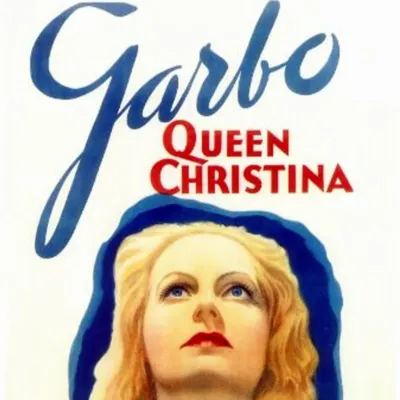
This week, we are joined by archaeologist Anton Larsson to discuss the other English-language movie about the Thirty Years War: Queen Christina , a historical romance starring the famous Greta Garbo. We discuss the multifaceted legacy of Sweden's famous philosopher-queen who oversaw the end of the long war waged by her father Gustavus Adolphus before ultimately converting to Catholicism and abdicating the throne.
We use this 1933 film to trace frenzied rise and fall of the Swedish Empire, the onetime bane of Central and Eastern Europe, which reached its apogee during the era of Christina. Surprisingly few Swedes today realize that their country was once the center of an overseas empire, but their neighbors sure haven't forgotten. Sweden, seemingly existing on the periphery, provided a continuous stream of both trade and warfare in a surprisingly vast swathe of the world across many different eras. We look at (hopefully) the last of these while also chatting about the film and looking more closely into the life of the real-life Queen Christina.
Hosted by: Liam, Russian Sam, Anton
Transcript
Introducing Anton
And we are back with another episode of Gladio Free Europe. I am Russian Sam, joined as always by my co-host, Liam.
Good morning.
And today we have a great guest with us following on from our previous episode where we examined the 30 Years' War with Matt Christman. We have a guest to talk about both a classic piece of Hollywood film as well as the history of Sweden in the 17th century, which is really a much crazier story than I would have expected. And we're going to get into that.
Absolutely. So much going on there. The movie for this episode is Queen Christina, of course, by Greta Garbo, one of two movies that at least reference the 30 Years' War in English. But it's not very 30 Years' War related thematically. I feel like I expected it to be more heavy on that element. But I mean, there's some of that. We'll get to it.
Let's give it up for Anton Larsson. He's a PhD student of archaeology at Stockholm University. And he is the loudest Swede, as we just heard from him before the recording. So you guys are going to get a lot of really interesting information this one, I feel like. So Anton, how are you doing today?
I'm good. Sadly, still Swedish. It's actually a big thing for me that we're going to talk about the 17th century. And obviously, I am Swedish. I speak Swedish. I grew up in Sweden. If you look back to the 17th century, most of my ancestors were Norwegian. Then a little something called the Swedish Empire happened. And suddenly, for some reason, we all speak Swedish. Yeah, we kind of have to.
Yeah, I guess we'll probably learn a bit about that kind of expansion with this episode on Queen Christina. As Sam mentioned, we talked a lot about the 30 Years' War. We've read a lot about 30 Years' War in the last couple of weeks. Something that I've never been exposed to that much is specifically the Swedish perspective on the 30 Years' War. Generally, the books that I've read basically just see the Swedes as foreign interlopers. I know that a lot of... Protestant depictions have historically been pretty positive toward the Swedes. A lot of modern, less confessional depictions are pretty negative toward Swedish involvement. And they basically just see them as, you know, pillagers who came down from the north and prevented this peace and kept the war going as long as it did.
Sweden forgets its empire
Yeah, it's always interesting to hear about the Thirty Years' War from a foreign perspective, because in Sweden we don't really have a perspective on the 30 years' war, I think. It's both the 30 years' war and the wars immediately prior and after are very missing from the Swedish narrative. Obviously we know who Gustav Adolf was, we know about the great ship Vasa that sank very famously and so on. But we don't really have a social context to any of it. Especially not the atrocities. In for example, Poland, the things carried out by Swedish kings in the 17th century are very much a living memory. There's still Polish politicians asking for artifacts to be repatriated and so on. But in Sweden we don't really know about that. We don't remember this as a people, I think. I think if you go out on the street and ask any number of Swedish people, most people will not be able to know that we ever were in Poland or Germany.
Really?
Yeah, it's absolutely not a part of our cultural memory, I think.
Yeah, I know that on Twitter a while back, you and I were talking about how I had no idea that there was ever a Swedish Pomerania. And then you said, oh, don't worry, nobody in Sweden knows that there was ever a Swedish Pomerania.
No, no, no. Absolutely not. No, no.
It sounds fake.
It sounds so. Yeah, so generally, when people hear Sweden, they don't think great power. They think like Abba or IKEA Lingenberrys. Sort of very horny people. You know, the old Hollywood stereotype. You know.
Yeah, it's the 60 stereotype.
Yeah.
Yeah. Yeah, but this is a really unlikely candidate for a great power, and yet it happened for a very specific set of reasons in the 17th century. And that's what this episode is going to be about.
Queen Christina's reign was really the apogee of Swedish power in terms of the structural integrity, at least. But it would persist for almost another century after that.
The Age of Greatness
So this period in the Swedish historiography is known as the stormaktstiden, which is usually translated as the Age of Greatness. And that denotes the period from 1611 to 1721, 1611 being the end of the Polish-Swedish war, which gave Sweden a lot of territory in the Baltics. And 1721 being the signing of the Treaty of Nystad with Russia when Sweden lost almost all of her overseas possessions. Absolutely terrible. Yeah. Yeah.
Four of the five monarchs who reigned during this period presided over massive wars of expansion in the Baltic. Yeah. And to give you guys an idea, Sweden, even right now, it's not a very big country. But back then, Sweden and Finland taken together had a population of maybe like a million people. So they were much, much smaller and much poorer because of their climate than many of their neighbors. And yet, nevertheless, they were able to attain such great heights.
The Kalmar Union
I guess a good place to start this story would be the end of the Kalmar Union. What was the Kalmar Union, and why did Sweden feel the need to exit that arrangement?
Well, it's an excellent question. The Kalmar Union, a lot of the time you have people viewing European history from sort of this sort of Paradox Interactive point of view. And from that point of view, the Kalmar Union would be this union of Scandinavian countries. In reality, it is a very, very loose personal union in which for a period of time, the three Scandinavian countries accept a common ruler. And that does not mean that they have a common army, you know, or anything.
Iceland also is part of it, right? As part of Norway?
Yes, but Iceland, Greenland, and Finland are obviously not Scandinavian countries. And also, from a traditional point of view, they were not nations as such. They didn't have a tradition of kingship.
Right, right, right. Yeah, I think, if I remember right, Iceland was kind of a strange little fiefdom that was totally autonomous but technically part of Norway.
Yes, they're very much, in the sense of the Kalmar Union, they're very much possessions. Now, the same way that Swedish Pomerania would eventually be. And so it's a very loose union with, you know, no common army, very few common goals, peace, I suppose, which is nice. And even that very, very low grade of integration, you know, falls apart eventually. Because sooner or later, no nation is going to want to have a foreign ruler, unless you're Andorra. Otherwise, it's not very popular to have a. If you're a Swedes, it's not very popular to have a king sitting in Denmark deciding taxes for you. And once, if you, like the Swedes, have the military power to say no to that, that's going to happen eventually.
The Stures
And so, I know that the main figure that's traditionally kind of implicated in the end of the Kalmar Union and eventually the independence of Sweden is that guy Sten Sture. Is that how you say it? Sture?
Sten Sture.
Sture, thank you. Yeah, and that family comes up a lot in this period in the 16th, 17th century. And I feel like they had pretty a lot of unfortunate fates in the Sture family, didn't they?
Yeah, it's not great fun being a Sture, no. Although, obviously, it's sort of the Stures are a bit of a legal fiction in a way.
Please explain.
You have Sten Sture the Elder, who is a Sture, and then you have Sten Sture the Younger, who is sort of the last figure. And he's actually born a member of the family of Natt och Dag, but he adopts names for political reasons.
But basically, the Stures, whether or not they were a real family or more of a kind of political arrangement, they were basically the people who pioneered Swedish independence, right? And would play a pretty big role in running the Swedish government prior to the Vasas.
Yeah, I mean, for a long period of time, the Stures were effectively the kings of Sweden. Although, you know, they had the title of regent, yeah, Lord Regent. Yeah. In Swedish, riksföreståndare. That, for a very long period of time, essentially meant that they were the singular rulers of Sweden. Because although they technically had, you know, a king sitting down in Denmark, that was very much, again, a fiction, all on paper. Especially during a period of time where they didn't even really acknowledge the Danish king.
Before I started reading about the Thirty Years' War, for the last few episodes, I knew basically nothing about early modern Sweden except for the story of the Sture murders that happened in the 16th century by Eric XIV, right? He wanted to be married to the peasant woman. Oh, yeah, okay, okay, yeah, well, I'm getting ahead of myself.
Yeah, yeah, please say him.
Yes, take us back on course.
Sture rebellions and the Swedish peasantry
Yeah, so Sture launched his first rebellion in 1512, I believe it was, but a more significant one happened in 1518. And it seems like Sture succeeded because he was able to cement this alliance of peasants and burghers against the aristocracy. Is this the root of Sweden's advanced legal standing of the lower estates compared to its neighbors like Denmark?
It's definitely an instance of it. I think it has a lot of earlier roots. I mean, the historical role of Swedish peasantry has been very independent, very strong. And that, you know, it goes back to the late Iron Age, the Viking period, where you have, you know, a lot of power invested in free landowners. That continues for a very long time. You have in the 1200s, you have the Westrogothic law code, which specifies that the Swedes have the right to elect and evict kings. From the widest sense of the word, times immemorial, the Swedish peasantry had a lot of power. And you also see this sort of alliance between the peasantry and the burghers in the Engelbrekt rebellion of 1434, for example, when the peasants and miners and burghers joined together to depose King Eric of Pomerania, then king of the Kalmar Union. And also the petty nobility as well, of course.
I don't want to overgeneralize here, but I kind of wonder if, like, this does seem to be kind of part of a broader period of late medieval transition you see across European history, where there basically was in, it seems like there was an uptick in popular violence from the late 14th up until like maybe the early 16th century.
Yeah, absolutely. I mean, especially later on during the reign of, you know, Gustav Vasa, you see a lot of rebellions. It's definitely both coming from the lower aristocracy and the peasantry.
Yeah. And that's one thing that I get the impression that the 16th century, the Sture era, was just very chaotic for Sweden. You know, it begins with the kind of violent ascension to independence and then all these different various rebellions after independence is achieved.
Yeah, absolutely. I mean, after, I think it's 1596, you have the Klubbekriget, which is a Finnish rebellion, the Cudgel War. After that, you almost had no rebellions in Swedish history after that. I mean, you have a few minor sort of uprisings and riots, but nothing compared to what you see in the 16th century.
Sten Sture, he would meet a bad end. He ended up taking a cannonball to the knee in 1520 and died shortly thereafter. But his followers wouldn't be so lucky, as we'll get to in a second. But one of the interesting things I came across while doing research for this episode is that Sten Sture was accused of heresy by the church. I'm just wondering if this is a case of Lutheranism spreading or if it's just some very creative interpretation of you being against the king who is chosen by God, therefore you're a heretic.
Yeah, it's, I'm gonna admit it, I'm not a historian of the church, so I'm not quite sure about the spread of Protestantism in Sweden. But as far as I know, those accusations of heresy are basically an excuse just to execute them. And that's mainly founded in how Sten Sture the Younger acted against Gustav Trolle, who was the Archbishop of Uppsala, but very much beyond being the primate of Uppsala, he was also very much King Christian's man. So, in acting against the king's man, who was also a man of the church, it was an act against the king, but then also heretical in a way. That was the argument proposed by the Danes, at least. Right. So, it's yeah, I mean, there could be shades of early heretical thinking, but I think it's doubtful.
The Stockholm Bloodbath
Right, and speaking of that king, King Christian II would be coronated in 1520. And as part of his coronation tour, he stopped over in Stockholm, where he issued this notorious proclamation giving amnesty to everyone who had sided with Sture. It's like creating this impression of, oh, well, let bygones be bygones. I'm the new king. We can figure this out. And instead of reconciling with them, he just, again, has all of them accused of heresy and has something like 100 people killed in the span of a couple of days. This was the Stockholm Bloodbath.
Yeah, unlike the Thirty Years' War, the Stockholm Bloodbath is very much alive in the popular imagination of Sweden. Probably because Gustav Vasa ended up using it, you know, as a major propaganda piece, obviously. But it's very much this sort of national trauma. It was a really shame, big shame that it happened in 1520. So obviously, the 500th anniversary was during the start of the corona pandemic. So there's all these things planned, a big conference and so on that had to be postponed. It's a big shame.
Wow. So this is really like a big part of Swedish identity today, the fact that this massacre happened half a millennium ago.
Let's put it this way: even though I am from a formerly Norwegian province who did not have Gustav Vasa as their king, in fact, Christian II was my king as a Norwegian, so to speak. Even though we have this history, in school, we were never taught anything about Danish or Norwegian history. We were taught about Swedish history. And when I was 12, I think, we put up a play in my primary school. I actually played Gustav Vasa, myself.
Oh, nice.
And it was about the Stockholm Bloodbath and the subsequent uprising. You see, I have all these little 12-year-old kids running around pretending to be German burghers asking for various privileges. And, you know, it's very strange. It's very much a part of, you know, the popular memory.
Yeah. Well, that kind of reminds me of how in the United States, there's kind of this vague awareness of the Tudor period of England. And so a lot of Americans have some understanding of who Henry VIII and who Mary and Elizabeth were, even if they don't really know anything about prior or later British monarchs. Just that for that reason, just both of these periods became part of kind of the national myth-making. Even if, like, in both these cases, the United States and formerly Norwegian provinces weren't actually part of Sweden or England at all. It became part of this kind of national cultural consciousness, regardless.
Exactly.
The Vasas
Well, we have, I think it might probably move on to the Vasas, who are really the family that we're going to be talking about here. That, of course, being Queen Christina's family, that being the family of Gustavus Adolphus. You mentioned the ship, the Vasa, which was this famous 17th-century battleship that I think made it about five minutes into the Baltic Sea before it sank.
Yeah, big embarrassment.
Yeah. But at the same time, it's this incredible, because it's been so well preserved, it's a great kind of, you know, a testament to the memory of this, you know, period of former greatness, right? And so I get the impression that the name Vasa is somewhat associated with this 17th century imperial period in Sweden, right?
Yeah. I mean, the Vasas are interesting because, I mean, they're obviously a very, very much a real family. But the name Vasa doesn't really appear until the late 1500s.
Oh, really?
And then, I mean, it's used for, for example, the ship Vasa, but from a historiography point of view, it's not really popularized until the 1700s. Because obviously, you have all these noble families running around, but in the actual late Middle Ages and early modern period, people weren't really calling themselves by these names. So Gustav Vasa was never in his lifetime called Gustav Vasa. He was called Gustav Erikson. That's what anyone would have called him or just the Erikson, maybe.
Just the patronym, yeah.
Yeah. Yeah. So, I mean, the noble name is very much, you know, a later add-on. But today, we absolutely associate the name Vasa with the 15 and 1600s, very much. They completely dominate the period.
And so you mentioned that. So when you were a kid in school, you played Gustav Vasa in the play.
Gustav Vasa
Can you tell us a little bit more about Gustav?
Well, Gustav is a very enigmatic figure in a lot of ways. He comes from this family of high nobility who just a few centuries before had been petty nobility. He is taken as a hostage by the Danes. He hears of his entire family almost being executed by the Danes. He escapes captivity, flees to Sweden, raises a rebellion very heroically, is elected the king, casts out the Danes, you know, forms the first true Swedish kingdom, and, you know, so on. But he's also very much a brutal tyrant in many ways, very angry guy, prone to violence.
Oh, so we see a bit of his son in him then.
Yes, very much so. I mean, more calculated than his sons.
It's a lot like Game of Thrones. I mean, the Stockholm Bloodbath is obviously very Red Wedding.
Absolutely.
And then Gustav is also a lot like a lot of these Hergarian kings, in that there's this one king who's very competent, and then he has a lot of really incompetent sons. It tends to happen. And he's one of those kings where multiple of his sons would end up succeeding him, which I feel like is always interesting.
Exactly, yeah. And Gustav, Gustav, not a very nice guy. Highly competent, I would say. His sons, each of them, they have this aspect of his personality, but not the whole thing. Yeah. And that's what makes them weak in a way.
And I think part of, of course, I think an important part of why his sons would...
From elected to hereditary kings
The fact that his sons would take the throne was not initially a given, because didn't Gustav essentially abolish the electoral system that had brought him to power and instead kind of instituted some kind of hereditary monarchy?
Yeah. So previously I mentioned that according to early medieval law, the Swedes had the right to elect and depose kings. And that was theoretically also the case during and after the Kalmar Union. In a lot of cases, not so clear-cut. I mean, the whole election thing, it's not like you ran an election campaign and then people picked the best candidate. Usually there was one candidate, and you could say yes or no. And a lot of the time, saying yes or no, you know, wasn't really an option either. But Gustav, he very much, you know, he comes from this family that has no historical claim to a throne whatsoever. And he sort of makes himself the only viable candidate and then ensures that his sons are also the only viable candidates. And then after that, you kind of stop choosing. Obviously, I'm not a historian of constitutional law either, as much as I'm not a historian of the church.
But you have a breaking period here during the reign of Gustav Vasa, where the formality of choosing a king stops even being a formality. You just get the king that, you know, you get.
Yeah, which you see.
Sweden on the periphery
It seems to be kind of a process you see in like one that Matt was talking about is that you see a similar process throughout Europe where a lot of electoral systems in Western Europe sort of dissolve away. And so the only ones remaining are sort of on more of the periphery of European Christendom, you know, like in Denmark and Sweden, in Poland, in Bohemia.
Yeah, I think that's a very running theme through Swedish history that we are on the periphery of history. Yeah, that's obviously oversimplification.
I think one thing I think is just to kind of underscore that point here is that I think that I'm getting ahead of myself here, but I think that a lot of English language depictions of early modern Sweden have the same kind, you see the same kinds of oversimplifications and exoticizations that you see in discussions of the Viking Age, because it's just understanding that Sweden and the Nordic countries more broadly are only on the periphery, are kind of beyond the horizon of European politics. And then suddenly they emerge, whether it's the Vikings at Lindisfarne or whether it's Gustavus Adolphus coming down, you know, and occupying half of Germany. I think there's this impression that the inscrutable Swede only, you know, this kind of sleeping giant only enters European history to wreak great chaos or achieve great things before, and then, you know, goes back up to the mountain.
Yeah, it's very much like Sauron, you know, suddenly emerging in the third age, yeah, third age, which is orcs pouring forth.
Yeah, yeah.
You do get that kind of impression, but I mean, if you look at the historical material, I mean, for example, the Viking Age, Scandinavians were very much present in Northern Europe prior to the first raids at Lindisfarne. Well, it's constant trend. Especially with the late Roman Empire, you have tons of contacts and you have so many Roman finds popping up in Sweden.
Yes, they call it the Roman Iron Age, that period.
The Roman Iron Age, yes. And the first part of the Iron Age is even the pre-Roman Iron Age. 500 years of Swedish history defined by it being prior to contact with the Romans.
Yeah, and I believe the migration era is sometimes called the Merovingian era, right? Because of the prominence of Frankish kind of material culture in Scandinavia.
Yeah, in Sweden we don't use that term, but for example in Finland they use the Merovingian period. In Sweden we use folkvandringstid, which I think is a bit of a nationalist sentiment.
Interesting. Yeah, yeah, like the folk movement. Yeah, we've talked a lot about the kind of the problems with the idea of folk migration in ancient history. I feel like one other thing here is that there's this idea of kind of Scandinavian remoteness. I think it's maybe slightly informed by the 19th century policy of Swedish neutrality, maybe. I'm just going to guess. But I think that a part of why it's quite incorrect is that it's very Western-centric because I get the impression that in the Kalmar period and then into the early modern period, Sweden had incredibly active relations with continental Europe in the East, just not so much with places like France and Italy and England. Because there was constant warfare and diplomacy with various Slavic countries and with the Baltics. Gustav I would expand into the Baltics to a great extent. And in the Kalmar era, I understand that a lot of rulers had a lot of Slavic ancestry, a lot of marriage ties to Poland and Russia.
Yeah, absolutely. I mean, and that is the crowning achievement of that is obviously Gustav I's son, Johan III. There's a lot of numbers here. But Johan III's marriage to a Polish princess and his son, Sigismund, then becoming the king of Poland-Lithuania.
Yes, we mentioned Sigismund a little bit in the last episode. Even prior to that, you do have a lot of connections to the, you know, the Baltic coasts. But let's rewind a bit.
Gustav and the Hanseatic League
Let's get back to Gustav and what exactly he did. As Anton said, not a very nice guy, but very competent. He was the one who, although the Swedish age of absolutism wouldn't happen for another 150 years or so, he is often credited with being the one who laid the foundations for it. He created a rudimentary bureaucratic structure, much of it being staffed by foreigners, which was actually a really big sticking point for people in Sweden. In fact, the term rule by secretary has negative connotations because of this throughout this period. And he had very tight relations with the city of Lübeck in Germany, which was then a part of the Hanseatic League, which actually helped him to defeat Denmark and capture the Swedish throne. So I guess that's just a long-winded way of asking to what extent was Gustav Vasa really the precursor for what we would see in the Swedish 17th century and to what extent was he engaging in a more medieval form of rulership?
Well, it's a bit of both, I think. I mean, he's very much a fundamental figure to the creation of a modern Sweden. And very much, you know, he did, you know, carried out the Reformation and seized all the, you know, the lands, the church, solidified the hereditary kingdom, as you said, formed a rudimentary bureaucracy and so on. But at the same time, very much a medieval rule. And also, I think it's an interesting point that you mentioned his connection to Lübeck, where he had previously escaped to prior to becoming the king of Sweden. And in a lot of ways, he could be seen his rebellion against the Kalmar Union and the Danish crown, could be seen in a lot of ways as just a sort of this proxy revolt funded by the Hanseatic League against their competitors, the Danes.
Hanseatic colour revolution.
I mean, he ended up being deeply indebted to the Hanseatic League. Had to spend years just repaying debts for the mercenaries and the cannons and the ships and so on. Big, big problem for him.
Yeah, and we read Paul Lockhart's book about early modern Scandinavia leading up to this, early modern Sweden in particular. And it kind of mentions how the Hanseatic League was this very important connection between Germany in particular and Scandinavia, and to a lesser extent to other to the Low Countries, to France, to England. This is a huge kind of question. If you could very briefly summarize what exactly was the Hanseatic League and what did it do?
Great question. So, I mean, the Hanseatic League was, you know, putting it very briefly, it's this trade monopoly league uniting these German and German-affiliated cities from the 1100s and onwards, where they carry out a joint trade policy throughout the North and Baltic Seas, protecting their trade against competitors. I mean, that's basically it, right? I mean, it's tempting to call it this merchant republic and whatnot, but it's much too broad to say that, I think.
It's a big part of modern, the kind of modern liberal European identity, which is, you know, in a way that I don't really understand, that I'm a little bit skeptical of. The idea that the EU is somehow an extension of this kind of trade system.
Yeah, but the EU does that all the time. The EU has funded extensive research into the Scandinavian Bronze Age just for the same reason that it points towards these joint trade connections to the rest of Europe and commonly shared ideals and so on.
Yeah, like, oh, we have Greek products in Scandinavia, therefore, you know, European integration is natural.
The Dacke War
Yeah, exactly.
As you mentioned previously, and Gustav had a number of revolts crop up during his reign. The most prominent of these is one that I actually learned from you about, the Dacke rebellion, where the Swedish peasants took up crossbows against the crown. What was that about?
Yeah, so it's interesting because it's been framed very differently in Swedish historiography. A lot of the time you associate the Dacke Rebellion as being this very small, sort of provincially separatist thing going on in a province called Småland. The Smålanders are sort of historically associated with being these stubborn, a bit rude people, I suppose. But in fact, it was far beyond that small province. So the Dacke Rebellion, or in Swedish, the Dacke feud, began in 1542. And it's very much part of the counter-reformation, while also a peasant revolt for entirely other different reasons. So you have this guy, Nils Dacke, who is a rather lowly peasant. He rises up and unites all these other people who happen to be rising up at the same time. They are fighting for the traditional rights of the peasantry. They are against the high taxes being imposed. They are against them not being able to trade cross-border, which previously had been a privilege of the peasantry. Even in wartime.
Peasants could trade across the border. But they had been, you know, rules being set against that. And they were revolting against the Protestant Reformation. They wanted to bring back the thing assemblies of the old, they wanted to bring back the trade of old. They wanted to bring back the mass of old. So it could be seen as quite conservative in a way, but very much an expression of the rural peasantry being oppressed by Gustav. And obviously, as we said, Gustav's opponent, Christian, is commonly called tyrant. But in many ways, Gustav could also be called the tyrant. He committed some quite ruthless acts to put down this rebellion. And for a long period of time, this rebellion spread very rapidly. I said the province of Småland, but also took the island of Öland, a lot of woodlands in southern Östergötland, eastern Västergötland, and so on. A very, very large part of what was then Sweden fell under the influence of this sort of counter-reformation Catholic peasant republic.
And they came very close to ending Gustav's reign, had it not been for the winter season and the truce and so on that allowed Gustav to recuperate his losses, gather mercenaries and so on. And then Nils Dacke was killed in battle and the whole thing ended. But it's a very pivotal moment in Swedish history. And it's been portrayed very much as provincial separatist unrest, basically.
Yeah.
The Swedish Reformation
You know, speaking of pivotal moments in Swedish history, I think that probably if non-Swedes or at least non-Scandinavians know one thing about Gustav Adolf, it's probably his involvement in the Swedish Reformation, which I didn't realize until this podcast episode actually predated the English Reformation.
Yeah, it's very interesting, the Swedish Reformation, partially because it's, you know, the English Reformation, it's so very much associated with Henry VIII's, you know, desire to divorce, right? I've seen the Tudors, I know all about it. It's Henry and Catherine and Anne, and you know, it's all about his personal emotions, basically, from the popular standpoint. In Sweden, you don't have that at all. You have a very early Reformation being pushed to do by this guy who just wants all the land and silver in a sense. I personally wouldn't say there's much ideology behind Gustav's conversion to Lutheranism. I wouldn't say. I think it's a lot about him wanting to have control over the church's land and over the churches themselves. I think that's the main thing.
Yeah, and he would achieve that. In fact, I would guess that a big motivating factor, much like it was for Henry, was to recuperate all this crown land that had been given away over the centuries. In fact, I believe I read somewhere that crown land in Sweden before this, it constituted like 3% of territory. But after the Reformation and after the church lands were taken, the crown had something like 20% of all land in Sweden, which is what allowed them to build upon the foundation to really create a more modern state because it would give them the resources directly to actually determine what should be done.
Yeah, absolutely. I mean, taxes were paid in kind. So, you know, the peasantry who were tenants of first the church and then the crown were paying, you know, in butter, in oxen, and so on. And that constituted the base of the entire Swedish state, in essence.
That's great. The butter tax, I love that.
It's a lot of butter. Like medieval land, early modern Sweden, it's very much butter. Everything is measured in butter.
That's funny.
Gothicism
You know, before you, I think one last thing we should probably mentioned, one big thing that Gustav talked about is kind of his first kind of involvement with, as far as I understand, that's the first time since the Viking Age that you start seeing a lot of military involvement in Eastern Europe, right? But before we get into that subject, something that kind of I think sort of precedes it, which is not disconnected at all to early Swedish imperial ambitions, is the fact that in Gustav's reign, you start seeing the kind of first flowering of something that we've discussed briefly on this podcast, which is this Swedish romantic kind of proto-nationalist ideology of Gothicism. The idea that the ancient Goths, who a very kind of complicated culture or perhaps set of cultures or several political arrangements who would be involved in various ways in Roman history, the idea that those people were actually Swedish.
I think the primary foundation of this is the fact that Sweden is this isolated, upstart nation. You know, at the end of the Kalmar Union, you have this rebel king who's not even of a royal line himself, throwing out the legitimate from a continental point of view, legitimate king, creating a state of his own. In order to legitimize all this, you need to have a glorious past.
Yeah.
Because they have nothing else to go on. So you start seeing all these claims about Swedish prehistory and early history, which are, you know, from a modern point of view, complete nonsense. But from their point of view, very significant. I mean, we have, you know, Gustav Vasa, he's Gustav I, right? And then after him, his son, Eric XIV.
There's a lot of Erics, right?
Yes.
Like half of them are fake.
Most of those did not exist. Yeah, most of them are completely fake. It's... Yeah, they date back to you, Viking Age stuff. And then you have Johan III, and then Sigismund I, and then you have Charles the Ninth, who I'm sure we're going to talk about. And the 9th, again, there's a lot of Charles's. So they start inventing these genealogies. Johannes Magnus, for example, he writes the Historia de omnibus Gothorum. I can't pronounce the rest of it, but it's all on that. Yeah, the history of the Goths and the Swedes in English. And they trace the royal line of Sweden back to Magog, you know.
Oh, we tweeted, you know, just a couple episodes ago, we talked a bit about Magog, how that biblical figure figures very much in medieval and early modern genealogies, especially in Ireland and Scotland. It's very strange how they, you know, came down that guy specifically.
But I think according to the line proposed in this bill, Gustav I, he is actually the king number 143rd, I think, of Sweden. Which is a lot.
Going back, yeah, going back to like the biblical era, the sons of Noah, yeah.
Yeah, and then you have a lot of indistinct sort of Siga II and so on that no information on whatsoever.
Is there a king called Ring? I also thought that was kind of cool.
Yeah, there's a lot of really random ones with no subsequent information. But then you have like, I think, king number nine, Odin. You know, it's like, okay, yeah.
Yeah, even in England, a lot of the early Anglo-Saxon kings claimed descend from Odin.
Which is interesting how this sort of Germanic figure, you know, keeps clinging on.
Yeah, yeah. And also, it's funny. It's like, it shows, we talked about this in the earlier episode, but it shows this kind of blending of various kinds of genealogical traditions to appeal to a wider audience. So, you know, in Sweden, the figure of Odin as putting Odin in part of your heritage has some obvious prestige. But if you're trying to explain your impressive royal pedigree to somebody from outside Scandinavia, they're not going to know who Odin is. So that's why it makes sense to say, oh, but Odin was himself the grandson of Magog, who was the grandson of Noah. It's a very interesting fusion of biblical history and Norse mythology.
Yeah.
And then I feel like with Gothicism specifically, you see this injection of the classical literary tradition as well. So any Latinists will have a very, well, any Latinists are going to know who the Goths are because they appear constantly in Latin and Greek scholarship from the late Roman era and early medieval period. So if you can say that those Goths, whether you love them or hate them, we were Swedes, then suddenly this isolated Swedish nation basically becomes at the center of European politics.
Yeah, and I mean, whether or not the Goths are in any way connected to Scandinavia, that's beyond me. I mean, it's not my, it's not my spurious. But it was so easy for these guys in late Middle Ages and early modern period that the names themselves were so similar. You have Götaland, and then you have Gotland as well in the Baltic.
Yes.
And it's so easy to make that connection.
The Goths.
Yeah.
The Geats.
So on.
Usually, most scholars do think there's probably some connection there, but it's so far back in the past and it's so uncertain that there's certainly no, there's certainly like there's certainly no direct connection. You know, the Swedish people are not Goths. You know, that is a, that is, you know, nationalist bullshit, the kind that comes up all the time in the early modern period. That is simply untrue. There's no way for any Swedish monarch or Swedish state to claim that any achievements or atrocities associated with the Goths, have anything to do with modern Sweden. But that's actually what I find so interesting about Gothicism specifically, because when we looked at the legendary genealogies a couple of episodes ago, much of this was very clearly meant to be the genealogies of particular ruling dynasties to explain why they have the right to rule. Whereas Gothicism really did seem to be much more in a proto-nationalist bent, in that all Swedes were considered to be the descendants of Goths, which really makes it stand out from the rest, I feel like.
Again, it's this period where the Swedes are desperate to have their own identity that marks them out as a special people, and they are clinging on to what they have. Yeah, absolutely.
Livonia and the Baltic
So, what exactly would the Swedes use this ideology for? Well, conquest, of course. And Gustav's final years, although by this point he was very sickly, he was mostly stuck in his bed, from what I understand. But a couple of years before he died in 1558, I believe it was, a war broke out in Livonia because Russia was trying to take over that region, and the local nobility were appealing to Sweden for aid. And in that way, the province of Livonia was integrated into the Swedish Empire in 1561, the first overseas territory of Sweden.
Yeah, it's this very interesting phase where you see this continuation of, you know, early in the Middle Ages, you have the conquest of Finland, obviously. And then you don't really have that much expansion eastwards for quite a long time. You do have the Schechsalm War of 1321 to 1323, I think, but you don't have that much expansion. And then suddenly, you know, the east becomes the focus.
Yeah, I mean, it's just really interesting because the Baltic was for a very long time, like the place to go if you were a Scandinavian going all the way back to the Viking Age. And a part of this was the question of who exactly controlled the Baltic trade, which was much more important than I had realized when I started researching. Yeah, so first of all, why was the Baltic so important? And second of all, why was Sweden specifically able to conquer it rather than Denmark or another country? I believe Denmark was also an ally of the Swedes in that war.
Yeah, I mean, it's obviously a very difficult question to answer, but I think a primary factor behind the Swedish success, contrary to the Danish failure.
Yeah, was it the Hansa? Was it the Swedish state?
Obviously, the Swedish state and the sort of Finnish holdings of it are very well situated to take over the Baltics, for example, just from a purely geographic point of view. But then you also have access to the resources necessary, tar, pitch, timber, you know, in extensive amounts. You have Denmark that is basically deforested. You have Norwegian provinces of Denmark, obviously, for example, my own, which in the 1500s were a major source of timber, which in span of just a few decades essentially becomes heavily deforested. By the 1800s, my home province is completely deforested, having been previously a major exporter of timber. So Sweden, from that point of view, had the major advantage that they could create these ships necessary. On the other hand, Sweden has never been marked for its seamanship.
Really? Not like Norway that way.
No, no, no, absolutely not. I mean, we have famously have the Vasa that sank because of poor workmanship.
Of course.
We have never been a very naval nation. Although we have controlled the Baltic, we have never been known for our naval successes. If you look at the wars with Denmark, for example, I mean, you have a few victories, but generally, a Swedish war in the early modern period begins with the complete destruction of the Swedish Navy. And then you have to get the guys on land to stop marching. Yeah. That's generally how it works. So Denmark has much more of a tradition of seamanship, I would say, than Sweden does. But it's down to geography.
Eric XIV
We should probably move this forward so we can get to Queen Christina, who's really going to be the main focus of this episode. But before we rush too fast, I would love to just go over a few quick things about the kind of middle Vasa period. We mentioned a bit that Gustav I's son would be similarly brutal, probably much more so, that being Eric XIV. He's somebody I know a bit about. I understand that he's pretty well known in popular Swedish history, right? Because he had a kind of unusual life. What is the kind of modern perception of Eric XIV today?
There's a lot of debate about him. I mean, not necessarily in the public culture, but certainly within, I mean, you know, among historians. I personally feel very sorry for the guy because he clearly had a lot of deep-seated mental issues. He famously became insane, as they say, and carried out a lot of really weird acts. Some of them... Yeah, well, most famously, you know, he married his much younger peasant mate. Well, much younger. I mean, from a royal perspective, I don't think 17 years is that. I mean, that's kind of like Leonardo DiCaprio type of thing. But he did marry his peasant-born mistress out of love, from his perspective at least. And I think, I mean, that's a sign of madness to many, but it's also deeply sympathetic in a lot of ways. And he married for love rather than, you know, for a dynastic alliance.
Then, after that, you know, it starts breaking down. He becomes becomes very paranoid, does a lot of really weird stuff, famously executes a couple of relatives, the Sture murders, yes, another massacre, yeah, of the Sture family, yeah, yes, in 1567.
And didn't he? I know what I've heard is that he personally killed them, right? Like, he just went in and stabbed them. Is that true? Or is that in the Goshman?
I believe he stabbed, I can't really remember, I think he stabbed at least one person himself. And then the rest, I think, he didn't carry out himself. But he, he, after, well, basically, he has a couple of relatives and their allies arrested on charges of treason. He's in this paranoid state. He goes to meet one of the captives and then sort of panics and stabs the guy. And then, as he flees from the scene, he orders his men to kill the rest of the prisoners. And then he escapes into the woods. So he is lost in the woods for almost a week, dressed as a peasant, found in a confused state, and asks God for forgiveness, asks the relatives for forgiveness and so on. And, you know, makes sure to free his brother, who's in prison, executes his, well, his counselors execute his closest man and so on.
And from that point on, it's very clear that, oh, yeah, he's lost it. He's lost it. Which eventually led to his brother Johan violently seizing the throne, Eric and his wife Karin, this woman of peasant birth, being locked up for a very long time. And obviously, Eric himself dying. Eric is eventually poisoned.
I believe he and his wife had several children while they were imprisoned, right? So he was alive for a few years before he was poisoned.
Yeah. No, no, they kept him locked up for a good long time. Yeah, he just kept plotting, so they killed him eventually because he got too annoying.
Yeah. And remind me from, I might be getting this wrong, but wasn't his death initially assumed to have been caused by natural, would be natural, but then recently his bones were examined and some scientists determined that actually, yes, it was arsenic?
I think it's not until the 17th century that people actually start considering that it might have been poison. And then, you know, in the 1800s and 1700s, that they, you know, historians are a bit, is it true? Is it not? And then in the 1950s, they opened a grave, examine his remains, and find, oh, Jesus Christ, that's a lot of arsenic.
Oh, that's great.
Yeah.
Yeah. I know that one of his, some of his children, I believe, would become mercenaries abroad, which kind of, I feel like, prefigures the later involvement of Swedish forces across the Holy Empire.
Johan III and Sigismund
But before he got ahead of himself, Eric would be succeeded by his brother Johan, who was also not a great guy, right? Also, somewhat bloody.
Yeah, I mean, all of them are to varying degrees. Personally, I think Johan is one of the most interesting because he's not this sad, sickly man as Eric was. He's not just this brutal guy that his later successor, Charles IX, was. He's very much a spiritual and cultural man. So he's very fascinating in that way. But yeah, he wasn't particularly nice either.
And Johan would be very instrumental in expanding into the Baltic even further, right?
Yes. And obviously, as I mentioned previously, I had this alliance with the Polish, I married the Polish princess. And that's, of course, very important because then his son would be Sigismund.
Yeah, and he kept trying to reconcile Protestantism and Catholicism. And after a certain point, it was just very annoying. His son Sigismund outright converted to Catholicism and became the king of Poland, Lithuania, a couple of years before he took up the Swedish throne. That was in 1592. And yeah, I imagine that was a source of a lot of discontent that suddenly this country that had been Lutheran for 50 years at this point is suddenly just.
Yeah.
Sigismund is a pretty interesting figure. I feel like it seems to me like a great missed opportunity from a Swedish perspective, right? Because he had this incredibly vast realm going from basically the Arctic Circle on paper up down to the Black Sea, given how big Poland was at this time. But in practice, from I understand, he was basically only king of Poland, right? And that his authority over Sweden, his birthplace, was incredibly flimsy.
Yeah, I mean, again, it's the same thing as with the Kalmar Union.
Exactly.
On paper, you have this fantastic union, you have Denmark, Sweden, Norway, Finland, Iceland, Greenland. It's enormous, and some Baltic territories as well. But in reality, you know, very flimsy rule over the Swedish and Finnish part of it.
Yeah, so then, of course, Sigismund would be pretty bloodlessly, I understand, overthrown, right? Because he wasn't even in Sweden at the time. He ruled from Krakow. And then his cousin basically seized the throne, proclaimed himself king.
Uncle.
Yes.
The uncle.
Yes. It's always the uncles, right? It's like, you know, Scar and the Lion King, the treacherous uncles. Never trust him.
Yeah, never, never trusted uncle.
Yeah. And but basically, this led to this very interesting period of long-term tension between Poland and Sweden that would go on for about a century. There were existing tensions, more kind of geostrategic tensions between the two countries, but now there is this very interesting dynastic argument where the Polish Vasas wanted to reclaim the Swedish throne and would try to do so for several decades. And the Swedes obviously had other plans.
Charles IX
This was when pretty soon after this, you start seeing Charles IX, who really cements the power of Lutheranism and probably ends, as far as I can tell, any chance of reconciliation with Catholicism. And then, of course, the very famous Gustavus Adolphus, most important to this episode as being the father of Queen Christina, most important to history as being the guy who totally changes the course of the Thirty Years' War and ensures that the Protestants have a fighting chance and sort of win the peace of Westphalia in the end.
It's a very tremendously important period of Swedish history. I should note, though, that you mentioned that Charles IX sort of sort of solidified Lutheranism, which he very much did. But as far as I understand, both him and Eric, his brother, actually were more Calvinist-oriented.
Oh.
Which is interesting.
That is interesting. I didn't realize that. It makes sense given that, you know, so many of the Protestants in the Thirty Years' War were Calvinist, but I didn't realize that the Swedes, too.
Yeah, Charles IX, he was very focused on Mosaic law. He introduced a lot of new laws with the death penalty, for example, for sodomy, bestiality, witchcraft, infidelity, and so on. Very much in that Calvinist tradition.
Which is also certainly a broader European trend, this codification of religious law leading to things like witch trials and increased, like you said, increased homophobia.
Duke Magnus
Before we move on, I should also mention that not a lot of people know this, but so we've been talking about the sons of Gustav, Gustav I. We talked about Eric XIV, the madman. We talked about Johan III, the sort of conflicted quasi-Catholic. We talked about Charles IX, who usurped his nephew Sigismund. There's also a fourth guy.
Magnus.
Oh, Duke.
Magnus, son of Gustav Vasa. Can't remember which in the order he was, but he's the only one that never became king.
He was the third son.
Third son, yeah. And he was also, as they said back then, insane. There's a lot of folklore about him seeing mermaids in the castle moat and trying to reach them and falling out of Vadstena Castle and so on.
Yeah, but he was also insane.
And the Vasas have something going on.
Yeah, he was also troubled, put it that way. So it's interesting that there's a lot of sort of hereditary issues in this family, I would say. Because I mean, out of two out of five sons.
Yeah, a bit of the Targaryen madness.
Yeah.
Yeah, Targaryen madness.
Gustavus Adolphus
And was any of that present in Gustavus Adolphus? Because he's seen very favorably through history by Anglo-historians. How is he and his kind of temperament seen in Sweden?
I think his temperament is seen very positively compared to both his successors and his predecessors. I mean, Gustav Vasa is seen as this powerful but you know ruthless and angry king. We have Charles XII later on who's very much a madman as well. I think Gustav II Adolf, as we call him, he is very much seen as an almost rational figure, which is weird considering that it will conquer the entirety of the Holy Roman Empire idea.
When I was doing research for the 30 years episode, I came a lot of talk about how Gustavus Adolphus is overrated, how he's overhyped. It's just hagiography, propaganda. He really wasn't that good. But the more I read about this guy, the more impressed I become. He was clearly very affectionate. He knew a lot of languages. He had great relations with pretty much everyone that he met personally. And he was just very willing to put himself on the line in a way that you don't really see that much in history. He was very much leading from the front. There's almost this holy aura around him, I'd say. And I found this really great quote while I was doing research. This is from the farewell address to the estates that he gave right before he went over to Germany. And it reads: And since it is wont to fall out that the pitcher is born so often to the well that it is broken at last, so will it be with me that I, who now in so many dangers and occasions have shed my blood for the welfare of the Swedish realm, though hitherto by the gracious protection of God without forfeit of my life, must lose it also at the last.
Therefore, on this last occasion before my departure, I would commend all of you, the subjects and the estates of the realm, present and absent, to the care of Almighty God in soul, body, and estate, in the hope that after this evil and painful life, we may, by God's pleasure, meet once again in the heavenly and eternal life and gladness which God prepared for us. So he's just saying, Yeah, there's a good chance I'll die, so this might be the last time I'm talking to you. But keep up the spirit, keep up the good work. And I guess all of that is to say that he was just very charismatic, very forward-thinking, and also very warlike. His intervention in the 30 Years' War, in fact, was his third major war, I believe it was. Yeah, something like that. Yeah, he had a lot of experience prior to that.
Yeah, and always leading from the front, getting his horse shot from under him. In fact, in one of the letters that he wrote to Oxenstierna that I read, he's just like, Oh, sorry, I can't describe the battle to you in more depth. My hand is sore from all the shooting, basically. And I just can't imagine a more impressive monarch than that.
The military modernizer
But let's get to what he actually did and what kinds of reforms he instituted. Like, it's famously, of course, he was the great military modernizer, right? Like, he was the first one to have uniforms, as far as I understand, in any modern European army. He, you know, despite the fact that Sweden actually had a smaller population than Denmark at this time, which kind of shocked me to learn, he had so much more success in the field than the Danes ever could hope to.
Not that the Danes said we would go to the war, but I mean, you obviously talked about the 30-year wars priorly. But from a Swedish point of view, a brilliant mind at war and above all, bureaucracy. And perhaps beyond that, he also had the support of other brilliant minds. He was very good at, you know, attracting leadership. He's a very fascinating figure.
Yeah, absolutely. He also did something to reform the conscription system to make it more rationalized, part of this trend that we keep seeing where Sweden is sort of ahead of the pack in many of these regards. And we'll get into more specifics later, but basically, he was able to create a system that was able to bring in both reliable tax revenues as well as to have actual population rolls to check out which people are going to get conscripted. Because again, Sweden is a very small country, only around a million population in both Sweden and Finland, which was part of the kingdom of Sweden. And despite that, because they had a lot of innovative reforms for their time, they were able to punch way above their weight. Although not very time would eventually catch up to them as we'll get to.
A brief golden age
That's what it seems like from like, you know, a foreign perspective, the Swedish golden age, if whoever you want to call it, it was a very bright but very brief period, right, Anton, where you had like all this huge involvement in international affairs, particularly violent military interventions. But then by the middle 18th century, Sweden seems to no longer be capable of that.
Early 18th century, I would say. Yeah, you have a period of this, you go from having this under Gustav Vasa, this upstart little rebel nation rising up against the Danes with no royal heritage. And then you suddenly get, you know, the great power era, as we say. As we say, as we mentioned in the beginning of the podcast, we don't say the Swedish Empire in Sweden, the Great Power Age, and then suddenly that ends with Charles XI, and then you get nothing. You get constant losses and the status quo, and nothing. Although you do have this sort of change in policy where you start seeing, for example, scientific advancement instead, a big focus on the natural sciences and so on. But yeah, there's a period of time where Sweden dominates from a military perspective. And I think a lot of that is down to luck and appearances.
I mean, it's much like, well, I hate to do a you know, Godwin's law thing, but much like Hitler, much like the Third Reich, the military conquests were simply not sustainable. I mean, a very small population in a very large kingdom, even though natural resources were boundless, you could simply not mobilize that type of military power for too long. I mean, even during Gustav Adolf's reign, you see an increasing reliance on foreign mercenaries, for example. You have an economy almost completely built on taking off more and more debt and bringing foreign investments. It's very unsustainable.
Right, exactly. And there's just this general, like, basically, the way I understand it, the Swedish Empire was really built up by the fact that they built up this massive infrastructure to enlist peasants into the ranks, but they also needed the money to keep going. So they had to be in an almost constant state of war. And that's where Gustavus Adolphus really shone, from what I understand, he was the first one to really understand that you don't necessarily need to provide all the resources to the army per se. You just have to get them to foreign territory for them to make a living for themselves by living off the land, to say euphemistically.
Yeah, and that has obviously then led to the very poor reputation of Swedish troops in Germany and Poland, for example.
Yeah. Although, from what I've read, it seems like Gustavus Adolphus actually was able to keep a good amount of discipline within his ranks while he was still alive. He had a very strict code of morals. He said that his troops couldn't go around killing civilians, that they couldn't burn down churches, that they had to pay for the things that they take beyond the bare necessities like food, etc. And he, in fact, did have people executed who went against these rules. But after that personality just ceased to exist, there was no one to take his place, and things got increasingly less organized and messier on the lower levels.
Yeah, it's as usual when the sort of idealized general dies, things go south. I mean, the same thing with, obviously, it's a very different scale, but you know, Alexander the Great and his generals, once the big guy dies, it all devolves. So you have this unifying figure who could keep things together and then eventually, you know, it falls apart.
Maria Eleonora
And part of keeping it together is making strategic marriage alliances, which Gustavus Adolphus did in 1620, I believe it was, to Princess Maria Eleonora of Brandenburg, which is that bit of Germany that's like right in the northeast. He married into this family. He married this woman who he didn't particularly like and she would form this obsessive attachment to him. She was also not the most mentally sound person out there, as we'll get to in a bit. It seems like she really loved him and he just found her to be a nuisance, basically. It's really quite sad.
Yeah, everything indicates, as far as I know, Maria Eleonora was deeply in love with Gustav Adolf. Him on his part, maybe not so much. He did have love in his life. When he was younger, he was deeply in love with the courtier Ebba Brahe, but he was unable to marry her because it was not a good dynastic match, although the Brahes were a very prominent noble family. And he also had an illegitimate son, Gustav, funnily named, with a camp follower.
Yeah, Gustav's son, literally.
Yeah, they do like repeating the names. I should note that he was one of the kings that had the smallest amount of illegitimate children.
Hey, it worked for Eric XIV.
Yes, his predecessors had a lot of more ones. I believe that Eric XIV had, I think, six children out of wedlock. John III had, I think, four. Gustav's father, Carl IX, had one, and then Gustav himself had one, and then later Charles X had, I believe, five, I think.
Judging by the standards of the time, Gustavus Adolphus, good guy, quite respecter. Well, not respecter, but at least he wasn't sleeping around like the other guys. But anyway.
Yeah, he's relatively well-behaved.
Christina's birth
One of the things that Maria Eleonora really agonized about was that she wasn't producing a male heir. She had one little girl who died shortly after birth. Then Christina was born in 1626. And shortly after that, there was a boy, but it was a stillborn again. So it just did not help her mental state.
Yeah. I actually think you might be a bit confused about the dates there, because I think at first there was a stillborn daughter, and then there was a daughter born called Christina, who dies after about a week. And then there's a boy, and then there's our Christina. So there's actually, there's actually two Christinas. Yeah, it's very weird.
Yeah, it's a weird thing that they named the new child after the dead child.
It's a thing.
Oh, yeah, that was common back then.
Yeah, very creepy.
All right, well, let's take a quick break, and then I think we should get back in to talking about this, the living Christina, both the real Christina who had such a great impact on Swedish history, and then the Christina as remembered by the Swedish folk memory and the American folk memory in Hollywood.
Queen Christina, the film
So we spent a while talking about the Vasas and Swedish history in general, but now let's get to the meat of the episode, the figure that it's all about, Queen Christina, both in her historical personality and the one that's been reimagined by the 1933 film.
Right, and this is the film Queen Christina, directed by the Soviet Armenian filmmaker Ruben Mamoulian, interestingly. He has a heard of this guy, but he was a really big theater director, starting out in the Caucasus, moving on to England, eventually settling in Hollywood. His mother was actually a theater director in the Tsarist era, which I would think was probably pretty unusual. And then he ended up being discovered by another Russian émigré in London who was the opera singer Vladimir Rosing, who basically introduced this guy to Hollywood. One tiny note about that guy, Rosing, the singer, is that that might not sound like a Russian name. It's because he himself, funny little note, was descended from Swedish POWs who were captured in this era and ended up settling in Russia. So I think it's kind of a funny little link here. Mamoulian would best be known for his musicals.
He did a lot of early Hollywood musicals as well as stage musicals. If you've heard of Oklahoma and Carousel, he brought that to Broadway. And he also did some more serious films. One of them that I've seen, which is pretty good, is the 1931 Jekyll and Hyde. Really old, really creepy, very suggestive too, which is something you see with Queen Christina. He made very pre-code, you know, much more frank depictions of sex than you're expecting to see in a 1930s movie. And this particular project was largely chosen due to the insistence of the lead actress, the famous Greta Garbo.
Greta Garbo in Sweden
And now, Anton, before we recorded this episode, you told me something which shocked me, which was that Greta Garbo herself is not very famous in Sweden.
Yeah, right. I mean, she is famous in the way that people know of her name, but I think it would be quite rare for someone to actually have seen her movies, I think. And that might, in one way, be because, you know, they might be difficult to access. Maybe she was very famous in her own time, but now have been largely, you know, when people don't watch 1930s movies anymore. But I think she's as a name famous, but in terms of the filmmaking itself, pales in comparison to, for example, certain stars of the Ingmar Bergman period. Although she is featured on the, I think it's the new 100 crown bill.
Oh, really?
Yeah, and a few years back, we got some new bills for the crown. They featured these sort of classical artistic figures, and one of them is Greta Garbo.
That's cool.
That's cool.
Yeah, yeah.
Well, so she's in this movie, obviously, so she is the queen, and I, and her performance is easily the best part of the movie for sure. I read a biography of Garbo, who said that the movie itself should have been pretty bad, basically. The dialogue is clumsy, the story isn't that eventful, but she has such a strong performance, such a great screen presence that she really carries it through. And so much about this movie is really based on vibes, based on kind of getting familiar with Garbo as Christina. It's all about her presence, which is something you don't really see in modern films that much.
Props and authenticity
Before we go into you know the plot of the movie, the production, what did you guys think about Queen Christina, the film?
She really carries the film, Garbo, that is, of course. But although it's not great from a film perspective per se, aside from Garbo's part, I did come to appreciate it more after reading more about Swedish history, just because they found a way to really cram a lot in there. And although a lot of it isn't necessarily very accurate, referring to the historical events in question, they nevertheless are able to touch on a surprisingly large number of themes that really were very present during Queen Christina's reign.
Yeah, absolutely. One thing that impressed me, although, as you said, the historical accuracy isn't fantastic, there are some really interesting aspects in terms of, for example, the props. As the introduction roles, you see the coat of arms of the House of Vasa in a quite entirely accurate, but it's quite accurate. And then you have, for example, at one point when Antonio thanks Christina in male disguise for salvaging his carriage, he throws her a thaler and they actually have this quite convincing replica of a Swedish thaler, riksdaler, with Garbo's face on it, which I thought was quite quite nicely done, that's prop. So, I think, in terms of the material culture, although obviously a 17th century tavern wouldn't look like that, and the 17th century castle of Stockholm wouldn't look like that, a lot of the material culture of the movie was quite convincing, I think.
Yeah, and that was no accident. Mamoulian really made an effort to be authentic as far as he could be in that way. The best illustration of this, but I thought this is a cute little story, is that he really wanted to find some kind of actual art that had belonged to Queen Christina. He wasn't successful. There's a painting in the movie of her father that she commissions, which one of the reviews said looks very unconvincing. You can tell it's by this amateur set painter trying to, you know, replicate a 17th century painting. But the one thing he was able to get his hands on was a globe seen briefly in the movie, because it turned out that a real globe that was owned by the Swedish court in this time was actually part of the Huntington Library Museum in right in Pasadena, outside LA. So it turned out that like just a 20-minute drive from the studio, they had an actual artifact from Queen Christina that they were able to buy, or able to borrow for the film.
That's fantastic.
Yeah.
Yeah, yeah.
Antonio and John Gilbert
So much of the plot of the movie is about this imaginary but very evocative romance between the famously unmarried Queen Christina and Antonio Pimentel de Prada, this Spanish ambassador who is a real guy, but almost certainly not actually involved with Christina. He's played by the actor John Gilbert, who was Greta Garbo's real-life ex. They did not have a good relationship at this point, but despite that, Garbo really wanted to cast him. I'm not sure if she thought this would kind of drum up interest in the movie or if she just really liked working with him professionally, but it ended up being, I guess, ultimately a success. He does pretty well, but apparently, at the time, it was very unpleasant to be on this set. He was the most infamous alcoholic in Hollywood, and apparently, he was so tired of dealing with Garbo because at this point they had a very strange relationship that he'd basically be drinking constantly before and after the takes just to get it over with because he really did not like being around her sober.
They fought constantly offset, and I think the this was constantly frustrating the director, Mamoulian, who was just trying to get this movie done.
I think, despite that, their romance is somewhat convincing, I'd say. I honestly couldn't tell that he was drunk during the filming.
Yeah, no, same, same, he was good at hiding it, yeah, yeah.
Yeah, he's a very professional day drunk, yeah, yes.
The tavern
And a big plot point here: it's it's sort of it sets the kind of the mold to be followed by Mulan, where a big thing that happens, like a big chunk of the middle half of the movie, the middle section of the movie, is that Queen Christina disguises herself as a man to explore the countryside, and she ends up going into this little country tavern where Antonio and some other Spanish dignitaries are staying. And although she still dresses as a man, she and Antonio totally hit it off. They end up getting a room together, and then even though she's still, you know, presenting as a man, it seems like they kind of start falling in love. Some kind of interesting stuff going on there, you know, very pre-code. And then, of course, he does find out that she's a woman, and the two of them end up very frankly spending a couple weeks together, just you know, in this passionate love affair.
I should add to that that the tavern part, although the you know, the decorations and the furniture and so on, is not very historically accurate. It is interesting to note that this is precisely in the period where these roadside inns are being built extensively across Sweden, where the Swedish state is solidifying a new infrastructure, they're solidifying a new postal system. In 1649, you get a new system for how to finance these these roadside inns and so on. It's it's very fascinating how it's the structure is being constructed.
Oh, for the purposes of conscription.
Obviously, the quality of these inns were not fantastic. You have, in my own research, I've used Mary Wollstonecraft quite a lot from the 1790s. The mother of Mary Shelley, she traveled to Scandinavia in, I think, 1795. And she visits a few of these same inns, the same type of inns that is used in this movie. And she has some very scathing critique about their state. They're very, very, very terrible. And they would have been also in the 17th century. So, this aspect of, as in the movie, sharing the bed and the, you know, the rowdy patrons and so on, that part is fairly accurate, I would say. Even though the material culture itself, maybe it's not.
You might remember that the innkeeper was carrying an open flame throughout his inn.
Yeah, yeah, yeah, yeah. Another kind of funny thing about the inn, though, also very kind of, you know, kind of a little bit surprising is how frank they are with the prostitute character. You know, there's no real attempt to conceal what she's doing there in that tavern.
Francisco de Miranda in Sweden
Again, this is an 18th century reference, but in the 1780s and 90s, you have this character called Francisco de Miranda, who you might know as a Venezuelan freedom fighter.
Yes, you know, he was a, yeah, of course, yeah, he's a, what they call him, the great precursor.
He was like the precursor, yes.
Yeah, the guy who came before Bolivar, yeah.
So what was he? He was out in Sweden?
He was in Sweden, yes. I can't remember if it was before or after he was a lover of the Russian Empress. But he did spend some time in Sweden. I read the translation of his diaries because he was very, he was very frank in his diary.
Oh, yeah.
So he met Gustav III and so on. And then he traveled through the country. And his travels, he's very in-depth about the personal details of it. And he routinely visits prostitutes in Sweden. And he also routinely sexually harasses barmaids at the various roadside inns. There's one anecdote in which he describes trying to rape one of the barmaids. And then he's interrupted by his servant bringing him breakfast. A very fortunate interruption. But this movie captures, well, the prostitute character is maybe a bit too forward, but I mean, the sort of the sexual nature of these institutions, I think, is somewhat accurate. Whether how willing that might have been.
Garbo as Christina
And basically, as the movie progresses, after, you know, they have this encounter with this prostitute. Very shortly after this, we find out that they say something like, oh, which one of us will spend the night with her? Then Garbo undresses and reveals herself to be a woman. She doesn't yet reveal herself to be the queen, but she and Antonio start this passionate affair. Probably the most famous scene of the movie, it's very kind of surreal, is after they spend the first night together, she wakes up and just goes around the tavern touching random objects so she never forgets them. It's very vibesy.
It really is.
It's so vibesy. And one thing that the biographer Robert Payne says, that sequence would have worked so much better if there wasn't any dialogue. And I think he even says that the screenwriter Behrman, who would go on to write Quo Vadis, something like, oh, he should have known better. That any talking in that scene just ruins the vibe.
Well, nothing's ever perfect.
A really interesting part of this movie, which you don't really see in modern films, is the importance of Garbo as kind of a physical actor moving through space. So much about this movie is just watching her body move and watching her face move from a purely visual standpoint, which is in some ways is it's incredibly old-fashioned. It goes back to the silent era. But it also makes the movie feel a little bit modern because this movie isn't really about what these characters are doing or thinking. We're just seeing how they feel.
Yeah, it's incredibly modern. There's a lot of emphasis placed on how Christina just wants to follow her heart, that she had this throne hoisted upon her, and she just doesn't want to be there. And another major plot point that we're also going to talk about a bit later in terms of the actual history is just how much she wants an end to the war. Again, once again, very modern terms. When she's talking to one of her ministers about the war, she's just like, will you slaughter all of contrary faith? Yeah, so on the one hand, this is incredibly modern, but on the other hand, there's also the fact that Christina as a figure herself was very modern for her time in many ways. In fact, she even wrote an autobiography that, as far as I can tell, hasn't been translated. So I wasn't able to consult it for this episode.
Oh, really?
Yeah, like I can't think of another noble who would have been writing in this way about themselves.
Well, here's a big question, Anton.
How Swedes see Christina
Do you think that the depiction of Garbo's excuse me? Here's a big question, Anton. Do you think Garbo's depiction of Queen Christina matches the kind of popular Swedish perception of the queen, or is this just an invention of Hollywood?
Obviously, as I believe Garbo herself commented, the depiction of the romance feature in the movie is quite inaccurate. But in other parts, I think that Garbo captures the sort of ethereal, artsy Christina, sometimes even queer that we see in the modern perception of Christina. She is very much apart from the rest of her contemporary society in Sweden, both in the movie and I think in real life, and in how we perceive her. Today in Sweden, she has become an increasingly popular figure in both what maybe Russian Sam described as girl bossy types of depictions, but also there's a lot of queer readings being done in movies and in theatrical depictions and so on. And I think that Garbo, her version of Christina is very quite close to what we would do today. Perhaps she's a bit too pretty. Christina is in the historical descriptions, she's not quite as conventionally attractive as Greta Garbo might have been.
Yeah, Robert Payne is very, he's very coarse about her. He describes her as small, ugly, with one shoulder higher than the other.
Yeah, I think that's, that's unfair. That's unfair. I think she was, from her own society's perspective, quite that. I mean, the shoulder thing, that's unfair.
It definitely seems like paintings of her don't seem to kind of be the feminine archetype of that time. You know, there's so much discussion about her gender and sexuality. I do wonder if her appearance was meant to kind of be somewhat masculine.
Yeah, I would think so. Somewhat, yes. Because she inherently, her curly hair sort of resembles a man's wig at that time. Yeah, there's one description I read that she, in all of her paintings, has permanent bed hair. That's a description by a Swedish historian.
I can't remember which one.
Raised as a boy
Yeah, she was also just raised as a boy, basically, just because it was already known that she was likely to be the heir to the Swedish crown, so she had to have the prerequisite education. So she got the work. She got the classics, Bible, of course, but also warfare and horse riding and things of that nature. Yeah, she was famously a great polyglot, although I know you're a bit skeptical of that, Anton.
Yeah, I mean, if they say that you can speak any number of languages, I think a couple of those you're gonna speak fluently in the rest you're gonna be gonna know a bit, but I don't buy that she knew fluent Hebrew, for example. I don't buy it.
Yeah, yeah. A number of visitors to the court did say that her German and her French were very good, at least.
Well, her German, that makes sense because I mean, her father was half German, for example.
Was her mother German?
Yeah. I should note that when we talk about her, you know, the upbringing of a statesman, her father dies just before Christina turns six. At age 10, she's removed from her mother. As a child, she receives foreign dignitaries. At 14, she begins to be informed about matters of state. At 16, she began to attend privy council meetings and so on. That's very much the same upbringing that her father had. Although her father didn't lose his father that early. He was still, you know, very much involved from an early age. At the age of eight, he attended the privy council. At the age of 12, he was carrying out public missions of various types. At the age of 15, he was holding speeches by the throne and so on. This aspect of being forced into the public life at the very early age, she shared with her father.
Yeah, and her father didn't at all seem to resent the fact that she was a girl, unlike her mother. In fact, when she was born, there was actually word was sent around the palace that a boy was born because apparently she was covered in hair when she was a baby or something like that. So they just guessed that that means it's a boy. But Gustavus Adolphus, he had originally been informed that he had a son, but then when he got a daughter, he just laughed it off and said, oh, that's good. She'll make fools of us all.
Yeah, according to the traditional story, I believe it was Herr Oliver, a strong voice, and she was born with the caul, you know, with a I don't know how you say it in English, but in Swedish term segerhuva, the caul, the victory hood in Swedish, which is sort of seen as a you know a sign of great importance. And the midwives incorrectly reported that she was boy. And you're right, you're right, that her mother seems to have cared very much that she was not a boy, but her father did not, which is interesting. I think that might be down to her mother. You know, as we talked about earlier, she was very much in love with Gustav and she was quite obsessed with getting an heir. But perhaps she was not quite as you know, intent on having an heir of male gender, that is, which is interesting.
Gender, Garbo, and Christina
Also, you know, a lot of the gender stuff, I think it really ties into the gender presentation of Greta Garbo herself. Because Garbo, just like Marlene Dietrich, was seen as this kind of somewhat of a gender, you know, an actress who crossed gender lines, who performed very strong roles that were not necessarily totally acceptable within the confines of 20s and 30s femininity. And of course, both of them almost certainly had relations with women. Garbo was bisexual, and Queen Christina, probably gay, we'd say today. Well, not gay, but definitely like bisexual by our terms, I think.
Do we know if yeah, I think her only known relationship was with her handmaiden, Ebba, who's in the film?
She kept trying to hook up with the cardinal when she was in Rome.
Oh, really? Okay, good.
It's really difficult. I mean, it's incredibly difficult to apply modern labels to these people.
Oh, absolutely.
I personally wouldn't dare to put a judgment onto either Christina's sexuality or her gender. There's been so much historical debates about was she a hermaphrodite? Was she not? You know, all these things that it's been so heavily discussed by Swedish historians. I would not dare to judge this person. But she's very much a conflicted person in terms of her actions and also in terms of her personal relationships. And in that way, I do think she's a lot like Garbo. She's an independent-minded person who does not follow conventional social rules. She leaves her homeland like Garbo did. And like Garbo, she also, as to that, she has plain doesn't follow the rules of society. Garbo didn't, she didn't do autographs, she didn't do interviews, she was a recluse, you know. Although Christina wasn't by any means a recluse, she, you know, she was very much not doing what society wanted her to do.
And that's why I was very interested when you said that, as it turns out, Garbo was not a fan of how Christina is depicted in the movie.
Well, I'm not sure how true this is, but I've read one source that says that she wrote, that Garbo wrote to a friend in 1934. And this is my own translation of the Swedish version. According to this version, Garbo writes to her friend that to think that Christina abdicates for a little Spaniard's sake. I thought for the longest time that it would look like the beauty of boredom with it all and an eternal longing for freedom. So Garbo was, she came into this movie thinking maybe then that the movie would reflect what we today in Sweden think that Christina abdicated because she was longing for a freer life, for something different than being the queen. And then she's stuck in this sort of, you know, the scenario with Antonio and the mad love with the Spaniard, the little Spaniard, as she says in the letter.
Yeah.
He's not particularly little, I think.
Well, yeah, I guess maybe a little in historical stature, you know, compared to the ruler of the Swedish Empire.
Why did Christina abdicate?
Yeah, if you could talk more about her abdication and eventually her subsequent conversion to Catholicism, this is probably the most really important part of the movie and also probably the worst part of the movie. They do a terrible job explaining why this happened. They don't seem to be that interested at all in this great pivot in her life. In your own words, Anton, why do you think Queen Christina abdicated the Swedish throne? And why did she then subsequently convert to Catholicism and spend basically the rest of her life in Catholic countries like Italy?
All right. This is a major, major piece of discussion in Swedish historiography. It's so unusual.
It's really, yeah, it's a very romantic kind of choice to make.
It's very, very strange. There are two, there, there's two traditional schools, I think. So you have the historian Weibull. He argues that she was a strongly religious person, that she converted to Catholicism genuinely. She wanted something else from a spiritual point of view. And then you have the perspective of the historian Stolpe, who was more that she sought freedom. She was trying to reach that sort of continental libertinism, you know. She was seeking something on a more personal level, individual freedom. I think that it's something in between, I think. Her great-uncle John III, he was quasi-Catholic. Her cousin, Sigismund, was a Catholic. Her grandfather, Charles, he was inclined towards Calvinism. Her great-uncle, Eric, was inclined towards Calvinism. I don't think it's that much of a stretch to say that she had different religious ideals than contemporary Swedish society did, because other people in the family also did.
But also, that aspect of being a libertine, of personal freedom, I think that's a very strong pull for Christina. If you read her autobiography, which we referenced earlier, it's a lot about individual liberty and freedom. And I think that above all, Christina did not want to be governed by any social more of her time. Again, it's very difficult to apply modern principles and ideas to their time. But I think that Christina would have been much happier in the 21st century than she was in the 17th century.
Absolutely, yeah, absolutely.
A forgotten queen
And this is why I think that Queen Christina is such a very interesting figure and one that I think that it's kind of a shame that is not more well known in the English-speaking world at all. I had honestly, I had not heard of Queen Christina until I started researching these past couple of episodes. I didn't realize that Gustavus Adolphus was succeeded by a daughter, let alone such a remarkable daughter. She's quite unknown, with one exception. I think there's an expansion pack to Civilization VI, which features her as the ruler of the Swedish culture.
Yes, you're right about that.
Yeah, yeah, she is.
Yeah, yeah.
There's also this, there's this movie from 1974. Have you heard about it? The Anthony Harvey movie.
Cool, no, I should check that out.
It's called The Abdication, and in the starring role, it's Liv Ullmann, the other blonde star of Sweden. From every famous, basically every Bergman movie you've seen.
Every Bergman movie I've seen, yeah.
But yeah, she's not very well known in the English language, no. Only through or only because of Bergman, I think. Which is interesting that she's not very well known because, I mean, even in her own century, Calderon was writing plays about her life.
Wow, I didn't realize this was so criticizing. So, Queen Christina at the time was like an international celebrity, you're saying?
Yeah, absolutely. I mean, from her own time and onwards, people were obsessed with Christina.
That's interesting.
Imagine it, a sovereign monarch of a Protestant country abdicating and becoming Catholic and moving to exile in Rome. It's an amazing thing.
And a woman at that, you know?
Yeah, and it was just great counter-reformation propaganda, which would explain why it was so widely adopted. You had the counter-reformation angle, you had the libertine angle, the angle of this woman of great learning who abandons her throne to continue her passions rather than just ruling.
There's something for everyone.
How the film ends
Let's finish up the movie and then get more into the real Christina.
Yeah, yeah. Just basically, so the film ends. Typically, she is this passionate romance with Antonio. He goes to the court, he sees her in full state and realizes that, wait a minute, that woman I slept with is the queen, his eyes pop out of his head, it's a great shot. Then the rest of the movie, honestly, very tedious. There's a lot of drama between a couple other suitors, including her cousin Gustav, who'd end up succeeding her to the throne after the abdication, as well as the Count Magnus de la Gardie, who only thing that I find interesting about him that I know is that he was descended from a French mercenary. So it's kind of like a kind of reminds me of Bernadotte a couple hundred years later.
Yeah, Magnus Gabriel de la Gardie is a really interesting figure, actually. It's not portrayed as that very interesting here.
Oh, not at all.
No, it's very flat in the film. In real life, he was this true Renaissance lord, you know, a great patron of the arts, as Christina was. Built all these castles.
And actually, in love with Christina, I believe.
Yeah, I mean, they weren't necessarily romantically engaged. He was for a time very much her favorite until falling out of favor. But De la Gardie, he was very much this patron of the arts, a castle builder, and so on.
Yeah, he was the one who really started Swedish archaeology as a field. He was constantly going around on digs personally.
Yeah, that sort of Swedish archaeology starts very much in the 17th century. We have in 1666, we have the first, I think, legislation in the world protecting archaeological remains. De la Gardie, he's this fantastic Renaissance person, but also a terrible wastrel. So he ends up, you know, losing most of his estates. Terrible, terrible manager of finance, like Christina was. Also terrible at economic matters.
Oh, yeah. Yeah, we'll get to that. So, how's the movie end?
Basically, there's a completely fictitious duel between Count Magnus de la Gardie and Antonio Pimentel, the Spanish ambassador. Antonio is wounded terribly, and then he ends up dying on the exact same ship back to Spain that Queen Christina is on. So they have a tearful farewell, and he dies in her arms. And then there's this very famous ending shot, which is also very modern. She goes to the prow of the ship and looks forward to her new life abroad, no longer as a queen, but simply as this free intellectual, a free liberated woman. And the camera just zooms slowly into her face and lingers on her face for about like 10 or 11 seconds, a very long time in cinematic language.
Yeah, it's a really enigmatic shot. I really enjoyed that. It almost made the rest of the filler nonsense worth it.
I agree. And one thing that's very interesting here is that, which might show a tiny bit of influence from Soviet cinema, is that Mamoulian told her, when she asked what her emotions should be, he said, basically, I want your face to be a blank sheet of paper. And that way, I want the audience to fill in what her emotions are after all that she's experienced in this film. From her conversion, the abdication, and now the death of her lover.
The empire at its height
Right. So yeah, so he gets kind of a wrapping up here with the talk of Queen Christina. I think we're gonna end with some talk about the ultimate decline of the Swedish Empire. But before we go there, Queen Christina is often seen as the height of this empire. What exactly can you speak to that, Anton?
A lot of it is not down to Queen Christina herself, it's down to these quite formidable administrators, right?
Right, just like you could say of a Tudor England at the time of you know, Henry VIII and Mary.
You know, after the death of her father, she's she's she's a child, obviously, and you have these figures like Axel Oxenstierna, absolutely brilliant bureaucrat who takes over the, as they say in English, Swedish Empire, who was pretty much running it when Gustavus Adolphus was off in in the battlefields, yes, exactly. And they implement, you know, the famous bureaucracy, the Swedish Empire, they do all these fantastic reforms, yeah. At the same time, I mean, there's a quite immediate decline, there are victories, you also see a lot of economic decline. The kingdom becomes increasingly dependent on foreign lenders, you see a lot of land being thrown out to various noblemen, which is a major, major deficiency of Christina's. She's doling out noble titles left and right, yeah, because she needs money to build up her collection of trinkets, yeah. She even ennobled her own royal tailor, yeah, Lejonkrona, Lion Crown was his noble name.
Oh, that's great, yeah, yeah, so they're they're doling out noble titles and above all, estates everywhere. The landownership of the crown. We talked about earlier that Gustav Vasa, he increases the land ownership of the crown by seizing the estates of the church, and now Gustav Adolf and then Christina are doling out these estates to the aristocracy, growing the land ownership of them quite rapidly. At one point, the aristocracy owns over half of the kingdom. That is weakening in the church as the state, as the state is no longer receiving tax from these estates. Christina also massively raises the court expenditures.
And I understand that, you know, the movie depicts the pullout from the Thirty Years' War as basically because of sentiment that she wanted peace. From what I understand, a lot of it was basically because, you know, she wanted to basically spend money in Sweden and not on a foreign war in Germany.
Absolutely, yeah. I mean, Christina did enjoy the bounties of the war. A lot of her art collections came from the war. Yeah. They seized, you know, the collections of Prague, for example. But yeah, the movie has a very strange perspective on the war issue, I would say.
But that perspective on the war issue is what I found so interesting because you see this very clear representation of what the common people want, which is not something you expect from this period. And yet, within Sweden, the peasants actually had a very advanced position relative to their neighbors. They were one of the four estates that were represented in the Riksdag. Unlike the traditional European structure of just nobility, clergy, and burghers, I guess, here, the peasantry, who represented 95% of the population of Sweden, actually got a voice at the table. And they were often very effective at pushing their interests in conjunction with the crown, which was constantly dealing with this problem of the nobility. It's what drove Eric XIV insane, it's what led to a lot of problems in Gustav Vasa's reign.
The peasants' appeal
But in Queen Christina's reign, I found this amazing appeal by the peasants to Christina, who are warning her that the nobility are going to start mistreating them because they're gobbling up so much land. They wrote, We know that in other lands the commonality are slaves, and we fear that the like may happen to us, who are yet born a free people. And when Queen Christina said that she would bring any offenders to justice if they just report it, they say that they have no one to complain to when they suffer injustice. Between noblemen, it is nothing but brother, brother, and there is no good in complaining to one brother that another is doing wrong. So, this was something that impressed me about the movie again, just because you don't associate that with this period, and yet this was the reality in Sweden, and they were able to capture that.
Yeah, Christina is one of these figures that manages to play off the various estates against each other. She plays off the peasantry and the burghers against the aristocracy, even though she's constantly ennobling more and more people, giving more and more land to aristocracy. She's very much similar to Gustav III in the 1770s, 1780s, 1790s. He's a very fascinating character. He's also famously a patron of the arts, more concerned with French culture than he is with ruling Sweden. And he also has major difficulties with the aristocracy, favoring the peasantry and the burghers. So she's very much an early sort of Gustavian figure.
But the nobility thing makes sense, just ennobling people, just because the idea is to make more nobles so that the proportion of people who don't like Christina, who don't owe their position to them, aren't these old families, rather, it's these commoners who have a direct tie to the crown.
Yeah. The problem is, I guess, yes, the more land you give to the nobles, even these newly ennobled people, they're going to resent you for things they perceive as being against their class interests. And even the peasantry wasn't, you know, always in favor of Christina.
The Morning Star Rebellion
You have, for example, in 1653, you have the Morning Star Rebellion.
I haven't come across that one.
Very interesting. So the Morning Star Rebellion is a very small rebellion. It's basically a couple dozen crafters in the province of Närke rising up against the soldier conscriptions and the hard taxations and the famine at the time. But you do have a number of peasants who are rising up, protesting against the queen and the misrule of the time, and then all being brutally executed by Queen Christina. So, I mean, there are aspects of the peasantry that are not quite as friendly towards Christina as the rest. I should note that when we're talking about the peasantry in Sweden, that they are, you know, the fourth state of the Riksdag, we are talking about the landed peasantry. We are talking about the people who own their own land. So the landowners themselves, they are peasants. In some cases, very much smallholders, but they are still land of the peasantry.
So the, for example, the crofters, the paupers, the women, the laborers, the miners, and so on, they do not have a vote in the Riksdag. It's only the land of the peasantry.
But from what I understand, the peasantry in Sweden in this period also had a larger share of people who actually owned their own land compared to most other places in Europe.
No, absolutely. Yeah, it's a significantly larger portion of the people that are self-owning rather than being tenants of either the aristocracy, the church, or the state. But still, of those 95% that you mentioned-ish, that are the peasantry, far from all of them are themselves landowners and thus part of the states.
Right. Okay. I see.
So the people who were rising up in 1653, for example, in the Morning Star Rebellion, they are not mainly landowners.
Right. Okay.
Charles X Gustav
Yeah. So one of the major plot points of the movie is that everyone wants Christina to marry the guy who would become Carl X. And in the movie, he's just kind of this gross old man who's expected to, you know, marry this beautiful woman in her prime. And we're supposed to feel bad about that. And I mean, I guess it is a shitty situation for her. But the real-life Christina also kept rebuffing his advances. And ultimately, she was able to come to an agreement with the Riksdag that she would be allowed to abdicate the throne and have Karl be the next king, and then that the line would continue through him, which was the end of the Vasa dynasty and the time when the Wittelsbachs of Germany got their grubby little fingers all over Sweden.
Yeah. So obviously, Carl or Charles Gustav X, he marks the end of the Vasa dynasty in one way. His mother was obviously a Vasa. So that's the way he has the claim to the throne. But his mother was Catherine of Sweden. His father was, you know, John Casimir, Count Palatine of whatever, some German little chief. He is raised in Sweden because his father was exiled. So although he is half German, he is quite Swedish. But he's quite interesting in that he is, yes, a successor to the throne by his mother's side, but it's not readily apparent that he will be the successor, I think. I mean, you could have gone through different branches. You could have legitimized quite a large number of legitimate sons, for example, before you come to Charles. I mean, and his father is just this random exiled count, you know?
Yeah, but nevertheless, he was a war hero. He was a major leader in the Swedish army throughout the war.
He does manage to become that, yes.
Yeah.
You talked about how in the movie he's portrayed by, I can't remember the name of his actor, but it's quite, he looks quite elderly compared to Greta Garbo. And it's funny because he was only, what was he? He would have been in his early 30s.
Oh, I didn't realize that. And he succeeded with Christina.
No, Christina would have been something like 28. He would have been something like 32, I think. Yeah. I mean, obviously, again, Greta Garbo is maybe.
Four years. He was only four years older than she was.
Yeah. Maybe Greta Garbo is not the most accurate actress for Christina, but.
Yeah, she was the same age as Christina when she abdicated, when she played this role. But yeah, definitely much more physically beautiful than Christina is described as.
The three Charleses
Well, so we're kind of getting a little bit long here, but I was hoping if you could kind of just briefly go us across the history of the three Charleses, the three Carls who would take over after Christina, because this is generally, from my understanding, associated with the ultimate decline of Sweden as a great power. But it certainly wasn't, you know, for any lack of trying. Right.
So Christina abdicates, leaves the throne to her cousin, Charles XII, Charles X, Gustav. Yeah. Charles begins a rapid succession of Charles's. It's very unfortunate. Charles X, Charles XI, and Charles XII. It's very bothersome.
Yeah.
You're very complicated.
Yeah. Yeah.
He called it the Swedish Carolingian period.
Yeah, exactly. The Caroline period. So Charles X, he becomes king in 1654 after Christina's abdication. And he was obviously a war hero during the Thirty Years' War. And he proceeds to win war after war after war. I mean, he doesn't win all of them, but he has some really famous victories. For example, the march across the belts in 1658.
Oh, yes. When he marches across the ice.
Yeah, very important.
Yeah, that immobilized the Danish navy, so they weren't able to do anything about it. So the Swedish army was able to march right up to Copenhagen.
Yes. So he signs the Treaty of Roskilde in 1658, which is the treaty that makes my ancestors Swedish.
That's right.
Expands in Norway.
Yeah, so with the Treaty of Roskilde, he does win some provinces, which he promptly loses. For example, Trondheim and Bornholm. But the majority of Sweden's current borders are won in 1658. The Sweden of 1658 is almost the exact same as today.
Yeah, he wins the Scanian provinces. Those had traditionally been a part of Denmark and very valuable land. It's great agricultural land. And Sweden, being mostly a barren wasteland in that regard, really needed this land if it wanted to keep the imperial dream alive.
Absolutely, yeah. Yeah. So Charles X, he wins all these provinces and then promptly dies of what can only be described as a stomachache in 1660 and in Gothenburg, which is founded by Gustav Adolf.
Charles XI and the reduction
And he is succeeded by his son, Charles XI, who is an interesting figure in Swedish history, portrayed as very stern, very sort of harsh, I suppose, not a great father, perhaps, who also wins a lot of victories. He succeeds in keeping the conquests from Denmark in the Scanian War and introduces the indelningsverk, you know, the system of conscription. Yes? Yeah, the conscription system, the allotment system, literally. And then he in turn is succeeded by Charles XII, who proceeds to fuck it all up.
And you forgot about the reduction.
What was that?
Yes. So Christina, as we mentioned earlier, she's been doling out all these titles. She's handing out estates left and right, sort of giving up this vast landownership that her great-grandfather had acquired during the Reformation. And then Charles XI, he decides to, well, we're going to take it all back. Yeah. So the reduction is a very significant part of his rule. He basically begins in 1680 to take back a lot of these lands that the nobility had acquired during the past few decades. They do receive some compensation for it, but overall, the aristocracy ends up losing a lot of land in favor of the crown.
Yeah, and this was really important. Like, basically, the Swedish crown went from owning a third of Swedish land to two-thirds of it just overnight. And in addition to that, Charles XI was also, he was a really big institutions guy. So he realized that Sweden was in a very unstable situation by having all of these weird personal unions with all of these states in Germany and in the Baltics. And he made a very strong effort to actually integrate these regions into Sweden proper, which he was able to do to some extent in the Baltics, but the Germans just were not having it. And that's really the drawback of a personal union, because even if on paper you're both the king of this state and that state, if they're still functionally different states, it's not really something that you can utilize to the maximum advantage because the old nobility is still there.
The old way of doing things is still there. They don't really think of themselves as Swedish per se. So if you want this to be a long-term thing, you have to apply pressure to centralize, for lack of a better term. And not in like that's the thing, it's things. You're talking about how no one in Sweden knows that Swedish Pomerania existed. Man, they really fumbled the bag there. They could have been had a permanent foothold in the southern Baltic in Germany, but they let it go.
Forgotten colonies
Yeah, absolutely. I mean, you could apply the same thing. I mean, very few people know about, for example, Queen Christina's colonial ambitions. I mean, New Sweden in Delaware or Cabo Corso in West Africa. Very, very, very few, very few people know about that.
Yes, that was all under her reign.
Yeah, in Africa as well. So all these sort of distant conquests are quite forgotten today. I mean, most Swedes, we know we held, for example, Finland. But the rest of it, we're not so certain, I think, most of us.
So yeah, Charles, he made a lot of headway into actually making the empire work. He got a massive budget surplus with the reduction as well as a bunch of financial maneuvers, basically, that were able to actually bring in enough revenues to keep the Swedish army on foot the entire time. And of course, the indelningsverk system, it was really quite brilliant. There was already an indelningsverk system, as I understand it, under the previous administrations. But where Charles XI really shone was really standardizing that, he basically created a way for this army to be fed and mobilized without the Swedish state having to do it. So basically, like conscripts were living with peasant families in the meantime while they weren't on campaign. So they'd have their basic needs taken care of, like food and shelter, but they would also do labor for the family that was hosting them, things of that nature.
And of course, that extensive network of roads and inns that we mentioned a bit earlier, that was also a part of the same process of trying to create a country that can mobilize soldiers from all over the place because, again, Scandinavia is a big country in a relatively short time period. But unfortunately, as far as I understand it, Charles XI, although he did a bang-up job, the system was really fragile and not able to cope with stresses in a period that wasn't peacetime. And that's another thing where Charles XI is unusual. He had like 20 years of peace, unlike most of the other previous monarchs who were constantly on campaign.
Yeah, he's very much remembered as this sort of warlike king. But compared to his predecessor and successor, he wasn't really that warlike, wasn't he?
Yeah, no, he was he was more he was warlike in the sense of we have to capture territory to maintain our territorial stability to keep us from being encircled by Denmark and Poland and the Habsburgs and Russia. But it was kind of a period of consolidation more than outright conquest for the most part. And it was also the age of the so-called Swedish absolutism, although the previous monarchs also made a number of steps in this direction. It was under Charles XI that you really get absolutism as historians would understand it in Sweden.
Yeah, a big aspect of Sweden being absolutist or constitutional is that you have to remember that the Riksdag until the 19th century was not a thing that was in session all the time. The Riksdag was only assembled every now and then again. Again, that leads to, you know, some kings, they were more absolute. They rarely or ever assembled the Riksdag, whereas some kings, you know, they assembled it quite often. So you have to remember that parliament was not in session all of the time. That affects a lot of things. So for example, Gustav III later on, he just doesn't assemble parliament.
Right.
Charles XII and the Great Northern War
And so Charles XI's reign comes to an end in 1700, I believe it was. It looks like everything is going great. And then suddenly, as soon as he dies and Charles XII gets the throne, Sweden gets itself into the Northern War. The Great Northern War, I should say, because there are a lot of Northern Wars. That was the one where Sweden tried to march on Moscow, but they got wrecked at the Battle of Poltava in 1706, I believe it was. And that was the end of that, really. And although they did have a number of successful maneuvers, they really weren't able to hold off the inevitable. This was no longer the Russia of the Smuta, but it was the Russia that Peter the Great was building to a great extent on specifically the Swedish model.
Learned from you, Dad.
In fact, I believe that Peter, he had this famous quote.
Yeah.
Yeah, Peter, he has this famous quote when he was told that the Swedes had defeated them in the battle. He said something along the lines of, first we lose to them, then we lose to them again, then we learn from them, and then we beat them. And that's ultimately what happened. Russia was finally able to build up the structure of a more modern state that was able to actually utilize the vast resources of the Russian Empire to the ends of defeating this ancient enemy.
Yeah. So the Russians, they obviously learned from their mistakes. But then again, so did not the Swedes. We had the misfortune of having King Charles XII, famously known as one of the worst kings of all Swedish history. A man completely obsessed with warfare, completely and utterly obsessed. He don't seem to have liked anything but being at war, being in uniform. And that really is what leads to the Swedish Empire's downfall. That he just does not know when to quit it.
Charles XII and the far right
Yeah, you told me something really interesting that apparently Nazis in Sweden don't really care about Gustavus Adolphus, but Charles XII specifically is their guy. Like, what's up with that?
Yeah. So Gustavus Adolphus or Gustav Adolf, he is this sort of general character. I mean, there's a statue of him in a bunch of different places. There's a cake for his death day, the Gustavus Adolf cake. All these things that Charles XII does not have. Charles XII does have a statue in Stockholm, which is sort of a traditional Nazi shrine.
Oh, it's awful.
They hold their marches there.
Death Day.
Yeah. And he died on the 30th of November 1718, and on the 30th of November, the Nazis do tend to assemble there. And it's strange that they choose Charles XII. Because Charles XII, he met a few initial successes, like at the Battle of Narva, for example. And then he has fails and fails and fails. And he allies with the Turks against the Russians, and then he fails some more, and then he dies horribly. And that's it. He loses the entire empire. Whereas, you know, Gustavus Adolphus, he sees nothing but success until he dies in battle. In a battle, he does win, you know. And yet, Charles is the figure that is picked up by the Swedish far-right and by Swedish neo-Nazism. And I do not know why. It's very confusing why they choose Charles.
Well, from an outsider perspective, I would say that it's kind of appropriate that people who think that Hitler was great also love the guy who basically went out the exact same way that Hitler did. But I imagine that that's not where they're coming from at all.
No, I suppose it's something that he's seen as this warrior king that, you know, has been reviled by Swedish historians. I think that might be part of it, but he's not popular and that's why.
Oh, it's almost like it's like an owning the libs kind of thing, right? Like, oh, they say this guy sucks, but because he killed so many people in the name of Sweden, he was great.
Yeah, that might be it. I mean, there's a long school of historiography behind it, but, you know, might have been something to it. One thing that's quite interesting is that, so as I said, Charles XII, he has this sort of neo-Nazi and also Nazi history. I mean, in 1939, the Swedish German Association held a rally to his statue and so on. But he is quite interesting in that way. One aspect that's interesting is that Swedish neo-Nazism over the past few years has been quite closely aligned to Russian far-right interests. So you have, for example, the Russian Imperial Movement have been providing training for the Swedish neo-Nazi movement, the Nordic Resistance Movement. And the Swedish Nazis, they have been bringing Russian Nazis or fascists to attend rallies at the memorial of Charles XII.
Yeah, you know, our very first podcast episode discussed in brief relations between fascists in post-Soviet Russia and in Sweden.
Yeah, so Swedish Nazis bringing Russian Nazis to celebrate Charles XII. The man so obsessed with fighting the Russians that he allied with the Ottoman sultan. It makes no sense.
It's all yeah, that's great.
The end of the empire
Yeah, so yeah, so Charles XII dies and he's succeeded by Frederick I. And by that point, although Sweden does try to crawl its way back into greatness a couple of times, they generally fall flat on their faces and they're involved in a number of wars during the Napoleonic Wars, from which point they adopt a neutral foreign policy. And I guess that's the end of that. But to close off this episode, I would just like to read this one epigram that I found in a book called Sweden's Age of Greatness, which I used heavily for this episode. And the epigram reads, The glory of the age is past and gone. We too, our former nothingness, are faded. King Charles is dead. King Frederick consecrated. And Sweden's clock has moved from 12 to 1. Damn. Yeah, that's a nice way to put it. You know, obviously quite unfortunate from the Swedish nationalist perspective, but...
Nostalgia and modern Sweden
Well, let me ask you this, Anton. Is there nostalgia for this so-called Swedish golden age today? You talked about that among the far right, there's this, you know, appreciation for Charles XII. Do regular, non-crazy Swedish people think that things have gotten worse since then, or just is it just not really something people give much thought to?
Well, that's a harsh question to ask when a very significant part of Sweden votes for a far-right party. I would say that most of Sweden does not, you know, linger in the thoughts of the great power era. I think most people are sort of yearning for the period of Swedish history when, well, basically the early era of social democratic rule, I think. That's what people are longing for, that sort of stable period when the state took care of you. I don't think people yearn for that imperial era when we were conquering things, I wouldn't say.
So the social democrats domesticated the Swedes. Fascinating.
Well, I would say that the 18th century domesticated the Swedes. In the 18th century, you know, you have Frederick I and the subsequent age of liberty when the parliament ruled everything. And in that period, where we failed to win militarily, we began to win scientifically. You have, you know, Carl Linnaeus, for example, and the Latin taxonomy system. And then later on, you have, you know, Alfred Nobel and the Nobel Prize and so on. We begin to expand on a cultural and scientific basis instead. You do have the brief conquest of Norway in 1814, but that's a, you know, that's one event, basically. For several centuries, Sweden began to be quite peaceful and quite intent on expanding in ways beyond the military. And I think that's where we are today as well.
Well, let's hope it stays that way because I don't want Swedes invading Ukraine.
Yeah, Ukraine is enough to worry about right now. Yeah.
Yeah, no, the Poles should be watching the northern border.
Yeah, watch out, Poland.
Thanks and goodbye
All right. Well, thank you so much, Anton, for coming on for this great, really very nice chat about the Swedish Golden Age and Queen Christina. She is a really interesting figure that I'm so glad I was able to learn about. And I'm really glad that you were able to come on and lend your expertise in this issue. And we'd love to have you on again whenever you'd like to speak about Sweden or anything that captures your interest.
Yeah, absolutely. Thank you for having me on.
Yeah, and before we go, I must say Sweden, yes.
And I, as a Swede, would say Sweden, nay, Snella, nay.
All right. Well, thank you so much, everybody. See you soon. Bye-bye.
The show is also on Apple Podcasts, Overcast, Pocket Casts, Podcast Addict, YouTube, RSS and Patreon.