Our friend James returns to give Russian Sam a crash course in Catholicism and how it differs from other Christian denominations.
Hosted by Russian Sam and James.
Transcript
Welcome back, James
And we are back with another episode of Gladio Free Europe. I'm Russian Sam. And unfortunately, I will not be joined by any of my co-hosts on this fine evening. But fortunately, we have a great guest lined up and a great topic. Gladio Oldheads will, of course, remember James from his Parallax View and Wind That Shakes the Barley episodes. And now he's back to Cathsplain his faith to me.
You know, day ones might remember that I talked about history and I talked about conspiracies. Now I'm here to tell you about a guy from history who was victim of one of the largest conspiracies of all time. He was a little man from Nazareth. Yeah, happy to be here. Excited to be yet another insane person on the internet who talks about the Catholic Church. There aren't enough of us out there.
Yeah, but it's great because you seem to actually know what you're talking about. You seem to have an actual grounding in Catholic theology, much more so than the Tradcath or Gritty Cath posters on Twitter. So hopefully we can dig a little deeper. I can maybe do some microaggressions against you and the Irish writ large.
I'll do my best to defend, you know, defend 2,000 years of history. There's a lot there. There's a lot you can pick apart. But yeah, excited to do it.
The Trinity
I thought we'd start this episode off by going into some of the misconceptions that people have about Catholicism and the stuff that you guys believe. Let's start with the Trinity. What's that about? I remember a couple of years ago, there was a meme going around explaining the Trinity as a fidget spinner. Yeah, where like you have God the Father, God the Son, and God the Holy Spirit, and when you spin it, like it turns into one whole. Is that accurate, more or less?
That was shared by many Catholics I saw. However, it's not very sound as far as Trinity metaphors go.
But it is very funny.
Oh, it is very funny, yes.
But of course, I do remember Muslim friends sending me a version that just said God, and then it's God, and He's very blurry. And that's basically how they thought about that meme.
So, okay, so the Trinity. So, according to the Catholic Church, the Trinity, which is the idea that there is one God in three persons, those being God the Father, God the Son, and God the Holy Spirit, is considered by the Church one of the greatest mysteries of the faith. And by that, it means, you know, you know, according to, you know, the scriptures, we can't know God. We can only know God as He's been revealed, right? It's because we're humans, we're stupid, you know, we're down in the dirt, you know, we're not as good. So I thought I would read from what the church has to say itself. So this is from the Catechism of the Catholic Church. This is, if you're reading along at home, this is 261, I believe, from 261. The mystery of the Holy Trinity is a central mystery of the Christian faith in a Christian life.
God alone can make it known to us by revealing Himself as Father, Son, and Holy Spirit. So, basically, the way it works, as was developed at the Council of Florence in the, I want to say 15th century, was that God has, it's a one, two, three, four thing. Okay, so it's He is one nature, right? So all three persons are still God, they're not like one-third of God. There's two processions, which we'll get into later with the Orthodox: three persons and four relations. Basically, it's as it says, it's the Father who generates, the Son is begotten, and the Holy Spirit who proceeds. So, the whole thing you have to understand is in Catholicism, Jesus, because he is God, didn't just start existing in 1 AD or whatever the actual historical year was, right? It was he exists before time as something called the Logos, the Word, and it was the Word who was made flesh.
And the Word is God, and the Word is from God, and the Word is part of God. It's a whole thing. And basically, this gets into very early Christianity when they wanted to say that people like Socrates were actually in heaven and not in hell for being filthy pagans, was because they had something revealed to them by the Logos before the birth of Christ. And that's the virtuous pagan, the idea that comes from there. It's a very complicated issue, but suffice it to say, it is one God, but it's three persons, not necessarily aspects, but three persons of God. The Son proceeds from the Father, and the Holy Spirit proceeds from the Father and the Son. It's a whole thing, and if you bring that up to Orthodox, they're going to get mad about something called the Filioque, I think is how it's pronounced in Latin, which is basically just from the Son.
But, you know, contrary to what I guess Muslims, Jews, or Unitarians, I guess, would say about Catholics, you know, the Trinity is, it's not three gods, you know, like when you get baptized, right? It's baptized in the name of Father, Son, Holy Spirit, not names of. So it's not three, it's one. And basically, we know this because it's in the Bible, it says it. It's up to us basically to figure out what the hell it means.
I'm at the risk of maybe rustling your jimmies. This reminds me a bit of the way that the world works in Hinduism, where basically you have one supreme God, Brahma, and then you have like all these other gods that are different emanations of Brahma. So you have Shiva, you have Vishnu, but like ultimately it's still one guy.
It's hard to explain these concepts in a way that doesn't sound like polytheism, right? It's difficult. We've been trying to do it for centuries. It's been the main beef that the Muslims have about, you know, shirk with us, right? Polytheism, right? It's more that it's one God, but it is three distinct persons within it. It's not different emanations of it. It's three distinct persons that exist in what's called the Godhead, which is the triune unity of the Trinity. The whole point is that it is united. It is one God, but three persons. It's difficult to explain. And if you're looking for really in-depth ones, I would highly recommend consulting your local priest of whatever Christian denomination you find.
All right. Well, we're clearly not going to resolve the question of the Trinity and whether it's polytheism or not in this episode.
Do Catholics worship saints?
So let's proceed to more wacky Catholic doings. So you guys, you worship saints, right?
Ah, I see we have Puritan Sam here. No, a common misconception is that Catholics pray to saints. In reality, saints in Catholicism simply refers to all the people who are in heaven. And the people who are designated saints by the church are just people who usually involve attestation to miracles performed on behalf of or by the person. And basically, just overall, through a pretty thorough investigation, whether this person can be basically proven beyond a reasonable doubt to be in heaven.
And to have performed miracles on behalf of the living.
Yes, exactly. Yes. So when Catholics talk about saints and prayers involving saints, we're not praying to the saint as if they're God, right? Because that's a pretty big heresy that the church actually had pretty early on. What actually they kind of focus on is asking the saint who was already in heaven to pray for you. Because, you know, they're already in heaven. They're already with God. They may as well put in, you know, a good word with the big man, right? You know?
Well, why not pray directly to God? Does God just have a big pile of like prayers that he has to answer? And if you like ask a saint to do it for you, it goes to that very important pile automatically?
Not quite, but you know, in the same way that a person might ask their friends or people that they know to pray for them, right? You know, basically, the thought is, you know, the more prayers, the better. You know, you can ask people you know, oh, you know, I'm going through a tough time. You know, oh, this person is sick, you know, please pray for me. And the thought is, well, souls who are in heaven can still pray, so you ask them to also pray for you.
Mary
Same with another thing that, you know, we might get to a bit later, which is Mary. And Protestants do not like how Catholics feel about Mary.
Yeah, it's because they hate to see a girlboss winning.
You said it, not me. I'm trying to be ecumenical. But yeah, I will say that people have a lot to say about the Catholic Church's views of women, but pretty much like the first best person that they can think of is Mary. You know, she was, you know, the only person still praying at the foot of the cross while, you know, while Jesus was dying, you know, she was a real one.
And the only person born without sin, it should be noted.
The only person born without, well, of course, besides Jesus, but that's a different matter. So it is not saint worship. There are, of course, cases in the world where, you know, that lesson hasn't been very well taught. You know, there's a bit of, I think, you know, certain parts of, for example, Latin America, there is a, but that's more due to syncretism than an actual position of the church.
Folk saints
Yeah, right. We're talking about church doctrine rather than the ways in which ordinary people might approach this. So, for example, I know Italians often, when they first came to America, they were accused of praying to Saint Anthony. And I mean, I'm not very familiar with this history, but it seems to me like some Italians kind of do do that.
So, this is where you get into the very interesting world of actually folk saints and folk practices, right? Because it's not just something that happens with syncretism, it's also just what happens with, say, late medieval, early modern peasant Europe. So, for example, something that I remember learning as a kid, actually, is a prayer not to Saint Anthony, but a prayer asking Saint Anthony for some help, because saints are often patron saints of things, right? You know, they're patron saints of sailors, of the accused, of doctors, you know, what have you. Saint Anthony is well known, and I'm not quite sure how this came about, but St. Anthony is known for being a patron saint of helping you find things. Like if you've, like, if you, and I remember learning this as a kid, if you've lost something, right? You know, you say a prayer, you know, up to heaven, and, you know, you ask St.
Anthony, I think it goes, St. Anthony, St. Anthony, something is lost which needs to be found, or something like that, right? And the idea is, you know, you say this prayer a couple times, and, you know, say you lost like your keys or something. You say, you know, say a couple St. Anthony's, and it'll help you find your keys. I don't think that's quite church doctrine, but I think it's one of the things that the church is like, you're not really hurting anyone. It's tolerable, even if it's not technically correct.
Yeah, some things are left up to, you know, cultural practices.
Purgatory
Yeah, and speaking of cultural practices and folk beliefs, purgatory, you often see it depicted in the media and various works of culture where, like, you have heaven, you have hell, and then you have purgatory for like people who like weren't great but weren't awful, and with time they can purge themselves of their sins and make it into heaven. To what extent is this accurate?
Purgatory is definitely a thing in Catholicism. Protestantism, largely, there might be some exceptions in terms of denominations, but for the for the most part, Protestantism did away with purgatory. Orthodoxy has, I believe purgatory, at least things very similar to purgatory. You know, you get people talking about toll booths in heaven, but that's that's a whole other matter.
Russians are really into that. Yeah, and I believe in Orthodox theology, they believe that ultimately, like, like when everything is over, like everyone is going to go into heaven, even Satan is gonna get to heaven.
So, the thing with purgatory is that it's not part of hell, it's actually part of heaven. Because the idea is, right, nothing can enter heaven because entering heaven, you are fully united with God. Your soul, there is no separation between you and God. You are in there with God and all the saints in heaven. So, therefore, nothing impure, logically, can be in perfect unity with an inherently pure being like God, right? So, the idea is that you're in purgatory for a period of time while your soul is being cleansed of all impurities. Basically, the way it works is that you're there, you're not quite in heaven, but the only place you can go from purgatory is heaven. You can't go from purgatory to hell. If you go to hell, you go to hell. But the idea is you're in purgatory to be cleansed for a period of time.
You know, basically, you're doing penance, right? Like, in Catholicism, you go to confession, confess your sins to the priest. The priest, with the power of God, absolves you of your sins and then gives you a penance to do. You know, whether it's, you know, say a couple Hail Marys, go out and do this thing, right this wrong that you have inflicted upon someone else, right, that sort of thing. So, the idea is that because this is something that is with the soul and not the body, therefore, after you die, your soul still has to do penance. So if you die with sin on your soul that has not been absolved, because the whole way the sin works in Catholicism is you confess your sins, and as long as you do a true confession and you know you don't intend to do the sin again, you do the penance, the slate is completely wiped clean.
You're good, which is the whole reason why, you know, people don't go to confession as often as the church wants them to, because the idea is, no, we want to get you guys to heaven. You know, go to confession. So basically, yeah, it's you're there for a period of time, and people on earth can pray for the souls in purgatory. Either, you know, a particular loved one who was passed, if you think that they might be in purgatory, or even if, you know, just want to be on the safe side and pray from anyway, or just do a prayer for all the souls in purgatory. The idea is that you are helping them with their penance, and therefore their period of time that they have to be there to be cleansed is actually reduced. So you actually can get people into heaven faster by praying for the souls of purgatory on earth.
It's not like, you know, it's not like a prison sentence, right? It's you can do stuff, you know, it's the whole thing with think about the saints, right? So the idea is, yeah, if other people are praying for you and praying with you, the idea is that your prayers come together more, right? So the same thing applies to purgatory.
Confession
Right. And that reminds me of another common misconception that many people have. That's like down in Catholicism, like you can just like kill a guy, for example, but as long as you go to confession and tell the priest about it, like you're absolved, and like that's the end of the story. I get the impression that's not exactly the case in reality.
It is not the case. No. The murder thing, funnily enough, was actually brought up to me as a kid, you know, because as a kid in the Catholic Church, you go to, at least in America, it's called CCD. It's basically religious education and it prepares you for all the sacraments because Catholicism loves sacraments. You know, it prepares you for all the stuff that leads up to confirmation, which is at least a thing in the Latin Rite, which we can get into later about the different rites. Latin rite, you know, you're baptized, you have, you know, first confession, first communion, and then confirmation, where you are accepted as an adult in the eyes of the church. And so part of that process is, you know, they, you know, they're preparing you for, this is the sacrament of confession. So it's penance, right? The explanation they gave for this specific example, actually, was if you come into the confessional and you say, you know, bless me, Father, for I've sinned, you know, blah, blah, blah, I killed the guy.
The priest may tell you that part of your penance is, for example, to turn yourself in. Because part of the idea of penance is not only do things to heal your soul, but also you have a responsibility to those around you. Because, you know, you did something to hurt someone else. Your penance could include, it doesn't have to, but it could include making things right with that person, apologizing to that person, right? So the same idea of paying your debt to society, all that stuff would apply to this. However, a big part of it is you have to have the intention to not commit the sin again. You know, the way my childhood priest explained it to me was: if you're a hitman and you go into the confessional and say, you know, bless me, Father, for I've sinned, I killed another guy. You know, the priest would be like, okay, are you, you know, and you're like, yeah, I killed a guy.
He may ask why. And you say, oh, I'm a hitman. You know, I kill people for money. And, but if you, if you're just like, Yeah, probably gonna kill another guy for money, then you know, your confession isn't really valid. So that's that's kind of how that confession works. It is, it is a pretty powerful idea, right? You know, the idea that no matter what, God wants to forgive you, but what you have to do is ask. And then you, you know, you have to do something else, but really, you just kind of have to ask. And, you know, you get the forgiveness, which is, you know, there's from the beginning of Christianity, you know, the Old Testament and the new, you know, there are plenty of people who committed a great wrong, committed a great sin, but were still able to come back, right?
You know, whether it's King David or, you know, denying Christ three times to the Romans, right? The idea is you can come back, right? So that's that's kind of the whole reason why we have confession and the way that confession works.
Excommunication
What about if you're an excommunicated? Because I know that's also a thing in Catholicism.
Excommunication is another big misunderstanding. The Catholic Church does not treat excommunication like, say, the Jehovah's Witnesses, right? Where I think that's disfellowship, as they call it. And that, you know, you're not allowed to talk to the person. You're not allowed to look at the person, basically. Excommunication, the idea behind it is that it's not like a criminal punishment. The way the church describes it is it's like a physician's proclamation or something, right? For the soul. Basically, the way excommunication works is you're not cast out of society. It's just you can't receive the sacraments, which, if you, you know, remain a believing Catholic, then you want to receive the sacraments, right? So the idea is that, because the way excommunication works is you can come back from excommunication. Plenty of people have. Excommunication is not a particularly common, you know, promulgation, especially nowadays.
The Lefebvre controversy
But when it does happen, pretty prominent excommunication happened actually during the there was a controversy in the 20th century called the the Lefebvre controversy, where an archbishop of the Catholic Church, Marcel Lefebvre, who is a Swiss, basically neo-Nazi, basically split off from the church, claiming that the the pope was not a valid pope.
So he reinvented Protestantism, in a way, yes.
But he claimed to be continuing on the true Catholic Church because apostolic succession of bishops is very important. He actually got the brother of Ngo Dinh Diem, who is a bishop in Vietnam, to actually do consecrations of priests and bishops in his church. Archbishop Ngo Dinh Thuc basically helped out this church, and for it, all of the bishops and priests, including Ngo Dinh Thuc and Lefebvre, were excommunicated. Now, the thing is, some of them went on to remain with Lefebvre, and Lefebvre still has followers today, and that inter, you know, of course, overlaps very heavily with weird, you know, weirdo political right people, as it did then and as it does today. But a lot of them actually later decided to come back to the church and say, we're sorry about all that.
Melissa, we just, you know, sorry, Pope. Can we come back in? And what happened was, yeah, they were allowed back in. They just had to basically renounce their previous actions, confess them to a priest, and they're let back in. They're totally fine. So that's kind of the way that that kind of works according to Catholicism.
Dissent in American Catholicism
Yeah, that's very interesting because I know I'm not very connected to these circles, of course, but I know that a lot of reactionary Catholics in the U.S. right now, they're basically like also mulling over the idea of a break with the Vatican because Pope Francis, he's a communist, et cetera, et cetera.
Yeah, so the situation in America right now is basically you have people who just, even on the right, right? You have people who think that just, say, the Pope is overstepping what the Pope is allowed to declare. You have people thinking that the Pope is simply making a mistake, which we can maybe get into infallibility later, but infallibility does not apply to everything that a Pope does, only specific things that he does. And then there are people who basically seem to want an actual split. And then you have actual, they're called sedevacantists, which means vacant seat, which is they claim that the current, the seat of the papacy is vacant of an actual legitimate pope. And they claim various popes as being the last legitimate pope. So, you know, there's a bit of infighting there. But it's, yeah, it's not an ideal situation for the Catholic Church in America.
Oh, yeah, one of many, many, many controversies.
Indulgences
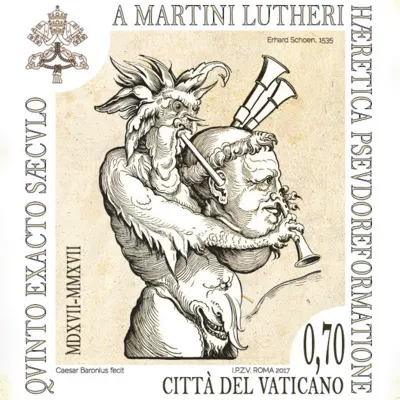
But speaking of rebellion from the church and Protestantism, another very common thing that everyone pretty much knows about the church is the question of indulgences and the fact that Martin Luther basically broke with the church over this question. I mean, there was a lot of other stuff. He had his 95 theses. He had a whole manifesto for why the church was bad. But as I understand it, issuing indulgences was really like the straw that broke the camel's back. So if you don't mind, could you please explain to us what indulgences are, what the popular conception of them is, and how the truth of the matter differed from what the common wisdom is?
Sure. So really what actually Martin Luther was upset about, and a lot of Protestants and even people within the church who were, because again, there were reformers within the church and reformers who broke with the church, right? So really the big problem was the idea that you could pay for an indulgence, which is how they saw what, you know, the defenders of the practice said, listen, churches have to get built. It takes money to build churches. If someone wants to donate some money to help build a church, that is, you know, it is a donation to build the church, you know, is a religious donation. But oftentimes, right, this practice was being abused, particularly by, you know, very wealthy people who would, you know, commit these sins and then would basically either being told or implied that they could pretty much pay their way to heaven, which was the real problem that they had.
So indulgences still exist today, actually. So they got rid of a couple things with the, I think the Lateran Council. And so specifically one of the things they got rid of was you can't, you can't promise, okay, you do this and you get 20 years out of purgatory, right? They reformed it, you know, you can't really get it. You can't get it from getting money anymore. But so there are partial indulgences, which pretty much cover venial sins, which there's a division in Catholicism between venial and mortal sins. Mortal sins are considered more severe and entirely break your connection with God. And so you have to go to confession if you want to receive communion again. Venial sins, you can receive communion while you have them on your soul. And actually, the communion, because it's in Catholicism, is considered the literal real presence of God in the communion, which is a whole other matter.
It will actually wash away some of your, you know, it heals your soul is a way that it's kind of seen. But so plenary indulgences today, here's just a couple. You can get a plenary indulgence. You can only get them once a day. So, you know, you don't get four in one day. You can read or listen to scripture for half an hour. You can perform adoration of Jesus in the Eucharist for half an hour. You can do the Stations of the Cross, which is a processional prayer throughout a church. Or you can recite the Rosary. So doing those gets you the same kind of indulgence that you used to get from doing things like giving a big fat donation to build a church.
That sounds like a very individualistic endeavor. I thought you were going to mention something along the lines of, like, if you do works in the community, for example, then you get an indulgence. But this just sounds.
You actually do as well. So I'm just, I'm reading through the list because they have a whole list if you want to find it. Taking part for at least three full days in a spiritual retreat, receiving a blessing given by the Pope to the city of Rome and to the world, you know, Urbi et Orbi, which they can only give out three times a year. So I will add, you can listen to it on radio or TV and you still get the blessing. And so, because again, these things are indulgences for sins that you don't basically have to, so you don't have to kind of wash off this stuff while you are in purgatory.
Faith and works
The thing you mentioned about doing good works in the community is actually that kind of goes back to another thing that the Protestants had a problem with, which was the sola fide, right? The by faith, salvation by faith alone. And actually, interestingly enough, a couple decades in the late 20th century, there was actually a meeting of Protestant churches and the Catholic Church in which they actually kind of hammered out their differences on that. And the Protestants basically came to the understanding that the famous line that I think was maybe from Luther or Calvin was that faith without works is dead. Because the whole thing is that Catholicism teaches that you can only get to heaven through faith and by good works. So you have to do things, right? You can't just sit at home and not really help anyone out and just be like, well, I believe in Jesus and I can still get to heaven.
You can't do that in Catholicism. Doing good works is actually one of the requirements to even get to heaven.
All right.
Where doctrine comes from
Well, this obviously speaks to a very rich, to the very rich and very vast array of scriptures and traditions within the church. So if you don't mind me asking, like, how did this entire framework come into being?
Well, so Catholicism operates off of what's called a magisterium. And that involves teachings passed down not only from scripture itself, right? So from the Bible itself, but also the traditions established by the church. And so a lot of this came about through various councils, right? The history of Christianity is a history of councils. One of the first councils, actually, that was called was by the emperor Constantine after he had converted to Christianity.
The Council of Nicaea
Well, he technically hadn't converted yet. He only converted on his deathbed, really, but he was flirting with the religion for a very long time.
He was at least sympathetic.
Yeah, he was sympathetic. Yeah. There was the famous battle and the whole thing. And so it was called in Nicaea, and it was called to settle a couple things. It was called to settle questions of Gnosticism, which was a, I would classify as a semi-pagan, or at least deeply influenced by Greek and Roman paganism. Early Christian heresy that the church took very, very seriously and was very worried about.
Well, I'd maybe like to push back a little bit against the idea that this was heresy, because this was before the Orthodoxy was really set down. So really, it was, up until that point, it was really anyone's guess who was correct as to these matters, if I'm understanding it correctly.
In terms of the average early Christian, you would be correct. However, in terms of what is considered the Orthodoxy passed down from the earliest churches, which is considered the Apostolic Church, right? Founded by Peter, you are the rock on which the church will be built, yada, yada, yada, that stuff.
Exactly, yeah.
But, you know, all the apostles, you know, who actually, you know, split off and went all over the place from, you know, India all the way to Western Europe. So basically, it was to settle and basically put down, okay, what is orthodoxy, right? Because the idea was we need to figure out what we actually believe. And one of the most important things to come from the Council of Nicaea was actually what's called the Nicene Creed. I'm not going to read the whole thing because it's a bit long, but the point is, you know, at least in Catholic Mass, you know, Catholic church service, it is said every single Mass to reaffirm basically the central tenets of what's called Nicene Christianity, right? Basically, it covers things from, you know, there's one God, Jesus, born to the Father, virgin birth, crucified, actually died, resurrection, Trinity, there's one church, one baptism, and there's resurrection of the dead, and there's a world after death.
And of course, they have to make all of these proclamations because they were really cementing their own position in opposition to all of these other beliefs that had propagated in the time when the church wasn't really the kind of all-powerful entity that it would later become, when it was basically just a bunch of guys wearing sandals going around and preaching rather than having a strict church hierarchy.
No, you're absolutely correct. Yeah.
Arius
And one of those actually very famous early, if you don't want to say heresy, because if we're assuming that the orthodoxy hasn't been established, then certainly a competing vision or a competing voice or a competing idea was actually from a guy known as Arius. And he was a presbyter, he was a priest. And yeah, so he was pretty influential. He actually had a lot of followers and more, his views were seen as pretty outside of the orthodoxy, even if the orthodoxy hadn't been formally established. What was popularly understood to be orthodoxy. And they were worried about it spreading. So, one of the things that Nicaea did is that it formally denounced Arianism as a heresy. And Arianism, there's a lot of aspects to it, but basically, one of the things that it has is it has a very different understanding of the Trinity: is that God the Father is preceding the Son and the Holy Spirit, right?
And a Council of Nicaea was not, you know, just a completely, you know, very civil, let's sit down and calmly explain our views. You know, tempers got pretty high. And there is a, I would say, piece of folklore. I don't think it's quite historically accurate that actually Saint Nicholas, you know, the inspiration for Santa Claus, actually got so upset with Arius at this, you know, ecumenical council that he, you know, he walks over to Arius and smacks him in the face. Unfortunately, or fortunately, depending on, you know, depending on how you feel, I don't think it's quite true, but it definitely does attest to how high these tensions were and how seriously these people took these matters to be, right? And so there's further development as it goes on later with more councils.
Chalcedon
There was the Council of Chalcedon, which was a couple centuries later. And one of the things that actually set out is the matter of the nature of Jesus, right? So according to the Council of Chalcedon, you know, Jesus Christ was of two natures united, but it was a united nature.
Yeah, so he's both human and divine at the same time.
Yes, and fully, and importantly, because this was actually a source of many controversies, many controversies and things considered heresies before and afterward. It's not partially human and partially divine. It's not, you know, half human, half divine, mostly divine, part human. It's that he was fully human and fully divine simultaneously and in a united sense. It wasn't two natures in conflict with each other. It was two natures united. And as a result of this, there were some people at the council who fundamentally disagreed. And, you know, Miaphysites is what they're called, or monophysites, which is a distinction between the two. But basically, what this created were the Syriac churches and the Nestorian churches, you know, what you have you. And interestingly, the Armenians, who were the very first country or kingdom in history to officially adopt Christianity as its state religion, actually ended up on the side of the anti-Chalcedonians, partly because there was a war going on involving Armenia, where the bishops representing Armenia weren't able to get to the council because the war was blocking travel.
And so they couldn't get there. And they had had some disagreement, but especially afterward, they were pretty upset that the council went on without them. And so they ended up siding not with the rest of Western Christianity, but they actually ended up siding with what became, say, today the Coptic Church in Egypt and the Syriac Church, which is a division that still goes on to this day. The Armenian Orthodox Church is still not actually Eastern Orthodox. It is Oriental Orthodox.
Why the details matter
Yeah, so here I go again, being a non-believer and introducing doubt into your heart. But to me, it sounds like there's an awful lot of attention paid to these seemingly very trivial details, like the nature of Jesus and the nature of the Trinity and so on. And on one level, coming at this as a non-believer and as a Marxist, it just seems to me like this was to a large extent just different networks of people posturing and trying to acquire power with the pretext of an official theology, in a way saying that we are the ones who uphold the real theology, therefore we are the legitimate ones, therefore power belongs to us, not to all of these heretics.
So, I mean, certainly it feels that way, right? Like, it feels like how trivial is this stuff, right? How much does this actually matter? And there are cases in the history of Catholicism where it's pretty clear in hindsight, especially that certain actions were taken with more of a political motive than necessarily a religious one. Or the political motivations gave people an unfair shake, an unfair trial, right? And actually, we could get into that later with the Jansenists, who many feel got a bit of a raw deal during their church trial. But the thing is, the thing you have to keep in mind, as with really any religion, is that to these people, this is not just, oh, well, who really cares? I mean, it's the matter of what is God? You know, what is the thing that you are presuming created you, created the universe, right?
So, and therefore, it does matter, right? It really, really matters to these people what is true and what is false. And most importantly, are people endangering the souls of others by teaching things that are not true? And the kind of push and pull between how open can debate be versus what is considered orthodoxy, especially in the early years when you're trying to figure out what orthodoxy is, is a bit kind of difficult sometimes to see. But really, the thing is with these councils is that oftentimes it wasn't just, oh, it's this. Oh, it's a partially different view of the nature, right, of the divine and the human in the form of Jesus, right? It's often attached to, and therefore, blah, blah, blah, blah, blah, right? There's like a follow-up theology that hinges upon that assumption. So it's in part, it's not just, you know, how many angels can stand, you know, can dance on the head of a pin.
It's if someone believed that how many angels could dance on the head of a pin, also therefore meant you had to believe 500 other things, right? And if you thought it was a different number, you had to believe 500 other different things. So it is a difficult balance, right, that you have to take as, you know, someone who's trying to study history to figure out what is the motivations behind these actions, really.
Right, yeah. I guess I'm just having trouble seeing what the concrete implication is for a worshiper believing that Jesus was human, for example. Like, what's the danger there exactly?
Oh, well, because that, again, goes right to the heart of what is considered basically the heart of Christianity today, is you need the Trinity. Because if Jesus is not God, right, then that means not only are all of the scriptural texts in which he says, I am God, I am the Father, and the Father is me, right, all of these things, then now that's not true. You can't trust it to be true. And if you can't trust it to be true, then what can you trust to be true about Christianity? I'm trying to be ecumenical, but that's how you get a lot of problems within certain sectors of Christianity today, is you kind of lose track of, well, what actually is true? What do we believe?
Right. So it's not a problem of thinking that Jesus was just a guy as much as it is a problem if you cross into the territory of Jesus was just a guy. What else can you question?
Exactly.
Right.
Which, obviously, for religion, making sure that the people claiming to follow it actually are following it is important not only for, you know, if you want to view it more cynically, making sure that, you know, they're actually going to follow along with what you're doing. But two, in I guess, a less cynical way, right, again, assuming that the people running it actually believe what they preach, you know, they want people to go to heaven. You know, they feel a responsibility for their parishioners, for their congregation, for the members of the church as a whole, depending on, you know, how high up in the hierarchy you go, right? So it takes this stuff very seriously because for a true believer, it is a matter of life and death. It is a matter of the life and death of your soul, right? Which is true of any religion, whether it's Islam, whether it's whatever form of Christianity, whether it's Judaism, whether it's Hinduism, Buddhism, right?
You know, believing and practicing the religion matters to believers in the religion. And therefore, you have to get it right, which is why, again, in these councils, you get these just real, there's real tension. And sometimes it's resolved through debate, and sometimes, you know, it erupts in a slap fight on the floor. You know, to these people, the thing you have to keep in mind when, whenever studying any religious history, no matter what it is, is that to these people, you have to keep in your mind that this stuff really does matter to them. There are cases, of course, where it is just a con man, right? But if you're accepting prima facie, right, that they're not all just con men, then you have to accept that they believe, at least to some extent, truly, that this stuff really does matter.
The Great Schism
All right, let's move on a bit. So we talked a little bit about orthodoxy before, but we were talking about orthodoxy in terms of official church doctrine rather than the Orthodox Church, which alongside Protestantism and Catholicism is the third major current of Christianity. And so as far as I understand it, it wasn't really until the 11th century that you saw an explicit split between Catholicism and Orthodoxy. Could you tell us a bit about how that situation arose and why it was such a big deal?
Yeah, absolutely. So for a long time, there had been kind of tensions between, you know, the Bishop of Rome, who the bishop, the first bishop of Rome is considered to be the Apostle Peter, right? One of the original apostles, you know, set up the bishopric of Rome. And, you know, for Catholics, they especially cite the line in the scriptures in which Jesus says to Peter, I call you, you know, Peter, you are the rock upon which I build my church. And for the Orthodox, they just assume, oh, yeah, well, because he was the first bishop, and therefore all of the, you know, all of the archbishops are the rocks upon which the church is made. You know, you had the pentarchy, right, in the East. But for the Catholics, you know, and especially for the Bishop of Rome, the idea was that, yes, all the archbishops are important, but the Archbishop of Rome is the most important and therefore is basically is still the top bishop in all of Christianity.
And so it was actually, it was a series of things. It wasn't just, you know, one event that took place in, right, 1054, right, is when the Great Schism, the East-West Schism, however you want to call it, between the Catholic Church and the Eastern Orthodox Church occurred. It was kind of a culmination of various differences between them. It was a lot of things. Like, like earlier, I mentioned that one of the things that Catholics believe is that the Holy Spirit proceeds from the Father and the Son. The procession of the Holy Spirit is important in understanding the Trinity. The Eastern Orthodox have a somewhat different interpretation, which is that the Holy Spirit proceeds from the Father. It's called the Filioque, right, which they objected to. Another issue is more liturgical, right, in terms of how worship is actually carried out in you know in the church service, which related to leavened versus unleavened bread.
And you know, Catholicism, to this day, your communion wafer, which nowadays are, I would say, unfortunately, you know, kind of mass-produced rather than being made in the church itself, it's unleavened bread. And that's that's seen as basically a continuation of you know Passover practices, right, with the unleavened bread, and also because there are other justifications used, which are like for example, partly symbolic, which are that Jesus uses leavening as basically a metaphor or an analogy for hypocrisies, particularly of the Pharisees, which were one of the one of the major you know priestly groups in Judea at the time of Jesus' life. And then, and especially the biggest one, however, was of course the Bishop of Rome saying that yeah, he has jurisdiction over everyone because the Eastern Orthodox claim, you know, whatever your bishop is, you have jurisdiction over your bishopric, you don't have jurisdiction over another bishopric.
Yeah, so it's a much more pluricentric system, yeah, yeah, yeah, which is why you have today you have a ru, you have a Greek Orthodox Church, you have a Russian Orthodox Church, you have a Bulgarian Orthodox Church, right?
You have a Georgian Orthodox Church, right? You have the idea that you are in charge of your area, but the Catholics, of course, said, yes, you're in charge of your area, but you still have to answer to the Bishop of Rome. And so that led to a lot of things, which basically resulted in the Patriarch of Constantinople excommunicating the Pope and the Pope excommunicating the Patriarch of Constantinople. And so what actually happened much later, actually, both of these excommunications were lifted fairly recently in terms of church history.
After Vatican II, I'm guessing?
Yeah, it was in 1965. It was Pope Paul VI and the Ecumenical Patriarch Athenagoras I, you know, nullified the thing. And it wasn't really, that didn't result in the two churches, of course, coming back together as one, but it was seen as a symbol of goodwill and a way for inter-church relationships to be rebuilt.
And the churches are going to reunite any day now.
Faithful Catholics hope so, and from my understanding, faithful Orthodox hope so, but you know, there are still a lot of differences that where it seems unlikely to happen anytime soon. I'll say that. As much as it would be nice, it seems unlikely.
The Eastern Catholic churches
Well, it seems to me like Catholic priests might have a good reason to support reunification, if you catch my drift.
Oh, you, if you are referring to priests marrying, actually, that gets into the different rites of Catholicism. So the Catholic Church actually does not just consist of the Latin Rite. There are particular churches within the Catholic Church. There is an autonomous particular church and there's a local particular church. So sui juris, which means, you know, basically of one's own right. So, you know, there are multiple churches within Catholicism. There's the Latin Rite, which is certainly the largest, but there's also things such as the Syro-Malabar Catholic Church, which is centered in India. There's the Maronite Church, very famous in Lebanon. Most Lebanese Catholics are Maronite Catholics, not Latin Catholics. There is the Greek Catholic, the Byzantine Catholic Church, you know, Romanian Catholic Church, Ukrainian Catholic Church, yep. There's the Coptic Catholic Church, you know, actually the newest one that was just established, which is in 2015, the Eritrean Catholic Church.
And then there are ordinariates, which gets into actually recently there was a personal ordinariate established for Anglicans who want to become Catholics but want to retain some Anglican traditions, are permitted to join the personal ordinariate, which is for them. So there's the West Syriac, East Syriac Rite, Byzantine Rite, which has a bunch, particularly those are centered in the Balkans and Eastern, specifically Southeastern Europe, is where most of those are set up. And then there's the Armenian Catholic Church, which has its own right, and then there's the Alexandrian Catholic Churches, which are, yeah, Coptic Catholic, Eritrean Catholic, Ethiopian Catholic, right? Because today, Eritrea, Egypt, and Ethiopia, those are actually now, those are Oriental Orthodox, same as the Armenian. And so because of this, for example, just picking one, right, in the Byzantine Catholic churches, right? A priest can be married. He has to be married before he becomes a priest, but he can keep being married.
If his spouse dies, he can't remarry. You can't get married once you become a priest. However, if you're a bishop, you can't be married and a bishop, which, if I understand correctly, in Eastern Orthodoxy, bishops are also either not allowed to be married or it's very, very discouraged for bishops to be married. Priests can be married, but not bishops. Because, you know, they're considered to have to hold themselves to an even higher standard than priests. So, yeah, and which gets into, I think, another misconception is that the Latin Rite is the only right that exists. And, you know, all of these churches still recognize the authority of the Pope, but are allowed to have their own doctrine that in places where there is room for disagreement, they're allowed to set up their own doctrine. They're allowed to have their own liturgical practices. You know, what have you.
Very, very, very interesting.
Lots of exciting things happening in the world of Catholicism right now.
Incredible things are happening in the Catholic world.
Medieval heresies
So you had the split between Orthodoxy and the Catholic Church in 1054, but that was, of course, neither the first nor the last split. And in fact, during the Middle Ages in particular, there were a lot of different schisms emerging. Just name a few examples. You had the Waldensians, you had the Albigensians, you had the Cathars. What was the deal with that? Why was there suddenly this groundswell of people deciding to make their own churches?
It's interesting, right? There's a lot of different causes for these things. In particular, some of them was basically seeing that the church was no longer holding to its roots, right? The Cathars, I believe, very much stressed, you know, sort of a communal life. And that was kind of one of their big reasons is, you know, they saw this church that was, especially at the time, you know, aligned with a lot of lords and kings and wealthy merchants and what have you, right? And they felt that it had, you know, kind of lost its way. And so that led them to actually go back and try and find older forms of Christianity and often also led them to reconsider what had previously been declared heretical, whether it is the nature of God, especially the authority of priests and who can be a priest and who could be a bishop and the authority and the hierarchy and what have you.
A lot of it was seen as a corruption and seen as basically a way to kind of bring it back to a more primitive kind of Christianity. Of course, what this meant was also you had to come up with a whole bunch of new doctrines. And so a lot of this was unfortunately not resolved in the most civil of matters.
That's putting it a little mildly.
As much as I think the Cathars were wrong, as a Catholic may think that they were wrong, I don't necessarily think that they should have been all put to the sword.
Gladio Free Europe is the only podcast where you'll hear someone brave enough to say this, by the way.
But the crusades did not only happen, which crusades are entirely, that's a whole can of worms of getting into, and that's a lot of history to try and cover. But again, one thing you have to keep in mind is that they were crusades within Europe, particularly directed at what were seen as heretical Christians.
Yeah, and not just heretical Christians.
The Stedinger Crusade
One case that I came across fairly recently that I was stunned by was the Stedinger Crusade in the first half of the 13th century, where essentially you had a bunch of peasants decide that they don't want to be serfs anymore, and they start occupying some fallow lands. So, the local prince or lord or whatever, he goes to Rome and he says that these people are heretics. So, in this instance, you have a crusade that's basically a class war explicitly.
Yeah, yeah, there were a couple ones like that, right? Where they were, of course, accused of because I'm vaguely familiar with the Stedinger Crusade. I'm not very familiar with it, but from what I understand, the Declaration of Heresy was also contingent upon accusations of demon worship, of course.
Yeah, demon worship, you know, killing priests, burning churches, desecrating the Eucharist, you know, what have you.
Pretty normal.
Raping our churches, burning our women. If I remember correctly, I think they were also accused of having orgies, which is interesting.
Yeah, that's also a very common accusation.
Yeah. Basically, yeah, they're having a peasant Bohemian Grove.
Theology and politics
Unfortunately, this is where the line between theological debate and political debate is hard to kind of suss out. You saw actually a similar thing with Protestantism with Luther against one of the peasant uprisings in Germany. I want to say this is Thomas Müntzer.
Yes, yeah, the Peasant Wars.
Yeah, the German Peasants' Wars, yeah. So he, you know, started out basically, you know, siding with Luther. But the thing is, Luther had just basically only escaped with his life by the good graces, what have you, scheming machinations, you know, of the German, of certain German princes. And so, of course, he didn't want to abandon that, and so he stood with the princes against these peasant uprisings. You see this a lot, not just in Catholicism, but, you know, and you can take a very cynical look, you can take a mixed kind of look where it's like, yeah, sometimes, you know, sometimes things have fucked up, sometimes things was good, you know. And for some of this stuff, you know, the church has definitely walked back. There's certainly a reason why the church no longer does crusades. It's very easy to go a bit over the top, shall we say?
It's very easy to kind of lose control while you're having all that fun, you know, pillaging and looting and, you know, hacking about with swords and spears.
All of which is theologically sanctioned with the promise of going to heaven if you do this, by the way.
It was actually considered an indulgence, again, to participate in crusades and go to crusade sermons, yes.
The Bohemian Reformation
Later on, actually, one of the, I would say, somewhat lesser known precursors to the Protestant Reformation was the Bohemian Reformation. And a lot of these things is usually a confluence of things, but there's usually a spark, right? That kind of sets a whole thing off. With this, it was a group of Christians in Bohemia, nowadays, Czech Republic, who were upset with the liturgical practices specifically of the Catholic Church at Mass. To give a very brief rundown, Catholic communion consists of bread and wine. According to Catholicism, it's the literal body, blood, soul, and divinity of Jesus Christ under the appearance of bread and wine, transubstantiation, which the Protestants had a big problem with. Specifically, one of the things that they wanted was communion under both kinds, which was for a long time, you know, the priests would get the wine, right? And then the regular congregation would get the bread, sometimes dipped in wine, but usually just the bread.
And they felt that they were being deprived of it. The position of the Catholic Church at the time was it's all still, you know, the whole thing, but it's, so it doesn't matter which one you're getting, but it was seen especially as unfair separation between the priest and the rest of the congregation, right? Basically, another way to put the priest above the average lay person, right? And so that started the whole Bohemian Reformation. You know, the Hussites, all of them, and actually, one of them, the Calixtines is, I think, I would say, but basically, it referred to its Latin, basically the important part of it is the word chalice, right? And so they were one of the more moderate groups, right? Because the whole, especially with these things, is it starts off with one thing, and then suddenly you get tons of people who have just been waiting for their opportunity to shine, right?
Waiting for their opportunity to, again, go back and see what else they can change, what else they think should be different. Eventually, the Catholic Church actually reunited with the Calixtines and used them to actually put down the rest of the Bohemian Reformation armies. And the position of the Catholic Church today is that it is a bishop can decide for his own bishopric whether to administer communion under bread alone, under wine alone, or communion under both kinds. So I will say the Calixtines definitely won that exchange.
Using facts and logic.
Facts, logic, and also some pretty sweet wagons with guns on them.
Well, political power grows out of the wagon with the gun on it.
Absolutely, yeah.
Martin Luther
Yeah, so you had the Hussites, you had the Calixtines, you had this sort of proto-Reformation happen in Bohemia. And then a little less than a century later, you had the actual Reformation with Luther with his famous 95 Theses that he nailed onto the door of the local church. So who is Luther and what was his problem?
Luther had a series of problems with the church. One of them, as we mentioned earlier, was indulgences. A lot of it was originally, and this, again, a very common thing with all of these reformers who end up splitting with the Catholic Church is it starts as one thing and then usually expands from there. So it started with, he was not originally splitting with the Catholic Church. He wanted to reform it from the inside. You know, he was a, you know, he was a, you know, he was working within the Catholic Church. However, he then continued to just, it started off with particularly concerns about corruption, right? Which, especially at that time in European Catholicism, corruption was a huge deal, especially in Germany and the Italian states. You know, you have the Borgias, you have all these people, you know, you have the alliance of, you know, the various princes, you have, you know, you have bishops who have, you know, temporal power.
You have all these problems, right? So one of the things that arises from this is basically, as it goes on, you know, Luther's like, yeah, this is wrong. And then people are like, okay. And he's like, yeah. And then eventually it comes to basically the belief that, oh, all of these Catholic teachings are also wrong, right? It's not just how they're practicing and going about it, but that whether it is presence in the Eucharist, whether it is especially the power of the Pope, the papacy itself. And so, as this grows and gets larger, eventually, as it comes along, Luther is excommunicated from the Catholic Church. And instead of taking that as a sign to, oh, maybe I should rethink some of these things, he, of course, only emboldens him further, makes alliance with certain princes in the Holy Roman Empire. And this starts one of the largest periods of religious conflict in European history.
Yeah, so what exactly was it that made Luther split with the church explicitly? As you mentioned, these were ongoing debates within the church itself, and there were many people in the church who held many of Luther's position without necessarily breaking with the church. So, why did it get so far in the case of Luther himself?
So, with Luther, actually, one of the biggest things was translating the Bible into vernacular, right, instead of Latin. You know, it was part of his belief that in trying to, I wouldn't say de-hierarchize the church, you know, but basically, was a lot of this, especially for Luther, right? It was sola scriptura is a very famous phrase, and it means scripture alone. Because as we talked about earlier, the position of the Catholic Church is that the magisterium is made up of scripture and tradition. And he said, Luther basically came to the conclusion that, well, if it's not in the Bible, it shouldn't be there. Specifically, that it's the only source of, it's the only thing where it's actually divinely revealed, right? There are no divinely revealed traditions in Luther's view. Only the Bible itself has been divinely revealed. And so, printing the Bible in German and then later English, basically, it allowed his views to spread rapidly, especially with the, you know, you mentioned the printing press and all that.
It allowed it to spread rapidly throughout Europe. And there were a lot of people who were, for various reasons, either drawn initially to his theological concerns or drawn initially to his criticisms of corruption in the church, or thinking, like, you know, Müntzer and the peasant rebellions, that what this signaled was an end to feudal rule and feudal order. Unfortunately for them, that did not turn out to be the case. You know, oh, also, of course, a priest could get married, which made a lot more people wanted to become priests, and also made a lot of priests who were tired about having to hide their secret families, you know, figured it's probably just easier to just be married in the open rather than have, you know, you know, a couple goomahs on the side in the Italian parlance.
Calvin and the Reformed tradition
And then, of course, later you have Jean Calvin, a Swiss reformer who has, you know, began the reform tradition, which is distinct from Lutheranism because it sees basically that Lutheranism didn't go far enough with the Reformation, right? It calls itself the Reform tradition because it sees itself as the ultimate conclusion of the Reformation. It has fully returned the church to its earliest roots. It is done away with superstition. It is done away with Roman practices, whether they be, you know, created by popes or derivations of old pagan practices. There's a wide range of these things, right? The Puritans very much considered themselves in that tradition, right, in England, which is, you know, of course, why when Cromwell took over, you know, he did away with Christmas. Actually, all holidays, because in their typically insufferably annoying nature, the Puritans. The Puritans' refrain was, for a true Christian, there are no holidays because every day is a holy day, which basically, you know, was seen as very annoying by everyone who liked Christmas and liked Easter and liked, you know, having fun. They liked beer.
I'll give that to them. They did like a good, they liked a good pint. But, you know, Reformed traditions were especially popular in southern France, which led to the Huguenots or Huguenots, I guess.
Who also arose in the same regions where the Cathars.
Yeah, absolutely. Absolutely they did. Of course, Switzerland, parts of Germany, and especially Scotland, actually, which led to a later split between the Church of England and the Church of Scotland. In Scotland, Calvinism was the predominant Protestant denomination and still is to this day, which nowadays is called Presbyterianism, of course, but it is just another form of Calvinism, but specifically in the Scottish tradition.
The Counter-Reformation
Yeah, so in response to all of this, the church underwent something called a counter-reformation, which, as far as I understand, it had many different aspects. Like on the one hand, yes, you had these absolutely brutal wars to try to pacify these populations, but on the other hand, there were also significant reform efforts taken within the church to address these problems so that, you know, more schisms don't arise potentially.
Absolutely, yeah. And also because, again, these reform-minded people didn't, they weren't just all people who wanted to split with the Catholic Church. There were many who just wanted to see the Catholic Church be less corrupt, which was, especially for the time, pretty reasonable. You know, it was getting a bit ridiculous, untenable, even, especially to these people, you know, who want who believed in the Catholic Church, believed that the Catholic Church was the right church, but still felt that, you know, in order for this to keep going, we got to fix these problems before, you know, all the wheels spin off. Our proverbial gun cart. And so one of the things that this involved was actually, of course, getting rid of these financial indulgences, but also a further investment in getting the message out to the people. Basically, you know, there were conversions by the sword, but there were also conversions by simply sending priests to these places.
And the Jesuits came about, St. Ignatius of Loyola, who came about and helped found what became the Society of Jesus, the Jesuits. And they, for example, Poland actually was, I think, for a brief period of time, I think, majority Protestant. And then the Catholic Church sent in a ton of Catholic missionaries and Jesuits, especially, to try and get people to be like, okay, guys, guys, come on. We're fixing our problems. Come back. Come back.
And it worked so well that even in communist time, something like half of communist cadre were regular churchgoers.
Absolutely. Yeah. Yeah. Poland is, of course, there are still Protestant Poles today. Most of them are Calvinist, but the vast majority of Poland, as is quite famous, is very Catholic.
Anglicanism
Yeah, and then, of course, you had... a different reformation, which was a confluence of various forces, which resulted in what is known as Anglicanism. Obviously, the inciting incident there was King Henry VIII wanted a divorce, and for various reasons, the Pope would not grant him a divorce. And so King Henry VIII took his ball and went home. He set up his own church. And this led to, unlike a church, say, like Lutheran churches or Reformed churches, the Anglican church was sourced. There was a lot of tension. You had, you know, you have your high church people, you have your low church people, you want people who want to retain a lot of Catholic traditions. You have people like the Puritans who want to get rid of all of the Catholic traditions or all of what is seen as Catholic traditions. You have those more reform-minded. You have your Anglo-Catholics.
It's a whole mess. And you could do an entire series of episodes just on what the hell is Anglicanism at any given point in history.
Yeah, like all this stuff, very messy, very complicated, a lot of different threads. Again, this is just a very, very basic overview, just like sort of a roadmap for people who want to learn more and who want to have a general outline of.
Vatican II
Yeah, so maybe let's wrap this up by talking about Vatican II. Again, we're jumping over hundreds of years of history and church activity, but Vatican II is really the most important thing to have happened in the last century, I'd say.
I would absolutely agree with that. There are people who, even people who don't like Vatican II, still say, yeah, it's one of the most important developments in Catholicism, if not Christianity itself, simply because of how much it affected things.
So, one thing you would like about this Second Vatican Ecumenical Council is that, in fact, you get to go to heaven.
Oh, boy.
I've been dying to go to Catholic heaven, actually.
Well, this was one of the various things that Vatican II involved was basically because, of course, it took place over three years. This is, you know, World War II was not that far in the rearview mirror. So the Catholic Church was like really rethinking its position, its relationship with Judaism. And also, it was in many ways culpable for the Holocaust. Well, not often culpable, but at the very least, they didn't say anything about it. It was in typical globe-spanning church fashion. There were, you know, some Catholic priests and bishops who helped smuggle Jews out of Germany. And then there were, of course, also clerical fascists in Croatia. So, you know, what are you going to do? Very wide gamut. Very wide gamut. Yeah, of course, that's one of the things is it finally reached a conclusion that God doesn't break covenants. You know, if God made a covenant with the Jews, covenant still applies.
But so a lot of things that it did basically was it saw, it was really a response to secularism, and so, and a completely new world that the church had to find itself in in the 20th century. And so, you have new liturgy, which actually changes to the liturgy from Vatican II. It is actually one of the sources of, you know, you'll see in the news in America and elsewhere, you know, people getting upset with wanting to return to certain liturgical traditions, and they blame Vatican II for that. You know, the way the church acts in the world in terms of temporal powers, terms of religious freedom, you know, okay, well, we live in a world where French Revolution won, you're allowed to have whatever religion you want to have. You know, how does the church deal with that? And really, you have a lot of things coming from this.
And Vatican II was a lot of things, and it's been interpreted a lot of different ways. You have basically people who think that it's just complete liberalism, whether you like that or don't. You could do an entire episode on just Vatican II. The church today is still the church of the Second Vatican Council. There has not been something that has overturned Vatican II. The church is still told to proceed in what is called the spirit of Vatican II. So proceed with the spirit that brought it about and the spirit about it was carried out in. And whether that will succeed in the United States is to be seen. Certainly to be seen.
Yeah, so who knows? Maybe we'll get an American Catholic Church springing up in the next couple of years.
American Catholicism
Oh, good lord. I can only say that would not make anything better. I can definitively say there is nothing in American Catholicism that is in any way preferable to Catholicism anywhere else in the world. In fact, I would say it's pretty awful. And a lot of that is simply just by virtue of it's full of Americans.
Yeah, and just the Cold War in general reorienting theology in many different faiths, among them Catholicism.
Absolutely, yeah. Yeah.
We didn't have time to get into it, but of course, the conflicts between conservatives and liberation theology advocates in Latin America versus Cardinal Spellman in America being one of the strongest proponents of the Vietnam War. Huge, huge divisions, which will either be healed or continue to divide.
And well, let's hope everyone has fun.
Yeah, that's a great thing to hope for.
Wrapping up
Well, James, thank you so much for coming on tonight. Is there anything you would like to plug before you go or give us any parting words of wisdom?
If I could plug one author in order to understand Catholicism today, Eugene McCarraher is, I would say, one of the most important living authors in the Catholic tradition. His book, The Enchantments of Mammon: How Capitalism Became the Religion of Modernity, is one of the most important, and I would certainly say one of the most influential books on my religious experience. And if you're looking for an interesting Catholic perspective that you might not be exposed to, I would absolutely check that out.
All right. Well, thanks again for coming on, for sharing your wisdom with us, and for bearing my intolerable questions for which I would surely be burnt at the stake at a different period.
Well, thankfully, we live in an enlightened time, question mark to be determined.
The show is also on Apple Podcasts, Overcast, Pocket Casts, Podcast Addict, YouTube, RSS and Patreon.