"And all that believed were together, and had all things common; And sold their possessions and goods, and parted them to all men, as every man had need." King James Bible, Acts 2:44
"And when they found them not, they drew Jason and certain brethren unto the rulers of the city, crying, These that have turned the world upside down are come hither also." King James Bible, Acts 17:6
Liam and Russian Sam are joined by once again by Jackson (@GraceCathedralPark) for a two thousand summary of American radicalism and the utopian tradition. Since ancient times, religious and moral conviction has compelled the most pious among us to leave this sinful world behind.
Jewish groups like the Essenes and the Ebionites were joined by the earliest Christian monks in their complete rejection of secular society, preferring to live in intentional communities organized toward complete observance of religious commandments. These groups, who may have included the first followers of Jesus, held their property in common and believed they could lead mankind by their example toward a new moral world.
By the European Middle Ages, Christian institutions had taken on all the venal and violent obligations of the state. Reformers seeking to challenge the worldly power of the church were met by centuries of brutal oppression. By the 16th century these contradictions had become too much to bear, with the eruption of the Protestant Reformation and the flowering of idealistic sectarians. Some of these groups, like the Anabaptists and the Diggers, sought to upend the material hierarchies of man and make all equal before God. When these groups were also hunted down, even by their fellow Protestants, the dream of a new beginning survived across the sea.
Religious settlers like the Puritans and Quakers saw the wild American lands as a blank slate for their moral dreams, while more materialistic colonists used the New World to engineer new systems of extraction and domination unimaginable back home. Many of these groups created communes in the wilderness, some surviving for months and others for centuries. As Enlightenment writers argued for the equality of man based on reason rather than scripture, and the American and French Revolutions called all political secular communitarian projects also began to emerge. Most significant of all of these was New Harmony, the utopian experiment of reformed capitalist and lifelong idealist Robert Owen. Though New Harmony would not be a particularly long-lived commune, it cemented Owen as one of the most famous men of the early 19th century and a father of the socialist movement. Like many parents, Owen would see some of his children turn away from him, yet his lifelong agitation would lay the groundwork for more enduring transformative projects. While we now understand the utopian movement to have failed, Owen and his two thousands years of forebears succeeded in inspiring mankind to build a new moral world.
Listen to the end of this one to hear about Jackson's own radical utopian dream: BYU for Owenism.
Transcript
Jackson returns
Welcome back to Gladio Free Europe. I am Liam, joined by Russian Sam.
Hello, hello.
And our reigning guest, returning three-time champion, the Jaguar of Jacksonville himself, our good friend Jackson, better known as Grace Cathedral Park. How you doing?
Hey, how's it going? Doing well. Ready to talk Owenism?
Yes, because this episode, we are going into the American utopian tradition. This is another big one, just like our last series on Druidism. This is going to be a huge rundown on the entire concept of utopian living from the ancient past up until the middle of the 19th century, when American philosophers attempted to put into practice ideas that had been percolating in the old world for thousands of years. Ideas trying to answer the question about how you can live as a good person in a world that is not good and not conducive to moral behavior or ethical living at all. Just to get us started here, we have so much to get into. Jackson, could you tell us a little bit about how you came to this topic and how you first developed an interest in utopianism and Robert Owen and New Harmony in particular?
Hobsbawm and the age of hope
Yeah, so I'm a really big fan of Eric Hobsbawm, the English historian. And I was reading his Age of series that kind of goes through the long 19th century and eventually the 20th century. And he has a bit in the conclusion to The Age of Empire, which is about the end of the 19th century, where he says, he's talking about the 19th century as the age of hope, essentially, like the age where people imagined utopia, essentially. They imagine life getting better. They imagine progress making things better for everybody. And he says, is there still room for the greatest of all hopes? That of creating a world in which free men and women, emancipated from fear and material need, will live the good life together in a good society. Why not? The 19th century taught us that the desire for the perfect society is not satisfied by some predetermined design for living, Mormon, Owenite, or whatever.
And we may suspect that even if such a design were to be the shape of the future, we would not know it or be able today to determine what it would be. And as I was reading that, it's sort of, I mean, it's one of my favorite lines of anything I've ever read. I was like, okay, I know what Mormonism is broadly. You know, they have, they wear the underwear and they live in Utah and they have multiple wives, but I didn't know what Owenism was, or I knew vaguely what it was from reading Marxist stuff, but I wanted to know more about it. And it turned out to be a wacky and wonderful world of utopian living.
Yes, yeah, yeah, utopian, of course, is the word most associated with these guys in 19th century Marxist text.
Arthur Bestor's Backwoods Utopias
And the main author we're sourcing a lot of this from is a guy named Arthur Bestor, writing, I think, in 1950. And he really has a chip on his shoulder about what he sees as this like Marxist domination of the scholarship of Owenism.
Yeah, like different country here, but still kind of relevant. Like I learned about Owenism when I was pretty young because my parents are from the Soviet Union and like, you know, they taught this stuff in school over there. So like when I was starting to express interest in socialism, I would just constantly hear about Owen and like these utopian ideals that like were good on paper, but which just didn't work out because they hadn't discovered the eternal dialectic, yada, yada, yada. And I mean, that's sort of like the tenor that my parents spoke with, which is very interesting because they are totally anti-communist, but at the same time, they basically adopted like the Marxist frame of reference for understanding who this guy was.
Yeah, no, and there was actually, there was an American Soviet spy born to Russian parents in the early 20th century named Robert Owen Menneker. And we will say nothing more about him.
Yeah, okay.
Well, so just, you know, let's, if we could kind of focus on Arthur Bestor, this is, you know, this is the second time now you've given us a book that we have never heard of about a topic we've never given much thought about. It just totally blew our minds. You know, a couple episodes ago, you told us to read Chants Democratic by Sean Wilentz, which totally changed my perspective on early America, especially in the period right before and during and right after Andrew Jackson. That ties in a lot right here because the Working Man's Party in the 1820s in New York involved a lot of people who were Owenists. This book by Arthur Bestor, Backwoods Utopias, goes into the history of American utopianism basically from the 17th century up through Robert Owen. And I think in this episode, we're going to really focus more on the old world connections, especially the Protestant and religious links with these, what he would consider sectarian utopianism to these later secular experiments like that of Robert Owen.
But what are your thoughts just kind of on Arthur Bestor more broadly before we get into his writings?
Right. I think that he is kind of, he, like you said, when you read this book, you get a big sense that he is a guy who has a chip on his shoulder about Marxist historiography. He really and he was writing at the height of the Cold War. We have to keep in mind. He really does not like people belittling these experiments, sort of. He sort of sees it as something worth studying, something worth understanding beyond a sort of like invective against it. But he also kind of likes, he does ultimately see things like Owenism and New Harmony as like kind of a goofy project that was kind of bound to fail because they didn't essentially like use capitalist discipline well enough to like actually run their society. So he is sort of an interesting thinker.
And do you know anything about his family background? Because I think that's kind of a little interesting link here.
I have no idea, no.
His dad ran this kind of experimental like adult child and adult learning center in nowhere else but upstate New York that was founded in the 19th century with these kind of utopian principles about educating the public. And I think all their money came from the Edison family. It makes sense that he spends so much time talking about education as sort of a foundation of this with that in mind.
Yeah.
No, well, as we, you know, I don't know if we mentioned this in our episode on Chants Democratic, but the Owenist movement, even beyond New Harmony, really focused on compulsory education. And I think that, you know, if they had any great success, it is the fact that that would become the law of the land in basically every country on earth. And I don't think anybody was advocating for universal education as strongly as the Owenists were in the early 19th century.
Right, when they abandoned other parts of their project, the Owenites were generally pretty good about being like, okay, we're not going to do all of the parallelogram stuff or build a sort of intentional community anymore, but we are going to continue doing the educational work. And that lasted for a long time.
And so, you know, so we mentioned he has a chip on his shoulder. He believes that Marxist historians who he thought had this undue influence on the history of labor movements tended to focus on movements closest to themselves and their own beliefs to the detriment of other movements, which might have been more important at the time. Just they all petered out for various reasons.
Four kinds of reformers
And so he gives this pretty good schema for understanding 19th century movements for political reform. Because you're saying, you know, according to Hobsbawm, the 19th century was the age of hope. People had all of these different kinds of ideas, both religious and secular, often derived from some extent by the ideals of the Enlightenment or, you know, by the ideals of Romanticism about how the world should be changed and made better in some way. The betterment of the soul, the betterment of health, the betterment of society at large, common prosperity, yada yada. And so he organizes all these various ideas into four separate groups. First of all, the, I guess, most successful and the least ambitious of all these guys are simply the individualists. These basically are liberals, like the guys who would, you know, carry out the American Revolution, who seek to maximize personal liberty above all else, tending to focus most strongly on freedom of religion and freedom of conscience.
The individualists rarely have very much of a radical economic platform. If anything, they probably want to reduce government coercion in the economy. They probably support less government, less taxes. You know, these individuals clearly have a pretty strong legacy in contemporary politics, and as we're going to see, even in 17th century politics, you can see there. The next group are the revolutionaries. And here, revolutionary basically means Jacobin. These are peoples who seek a violent upheaval to redistribute power and property by any means. Next, contrary to the revolutionaries, are the gradualists, people who seek reform through existing legal systems. Most progressives and leftists today would fit into this gradualist category. In the early 19th century, this was very much an uphill battle because men without property couldn't vote. All gradualism had to be people of means who were enfranchised by the existing political system, advocating like the Lorax for those who could not speak for themselves.
The fourth group, the one we're really going to focus on in this episode, are the communitarians, the utopians. These are people who seek to reform society not from within, but without, in small communities, these backwoods utopias, beyond the corrupting influence of civilization. The most important of all of these for our purposes is the community of New Harmony, founded by the Welsh industrialist Robert Owen. But it's going to take a little bit of time to get there.
After Waterloo
To really understand why communitarianism was so popular, I think we also got to understand the political context of, let's say, the 1820s, 1830s. That being, it's the aftermath of the Battle of Waterloo, the end of the Napoleonic Wars, the end essentially of a revolutionary era, and the beginning of this era of the concert of Europe, of British hegemony, of the market above all else. Basically, in this period, revolution as a theory of change had been discredited. The reign of terror, the dictatorship of Napoleon, and the burning wreckage of Paris and Moscow was seen as evidence that you can't push too hard and too fast for any kind of social change. It's going to lead to worse outcomes than you started with. I think that we can compare the image of revolution in the 1820s to the image of socialism in the 1990s after the fall of the USSR.
People had thought that this previous model was totally debunked, and if you wanted to move forward, you needed other means of doing so. A new vision of progress. The first vision that people reached towards was gradualism, reformism. But the idea of changing the legal system from within was met with a lot more violent resistance than the people involved probably anticipated. In 1819, a group of demonstrating factory workers were massacred in Manchester in what became known as the Peterloo Massacre, you know, as a nod to Waterloo. Then in the 1830s, demonstrations of the Chartist movement in Wales and England were met with no less violence. We mentioned last episode that the Chartists had an unexpected influence on the neo-Druidic movement. All of this violence exposed the brutality of post-Napoleonic society and showed the dangers of attempting to reform it. As memories of the Jacobin reign of terror began to fade, more and more people began considering revolution as a better means of changing society in more egalitarian, more humane ways.
But the prevailing mood in the 1830s and 40s was peaceful separatism through the establishment of utopian communities. Marx and Engels began writing when utopian socialism, which was strongly associated with these backwoods colonies, was the most hotly debated reform movement in both Europe and America. It was probably the most popular of all these movements, just because revolution was still, you know, unpopular and reform was so difficult. And I think that to really understand the enduring appeal of communitarianism, we're going to have to go way back before this, the real communitarian moment in the 1820s and the 1830s. We're going to have to start basically as far back as the written record will take us, into the ancient past, when people first began questioning the prevailing norms of society and began to suggest radical changes in radical new societies in which something as fundamental as private property could be called into question.
Taiping, Mazdak, and the Qarmatians
Russian Sam, why don't you describe some of these ancient utopian experiments and proposals?
Yeah, so history is just absolutely glittered with these kinds of movements just because, you know, egalitarianism, it's just very appealing and a very enticing outcome for people across the board, even when this wasn't something that was materially possible so much. But nevertheless, like so many people just longed for this time. Like you find these kinds of sentiments in the Bible implicitly in the Old Testament. But in the more like concrete in terms of like actual movements, you have, for example, the Taiping movement of the second century. That's the original Taiping, the ones that the 19th century ones took their name from. And these were basically charismatic Taoists who were offering faith healing and became a rallying point for peasants who were really fed up with these exploitative officials who were just bleeding them dry through taxation and all these things. So ultimately, these people got together and they launched the Yellow Turban Rebellion, which cascades and sets off the events that are now immortalized in the novel Romance of the Three Kingdoms.
Moving a bit further west, you had the movement of Mazdakism, which is sort of like the Reformation for Zoroastrianism, where you had this charismatic figure named Mazdak, who was actually making pretty significant inroads within the royal court himself. He got one of the Iranian shahs to endorse his reforms. And there were a lot of different aspects to this, but one that people really hone in on is like peace among men, peace on earth, communal property, and just like brotherly love. It didn't end very well for Mazdak as he was rather famously planted head down in the royal courtyard.
Yeah, and this is going to be a recurring theme here: is that anybody who proposes some kind of radical social change, even if they don't attempt to put into practice, might find themselves horribly killed in a brutal public fashion as a show of force to any others who might have those dangerous ideas.
Yeah, absolutely. Another really fun one is the Qarmatians who lived in the 10th century, who were basically doing their own sort of proto-socialism where like they explicitly had the areas under their control. They were a heretical Ismaili sect that wanted to do communal living and to raid their neighbors who didn't practice their theology. Most famously, stealing the Black Stone out of Mecca when they sieged the city in like 920. This experience has a very dark underbelly because on the one hand, there was a lot of benefit to be had for members of this community. But on the other hand, the entire thing was very heavily reliant on like slave labor working on like date plantations to generate the surplus that would have allowed the actual members of the religion to live a more or less carefree life. And remember that the ways that, you know, utopianism can actually be very compatible with slavery in certain interpretations.
Plato's Republic
And I think if we're specifically looking at the kind of like, you know, Western European cultural tradition that gives us Owenism, I think there's two very major sources here. The first one is Plato, and the second is Christian monasticism. Just a very quick note on Plato. His text, The Republic, laid out all of these proposals he had for society. Proposals that would be debated, often reacted against with some horror and terror by later Christian readers for many, many centuries. But his long list of proposals included the idea that property should be held in common, or that all power should be held by an enlightened philosopher-king, that children should be raised in common and wives should be held by men in common, that education should be universal and mandatory, and that there should be some degree of equality among the sexes, that women should be as well educated as men.
And I guess, I think you were saying this, Jackson. He did briefly attempt to put this into practice.
Yeah, he basically went to Syracuse in Sicily and convinced the tyrant, which at that point was just like meant king, of Sicily or of Syracuse to enact some of his reforms and to take some degree of steps towards building his republic, but didn't really work out because it called a little bit too much into question the tyrant's sort of authority, and he was enslaved and sold into slavery and kicked out of Syracuse. But he definitely tried. He certainly thought it was something that could exist in the real world.
Withdrawing from the world
Right. And I think one thing we should underline when talking about these utopian colonies, these, you know, these, the communitarian reform movement, it usually didn't actually involve trying to convince an existing society to abandon its sinful ways, to redistribute property, all that. Instead, it was about going out into the wilderness and creating a new society where no society had existed. This leads to obviously much less of a need for violence, much less of a resistance to deal with, but it still has all these problems of its own. And this idea, again, just really goes back to antiquity. And it's because for over 2,000 years, spiritual movements around the world have dealt with a universal problem. How can you be a good person in a world full of sin? The most obvious answer for all these people is: you create your own world, a new moral world.
In ancient India, Israel, Greece, and beyond, many of the most devout squared this circle by withdrawing from the material world, instead subsisting off of donations or supporting themselves in remote communities.
Essenes and early Christians
An ancient Jewish group known as the Essenes lived on the western shore of the Dead Sea, where they withdrew from sex, violence, and commerce to focus on simple subsistence living and full-time Jewish observance. This included a study of the scriptures as well as adherence to a lengthy list of religious obligations that regular Judeans often had trouble meeting. The belief and practices of these Essenes are recorded in the famous Dead Sea Scrolls and probably had some influence on early Christianity. We don't know as much about the original followers of Jesus because they didn't have the good sense to preserve their writings in dry and salty caves, but snippets of scripture and the example of the Essenes suggest they probably had a similar communal and ascetic lifestyle. Not unlike the Buddha, Jesus appears to have told his followers to abandon their attachment to material things in favor of affairs of the spirit.
Hence, it's easier for a camel to pass through the eye of a needle than it is for a rich man to enter the kingdom of God. To some extent, the Gospels also indicate a belief in the equality of the sexes. Christians are to be like little children, to abandon the distinction between man and woman, or the distinction between Greek and Jew, as these were worldly distinctions to be abolished in the coming heaven on earth. The secular New Testament scholar Bart Ehrman suggests that Jesus was probably not trying to reform existing social structures. He wasn't telling people to be charitable because it's good to be charitable. Instead, he wanted to lead by example, which is something he shares with a lot of the communitarian Owenists. He believed that by leading from example, others would follow him. And the reason they should do this is because you had to abandon all attachment to material things to instead focus on the world to come.
This world to come was the impending apocalypse, which Bart Ehrman argues was believed by Jesus and his followers to be coming any day now.
Desert fathers and monks
As Christianity became the dominant religion across the Near East, sidelining both Judaism and paganism, some believers in Jesus became uncomfortable with the increasingly worldly nature of the church. We mentioned back in episode 70 that a group of Christians called the Desert Fathers retreated from the world to live pious lives in the remote sands of Egypt and Syria. They existed either as hermits or in small self-supporting communes just like the Jewish Essenes. This leads directly to the development of the Christian monasteries. The first monks and nuns would become a defining institution of Christianity, both in the Greek East and the Latin West, surviving the fall of Rome. Monasteries were huge centers of learning and basically the only reason we know anything about the early Middle Ages. All of the peoples writing down histories, even in some cases, recording pagan histories, were in these monastic settings. Monks and nuns were also seen as a moral model for Christians living in the secular world.
While some monks and nuns lived in extreme isolation, others welcomed visitors to observe them in their ascetic prayers in hopes that these sinful peasants and princes might live in imitation of holy men, just as these holy men believed they themselves were living in imitation of Christ and the apostles. These groups would have some of the characteristics of later utopian colonies, but they weren't really an attempt to transform the material world. Christian monks and Jewish Essenes might have recognized that the world around them was unjust and cruel, but they didn't actually try to transform it, except by living through example. Additionally, these were voluntary communities of professional scholars and usually exclusively male, or in the case of nunneries, exclusively female. They weren't full communities that could, you know, reproduce generation after generation. They did not form families and that therefore didn't really bring forth a new permanent society.
To find something more like this, we should instead look at a small number of heretical groups, which believed that the followers of Jesus couldn't passively await the second coming of Christ, but instead had to begin transforming the world to pave the way for the approaching kingdom of God. These groups rebelled not only against prevailing religious structures, but usually against economic structures as well. They believed the end times were imminent, and all people had to abandon worldly possessions to devote their lives to God. Others thought that economic hierarchies were unjust and ungodly, and that living a good Christian life meant emulating the first Christians through cooperative and egalitarian living. Again, we know very little about how the first Christians actually lived, but there are a couple references in scripture to the followers of Jesus holding their property in common. Study of these groups from a materialist rather than a theological perspective goes all the way back to the early 20th century.
The famous socialist Karl Kautsky was also a self-taught historian, authoring several books on what he termed heretical communists.
Heretical communists
Now, here is going to be this 1500-year rundown of all of these groups, the first of which is so early and so heretical, the jury is still out on whether it can be considered Christian at all. These are the Ebionites, a group of Jewish people who recognized Jesus as the Messiah. As Christianity became increasingly Greek in its orientation across the second and third century, therefore drifting away from its Jewish roots, the Ebionites doubled down on most of the laws of the Torah and revered Jesus as the Messiah, but not God or even the Son of God. To the Ebionites, Jesus was a man, born to Joseph the Carpenter and the not Virgin Mary. Possibly in imitation of the Apostles and John the Baptist, they were sworn to a life of poverty and vegetarianism. Their name even means the poor ones. The Ebionites thought that their faith was the true Christian path, in contrast to the religion led by the charlatan Paul.
They welcomed Gentile converts into their Ebionite movement, but required them to make a full conversion to Judaism. Like so many of these groups, they believed that the end times were imminent. They were readying the door for the return of God to earth. But when this didn't happen, like so many other utopians were going to see, the Ebionites would slowly fade away. In the thousand years after the Ebionites disappeared, many monks and nuns in mainstream Christian circles would continue to live in this kind of isolated poverty, drawing from the desert fathers, and again in imitation of early Christians and perhaps also the Jewish Essenes. This lifestyle was increasingly at odds with the splendor and power of the medieval church, as the pope ruled from a Roman palace underneath a golden crown. The rival Franciscan and Dominican orders criticized clerical wealth as much as they could without being accused of heresy.
Others, however, were not so lucky.
Beguines and Arnold of Brescia
In the medieval period, there were plenty of lay people who were known as beguines or beghards who lived in imitation of monks without taking formal orders. They were under constant suspicion of teaching heretical doctrine, and it really didn't help that most of the Beguines were women. One Beguine named Marguerite Porete wrote an extremely popular book on divine love, but when the local bishop decided that some of her ideas did not line up with official church doctrine, she was burned at the stake in 1310. There were other similar groups which were more unabashed in their oppositional attitude towards the church. In the 1140s, for example, a popular priest named Arnold of Brescia took part in a violent uprising of the common people of the city of Rome. He was inspired by the ideals of the ancient Roman Republic. This Roman commune transformed one of medieval Europe's foremost cities into a utopian experiment in imitation of Christ.
Although the word commune in a medieval context usually just meant a city, Arnold had radical economic ideas that brought this one much closer to the kinds of communes that we're going to be talking about later in this episode. Arnold of Brescia argued that Christians and especially priests had to abandon all of their property and that any priest who refused to comply was no priest at all. Pope Lucius II, who was at the time trapped within the radical city, pled for help from the Holy Roman Emperor. This was Frederick Barbarossa. When help never came, Lucius and his small band of guards tried to force their way out of the city. But this pope, who was now declared just another sinful priest, was stoned to death by a mob. The powerful monk Bernard of Clairvaux, today best known as the namesake of the fluffy Saint Bernard dog, used his influence to force his friend onto the papal throne in absentia, and also pressured Barbarossa to invade Rome and restore order.
After several years of preparation, during which time both the new pope and Bernard of Clairvaux had died, the German emperor marched down the Alps and seized Rome by force, dissolving the commune, killing many of the comunardi, and seizing Arnold of Brescia. While he was never technically accused of heresy, Arnold was nevertheless hanged for defiance of the church.
Peter Waldo
Probably inspired by Arnold, about 20 years later, an Alpine merchant named Peter Waldo sold all of his possessions to wander around the countryside, preaching holy poverty and handing out Bibles written in vernacular French, not Latin. He abandoned his wife and swore himself to celibacy, giving his daughters away to a nunnery. We don't know if the wife and the daughters had any say in the matter. Again, like Arnold, Peter Waldo condemned material wealth and the temporal power of the church. He also charged secular nobles of medieval Europe with the sinful worship of mammon over God. Waldo was accused of heresy, but before he could be burned at the stake, he fled high up into the most remote valleys of the Western Alps. And so, despite being forced into the margins of society, writings from these Waldensians continued to circulate across the Catholic world, with new pockets of this belief emerging across Germany, France, and Italy.
The church played Where's Waldo across the 13th century, burning Waldensians as heretics wherever they could find them. But remarkably, communities of these heretical communists survived these persecutions up until the Middle Ages in the safety of the unreachable Alpine passes.
The Cathars
The next big 13th century would, of course, be the Cathars, who, like Peter Waldo, advocated for celibacy and abandoned all of their worldly possessions. Both Sam and Jackson, do you know much about either of these guys? Because the Cathars are a huge, huge topic.
Yeah, I'm familiar with them, but I also know that, like, it's very hard to say what they actually believed because all the writings that we have about them comes from the church.
And that's exactly, yes, yes, that's the problem: you know, quite a lot is written about them, but not a lot can be said about them for sure. But, Jackson, what were you going to say?
I was going to say that I knew that the Cathars were accused of Gnosticism, which is sort of dubiously true, may have been true, may not have been true. And there's still a lot of scholarly debate to this day about what extent they were Gnostic.
Yeah, they were definitely a group who came to power in southern France, especially in the city of Albi in the 13th century. And they were considered such a threat that they were the target of the notoriously brutal Albigensian crusade. And it's in the context of this basically violent war of extermination, possibly even genocide, that writings about the Cathars from Catholics first begin to circulate. They're described as Gnostics, they're described as Manichaeans. Both of those concepts come from late antiquity, which kind of raises the alarm bells for some historians who think that it's possible that rather than describing what these guys actually believed, they're just drawing from heresies they'd read about from the time of St. Augustine and are projecting them onto a modern group. Until we actually rediscover some writings by the Cathars, we will have no idea about what they actually believed. I don't think it's entirely impossible that some kinds of Gnostic-style beliefs might have survived in the high middle ages.
Another group called the Bogomils living in the Balkans appear to have preserved some kinds of Gnostic teachings around the same time, maybe a century before. In any case, they seem to have been some kind of another radical, you know, heretical communist group, but they were brutally, brutally suppressed, just like so many of these other groups, which including the next two, which are a lot better attested.
Something I think kind of interesting about the Cathars and the Bogomils is that they often get accused of Gnosticism, which is sort of interesting because obviously Gnosticism is the idea that the God of this world is actually sort of an evil god. He created this world to sort of fuck with you and sort of play a trick on you. And that the actual way to achieve salvation is to gain knowledge of this and to sort of transcend it and to transcend the material world. And I think it's interesting.
Yes, very matrix.
And I think it's interesting that it comes up again and again in these situations where life is very difficult. Like it's very hand-to-mouth. There's not a lot that can be gotten from life that makes it very worth living in the way that I think that we today would see it, right? It is a lot of drudgery, it's a lot of really hard work, and it's for a lot of not a lot of gain. So it is interesting that this Gnostic idea that like actually the world itself is bad and like transcending the world is the purpose of religion. I think it's interesting that that keeps coming up again and again.
No, no, totally. And it's all the same roots. It's recognizing that there's so much sin and suffering in the world. The best thing you can do is to create your own.
Exactly.
Just whether creating your own means, you know, awaiting the apocalypse, whether it means recognizing that the world itself is an illusion created by the false demiurge, or whether it means creating your own society in the backwoods of Indiana, it's all the same idea.
Exactly.
Lollards and Hussites
Okay, and so the next two we have to get, the next and the last two of these big heresies, they of course are the Lollards in England and the Hussites of Bohemia. These are, you know, commonly described as proto-Protestants who have a lot in common with groups like the Waldensians and Arnold of Brescia, but they had, I would argue, more of a lasting influence. Both of these groups called for the overthrow of church institutions and circulated the Bible in local vernacular languages. The Lollard leader John Wycliffe preached that any priest holding worldly property or worldly power was living in mortal sin, just like Arnold of Brescia. Therefore, these priests, which were essentially all priests, had no right to administer sacraments. Like most later Protestants, the Lollards also thought that these church sacraments tended to be more symbolic than literal. The Eucharist was not truly the flesh of Jesus Christ.
Instead, it was a ritual means of sealing the covenant between man and God. The Lollards drew support from across English society and had influence in elite circles as far away as Germany and Bohemia, but they were especially popular among the lower classes. One Lollard named John Ball took part in the famous peasants' revolt of 1381, which John Wycliffe condemned. John Ball urged the peasants not just to reject the wealth and power of the clergy, but all the wealth and power of the medieval lords. For when Adam dug and Eve spun, who then was the gentleman? And I gotta say, you know, that's a good question. Like, you know, if you really take the Bible at face value, there is not really any biblical Christian account for the feudal system. There's no moral case there.
Yeah, we can definitely say that John Ball knew Ball.
Definitely an aura merchant.
Oh, yes, absolutely. And so inspired by Lollard doctrine and furious over new taxes to pay for the apparently endless war in France, peasants led by Wat Tyler and Jack Straw seized the city of London. Just like the Roman comunardi of a couple centuries before, they were then slaughtered mercilessly by royal forces. Several months later, a meeting of English churchmen in southern England was interrupted by an earthquake. This was seen as a sign from God that this, you know, heretical Lollardism had to be condemned. Subsequently, the Lollards were outlawed and persecuted across England. Many of them fled abroad, but remarkably, some of them managed to survive in sub rosa communities all throughout the 14th and 15th and 16th centuries, ultimately, merging with the Protestant movement in the time of Henry VIII. Next, we have the Hussites of Bohemia, another group that are too significant and too historically contentious to go really in great detail about.
But what you gotta know is that just like the Lollards, who almost certainly inspired them, these Hussites, led by a man named Jan Hus, rejected the authority of the Catholic Church, and some of them began to question material hierarchies as well. One sect known as the Taborites put heretical communism into practice by forming a utopian commune called Tabor, named after a place in the Bible, where they shared all property but used local gold mines to trade with the outside world. For 14 years, these Taborites held out from their communal stronghold, repelling attack after attack by Catholics as well as more moderate Hussites. But one final royal push led to the capture of Tabor and the public hanging of its leaders. Less dangerous factions of Hussites continued to hold out in Bohemia and eventually acquired some reluctant recognition by the papacy. This would be a huge crack in the chalice of Catholic hegemony.
Just a few decades after the Hussites were formally recognized, this chalice would shatter. Ideas and historical transformations, both good and ill, would come spilling out.
The Reformation and Christendom
All right, so now we are getting into the Protestant Reformation. To paraphrase Zhou Enlai here, I think if you want to ask what is the impact of the Protestant Reformation, it's too early to tell. I think that what we can say for sure is that the Reformation, which was begun accidentally by an ambitious and somewhat arrogant young monk, destroyed an idea that nearly all Christians took for granted, from the mightiest bishop down to the average peasant in the pews. This was the idea of Christendom: that all people living under a Christian monarch were Christian by default. Birth, marriage, and death all happened under the auspices of the church, whether Catholic and Latin in the West or Orthodox and Greek in the East. Only tiny communities of Jews were exempt from this obligatory cradle-to-grave Christianity. And even then, this was only under conditions of extreme hostility and scrutiny.
Pagans, heretics, and in most cases, Muslims were afforded no legal right to adhere to their own beliefs or exist outside the social structures of Christendom. The historian Diarmaid MacCulloch explains that Christendom was not just a collective term for Christian believers or Christian kingdoms, but instead a legal and cultural framework in which temporal rulers shared power with religious authorities. Just like in the East, where Rome still existed, the legal framework of Western Christendom was directly derived from the laws of the late Roman Empire. Membership in the church was thus a form of citizenship sealed with baptism, which usually happened almost immediately after a person was born. There was no way to opt out of baptism and for being a Christian. To be a Frenchman or an Englishman was to be a Christian. And if you lived in Western Europe, to be a Christian was to be a Catholic.
This hegemony was unquestioned to the degree that the word Catholic was not even in common usage until the 16th century, when the challenge of Protestantism of Martin Luther destroyed the unity of the Western church and called basic assumptions of Christendom into question. Before we keep going, you guys have any thoughts here?
Yeah, it just is like I'm not saying anything new here by any stretch of the imagination, but it is interesting how we just went over the history of like all these idealist movements within Christendom, and these were very much prefiguring the Enlightenment, in some ways. Like this was just sort of the natural inclination of people in reaction to the church as it existed at the time. And like these movements could be suppressed for hundreds of years, but ultimately the cauldron did boil over because you just couldn't contain like people's frustrations indefinitely.
Yeah, no, yeah. I think that one big difference between the post-Luther Reformation and these early heretical groups is that Luther was very much trying to reform the existing structures of Christendom. These other groups, like the Lollards, the Hussites, the Waldensians, they were trying to withdraw from society. They didn't make much of an effort to convert the rest of the world into their beliefs. They were persecuted violently regardless. And I think in this way, they're more similar to these, you know, communitarians like Robert Owen. But I think that, you know, in any case, the Reformation just completely destroyed the ideological monopoly that the Catholic Church had over Western Europe. And this allowed for so many new kinds of beliefs to emerge, some of which have direct continuity with American utopian groups, like the Anabaptists, for instance. Because Martin Luther was mostly focused on how temporal power should be used and distributed, he really didn't have that many serious theological complaints with the Pope.
Just some issues about, I shouldn't even think now, like original sin, I guess.
Sola scriptura.
Yes, sola scriptura, the idea that, you know, faith alone and the text of the Bible alone is important for salvation. I guess his biggest theological belief was that he didn't believe that committing bad acts versus committing good acts is what makes you go to heaven. Instead, it's really about do you accept the doctrine of Jesus Christ. Most of their complaints beyond this were basically, political and economic. For this reason, Luther and his contemporaries are often described as the magisterial Reformation, you know, concerning the church's magisterium, the power that it holds. But right from the start, there were other more radical Protestants who began calling into question other assumptions about Christendom and medieval society. I think it's fair to say that the difference between these radical Protestants and Luther was bigger than between Luther and the Catholics.
The Anabaptists
You know, these radical groups included Calvinists, Presbyterians, Congregationalists, and a very early, very radical, very resilient community called the Anabaptists. Their name means to baptize again because they rejected the concept of infant baptism and obligatory automatic Christianity. They were not more tolerant of non-Christians, as you might expect. Instead, they thought that everybody should be a Christian, everybody had to be a Christian, yet everybody had to consciously decide to be a Christian. Membership in Christendom was a covenant with God. It had to be a deliberate choice, a choice that no three-day-old infant could ever actually make. This was a complete rejection of so many fundamental ideas about Christendom. It was also a really scary idea for people in a society where so many babies would die before reaching adulthood. Because if your baby dies without being baptized, there's not much of a guarantee that your baby is going to heaven.
These Anabaptists were willing to risk the eternal damnation of their own unbaptized children because they believed that unless you accepted baptism as an adult, you had never made any covenant with God at all. I think this also shows a turn toward individualism, which wasn't really present in earlier Christian movements. I think that you could even go as far as to argue that our modern understanding of religion as a belief system, as a conscious declaration of faith, goes back to this specific moment in the early Reformation. This is when religion stopped being about a creed that you have to follow, and instead being something you decide for yourself for the betterment of your own personal soul. And one last note about these guys: the Anabaptists tended to refer to their enemies as pedo-baptists, which is exactly the kind of insult you'd see on Twitter today.
The Peasants' War
Yeah, so much like the less successful Lollard heretics a couple of centuries before them, the radical reformers of the 1520s saw the feudal hierarchies as fundamentally unjust and contrary to the egalitarian ethos of Christianity. And so, men like Thomas Müntzer and Huldrych Zwingli attacked Martin Luther and his princely patrons as viciously as they did the Pope. Their rhetoric would inspire the humblest Christians of the Holy Roman Empire, the peasants whose toil and exploitation was the basis of all society, to rise up. Just seven years after Luther nailed his 95 Theses on the church door, the Protestant peasants rose up across the empire, taking up arms against not the Catholic Church, but the feudal princes of any confession. These men and women numbered in the hundreds of thousands, and while most of their strength was centered around Swabia in southwestern Germany, there were outbreaks of revolution in neighboring Alsace and as far as the Swiss and Austrian Alps.
This was the largest social revolution in Europe since the servile wars of Spartacus in the first century BC, and there would be nothing comparable to it until the American and French Revolutions some 250 years later. The peasants rose up because of their stomachs rather than their souls. Taxes and rents, which were always brutal in any kind of feudal context, had been rising across the 15th and 16th centuries despite sporadic famine. But the rhetoric of the radical reformers inspired these rebels to question all authority. And Müntzer, in particular, convinced many desperate farmers that the end of the world was at hand. In one statement to the peasants, he pleaded, quote, Help us in any way you can, with men and women, and with canon, and so that we may carry out the commands of God Himself in Ezekiel 34, where he says, I will rescue you from those who lord over you in a tyrannous way.
One aspect of Müntzer's ideology was of great interest to 20th century historians, in particular Marxists. This was his argument that property of the true believers should be held in common, omnia sunt communia, in the original Latin. Drawing from a New Testament description of the earliest Christian community, Müntzer would be killed in this rebellion alongside tens of thousands of his peasant allies before any of the redistribution of power and property could be put into practice. But like so many Christian leaders, all the way back to the first one, his death would not quash the movement but inspire beliefs for a generation to come.
The Münster rebellion
Enter the Anabaptists who followed Müntzer.
Yeah, so these guys, the Anabaptists, who followed Müntzer, they went underground, now outlaws in lands held by Catholics and Lutherans alike. Even their idol, Huldrych Zwingli, rejected their ideas about infant baptism. They found it quite exciting to exist in the Holy Roman Empire in conditions similar to the persecuted Christians of the first Roman Empire, hunted by Caesar because their ideas were simply too dangerous and too correct.
Yeah, I think a lot of people on the left in America today kind of have this complex as well.
The fragmentary political nature of the Holy Roman Empire meant that the Anabaptists could easily run and easily hide. There were so many borders to cross, so many little towns to give them shelter, always two steps ahead of the foot soldiers of Babylon. This persecution left them desperate, yet not without hope. One Anabaptist merchant named Melchior Hoffman spent the decade after the failed Peasants' War preaching that the kingdom of God was soon at hand, and the only way to get right with the big man was to join this new movement. Naturally, the end of the world was going to come in 1533, the 15th century anniversary of the death of Jesus Christ.
And, you know, Jackson, can you guess what social class in Germany was most likely to join this Anabaptist movement?
Would it perhaps be the downwardly mobile peasantry that wanted wives and redistribution of property?
That was part of it, but actually, the real source here were the urban artisans, the trade guilds of northern Germany and the Netherlands.
I think it's just because they really like the individual nature. That's all I can think.
I feel like, you know, merchants tend to be kind of individualistic-minded people. That's why there's this direct link from, you know, the development of the bourgeoisie to the development of liberalism. And, you know, but it was really the urban guys who were the biggest sources of Anabaptist agitation, and especially these Dutch merchants. It was a little bit easier to be an Anabaptist in the Netherlands. And all of these Dutch Anabaptists began moving to nearby cities across the linguistic border, especially in western Germany, Westphalia, including the city of Münster. When one charismatic preacher named Bernhard Rothmann took over the city of Münster, immigration by radical-minded Dutch artisans turned this town into the mustering ground for an army of religious outlaws. As the 1533 deadline of the end of the world approached, a pair of charismatic preachers named Jan Matthys and Jan van Leyden took control of the city.
Jan Matthys was an older guy who styled himself as an Old Testament prophet. Jan van Leyden was this handsome 24-year-old failed tailor. Together, the two Jans expelled all of the Catholics, including the ruling prince-bishop, as Münster was a town directly controlled by the Catholic Church. Next, all Protestants were told to accept baptism once again and become Anabaptists rather than pedobaptists, or they would face expulsion just like the Papists. All their property was declared to be held in common. Even beyond that, the Jans declared that all usury and even all exchange of currency was to be prohibited. They would return to a system of barter, as they assumed, was more natural. The city economy was to be held in the hands of the artisans alone. All decision-making was by the blacksmiths and the tailors, people of humble means. Jan Matthys justified all of this not only through scripture, but also due to prophetic visions in which the voice of God directly spoke to him and proclaimed the humble town of Münster to be the new Jerusalem.
1533 passed into 1534 with no sign of the risen Christ. That Easter, Jan Matthys and Bernhard Rothmann rode out to meet the armies of the evicted prince-bishop, hoping to usher in the Battle of Armageddon all on their own. In fact, all they ushered in was their own brutal murder and mutilation by Catholic troops outside. The surviving Jan van Leyden, again, this 25-year-old at this point, then declared that Münster was not only the new Jerusalem, but in fact a miniature kingdom of Israel. He began transforming this single city into a theocratic monarchy with himself as its King David. Inspired by King David and prefiguring another charismatic David who led a cult against, you know, terrible odds, Jan van Leyden took many wives from among his besieged parishioners. He made polygamy legal for anybody in the city. He allegedly chose 16 women to be his wives and queen, many of them former nuns or widows who were desperate for means of support.
By 1535, the besieged people of Münster were starving and increasingly skeptical of their King Jan's rule. He may or may not have executed one of his own wives for turning against him. This is only attested in later anti-Anabaptist tracts, but it seems somewhat plausible given the clear delusions of grandeur that he held and also the extreme paranoia of this environment. Because remember, there were Catholic armies surrounding the city. They believed they were the only true Christians on earth and that the kingdom of God was at hand. So there was not a lot of tolerance for any dissident within their rank. We know for sure that certain dissidents were killed, including directly by Jan van Leiden himself. Catholics were eager to portray him as a plebeian tyrant, a Stalin before Stalin. But the real violence came after the armies of the bishop broke into the city walls that June.
Thousands of armed and unarmed Münsterites were killed where they stood. Karl Kautsky writes: The bishop was the aggressor, the Baptists the defenders. The bishop slew for his own gain, the Baptists slew that they might not themselves be slain. Where then, after all, is the unheard of Nero-like cruelty of the Anabaptists? Upon close inspection, it vanishes like vapor. Far from being exceptionally cruel, they showed themselves to have been unusually lenient for their time, in view of their particular situation. Their cruelty lay in not patiently allowing themselves to be slaughtered. An unpardonable crime, of course. Shooting them was a service of love. As Luther himself said, every shot on their part was an iniquitous brutality. Karl Kautsky then continues to say, ironically, that Münster shows where the freedom of communism and equality lead. And he means there: if you attempt this kind of experiment that threatens the property of the powerful, you are going to be killed by unspeakable means.
Just like Jan Matthys, whose head and penis were left on display before their friends and relations, and young Jan van Leyden, who was tortured to death and left to rot in an iron cage that still hangs from the steeple of the Münster Cathedral today. As a funny addendum, the descendants of these guys are still around today. They are now the very much different Mennonites and the Amish.
Yeah, yeah. No, it's amazing. Like these guys went from being essentially violent extremists who very much were destructive. One thing I didn't mention was that Bernhard Rothmann called for the destruction of all icons, not just in Münster, but across Western Germany. He went around like telling people to burn icons of Mary, books of saints' lives. They were destructive people, but now they're a lot more taciturn.
Yeah, they just like making pops.
Yeah.
Yeah, they learned their lesson. They had their fit of youthful indolence and now they like, you know, got their asses handed to them so hard that they're just sort of like making their own living. I think they got defeated bad.
There was a chilling effect across all radical Protestant movements, I would say, after the massacre in Münster. And I think that many Protestants came to the conclusion that reforming the sinful world could not happen in the world they knew. Instead, their best bet was to build a new holy life across the sea, removing themselves from society to live in the wilderness, not unlike the desert fathers.
Utopia across the sea
This meant, of course, America. Yet America was, of course, not an untouched wilderness. It had millions of native inhabitants who would be treated with extreme hostility by many of these utopian experimenters, although not without some important exceptions. I think that, you know, the American utopian experiment begins less than a century after the fall of the Holy Kingdom of Münster, in the earliest century of American colonization. But, you know, Jackson, I think that the very first religious utopian experiment in America actually is very close to home to you, if you want to share anything about that.
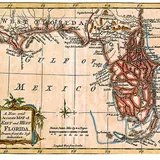
Yeah, actually in St. Augustine, in the early 16th century, community of Huguenots led by a man named Jean Ribault moved to North Florida, actually, right outside St. Augustine, and established a community there. And for most of the early 16th century, actually, most of Florida, the Europeans that lived there were actually French-speaking Huguenots. And if not for the sort of timely and unfortunate intervention of the Spanish, it's very likely that Florida would have been a French-speaking province of North America.
Yeah, no, as we discussed in our episode on New Smyrna, this Huguenot colony, which was the biggest European settlement in probably the entire North American continent outside Mexico, was just completely slaughtered to a man, pretty much, by the Spanish. And this was in the 1560s. So before the Huguenot could really get started, this first utopian religious colony was snuffed out.
Massachusetts and Virginia
But about 60 years after this, there would be two others a little bit more up the Atlantic coast. These were two very different kinds of social experiments created by two very different types of people, Massachusetts Puritans and the Virginia fortune seekers. You know, so one thing that Arthur Bestor talks a lot about is how America is a place for old world ideas to be made real in the new. You got any thoughts on that, Jackson?
Yeah, I was actually at a talk one time, and a historian was asked a similar question about this topic. And he basically said that America is like 100 or like 60 years ahead of the rest of the world. So, that like the stuff that is sort of being worked out in the old world is like already being put forward in the soil of the Americas, usually not really consciously because they haven't really dealt with the theory. We're not really theory-minded people, Americans. We're more of an action people, right? We're more of a, we want to do stuff. So, I think you can actually really see that very clearly in the Massachusetts and Virginia examples, just because these are guys that don't really, they haven't really developed like an ideological sense of like what capitalism is going to look like or what like market society is going to look like.
But nevertheless, they are two very clear instantiations of like what the market is going to do to society in some ways, positively in the Massachusetts example, but like pretty brutally in the Virginia example.
Yeah. No, and I think Massachusetts and Virginia are so different. I think we already said like these are the two poles basically of American politics up to the present, but they're both, they could be understood as social experiments or maybe even as very different intentional communities. Because you know, Massachusetts was consciously understood as a new kingdom of God, but they were kind of going about that, you know, like they're kind of it was kind of on an ad hoc basis. There wasn't any grand plan for what Massachusetts should be. Instead, it was just understood this would be a new society separate from the sinfulness of England based upon religious principles. We went into this in detail in our Thanksgiving episodes. I think one of the funniest little details here is that the Jerusalem artichoke does not, in fact, come from Jerusalem. It comes from New England because this was understood by the colonists to be the new Jerusalem, just as the kingdom of Münster was a century before.
Both Connecticut and Rhode Island began as ideological offshoots out of Massachusetts because they had thought that Massachusetts had become too sinful and corrupt, just like New England. So you can really see this idea of taking your sect and going deeper into the wilderness to create the real means of Christian living. We should say how, you know, there was a lot of ideological conformism and social control in Puritan New England. Not everybody living in New England was a Puritan or had to be a Puritan, but people were expected to be members of the Puritan church. Those who were not faced major social obstacles. Even within the Puritan community, there were a lot of strange methods of social control not really seen elsewhere. We talked about how the development of slavery happened in a unique Puritan context in New England, different from in Virginia. But another strange element was that it was actually illegal in Puritan New England to be a single man.
If you were an unmarried dude, you were forced to live in somebody else's house. It was considered too dangerous for young men to be living on their own.
Yeah, they were longhoused.
Diggers, Levelers, and Quakers
All right, and then so one thing I guess we should also mention, just because there's no way we just have to get into this here, kind of about your point about how America prefigures Europe for a few decades. Massachusetts would be figuring out some of these ideas that would later be exported back into Britain during the English Civil War. Most famously, there is Gerrard Winstanley, who had his diggers who attempted to create some kind of a utopian colony in England where all material distinctions would be flattened. They were part of a broader group known as the Levelers because they wanted to level all social distinctions. The Levelers were generally seen with a lot of skepticism by mainstream Puritans and by other parliamentary Protestants in the English Civil War period, including Oliver Cromwell. Another group that's pretty important here are the Quakers. We actually have a couple friends of the pod who are Quakers themselves.
Shout out Will.
Yes.
We have Wu of Wilf, we have John, we've got Richard Nixon.
You know, the Quakers, they're a pretty interesting bunch. So the Quakers, they were basically an offshoot from the Puritans, although Quakers today don't like that comparison because of the associations of Puritans with repression. Some Quakers today don't even consider themselves to be Protestants at all. They even argue that you could be a Quaker without even being a Christian. If you, you know, believe in the Quaker values of egalitarianism and pacifism, they've got the famous meeting houses where they usually don't speak unless you really have something to say. They're really interesting. They emerge in England during the English Civil War, but eventually would come to America afterwards.
Virginia as social engineering
Before we get more into them, though, we should focus on the much more important colony, or I would say the much more important experiment of Virginia. There's a great book I'm drawing off of here known as American Freedom and American Slavery, and that's by a guy named Edmund Morgan. I think it was written in the early 70s. His thesis is that Virginia was certainly not a utopia, but it was this new means of social engineering. I think it's possible that Arthur Bestor might have considered this an individualist experiment using his schema. It was an ideological refuge and an experimental foundry for the kinds of virtues celebrated by especially the royalists, but also some of the parliamentarians in the English Civil War. This being the value of aristocracy as an ideal, but not the value of aristocratic birth. In other words, Virginia was a society where every man could live like an aristocrat with the respect an aristocrat was due simply because of his own personal success and material wealth.
A lot of you guys will know that Virginia is actually older than New England, but took a little bit longer to get started. Even before the Puritans arrived, these guys in Virginia established their own nation independent of Britain. Various merchants and marauders landed on Atlantic shores with the goal of shaping North America as they saw fit. These guys were, generally speaking, amoral adventurers whose goals had nothing in common with the later utopians of the 19th century. But in their ambition, their eagerness to reshape the world, I think we do see a hint of the American future. Virginia settlers generally followed the Spanish model of colonization. They were men, rarely coming with families, and they intended to shape their fortunes by conquering Native American kingdoms or uncovering vast stores of gold, just like Cortez and Pizarro had done. The first serious attempt at English settlement, the lost colony of Roanoke, was dominated by soldiers and miners rather than farmers.
Some of them had come from farther than Britain itself. The first Jewish person in the modern U.S. was Joachim Gans, a bohemian goldsmith who hoped to find precious metal deposits. And I think that a lot of these guys, these early Virginia colonists, they really seem like the 17th century version of crypto bros. These totally amoral fortune seekers who are at the cutting edge of commerce, but are, you know, have only the worst intentions for humanity.
It was kind of a grind-set colony.
Like from that, that's absolutely it. Massachusetts was about moral behavior and cooperation. Virginia was about grind and hustle.
They would have fucking loved podcasts.
Well, yeah, like when they came to set up the Jamestown colony, like infamously, they just didn't have enough food stores and all that stuff because these guys, they just came armed to the gill with pickaxes because they were just expecting to just find gold and somehow to live off of that indefinitely. And instead, you know, they turned to cannibalism. Long story short.
Yes, though, they would, yeah. And so, you know, the first one to go was Roanoke. It would mysteriously disappear, probably ending with its settlers assimilating into the neighboring Indian tribes they had hoped to conquer. But the values and virtues of Roanoke would very much set the tone for the much more successful colony of Virginia, named for the recently deceased Queen Elizabeth. Colonial Virginia was an intentional community of planters and plunderers. They designed a society that was aristocratic without true aristocrats. Distinctions in birth were washed away, with financial success and eventually skin color being much more important than noble pedigree. All power in colonial Virginia was held by the Burgesses, who were powerful but almost entirely common-born landowners. They recreated the social hierarchies of England, even though exclusion from these hierarchies is usually what drove them to settle the new world. They lived in imitation not only of British aristocrats, but also classical elites, patricians of Rome, and citizens of Athens.
Keep in mind that all of these groups derived their power entirely from the exploitation of others, you know, bringing into mind the Qarmatians from the medieval Arab world. The Virginia Burgesses carried on the values and virtues of Roanoke, but this time they actually succeeded, although not without extreme hardship. Like you mentioned, the cannibalism and the starving time in the first couple winters. They also tended to sympathize with aristocratic causes, meaning that they were generally satisfied with the religious compromises of Queen Elizabeth, and they supported the king over the parliament during the English Civil War. In general, I think it's fair to say that the Virginia settlers were individualists who cared more about material wealth than divine reward. This puts them in direct contrast with the Puritans of Massachusetts and later more utopian figures like the Quakers and the 19th century guys we're going to get into.
The Virginia system was hugely beneficial to the landowners, as any man could be a king so long as he was white and Protestant. But it also meant that any man who was not a king was hardly a man at all. The most obvious contradiction in the Virginia system was slavery. Forced exploitation of Native American labor began almost immediately. We discussed parallels in early New England in episodes 90 and 91. But a major divide between the North and the South would emerge across the late 17th century, as slave labor would shift away from being an important element to the Virginia economy to its defining factor, something very different from the Puritan colonies of the North, where slavery existed but was significantly more marginal. I think that this was really not necessarily a moral issue, more of the fact, like, it's not that the Puritans were just, you know, less racist than the Virginia people.
It was that the climate of Virginia was much more suitable for plantation agriculture. After Native American slavery became less useful due to the mass dying off of Native American slaves, foreign slaves violently captured from Africa quickly began to become the primary labor source. In parts of Virginia, they outnumbered all whites due to the mass success of plantation farms. Slavery would become increasingly widespread and increasingly brutal across the 17th and 18th centuries. This corresponded with hard-ending racial distinctions that stripped black and mixed-race people of legal rights and social humanity. English slavery initially had strong parallels to what happened in the Spanish Caribbean, like Cuba, for instance. But in Virginia, racism would develop into a much more extreme system of ideology than what existed in Romance-speaking parts of America. American slaves actually didn't die at the same frequency as their kindred in the tropics, but paradoxically had less legal personhood.
Descent from slaves was a moderate social disability for Latin Americans. For Anglo-Americans, any visible African ancestry was a mark of non-personhood. Generally speaking, children born to one white and one black parent were guaranteed to be slaves. We also have to keep in mind that these were systems of social control that were new. They were being developed by the intentional community of Virginia. And in accordance with the values with this colony, some must suffer so others should prosper. We're still feeling the ramifications of all this today in every enduring social inequality, as well as in the persistent underdevelopment of southern states. And as we see in all periods of southern history, these economic and social institutions were designed to benefit an elite white clique rather than white settlers at large. All whites benefited from the genocidal removal of Native Americans from Virginia soil, but white workers found themselves out-competed by enslaved black workers.
Whites benefited from slavery indirectly in many ways, like, you know, for instance, they could rent slaves owned by their wealthier neighbors, but this system gave no incentive for wealthy southerners to establish the kinds of schools and civic institutions that existed in the North. I'm saying all of this to set the tone for what American society looked like, in particular in the Southern states. So, you understand the kinds of systems that people like Robert Owen are going to be rebelling against. Because the Virginia and the antebellum South writ large were an intentional community, not unlike that of the Owenists, but one much more dystopian than utopian. Southern planters scorned the common good in favor of their own advancement. Huge numbers of poor whites felt the cracks, and all black people were horrifically oppressed by this system. Even though no white person was ever a true slave, many of them found themselves in conditions we would today consider slave-like.
They suffered their short lives as indentured servants, often tobacco pickers working alongside black slaves, or they arrived free or quickly mired in debt peonage to a rich planter. For those settlers who managed to remain free and independent, the only means forward was lifetime subsistence farming, with the hope that enough surplus could be saved and invested to propel a poor yeoman farmer into the slave-holding class. There was basically no means to be wealthy and free in Virginia unless you had others you were directly and brutally oppressing. Dissatisfaction with this system caused poor whites led by Nathaniel Bacon to revolt in 1676, making common cause with many black slaves in the largest uprising before the American Revolution. After Bacon's revolt, racial distinctions and the institutions of social control in Virginia became even more brutal and even more crystallized. These enslavers, knownly or not, were socially engineering a new kind of community unlike one that existed previously in Europe.
In this way, the Virginia Burgesses were their own kind of reformers. But beyond Massachusetts and Virginia, there were other smaller attempts at institutional reform across the 17th, 18th, and 19th centuries. These tiny communes, these backwoods utopias, are going to be the focus of the rest of this episode. These new communes are going to be direct descendants in many cases of radical Protestant sects from the time of Martin Luther and Jan van Leyden, including the Anabaptists themselves. The Mennonites, including the Amish, are arguably the only Protestant utopian community that still survives to this day, although they were less ambitious in their utopian goals than most of these others. And even though Virginia and Massachusetts would be the real poles for American politics from the 17th century, arguably up until the present, the space in between the wild regions of backwoods, Pennsylvania, and upstate New York would become the real grounds for radicalism in the late 17th century and beyond.
Pennsylvania and the backwoods
All right, but moving beyond Massachusetts and Virginia, the two big ones, we begin to see a lot of other utopian experiments, much more radical, in these areas between, especially in the more wild parts of colonial America, including even parts of colonial America that were not initially colonized by the British. The first of all of these truly utopian groups are, of course, the Quakers, who we just mentioned in the context of the English Civil War. Because they were pacifistic, they were initially pretty conciliatory toward the Native American peoples of Pennsylvania, where they settled. You know, Pennsylvania famously means the woods of William Penn, the great Quaker leader. They pretty quickly became the ruling class of much of southeastern Pennsylvania, including the city of Philadelphia. And kind of the, you know, sad fate of the Quakers is that as they became more politically and economically influential, they kind of left all the nice stuff about being Quakers behind.
The descendants of William Penn were much more hostile to surrounding native Lenape peoples. Meanwhile, in the later 18th century, the Quakers had basically become a reactionary clique in the city of Philadelphia, opposing, for instance, working-class, artisan, and African-American involvement in the American Revolution. But I digress.
If you want to shit on Quakers, we could just bring up a biography of Richard Nixon.
Mennonites, Labadists, and Moravians
So let's continue to some of these other groups in the Pennsylvania-Delaware region who are really quite interesting. We've talked so much about the Anabaptists. We mentioned that their descendants today include the Mennonites. Dutch Mennonites were some of the first settlers of New Netherlands when the Dutch controlled much of the modern states of Delaware and New York. Some guys inspired by both the Anabaptists of Münster, as well as the English digger Gerrard Winstanley, had a short-lived commune somewhere in Delaware. Although, tragically, during one of the many Anglo-Dutch wars, the English would destroy this colony, therefore destroying really the only interesting thing ever in Delaware history. The next group we should mention are the German Labadists. These were guys who followed a Genevan Calvinist philosopher who founded Germantown, Pennsylvania. Today, Germantown is a cute suburb of Philadelphia. I've actually spent a lot of time there as a kid.
The Labadists aren't that interesting, except for the fact that later on, they would be joined by another group known as the Rappites, also a German utopian organization. The Rappites also had a settlement way out in Indiana, and this is going to become very important to our story later on. The next of these big groups, and probably the most important, are the Moravians. Some of you guys might know that there is a Moravian church in America. You might think that Moravian Christians come from the Czech region of Moravia in Central Europe. Not so. They are mostly Dutch and German from the kind of Western Rhineland region. They're pretty cool because, just like the Quakers, they had some ideals that we would today consider quite progressive. Lots of pacifism, lots of communitarianism. This meant that they formed these communes to protect themselves from Indian attacks without having to violently retaliate against native peoples.
This meant that Moravian missionaries were a lot more successful at converting their indigenous neighbors than most other Christian groups would be. The Puritans kind of tried to convert the native Wampanoag, but they also enslaved them, so not a great relationship there. By contrast, an entire Lenape band ended up adopting Moravian Christianity. These are the Munsee people who are still around today. What I think is really interesting is that the Muncie were some of the most fervent Native American Christians and were very eager to missionize among other Native American peoples all the way across the American continent. This means that there are pockets of Moravian Christians among Native American tribes as far west as Alaska due to 200 years of missionary efforts among these Munsee and their descendants.
Christian Priber
One last guy I want to mention here, because he's different from all of these, was a German guy named Christian Priber, who I never heard of, but he was really an interesting figure because he wasn't exactly a settler in the same way as the rest of these guys were. I mean that in the sense that he didn't try to settle land previously inhabited by Native Americans to build a European society. Instead, he joined existing Native American communities as an honorary member of the Cherokee. He started out as a mediator between the Cherokee and various white settlers. Then he was eventually fully incorporated into their community. He was an advisor of the Cherokee leaders, and he actually entertained the thought of transforming Cherokee society into some kind of utopian colony based on the ideals of Thomas More and Plato. However, before any of this could be put into practice, he was in fact arrested by the British as a suspected French spy in the lead up to the French-Indian War, and he would tragically die in prison before we could get the meme of the future city, except they're all Cherokee.
Mother Ann Lee and the Shakers
All right, so Jackson, that was a lot about the German and Dutch connection there. We're mostly going to be talking about English language utopians for the rest of this episode. What can you tell us about probably the most famous English religious utopian, Mother Ann Lee?
Right, so Mother Ann Lee is sort of an interesting figure who she founds a group that came to be known as the Shakers. She arrives almost immediately before the American Revolution, and her sort of ideas about Christianity spread pretty quickly among New England Puritans. And they sort of have a famous song called Simple Gifts that sort of, I think, encapsulates their ethos pretty well. And it's, 'Tis the gift to be simple, tis the gift to be free, tis the gift to come down where we ought to be.
Simple Jack was a shaker.
But yeah, I think it sort of encapsulates their beliefs, which is that they sort of believed in simple living in the sense that I think most people would be familiar with, like the Amish today, but they also kind of believed in sort of radical spiritual freedom. They didn't believe that hierarchy or stratification was justified by God. And they were into the sort of citing the Acts of the Apostles, where they talk about how the early followers of Jesus after he died held everything in common. So they were this early socialist experiment in America, and they formed a colony in upstate New York in the sort of famous burned-over district that had multiple waves of religious revival in the 19th century.
We did a whole episode on what's his name, Cyrus Teed and the Koreshans. They were from there.
Up until the 20th century, you had these weird religious ideologies specifically coming out of upstate New York. It's really funny.
It's their chief estimate.
Right, and Mormonism famously comes out in upstate New York as well.
Oh, absolutely. Yeah, that's the big one. Yeah, yeah.
And the one thing I know with the Shakers is that, like you said, they were very egalitarian, not just materially, but also racially. They saw no distinctions between people of black people and white people. They had very interesting ideas about gender because, you know, they were founded by a woman. She was their leader. There were many women in leadership positions. I think women shakers could have any of the same rights and authorities that men could, but they were also kept completely separate by gender.
Right. And they were famously shakers that are poor at reproducing because they are, in fact, not allowed to have sex. So.
Yeah, we keep stewed. You can't do this.
It's the cathar problem. We keep it.
And the shakers. They take this sort of separation of sex incredibly seriously, except at their famous dances where they would come together and dance together in a gender, a gender-balanced way.
They shake and shake together.
Which is how they got their name, obviously. Yeah.
Oh, we forgot to mention the Quakers. That was a pejorative. They called themselves friends. They were called Quakers because they supposedly quake at the fear of God.
Shakers quite literally would shake.
That wasn't. It might have been a pejorative, but they certainly did a lot of shaking. Yeah.
And I mean, the shakers are just very interesting because Bestor talks about them a fair bit. And when he's just introducing them, he's talking about them as an example of something that was not at all American in its origin because Anne Lee and all of her followers were basically Englishmen who had fled from England to America. And that's his huge thesis: that so much of the history of America are these European ideas being tested in America before they can be tried in Britain.
And I think actually a good link there is how he also, one thing also that Bestor makes a big deal about are all of the various European and also Latin American observers of various utopian colonies, especially New Harmony. But even before Robert Owen, even before New Harmony, we have these observers checking out the shakers. Because if you were going to America in the like, you know, early American period, like the 1790s, you probably are going to hear about these weird guys who shake out in the woods. You're going to want to see what you're going to want to see what's going on. One of them was François de La Rochefoucauld, who was a French duke who had supported the early stages of the French Revolution before being exiled for his aristocratic sympathies. And so during his time as an exile, he wanted to see other means of changing the world.
Going back to Bestor's thing about revolutionaries versus utopians. So he visited America and he spent all this time with the Shakers, totally convinced that this was the means forward for European progress.
Right. And just like continuing on from that, like the Shakers are really remarkable for a number of reasons, but the main one is that they were just really thoroughly Americanized. Like when Mother Ann Lee passed away, her successor was someone from England. But then after that, all the leaders of the Shakers were like American. So they just became totally Americanized in a way that a lot of these other sects just failed to do. And they were also much longer lived than most of them. In fact, and that's the thing that we kind of made fun of them for not physically reproducing, but because they kind of got became part of the American landscape the way that the other guys couldn't, minus the Mennonites, they were able to keep going. I think until like the 1960s.
No, no, no, no, no, no, Liam. I was doing research for this and I discovered that there were at least two Shakers still alive in 2017. Yeah, there's a town called Sabbathday Lake, which used to be like a Shaker town, but now it's just like these two old people. Here's how the article describes them: Arnold, blue-eyed and stooped, age 62, and June, small and shy, aged 80. So, I mean, it's been a while since this article was written, so I fear things may have turned for the worst, but who knows? Maybe they're still kicking it out there, one would hope.
Still shaken.
Oh, yes.
Exactly.
Enlightenment influences
All right, well, so the shakers are very cool, but they are completely rooted in this previous tradition we've been describing. This is the Christian utopian tradition. I believe it's what Bestor calls sectarian utopianism.
Yes, but he also notes that they very quickly became secularized, where previously, until the middle of the 19th century, the primary focus of their literature was on the religious aspect. Whereas from 1848 onwards, thereabouts, they're taking on a much more like social interpretation of what they're doing.
And you're right. And I think that this reflects changing trends in intellectual thought across the late 18th, early 19th century. And it's basically, in short, it's the rise of the Enlightenment, but there were specific thinkers in particular that had a lot of influence on not just the Shakers, but the broader utopian movement. These guys, you know, Tom, there's also Thomas Paine and John Locke, who you guys remember from AP US History. There was also a guy named Thomas Spence, who was kind of an early proto-socialist in 18th century Britain. He argued for redistribution of property and for communal living, and he would be a pretty chief influence, from what I understand, on figures like Robert Owen. But another influence was not ideological, it was political. It was the fact that the American Revolution changed everybody's ideas, upended everyone's preconceived notions over what was politically possible. So, you know, if you're replacing a king with an elected parliament and, you know, an elected president, it's a lot easier to begin asking bigger questions about if we should have these large landholders.
If it's, you know, if every man is equal, then should we not be equal materially? I think you can draw a comparison with the Protestant Reformation here, where there's this big shift that just uncorks a lot of new ideas. Most of these new ideas are going to be pretty violently rejected by the people in charge of the new status quo, who don't want things to change that much. But still, the end of the previous status quo makes asking these questions finally possible. You know, Jackson, last time we brought you on, a great episode on artisans in America. We talked about how a lot of artisans truly conceived of America in its earliest years as a workers state. And they felt immediately betrayed when they were sidelined from politics. Any kind of thoughts there as we're moving on to 19th century utopianism?
Right. You had said something recently I thought was pretty funny and pretty true, which is that for a lot of people, the United States was sort of the like the bourgeois Soviet Union. Like it was a it was kind of an open space that people conceived of as like in very different ways. And like they saw the opportunity to shape in many different ways, but for liberalism instead of for socialism, although in some cases for like proto-socialism. And it was sort of conceived as like a worker state in a sense where like, okay, if you work, but also if you're like a clerk or like, hey, if you're a capitalist who, you know, makes things that people need, like you're sort of included in that vision. And it, yeah, it really was like a place that people who wanted to embark on social engineering projects, 19th century ones, and not like, you know, not like the ones of the 20th century, but social engineering nevertheless, they saw it as a place to do that.
Right, right. And that's the thing here is that, you know, in America, it's the new world. Everything is being built by settlers from scratch. So this means that you're always reinventing society in one way or the other. The easiest thing to do is just to completely copy the European society that you had been brought up into back in the old country. But a lot of people had more ambitious ideas. You know, like obviously Robert Owen, who we're going to get into right now, is the most extreme and most interesting of all these examples. But I think that you do see these little beacons of utopianism all over the place in very different ways, even in some horrifically dark ways, like the construction of racial hierarchies in Virginia. That was a kind of social engineering that would have basically been impossible in Europe. But here in this tabula rasa of America, you can create a new society to fulfill whatever ideological aims you're reaching towards.
Robert Owen
All right, Jackson, let's do it. Let's go into Mr. Robert Owen, the man we're here to learn about.
All right. So, so Robert Owen, right? He is a guy who was born in Newtown in Wales in 1771, which is kind of interesting because it's sort of an English-speaking part of Wales, but yeah, I digress. He was a self-made man. He was kind of a characteristic figure from early history of capitalism. And he was kind of emblematic of the process that we kind of discussed in the Artisans episode, where he was initially brought up as a draper, like a man who would just make textiles. But he made some wise personal investments in the textile manufacturing industry. And he was sort of thrifty and sort of conscious enough to eventually allow him to gain some stakes in some textile concerns in Manchester and eventually where he would make his name and his fortune in New Lanark in Scotland.
No, I guess this is the one period where the whole boomer thing of like you could just walk in there and shake a man's hand with a firm handshake, you get the job. This was actually kind of true. I get the impression, you know.
A lot of like individual thrift and a lot of individual sort of effort was genuinely rewarded in like the early stages of capitalism just because there was so much left to build that like if you were just a guy who was like, you know what, I think I'm gonna build a new way to spin this cloth. Like a lot of the times that would be pretty well rewarded in a way that it really would not these days.
Yeah, I think like, you know, like having like coming from a poor family would have been a huge disability, but if you can move to the next town over and don't let anybody know that your parents were farmers, you can rise pretty far.
Yeah, and that's kind of exactly what Robert Owen did when he sort of embarked upon his commercial journey.
New Lanark
He had sort of made waves early in his New Lanark days as a manager, and it was here where he kind of developed his thought. He basically saw the problems of early industrial capitalism, things like poverty, drunkenness, destitution, overwork, as problems not of the moral failings of the workers themselves, but of the organization of the factory and eventually of society as a whole. The solution to these ills in his new view of society took a two-headed approach. On the one hand, proper education had to be given to workers so that they'd be able to transcend their lives of manual drudgery and have access to the finer intellectual pursuits that a sophisticated bourgeois gentleman like Robert Owen himself enjoyed. And then on the other, he called for a kind of cooperation among all classes of society for each other's benefit. Rather than capitalists attempting to exploit the workers maximally for profit, they should give them just restitution for their labor.
And the competitive spirit of industrialism should be replaced with a cooperative spirit in which ventures were planned out and executed with the benefit of all in mind.
He was Henry Ford without the Nazism.
Essentially, yeah, like he basically saw cooperation as like almost as like untapped potential for this new industrial system that he was a part of and he made his fortune on. He basically conceived it as like, okay, we have this system that produces like wild amounts of surplus, like unforeseen levels of surplus. But if we all work together, we could actually make even more. And he actually put those ideas into practice at New Lanark, where he was a manager. He improved the living conditions of his workers by renovating their workhouses, instituting fairer prices for goods at the company store. He still paid them in sort of scrip that was useless outside of the workshop, but it's fits and starts. And he also instituted some pretty radical educational reform in which the workers' children would actually be given an education broadly at Owen's expense. So he actually sort of took a lot of the profits that the textile mill was making and reinvested it in the education of the children of his workers.
He also sort of rationalized production and he actually started recording it and he instituted like writing to AGM like recorded, like writing down their yields, like how much was produced in the factory. Yeah, like how much they produced that day, how much like time they spent on each thing, how much inputs they needed.
It's crazy that no one thought to do that before. It was something that had to be sort of come up with almost like double entry bookkeeping, where you're like, how the fuck did you do it?
It took 6,000 years for merchants to realize you should write down how much money you're burning and spending.
Exactly. And I think people, I think capitalists had been doing something like that, but it was mostly like hire a guy to beat them with a stick if they stop working. And Owen was the first guy to be like, hold up, we don't need to do that. We can just write down how much everybody does, and we can kind of aim for what we're looking for.
Wow, I love welcomes.
It's not like he owned this factory and was doing this to make his own company more profitable. He was like an employee, right? He was basically a McKinsey consultant. He was giving these ideas about efficiency.
He was initially a manager who owns some stake in the textile mill. But eventually, he became like a controlling capitalist.
Yeah.
He also instituted pretty vigilant watch over theft and drunkenness in the factory. So you kind of see some of the beginnings of labor discipline. But again, at the time, it was, I think, I think it was slightly better than the previous system, as we said, which is just like, get someone to beat them until they do what you tell them to do.
No, no, also, I'll get into this in a second, but we talked about this in our episode with our friend John about the rise of alcoholism and alcohol treatment. It had a lot to do with the beginnings of the workday, as we understand it, with proletarianization.
Yeah, and I mean, frankly, you just don't want drunk people operating heavy machinery, period. He also instituted a like kind of interesting sort of daily grading system that would rate how the employees had done that day. So he would give you like essentially like a teacher does today, where they give you like a check, check minus, or like an X or whatever. He basically instituted a system like that in New Lanark, which again, I think to modernize is kind of like, oh, this was sort of a controlling atmosphere. And it was, but I think when you contrast it with sort of the sort of de rigueur processes of factory life at the time, it was very much better than what they were used to. It kind of gave them, I think, buy-in in a way that other capitalists had not cared to or been able to do.
Probably most importantly would be his sort of institution of a 10 and a half hour workday, which was radically, radically sort of not something that was done at that point, right? Workdays were essentially unlimited.
That is grim.
Yeah, people would work 16-hour days, 18-hour days. Owen was like, all right, let's scale that back to 10 and a half hours, which again, to our modernized is like, oh my God. But at the time, massive intervention for the benefit of the workers.
And they were lucky if they got Sundays off.
Exactly. Some sort of capitalists at that time would just not give any days off because sort of the modernizing sort of bourgeois is like, well, part of that is not being super religious, although sometimes it does mean being very religious. So the Sundays off was sort of come and go.
And something also that I know you've talked about before on Twitter is how you've pushed back a lot on the idea that like the Industrial Revolution was this inherent good for the well-being of poor people because every poor farmer would rather be a poor factory worker where they didn't have to do as much physical labor, and they didn't have to, you know, their meals were more regular or whatever. That wasn't the case. The earliest and the earliest stages of the Industrial Revolution were like just exceptionally brutal for the workers, obviously, but they were brutal to the extent that it was pretty hard to convince people to leave the farms to come into the factories. So, kind of in a funny way, these kinds of labor regulations were incredibly important for the development of capitalism because it made it made being a proletarian a better deal. It accelerated the development of capital.
Right. And I think that that kind of explains sort of some of Owen's later life, which is that, like, not only was New Lanark a financial success, he amassed a huge fortune, hundreds of thousands of pounds in early 19th century money, but he also like became a celebrity. Like, he was a he was honestly one of the first celebrities. He was sort of a famous attraction. New Lanark became a thing that, if you were touring the United Kingdom as a sort of continental, sort of noble layabout on your continental tour, like New Lanark is something that they would go to. They wanted to see like this new, this new moral world that was being built in Scotland and see how it had sort of changed society, how it had made society a lot better than it looked in a lot of industrial places on the continent.
And Owen established like really deep connections with a lot of very powerful people. He had a lot of sway in parliament. He could get basically most of parliament to read his tracks when he would publish them. He also like met a ton of like sovereigns. He had face-to-face contact with Tsar Nicholas I, who toured New Lanark in the 1810s. Like, he, he, he was, he was in many ways like one of the first celebrities. And it was because he sort of, I think it was because he had this vision of society that was like amenable to a lot of different types of people.
Yeah.
If you're a capitalist, you can be like, wow, this guy is like... This guy is, his production numbers are good. Like, he's making a lot of money. It seems like he's got something going on here. And then, if you're like a worker, or if you're someone who is looking for some sort of escape from what factory labor was like at the time, you could be like, this guy's factory seems pretty much like a great deal. Like, it seems like it's much better than working at a similar factory that might, you know, beat you, make you work 16 hours, not give you food, not let you sort of eat, employs children. Owen sort of avoided a lot of that. And because of that, made a lot of inroads both at the top of society and at the bottom of society.
Yeah. No, and I think we should upface here. Like, we're just, we're not even getting into the utopian stuff yet. We're just talking about how well known he was for his new means of social engineering just as a capitalist. Like, this is all before Saul becomes Paul.
Exactly.
You know, actually, one little point here I just want to also get into, just as we're talking about his early life as a capitalist reformer, we should keep in mind that so many of these things he was working with, like the length of the workday, the conditions of the factory, in the 1810s, this was like completely new. I doubt any factory worker in New Lanark had parents who had worked in a factory because a generation before, this kind of situation didn't exist. Like, this was 30 years before Engels would write about the condition of the English working class. This was a total, you know, this was very much the cutting edge of changes in society. And it's like, you know, this is still basically the Napoleonic era. And that actually makes me think that, like, you know, I have to wonder if anybody wants a free thesis idea.
To what extent do you think did the mass mobilization of armies and of industry for the Napoleonic Wars, you know, staffing all those armies, creating all the ships, to what extent did that kind of rigor inspire people like Robert Owen to apply this like military rigor to industrial life?
Right. And also, hey, if you want to write an alt fiction novel, what if Napoleon met Robert Owen? What if he turned France into an Owenite community?
That's right.
A new view of society
All right, well, let's get into the real meat of this. Let's talk about his more interesting career, even beyond all the stuff he was doing at New Lanark.
Right. So in the 1810s, Owen gets bought out of his share at New Lanark. The other shareholders are sort of willing to humor him. They like that he is sort of meeting production quotas, but I mean, end of the day, they're like, maybe we could pinch a few pennies and not spend money on education. So they buy him out of his share. So Owen turns to actually sort of codifying and publishing his thought. He writes this track called New View of Society, and he sends 40,000 copies to the reading public of the UK and abroad. And he argues for that cooperative and benevolent example of New Lanark to be emulated across the world. Like we said, at this point, he becomes something of a celebrity. His thought is read all around the world. Most major political figures that you heard about in your high school history class in American history probably knew who Robert Owen was and knew what his thought was.
John Quincy Adams, James Monroe, Thomas Jefferson, even Andrew Jackson, like these are all guys who knew of Robert Owen and sort of maybe didn't buy into, but were certainly intrigued by his new view of society.
I think this is why, you know, in the period before the 1848 revolutions, utopianism was considered the dominant reformist ideology. Just like it wasn't necessarily being put into practice all over the place, but everybody was reading about this proposal. Everybody thought, okay, the future probably is this kind of peaceful transition into these organized systems of new societies like New Lanark.
Right. So what exactly was this new vision, this new view of society? Basically, it revolved around sort of the topic of this episode, which is the creation of intentional communities. Owen pegged it at around 2,500 people per community, and they would put his cooperative principles into practice. Those communities, which later he would sort of design a building that they would live in that was called a parallelogram that contained all the provisions a community might need to provide for itself, they wouldn't be classless, at least not in his early thinking. Owen believed in the early days that classes would exist physically separate from one another, but that they would cooperate for each other's mutual benefit, as his sort of enlightened managerial mind had done in New Lanark. He sort of like, he even was prone to flights of fancy, so he was like, yeah, you know, the gentlemen will get to keep their horses, and you know, they'll get to keep doing their sort of you know, agricultural seniorial stuff, and the manual workers will get to do their manual worker stuff.
Like, he sort of envisioned them as separate but working for each other's benefit. It's probably, yeah, it's probably prudent to note at this point that Owen's vision of socialism was not what we would consider socialism, especially in the sense that he didn't really care about calling for the extension of democracy to the working class or the abolition of classes. He didn't really believe that the communes would be that democratic, or at least he didn't really consider it. He wasn't really an anti-democrat, he just didn't really think that the question meant that much. He didn't really calculate it into his planning. For him, socialism was more about being a rational and cooperative society. It didn't really matter if everybody had a say because, end of the day, if we plan the system correctly, we plan it rationally, and if everybody gets something out of it, everybody's cooperating for each other's benefit, there's really no reason to extend democracy to everybody.
Everybody is going to get what they need out of it, everybody's going to live a harmonious life. Everybody is going to agree voluntarily to be part of the system and not really have many sort of hang-ups about democracy or having a say. It'll all just work out in the end.
And I think that I think that's the issue here is, you know, like this is this kind of this great divide we're looking at in social reform movements up to this day. You know, to totally caricaturize here, it's like the in some ways more humane and pacifistic, but much more naive reformists versus people who advocate for oftentimes more violent solutions, not necessarily out of like bloodlust, but because they recognize that no, actually, no, no, I think this is like a really interesting point to bring up. So when I was thinking about Owen, I came to a realization that like given his experience as a capitalist, like everything just sort of makes sense. Like his idea was that humanity would transition to socialism, not through a violent revolution, which was very messy and very violent and often came with people needlessly being killed, which is definitely something he didn't want.
But rather, he saw how as like this figure working in a factory and working on creating all these new innovations that made the system even more profitable, like these kinds of things were just spontaneously adopted across the industry with pretty rapid progress because there was merit in them to increasing the profit margin. Whereas he took a similar view of society where similarly, if he can demonstrate that his model results in much better circumstances of living for the vast majority of people, then of course it's just going to become the law of the land of its own accord without any need for a violent intervention.
No, and also, you know, capitalism was so new, like we're saying, you can kind of forgive him for thinking it would happen so quickly. You know, in the same way that early Christians, to keep bringing back this parallel, their guy was just killed. You know, he had just been alive. So you can kind of forgive them for thinking that maybe he'd come back pretty soon. I think he did think that the new moral world was, you know, just around the corner.
Yeah, yeah.
All right. So we've used this phrase a few times now.
The new moral world
Let's get into what the new moral world actually was and what that phrase comes from.
Right. So Owen started to visualize a world that would be more just and that would distribute the sort of surplus of this industrial production that he was a champion of more equitably. And towards the middle of his time, around when he was designing New Harmony, he started to be interested in questions of the labor movement and he reconsidered the question of private property, which previously, like his sort of stance on democracy, he hadn't really thought about. He began advocating against the ownership of private property, although not its seizure. He wasn't a violent guy and he didn't believe in violent revolution. And he advocated for a sort of Ricardian socialism where the laborer would be remunerated with some sort of token that stood in for how much labor he did and could be exchanged for goods at the parallelogram store. Right? So he was envisioning this society in which everything is run harmoniously.
Everything is run rationally. Everything is run like his factory was run. And the question of private property, when it came up, he was somewhat ambivalent to, but end of the day, he basically thought that private property was something that came in between people and co-operating with one another. And in his view, if cooperation was the cost of private property, he wasn't really willing to maintain private property. He thought that, of course, it would be rational to have everyone cooperate. If everybody has to get rid of private property to cooperate, well, then fine. We'll just hold everything in common and it'll benefit everybody involved. Right. And so for Owen, his sort of new moral world, which we've talked about, is sort of, it was a, he started a publication, a newspaper in England that was titled New Moral World, which, you know, is a title that has a lot of aura.
It's sort of a sort of a hype element for sure.
Oh, yeah. Absolutely.
His new moral world would be one in which groups of enlightened managers would lead workers, but all the other classes of society as well, into these utopian communities where everything would be held in common.
The parallelograms.
Exactly. The parallelograms. Everything would be held in common, and each would be remunerated according to his labor, and education and plenty would be provided to all through the application of reason by enlightened managers. Owen's new moral world would be voluntary to join, but ultimately all thinking people would do so anyway. Through enlightened planning and cooperation, these communities would produce such abundance that they would extend the bounty of industrialization to everyone. And this is kind of key to his thought, eventually replace the current mode of society that we have now. It would replace all of them essentially through example.
Yes, and that's the thing, yeah, no, and I think we've mentioned this a million times in this episode before, but we've got to underscore that. The whole like lead-by-example thing is so central to this kind of like 19th-century naivete that underscores all of this. They really, really thought that if they had the coolest little town with the niftiest parallelogram, everybody else on earth would spontaneously develop their own. But again, like Sam said, you can kind of forgive that because so there had been so much voluntary change already in society with the development of capitalism and the Industrial Revolution.
I think that it's important to remember that Owen is kind of one of the first people to articulate something that I think most people or many people agree with today, but at the time was sort of radically new and not something that people were considering, which is that he believed that humanity's nature sort of was not determined by being saved or being sinful. And it wasn't determined by sort of innate slovenliness or laziness versus like innate industry, but that humanity's nature could be made for them through social organization. This is one of the first things he says in A New View of Society: that humanity's nature is never innate. It is always made for them. His theory led him to determine that the only way to make the best society possible was to make that society, right? He had to put it into practice in order to shape people into these sort of happy, harmonious, cooperative beings that he wanted them to become.
New Harmony
And soon after he became this sort of world-class celebrity, Owen started to explore exporting his gospel to America. That's how we get new harmony. Owen started to search for places that he could export this new moral world to. And he settled on a parcel of land from the aforementioned Rappites, right? The sectarian Christian group that was also utopian in southwest Indiana along the Wabash River, which nowadays is sort of just sort of rural Indiana. It's exactly what you would think when you think of that area, but at the time was sort of unsettled frontier.
Yeah, no, that's the thing. As crazy as it sounds, in the 1810s and 1820s, Indiana was exotic. This wildlife was like, this was, yeah, it was beyond the edge of European civilization in the Americas. It might as well have been Timbuktu, too. It was so hard to get to. And I think this is kind of why the Rappites left. They were uncomfortable living so far from any other settled areas.
But Robert Owen was not daunted.
No, he, in fact, he went to go tour the property in 1824. And while he was doing so, he gave a whirlwind speaking tour across the new country. And he managed to gain a ton of sort of acolytes and people that got converted to this sort of gospel of the new moral world. And he met with, like we mentioned, multiple presidents. He met with John Quincy Adams. He met with Andrew Jackson. And he basically assembled a sort of coterie of people that were traveling west with him to build this new utopian society. One of them was a man who will become pretty important later on, who is named William Maclure. He was kind of an American Owen. He was born to humble origins, but through industry, thrift, and sort of savvy investments, became a sort of rags to riches figure. And he became a respected man of science and industry in Philadelphia, where he sort of established a scientific society that had some political connections because it was sort of supported by the rich and famous of Philadelphia.
He was a more pragmatic figure. He kind of came to blows with Owen later at New Harmony, but he was really key in bringing this sort of great image in Backwoods Utopias of this sort of barge that was filled with books that was taken to New Harmony by Maclure and Owen. They sort of arrived by ship with this boat filled with books. And Maclure was sort of instrumental in building that.
And that's obviously the metaphor for American utopianism right there.
Right, exactly. Sort of bringing this new gospel of sort of not just gospel of religion, but sort of social engineering as well to this sort of Western area. Owen left his sons, who again will become a little more important later on, Robert Dale and William, in charge of setting up the new community. And they did a pretty decent job, but the community was kind of immediately beset by a number of problems. Most of the people who showed up were kind of useless loafers, and the venture was pretty uneconomical from the start, especially as the most logically profitable venture that they could have pursued, which would just be sort of agriculture. They didn't really want to do that or know how to do that or care to do that. And the community saw manufacturers of things like leather and textiles as sort of their key, their ticket to economic prosperity, which makes some sense.
Yeah, but on the other hand, like if you're out in the boonies where you're literally like on the edge of civilization, I don't think you have like the supply chains to actually be bringing your goods out east in sufficient quantity, even assuming that you're able to make an economical venture.
Exactly. It was kind of in a lot of ways, it was sort of doomed from the start, but they definitely made a bunch of choices where it's like, hmm, not really sure I would have done that in hindsight. I don't think any of them would have either.
I also wonder if the first kind of problem here was that Owen was a factory owner, not a farmer. So he just didn't really have that. He knew how to organize people into a new kind of building, but he didn't know how to keep these guys fed.
Exactly. I think he basically thought that, okay, I made my fortune and I made all of these sort of these inroads into building this new moral world in a factory. So if I want to do that across the world, what do I got to do? I got to build a factory. And, you know, it was, that was, I think, like we've said, not the worst idea to have just going off of what he had available to him, but turned out to kind of not be a good idea. The community of New Harmony was also kind of beset by a sense of vagueness that wasn't really intentional, but was really characteristic of Owen's sort of career as a community builder. He didn't really give a lot of clear instructions on private property, didn't really give a lot of clear instructions on the remuneration of labor. And as such, the community experienced a bunch of splits and defections with each of the three changes to its constitution in the short around two years that it existed.
And the attempts to fix it only kind of exacerbated matters. The community actually operated at a loss for Owen. He was the guy who was in charge of supplying the town stores at his own expense, which he did happily. But his attempts to improve this sort of situation, initially through the application of managerial distribution based on need, and eventually through like essentially a purge where he got rid of all the loafers and the shirkers, it didn't really succeed. Like he wasn't really able to get the community on an economic foothold that would last.
And I hate to say it, but I think, you know, this fumble here kind of puts all of Owen's credibility into question. Because not being able to turn a profit off of the company store is like not being able to turn a profit off of a poker table.
And I think that kind of speaks to something about Owen, which is that I think he was obviously thinking like a capitalist in a lot of his ways. He was trying to think about maximizing production. He was trying to think about maximizing value that could be extracted from a workforce in a given amount of time. But I also think that he was kind of a nice guy who didn't really want to exploit people, didn't really want to be mean and like crack the whip and tell them like, okay, you know, he who does not work, neither shall he eat. Like that wasn't really something he wanted to do. So it, this sort of inability to enforce a sort of discipline or a sort of plan, even into this community kind of sort of led to its downfall.
He just didn't have that dog in him.
He really did not. And essentially, he orchestrated a series of municipal coups to the government of New Harmony.
All right, let's go.
Broadly with support. I mean, each time people were like, okay, this isn't really working. We need to fix this. But he did a coup a bunch of times. He tried to reform the community each time, but every time he tried, it just introduced new problems and it failed to actually fix the fundamental sort of honestly irrationality of the venture. Eventually, the community attempted to split itself into three parts. There'd be a sort of community for mechanics or craftsmen. There'd be a community for agriculturalists. And then, key to this, there'd be an educational society whose sort of remit was enlightenment of the public, both the adult public and the sort of young public, right? They were involved not only in sort of schooling the young, but they actually were famous for giving these sort of almost like lecture hall talks to the community members that were apparently very well attended and very well beloved by the community.
This was really William Maclure's baby.
Something tells me a lot more people would have wanted to join the educational committee than the agriculture or the mechanics.
Exactly. And the agriculturalists apparently had the lowest amount of people in it, but were actually the most influential because they were the ones who were growing the things that they needed to eat. So they had a lot of power in that sense. Your point about the educational community, I think, is interesting and well said because this was kind of that character from earlier, William Maclure. This was really his baby. He shepherded it very well. Bestor, I think, really likes Maclure. He comes off very well in his narrative. Maclure shepherds this educational society very well, especially given the circumstances. He probably provided the best primary education in the old Northwest at that time. Like, I can't really think of anywhere else that would have done a better job than him.
Sure, yeah, yeah. Maybe in America, you know.
Bestor has this sort of point that the barge of knowledge or like the flotilla of knowledge that sails into New Harmony probably represented the best library, at least west of the Appalachians, if not like in the entire country. Like there's a lot of promise to this sort of educational project that Maclure was really interested in. The three societies that New Harmony split itself into traded with each other through these labor notes that sort of stood in for the amount of time that was expended on each sort of thing that the community needed to survive. This is an idea that actually continued to live on in Ohio and the sort of old Northwest region in this sort of really interesting venture in Cincinnati called the Time Store that was created by this guy named Josiah Warren, where essentially, you would labor for a certain amount of time, and then you could reimburse that for goods and services.
It was this sort of early attempt to think of how can we remunerate people for their labor in a way that is not exploitative in the way that sort of the wage-money relationship is. Owen's attempt to create these three new societies in New Harmony kind of failed, though. Recriminations, bad blood between him and Maclure, and this really funny figure named Paul Brown, who was kind of like the first left comm. He was like the first sort of left sectarian who was constantly denouncing everything as sort of not fitting with the vision. He was kind of a local roustabout that sort of created a lot of divisions in New Harmony. Eventually, Owen abandoned New Harmony altogether. He gave the community over to Maclure, who did manage to preserve a lot of its educational mission, but ultimately abandoned a lot of its social aims. Owenism without Owen. Exactly.
It didn't survive for very long without the man himself. All in all, I think it's pretty safe to say that New Harmony was a big failure. Owen, the man who thought he could plan his way into utopia, established a community that left fundamental questions of economy and even political economy basically unanswered. And his project essentially suffered and died because of it.
Why New Harmony failed
I want to ask now what you guys think about why do you think New Harmony failed? Because obviously there was a lot of things going against it. I think it had a lot of bad fundamentals. But there would, as we'll get into later, there were a number of other communities that tried similar ideas that actually managed to do a little better than New Harmony. And obviously the Shakers and the Rappites had had a lot of success in this sort of new social layout, building one in the West, right? Why do you guys think that this sort of ultimately failed?
Just guessing here, these were strangers with a shared ideological vision. And even then, we don't know how committed their ideology was. People had little reason to stick around through hard times. Whereas if you were an Anabaptist, you know, or a Quaker, you were part of this sect, which didn't just mean you had religious inspiration. It also meant that you probably knew all of these guys for much of your life before you had started living together with them. So I think that, you know, like an association of professional strangers basically doing like a socialistic startup, I think has a lot more against it than a deeply committed religious sectarian commune.
Alternatively, I think Owen got a little too big for his britches, as we mentioned previously. He was, you know, a successful capitalist and he knew how to build a factory, but he didn't really like, you know, how to do all that out into boonies where you're unconnected from the world at large. And I mean, there's also like the bad personnel element that's very unfortunate. And, you know, because you're out into boonies, it's much more difficult to get new people to fill in when these old loafers, as you call them, Jackson, just didn't feel like, you know, contributing. Yeah.
You know, it's also kind of funny that if he really wanted to inspire the world to abandon basically a step away from industrial capitalism, instead of doing all this, he could have just turned the original New Lanark into a co-op.
Yeah. But he didn't think of that. He didn't choose to do that. It kind of speaks to, I think, his sort of inability or unwillingness or to actually like grapple with the why of why capitalism often looks so ugly, especially in its early days. He's sort of like, I think he saw that and he was like, wow, this is bad. We need to change this. But unlike, you know, later thinkers, wasn't really interested in figuring out why, was more interested in figuring out how to get out of it, which kind of, I think, speaks to his sort of managerial mind.
Yeah.
Like, I'm sorry I keep dwelling on this, but like, why did he go out west? If you're building like a model community that you want to be emulated across the world, wouldn't you build it in like, you know, Pennsylvania or whatever? Like, there's plenty of Germantown was a utopian commune within Philadelphia, essentially. There was a Philadelphia utopian commune called Economy. I think that was the Rappites. Like, they could have been neighbors, you know? Just building economy and building economy and New Lanark side by side. Yeah.
No, also, speaking of the Rappites, you know, they had cleared this land initially. He bought it from them. You think he might have asked them, like, hey, why did you guys not choose to stick it out in Indiana? Why did you go back to the coast?
Because it's a lot easier to live out there. You know it's it's you're you're part of society.
Right. I think this kind of i think this speaks to a really interesting sort of facet of Owen's personality, which is that, like, I think it's it's safe to call him naive and definitely safe to call him naive yeah you could also just like call him like he was kind of an internal optimist like he he sort of like saw saw failures like this as like just kind of another bump in the road a lesson that would help him perfect his system like he he sort of he didn't think very deeply about things that didn't occur to him to think about but when they did happen when they did affect his projects when they did sort of cause them to fail he was more than willing to be like oh okay i i guess i got that one wrong i guess i should rethink this sort of whole idea of how i should build this society and and try and perfect this because that didn't really work so well so let's see what we can sort of do to tweak this yeah interestingly sort of the failure of new harmony like actually didn't really destroy owen's credibility in the way that i think it would nowadays or that you would expect it to have owen's new moral world was as much of a gospel as it was a plan right an idea that people could aspire to one failed attempt did not spoil the vision of a cooperative society built on the frontiers of america owen continued to develop his vision actually when he returned to england he continued to advocate for more utopian communities to be built and in a lot of ways shifted his focus from sort of like you said getting out over his skis and building these enormous projects that were kind of you know doomed to fail, he started to shift his focus a little bit more to education of working men and women to prepare them for better lives in England and to leave the sort of satanic mills that he had sort of grown up overseeing.
Later Owenite communities
And I think it speaks to the sort of resilience of that idea and the resilience of Owen's legacy that, like we said earlier, other Owenite communities were founded around the same time in like the same area.
Right, and that's what I found so interesting. Because, you know, like New Harmony was very ambitious. It was cool to learn about, but it only lasted for a couple years. I think really the real importance of Owenism are these various later attempts and the general kind of effect that Owenism had on the development of socialist politics. Like, you know, like, I think Owen is a lot more important, honestly, as a writer, probably, and as a visionary than as a utopian planner.
Right. And a lot of the communities that sprung up based around his ideas were like more successful than New Harmony would be. A lot of them actually managed to sort of maybe not, you know, change the world, but at least like was a venture that was solvent and sort of manageable for the people that lived there.
Yeah.
There are a lot of these communes are in Ohio. I've actually been to a couple of them. And one such community was Yellow Springs in Ohio, which had essentially the same trajectory as New Harmony, but crucially didn't fail quite as bad as New Harmony. And as a result, that commune, that area that had been cleared in Yellow Springs for the sort of Owenite Commune, eventually developed into Antioch College, which is still around today.
Yeah, I'm quite familiar with it.
Which sort of is, I think, noteworthy because it was the first, although if I have anything to say about it, not the last attempt to build a BYU for Owenism.
Yes, I think we can get back into that at the end of this episode.
Robert Dale Owen and the Working Men's Party
But before we get there, before we delve further into BYU for Owenism and start working on our chance and our mascot, let's talk about Robert Owen's children, both ideological and biological, because they really kind of kept the Owenist torch alive. His son, Robert Dale Owen, who was initially left in charge of New Harmony, but eventually left like his father, actually had a sort of really interesting legacy. He was one of the founders of the Working Men's Party in New York City that we discussed in our Chants Democratic episode. Yeah.
He was kind of his father's son, though, and he advocated for the most part for an education-first approach to ameliorating the workers' dire conditions in the city at the time.
Yeah, no, and that's the other guy we mentioned was a Thomas Skidmore, much more of a kind of traditional like proto-socialist. He drew a lot from Thomas Spence. He's a lot more in common with later socialists and anarchists. And he actually advocated for basically a revolution. And I think the phrase he used was the general division, which was the dividing of property from the wealthy down to everybody else.
Right. Yeah. Skidmore saw his vision of socialism, I think, more in line with, like you said, the Jacobin ideal of the French Revolution, where it was sort of an artisan socialism that saw workers broadly defined.
And what's kind of funny is that it's kind of also a low-key proxy for supporting Jefferson versus Adams. Do you support this kind of more agrarian-minded redistributionist platform about supporting the little guy, or more of an elite-driven, urbane model of social improvement? And I think Skidmore's greatest mistake was that despite being an urban artisan himself, he totally bought the Jeffersonian dogma that only rural living was true living. And a big part of his platform was after this general division of property happened, everybody would get a little parcel of land to become a subsistence farmer. And to his credit, Robert Dale Owen said, no, that's really stupid.
Right. And sort of owing to that sort of stupidity of the idea, I think one of the reasons that Robert Dale actually managed to oust Skidmore from the Working Men's Party.
Yes. No, and I think that the tragic thing, or maybe his just deserts, is then not long after Robert Dale Owen took over the Working Men's Party, a whole bunch of moderate Jackson voters would then oust him from the Working Men's Party. They would just turn it into another political organ in support of the new Democratic Party, and then they would dissolve the Working Man's Party.
Yeah, and Robert Dale Owen kind of had an interesting post legacy. He returned to New Harmony, actually, where it had been transformed into, I think, still a very, you know, idealistic community, but less sort of planned from the top down than it had been under his dad. And he actually continued his advocacy for educational reform, and he actually became a representative for Indiana in Congress in the 1840s, although for the Democratic Party. So you can kind of make your judgments there.
And it's also funny how Indiana has this real forgotten radical legacy, just not radical in the way we usually understand it. When you think of Indiana today, you're like, okay, the most right-wing Midwestern state.
But in the past, because it was this area that, and I think we have to mention it now, like because of Native American clearance, right? It was this area that was the most frontier-y part of the frontier for Americans in the 1810s and 1820s, which meant that, like, if you wanted to build something new, like if you wanted to build a new moral world, Indiana was going to be the place where you would have to go to do it, right? Yeah.
No, and it's horrific to think about, but Indiana may be the very first example of a housing development being named after the thing that used to be there. Like, you know, call a neighborhood Cherry Creek after you paved the creek and chop down the cherry trees.
Fanny Wright's Nashoba
The other sort of way that Owen's legacy continues in America is, I think, a lot weirder and in a lot of ways is a lot darker. That namely is Frances Wright's experiment with abolition at her planned community in Nashoba, Tennessee.
Yes. No, we mentioned Frances or Fanny Wright in our last episode with you, in the artisan episode, but we didn't really get into her own utopian experiment. So, which is an expensive longer than New Harmony, I think, but had a lot of worse outcomes.
Yeah. Like, like we said last time, Fanny Wright was sort of in the Owen mold of a speaker for, you know, all of these left-wing proto-socialist projects, utopian projects at the time. And she specifically wanted to see what the new view of society could do when applied to anti-slavery work. So she was an abolitionist and she wanted to use Owenism or an idea like Owenism in helping to abolish slavery in America, right? So sort of to do the utopian thing where you build a community and eventually everybody sees how cool it is and joins you. She wanted to do that, but for the abolition of slavery.
Yeah.
And she sought to end slavery by some of the most hare-brained means I could conceive of. Like her plan is so stupid. I'm sorry, Fanny Wright, but you should have known better. Yeah, right. Like her plan involved basically preparing slaves for manumission by educating them, but also having them work to offset the cost of that education.
Yes. So just to clarify, in other words, she purchased slaves. She became a slave owner, but she did promise these slaves that when she thought they were ready to enter free society, she would then free them. It's this, you know, it's, it really is this disgusting arrangement. And I think in some ways she did have good intentions by the standards of her time, but this was a horrifically exploitative system.
Right. And the system only kind of got worse after she left Nashoba. The sort of managers of Nashoba after she left instituted, you know, something that I think spells the end for any sort of utopian community, which is sort of free love. And the locals turned really hard against this because the community was officially integrated. Like they didn't have sort of race-based discrimination in the way that Tennessee did.
Oh, I didn't even consider that angle.
Yeah. Yeah.
No, so for the figure, for the Hicks outside, Nashoba was, it was the pits of hell. It was the thing they were most scared of. It was, you know, restrictions on all restrictions on interracial mixing stripped away, even if in practice it was still a deeply racially hierarchical society.
Right. And Nashoba didn't just kind of sort of in negative reproduce a lot of racial hierarchies, but it reproduced a lot of gender hierarchies as well. The sort of free love mixed with this sort of legal ownership of people, even if it was, you know, for whatever reason, it sort of ended up leading to a lot of like what I think today we would characterize as pretty bad sexual assault of a lot of the enslaved women at the commune. So I think it's pretty safe to say that Nashoba sort of represented another, in a lot of ways, way more significant and a lot more destructive failure than a New Harmony had been. And the manager of the community eventually took the enslaved people to Haiti and freed them and left them on to their own devices.
Yeah, so hopefully a happy ending for the people involved, but it's crazy. And I think the worst part here is that this wasn't even the most, you know, pro-slavery application of Owenism.
Joseph Davis's Owenite plantation
So Jefferson Davis, the sort of president of the Confederacy, had a brother who was named Joseph Davis who was inspired by Owenism to build his own like Owenite slave plantation in Mississippi where he would do the Owen thing with his sort of slaves.
Enumeral chattel.
Exactly. Like he provided a better quality of life than I think most slave owners did. And he allowed some level of self-government in the community that he built that was called Davis Bend. But he kind of did it to like prove that slavery, if it applied the sort of rational managerial principles of a guy like Owen, could be run in an enlightened way and in a sort of sick, perverse way. Applying Owenism in that context would like help him produce more. I think this sort of gets at the fundamental, one of the fundamental problems of Owenism, which is that the idea is about rational organization, right? It's not about emancipation. It's not about democracy. It's not about any of that. It's about rational organization such that the people who live in the society are sort of working for each other's benefit and are provided everything that they need to survive and to have a, you know, whatever good life they're able to have.
That's not an idea that fundamentally criticizes power structures. Like it's not an idea that thinks about, okay, why does someone get to make the decisions and the other people have to live according to them? And as a result, I think that it had a lot of purchase among people like slave owners who were sort of amenable to the idea of organizing their societies that they were kind of little lords standing over. They wanted to organize it in a way that was rational, that would benefit them. And they were sort of maybe comforted or could or were more able to buy into the system kind of because it didn't call into question the idea of, okay, who gets to make decisions and who has to follow them.
Yeah.
Dark Owenism in Silicon Valley
You know, I think we're going to end this with some nicer applications of Owenism beyond Owen's lifetime, but I think this might be a good place here. I know, Sam, you had some thoughts about how this kind of application of Owenism, which looks more like the Virginia method of social engineering than Massachusetts, this has some creepy modern implications or modern echoes in Silicon Valley, if you wanted to share your thoughts on that.
Yeah, well, I mean, just for starters, this isn't really Owenism per se, but rather it's this idea of like creating intentional communities in pursuit of your utopia. And this American tradition of utopianism. Yeah, and this conceit was really at the heart of the internet revolution of the 90s and Silicon Valley, where, you know, it was this confluence of a lot of very hippie-coated people on the surface making the argument that the internet was this ultimate liberatory force that was going to, you know, shatter the constraints of space and time and allow everyone to find their own tribe out there in the wilds of the World Wide Web and thereby to, you know, begin living their best life by being connected to all these people. And I mean, in retrospect, that idea is just very plainly naive. We are, you know, we're all internet natives at this point, especially you, if you're listening to this podcast.
And we can definitively say that, you know, it hasn't really panned out that way at all. So that sort of communal idea of the internet has sort of faded away. Now, you know, we don't really have our own communes anymore in the way of like, you know, having forum communities. For example, now everyone is just posting slop on Twitter. But I mean, in a more like a closer parallel that outgrew this original Silicon Valley mold is found right now in some really, really dark corners that are increasingly coming into the spotlight.
Given right, no, because we're not getting, we're not getting Silicon Valley Owenism. We're only getting Silicon Valley dark Owenism.
Yeah, Silicon Valley Joseph Davisism.
Yeah, exactly. So, I mean, the name Peter Thiel is probably very familiar to a lot of listeners. He's really having a moment right now. And he's, you know, one of these big tech financiers who founded the PayPal Mafia and who became stinking rich off that and had several strokes of luck along the way until now. Like, you know, he's the man behind JD Vance, basically. Him and his acolytes are putting forth this really noxious idea of intentional communities that are, you know, often characterized by, which are like categorized differently by different people. So, for example, you have a certain Silicon Valley guy named Balaji who's talking about this from the framework of the network state. There was a really famous Rees-Mogg book from the 90s.
Yes, and Rees-Mogg, for those who are not familiar, he is the British high Tory politician best known for having an adult nanny and for his extremely reactionary social views.
Yeah, yeah, yeah. So in the 90s, he basically wrote this book, which a couple of years ago was reissued by Peter Thiel's personal press, funnily enough, where he's, you know, sort of riffing on this same idea that with the internet, we are escaping the need for the nation state. And consequently, as the burdens of the welfare state and democracy accumulate, this is going to cause the collapse of the state, which is going to be replaced by basically these intentional communities of sovereign individuals who are going to have citizenship to any one of these microstates where they will be able to retreat into once the collapse has happened and leave the hinterlands in a state of barbarism, basically. And to venture out there to find labor when unspeakable things happen to the old ones and to exploit them for the resources, but otherwise to go into this mode of conserving their resources for their own tribe.
So in this way, it's like, we can't fault Robert Owen himself for any of this, of course. And again, I doubt many of these people would be thinking about this in terms of Owenism. But nevertheless, this is sort of a logical outgrowth of what happens to the idea of intentional community when the altruistic motives are savvy.
Yes. And this goes back to this. Yes, and this goes back to his naivete, because not only did he naively assume his ideas were so correct they had to succeed, he naively didn't think that his methods of social engineering could be used to exploit rather than to empower.
Yeah, and just to give some concrete examples, there has been a project called Prospera being built out in Honduras, which is closely connected to many of these Silicon Valley types who have embraced the more dark Owenism, where the idea is you build this intentional community that, you know, has locals laboring in it, but...
Yeah, and this is, yeah, so regular Honduran people working for these parasitic American Silicon Valley rentiers.
Yeah, yeah, exactly. So like they don't get the benefits of like the citizenship of that place. They exist fundamentally to serve people who like ran over there, presumably to dodge taxes, basically. And this has been the site of a lot of controversy over the years. Recently, a more recent government of Honduras has attempted to renege on the contract that was signed with the makers of Prospera because it was done illegally and there was a lot of corruption involved in the organizing of this venture. But basically, like Prospera countersued and I'm not sure where this is going to end, but it's not in a good place. Another example is Praxis. Peter Thiel is directly behind this one. It's currently being headquartered in New York City. It's still very much in the planning phase, but they are very much on the lookout for a place to build their base when with all the Greenland talk of late, there was talk of Praxis being able to operate in Greenland or alternatively in Gaza once Gaza is stripped of its native inhabitants.
But I guess all of that is to say that we are living in the epoch of dark Owenism, whether we like it or not. And it's worth considering all these histories because one man's utopia is another man's dystopia.
Fourier, Oneida, and 1848
Well, you know, Jackson, why don't he close us off kind of on a nicer note, moving away from the worst implications of Owenism, more towards kind of the general legacy and the, I would say, more positive implications of Robert Owen on later reformist thought.
Right. So I think Owen's sort of direct legacy is that, you know, there are a bunch of people who try to put something like his idea into practice at different areas, right? So there's this French thinker, his name is Charles Fourier, who was also, like Owen, a planner, a systematizer, but unlike Owen, was super in-depth about literally every almost minute of the day that would be spent in his sort of his own proprietary type of parallelogram, which he called a phalanstère. So Fourier was obviously very heavily influenced by Owen, and he actually also tried to build some communities in America that also failed. But the maybe wackier, kind of bad, but in a somewhat funny way, legacy of Owen is that there was another community in New York in the same burned over district that we talked about called the Oneida community, led by this guy named John Noyes.
It was also run by, along communitarian lines. It was remarkably long-lived. It survived for decades. But Noyes was kind of a Jim Jones kind of guy who ran the community pretty much autocratically, instituted free love, and eventually instituted a sort of eugenic program declaring who could and could not have children in the Oneida commune. Really wacky, not great, but it didn't seem to go down the worst road it could have gone down. So it remains a kind of wacky fun note in American history.
Yeah, he was playing The Sims with real people.
Yeah, exactly. And I think also that a lot of these utopian communities that get established in America inspire people who I think we would more traditionally consider to be like socialists in the vein that we would understand today to come to America and to try and sort of see their vision put into practice, but in a, I think, more practicable way. So like, obviously, soon after New Harmony fails, you get this wave of German immigration, especially after the revolutions of 1848 fail, that pretty much largely imports a sort of continental proletarian-ish, but more proletarian vision of socialism than I think Owen had. Imports it pretty much whole cloth into America after being expelled from Germany in 1848. So they are sort of attracted to America for the reasons that we've talked about, right? America is this place where visions of society can be put into practice.
Like they, you are allowed to do that here in a way that you are not allowed in the old world.
Yeah. You know, and just if anyone's not super familiar with the 1848 revolutions, this was a huge failed revolutionary push. These were generally liberal revolutions pushing for the expansion of democracy and to a lesser extent, like, you know, nationalism against international empires, especially the Hungarian Revolution against the Habsburgs. But a big effect of this was it led to really kind of accelerated the development of radical labor politics after they failed. And, you know, so much of Marx's works need to be understood totally in the context of these revolutions happening and failing across Germany, France, Austria, Hungary.
Yeah, yeah. While doing research for this episode, I was tickled to learn that Engels was at one point writing for the new moral world.
That's great.
Yeah, and I mean, I guess like they had to follow out at some point. Owen comes away, sort of, he gets a lot of, I think, do shade thrown at him in the writings of Marx and Engels. I think they sort of take a...
Oh, yeah, no, and that's what you're Arthur Bestor. He's just like, he's so, he's still so salty about that, that Marx and Engels shaded his boy. And, you know, I think...
I do think that, however, though, like, their thought definitely sees Owen and people like him as a necessary step towards what they envisioned for society, right? Like, in order to understand that political methods and political sort of organization is necessary to overthrow capitalism, to build something different from capitalism. In order to understand that, you have to first go through this phase where you sort of have this naive hope about what you can do with the world and you try and put it into practice. And I think Marx and Engels were both guys like Robert Owen who sort of saw failure not as a thing that would disprove a project, but merely something to learn from, right? Like you have to learn from the failure of a project in order to make it better. I think that sort of spirit in Robert Owen's life and thought is something that carries over into later attempts to build or to theorize about like what a socialist society would look like.
And, you know, what are the kind of the beyond Marx and Engels?
Polanyi's third revelation
I know that a lot of other socialist writers in the 19th and early 20th century had thoughts on Owen, right? One of the ways that kind of changed the way I think about this is the great theorizer of the sort of birth of capitalism, Karl Polanyi, basically at the end of his book, The Great Transformation, argues that there were sort of three revelations that were made that brought humanity closer to this sort of ideal understanding of our existence and how to make life good for people, right? So the first revelation was the Old Testament that brought humanity the knowledge of life and death, brought humanity this idea of, you know, fear and trembling in the hands of an angry God who demanded piety. The New Testament, which is the second revelation for Polanyi, brought humanity the knowledge of freedom, right? That through Christ's blood, the sins of the world had been washed away.
All men had the choice to live according either to the love of God or the sin of the devil, right? But Polanyi names Robert Owen as the third revelation. He's the guy who revealed the third thing to humanity that brought us closer to our knowledge of a sort of absolute ideal, right? And that was the knowledge of society, right? For Polanyi, Owen represented the idea that a person cannot act according to the testaments if they're hungry, right? They can't properly exercise their freedom if they haven't been taught how to do it, right? Owen was the first person in Polanyi's thought to articulate that not only could humanity retain its freedom in an industrial society where the worker is subjected to the discipline of the factory through the application of planning, cooperation, and reason, but in fact, that Owen was one of, if not the first person, to figure out that the Industrial Revolution contained within it a great breakthrough in man's ability to provide bounty and plenty for everyone, right?
And that Owen was the first guy to realize that if we plan it correctly, or if we sort of set society up correctly, that bounty, which is given to some more than others, can be shared in a way that people of previous times could only have dreamed about.
Right. No, and that's why, in a way, he does share a little bit with Marx, even though the Marx defined himself so much in opposition to him. Because so much of Marx's writing famously is lauding the productive capabilities of capitalistic industry to produce a previously unheard of surplus. You know, that this technology developed for capitalistic means, not just technology meaning machinery, but this social technology, the kinds of things he was doing in New Lanark, they could easily be applied in an extra capitalistic context.
BYU for Owenism
All right. Well, thank you, Jackson. This has just really been one of our best. This has been a really great episode. There's just so much to chew on here. If you could please provide us with one last little nugget, I want to hear your pitch for BYU for Owenism.
All right. So I've been thinking about this a lot. I also have a plan like Owen before me. I have a plan, right? So we have this college, right, in Utah where they've set everything up according to Mormonism, right? You can't, you have to do soaking. You can't sort of hold hands before you're married, all of this stuff. We need a BYU for Owenism, right? We need a college where...
Right now, and keep in mind, you know, keep in mind, you know, BYU, Brigham Young University. It's already a university based on the vision of a single utopian.
Exactly. And I say, if they can do it there, we can do it here, right? We can build a college where for four years, our best and brightest live in a parallelogram, they work at a textile mill.
Forget the quad.
Exactly. No more quad. We're building a parallelogram. And I think that it could, if it works, if I could get a couple million, maybe tens of million dollars of funding, I think that I could make a real sort of a real headway into building the new moral world.
We're going to tell the students that they will own nothing and be happy, but we'll be sincere about it.
Exactly.
All right. Well, thank you, Jackson. This has been such a great one. Hopefully, you know, with the help of our listeners, we can make BYU for Owenism a reality. Well, thank you all for listening, and we will see you in the new moral world. Bye. See you all there. Bye-bye.
The show is also on Apple Podcasts, Overcast, Pocket Casts, Podcast Addict, YouTube, RSS and Patreon.