38
Fritz Lang’s M
In progressFritz Lang’s first talking picture, M tells the story of a town shaken by a string of serial murders by a killer who targets young girls. This Weimar era film stood out as one of the most well crafted movies to date upon release. We talk about it, the director, and the German movie industry it was made in.
Transcript
Fritz Lang's M
And we're back with another episode of Gladio Free Europe. I am Liam here with Abram, and we are going to continue our Interwar series by stepping away from war and politics for a moment and looking at the culture of this time. A lot of you guys already know that the 1920s and 30s were quite famous for the cultural flourishing that happened all throughout many parts of the world. Germany in particular had an especially thriving film industry. And there's so many movies from this time that are worth talking about. But there's one movie in particular, which had an incredibly far-reaching impact, both in Germany and abroad. That's also a really cool movie to dive into, which is Fritz Lang's M, 1931. Probably the earliest serial killer movie, and one of the creepiest movies you're ever going to see. Abram, had you seen M before this episode?
I hadn't even heard of it. I mean, I had seen Metropolis, but I didn't even know who their director was. Like, I couldn't even name who that was.
So for anyone who's not aware, it's a movie about efforts to track a serial killer in 1930s Berlin. And in addition to being probably the first movie about a serial killer, it's also probably the first police procedural. There's some movies like Alfred Hitchcock's The Lodger, which go into the habits of police a little bit, but this seems to be the first movie that really goes in depth into what a police investigation looks like. But the movie isn't just about the police, because as they fumble in their attempts to find the killer, all of the various criminals of the Berlin Underground decide that they have to take it upon themselves to find out who is killing these children and bring them to justice.
Berlin or Düsseldorf?
Yeah, and one correction there, Liam. You say it was in Berlin. I'm pretty sure it's actually in Dusseldorf because when I looked up this movie, I saw one of the alternative titles for the movie is The Monster of Dusseldorf.
Yeah, so actually, a very funny point there. We can, we're going to get into this later. The setting is never said in the movie. Apparently, if you look at the uniforms, they say Berlin police in a couple times, but right after the movie was released, there was a really notorious string of crimes in the city of Dusseldorf. And this was the backdrop globally that the film was being released on. So when they brought M to America, they added the subtitle, The Monster of Dusseldorf, to kind of capitalize off of this political current event. And apparently, Fritz Lang himself was pretty unhappy about that. And he actually denied fervently that the Dusseldorf murders had any connection to his movie. But the American studios, you know, they didn't care. And they knew that would help it sell.
Yeah, and they were probably right, too.
Yeah, yeah. No, yeah, yeah.
If it bleeds, it leads, right? Like, yeah, making something... If something is seen as current, you know, people are always going to be more likely to see it, I guess. It's like Dirty Harry coming out right in the middle of the Zodiac killings.
Yeah, absolutely. And you know, Zodiac is a... The Zodiac killings are a great, you know, thing to bring up here because it's really interesting to compare and contrast the depiction of a serial killer in M with later serial killer films.
First impressions
But hey, let's talk about M. Do you like it? Do you not like it? So you hadn't seen it before, so what were your thoughts?
I thought it was pretty good. I mean, there were like a couple of things I didn't like, but for the most part, I thought it was like, you know, a very well-made movie. And it is the kind of movie where if it came out in, say, like 1970, exact same movie, just in color, same script, same like acting, same direction, like same shot composition. If it just came out in 1970, it would fit right in with like the 1970s movies. So it was... Very interesting that like, I think this was Fritz Lang's first talking feature, just right off the bat.
It's like fully realized.
Sound
Yeah, absolutely. It uses sound in a very sophisticated way also. And I feel like a lot of sound films from like 1929, 1930, 31, they really just want to be like, look, we have sound. There's music everywhere. But M is not like that. It uses sounds in a very realistic way. But it also manages to use sound in a really clever way that moves the story in a way you wouldn't expect.
Yeah, and it's not completely sound. I mean, there's long stretches throughout the movie or just complete silence. You know, this is like an hour and 40 minutes or something. So, you know, standard length feature, but yeah, production costs limited them for making the entire thing sound.
Yeah, and it's in Germany more than way more than the US.
Yeah, sound isn't just people talking. There's also like a lot of sound effects, like a lot of Foley work, which to us now, that sounds like obvious. Of course, there would be sound effects, but plenty of them were just purely talking and didn't have any kind of like background noises or just like, yeah, it's weird to like say that because yeah, it sounds like so obvious to us now, but at the time, it just slipped so many movie makers' minds.
Innovations
Oh, absolutely. And so much of this movie that might not be that shocking or surprising to us, and not only in the content of the story, just was super new. Just the fact that so many of the actors were not professionals, they actually just grabbed locals off the streets of Berlin when they're filming that, you know? The accents that a lot of the actors speak in are very kind of working class Berliner accents that weren't usually represented in other sound films and the editing was really quite new at the time where he will he'll cross cut between different conversations happening in different places in a single scene which i've never seen before at all in a film earlier than 1931.
One thing that stuck out to me is like this is a very little thing and this is like a thing you listening will have seen like thousands of times because you've watched many contemporary movies and TV shows but there's a sh a panning shot in this movie where it's like the characters are in a s the basement of like a bar or something just talking and then the camera pans up slowly and then keeps panning up and then all of a sudden we're outside on a balcony. You know what's happened there is you use that panning shot to you know pan on the concrete wall of the cellar to the concrete outer wall of the building and just you know hide the edit in that pan. This is like a very common thing. But in the 1930s this is a very very like new thing being that artistic with your edits because even though it looks simple and it kind of it isn't that very difficult but like planning that has to go into the movie like okay this scene is preceding this scene there's gonna be this dialogue and then there's gonna be this pan and then there's gonna be this pan in this dialogue.
It's like you know you sort of have to have a very exact view of how this movie is gonna turn out in your mind to be able to accomplish that. And you know a lot of movies they will trim a lot in the beginning in the middle or the end of a scene. So that's why like most cuts between scenes and movies are just like that hard cut. So, you know, it's not super impressive, but it is like we were doing things like that that early on.
That's interesting. Yeah, absolutely. And I think that the fact that Fritz Lang, the director, was able to do so many strange new things like that, that's kind of the most obvious reason for why this movie has a very high reputation among film critics today and also seemed to really impress people at the time. I can't really tell if it was any kind of a big box office smash or not, but it really helped propel the director Fritz Lang, who was already well known for Siegfried and Metropolis into basically becoming the most famous director in Germany.
Reception
You know, I looked at the newspapers from the time and it seems like it wasn't a huge success in the United States. There were complaints in the newspapers about like the dubbing because it was like dubbed in English and like people didn't like that for whatever reason. So then it came back in the original German with subtitles. I think people maybe preferred that version more, but even then, it didn't get like a super wide release.
Yeah, it's funny because in one of the reviews I found, they complained about the subtitles. So clearly you can never please everybody.
Yeah, some people are like put off by the fact that like the voices don't match the lips and some people are put off by the fact that you have to constantly read text at the bottom and you're not getting to like look at the shot.
Yeah, well I guess I think this goes to show that the dub versus sub debate goes back to 1931.
Oh yeah, like from the very beginning of talkies, people are complaining about it.
The birth of German cinema
Yeah, well hey, well, speaking with the birth of talkies, let's look at the origins of the famous Weimar German film scene and how Fritz Lang kind of came out of that environment.
Just before we get into this, a little bit of historical context is there was a war with Germany, and the Allied powers, you know, put out a blockade against Germany. Sanctions for our modern audience. But yeah, so they put sanctions on Germany, which meant that American movie studios could not sell movies to Germany, which meant that Germans had to make their own movies, which obviously eventually is what created the German movie scene, which became very successful and exported movies all over Europe. But that is the reason why this whole thing really got started.
Right, so as you know, the German film industry is suddenly isolated from American films and French films and British films, they not only have to make so many of their own films, but the films coming out of Germany during the last days of the German Empire and the birth of the Weimar Republic start taking on this supposedly uniquely German character.
Yeah, and they were also, this is my own personal interpretation, but they were much more artistic, I would say, or more artful. The American silent films of the time that I've seen were, you know, they were silent films, but, you know, they sort of came from that stage play pedigree. So a lot of them were, you know, you have people and you know, like you have seen people talking and then you see like a title card saying what the people are saying, and then, you know, read that and then just so many title cards. Whereas German films from this time, or the German films that survived for us to be talking about from this time, were much more artful with it.
Yeah, absolutely.
Fewer title cards, much more obsessed with the visuals, because like this is a visual medium. You don't have any audio at this point. You don't want people to read the whole movie. Like, otherwise, why weren't they just read a book, right? So you have to, like, make something that expresses emotion, you know, like feeling, just visually. And that is why, I mean, people like Fritz Lang, who started off as like an artist, like a visual artist, came into movies. And why, like, movies, you know, like we've talked about in previous episodes, like Nosferatu, are tended to depict things much more visually than like, you know, more modern films which have sound.
Totally, totally. Yeah, and like you said, like, also, I think that a lot of German films had a way better visual sense than American silent films. Like, that's why we did an episode on Nosferatu and not something like Broken Blossoms by D.W. Griffith.
German expressionism
Movies from this time that are called German expressionist films. You know, just interesting that, like, using the term expressionism from paintings, they're not using a literary term, they're using an artistic term, which is, yeah.
And what I find so funny about all the kind of you know creative flourishings in Germany in the 20s and earliest 30s is that although this you know flowering of culture is so strongly associated with the Weimar Republic, it actually started in the German Empire itself. And the German Empire was, you know, was understood as incredibly conservative and stodgy. No one saw it as this artistic bastion. But when this film embargo happened, the conditions were suddenly ripe for Germany of all places to be this like big artistic hub. So now I'm wondering, you know, with like TikTok and Netflix pulling out of Russia, are we going to see like the coolest video content ever from St. Petersburg?
Have you ever seen like the difference in what TikTok is in China versus TikTok is in America? It's like night and day.
I'm going to guess a lot less thirst traps in China.
There's so many that are just like drone shots of the Chinese countryside or like traditional Chinese cooking. With like beautiful Chinese music in the background.
Oh, yeah, yeah.
I mean, I'm pretty sure there's plenty of stuff that's just like very lowest common denominator trash, but the stuff that gets filtered out that I and as an American are seeing from Chinese TikTok is like stuff that is, you know, very culturally rich in a way that like the stuff I see on my personal TikTok is not. And bring this back to German expressionist films as yeah, the German films from this era are just like so culturally rich in a way that like American films from this period, you know, they're very contemporary and just like very slice of life. And you know, that's like that has value as well as well. But it is not as culturally rich, you know.
Oh, sure, yeah, sure. And I think that that's a great parallel with German film at this time because, you know, there were a lot of anxieties about TikTok a couple years ago, that it might be kind of an expression of Chinese soft power or whatever.
Trump almost banned it.
Ludendorff and UFA
German cinema was deliberately understood to be an extension of German cultural power. There wasn't much interest during the war about projecting cultural power abroad, but there was a big fear that the popularity of American and French film would lead to, you know, sympathy for the Allies during World War I. So there was a really, very kind of surprisingly, the person who was most responsible for the creation of the new German film industry was Erich Ludendorff, this incredibly nationalistic general, best known at the time for leading, basically being the military dictator of Germany, who held most military power in the second half of the war, who also, and then who would later attempt to take over the country with Hitler as part of the Beerhall Putsch. He, of all people, was the one who organized this national German film studio called UFA. And the big thing about UFA was that although the intentions were meant to, you know, support the German war effort and stir up German patriotism, it wasn't strictly a propaganda outlet.
The Deutsches Film Institute, which is basically the successor to UFA, says that against the backdrop of the war, military commanders such as Ludendorff turned to film as a means of influencing public opinion both domestically and abroad. Ludendorff demanded a consolidation of the German film industry with the aim of exerting an emphatic, methodical influence on the broad masses in the interest of state and in keeping with consistent, important viewpoints. So what happened was that all of these new German films were being produced, but they weren't just propaganda because they realized that to get people watching any films, some of them have to be entertaining. So during this era, you see movies like, I believe this is when The Cabinet of Dr. Caligari goes into production. This is when The Golem is released, which of all things is a horror movie based on Jewish folklore. Because the German Empire was strongly interested in kind of making any kind of movie, even if the kinds of people who were not in power in the German Empire, such as left-wingers or ethnic minorities or people from the working class, even if they were the ones making these movies, if they got people in the seats to watch German cinema to stimulate the economy and also to expose them to propagandistic newsreels, it seems worth it.
You mentioned that this was essentially started out as a essentially a propaganda tool. This fact was not lost on the Americans at the time. The Library of Congress has all these magazines from like 100 years ago, just like digitized online. And if you just like search German movies and you know, set the date from like 1910 to 1920. Every mention of German movies is just about like how the Germans like killing allies and like war and shit. Every single movie that existed in that three-year period was basically just like a war propaganda film. And then, you know, the war was over and then these studios turned instead of making like war propaganda into like actual films. Like, I think by like 1922, the ban on German films was lifted in the UK because you know, you had all these like movie theaters throughout the country and the owners of the movie studios wanted movies to show.
The reason why they were banned in the first place is because they were just fucking propaganda.
Propaganda and art
Right, right. And I think that, yeah, the role of propaganda in the film industry represents this kind of pretty interesting contradiction in, I guess, German culture in general, which is the fact that the people making these movies didn't want to be making propaganda. They wanted to be making stuff like The Cabinet of Dr. Caligari, but that the German government at this time was very undemocratic and was totally dominated by these right-wing aristocrats. But then, as soon as the war ends with the German Revolution, these aristocrats are suddenly taken out of power, and now the kinds of left-wing intellectuals making the film industry now find the government mostly on their side. But of course, there's tension simmering in the background as the aristocrats and the military forces that are no longer running the country are slowly attempting to consolidate power and transform the Weimar Republic into something more to their liking.
And, you know, obviously, we all know how that story ends.
After the war
In any case, with the end of the war, it leads to the US, understandably as basically the strongest economy globally, being the main global film market. But surprisingly, the second biggest film industry is not France or Britain, other victors of the war, it's Germany. And that you mentioned that, you know, although Britain tried to stop German importing German films, it seems like in France and the US, German films were pretty quickly accepted. And pretty early on, there was understanding that there was something a little bit different about German film, and we'll talk about that in a second. But it also meant that German and American pop culture would sort of permanently diverge, you could argue, you know. And I think that a lot of the very obvious differences between American and German pop culture, you know, like Americans, of course, have a shorter attention span. They're more into explosions and fast cars and all that.
I think to the extent that that's a real cultural distinction, I think a good amount of that can be placed to this period. And you don't want to be overly simplistic because there's so many differences between American and German culture beforehand. The political circumstances were so different. The experiences of World War I and World War II were so different. But I do think that the emergence of a distinctly German film industry at the end of World War I has something to do with Germany taking on its sort of uniquely European culture as distinct from American culture.
Yeah. Opinions on this were mixed from the very get-go, to say the least. I think by the end of the 20s, early 30s, I think it's understood that German movies were good because a lot of Americans like really enjoyed watching German movies. When the early days, plenty of people, you know, working as executives in Hollywood sort of saw German films as like not appealing to Americans just because like they are so different than what Americans were making. Here's an excerpt from an article from 1921 which just says German movies not attractive. German moving picture films will not be serious competitors to American films in the near future, in the opinion of many American producers who have been in Germany within the last few months. Studying the development of the film industry. Neither the play staged by Germans nor the personality of the German actors I have seen would appeal to American patrons.
This is like a producer saying, Oh, these films are very different than ours. I don't think Americans would like these. And then it turns out that they kind of did like them.
Selling German films
They were pretty good movies.
Well, yeah, I think a great parallel for that is that in the like 70s and 80s, it was basically impossible to watch Japanese animation in the US. Then suddenly around the late 80s, early 90s, American TV networks realized that they could buy anime for really cheap. And they started importing Japanese anime series, like, you know, the, I think some of the early ones were like Robotech. And suddenly, they just unintentionally opened this Pandora's box of, you know, weeb culture and created this permanent American obsession with anime and Japanese culture in general.
Yeah. Here's another funny thing, but this is from the German side, which is basically saying the same thing. German movies are inclined to be too ponderous and involved for American market. You know, this is like a German producer saying that, looking at American films and saying, like, oh, our films are much too heady for people who like watch this crap.
Outsiders as insiders
So the historian Peter Gay, in his book Weimar Culture, believes that part of why German films in this period were unusual, not just by American standards, but also by European standards in general, was because for the first time you had the outsiders in control of art. We mentioned that under the German Empire, a lot of left-wingers, a lot of workers, a lot of Jewish people were being involved in the film industry, even though they could not really be involved in other aspects of politics or the economy. Suddenly with the German Empire gone, they have a lot more prominence. So, that the phrase Peter Gay uses is that it became a society where the outsiders were the insiders. That's pretty cool, you know.
Weimar's culture war
A lot of people looking back do seem to kind of idolize the Weimar Republic, especially its culture, you know. But what's strange about this period was that it wasn't really this like a glorious time for the German left, because although a lot of individual left-wing people were producing some interesting culture, so much of the government, or at least local power, economic power, and oftentimes what was left of military power was still controlled by the imperial right. So, this meant that the military, many of the universities, a lot of the legal systems were controlled by former aristocrats and former, you know, German imperial officers who now had this almost like this kind of sort of an uneasy alliance with the left-wing people who were involved in culture. And as we also talked about in the last episode, were also now running the government. It was a very turbulent time.
A lot of German conservatives were interested in cooperating with the Social Democrats in bringing stability to Germany, but more extreme right-wingers, who of course would eventually take over the country, had no interest in the new Weimar society at all. You mentioned how Munich especially was this sort of global right-wing center where all these extremists from across Germany and even other parts of Europe would come there to, you know, plan out their attempted coups and assassinations. And also in this time, the legal system was way more sympathetic to right-wingers than left-wingers. Something like 300 political assassinations were carried out by German and Austrian nationalists during the Weimar years, and only one of those assassins was ever executed.
Yeah, and obviously the people they were assassinating were not exactly right-wingers.
No, yeah, no, no. Yeah, it was clearly a partisan attack. It's kind of interesting how, like, this kind of culture war really does seem weirdly familiar for Americans 100 years later. And maybe I'm just projecting onto it, but it does seem like a sort of analogous situation where you have certain aspects of the government and most of the popular culture dominated by the left in the broad sense, whereas the right in the broad sense is in charge of so much else, especially on the local level.
One thing the right had was essentially like a veto on what kind of art could be like shown. You know, like obviously these left-wing people are making art and making movies, but to get your movie shown, you know, there were still like censors in the government that could say like, you know, no, this is like too degenerate, like too extreme, like too socialist or whatever.
Censorship and Hugenberg
Yeah, yeah. And a big part of that really takes off after 1927, because we mentioned the German film, the national film company UFA, was originally state-run, but over time they started selling parts of it to raise money. And the person who bought the controlling share was this guy named Alfred Hugenberg, who was a huge nationalist and would also become a very early Nazi supporter. Hugenberg didn't really, he didn't try to turn UFA back to its propaganda past, but he did start exerting a lot more control over what kinds of films were allowed to be made. And this meant that you saw a lot less explicitly political content and a lot more things dealing with science fiction or crime or horror, the kinds of movies that people like Murnau, who did Nosferatu, and Fritz Lang would be making.
Also, movies like this movie M, they don't have like an explicit political message, but they do have like a touch of social commentary, which is even then plenty of right-wing people. And the government did not like movies with social commentary, but also these movies leave enough to the audience interpretation that like you, as a right-wing person, can like see this like social commentary in like a right-wing light and like agree with it in a way.
Yeah, and it's, I think it reminds me a lot of American pop culture, how there are some movies that seem to be a little bit more kind of right-tilting than others. I feel like the, for instance, the early Transformers movies seem to appeal to cultural conservatives a lot more than, let's say, a Marvel movie, because there's a lot more of a kind of prominent role of the US military, which you'd also see in a lot of German films at this time. A lot of interwar films were very patriotic, being made in Germany. A lot of kind of resentment over the loss of World War I, and a lot of kind of vague sort of German nationalist medieval kind of stuff, like adaptations of Wagner that I'm sure a lot of early Nazi members were big fans of.
Germany, being the very old country that it is, has like a lot of great sets for these like historical dramas. A German movie maker is discussing what makes German movies different for Americans: we haven't as many pretty girls as America, says Professor Dr. Max Glass, director of one company. But we try and make up with the beauty of the historical value of the surroundings. Castles and homes of all styles are at our choice: Renaissance, Baroque, Empire, and so on and so on. And what our stars are lacking in personal beauty, they're replaced with dramatic art. We are not aiming at a beautiful show display. We are trying to find the key to the heart through feelings. Obviously, there were movies like Caligari or Metropolis at this time, which were much more futuristic, but there were a lot of movies that just like took great use of their surroundings.
They're just like Berlin or Munich or whatever. This part of the city has looked exactly the same for like 200 years. So we can just like make a movie set 200 years ago like very easily. And yeah, that is also like one of the appeals of like German movies export to like America. It's just like you can't make those kinds of movies in America because there just isn't that kind of sets.
Fritz Lang
For sure. Yeah, yeah. And I think we should mention now that the filmmaker we're going to be talking about in this episode, Fritz Lang, he was born in Austria, spent a lot of his life in Germany. He eventually would come to America, but he would deliberately cultivate this image of himself as this kind of stereotypical German filmmaker. So he knew that Americans had these under these assumptions about German films and German filmmakers. And what's interesting is that he really kind of leaned into them and that he made that a big part of his career to sort of be the weird, aggressive, assertive, authoritative German filmmaker that Americans expected him to be.
I mean, obviously we still have this stereotype to this day, but the stereotype back then was, you know, Germans are very strict people. Very by the clock. You know, if you're like one second late, I'm docking your pay, that sort of bullshit. And I'm pretty sure, yeah, he like leaned into that hard-ass boss attitude.
He's a really fun guy to talk about, especially because, you know, there's so much that's been written about him. Half of it is false because he loved just telling lies to journalists and making up stories about himself. But what we do know for sure is that he was a very old world kind of guy. He was born in the Austro-Hungarian Empire to a conservative family, very Catholic, very patriotic, very pro-military. He wasn't the kind of aristocratic military officer he presented himself as, but he was, you know, a veteran of the losing side of World War I. And his family, they weren't aristocratic, but they were, you know, very comfortable and middle class.
A Jewish family
One thing that's interesting, which wouldn't really be an important part of his life, but would be very important very briefly for him, is that some of his ancestors were Jewish. It doesn't seem like he considered himself Jewish at all. He was raised Christian, and he was, you know, totally assimilated into the kind of like middle-class Viennese society. But, you know, part of his family was Jewish, which wasn't super uncommon in the early 20th century in Germany, and especially not in Austria. And there's this famous quote, which is going to come back later, where at one point, this very anti-Semitic politician, Vienna mayor Karl Lueger, when someone asked why he was saying all these terrible things about Jewish people, but also had a couple friends and supporters who were Jewish, he says, oh, it's fine. I decide who is a Jew.
Yeah, I mean, this is also the time where a lot of people who all of a sudden were getting persecuted didn't even realize they were Jewish. You know, like somebody in the government was just going through like all the birth certificates and like trying to figure out like who is Jewish in this town. And, you know, they had like one grandmother who was Jewish.
Right, right. Yeah. And it seems, yeah, and the Lang family is a perfect example of that because there were these respectable middle-class conservatives who, by all accounts, probably tried to downplay the fact that they were part Jewish. And they probably had a lot of friends who were very anti-Semitic. Honestly, I don't want to make too many assumptions, but just knowing what their social milieu was, it's possible that Fritz Lang's parents were anti-Semitic themselves. It's ironic considering what happened later.
Lang's travels
But yeah, he pretty quickly disgraced his family by dropping out of engineering school to study art, which was seen as not the kind of place for a good Austrian boy like him. He became a painter very briefly. He dabbled in sculpture, and then pretty quickly he started, he left Vienna to travel abroad. He would claim that he went as far as India and Bali, you know, he had all this Asian art to prove that he went all over the world, but it's more likely that he just went across Germany and France, and then he would find these cool collectors' items in antique shops or whatever, and then would later tell people for the rest of his life, oh, yeah, like I got that mask in Kenya, or I got that thing and I got that sword in Sri Lanka.
One point to this probably being a lie is that eventually he becomes like a very successful filmmaker. It's like, once you're a successful filmmaker, you can just like travel all over the world if you want to. You have that kind of money. And he never does.
According to his friends, really, all he really did on his couple years abroad was basically just move from city to city, staying in a hotel, and then spend all day reading crime novels in his apartment, which is pretty funny. He also, of course, went to all of the cinemas across Germany and France where he'd be exposed to a lot of filmmaking. He wouldn't be involved in the industry at all at this point, but he was a really big fan of all that kind of art.
World War I
He went to the theater, he went to cabarets, but then suddenly the dream is over in 1914 because World War I breaks out. He's in France, and this makes him an enemy alien because he's a citizen of the Austro-Hungarian Empire. According to Lang, he was nearly lynched by an anti-German mob, so he hopped on the last train out of Paris, supposedly. We don't really know what happened, but in any case, he made his way back to Austria. He's back home living with his conservative parents who disapprove of his, you know, previous artistic endeavors. And his older brother, Dolph, immediately joins the army, goes to the front. I think it's kind of funny because that means that Fritz Lang has just come home to his parents, and now his brother is suddenly leaving. So now he's just having all these kind of awkward family dinners with them for a few months, you know.
Of course, yeah, then Fritz Lang eventually would volunteer for the war a few months in. He was really lucky because instead of being sent to the trenches like his brother was, he was actually part of the kind of like the rear guard. So he was so lucky that he got to be part of a garrison in this picturesque ski resort town in Slovenia. And he actually was quartered in the home of this wealthy lawyer who also made wine in his spare time. He seems like a very kind of jovial guy. And what's really important is that this lawyer on the side was also one of the world's earliest amateur filmmakers. It seems like Lang struck up a friendship with this lawyer. He started learning about the process of making films, you know, how you arrange a shot, how you use a camera, how film is developed.
But before he was too involved in this world, the war took a worse turn for Austria and Germany. And he was eventually sent to the front. He goes to Russia, you know, apparently he fought pretty well. He gets a medal and he would talk about this medal for the rest of his life. But not long after his getting his prize, a shell would explode just several feet away from him. He'd survive, but his eyes would be terribly damaged by the explosion. And so for several days or weeks, he would actually be blind. He was brought back to Vienna to go to the hospital, and the sight would be restored in one of his eyes, but the other eye would be lost. And so, for the rest of his life, he would have an eye patch, which definitely, you know, contributed to his kind of, you know, imposing image, especially when he'd wear the eye patch and the monocle at the same time.
Recovering and writing
While he's recuperating in the hospital, Fritz Lang starts writing screenplays, and amazingly, a couple of them actually get bought. So, while he's, you know, recovering from his eye injury, he starts working remotely with Austria's largest film company, you know, sending them scripts, making edits, all that. It seems that around this time, he also, possibly while he's still in the hospital, Fritz Lang marries his first wife, who's a young woman named Lisa. We know very little about her. She was either a nurse or a cabaret dancer, depending on who you ask, but they met and almost immediately married during his time recovering. She also seems to have been a Jewish immigrant from Russia, potentially, and was definitely from a working-class background. So, all of this probably would have freaked out his parents, if you know, like this respectable Viennese family. And probably to get away from them, because of the judgment of his parents, Fritz Lang and his wife Lisa move out of Austria to Germany.
Berlin and Thea von Harbou
And if you're moving to Germany at the end of World War I, you're definitely going to go to Berlin, because that was where everything was happening. He gets a job at UFA, that state film company we mentioned, and he, you know, he starts writing films, he starts directing for the first time, and he also is introduced to this writer around his age, very well known in the film history already, named Thea von Harbou. The writer Thea, you know, she has a lifelong obsession with India. You know, she's interested in the mysticism of the Orient, I guess. Fritz, of course, said that he visited there, so she was very eager to learn more about this man who had visited the Far East. And, you know, they started collaborating on screenplays. They wrote one screenplay that was set in India. They also eventually start having an affair.
Lisa's death
Yeah, unfortunately for them, Fritz's wife, Lisa, catches them in the act, and next thing you know, she's dead, gone shot to the chest. Lang insisted to the police that she killed herself out of grief, but police were pretty skeptical of that, naturally. They tried to build a case against him that he murdered his wife, but there were no evidence, so there were no charges filed. And eventually Fritz would marry Thea, and they would never discuss his first wife ever again. Pretty, pretty creepy. Definitely darkens the character of Fritz Lang, you know. This was the kind of thing that was whispered about a lot in Hollywood, and nobody was really sure. Like, you could hypothetically imagine that she actually killed herself, and there's no way I'm sure to use like ballistics to tell if it was homicide or suicide by like the projectile back then. But definitely not a great thing to happen.
Yeah, it's also the sort of thing that like could easily be chalked up to rumor. Oh, yeah, you hear that director, he actually murdered his first wife. Yeah.
Yeah, yeah, yeah, yeah.
Die Nibelungen
Yeah, so yeah, Fritz Lang and Thea would marry, and they would pretty quickly get to work writing a lot of screenplays together, and then they would co-write them, and then he would direct them. One of their first big hits was Die Nibelungen, which is based on the Wagner Ring cycle. Thea von Harbou, we should mention, was a bit of a German nationalist herself. Wagner, who was, you know, so beloved to the German right, provided natural source material for the kind of films she was interested in making. So, pretty quickly, they made this movie, which ended up being an enormous hit in Germany, but also abroad. And so, for the first time after releasing Die Nibelungen, which was called Siegfried in the US, Fritz Lang starts having this American reputation. Not just American, even, because Alfred Hitchcock, the young British filmmaker, actually would come over around this time to visit Fritz Lang and learn about how the German industry is being set up.
And Fritz Lang is probably just in his, I think just his early 30s now. So he's quite young and he has this very eminent reputation. And I would say he's a big part of establishing the reputation of German filmmakers in the, you know, in the 20s.
Lang in Hollywood, 1924
So here's an article from the New York Times from 1924. German director tells a visit to Hollywood. On the eve of leaving for Germany, Fritz Lang imparted to us his impression of producers and players he met on the West Coast during a trip with the staff of Germany's UFA films. While he was in Hollywood, he visited nearly all the studios and had the opportunity of dining and lunching with prominent celebrities, including Douglas Fairbanks, Mary Pickford, Charles Chaplin, Samuel Goldwyn, and Ernst Lubitsch. Mary Pickford told Mr. Lang that she admired the courage of foreign directors who risked everything to obtain originality. Miss Pickford asserted that often she and American directors were afraid to carry out ideas which the foreigners attacked with enthusiasm. From Douglas Fairbanks, Mr. Lang learned that American producers relied upon personalities and pictures to appeal to the public. Mr. Lang said in Germany, the picture was a thing.
There were always six or seven important players in his films, but the picture was a thing.
No stars in Germany
And this is actually an interesting thing: in Germany, they didn't really have movie stars like America has movie stars. Like even here, this is like 1924, and already we're seeing the development of movie stars in Hollywood. And there's like three things that really contributed to this: one, there was like an actors union in Germany that put a like a salary limit. I think it was like 2,000 francs, on like how much you can make per picture. And a second one is that the value of the franc was continually going down throughout this decade. So there's like a limit on how much money you can make, and also the money you make is worth less and less every single year, which is pretty bad. And because of those first two things, a lot of talented, you know, would-be movie stars just left Germany and went to Hollywood.
And that's where they got their big successes. So yeah, that is part of the reason why, you know, German movies, I mean, some of them did, but generally they didn't really have like a protagonist. Like there was much more ensemble casts.
Yeah, oftentimes, yeah, yeah. And this one M is a great example of that. There's really not a really protagonist at all. You know, and just to go back to the part about actors for a second, I think a really good illustration of that is that Bela Lugosi, who plays The Vampire in Dracula, became one of the most recognizable film stars of all time. Whereas Max Schreck, who played the vampire in Nosferatu, was so obscure that film historians, even today, don't even know if that was his real name.
Metropolis
And then pretty soon after Siegfried in 1927, Fritz Lang's reputation would increase even more when he would direct Metropolis, another movie co-written by Thea von Harbou about this strange city in which the two classes are fiercely divided. This would be a huge hit, totally transform him, his career, and propel Fritz Lang to basically international stardom, turning him into probably the best-known filmmaker in Germany and one of the best-known filmmakers in the world.
But before we move on, anything you want to say about Metropolis?
Metropolis is one of those interesting movies just because of the reputation it has, like in modern day. We haven't gotten into this yet, but Fritz Lang, you know, the Nazis come to power and Fritz Lang decides to leave Germany and become an American filmmaker. You know, we say that like he was a bit of a German nationalist himself, but he wasn't like a Nazi German nationalist. He had like a personal dislike of the Nazis. So what's happened is, you know, people after the fact watch these movies and sort of project a distaste for Nazi Germany onto these movies. Metropolis is like a good example of this because it is a movie about like this futuristic city where like everybody is just like completely dead inside. Like everybody's just like walking like robots. They're like completely motionless, completely without any kind of passion or emotion or anything.
And you know, if you are somebody who's like has that in mind that this is a movie made like Nazi Germany and by like somebody who is like against Nazis, you would have the natural interpretation that like, oh, this is a movie about like the logical conclusion of Nazi Germany, you know, with like the Nazis, you know, being so against art, being so against like expressionist art and just wanting everything to be very like realist and you know just sort of having these very specific ideas of how people should act or how people should like be. And you know, see this movie and just like, oh, this is like an interpretation of like how the Nazis would want the country to be. And of course, you know, it is a work of art. You all bring your own interpretation to the movie. But it's really not about that.
Like the movie just is Fritz Lang went to America, which we already discussed before. He went to New York and he had a very miserable time in Manhattan. And he was just like freaked out by just like the giant skyscrapers in Manhattan. Really bad vibes. You know, he went to New York and this is the city of the future. So we're making a movie about the city of the future. We're like everything is just like big and imposing and just like feels so dehumanizing and everybody just like doesn't feel human either. Like everybody feels like a robot. You know, obviously, you should bring your own interpretation to art, but you should also like remember, you shouldn't take this person's views like 10 years after they made the movie and apply them to the movie that was made, you know?
Right. And honestly, 27 would have been after the Beerhall Putsch, but that was five years before the Nazis would take power. I don't know to what extent they were on his radar at all. He might, I'm sure he'd heard of the Nazis, but so much of the analysis of his movies around this time and Weimar-era cinema in general, I think, I think attributes this kind of a cultural power to the Nazis that wasn't there yet. It wasn't inevitable that the Nazis were going to take power, and Germans at the time absolutely did not think it was going to be inevitable.
Yeah, like, what? They had like 5% in government at that time?
Yeah, no, at their most, I think the highest percentage the Nazis ever had was like 35%. You know, I don't think that most people most Germans and probably most, even many Nazis themselves, expected Germany to become this tyrannical fascist state.
Yeah.
Making M
Well, before we talk about the Nazis, which are going to come back, I think we should probably lay the context for M. And so this is, you know, 1931 when he gets started on this one. Like we said, he was probably the best-known filmmaker in Germany at this time, especially because a handful of German filmmakers, like F.W. Murnau and Ernst Lubitsch, had already started leaving for America. This was not for political reasons, but just because the American film industry had a lot more money to give out than the German film industry. So filmmakers who moved abroad would be able to have way higher production values for their work. Lang, however, would prefer to be kind of a big fish in a medium pond, especially as he prepared his new movie, which was on a subject that really hadn't been delved into before. We mentioned there was that Hitchcock movie called The Lodger, which is interesting because, you know, he and Lang had previously met.
So maybe that was a deliberate influence that was sort of inspired by Jack the Ripper, but this one has a much more realistic and I would say much more chilling depiction of homicide. And the clearest influence on this is the fact that in the years after World War I, Germany would have this string of really shocking murders that would be widely read not just in Germany, but oftentimes abroad.
The Weimar murders
In 1922, you've the notorious Hinterkaifeck murders, where some killers sneak into a farmhouse isolated in the woods and slowly over the course of a few days, pick off an entire family, killing them one by one. The murderers would never be found. There's the Grossmann killing, when a butcher in repeat child molester was caught in the act of killing a woman. He later confessed to having previously killed 20 other women. He might have been lying. Nonetheless, this was breathlessly reported by the German press, especially because the guy was a butcher, so very quickly speculation ran wild that maybe he was putting human flesh in his sausages. Who knows? Most notorious would be the Dusseldorf murders, when a man named Peter Kürten brutally murdered a nine-year-old girl and was even alleged to have drunk the blood of other victims. Just like Karl Grossmann, the Kürten murders became a media sensation the world over.
And even in America, kids in Kansas were hearing stories about the vampire of Dusseldorf. Fritz Lang, like we mentioned, started working on M as the Dusseldorf killings were happening. And he insisted at the time that his movie was not inspired by Peter Kürten. Despite this, when it eventually came to America, they chose to ride the coattails of the Kürten killing infamy, you know, to promote the movie, which is kind of funny.
The opening
Yeah.
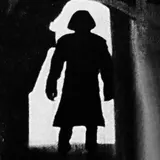
All right, so let's get into this movie. So the way this movie starts off is like very beautiful and artistic and also kind of morbid. You know, there's this little girl, her name is Elsie, and she's, you know, walking back home from school. She's bouncing this ball up against this post, and on the post is just like this poster warning about this murderer that's been going around the city, killing little girls. And then you just see the shadow silhouette figure just appear over this poster and just like start speaking to this girl. And, you know, immediately you understand this is the killer. And this little girl is just about to be killed. And that entire like opening sequence, you know, where the mother, she's like waiting at home for the little girl to come back. And then the other girls come by. She's not with them.
You know, she's like asking the neighbors if they saw Elsie come by. We see the mother watches the clock as it as time takes farther and farther and farther without her daughter coming home.
Yeah, and then just going out of the balcony and just like shouting, Elsie, Elsie, Elsie never comes home.
Yeah, that opening is like very, very well crafted. Like I said earlier, if this movie just came out in 1970, just like in color, it would look basically almost exactly like this. Like, you can't really do this any better than it's done here.
Yeah.
Paranoia
I think it's a very kind of ultra-realistic depiction of, you know, the experience of learning that somebody has gone missing that is just yes so ahead of its time we say okay you know if i were to describe this movie to a friend i would probably say oh it's about a serial killer who like kills children but you know if we're really getting into what this movie is actually about it's not it's not about that because the serial killer he appears in this introductory scene and then he appears again at the very end but the whole middle of the movie he's not like a character it's more about this killer is on the loose this ninth murder has happened and now this town has to deal with that obviously the police deal with that by like doing curfews just doing like random inspections just having like way more police officers patrol the town the people of the town deal with this by just getting super paranoid and just you know there's a scene very reminiscent of David Fincher's Zodiac where you know the police put out this call for like if you know anything just come and tell us and like every single person in the town just accuses their neighbor or like the weird guy across the street of like being the killer and paranoia mass hysteria just it is basically just an examination of what is going on in the minds of the townspeople rather than an examination of a killer like it isn't like that movie Maniac which is basically just like through the eyes of a killer like the killer is not really a character until the very end and i kind of wonder if this connects to this broader theme about american versus european filmmaking specifically german that there isn't much interest in delving into the personal motivations for the killer.
Eventually, the killer does get to kind of, you know, speak his part, but we never get a clear, discrete answer: like, oh, he's a murderer because his father was abusive. He's a murderer because he resents women for never dating him, or whatever. You know, they don't really, they don't really try to rationalize it that way, which I think is probably more effective and maybe more realistic because, you know, murders don't necessarily have rational explanations that we can clearly pin down.
Yeah, I mean, this movie poses, like, what if this happened to like you, or this happened to somebody in your neighborhood or your town? This is probably what it would look like. Like, it is very from the point of view of the average citizen in the town rather than the point of view of the killer or the point of view of the police or, you know, the killer, you know, he has a very good scene at the very end where like he monologues for like 10 minutes. But for the most part, he's not in the movie and just cutting back between several different characters.
Yeah, it's kind of halfway between like a classic mystery and something like Silence of the Lambs, which goes in depth about the persona of the killer. Because for the first third act, the first act of the movie, the first like, you know, 30 minutes or so, we don't know who the killer is. And there is a little bit of mystery. But then pretty kind of anticlimactically, they show him. He's this soft young man, doesn't look especially harmful. He's very short, you know, he's got kind of a baby face, huge eyes, almost childlike, which I think makes him less of a suspect. But then after that initial introduction, we don't see too much of him, like you said, until the end. There's some parts of a chase. He's an important character, but he's not the protagonist any more than any of the police are.
Two investigations
If we were just to loosely describe the events of the movie, the first act where we just see the effect this murder has had on the townspeople, then we go into, there's like two different dialogues happening in one in the police station and the other in the like a meeting of the local mob bosses, I guess. And they're both coming to the agreement that okay, we're really gonna do whatever we can to catch this killer. The police, obviously, because they want the killer caught, organized criminals because they want the police to like stop being everywhere. And then after that, there is just a very methodical like examination of how you would go about catching this killer. And what happens is the police eventually figure out who he is because he wrote a letter to the police, and then the police kind of just like search random houses and eventually like see that this is the house of the person who wrote the letter.
And then meanwhile, the criminals actually like track down, like, wait a minute, on the day the little girl was taken, there was a man whistling, and this man has the exact same whistle as her, and then there's a chase, right?
The whistle
Yeah, which again, and that's a really, let me just add that that's a super innovative use of sound. Like, most of the early sound films in 1931, which was one of the first years for sound films at all, it was all about music, you know, these like lavish numbers. But here, Fritz Lang does something a lot more clever that I would never have thought of, to use the specific melody whistled by the killer as the way to identify him.
Yeah. I've heard people after the fact, you know, contemporary reviews describe this movie as a psychological thriller. It's not really a thriller, it's more like police procedural because once the criminals and the police like really get down to it and try to figure out who the killer is, he's done.
Right. It's yeah, it's like something like Columbo, where we know who the killer is pretty early, and it's instead it's all about this tension that's built as we try to figure out how is he going to get caught. And the twist here, which is kind of interesting, I hope this isn't too much of a spoiler, but the criminals of Berlin, the German underworld, end up being a lot more effective than the police at actually apprehending this guy.
Yeah, if you've ever seen John Wick in the John Wick movies, it turns out the homeless people are also like on the side of the criminal underworld, and that's basically what happens in this movie too. All the vagrants in Berlin or Düsseldorf or whatever this is based are basically on the side of the criminals. So that's another way that this movie has influenced modern film.
The M
That's true, yeah, which I think also says a little bit about you know Fritz Lang's interpretation of you know the German poor might be kind of hinting at his own you know middle-class polite upbringing. Probably the most famous part of the movie, the most famous image is that the way that the local vagrants identify this guy is that they write in chalk a big M on his back, you know, for Mörder, which is German for murderer. I think that happens basically halfway through the movie.
And, you know, if I had to say negative, it is like there isn't a lot of suspense, like there isn't a lot of chase. Like, the killer never has an upper hand. Basically, once the killer, like, notices the M on his back and then looks around and notices that these people are following him. There's just like a look of doom on his face for like the rest of the movie. He understands, like, he is not the kind of person that can like get himself out of the situation easily. The rest of the movie is just like his bad deeds catching up with him.
Cross-cutting
Yeah, absolutely. Just to move back to the kind of the planning part, the procedural elements for a second, I think one of the coolest parts of this, which it's a little hokey, but I'm sure had never been done before, is he draws a parallel between the criminals trying to catch this guy and the police in the most obvious way, or at least the most direct way, by cross-cutting between their two conversations in two different meeting rooms. So you have one guy start a sentence about how, oh, we need to catch, and then you cut to the criminals, this terrible killer. And it's kind of annoying, but they do that for a whole scene. It's just somewhat entertaining.
So it's like the exact same conversation happening in two places, but you know, they're cutting back and forth between like, you know, the implications like the same sentence has been delivered in both places. I feel like I've seen that kind of scene in so many movies since then, but you know, to see it so early on in the 1930s, like, you know, this is where like these movie tropes are being invented.
So much of this movie, I think, really can be, is the first domino, you could say, in a process that brings us to modern crime and modern police media. There was an existing genre of crime fiction that was actually called Krimis, which is kind of funny in Germany at this time, but they were mostly novels, not films. And this was enough of a hit, especially among critics in the US, that I'm sure it influenced so, so much. And as we'll talk about a little bit by the end, Fritz Lang himself would end up in the US and would be instrumental in creating film noir, which would, I would say, continue this tradition.
Yeah, and even pulp novels. I mean, the detective novel genre didn't really exist before movies came. Like, it evolved in tandem with these kinds of movies because, you know, a lot of the authors saw movies and a lot of the movie makers read these books. So it isn't like this existed in literature form beforehand. Like, no, this is the very beginning and it begins with a movie.
Yeah, definitely.
Violence and its sources
Definitely, yeah. Talking about like the way that you kind of influence the craft of other movies, like you mentioned that a lot of the camera work is really effective. A lot of attention has also been paid to the way that this movie is thematically sophisticated and takes a more nuanced view of crime and violence than a lot of media at this time. A lot of the ink that's been spilled about M really tries to link it to the rise of Nazism and, you know, Fritz Lang's reaction to that. I think we've talked about why that's a little spurious, but I'm curious then, I don't think he's trying to make a commentary on fascism because fascism had not yet really arrived in Germany. But do you think Fritz Lang is trying to make any kind of statement about violence and where it comes from?
This is the thing where, you know, there is a... The final scene is basically the killer in front of a court, and he basically has to like, you know, plead for his life and say why he has done the things he has done. And one person could interpret that as like sympathetic to the mentally ill. Like, this is somebody with like a derangement.
Right, the lawyer says that, oh, this man is sick. He doesn't need an executioner. He needs a doctor.
Yeah, but another way you could see it is just like this is just somebody trying to rationalize their terrible deeds to themselves. And this isn't really what's going on. Like, this person is just a twisted individual. And this is just like them trying to get out of it. I don't know what like Lang's interpretation is. You know, if he is a good artist, then this scene was probably written with the intention of like, you know, being open to interpretation.
Right, right. Yeah. I got, you know, one quick little kind of quick thing here. When he's, you know, giving his defense at the end, he says that he's compelled to kill. He can't help it. And then he also says that he has this. He really goes deep into his, you know, process and explains that, you know, like he's he feels like he's running from the urges, but he can never run from them too far. Eventually, his urges catch up with him, and then he says he finds a target, and then everything goes blank, and he comes to and he's committed another murder. The people that he's saying this to are skeptical. They think he's just trying to exonerate himself. But, you know, Peter Lorre gives such a great performance as the killer that you kind of believe him, that he is out of control. He is, you know, unable to remember what happens.
And I think that's kind of cool that that also is a lot of interpretation. You know, like, if anything, like the strength of the performance makes you more likely to side with him and think that he probably is not responsible for his actions.
The criminals' court
One other point here is that because the criminals catch him, they're the ones who like are the jury in this court. And, you know, obviously, like, there are a lot of criminals that are characters in this movie. You know, the people who are on the court are, you know, thieves, you know, drug dealers. Some of them have even killed people. And, you know, the movie portrays them as fairly sympathetic. Like, this is just a line of work rather than like these are terrible men. But even then, you know, the killer says, at one point, you know, says, like, I'm sure you people have killed too, you know. But it is just interesting that it even portrays like two different kinds of criminal or two different kinds of killer. The one that is much more drug-smuggling guy who like kills when he needs to, and then the compulsive killer, you know, the person who just like doesn't kill out of necessity, just like kills out of compulsion.
I think it's interesting that both, you know, the serial killer and the other, the criminals who are killers, they both seem to think that they are morally superior to the other. Yeah, that's part of why that last scene is so good, because, you know, like if he was just like doing that in front of the cops or like the city judge, then it wouldn't have landed as hard as it would, right?
Killers among us
Absolutely. Yeah. You know, again, I don't think that like attributing a specific political interpretation is short-sighted, but you do got to think about the fact that this was made in 31. You know, Fritz Lang, like so many other men in Germany, was a veteran. He might have killed people himself. Hey, he might have killed his wife. So I think that, you know, looking kind of personally and in the context in which this was made, he would have known a lot of people who had killed other human beings. And it must be kind of a weird adjustment to have killed someone and then reintroduce yourself into a society where to kill is wrong, you know? Like the Italian fascists, their reaction to this was create the trenchocracy, a society where only the military had any moral right to rule. You kind of wonder if that was a, that kind of thought was bouncing around Fritz Lang's head at all.
And like, and also again, like, just these, the big homicides at the time were such a news item that I think that murder was on everyone's mind. And I can't find any writings from the 20s or 30s to suggest this, but I kind of gotta wonder if Germans at the time were thinking that the mass slaughter that had happened over the past six or seven years in the First World War somehow kind of uncorked its genie of brutality that was now embodying itself in the horrific murders of women and children that were scattered across the tabloid pages of German newspapers.
Yeah.
The critics
Okay, so that's enough of our view on the movie. Let's read some other people's views. So here's the New York Times in 1933. A couple years after the German release, it was brought to the US. As we mentioned, it was dubbed in English, and funnily enough, they also explicitly made the setting Dusseldorf, even though Fritz Lang himself had insisted it wasn't based on the Dusseldorf murders. So this review says, based on the fiendish killings in Dusseldorf 1929, there is showing at Mayfair a German-language pictorial drama with captions in English bearing the succinct title M, which of course stands for murder. It is extraordinarily effective, but its narrative, which is concerned with the vague conception of the activities of a demented slayer and his final capture, is shocking and morbid. Peter Lorre portrays the murderer in a most convincing manner. The murderer is a repellent spectacle, a pudgy-faced, pop-eyed individual who slouches along the pavement and has a Jekyll and Hyde nature.
Little girls are his victims. The instant he lays eyes upon a child homeward bound from school, he tempts her by buying a toy balloon. This thought is quite sufficient to make even the clever direction and performances in the film more horrible than anything that has yet come to the screen. Why so much fervor and intelligent work must be concentrated on such a revolting idea is surprising.
I mean, this review goes on to like talk about the rest of the movie, but it is always interesting to me that when I watch this film, I'm amazed by like the craft, like the visual craft that goes into it. And, you know, a lot of critics will always just always point out the performances. Again, the guy like has a couple of lines of dialogue until the very, very end. And somehow, like, he is the main star that's like being talked about rather than like just how beautiful and like innovative this movie is. Maybe that says something about like how the differences between American cinema and German cinema. That even when you have like this expressionist work of art coming over here, it's still graded on the same metric as American movies with standout performances and movie stars and such.
Yeah, I guess Peter Lorre himself, you know, although he would never become this major star, he was who the American critics really focused on. And he's great. He does this, he's very young. He had not had many roles before, and he really kills it. And so so many of the reviews, you know, mention him specifically. What I find interesting is that the LA Times review, even though Peter Lorre was basically an unknown actor, their headline is, Peter Lorre terrorizes Germany and Los Angeles in New Thriller.
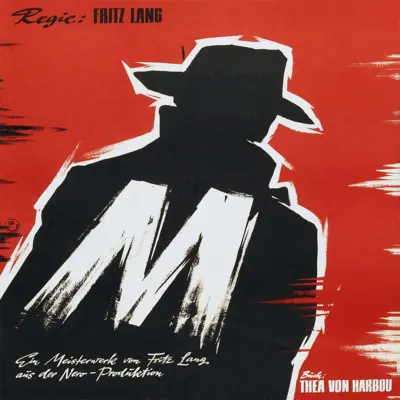
Nobody knows who that is. And also, obviously the poster in the time was just a hand-drawn hand with the letter M on it, signifying, you know, that point of the movie. But later on, the movie poster becomes, you know, just a photo of Peter Lorre. He becomes the face of the movie as the years go on. The Düsseldorf murderer was loosed yesterday within the shiveringly narrow confines of Hollywood's President Theater. M, shot in Germany, is the study of a psychopathic case almost suffocating in its suspense. The murder was portrayed devastatingly by young actor Peter Lorre, who I will not soon forget. The picture is in German, with occasional English subtitles superimposed. I would have wished there were more of them, because the story is laid out in the methodological, almost stolid manner characteristic of Teutonic photoplays. M plods forward and forward, grinding down petty obstacles such as language, but finally sweeps the spectator all of a heap into a climax of terrific proportions.
I think it's kind of funny how he's like, you gotta bear with me. Like, you might be confused, you might be bored, but I promise it's worth it. You know, like, it just shows that, you know, Americans have always been terrible with subtitles.
Yeah.
I don't know if you missed this, but photoplays?
Yeah, I'd never heard that before.
In researching this movie, it's like one of the difficulties. You know, Library of Congress has text stores, so you can put German movie, right? But a lot of people didn't say movie. A lot of people said film or cinema or photoplay or like even other ones that I'm forgetting right now. But yeah, it wasn't until another decade that we sort of decided on movies and films.
Yeah, I was going to say, yeah, you still do hear teleplay in like the screenwriting world, which is interesting, but no, photoplay, that's a new one.
A German review
There, of course, also were reviews in Germany, and so these were a lot harder to track down, but huge props to Abram that, yeah, you managed to find one from Der Kinematograf in 1931 when it came out.
This is a German like trade magazine. Like this is a magazine for like people who worked in movies or were hobbyists in movies, because like every single all these ads were like film and all these ads were cameras and like all these articles on like how to like make films. It's the equivalent of an American magazine this time called The American Cinematographer, you know, for people who are interested in making movies more than like watching them. But, you know, obviously, whenever a great movie is made, they have to, like, write two or three pages about it. So, this review goes, This is finally what the critics have been clamoring for: a Zeitfilm, a movie of the times. There is something instinctively repellent about the whole uncanny, horrible subject matter that we have witnessed in the multiple cases. With Thea von Harbou, Lang finds the forms in which the depiction is not only tolerable and human, but also gripping, captivating, and rousing.
We see firsthand the operation of the homicide squad, feel the tremendous efforts of the safe police, then experience the fight for the honor of the crooks almost like a fairy tale, which finally leads to the discovery of the horrible deeds. All of this is exciting. Strong Pace shows the small, slower scenes at exactly the right moment, which are cleverly and precisely placed at one point where the listening viewer needs a breather. You always see the environment, experience the small business in our framework, but even with the organ player in the back building, with a murderer looking into a shop window, with shopping in the small general store, with a long patrol in the most distant corners of the city, you can always feel the fine artist's hand, the man with the cinematic painter's eye.
I mean, like I said before, the American reviews, they were like newspaper reviews with like newspaper critics. This is a trade magazine, so obviously it's gonna be much more going to talk much more about the visuals, but yeah, it is immediately noticeable that like here is where we see the Germans are talking about like how cinematic this movie is.
The Americans aren't.
An eye man
There's a kind of famous story about Fritz Lying Canoe because he was a visual artist, and although you know this is a sound movie and he uses sound so effectively, he was known for his command of the image more than anything else. And at one point, one of his friends took him out to see some great symphony, and when they asked him what he thought about it, he just looked over and said, Eh, I am an eye man, not an ear man.
I mean, I can kind of relate to that. I definitely have a much more attractive movie with like a very specific visual style and less move with like very specific like writing style. Like, whenever somebody says the dialogue is good, that's how I know the movie isn't for me.
Yeah, no, and it's funny because you know, for me, I'm the opposite. I have, I often don't pick up on like the specifics of production design or editing because I'm focusing more on the dialogue and what's happening in the story.
Dr. Mabuse and the Nazis
But you know, for all of these reasons, M would be a pretty big hit, at least critically. You know, like you mentioned, there was a some of the reviews were a bit reserved, but M was a movie that a lot of people watched and a lot of people paid a lot of attention to. So when Fritz Lang announced that he was making a new film, The Testament of Dr. Mabuse, which was actually a remake of an earlier silent film he'd made, he quickly got to work with Thea von Harbou and making this. But pretty early on into the filmmaking process, there was some turbulence in their personal life that would slow down the movie for a bit.
Yeah, it turns out she was a Nazi.
Yes, she was. Yeah.
So she was a Nazi sympathizer, even though he himself, like we mentioned, was from a Jewish family. And the Nazis were a lot less forgiving, I guess, with their anti-Semitism than really any prior anti-Semites in Germany. They had an incredibly strict and incredibly brutal, you know, racial hierarchy they were trying to build. And suddenly, somebody like Fritz Lang, who was a German Christian, completely part of German Austrian society, was now seen as an outsider who had no place in this world.
And, you know, to add insult to injury, very shortly thereafter, he catches her in bed with this young student from India. You know? So, so yeah, so her Indian interest, you know, went even that far. They get divorced. She joins the Nazi Party. She even tries to get her Indian boyfriend to become a member of the Nazi Party, and he seemed actually initially enthusiastic. I don't know if it was the whole Aryan thing or what, but yeah, yeah, his name was A. E. Tendulkar. B yeah, no, but eventually he would not be allowed in.
This was just very amusing to me. Like, her love or her interest in like Indian culture or like history did not conflict at all with like, you know, this racial hierarchy that the Nazis were proposing. Obviously, there's plenty of right-wingers today who are exactly like that. So it's not that outlandish, but it's always amusing when that happens.
Oh, yeah. Again, Dan, we talked about anime earlier. Think how many American Nazis are addicted to anime and hentai.
Yeah.
So the Nazis are by this point, early 30s, the Nazis now are kind of on the move, but they're not incredibly popular. I don't think at this point that Fritz Lang knew that the Nazis would take over Germany. I'm sure, you know, his wife hoped they would, now his ex-wife. But he continued making the movie just as he was finishing Dr. Mabuse. The Nazis do take power.
Leaving Germany
At the time of the Nazi seizure of power, like we said, Fritz Lang was probably the foremost director in Germany. Immediately after the seizure, a huge amount of filmmakers leave. Nearly everybody with a Jewish background tries and many of them succeed in getting out of the country. And the most successful of them have new careers in the United States. So many German filmmakers come to the US in this period. Not all of them Jewish. Many of them were Christian. And it had an enormous impact on the course of Hollywood. But Fritz Lang, he tried to stay a little bit longer. Maybe because his Jewish heritage wasn't super widely known, or for some reason, he thought he could stay, you know, in the new Nazi state. He also really wanted Dr. Mabuse to be released in Germany. He seems to have some kind of meeting personally with Joseph Goebbels, the propaganda minister, shortly before the release of Dr. Mabuse.
It's very hard to know what this meeting actually entailed. They might have just talked about whether or not Dr. Mabuse would be accepted. The way he tells it, Fritz Lang, was that Goebbels told him that he would only allow Dr. Mabuse to be released on one condition: that Fritz Lang become the head of the Nazi film industry and make Nazi propaganda, just as Ufa had previously made propaganda for the German Empire. And that Fritz Lang says, oh, well, I'm so flattered you'd say that to me, Mr. Goebbels, but don't you realize that my family's part Jewish? And then supposedly Goebbels said, you know, quoting the mayor of Austria 30 years before, oh, don't worry about that. I decide who's a Jew. This probably didn't happen. There's actually no reports of this story. But in any case, there was some kind of falling out between Goebbels and the Nazi party, probably just because he was of Jewish descent.
The film was not allowed to be released, and Fritz Lang eventually would leave Germany, although he wouldn't leave immediately. He would tell people that he took the first boat he could after that meeting, but that wasn't true actually. He lingered for a bit. He went back and forth between Germany, initially Germany and France, and then eventually Germany and the US. And then by 1934, eventually, he would permanently relocate to Hollywood. By the time he got there, so many of his old friends from the German film industry had already left. And because he took so long to leave, people were a little bit suspicious of Fritz Lang. It seems like the fact that he was part Jewish is the main reason why he left, but you know, in Europe, anti-Semitism was a lot more prevalent than in the US. So him having Jewish heritage was a huge deal.
The French magazine Cinemant said something like, oh, although he depicts all of the characteristics of a German filmmaker, he is really a member of the Hebrew race. You know, that's the kind of anti-Semitism that existed in Germany. This guy is as Jewish as Hitler was Jewish.
You know, we say, like, he took very long. I mean, I think it's kind of rational for him to assume that, like, this shouldn't be an issue because, like, this, like, one Jewish grandparent.
Yeah, and yeah. And in many previous generations of German politics, you know, like anti-Semites had been fine with individual people of Jewish descent before if they didn't rock the boat and they didn't make too much of a big deal about, you know, being part Jewish. And I think, you know, Fritz Lang thought that he could do that, but he couldn't. But then when he came to America, it was a totally different situation where he wasn't necessarily seen as a Jewish person anymore. He was seen as a German. And he was seen as a German who was cozy with the Nazi state.
Lang in Hollywood
So a lot of other filmmakers, especially American filmmakers, they started wondering, is Fritz Lang a Nazi? He wasn't at all, absolutely not. But people probably knew that his wife was, you know, his ex-wife. And this really is what led to this understanding that he was this kind of scary, militaristic, you know, German war veteran who's now making American films. Some people were very suspicious of him. Some filmmakers did not want to work with him. And it seems like that the way Fritz Lang responded to this was just leaning into the stereotype of the harsh German filmmaker, which I think is very funny. That, like, and it seems to have work for him. He carved out a niche for himself. He had a huge role in the new genre of American crime films, which often drew off of M. And he really embodied the stereotype of the you know imperious German filmmaker.
He wore the monocle, he wore the eye patch, he was loud and big and boisterous, and he claimed that he was even known to throw an actor down a staircase to get a good reaction out of them.
Yeah, which is something David Fincher does, famously throwing Edward Norton down the staircase in Fight Club.
Fincher, German name.
That's true.
Fincher is, yeah, that's a good point. There's nothing to it, yeah.
Maker of Zodiac.
Oh my god, there's so many parallels.
Germany and America
Well, yeah, now, just to wrap us up, Abram, so yeah, so let's, if you want to talk about kind of so so many German filmmakers come to the US, but it seems like Fritz Lang, more than a lot of them, is seen as particularly German. And his films are used to exemplify the supposed cultural differences between the US and German cinema. Billy Wilder, who was also, you know, Austrian German, his films were seen as perfectly American, whereas the New York Times described Fritz Lang's films as weird and symbolic, which I think is how a lot of Americans think about German films. We found a few articles digging through the archives that show the ways Germans and Americans thought about each other in this period and their respective cultural outputs. Abram, you want to take us off?
This first one's from the LA Times from 1924. You know, before Metropolis, before M. Yeah, this was during his brief trip to the U.S. that inspired Metropolis.
When conversing with two German filmmakers, it is only natural to wonder how Harold Lloyd's film Safety Last translates into their tongue, seeing as for us, it is a parody of the English phrase safety first. Fritz Lang, one of these filmmen, explained that the words safety last are not easy to translate, but Harold Lloyd is very popular in Germany, even if he plays second fiddle to 10-year-old Jackie Coogan, now the biggest star by great odds in Germany. Askoresen Volkenkraze. These words, Mr. Lang assures us, are impossible of translation. However, he attempted to illustrate what it conveyed. If I asked with whom you were going to dine, you might reply, you don't know. But if I asked whether you were going to dine with your former wife, you might reply, that is askerescent. And that would mean that it was out of the question. So far as Germany is concerned, Harold Lloyd and Charlie Chaplin both play second fiddle of Jackie Coogan, even if they stumble over pronouncing the name Jackie.
Licht, Achtung, Kurbel
That's very funny. And here's another one from 1930 that you found, Abram, which is from American Cinematographer. And that's, it's, yeah, the headline is, Licht, Achtung, Kurbel.
A set in the studio. Five retakes. Directors up in the air. The last shot is excellent. Everything lovely. But on the floor lies a beautiful splash of morning sunlight. But no sunlight enters the windows. Somebody forgot to turn on the sun. Where does the sun come from? A can of paint. This way, the sun goes down outside but stays up in the movie studio. Such things can happen in Germany. In Germany, every cameraman has a collection of just four or five lenses, 35 to 100 millimeters in focal length. When a close-up is needed, rather than getting a lens with a more suitable length, the operator will apply to the screen a gauze. The cameraman seldom has a soft focus or portrait lens due to the near poverty prevailing among camera operators. Despite this, German filmmakers produce excellent results with as few as two lenses. In contrast to the American industry, the greatest factor here is cost.
Due to economic conditions, money is not available for salaries or equipment on the American scale. Partly as a result of this, the technical staff is better trained than here. The German cameraman produces excellent results with much less equipment than his American brother. Skill, not cost, is the greatest element in film made in Germany.
Yeah, and I think that really comes across when watching the movies that these are very skilled movie makers, like technically. You know, they might not be the most skilled actors or even the most skilled screenplay writers, but they are definitely the most skilled technical filmmakers in terms of like positioning cameras, positioning lights, you know, just like understanding what makes a good shot. In this movie, there's like a lot of shots of the outside, you know, of like people walking around, just very wide shots. And, you know, like understanding where to position the camera so you can have like this good shot of an actor walking through the street is something that requires skill that, yeah, these German cameramen like have developed over years and years that American cameramen still would take like years to like really figure out.
Definitely. Yeah, and that was really part of the reputation. And after World War II, as the film noir took shape, a huge part of the distinctive visual style of film noir came from incorporating all of these German techniques first developed in the silent era of Weimar cinema and then carried out over to Hollywood.
What the Nazis destroyed
It's a real shame this industry died, you know, because the Nazis had very specific ideas of what art should be. And, you know, obviously a lot of Jewish filmmakers left Germany, but like a lot of, you know, Christian Catholic filmmakers left Germany just because like they found this like attitude suffocating and they wanted to like make art and they couldn't make art in Germany anymore so they left.
Yeah. No, yes, it was cultural suicide of like basically the entire German nation. And I don't want to talk shit on like post-war Germany, but I really don't think that that cultural output in art or in music or in anything comes close to what existed before the Nazis and the Holocaust.
Yeah, I mean, they were like a decade ahead before the war. And then when the war happened, they were like a decade behind or even two decades, you know. Yeah, they just never recovered because, you know, you have in the 30s where you have like the Nazis just vetoing any kind of like artistic expression. And then you have like a war going on. And then you have like rebuilding going on. It's like, yeah, 15 years just down the drain, basically.
No, I know. Eventually, it was so bad. The brain drain was so severe that the Nazis ended up basically kidnapping all the remaining, you know, German directors they could find and forcing them to make propaganda films. G. W. Pabst was a pretty well-known director from this time, and he liked for Slime. He went to America, but he frequently went back to visit. And then one day in one of these trips, he was told by a Gestapo officer that he would never be allowed to leave and that he must, you know, produce content on behalf of the Reich from now on.
It's always a bad sign when a nation is like dictating what can and can't be made. I mean, we mentioned TikTok earlier, and yeah, like China is sort of in that process right now where they're like, not even dictating movies, they're like even dictating like what kind of like YouTube videos it can make. I mean, just yeah, completely suffocating any kind of creative output in like the populace.
Oh, yeah, and then like lately, didn't I know that a lot of like Chinese TV viewers were upset because they've suddenly started censoring gay couples, and so any series with like long-running gay romances have to clumsily write them out of the show.
German film today
Yeah.
Of course, eventually, like we said, there would be a German film industry again. And a lot of the films in Germany made, you know, in the 70s, 80s, you know, Wim Wenders, you know, Fassbinder, Werner Herzog, probably most famously, would be quite interesting. But like I said, they never really had the cultural prominence of German films in this period. So my question, Abram, is: do you think that the distinctions between German and American film that were apparent to journalists in the 20s and 30s, you know, the idea that American films center around one character and focus on the movie star, whereas German films are ensemble pictures that are more symbolic or even a little more artful? If you're really being uncharitable, you'll say German films are pretentious. Do you think that still holds true with German films made after the Holocaust in, you know, Western Germany and then in more recent reunified Germany?
Well, I've only seen a few German films like made in the past 50 years, and all of them feel very similar to American movies. I feel like that's basically never coming back. In the newspapers in the 20s and 30s, they were talking about how there's an Americanization and a Germanization going on in Europe. Some cultures are becoming more Americanized because of our cultural output and also becoming more Germanized because of Germans' cultural output. And then, you know, that German output basically just like ceased to exist for a while and never recovered. So like now, Germany has become Americanized, you know? They can't really go back, right? Like there isn't a very distinct German character that the entire like medium of cinema can like latch onto to create something completely unique. Obviously individual movies can be like very uniquely German in some ways, but like a German film industry cannot be like that anymore.
Yeah, I think that's true. You know, like, I think that German films, at least the ones that come to the US, do seem to be a little more artful than American films, but there's so many like just like awful goofy comedies they make over there. I know one of the biggest hits a couple years ago was a remake of Three Men and a Baby, except in this version it was three Turks and a Baby. Yeah, thankfully the director himself was Turkish, but still a little odd. And I also kind of think that like the similarity, the kind of merging similarity that we saw in the 1930s, I think is sort of happening now on the kind of artistic fringe of American film. I think that indie films that come out now are a lot more sort of European looking than typical movies from 20, 30 years ago.
But the flip side of that is that I think that mainstream American films are kind of farther than ever from the artistic heights that we saw in the Weimar era.
Two camps
Yeah, I mean like these days, it feels like there are two main camps, the mainstream blockbuster camp and there's the A24 camp. Basically any movie that's made in the whole world sort of like fits into one of those two camps.
You're completely right. You're completely right. And I like countries that were never, that 20 years ago would have not understood that paradigm at all are now totally in lockstep with it. I think that a really big turning point culturally for China was in like 2016 or 2017 when this incredibly affecting historical drama called Youth was produced. This really beautiful movie that deals with the cultural revolution and specifically an acting troupe who has to deal with the excesses and then the sudden end of that moment in Chinese history was shockingly not sent to the Oscars as a potential best picture nominee. Instead, the Chinese film board sent Wolf Warrior 2 as their submission to best international picture or whatever.
I mean, we're going off track, but speaking of China, recently I watched this movie called An Elephant Sitting Still, which is from 2018. It's like a fantastic piece of art. And it is like really a piece of art. But even then, if I really had to get down to it, if this was just like made with American actors, like the exact same movie, but just American, would it slot in with like an A24 lineup? Honestly, yeah, it would. As good a movie as it is, it still feels like part of that paradigm that we have. Like it doesn't feel uniquely Chinese.
American cultural power
Well, yeah, I think it's that that's like this weird irony of our current moment. You know, I don't want like talking about contemporary politics too much in this podcast, but it really does seem like in general, the last 10, 20 years, you're seeing this, you know, rise in nationalism in so many countries, which has had ripple effects in so many ways. But at the same time, it seems like it's a losing battle because the world is more connected than ever before in so many ways, more than ever. And I think it's funny how even though, you know, American political power does seem to be on the wane globally, American cultural power really doesn't seem to be going anywhere. More people speak English than ever before. More people are watching American films than ever before. And I have no idea what it would take for that to change.
Yeah, I don't know either. I mean, I don't know. Maybe Russia nukes us.
Yeah, that would probably do it. Yeah.
You know, if you're listening to this episode when it comes out, which is, you know, in March of 2022, you're probably aware of the whole Russia-Ukraine situation. Just movie recommendation: Dead Man's Letters. It's a Soviet film about basically just like a character drama about trying to live in the post-apocalypse after the nukes went off. It's a very good movie, and you might enjoy it if you're watching it right now.
Wrapping up
All right, well, on that lovely note, thanks so much, Abram. This has been a fun one. I hope everyone listening enjoyed this. This is Gladio Free Europe, signing off. Peace out.
The show is also on Apple Podcasts, Overcast, Pocket Casts, Podcast Addict, YouTube, RSS and Patreon.