83
Fritz Lang's Fury and the Brooke Hart Kidnapping
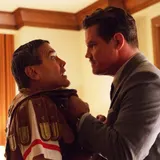
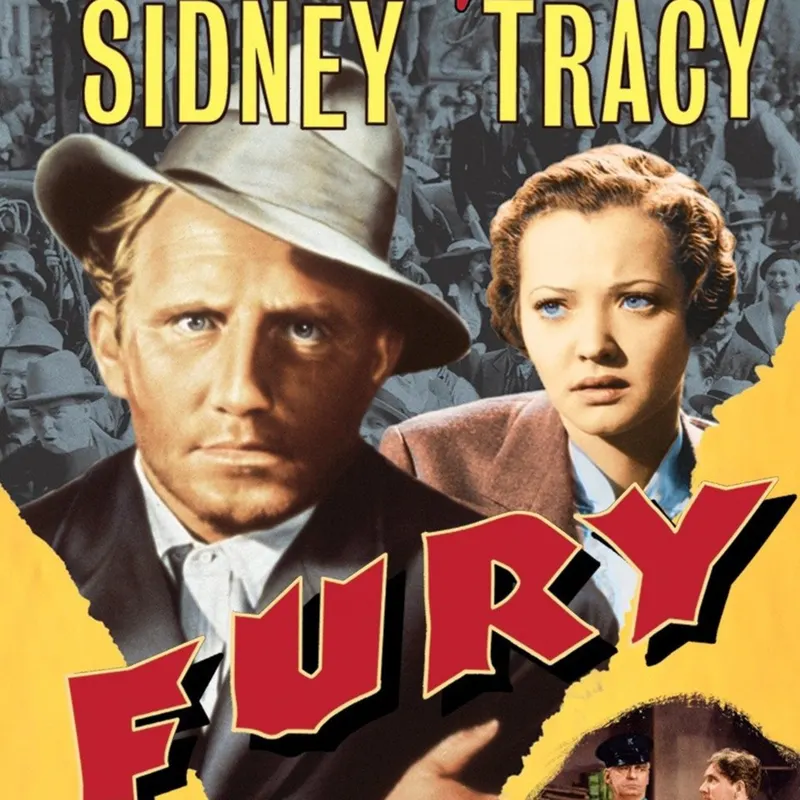
In progressIn 1936, acclaimed German exile director Fritz Lang made his American debut: Fury . The ripped-from-the-headlines story of a deadly false accusation was acclaimed by critics as the best drama of the year, but audiences and studio executives shunned the film for its dark content and uncomfortable social commentary: particularly how Lang shed light on the crimes of his adopted country, including the brutal crisis of lynching.
With Spencer Tracy playing the accused, and by setting the film in the Midwest, Fritz Lang would fear for the rest of the life that he was a "coward" for not addressing the inherently racist character of lynchings in the South. But this film was based directly on a true series of murders, and one which — though lacking a racial angle and committed outside the South —helped spur the fight to end lynchings everywhere.
These murders began with the disappearance of Brooke Hart, a popular San Jose 22-year-old whose bright future was cut short in 1933 when he was kidnapped and held for ransom. Before any money could even change hands, the police traced the ransom call to two locals with a shady past who confessed to not only kidnapping Brooke Hart, but killing him that same night. Incensed, everyday citizens of Bay Area, including many respectable professionals, stormed into the local jail and subjected the two suspects to horrific torture before hanging both men from a tree. This event, often hailed as the "last lynching in California," was not condemned but celebrated by members of the press and even the governor. This blatant murder of the two suspects, a complete miscarriage of justice, eventually made its way into the national press. The early American Civil Liberties Union led a push to raise awareness of the killings of these men, an awareness which helped fight the broader plague of lynchings in all parts of the nation.
This episode of Gladio Free Europe explores those three San Jose murders and the production of Fury within the broader cultural context of the 1920s and '30s. Although these killings may not resemble our idea of a lynching today, they were part of a centuries-long American tradition of rabid violence in the name of revenge and domination. Fritz Lang's film helped shed light on these atrocities, and remind Americans that this was not a problem isolated to the South. Since the 18th century, lynchings have been committed in all parts of the country. And some of the most brutal lynchings, many of which were just as racially motivated as the reign of terror in the South, were committed in Hollywood's backyard.
Transcript
California's heart of darkness
And we are back with another episode of Gladio Free Europe. I am Liam, joined as always by Russian Sam.
Hello, hello.
We've got a really exciting, really rich, really deep episode this week. All thanks to Russian Sam. Sam, you dug up this really incredible story, one of the most celebrated kind of true crime narratives of the 1930s. A crime that reveals so much about the American heart and so much that is rotten within it that is not very well known today, but had a huge impact on the pop culture of the 30s.
Yeah, just honestly, researching this has truly convinced me that California is the American heart of darkness, and I don't think I'm ever going to change my mind.
Yeah, yeah, this is a very interesting California story. It shows a side of California that the Golden State might not want to be exposed today. But people at the time, to their credit, did expose that. So we are going to talk about today the 1933 Brooke Hart killing and the violent backlash to that kidnapping and murder, as well as Fritz Lang's 1936 film Fury, his rip-roaring American debut, really going straight at the jugular of so much that's wrong in American society. All right, so let's with a without further ado, let's jump in. This is going to be a big one.
November 1933
We are going back to November 1933. In DC, the Roosevelt administration had finally extended diplomatic recognition to the USSR. Meanwhile, the labor movement was making history with the Hormel meatpacking plant sit-in, the first sit-down strike of the 1930s. Still further west in South Dakota, the first storm of the terrifying Dust Bowl had just kicked off this month. All across the United States, changes big and small were stirring as America was beginning to rebuild after four years of economic devastation. Some of these changes took longer to effect than others. These days, Silicon Valley is a byword for American innovation, but before there was a Silicon Valley, there was just San Jose, California. And in this month of November 1933, San Jose was the site of a series of events which, if anything, harkened back to an even earlier age. On the 9th of that month, Brooke Hart, son of a proprietor of a prominent department store in this fledgling town, disappeared.
Later that night, it was revealed he'd been kidnapped to secure a ransom. The Hart department store was a fixture of San Jose, and young Brooke was known and beloved by all. These events shocked the city and sent people into a frenzy. Tensions ran high. A week later, two suspects were apprehended and confessed that they had in fact murdered Brooke Hart before the ransom was even demanded. As salacious details of questionable veracity swirled in the press and by word of mouth, the townsfolk sought to avenge the death of San Jose's favorite son. A so-called vigilance committee formed behind closed doors, but in plain sight to lay the groundwork for what came next. Even the governor of California chimed in to say that he would pardon anybody convicted of participating in a lynch mob. After Brooke's body was discovered, the mob signed the death warrants of the accused before their trial had even begun.
On the night of November 26th, thousands of San Joseans overpowered the police and stormed the jail where the accused were held. They were tortured and hung from a tree. Cameramen were on site through the ordeal, and newsreels from that night were circulated all across the country and the world. But although the pair had confessed, there remained some lingering questions. Their confessions were extracted under less than clean conditions. Their stories were at times contradictory, and one of the suspects had a very credible alibi for his location when the killing of Hart took place. Despite their insistence that the pair had acted alone, other circumstantial evidence pointed to further accomplices. A veil of silence hung over both sides of the entire affair, and the people of San Jose went to their graves without revealing the full scope of their participation in the lynching. Too much time had passed since the events in question took place to really get to the truth, and many documents related to the case have since been lost or destroyed.
Nevertheless, we here at Gladio Free Europe have decided to dig into the story and the film that it inspired. And that is, of course, Fritz Lang's first Hollywood film, Fury, which was released in 1936.
Fritz Lang comes to America
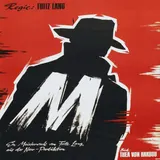
Right, so we've talked about Fritz Lang in the podcast before. He is one of the most beloved German directors who then became an American director in the 1930s when he fled Hitler like so many of his compatriots. He came from an Austrian background, but established himself in Berlin as the director of a lot of very prominent silent films, often those with some kind of allegorical element or dealing with, you know, dark questions of the human soul not often broached by filmmakers, especially not American filmmakers. Previously, we did an episode on M, his famous movie about a kidnapper and killer of children whom the entire community of a German city, particularly its underclass, teams up to take down. He also did the movie The Testament of Dr. Mabuse, very well known for its villain who is kind of this charismatic hypnotist figure who could rally up mobs of people to support him to do evil deeds.
Perhaps his best known early film is Metropolis, the famous early science fiction movie with a very strong class allegory that he co-wrote with his controversial wife, Thea von Harbou. So before he came to America, he saw that as the Nazis were coming to power, so many of his friends were forced to flee due to their Jewish background, due to their politics, due to the fact they didn't want to live in a fascist country. He realized that Germany was no longer the best place to be a filmmaker. His wife, Thea, was quickly becoming enamored with the new Nazi government. He also found out that she had taken a lover who, even though he was from an Indian background, was quickly converting him to Nazism. So things were not going well for Fritz Lang in the mid-30s. He was planning on leaving when suddenly he got a call from Joseph Goebbels.
What exactly happened in their meeting has never been fully understood. But until the day he died, Lang claimed that Goebbels proposed that Fritz Lang remain in Germany as essentially the court propagandist of the Nazi government. When Fritz Lang said that wouldn't make sense because he was in fact part Jewish, Goebbels said, that's fine, we decide who is a Jew. That meeting, whether or not it ever really happened, quickly became part of the Fritz Lang myth. He came to America, a man without a country, a man of suspicious allegiances, who is known to have associated with both far left and far right radicals in his home country. But now he was here in America, and he was certainly going to rock the boat in the United States as well, as shown by his pick of this controversial film treatment based on the Brooke Hart killings quite directly.
Fury, the film
So Sam, before we go into this case, before we go into the production of the film, we got to talk about the movie itself. Did you like it? What were your thoughts?
It was really wonderful. It's the kind of stuff you come to expect from Lang, with the caveat that because he was working with MGM, which was sort of making the really cheesy movie of the movies of the time and which wasn't particularly fond of any kind of political messaging, they made him rewrite it to basically give the story a happy ending.
Yeah, yeah, it's funny. With a sweet kiss between the idea, it was pitched to the studio by a different screenwriter who, and then he was assigned to the project. As soon as he got his hands on it, he tried to make it much darker, you know, give it the Fritz Lang touch, but he was constantly clashing with the studio about that. And we'll get into that. I guess, you know, so we should start by talking about the plot of the movie itself. This is a plot that honestly today seems straightforward, a little bit cheesy. It's very theatrical. But when this film was released in 1936, it really made waves in critical circles due to the incisiveness of its social commentary and the gravity of its story. Because the premise here is that a young man named Joe Wilson is saving up enough money to get married.
He is a gas station owner who doesn't make a lot of cash. And his fiancé, Catherine, this idyllically sweet girl who has very little personality besides being completely adoring, is moving, I believe, from Chicago to California so she can make some money too. Joe is alone. He's very sad. His only friend is a young little dog that he picks up named Rainbow, who we should mention. Joe is played by the famous actor Spencer Tracy. Catherine is played by the less famous actress Sylvia Sidney, who would later go on to play a character in Beetlejuice 50 years after this movie.
Yeah, for whatever reason, Fritz Lang really had a thing for Sylvia Sidney. She just kept appearing in his films consecutively until all the way into like the 1940s. If you want to be Freudian about this, I think he was looking for an actress as like absolutely opposite of his, you know, adulterous Nazi wife. That might be what's going on there.
But probably the most famous actor in this movie, I would say, is in fact the actor who plays Rainbow, the dog. You know who played Rainbow, Sam?
I'm just going to guess and say that it's Toto.
That's correct. Yes, this is Toto's, one of Toto's first two appearances before the Wizard of Oz. All right, so young lovers, you know, they're separated. Joe is staying in Chicago. Catherine goes out to California. Eventually, he makes enough money so he can drive out to see her. He takes his old clunker, drives it across the country. This is before the freeway system when you had to pass through a lot of small towns. And while he's going through one small town, Joe is suddenly stopped by a tough sheriff and his hick deputy, Bugs Meyers, played by Walter Brennan. And these two men accuse Joe of taking part in the notorious Peabody kidnapping, the kidnapping of a child that has happened somewhere along the area. And when he asks why he's being accused of this crime, they explain it's because he's been seen eating peanuts, which have been associated with this kidnapping.
Yeah, he has peanuts in his pocket, and the ransom letters in question have peanut shells over them. And there's this great little moment where he's taken down into the sheriff's office, and he explains that he likes peanuts because his father always got him peanuts. They're emotionally significant for him. And then he looks at the cruel sheriff and says, Surely you've had peanuts, right? And then probably in the best line of the movie, the mean sheriff says, I never ate peanuts in my life.
Yeah, that was great. Yeah, the deso, as soon as it happens, while they're still holding Joe in custody, the sheriff's deputy goes to get a haircut, and a pair of busybody European barbers overhear what he says, that they've just brought in the guy who did the Peabody killing. The barbers tell their wives, the wives start talking to each other, and in a scene that also reveals Fritz Lang's issues with women, you see all these housewives gossiping, and the scene suddenly cuts to a shot of hens chattering with each other. As we see that the news of Joe Wilson, this suspected kidnapper, being arrested, is quickly spreading across this small town. And being embellished in the process.
Yeah, exactly.
Yes, yes. So then, really, pretty early in the film, by the end of Act 1, maybe, Joe is in jail. He somehow has managed to smuggle in his little dog, Rainbow, played by Toto, with him. And then he looks outside his window to see that a crowd has gathered. A crowd that's described in the film as a lynch mob.
Oh, Liam, you missed a really fun detail. The guy who gets the mob worked up enough in the first place to go over there and take care of Joe is a strike breaker who's just passing through the area.
Yeah, very 1930s.
Yeah, yeah, right, right.
So to his credit, the cruel sheriff does what he can to scare away the lynch mob, but he is not able. The mob attacks, not with a noose like we'd associate with a lynch mob, but instead with dynamite. And the way they do this is that they blow up the jail, killing poor Toto in the process, but allowing Joe Wilson, the suspect, to secretly escape. By the time the dust has settled, they don't find the body, but everybody assumes that Joe has been killed, including his poor sweet fiancé Catherine, who just has received word about the lynching.
Who was in fact present at the scene of the lynching? She got there just as the building was burning and she saw him through the window and she just sort of fainted.
Yeah.
In the audience.
Right. And so then here the movie really switches gears. We see Joe kind of pass like a ghost to this town, eventually meeting up with some people he can stay with, but not yet reuniting with Catherine.
Brothers.
Yeah, right. Meanwhile, the people who take part in the mob are now prosecuted themselves. Now, instead of Joe being on trial for kidnapping, all these people in the town are on trial for murder. And then it becomes this kind of interesting question about to what extent should Joe, this essentially a ghost, seek vengeance? Should he be this revenant trying to punish the people who believe they killed him, or should he seek forgiveness? There's a pretty interesting moment near the end of the film where the trial begins. You see individual members of the mob be caught on film and named. I feel like this is kind of resonant right now with all the January 6th hearings, right? That was kind of interesting. Eventually, Kate receives a letter and realizes that Joe is alive. She reunites with him and she urges forgiveness. She's much more New Testament than he is.
But he rejects her. He leaves his fiancé. He leaves everything. Joe, this lonely, vengeful ghost, goes off on a bender. Part of him feels guilty about the 22 people in the mob who might be condemned to death because of him. But he wants to let them be killed, just as they tried to kill him. He eventually walks into a bar, he gets a drink, and then he sees that the calendar that the very next day is going to be the 22nd. And that reminds him of the 22 defendants. So then the day before the sentencing, he walks in to the jury, revealing that this is in fact not a murder trial after all, because he was not murdered. And then in this kind of abrupt, sudden Hollywood happy ending, charges are dropped. The people start to feel bad. All of the, you know, attempted murderers feel guilty.
And then Kate, the fiancé, embraces him, thanking him for his forgiveness.
A lynching without race?
So this was a movie that didn't make a lot of money at the time, but was really widely celebrated by critics. The studio didn't like it, but as we'll get into, the critics thought it was especially meaningful. A big part of why this movie was considered so meaningful was because it was really one of the first American films, if not the very first, to critically address the subject of lynchings. But this is kind of funny because for the very obvious reason that this film, starring Spencer Tracy as essentially a lynching victim, does not look very much like what we associate with the social crisis of lynchings in the 20th century, for the very obvious reason that there is not any kind of racist angle. This is a case about a white attempted victim, played by Spencer Tracy, based on a real story in which two white guys were killed for a crime that they probably committed.
Also, there's a few other differences. It's an arson, not a hanging. But despite that, this film was considered incredibly important commentary. Even though it didn't match what we think of lynching today, it did reflect the realities of some lynchings. Because the word lynching is funny. We use it specifically to refer to a category of hate crime right now. But at the time when those hate crimes were incredibly common, they also were used to refer to a minority of crimes that did not have a racial angle. Because broadly speaking, a lynching really can be any kind of extrajudicial killing by a group of people under some pretense of either serving justice or upholding some tradition or hierarchy. When the word lynching was first used, it didn't necessarily even refer to a murder. It could be any kind of punishment. I think that in the earliest, broadest contexts, the tarring and feathering of suspected British loyalists and tax collectors could be considering a mild form of lynching.
Obviously, it's a very different phrase today. And of course, so overwhelmingly, most lynchings in America had a racial white supremacist component. Between 1882 and 1968, there were nearly 5,000 in America, and according to the NAACP, nearly 75% of those victims were black. This might even be an undercount, if anything, because this is only known from newspaper reports. Lynchings that were not reported may be lost to history. But if nearly 75% of them had a racial angle, that means that over 25% of them did not. And those that did not were, of course, still very horrifying and tragic, and also easier for the social critics of the 1930s to address. This is a big part of why this movie was made and why it was considered both so important and so controversial in the context of 1936. I think this is also why it's a movie whose impact might be hard to understand today, because it's essentially a movie about racism that never mentions racism at all.
But it's also a kind of interesting commentary on mob mentality and mob violence more broadly. If we look at Fritz Lang as a German person fleeing Nazi persecution, you can see why the idea of lynch mobs and mob violence in the abstract would be a very compelling subject.
So with all of that out of the way, Sam, let's talk about how this uniquely and despicably American phenomenon emerged.
Judge Lynch
Well, although lynching as an extrajudicial violence isn't really uniquely American, the term lynching is. It has its roots in the American Revolution, and you can trace it to southern Virginia in the summer of 1780. The revolution at this point is in its fifth year and pro-British sentiment continues to linger among some segments of the American populace. These loyalists would aid and abet the British in various ways. A pro-revolutionary agent infiltrated one such group of loyalists and learned that they were planning to murder revolutionary leaders and seized lead mines crucial to the war effort. These mines were managed by Charles Lynch, a colonel and a justice of the law. He marched his troops to protect the mines and began arresting alleged loyalists. It was at this point that he began to use what has been termed by some kangaroo court. Lynch was insistent that he had done nothing wrong, but word reached Thomas Jefferson that there were irregularities of some kind in the trials.
Jefferson had instructed that the worst offenders be transported to Richmond for trial on a larger scale, but Lynch refused, citing concerns that the prisoners might be intercepted. Now, we don't know what exactly Lynch was doing, but despite the severity of what Lynching implies today, they weren't killed, just mistreated. The accused were likely roughed up in the lead up to the trial to get them to confess, and legend goes that those who were found guilty would be tied to a tree and whipped 39 times with a cat of nine tails, which is a type of many-headed whip. If the convict screamed liberty forever during the ordeal, the whipping would stop and the person would be conscripted into military service for a year. Funnily enough, this affair also had a racialized angle, but it wasn't what you would expect. Colonel Lynch was accused of unfairly targeting the Welsh at several points during his career, including this one.
But you have to ask, when exactly did lynching come to be used? Lynching named after this man. Right, as a verb.
Yes. Well, in 1782, Lynch himself would use the term lynch law to describe the breakup of a work stoppage by Welsh mine workers who refused to work because of the grueling labor conditions and because they were only given bread and water. Lynch was dismissive towards those who questioned his methods, dismissing them as Tories and such. But nevertheless, Lynch was worried enough about the possibility that his victims would sue him over his methods that he asked the Virginia legislature to legitimate his actions. This was done that same year, and the text of the resolution became a really familiar retort in the history of lynching, even if the act is, strictly speaking, illegal. It was, quote-unquote, justified from the imminence of the danger. And that would, of course, be the justification used for these kinds of killings, really, for the next 100 years or more.
Lynch law goes west
Right, and so this term that was invented by a man seeking to justify his own actions and bold enough to aggrandize himself in such a matter entered the everyday speech of Virginians. But the term would radiate outwards very soon. Things were already starting to get cramped in the East before the Revolution. After all, the proclamation line was one of the reasons for the outbreak of hostilities in the first place. And after the war ended, the flow of settlers became unmitigated. Virginians, for whom Lynch's Law, so-called, was a familiar term, were among the vanguard of these settlers.
Right. So, so as we mentioned in our episode on the river pirates of the frontier, the American West was a very lawless place. Settlers were moving into lands in which there was no American authority. Vigilante violence came to fill the void, and reports of this violence became widespread in the literature as men of words traveled to observe conditions on the frontier. Now, this is from in 1819 in Indiana, travel writer William Faux heard talk of Lynch's Law, that is, a whipping in the woods. Nine years later, the observer and reporter of pioneer life James Hall described Lynch's Law as the lex loci of the frontiers. In March 1830, a writer named James Stuart journeyed across Alabama and then Arkansas, encountering more stories of Lynch's Law. The people Stuart met defined this law as a community-administered summary punishment of some miscreant. In Arkansas, he learned of a murderer lynched on the Mississippi River by steamboaters, possibly the first known use of that as a verb.
This is from Waldrep's The Many Faces of Judge Lynch.
Yeah, and even after many areas were settled densely enough for the formation of formal institutions of the law, the mob continued to be more powerful than these institutions in many instances. Some witnesses bemoaned Lynch's law, taking it to be savagery, but they were powerless to stop it. Soon, lynching became a point of national attention, and the Jacksonian era brought with it a new focus on popular sovereignty in the press, and extrajudicial violence was taken to be an example of it.
Vicksburg, 1835
But lynching became a matter of national attention after the events that transpired specifically in Vicksburg, Mississippi, in 1835. Vicksburg was a standard frontier town. It was a boomtown occupying prime land on the Mississippi. But in addition to bringing in settlers who hoped to become self-sufficient on expropriated native land, slavers managing vast estates, and respectable bourgeois townsfolk, there were other less than respectable people right at home, right at home on the frontier, professional gamblers. The weak legal apparatus of the frontier meant that things were a lot more lax, and this laxity encouraged a flourishing, seedy underworld of card players. There was always a tension between the gamblers and the rest of the town, but they were largely tolerated until July 4th, 1835, when things came to a head at an Independence Day celebration. One gambler got into an argument with a townsperson and was kicked out of Vicksburg.
He returned armed, at which point he was dragged out, now to be tarred and feathered, forbidden from ever returning. The town had enough of these gamblers, and there was something else happening in next door Madison County that we'll talk about in a second, which made this altercation the final straw. That very night, the people of Vicksburg assembled at the town courthouse and made the following resolution. Resolved, that a notice to be given to all professional gamblers that the citizens of Vicksburg are resolved to exclude them from this place and this vicinity, and that 24 hours notice be given them to leave this place. Most of the gamblers packed up and left, but some decided to do better to test their luck. Very bad idea, because on July 6th, militiamen went door to door to houses suspected of being gambling dens, destroying gambling tables, and to show that they meant business.
Until they reached one such establishment packed full of armed men. The militia surrounded this house while other members kicked in the back door. Those inside the house opened fire, instantly killing a respected doctor in the militia. The militia fired back, storming the house, killing who knows how many. Five were retrieved alive. These five men were hanged publicly, and their bodies remained hanging until the following day, when they were unceremoniously cut down and dumped into a ditch. But they hung long enough for this event at Vicksburg to go national. Vicksburg, as we mentioned, is on the Mississippi River. Boat traffic carrying news up and down at great speeds meant that newspaper men quickly found out about this. By July 11th, just four days later, this had reached the New Orleans press, which quickly labeled it a lynching. From there, the story went national in just a few weeks, and the word lynching with it.
So note this transformation of the word, shifting from roughing somebody up to unceremoniously murdering them. Still, we should note, without any kind of specifically white supremacist connotation, that would come in a minute.
The Madison County panic
But at the same time as this affair was transpiring in Vicksburg, there was another far more chilling act of mass violence taking place in next door Madison County, starting from July 2nd. And this is another tie-in with episode 76 on the Ohio River Pirates. You guys might remember John Murrell, one of the river pirates who was involved in the so-called Reverse Underground Railroad. Despite being no abolitionist, he was apprehended in 1835 for allegedly plotting a slave rebellion. It was alleged that the groundwork had been laid for a massive slave insurrection all across the county. He was apprehended and a confession was forced out of him. Quote, the grand object that we have in contemplation is to excite a rebellion among the Negroes throughout the slaveholding states. Our plan is to manage so as to have it commence everywhere at the same hour. And then later on, quote, we find the most vicious and wicked disposed ones on large farms and poison their minds by telling them how they are mistreated and that they are entitled to their freedom as much as their masters, and that all the wealth of the county is the proceeds of the black people's labor.
We remind them of the pomp and splendor of their masters and then refer them to their own degraded situation and tell them that it is power and tyranny which rivets their chains of bondage and not because they are an inferior race of people. We tell them that all of Europe has abandoned slavery and that the West Indies are all free and that they got their freedom by rebelling a few times and slaughtering the whites. In addition to this, we should get them to believe that most people are in favor of their being free and that the free states were not to interfere if they were to butcher every single white in slave-holding states. In the days and nights that followed, the people of Madison County went on a frenzied killing spree of enslaved people they believed to be part of the planning committee, as well as the white men they thought to be corrupting their minds, so-called, and abetting them.
Exact figures of casualties aren't known, but it's estimated that dozens of people were murdered in the weeks that followed, often being subjected to horrific torture before they were finally dispatched. These events would be justified in a familiar way. Quote: The civil authority was inadequate to this and in Madison County, for there is no jail in the county sufficient to contain more than six or eight prisoners, and even those very insecurely. And whenever prisoners should be dispatched to any other county, a guard should have been required, which would have left many families defenseless. And it is unknown at what moment this protection might be required besides immediate example. And its consequent terror, without hope from the law's delay or evasion, seemed, as truth it was, indispensable to safety. So, in other words, we had no other way to deal with this.
Right. And to sum things up, these events in Vicksburg were part of the rising tensions provoked by news of a possible slave insurrection.
Abolitionists against lynch law
Murrell's prolific gambling was likely part of the calculus that went into this ban and the subsequent effects. Ironically, from today's standpoint, even though the Madison County events are archetypal of the events one associates with the lynching, it was really the Vicksburg events that put the word lynching in the national lexicon. The Murrell excitement only received a tiny fraction of coverage in mainstream circles, even though it seems to have been a lot more grand and horrific. But some people certainly took notice. From this point forwards, lynching became a regular topic of discussion in the press. Abolitionists added a new tool to their linguistic arsenal in their battle against slave power. Even though the Vicksburg coverage dwarfed that about the Madison County reign of terror, abolitionists made both part of a cohesive framework that reflected on the slavers' way of life. That is, that slave power is a system of lawlessness, which deprives people of their rights, be it either the inalienable right to liberty or the right to due process, opting instead for mob insanity and arbitrary killings.
Right, and we should note that this is an effective tactic precisely because it expands the number of people who care about it beyond those concerned specifically with the well-being of black Americans, which at this point abolitionists were a very small percentage of the population. And by framing it in this way, it was able to, they were able to reframe it in terms of an opposition to lawlessness in general. And the abolitionists said as much in their literature as they embarked on the mass pamphlet mailing campaign to decry lynch law. This noticeably raised the temperature and the fierceness of both the discourse and physical confrontations between abolitionists and slave power rose as a result of this. As one satirical abolitionist poem at the time went, and if they step a single inch on our southern soil, we'll catch and lynch them, pour upon them all our fury, and hang them without a judge or jury.
Yeah, not super catchy, but you can see where they're going for it, right? You can see what they're trying to mock there.
Lynching in the West
So this could be an episode into itself, the rising of anti-lynching popular sentiment. But for now, let's focus, let's go west to bring us closer geographically and in time to the Hart case, which is in the 30s. We're still in the early 19th century. Because the lynching was not only a southern phenomenon. There was no shortage of mob killings elsewhere in the country. For instance, there was the Philadelphia nativist riots in 1844. But on per capita terms, the West, in fact, not the South, was the site of the most extrajudicial mob murders. These tended to look very different from lynchings elsewhere. For instance, because the fact that very few of these were lynchings of African Americans in the West. But as we'll get into, this doesn't necessarily mean these killings were not racist. It was just a different kind of context. The main reason why lynchings were so common out West was because, number one, there was not really a legal apparatus first to legally try accused criminals, and also there was not the legal apparatus to punish people participating in lynch mobs.
Additionally, land-hungry settlers needed ways to dispossess the people who were there in the West before them, including Native Americans and especially Mexican Americans. This, of course, doesn't fit with California's modern-day image at all, but it was an immensely violent place with a really long track record of extrajudicial violence, so much so that California law became a byword for lynching. In the areas that had already been settled in Spanish times, there was usually enough density and enough institutions around to regularize such procedures, although towns like San Francisco nevertheless had a very long history of lynch mobs, going all the way back to the early 1850s. But the Spanish and later the Mexicans weren't very good at utilizing manpower to settle disparate clans, and as such, these kinds of settled areas were very few and far between. The people who ventured outside of such areas understood that they were venturing onto land that did not have courts or regular law enforcement and that they might fall victim to so-called California law.
Gold rush California
The demographics of early Anglo-settlers in California really didn't help the situation. These were, for the most part, single men who had come out west hoping to make it big during the California gold rush. These so-called 49ers, 40,000 of them in 1849 alone, congregated in the camps. These were, as a rule, single men.
And just a crazy statistic I dug up about this period. In the 1850s census, over 95% of people over 16 who were counted were men.
That's crazy.
So it was a real sausage fest over there.
And these weren't, of course, the most comic-con.
Yeah, and these weren't the most cultured men.
No, these were the rough kinds of guys who were hoping to make it big from the gold rush and not, you know, fine-spoken doctors.
Right.
In his book, Lynching in the West, Ken Gonzales-Day outlines this phenomenon known as the frontier lynchings. These historically have been understood as a phenomenon totally separate from that of southern lynchings. But he argues that this is that the differences are really more about differences in local ethnic demographics and differences in local political frameworks rather than any actual difference in their intent, which is kind of interesting. You could argue that basically these were expressions of kind of the violent id of white settler society. They just had different targets in different kinds of places. White supremacy was just as strong in California as it was in Alabama, but it took a different form. Again, so this means that in California, these targets were most often Latino. A plurality of lynching victims from the 1850s to the 1920s were Mexican immigrants or descendants of early Spanish settlers. A small handful were also Latino immigrants from elsewhere, usually Chile or Peru, because a lot of South American miners actually came up to California during the Gold Rush.
Some victims of lynchings were long-time landowners from respectable families who suddenly found their territories threatened by incoming whites during the gold rush. Others were accused of crimes and denied trial. Often these charges were pretty trumped up.
Josefa Segovia
The most notorious lynching of a Hispanic person probably has to be the killing of Josefa Segovia in 1851. She was a young Mexican woman living in Downieville, a tiny mountain town overlooking Reno, Nevada. One night when her husband was away, a Scottish miner named Fred Cannon broke into her home intending to rape her. She managed to fight him off, but the next morning, he came back. Cannon's friends would insist he was only going to offer his apologies for his actions the night before. But before he could say anything, Josefa grabbed a knife and stabbed Cannon, killing him instantly. Despite his reputation as a drunkard, he was a popular guy around this mining town. And as soon as word broke that he'd been killed, a mob dragged Josefa out of her home, brought her to a hastily erected scaffold. A lawyer attempted to plead her defense, but he was beaten into submission, and Josefa was hanged.
The owner of this mining camp, as well as the state of California, condemned her killing, but no real action was taken to prevent these lynchings. About 140 more lynchings of Latinos would be committed across the next 70 years. And so, taken as a whole, these lynchings can be understood as the violent imposition of a concept of law and order that had a fundamentally racialized component in 19th century America. In the words of one Angelino at the time, the safety of the better classes in these troubles often demanded quick and determined action, meaning essentially murder. People who were coded as outlaws, which were often people who weren't white, were especially likely to be victims of this violence. In the 1850s, lynch mobs had become organized enough into semi-official posse that traveled between frontier towns on annual visits in search of fugitives, especially those of Mexican descent. One man named Encarnación Berreyesa survived a lynching in 1854 by convincing the mob that they were really looking for his brother instead.
They killed his brother, but they had strangled Berreyesa with a rope and left a permanent scar on his neck. Several years later, another lynch mob on the hunt for another Mexican man came to Berreyesa to question him. Once again, he told them he wasn't the man they were looking for, but this time, these men noticed the scars on his neck, decided he had to be guilty of something, and hanged him.
God, that's that's rough.
The Los Angeles massacre of 1871
Yeah. We should probably also mention, though, that, you know, in this kind of racialized context, Hispanic people were not necessarily entirely victims. There were a few occasions where they would actually be involved in lynch mobs for people lower down on the totem pole, specifically Chinese immigrants who were a step below in this racialized hierarchy. Because probably the most infamous lynching in California history is the Los Angeles Massacre of 1871. A gunfight between two rival Chinese gangs killed a white passerby. In response, a mixed mob of Anglos and Mexicans carried out a massive organized attack on the Chinese community of Los Angeles. 500 men and women, which was about 10% of the entire city, gathered outside an apartment building full of Chinese residents, intending to kill all those inside. 17 people were dragged out and killed, either hanged or shot. The victims included a respectable doctor and many women, which meant that those were not the kind of targets that lynch mobs were essentially supposed to be killing, which meant that when news of the Los Angeles massacre broke, there was widespread outrage at these killings.
But again, this outrage didn't lead to anything. Eight men were convicted of participation in the riot, but they avoided prison time due to legal technicality.
The anti-lynching movement
And so by the late 19th century, there was a lot of popular outrage against this form of so-called justice, both in the South and in the West, but very little action had yet been taken. African-American groups began to rally against the explicitly racist lynchings of the South, and Ida B. Wells, a founder of the NAACP, spent decades working on anti-lynching legislation and proving that lynchings were incompatible with any kind of fair or civilized justice system. A group known as the Anti-Lynching Crusaders, founded in 1922 and mostly made up of black women, organized support for anti-lynching bills introduced by Congressman Leonidas Dyer. The Dyer bill passed the House by a huge margin, but would end up being blocked in the Senate by the infamous tactic known as the Southern Filibuster. Several years later, the lynchings of the Brooke Hart kidnappers that would inspire this film Fury would lead to a renewed effort by the anti-lynching crusaders, who are now joined by the American Civil Liberties Union.
The kidnapping craze
But before we get to the Brooke Hart lynching, we should probably mention that this happened in a very unique period in American history. That being the rash of high-profile kidnappings, often very violent, murderous kidnappings, that shook America in the 20s and 30s.
Yeah, for whatever reason, this was really in the zeitgeist at the time. But the first case that really set this off was probably the famous Leopold and Loeb story. Two well-off University of Chicago students decided to pull off the perfect crime just for kicks. They kidnapped and murdered a child, demanded a ransom from the family, and then disappeared into the mist. But they weren't as smart as they thought, because one of them dropped a pair of glasses next to the child's body, which led the police straight to them. Clarence Darrow, who we had mentioned in our LA Labor Wars episode, came to their defense. Alfred Hitchcock's movie Rope was inspired by this case. The kidnappings reached a fever pitch through the 1920s, with groups like the Purple Gang of Detroit working around the clock to hold victims for ransom. Perhaps the most upsetting kidnapping in this period was that of Marion Parker in 1927, which was described at the time by the LA Times as the most horrible crime of the decade.
A 12-year-old girl was kidnapped, and two days later, her parents received a call asking for a ransom in exchange for her safe return. Her father came to a public park with a suitcase full of money. A car pulled up and saw that his daughter saw that his daughter was in the back seat. But as soon as he turned over the money, the kidnapper tossed his daughter out of the car, and that's when the father realized that she was dead, but her eyes had been sewn open so that it looked like she was alive.
Yeah, really grim stuff.
Probably the most publicized kidnapping of the 20s was more lighthearted. That would be the disappearance of Aimee Semple McPherson in 1926. If you're not familiar, Aimee Semple McPherson was an incredibly transformative American pastor, a preacher in LA who basically invented the concept of the mega church, probably the first televangelist, even before television existed. She disappeared one day and an anonymous caller contacted her church demanding a ransom. A month later, she reappeared in Mexico, claiming to have escaped a group of kidnappers and wandered through the desert. But her story was inconsistent, and questions were raised. Eventually, the received wisdom came to be that she had taken advantage of the kidnapping craze to stage a fake one, probably to raise money for a ransom that she could then pocket herself, or maybe just to get herself in the news. In any case, McPherson and her elderly mother were both tried for criminal conspiracy, perjury, and obstruction of justice.
She was looking at 42 years in prison, and because she was about 50, this certainly would almost certainly have been a life sentence. But eventually, charges were dropped due to a lack of evidence, although it basically destroyed her reputation. It didn't help that a lot of publicity around the trial brought up rumors that she had really run off with some lover and had been at some love nest resort by the beach for a month. Then, 1929, the stock market crashes. This means that kidnapping suddenly becomes a very viable institution for a lot of people who need money really fast. Cases skyrocket. The rich start hiring bodyguards to protect them. Insurance companies make a killing off of kidnapping policies. It had become a social panic, but not without reason. In 1932 alone, there were around 3,000 ransom kidnappings in the U.S.
The Lindbergh baby
Yeah, many salacious kidnapping stories dominated the press, but one case stood ahead above the rest. The Lindbergh baby case raised such a ruckus that the Federal Kidnapping Act of 1932 was dubbed the Lindbergh Act. Charles Lindbergh had made a name for himself by becoming the first pilot to complete a solo transatlantic flight, but in 1932, he had the misfortune of becoming a national figure for much more tragic reasons. On March 1st of that year, his son, also named Charles, was abducted from the family's home. The kidnappers left behind a ransom note demanding $50,000 at the scene. Their demands were met, and the Massachusetts location where Charles Jr. was supposed to be held was revealed. As it turns out, it was a false lead. In reality, little Charles had never left the vicinity of the house. In May, his heavily decomposed body was discovered in the woods less than five miles away from the Lindbergh home.
A suspect was apprehended in September and given the death penalty. The tragedy of the Lindbergh case gave new life to the federal anti-kidnapping legislation. There were previously concerns about federal overreach, which kept it from being passed, but the horrific case allowed for federal involvement if the victim were transported across state lines, if a ransom was demanded, or if the postal system was used in the process of the crime. And so the Federal Kidnapping Act was finally signed into law by Hoover on June 22nd, 1932.
That was Charles Jr.'s birthday.
Yeah, yeah, yeah. Bad stuff.
That might have unfortunately contributed to Lindbergh's later mental state and his later political actions.
Brooke Hart
But so after all this setup, we are finally ready to delve into the Brooke Hart kidnapping, which is going to be really the focus of this episode and the film that inspired it. So Brooke Hart, as we mentioned, he was from San Jose when it was not yet the kind of tech hub that it would now be. He was born to a Jewish dad named Alex Hart, this well-respected businessman and a Catholic mom. And in fact, actually, before his life was cut short, he was deliberating about which faith he should adopt. Should he consider himself a Jewish person or a Catholic person? His grandfather, Leopold Hart, was from Alsace-Lorraine, and moved to the U.S. in the 1860s. He bought a small corner store, which would be the very same site where his father would start the Hart department store. The grandfather and father both became local community leaders, laying the seeds for a powerful chain of local businesses.
Interestingly, something that I didn't know until you told me to Sam is that San Jose was actually the oldest civilian settlement in Spanish California, something that the people were very proud of. And that for a while in the early 19th century, there was real competition between San Jose and San Francisco to see which one would become the local center of power. And due to San Jose's earlier foundation, it was actually the initial favorite in that contest.
Yeah, but their dreams for primacy were cut short because it turned out that the waters near the city were too narrow to build a major port. So even before the 30s, it was a desirable location, albeit built on agricultural wealth. It was the site of the biggest fruit canning companies in the country, I believe. So Brooke's father, Alexander, was born in 1869, and as Leopold's only son, he was groomed to become his heir, much like Brooke was in the process of becoming. Brooke, as the eldest son, was supposed to inherit the family business, and from his earliest days, he spent countless hours at the department store, learning the ropes of the trade from the bottom up. In this role, he became well known to all the locals who would frequent the store, and by all accounts, he was a great kid.
Right, and so by, you know, by 22, he'd just gotten his bachelor's from Santa Clara University. And to mark this graduation, his dad held a banquet where he announced that Brooke would become the vice president of L. Hart and Son, the company founded by his father. The Mercury Herald reported on the event and ran a picture of the pair, captioned, future boss. Nobody had an inkling that in just two months, this picture would be run again, this time with the caption, kidnapped victim and father.
The kidnapping
Right, so Thursday, November 9th, was supposed to be a day like any other for Brooke. He had got the store just before 6, and he was en route to give his father a ride to a Chamber of Commerce dinner before attending a public speaking class at 6.30. Witnesses saw him get into his green Studebaker, which was a flashy graduation gift from his parents, and drive away. But he never reached his destination. His father was left waiting and decided he would hitch a ride from an employee instead. It was unlike Brooke to forget to pick his father up, but hey, we all skip up sometimes, right? This was no case for alarm just yet. Then around 7 o'clock, the phone rang. It was one of Brooke's classmates. He'd called to find out why Brooke hadn't made it to that public speaking class. This was when the first inklings arose that something was wrong.
And then at 9.30, another phone call pierced the silence of the home. Brooke's sister Elise answered the phone. The soft, unhurried, well-modulated voice of a male stranger inquired, Is your brother missing? Yes, who's this? Is your father there? No, but he should be here any minute. Even as she spoke, Elise heard the car with Alex and Miriam arriving in the porte cochère. Your brother has been kidnapped, the caller said matter-of-factly. You'll be hearing from us. Alex Hart and his other daughter, Miriam, rushed to the police station, not wanting to discuss the matter over the phone lest it leaked to the press. But by the time they got there, it was too late. An enterprising journalist was already loitering outside of the chief's office. It was already known that Brooke, San Jose's favorite son, had gone missing. And despite the urging of the family that publishing the story might endanger him, the story was going to be published regardless.
The journalist said to Alex Hart, you might as well level with me. The story's coming out. I'm a newspaper man and I'm gonna print it. I'd print it if it was about my own mother. So the police being notified, all phone calls made to the Hart home were now being traced, and the officers were told to be on alert for Brooke's car. At 10:30, the phone rang again. We have your brother. He is safe, but it will cost you $40,000 to get him back. If you ever want to see him alive again, keep away from the police. We will phone further instructions tomorrow.
And we should mention that $40,000 is about a million dollars in today's money.
Yeah, yeah, so quite a pretty penny, especially during the Depression. And so the first call was traced to a speakeasy in San Francisco, but when the investigation began, the trail ran cold, as the phone in question was often used by patrons and nobody could identify anything unusual happening in the bar that night. The second call, placed from a nearby hotel, would similarly fail to discover anything of interest. And then around midnight, Brooke's car was finally recovered by a rancher six miles north of San Jose. Police rushed to the scene and confirmed it. But Brooke was nowhere to be found.
We should note a strange detail here, which was that despite the fact that the car was presumably idling since Brooke's disappearance, the headlights were still running and the car was full of gas.
So it turned out that the Federal Kidnapping Act was a godsend in this case, as the location where the car was found was outside of San Jose proper, and law enforcement over there would not have had the resources to pursue it.
The investigation
This was a job for the Department of Justice a few years later rechristened the FBI. A DOJ agent named Reed Ernest Vetterli was roused from his sleep that very night by a terrified Chief Black of San Jose. Vetterli had already made a name for himself in several high-profile kidnapping cases, and as a San Francisco local, he was properly located to tackle the case. That very night, he ran to a Western Union office to wire J. Edgar Hoover and fill him in on the emergent case. Vetterli began a meticulous investigation, tracking Brooke's final days in an attempt to get a glimpse of what had just transpired. The day before the kidnapping, Brooke went with his girlfriend to a local speakeasy to drink and gamble. Brooke indulged in such vices, but only sparingly, according to most accounts. Meanwhile, the newspapers would make the life of the Hart family really difficult in the coming weeks, harassing them in hopes of extracting more titillating details.
And when they failed, they began publishing rumors as facts. The Mercury Herald ran an enormous headline on its front page, reading, Brooke Hart, son of a wealthy merchant, kidnapped. $40,000 ransom demanded is received. Just a few days before his disappearance, Brooke had been a pallbearer at a funeral of a close friend who had been gored by a bull in front of his eyes.
Yeah, frontier stuff.
Yeah.
Yeah, several eyewitnesses reported that Brooke had been in a dour mood in the days that followed. So taking the story and running with it, the newspapers insinuated that Brooke might have killed himself in a fit of melancholy. And so newspapers spread really outrageous accounts and the public got in on the action, with many people across California claiming that they had seen Brooke in the days that followed. Even false messages from alleged kidnappers were published, despite the fact that it would be many days before contact was re-established.
Witnesses on the bridge
But promising leads were beginning to surface despite all this garbage. Somebody had reported that a man matching Brooke's description, accompanied by two men, was seen on the San Mateo Bridge the night of his disappearance. When police were sent to the area to look for clues, they uncovered yet more eyewitnesses to what had transpired. Delphine Silveria and her daughter, hiding behind their barn door 20 feet away from the site, witnessed the events with more detail. They report, As we were watching, the car stopped in the wide part of the road, right in front of the driveway to our barn, and the driver turned out the lights. It was a big dark sedan about the size of a Buick or a Dodge with a long hood, and there were three men inside. They talked and smoked for a minute or two until a smaller car, a roadster with a canvas top, came up the same direction.
One man was driving, and there was another man on each running board. The roadster stopped right near the bigger car, and the driver told to get out. One of the men in the running boards went over to the man in the big car and said, Well, we got him all right. Mrs. Silveria said that the driver of the roadster was marched over to the sedan and one of his guards told him, Come on, big boy, get in here. He complied. Delphine was convinced she was watching a hijacking. She and her daughter, hidden by the barn door, remained silent. She heard one of the men ask, Are you sure we're on the right road? Yeah, replied another. Keep straight ahead. And then turned on Milpitas onto the old Oakland Road. Head for Stockton and then shoot to Sacramento. We'll take him to the cabin on the hill.
What about the license plates? Leave them like they are. Have you got enough gas? Sure, plenty.
And this is coming from one of our primary sources for this episode, Swift Justice by Farrell. And so Brooke's car was positively identified by Silveria and her daughter after the fact. They both placed the event in the vicinity of 6:30 p.m. There was another pair of witnesses as well. Vinton Ridley and Al Coley, who were partners in an Oakland wood business, had been scrounging for driftwood that evening on the mud flats beneath the bridge's eastern approach. At about 7:25, they had watched an automobile drive onto a darkened span somewhere out there over the river and, after a time, turned back. As the car stopped, a man's voice had cried, Help, help, and leave me alone. Finally, they had heard, I can't hang on much longer. Ridley and Coley had made their way in the dark along the shoreline toward the sound of the voice, but they had found nothing.
After the distress calls ceased, they had given up the search, driven to Hayward, and told the police of the episode. On Friday morning, officers had gone out to the mud flats and looked around, but no further action had been taken. Once again, from Farrell's Swift Justice.
Ransom calls
And while all this was happening, the Harts received several more ransom notes from the kidnappers. They were erratic, with unclear instructions. Police were starting to wonder if the people in question had actually no idea what they were doing. But as the kidnappers requested, Alex put up a sign of the number one in the window of their department store to signal they were ready to discuss details of the ransom. And then that evening, this is now Tuesday, a call was made in the home of one of Hart's employees. Hello, is this Charlie? Yes. I have a message for Mr. Hart. Get this. Tell him to place the money beside him on the seat of Brooke's car right away and heads for LA. Before he gets there, he'll be relieved of the money by a man in a white mask. Who is this? Never mind. Just tell him to take a satchel with $40,000 and put it on the seat beside him.
A man in a white mask will appear. Do you get that? O'Brien rushed to the Hart home and informed him of the condition. Alex Hart was skeptical and refused. The instructions were impossible to follow in the first place, as Alex couldn't drive. And then at 8:45, the phone rang in again. Is this Mr. Hart? A man asked. Yes, this is Alex Hart. You didn't follow orders, Mr. Hart. The voice was smooth, calm, softly accusatory, the voice a schoolteacher might use with a recalcitrant pupil. You did not drive south. You did not follow the instructions we gave to Charlie O'Brien. Why not, Mr. Hart? Look, I have no idea who you are. I'll do anything to get my boy back, but I need some proof that you've really got him. You're gonna have to trust us, Mr. Hart. Look, I can tell you exactly what your son was wearing when we took him.
That ought to prove something, Mr. Hart. He had on an overcoat and a light felt hat, and he was carrying his glasses. That hadn't been in the newspapers. And this was true. The newspapers were running Brooke's description every single day, but although they mentioned his gray suit, they didn't mention his glasses. So Alex, getting nervous, asked, could you give me a sample of his handwriting or one of the shoes or something else that he was carrying? The man replied, It would take two weeks to get anything like that, Mr. Hart. Brooke is a long way from San Jose. Besides, I have to get permission from my superiors. There was an awkward pause. The caller then explained, This is your last chance, Mr. Hart. You still have time to catch the 9:30 train to LA. Catch it, and the man in the mask will meet you. You won't have to wait.
When the money is turned over, your boy will be released in the morning. Take that train, or it'll be too bad.
Yeah, I just noticed the contradiction here. Brooke is so far away that a handwriting sample would take two weeks to produce, but he would be returned to the Hart home the following morning if the request were fulfilled. Alex Hart noticed that this was a big mismatch, and he decided that he would not be taking that train.
Remember, we're talking about a lot of money in economically desperate times. There was no guarantee that the people making such calls were the kidnappers in the first place. Scams had been attempted before, and they were ongoing.
Yeah, the police managed to successfully trace the call, and cops were dispatched to the site, just a parking lot. But they got in there just a few minutes too late, because the situation ended in a fiasco. The police saw a local bank teller out on an evening stroll, and assuming him to be one of the kidnappers, tackled him. One of the cops actually recognized this man, but by this point, the noise raised attention, and this endangered the manhunt. Because until this point, the police have been trying to hide their involvement because the kidnapper said, don't get the cops involved. But now, their participation was obvious. But the cover was not apparently entirely blown, because the Harts continued to get ransom letters, but these letters were increasingly sinister in tone. One of these, delivered on Wednesday, the next day, is the following: Killing him is the easy way, with little risk for us.
Returning him is what we demanded ransom for. Sorry, we can't get some further proof for you, but I said the writer is a contact man only. We do not hold Brooke Hart here, Mr. Hart. Unless your principals hear favorably from us by 7:30 on November 15, 1933, you will not be contacted again. It will be useless if you comply to our demands, putting a numeral two where the one now is as soon as it was received. Starting at 7:30 on November 15, drives out on Monterey Road to Los Angeles, take Malibu Blue Highway into LA. Hart just would not play ball.
Caught on the phone
Even if he wanted to, he could not comply as he was unable to drive. A further message posted to the window of the store included an addendum of quote, I cannot drive. Hart was instructed that any case he made should drag on as soon as possible to give the police time to apprehend the suspect, who continued to use public phones in all of his communications. That night, the tactic had paid off, and Hart kept the infuriated kidnapper on the line long enough for the police to be able to apprehend the suspect while he was still on the line. The man in question was named Harold Thurmond. Thurmond was a 27-year-old who was pretty well recognized as being not that bright. He was born in the Central Valley to a devout Baptist family, and his family moved to nearby San Jose when he was a young child.
He had some kind of bout of sickness that left him a bit slow, so he'd spent most of his young life working dead-end jobs without any success. The love of his life had just left him when they were engaged due to his low prospects, and this broke something inside him, sending him down a bad path. Harold lost a job for stealing and remained in debt to that former employer for the amount that he stole.
Thurmond confesses
So Thurmond was taken back to the police station and interrogated. He tried to maintain his innocence, claiming he was simply down in his luck, and that when he heard some men discussing the sign placed in the Hart department store window, he decided he tried to cash in by posing as the kidnapper. But by doing so, he incriminated himself. There's something I don't understand, Harold. What do you mean when you told Mr. Hart you were, quote, one of the boys who wrote the letters? I pretended I'd written the ransom notes. What ransom notes, Harold?
Right, because you see, the ransom notes weren't mentioned in the newspapers.
And so as this interrogation continued, Thurmond continued to incriminate himself and also continued to change his story to fit the parameters. Eventually, he admitted to placing the call from San Francisco on the night of Brooke's kidnapping, even before the press had published anything. Eventually, he confessed something especially shocking. Those people have been suffering for a week, Harold, because their boy is gone. God wants you to show mercy now and put a stop to that. Tell me, can you swear before God Almighty you did not kill Brooke Hart? There was a pause of a few seconds' duration. Then suddenly the prisoner broke into an uncontrollable sobbing. Brooke Hart is dead. What did you do with him? We threw him off the San Mateo Bridge. At this point, Thurmond claimed that Jack Holmes was his accomplice.
Jack Holmes
Right. And so Jack Holmes was a few years older than Thurmond. A bit more successful and unrelated to anything, but really, as you mentioned, was the exact spitting image of Hunter Biden, the son of President Joe Biden. Like seriously, if you look at this guy, Jack Holmes, 1933, you'll be shocked. Spitting image. Google him right now. But anyways, much like Thurmond, Jack Holmes had had a lot of trouble with authority. He was kicked out of high school for his insubordinate personality and became a traveling oil salesman, but was also savvy enough to join the Freemasons. When the Depression hit, Holmes decided that he would give college a try before eventually dropping out after just a year. According to Farrell, Holmes' classmates reported that he was obsessed with analyzing crime stories, figuring out where they had gone wrong. Little hints of Leopold and Loeb here. He also began chatting up cops regularly, learning about what fighting crime was like, probably so he could, you know, eventually learn what not to do.
And around this time, he met Harold Thurmond at a gas station where he worked, and the two men became friends. According to Farrell, the two had committed at least two crimes together already, robbing men Holmes knew to be transporting cash to the bank and making off with a pretty comfortable sum of money. Farrell claims that it was at this point that Holmes tempted Thurmond to try some new heights of criminality.
A flawed source
Yeah, so side note, let's just quickly discuss the main source for this episode. It's Harry Farrell's Swift Justice, which is the most comprehensive source on the Brooke Hart kidnapping and the lynching that followed. And it does incorporate a lot of interviews with people involved in the events, but it's an enormously flawed source. He takes both of the men's guilt for granted, but far worse in my opinion, he doesn't cite sources directly outside of a general bibliography section. And he made up a lot of dialogue, quote, in order to produce a narrative in human terms. But it is the most comprehensive book on the matter, so we have no choice but to use it. But just keep in mind, this guy is very unreliable as an actual historical writer.
Yeah, well, ultimately, the interrogators were able to extract an exact confession of all these events that we just saw above. But even Farrell admits that it is likely not a pure transcript, but a legalese document which was produced with heavy prompting from the interrogators. Thurmond would confess that Jack Holmes had roped him into the entire plot and that they had murdered Brooke Hart in hopes of producing a perfect crime, which could not be traced back to them. The confession reads, We stopped about half a mile out on the San Mateo Bridge, at which time Brooke Hart was ordered out of the car and Jack Holmes walked to the back of the car and hit him over the head with the brick, while I obtained a cement company in San Jose before we started the trip with Brooke Hart. When Jack Holmes first hit Brooke Hart over the head with the brick, he hollered, help, help!
But Jack Holmes hit him over the head again with the brick and knocked Brooke Hart unconscious. And then I took some bailing wire from the car which I had previously purchased in the afternoon on the 9th of November 1933 at a hardware store in Santa Clara for 55 cents and bound the arms of Brooke Hart around his body close to his shoulders. Jack Holmes then told me to get rid of him. Jack Holmes took the upper part of Brooke Hart's body and I took hold of him from his knees down and together we lifted Brooke Hart onto the railing of the San Mateo Bridge and tossed him into the bay. I recall as we lifted up onto the San Mateo Bridge, he struggled slightly. With this confession in hand, the police went to arrest Jack Holmes. Holmes would claim that a confession was forcefully extracted from him through a combination of rough handling and sleep deprivation.
Eventually, he did produce a confession, but it differed markedly from Thurmond's. For instance, Holmes said the entire crime was in fact Thurmond's idea, and he had just been the unwitting patsy. In his words, we let Brooke Hart believe he was going to be transferred from one machine to another. And while we were doing that, getting ready to do that, he got to fussing around, and a car came by and he started to shout. So I hauled him off and hit it with my fist. I guess he hit his head in the concrete as he fell, because he lay quite still for a few minutes. Then, Harold reached into the car and got the wire and started wrapping his feet and hands. Around that time, he passed me a gun. I don't think after that, Hart ever snapped out of it. I think he hit the curb.
I was watching him and he fell. I hit him with my fist. I hit him pretty hard. I wanted him to know we meant business. And then we were holding the gun to him, so if he decided to get up again, I intended to threaten him with it. Harold got the two concrete blocks and tied them around his feet, and we tossed Brooke Hart overboard. After that, I don't know what it was, but maybe the water revived him, maybe he made some sound, because Harold said, Give me that gun. And he climbed down onto the stringers and fired the cartridges in the pistol, where he imagined Hart would be in the water. Afterwards, he said that he thought he hit him, but he wasn't sure. While he was doing that, I drove up the bridge a ways and turned around and I came back. I was looking for Harold on the same side of the bridge he'd gone down, but I finally saw him coming back and crawling over the railing on the other side of the bridge.
He climbed down onto the stringers and listened for some disturbance, but he was satisfied there wasn't none. Because when he got in the car, I asked him what happened and Harold said, I'm not sure, but I don't think Brooke Hart is coming up again.
The press calls for blood
News of all these happenings were leaking out into the public and newspapers became more ravenous in the pursuit of a scoop. They were now harassing the families of the accused. David Holmes, Jack's son, who was then six years old, told Farrell that he remembered his mother frantically pulling him out of school on that day and that their house was being swarmed by photographers trying to snap a good picture of its interior. But more worryingly, there was now a real possibility of a lynching. California law had been dormant, but it hadn't gone away entirely, and the San Francisco Vigilance Committees of old were treated with reverence. This showed in newspaper coverage as well. It seemed as if the local papers were now engaged in the contest to see who would be the most bloodthirsty. One early editorial reads as follows: Quote, If mob violence could ever be justified, it would be in a case like this, and we believe the general public will agree with us.
There has never been a more fiendish crime committed anywhere in the United States, and we are of the belief that unless these two prisoners are kept away from San Jose, there is likely to be a hanging without waiting for the course of justice. To read the confession of both of these criminals makes one feel that he wanted to go out and be a part of that mob. If you could have been with the writer who called at the Hart home to offer the sympathy and assistance in the time of their great trial, it would have made you feel like going out and committing a lynching yourself. Meanwhile, the San Jose Council adjourned a meeting, coming out with a resolution. It is the hope that justice will be sure and swift, that the subterfuges and technicalities of the law that frequently thwart or delay justice will not be taken in this instance.
Unanswered questions
Yeah, so let me just say what I think is going on here. I think that there's enough evidence to definitively say that Thurmond was involved. He had been caught red-handed talking on the phone to Hart and was aware of all kinds of details which he could not have possibly known, such as the exact size and weight of the bricks used to drown Hart. In fact, the man who sold Thurmond these bricks remembers their transaction very clearly because he thought it odd that Thurmond wanted so few bricks and explicitly wanted them to be as big as possible. The FBI's handwriting analysts also decided that the ransom notes were written in Thurmond's hand. But in Holmes' case, it's much more murky. Although a car matching the description of the one he owned was seen at the scene of the crime, he also had an alibi. His wife mentioned that he had come home that day around 6:30, and the woman with whom he had spent the night maintained that Holmes and his wife had come over sometime between 7:30 and 8.
So, depending on which of the witnesses you believe, Holmes either could not have possibly been at the scene of the crime, or he would have needed to drive home, which was over 30 miles away, like a complete maniac in a 1934 car that can't go at those kinds of speeds for very long.
Yeah.
Speaking of the witnesses, there's another really chilling element here. Several of the witnesses reported seeing more than two men on the bridge that evening. Even if both Holmes and Thurmond were involved, who exactly were these figures? There are really a lot of really strange details cropping up all over the place. Jumping forward a little bit, during the search effort to recover Brooke Hart's body, a pillowcase was found in the water. There was supposed to have been a pillowcase over Hart's head when he fell into the water, so this could have been it, right? Well, the police were actually able to trace that pillowcase to its owner, who was none other than Jackie Coogan, the tragic child actor who had made it big in Charlie Chaplin movies, but who never saw a cent of his money because his parents had spent it all.
Right, because Jackie Coogan went to Santa Clara University with Brooke Hart, and the two had become good friends in college.
Right, so when police questioned Coogan, he said that he had taken the pillowcase to a football game several months ago and that it had disappeared from his car then. Which, at this point, I'm just wondering, who brings an empty pillowcase to a football game? And how was this pillowcase floating in the vicinity of this spot for several months on end? It just doesn't make any sense. Now, this doesn't prove anything on its own, of course, but for whatever reason, it seems to have been accepted at face value by local authorities that Holmes and Thurmond were the only two people involved, to the point that the sheriff openly belittled witnesses who claimed otherwise. Even Vetterli, who was the FBI agent on the case, believed that there were other accomplices and was wiring J. Edgar Hoover to that effect. Nevertheless, that story went nowhere, and Vetterli's concerns weren't made public until a FOIA request uncovered them in the 1980s.
Yeah.
Yeah, so it's just extremely bizarre. I do not know what to make of it at all. At the time, there was some speculation from Vetterli, who it must be said was a devout Mormon, that maybe Brooke Hart, who, as we mentioned, would sometimes go to speakeasies and gambling dens, that he had perhaps accumulated a big gambling debt. And because of that, these actions had transpired against him. And the people who, whoever they were who did this, would have had connections to some very powerful figures. And so maybe because of that, the investigation was squashed to hide their involvement. But truth be told, like I said, it's been almost 100 years. We just have no idea what actually happened. But it's just really strange. And the fact that there was this lynch mob being organized as all of this was going on really makes it seem like there might have been a larger conspiracy at play that could have been hidden in plain sight through this kind of spectacle of violence.
Right, right, right. And that's, yes, you know, and as we get to the lynching here, I think this is a really important thing to mention: is that even if these two men may have been guilty, the fact that they were murdered and not put on trial means that justice wasn't done. So many details of this case never would have come out. You know, you can, in a way, you can compare it to, you know, Lee Harvey Oswald being killed. That an extrajudicial killing of a murder suspect means that, you know, a full investigation cannot happen.
Waiting for the mob
Right. So Holmes continued to maintain his innocence to his wife and his family, telling them he had made the confession only under duress, how he'd been counseled by the sheriff to confess, or he'd be thrown to a lynch mob. Holmes' car was dismantled piece by piece, literally, in search of evidence tying the vehicle to the crime, which is actually a scene shown in the movie Fury. Inside the car were concrete crumbs and safety pins, which, according to Farrell, were possibly used to fasten the pillow slip over Brooke Hart's head.
Yeah, great detective work there.
The temperature continued to rise across this week when Thurmond and Holmes were behind bars. They were held in San Jose despite all the warning signs of growing mob violence. The only thing keeping them alive was the lack of a body, but soon this wouldn't be the case. The spectrum of opinion in the local press ran the gamut from these men need to be tried as quickly as possible and executed to these men need to be murdered immediately. Everybody knew that a lynching was going to go down, according to the people Farrell interviewed for his book. Sheriff Emig denied this possibility publicly, but even then, he was trying to secure National Guardsmen from the state to guard the jail. But the governor, James Rolph, was actively obstructive. According to Holmes' lawyer, his client needed the protection of a state militia to prevent a lynching. The governor said, I won't accommodate you.
If they lynch those fellows, I'll pardon the lynchers.
Which is a really shocking confession there. Really, really crazy stuff.
So by this point, the search for Brooke's body had been ongoing, but the police were unable to locate it. To that end, Alex Hart declared that anybody who found his son's body would be given $500, which brought an onslaught of people desperate for money in these desperate times. And then on the morning of November 26th, a body was found half a mile south of the bridge. It had been badly decomposed, but was still wearing the clothing that was confirmed to be Brooke's. Photos of the decomposed body, taken from the dark rooms of the local papers, were circulated by hand throughout the town. The vigilantes now had the only excuse they needed to snuff out the lives of these killers of San Jose's favorite son. Now, word of mouth was of course important to get the crowd to assemble, but the mass communication aspect of this lynching is really worth considering.
Local radio reports on that day issued a stream of inflammatory bulletins throughout the events, and that night during a screening of a movie at San Jose's movie theater, the projectionist displayed a slide to the audience informing them that the lynching was beginning, prompting a mass exodus. There were even news crews with video cameras present. The lynch mob was caught on video and shown to the world through newsreels, which is not really something that happened very often. Now, as we mentioned earlier, everyone knew that something was going to go down. Sheriff Emig had been warned by participants of what would happen that night and told to have his officers stand down to avoid bloodshed by future participants. As the day progressed, more and more people aggregated in front of the jail. By 5 p.m., there were some 2,000 people present. The police did nothing to stop the crowd from assembling.
But even if the police had wanted to do something, they were greatly outmatched. There were only 17 officers on duty in total. And as mentioned above, Governor Rolph had denied the request for the National Guard, partly because he sympathized with the mob and partly because he was up for re-election the following year and thought that obstructing them would hurt his chances. By 10 p.m., it was clear that the mob was serious about what they were going to do. At this point, Emig told his officers to put away their guns. They were not to open fire on the mob no matter what happened. Their arsenal was now limited to tear gas, and even though they, quote, had enough guns to kill a thousand people in that mob, but we didn't want to do it, as one policeman later recounted.
The lynching
Yeah, for the record, if you're not okay with listening to very graphic depictions of violence, skip forward a bit because it's getting bad. Yeah.
As the sun set, the mob became more agitated. While Thurmond and Holmes looked out from their cell windows, they saw thousands of angry faces pointed in their direction and even louder chants of Lynch 'em, lynch 'em, lynch 'em. When the mob began to make their way towards the jail, they were bombarded with tear gas canisters, but this would only provide temporary respite. The police were soon blinded when the canisters began to be thrown back at them, and they were progressively pushed back until they were huddled inside the station. The mob battered the door down. Sometime after 11, they were inside and knocked Sheriff Emig unconscious, leaving him with a concussion. Then they began to have their way with Thurmond and Holmes. So at this point, Holmes was beaten unconscious, but reawakened several times before a noose was placed down around his neck and pulled down the stairs headfirst.
Then, other participants of the mob went in for Thurmond. As Farrell puts it, Thurmond was trying to hide in the shadows near the ceiling of his tiny toilet stall, suspending himself from an iron grating above the water box. Wedged between the walls of the stall, his head against one and his feet on the other, he clung to the grating with clenched fingers like a treed raccoon, according to a reporter from the San Francisco Call-Bulletin. Get out of here, he screamed desperately. I'll kill all of you. Remember, the mob later said he was plumb crazy, trying to climb the walls like a monkey. He was squealing and leaping out, and we had to chase him and pull him down. Eventually, Thurmond's scream turned into a whimper of, Don't string me up. For God's sake, don't string me up. Apparently, these were the last words he ever uttered, because when he crashed down from his hiding place, his head struck the toilet seat, or perhaps the floor. Stories differed.
And Thurmond was knocked unconscious. Somebody suggested they pray for Thurmond before murdering him. Dear father, intoned a man holding a rope, forgive this sinner. Never mind, interrupted another. He's going to hell anyway. Before the part of the prayer got any further, a drunk in the party shouted, Amen, Brother Ben, and the prayer session was broken up. Somebody produced bricks to hammer in Thurmond's skull, but a man objected, No, not here. We promised the crowd we'd bring him outside. So the two men were dragged to a park across the street. Thurmond was hanged first, around 11:20. The crowd tore off his pants, put out cigarettes on his thighs, while his feet were burned. The noose had not broken his neck, so his body spasmed wildly for several minutes. Hopefully, he was unconscious during all of this. Holmes, however, was awake. He tried to plead with the mob, but to no avail.
Before they began torturing him, they showed him Thurmond's already destroyed body. Holmes was tortured and beaten for a bit, but the crowd was informed police were on their way, so the deed had to be done quickly. Nevertheless, by the time they finally got to the end, his face was beaten to a bloody pulp. Scores of hands pulled slowly, deliberately, until Holmes' feet were 15 feet off the ground. Even as he rose, screaming with pain, he kicked the air and made two final grabs at the rope above his head, managing actually to climb it hand over hand. Frantically, he tried to slacken the noose and jerk it free from his neck. The mob lowered him, beat him until his arms broke, and hauled him up one more time. By 11:25, he was dead. The Oakland police officers who had been called in arrived about 10 minutes after both men were dead.
People were busy at work collecting souvenirs, as was often done during lynchings. Pieces of the rope, clothing, and trees were collected as mementos, and photos of the body were taken. Finally, Thurmond's body was drenched in gasoline and set alight while Thurmond's mother looked on with horror. The corpses remained hanging for 40 minutes, and the next day, the trees they were hung on were cut down.
The governor approves
Yeah, and so the next day, immediately after the lynching, California Governor Jim Rolph endorsed these killings as expected. He said, this is a fine lesson to the entire nation. There will be less kidnapping now. When a reporter pointed out that everybody in the lynch mob was now an accused murderer themselves, the governor shrugged. I don't think they'll arrest anybody for those lynchings. They made a good job of it. If anybody's arrested, I'll pardon them all.
Yeah, the lynching and especially the governor's clear endorsement of the crime led to a media sensation. The San Francisco Chronicle broke records with their issue announcing their lynching, which were even higher than the sales announcing the end of World War I. When approached for comment the next day, the horrified family of Jack Holmes continued to assert their son's innocence by pointing out that he had already been home when Brooke Hart was allegedly being tossed off the San Mateo Bridge. And that next evening, Brooke Hart was buried in a joint Jewish and Catholic funeral. His father, Alexander, gave qualified praise for the killings of the accused. I was perfectly satisfied that the law should take its course against the men who killed my son, but it gives me some comfort to feel my fellow citizens were called to violent action because they loved Brooke. I am a believer in law and order, and I've never tolerated violence of any sort.
But when I was informed of what happened that night, I must confess that I didn't know whether to laugh or to cry. The little word I sent urging the crowd to let the law take its course could not have stemmed that tide of righteous fury, not if it had been amplified a thousand times. You see, it all felt rather futile. After all, my boy was dead.
Also approached for comment was a young district attorney, Earl Warren. Yes, that Earl Warren, the future Chief Justice known for Brown v. Board, and more controversially, the investigation into the Kennedy assassination. Although he's remembered today as a great liberal, Warren prevaricated over the killings, saying that the California government failed in its duty to protect life and property. He avoided blaming the lynchers outright, saying that they were not just a simple symptom of the failure to uphold the law, but also a consequence. That if California was more lawful, lynch mobs wouldn't exist.
Right, it's the frontier justice excuse. It's the idea that, you know, because there's not a developed legal system, this vigilante, often racialized violence has to step in. But, you know, that's not, I think in this case, that's nonsense.
In the following days, the San Francisco Chronicle would become increasingly supportive of the lynching of Holmes and Thurmond. Reporter Royce Brier wrote, Whatever the world may think of San Jose, justice was done in last night's lynching. You can't find a man, woman, or child who dissents from the fearful decree of Judge Lynch.
Dissenters and the ACLU
But there were dissenters. Holmes' lawyer Vincent Hallinan filed a lawsuit against the governor for inciting the lynch mob and failing to uphold the law. Other officials, such as the San Francisco police, were slapped with civil charges of negligence in allowing these men to die. In addition, he intended to name members of the lynch mob, just as shown in the film Fury, opening them up to potential criminal prosecution.
Probably the most prominent opposition to lynching actually came not from within San Jose, but from New York. Because Roger Baldwin, executive director and founder of the American Civil Liberties Union, decided he had to get involved. The very week after the killings, Baldwin announced a $1,000 reward for any information about the people killed in the mob. According to Swift Justice, Baldwin's decision to publicize the lynchings nationally may be the only reason these killings are remembered today at all. This is what made them a national story, particularly because of the furious backlash to Baldwin's actions in San Jose. Not unlike the reaction to people who tried to stop lynchings in the South, the city of San Jose condemned Roger Baldwin as an outside agitator who wanted to lock up respectable gray hairs involved in the mob. And something that would also echo future condemnations of civil rights leaders, the ACLU was smeared as a communist organization.
Baldwin was seen as essentially a Soviet agent trying to sow discord in the city of San Jose by seeking justice for these two murdered men. Eventually, he would successfully lead to trials of people involved in this lynching. However, it did not have the kind of result he and the burgeoning anti-lynching movement would hope for.
Right, so just like depicted in the movie, the people of San Jose really circled the wagons and they maintained their vow of secrecy for the rest of their lives, even though they were very well aware of who had been involved.
But there was one person who had not been so lucky. There was one teenager who, the night of the lynching, had bragged to a journalist that he had been the one who strung up Jack Holmes. He was just trying to take credit for that as, you know, typical teenage bravado. And so this story was published along with the teenager's name. The ACLU was able to bring charges against him in particular, but that was really the only person who would be tried for the killing of Holmes and Thurmond. And even in that case, the person would not be convicted. So what would happen here with the Brooke Hart lynchings is that there would not be justice for anybody involved in this specific crime. The killers of Brooke Hart, whether or not they were these two men, would never actually be brought to justice because the two men accused of the crime would be extrajudicially murdered.
Eventually, the people who murdered them would themselves not be properly brought to justice. However, the impact of this crime, largely due to the efforts of the ACLU, led to a renewed effort in the fight against lynchings nationwide, whether in California or in the South.
The fight for anti-lynching law
Outrage at what had happened in San Jose, particularly the obstruction of the ensuing prosecutions, led to the drawing up of the Costigan-Wagner Bill, a 1934 law intending to revive the anti-lynching push of the 20s. A lot of prominent liberals, including Eleanor Roosevelt, locked arms in support of this bill. But in one of his greatest moments of weakness, President Franklin Roosevelt declined to endorse it because he figured that if he supported any kind of anti-lynching legislation, he would lose support in the South. Again, the bill failed in the Senate due to the Southern filibuster. And during all these debates, a Chicago newspaper columnist named Westbrook Pegler, who seems like a real piece of work, coined the term bleeding heart liberal to mock people in support of anti-lynching laws. If anybody's curious where that phrase comes from.
Yeah, you just don't hear about dudes named Westbrook anymore.
No, yeah. So this is 1934. Across 1934 and 1935, there is national attention paid to lynchings, largely due to the Brooke Hart killings, which leads to a broader interest in all lynchings, including the majority of those that happen in the South, with a very different, in very different contexts, with often very different causes.
Making Fury
And so during this time, a young screenwriter named Norman Krasna was inspired to pitch a movie about lynchings to MGM, based primarily on the Hart case. Famous producer Joseph Mankiewicz bought Krasna's idea on the spot and assigned it to Fritz Lang, the German director who had just fled to America and gotten the contract with MGM to develop along with comedy screenwriter Bartlett Cormack, who they hoped could give some lighthearted comic relief to this very serious project. This was intended to be a commentary on the broader social crisis of lynchings. However, they explicitly made sure to avoid making it about the more notorious racial southern lynchings because this would make it essentially impossible to sell in the south where they needed a lot of their revenue from. So instead, they drew up a fictional lynching of a white man based on the real-life lynching of two accused killers, two are white.
Fritz Lang, however, would insist he always wanted to change the movie to make it about an African-American lynching victim instead, but the studio wouldn't go for it. Fritz Lang's biographer, Patrick McGilligan, finds this somewhat unlikely. He says that if you look at the production notes of this film as it was early in development, it was always supposed to be a Spencer Tracy vehicle. There weren't any films at all being made in the studio system with African-American leads until the 50s. So this would have been completely unprecedented, especially with such a dark social context that would be so controversial in the South. McGilligan thinks that Fritz Lang later claimed he wanted to make the film more groundbreaking and progressive than it ever was intended to be. But I guess this shows that in any case, Fritz Lang was very much aware of the broader social context of making a film about lynchings, even a lynching that was atypical and less controversial than some others.
What McGilligan believes really drew him to the project especially was, like we mentioned, the way that it impugns mob violence in general. Not just the kind of mob violence that leads to lynchings in America, but the kind of mob violence that led to the emergence of Nazism in Germany.
Right, so Lang had attended some Hitler rallies with his wife and had been disturbed by how many ordinary Germans so quickly supported a violent demagogue. M was produced soon after he attended one such rally and showed the way that a mob mentality can take over and obstruct justice. And I mean, this movie, it really hits a lot of the same notes that M does, especially the last 15 minutes where there's this attempted trial and lynching of Peter Lorre's character, the serial killer, who cannot help himself, as he says. Another element that I learned while listening to a commentary that Lang made about the movie is that he originally wanted it to be about a guilty man in particular because he thought that it would be more powerful to tell this story in a way that says that lynching is wrong, even if the person it happens to is guilty.
Yeah, yeah, but again, the studio wouldn't go for it. There was a constant back and forth between Mankiewicz and also Louis B. Mayer, head of the studio, and Fritz Lang. They didn't trust Lang for a number of reasons. His production style was very different from the Americans, but because he was so well regarded, they knew they had to give him a project. He'd also, by 1936, already spent two full years on this payroll. They needed him to choose a project. Eventually, they decided it would be this one, and he would have to make it on the studio's terms. Interestingly, a figure really important in the creation of this movie was Eddie Mannix, the guy we talked about in our episode on Hail Caesar by the Coen Brothers. Mannix had to strong-arm Fritz Lang into choosing a project or he'd be fired. They also didn't give him that much money for it.
It was a low-budget B movie. McGilligan mentions that it perhaps could almost be called a C movie, given how low the production budget was. But the good thing was that this meant that at least although Fritz Lang had very little control over the story, he had lots of control over the physical production, where they would shoot, who the secondary characters would be, how he could shoot them, you know, because the stakes were so low. They were spending so little money on it. One thing the studio really insisted on was the classic happy Hollywood ending. Like we said, he had to be innocent, and he also had to leave with the kiss from his fiancé. Initially, Fritz Lang wanted the character Joe to be a lot more vengeful. He was going to take out a gun in an attempt to kill the prosecutor, which eventually was going to scare Kate, the fiancé, so much that she leaves him for the prosecutor.
But Mankiewicz said, no. has to have a happy ending.
A tyrant on set
And so eventually, yeah, they started shooting in Los Angeles. And production, although, so the movie is quite good, I would say. It's not my favorite, but it came out pretty well. But you wouldn't know it if you were on set because there was constant infighting between Fritz Lang and the actors and the crew. This production of this film gave him a reputation that would haunt him for the rest of his life. Eventually a reputation he would kind of embrace as this imperious German director who completely brutally dominated the set, who forced his actors and his crewmen to do whatever he wanted, not breaking when they were supposed to, not having food on set, forcing them to act while hungry and thirsty because they had to get this done right. Apparently at one point, Spencer Tracy told him, you can't do this. This isn't the American way.
And Fritz Lang said, I don't want to do it the American way. I want to do it my way. He eventually would comply with most of the studio's demands, but there was a lot of bad feeling. And his German-ness came up a lot. According to the cameraman, Joseph Ruttenberg, he's a German through and through. He puts on a worse front than the dragon he had in his Siegfried picture. He was hell on everybody. Actors, technicians, everyone. But regardless, the film was finished. And when he had the final cut, Fritz Lang screened it in front of Eddie Mannix, the tough studio executive. But as soon as he was done, Mannix screamed that what he had shot wasn't the script he had paid for. So Fritz Lang showed him actually that, no, no, no, this is the script that I paid that you paid for. Look, you can see the script.
You can listen to the lines. It's the same thing. And Mannix grumbled that, well, it sounds different on the screen.
MGM's cold feet
Yeah, and as mentioned previously, MGM really didn't like this movie just because it was too political for them. To the point where when a journalist who had gotten word that there was going to be a preview screening of Fury at some point, spoke to Eddie Mannix and asked about it, said that, oh, oh, this isn't worth seeing. Let's go play poker instead.
Yeah.
Yeah.
Yeah. And because I guess we should mention the context here is that, you know, the reason for this kind of timidity of a controversial film was because this was around the context of the passing of the Hays Code in the 30s. There was a lot of increased suspicion of the film industry from conservatives of all stripes. It was a very political backlash. Northern Catholics and Southern Baptists were both very distrustful of films and filmmakers. This was underlined with some unfortunate, you know, hints of anti-Semitism, skepticism of foreigners in general, and the studios really didn't want to offend parochial audiences. And so that's why anything dealing with lynching, they were convinced could be enough to get Southern theater owners to not show the movie, even though the person being lynched in this film is a white guy. So because of that, the studios were not enthusiastic about this movie.
And in kind of a self-fulfilling prophecy, when it eventually did hit theaters, it was a bust. It made its money back, but only barely. It initially didn't seem like an auspicious start to Fritz Lang's career in America.
Critical acclaim
At least not until the reviews came in. Novelist Graham Greene had the following to say: Fury is the only film I know that I have wanted to attach the epithet of great. No other director has so completely the measure of his medium, it's so consistently awake to the counterpoint of sound and image. Meanwhile, the New York Times chimed in. Let it be said at once: Fury, which came to the Capitol yesterday, is the finest original drama of the screen has provided this year. Its theme is mob violence. Its approach is coldly judicial, its treatment as relentless and unsparing as the lynching it portrays, a mature, sober, and penetrating investigation of the national blight. It has been brilliantly directed by Viennese Fritz Lang, bitingly written by Norman Krasna and Bartlett Cormack, and splendidly performed by Spencer Tracy, Sylvia Sidney, Walter Abel, Edward Ellis, and many others. It should appeal mightily to those who might look to Hollywood forlornly most of the time for something better than superficial dream world romance. Mr.
Krasna's story, elemental in its simplicity, is yet an encyclopedia of lynch law. It permits us to study this great American institution from every angle and from point of vantage provided by Mr. Lang's unquestionable camera genius. We see it as the victim sees it, as the mob sees it, as the community sees it, as the law sees it, and as the public sees it. We see a lynching, its prelude and its aftermath, with all of its cold horror, its hypocrisy, and its cruel stupidity. And it disgusts us and fills us with shame for what has been done and is being done in our constitutional republic. Hollywood rarely bothers with themes bearing any relation to significant aspects of contemporary life. When it does, in most cases, its approach is timid, uncertain, or misdirected. Fury is direct, forthright, and vehement. That it is brilliantly executed as well makes it all the more notable.
Cinematically, it is almost flawless. Mr. Lang, director of Metropolis and M, had been in Hollywood almost two years before MGM permitted him to make this picture. It was worth waiting for. So, in a sense, this is a film that was universally acclaimed by critics at the time. They were amazed at what they saw as its courage in addressing one of America's foremost social ills. It had a very significant impact on the rise of, you could say, socially conscious cinema in following decades, the movement that would be considered social realism in the 40s and 50s. It's not a film that is especially well known today, unless you are a film nerd who's particularly into Fritz Lang, but it was a very important film in its time. I personally think that even though it's not a perfect movie, it's not one of my favorites of his, I think it does deserve a better reputation.
It should be more remembered. I think that it is interesting and significant that he chose to address this social topic when that was so stigmatized and when there was great social risk for him to do so, especially as a foreigner.
Was Lang a coward?
But I think we also need to mention that Fritz Lang himself believed that his decision to make this film, to agree to the wishes of the studio, made him, in his own words, a coward. Later on in the 1940s, he would screen the film often to his friends and people who he took as his protégés, who young Americans who recognized that Fritz Lang was doing something different from American directors. But 10 years later, when he showed them this film, he was increasingly regretful. He believed that he really should have disobeyed the studio, first off by making it a film, if he could, about a guilty person, or at least by making it about a black person. He believed that because lynching was predominantly an explicitly and explicitly racialized problem in the South, making a film about a non-lynching killing outside of the South misrepresented the social crisis of lynching.
But again, McGilligan, the biographer, sees this as self-aggrandizement after the fact. Hollywood in the 30s was so racist that this would not have been possible. That in the context he was working in, Fritz Lang basically did the best that he could. And it was based on a real case. He was bringing light to a real miscarriage of justice in a way that I think is, you know, pretty commendable. And sure, maybe he could have done a better job, but I think that it's a pretty fine picture. And I think it's significant that this was part of a broader anti-lynching movement that eventually thankfully succeeded. And interestingly, it succeeded not primarily through the passage of legislation, but by changing the hearts and minds of people who would be committing lynchings by the recognition of the humanity of the victims. I usually don't think that there is much specific power given to that can be given to any one work of media, but given the way that the anti-lynching movement succeeded across the 30s, 50s, and 60s, I gotta wonder if maybe in the minds of some people, this movie did play a part.
Maybe some people in small town America did reconsider whether it was just to murder somebody because they were accused of a crime.
A patriotic film
No, absolutely. And in fact, this really brings us to an element that we didn't cover before, but it's a very deeply patriotic movie in many ways. It has a very sort of Mr. Smith goes to Washington type of affect around it. And personally, I just find that really charming just because I just think it's kind of cute, frankly, that there was this period of this kind of American civic nationalism where you have this idea of these filmmakers who are genuinely proud to be American or to be in America, at least to try to extol what they saw as the virtues of America in the face of what is a reality that does not really correspond to that.
Right, right. And yeah, and even if he couldn't make a film as courageous as he wanted to, I think that he was doing something courageous by calling out a social crisis in the country that was sheltering him. Because when Fritz Lang came to America, he saw many of the same problems that he saw in Nazi Germany. The difference was, though, that he believed in liberal society, let the law and art and literature and journalism could be used to solve these problems. And that is what Fritz Lang thought he was doing. I think that he believed, consciously or not, that he wasn't just calling out the practice of lynchings in America, but also the role of mob mentalities across the world, whether it's the mob that tried to kill Peter Lorre's character in M or the real-life mobs that had brought the Nazis to power in Germany.
I think he recognized that mob mentalities are often galvanized by existing prejudices, whether it's white supremacy in the American South, whether it's violent anti-Semitism in Germany, or whether it's simply the desire to impose law and order. And that's why I think of this as, you know, as a product of Fritz Lang's psychology. And as a moment of his biography, I think this movie is certainly very important. And as a work of American film history, I think it's important too. And I gotta say, thank you, Sam, for finding this really cool story that I had not heard of and getting me to watch a movie that I think I should have watched a long time ago.
Well, you are welcome. And I once again implore our audience to give this one a watch because it may not be as well known, but hey, you can bring it up at the next party you attend to make it seem like you are more cultured than you really are.
Yeah, yeah. And Fritz Lang's great, dude. There's a lot of like very kind of Fritz Langy moments in this movie. If you've seen M, if you've seen Metropolis, you know what I'm talking about. So yeah, give this one a watch.
Final thoughts
Any closing thoughts, Sam, on you know, this crime, the film that it inspired?
Well, it's just really horrific to sit there and read through the testimony of the kinds of harms that were inflicted on Holmes and Thurmond, and just even if they were guilty, they just did not deserve that kind of treatment, period. Nobody really deserves that, as far as I'm concerned. It's terrible that anyone, let alone a mob consisting of thousands of people, would just entertain this impulse to torture people in such horrific ways.
Absolutely. Yeah, no, no, because yeah, absolutely. And this kind of shows, it shows the ways that the worst of human nature can be expressed in ways that seem righteous.
Right, of course. And I mean, just looping back to the point where we started, this entire affair really speaks to the dark underbelly of the nice bourgeois America because this lynch mob was made up in large part of professionals who you wouldn't expect to get involved in this kind of mass violence. But nevertheless, because they felt that this was a crime so horrific that it deserved the worst punishment possible, you had a bunch of middle-aged men who were lawyers and doctors and all of that go out and personally torture these men while women looked on and egged the men on to make the punishment of these men even worse than it was.
No, absolutely, yeah. And I think that one kind of aspect where I think the film does kind of fail, and I think this is probably more of the studio's fault than Fritz Lang's fault, is that a big point becomes that the main character must forgive the people who tried to lynch him or really thought that they lynched him. They believed he was dead until the last moments of the film. I think in reality, I think that that kind of forgiveness in that specific context doesn't make the problem better. I think that turning the other cheek in that context, letting people get away with a crime like that, allowing it to go unpunished, I think sets a very unfortunate precedent for justice as a concept. And I think that if there really is anything that, you know, if he wants to call it, if Fritz Lang, if Fritz Lang wants to call himself a coward, I think that might be more cowardly than making a film about an innocent person, you know?
Yeah, but anything else?
I also, I guess it's just a bit of an interesting quandary now that I think about it. How exactly do you decide to prosecute in such a scenario and something that's depicted as totally collective the way that it is, as like the self-generating rumor mill where everyone is chiming in with their own two cents to embellish what has happened to an even greater degree? How does one assign blame in that kind of context exactly is something I'd be curious to think more about.
No, and that's and I think that that is a very question. And I think that I would say basically it's tragic that that question was not able to be answered because the ACLU would ultimately not be successful in prosecuting these charges. I think that, you know, part of like, in a way, the like terrible genius of a lynch mob is that because there's the blame is so divested, it's really hard to accuse any single person. It becomes kind of like an I am Spartacus kind of moment. And that's very interesting, you know. And another kind of unfortunate aspect of mob violence is that people might be intimidated into not into being scared to not participate because you don't want to be the guy the next day who's the only person in town who two stayed home. Are you a sympathizer? Or maybe did maybe you were part of the Brooke Hart killing too, you know?
Right, yeah. Although support for the killing of Holmes and Thurmond wasn't as universal as it's depicted in the movie, nevertheless, just even the people who were upset by what had happened just sort of kept their mouths shut and went on with their lives.
Yeah, right, right. No, because the thing is, a mob is an instrument of terror, whether it's racialized terror or whether in this case it's simply just, you know, the terror to impose law and order. But in any case, it's a reactionary sentiment. It's always completely contrary to any civilized notion of justice. And I think that it shows a kind of mentality that even people who are progressive, you know, need to be aware of. There have been a lot of killings like this in, you know, very progressive societies, you know, like, you know, China and the Cultural Revolution, for instance. And I think that it's an interesting, this film is an interesting commentary on human psychology that I think succeeds in going beyond the limitations of any specific cultural social issue while still being a really stinging critique of that particular issue.
Well, on that note, thank you for listening to Gladio Free Europe. Liam, thank you for co-hosting this with me, like always. And thank you, dear listener, for giving us a listen.
All right. And yeah, and yeah, let's hope this never happens again. That's all I can say. Gladio Free Europe signing off. Bye-bye.
The show is also on Apple Podcasts, Overcast, Pocket Casts, Podcast Addict, YouTube, RSS and Patreon.