47
Dirty Harry
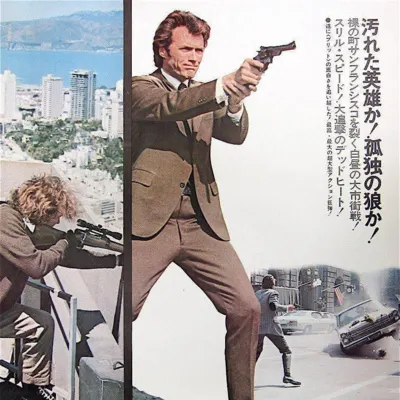
In progressAs the Zodiac Killer was tormenting San Francisco and captivating the rest of the country, Dirty Harry, a movie about a hard nosed cop who takes down a serial killer called Scorpio, was released. We talk about it, why people may have convinced themselves there were more similarities than there were, and the general topic of escalating violence within society and cinema.
Transcript
M and the Zodiac letters
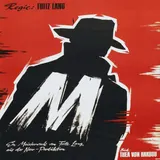
And we're back with another episode of Gladio Free Europe. I'm Abram. Today I'm joined by Liam. And sometime back, we did an episode on the German movie M by Fritz Lang. If you haven't listened to that one, M is a movie from 1931. It's set in some unspecified town in Germany where there's a serial killer that targets young girls. And it follows the police in their investigation to try and stop them. Good of a movie. Definitely holds up. Really most famous for sort of inventing the police procedural. You know, the format that a lot of movies and TV shows copy. The movie is on YouTube if you want to watch it. And you should. It's quite fun. It's about as fun as a movie about a pedophile killer could be. It definitely feels like the kind of movie that could have come out like 50 years later.
Just, you know, it's in black and white. But yeah, so that episode is on your podcast if you want to listen to us talk about that. But I only bring this up because of one thing in that movie that stuck out to me is the serial killer in the movie writes letters to the newspapers taking credit for the murders, essentially to taunt the public and make them afraid for their lives. And the police use these letters to try extract fingerprints and do handwriting analysis to try determine who the killer is. Now, if you're familiar with the Zodiac Killer, or you've seen David Fincher's movie Zodiac, this should sound very familiar to you. Now at this point, we've done an episode on M, a fictional serial killer. We've done an episode on Serpico, a movie based on real-life cop and the real-life NYPD in the 60s.
And we've done an episode on the Oakland Black Panthers and other black radicals in the 60s. So, why not bring all these hobbies together and do an episode that combines serial killers, crooked cops, and radical movements in the 1960s Bay Area?
Dirty Harry
And what better way to do that than by talking about Dirty Harry, the film starring Clint Eastwood from 1971? So, we both just watched this movie.
Liam, what did you think about it?
I think it's really fun. I think to paraphrase Roger Ebert, it is a fine movie, but unquestionably fascist.
Oh, yeah, definitely. It's not exactly Judge Dredd, but it is getting there.
Yeah, yeah, I think it's a really interesting document of a particular moment in time when fears of crime had reached heights we really haven't seen before or since. And a lot of everyday Americans were embracing very, very right-wing ideas about law and order, you know, the late 60s, early 70s. And because of that, I think it also kind of says a lot about American psychology and hints at some kind of broader trends in American politics and attitudes toward, you know, policing. But I think that even beyond that, much more importantly, it's a really well-made action movie, or like action thriller, I guess. And I can kind of see why at the time it was incredibly popular and why some people at the time were worried that a film like this could be so entertaining while also involving these ideas about the freedom of cops to abuse whoever they want.
A buddy cop movie?
Yeah, it's also a pretty good buddy cop movie.
Yeah, yeah. With Gonzalez.
I mean, it's not like a Lethal Weapon. Lethal Weapon is more where the two characters are, you know, fully fleshed out characters and, and you know, they're fun to like watch on screen. And they also like, they have a good back and forth. In this movie, Dirty Harry's sidekick, you know, is kind of like a second character. He's not really like, obviously, he's not the star, but you know, you do get like some good, you know, buddy cop interactions.
Right.
Yeah, he is a guy with a sociology degree, which really makes Harry turn his nose.
Yeah, and also he's like not in the sequels. He also isn't even in the final showdown in the movie because he kind of gets taken care of near the end of the movie. So, yeah, not a buddy cop movie, but still a good decision to have Dirty Harry have somebody to talk to throughout the movie and not just like be this lone cop, which I assume would have been more Eastwood style at that point, having come out of all these Westerns where he was, you know, like the man with no name and just being the lone vigilante, that sort of thing.
Eastwood before Dirty Harry
Have you seen any Eastwood films from the 60s?
From the 60s. Oh, absolutely. Yeah, all of the Morricone ones, yeah. And I've yeah, I've seen, and then later on, he did High Plains Drifter. I've seen that one. He had a great career at this point. Again, mostly Westerns.
Eventually, he sort of pivoted to cop movies. The movie he did before this was Coogan's Bluff, which he plays like an Arizona cop in New York City. But even then, he's like a country cop. You know, he wears the cowboy hat, even though it's like 1968 and still kind of doing the sort of cowboy thing, even the present day. Whereas this one's like full present-day city cop, no cowboy thing at all.
Yeah, yeah.
But yeah, okay, Coogan's Bluff came out in like 68.
Bullitt
What also came out in 68 was Bullitt. Let's talk about Bullitt. Bullitt is a movie from 68 about a cop, Lieutenant Frank Bullitt, played by Steve McQueen. The story is there's going to be a mafia trial in a couple of days, and Bullitt has to guard a witness that's going to testify because the mob wants to kill him. And then there's some difficulties in doing that, as you can imagine. And, you know, it's like a cop action movie. Of course, there's going to be difficulties. That movie is mostly fine, but there is this really famous car chase in the middle.
Yeah. Yeah, they actually recreated that car chase at the car show at Disney World.
It's definitely fun to watch. It's, you know, like a 60s Dodge Charger and a 60s Ford Mustang in the streets of San Francisco. And, you know, like, San Francisco is a city built on a hill. So, you know, all the streets are very steep. You know, they're pretty narrow, like city streets. So these, like, muscle cars are just, like, flying up and down these hills and just, you know, swerving around corners. And, you know, of course, the cars are fucking loud. So you can hear them from a mile away. So it's not exactly, it's not like Nicolas Winding Refn's Drive where there's like, you know, tactics and like hiding where the car is. Like, no, everybody knows exactly where you are. You're not going to get away tactically. It's just pure speed. So they're just like, you know, chasing each other around the city. And I can understand why it's like so big at the time.
And the rest of the movie, not so much. That kind of, you know, very serious police procedural wasn't super common in 1968. You know, there were a lot of detective movies, but those are pretty different stylistically.
Yeah.
But I've seen those 80s procedural detective shows. You know, like Remington Steele, Columbo, Magnum PI, even Knight Rider's kind of a detective show.
I've been watching tons of Miami Vice the last few weeks.
Miami Vice is a very different one because it's like a.
Yeah, different vibes.
Much more fun.
Much more fun vibes, in my opinion.
Yeah, Steve McQueen isn't as cool as Pierce Brosnan is in Remington Steele. And, you know, like, doesn't have as much charisma as Michael Knight and Knight Rider. I don't know. It's just. It's not that he's bad in the movie per se. It's just like, you know, he's doing the very serious stoic thing, you know.
Yeah, in a way, yeah, just like Eastwood, he's almost doing more of a cowboy kind of performance.
Yeah, it's got like the same expression most of the time. You know, he's just doing like serious police work. He's just like questioning people. And that stuff's like very interesting. You know, if you've never seen like how that kind of detective work. I mean, I grew up on those kinds of shows, so watching this is kind of like, I've seen it all. This is boring.
San Francisco on film
I bring up Bullitt for a few reasons. One, both Bullitt and Dirty Harry are San Francisco police movies. And Dirty Harry is a much better San Francisco movie. You know, much bigger variety in outdoor locations, and everything is generally shot better. You know, it's a much better-looking movie.
I think a really big difference between a movie like Bullitt is that they use all these cutting-edge filmmaking techniques in Dirty Harry. I think that what maybe stands out most about halfway through the movie, you'll know what I'm talking about in the stadium scene where the camera suddenly pulls back. I guess it's on a helicopter, and it pulls back from Dirty Harry to suddenly show the entire stadium. That's a kind of shot that might be pretty commonplace now, but because in the early 70s that was basically unheard of, it just looks amazing. And because it's an older film and those kinds of shots are less expected, I think it really hits you a lot stronger. And then, not to, you know, spoil anything here, really.
I don't care for it.
I don't know if you care about that, but on the school bus scene at the end, really well shot the way they do that. The way that you see this, the tension of this school bus going through this bridge, and you see Dirty Harry standing on top. You don't really know what's going to happen and what he's doing. And then he jumps onto the moving school bus, and the camera follows as the school bus, you know, swerves around as the driver tries to shake Dirty Harry off. And it's just very believable in a sense, even though it's such a goofy idea. It really works.
The problem with Bullitt is the car chase is very well shot and it makes a lot of good use of the space of San Francisco. But the rest of the movie is mostly indoors. So it isn't like Dirty Harry, where you know you have, you know, cops just walking down the street or you have like aerial shots of the city giving you an idea of what the geography of the city is, you know, from up above and then, you know, from pedestrian view. Bullitt is just, you know, there's a car chase, and then there's like the scene at the very end at the airplane. But for the most part, it's like, you know, they're in the apartment guarding the guy, or they're in the hospital, or they're in the police station or something, you know, just not a lot of stuff to really give it a San Francisco feel.
You know, I don't even think those scenes were shot indoors in San Francisco. It could have been shot somewhere else. But yeah, so I bring that up just to compare it because, you know, they're both San Francisco movies.
Dave Toschi
And another reason is for the character of Bullitt, Steve McQueen met with San Francisco police inspector Dave Toschi. And, you know, he based some things on Dave Toschi, the main one being the look. So Toschi kept his gun in a shoulder holster. And in the movie and the movie poster, you can see McQueen doing the same thing, you know, the shoulder holster. That movie came out in October 1968. In December 1968, the Zodiac killings start. And Toschi was the cop who was assigned to that case. Toschi is probably familiar to you if you've seen David Fincher's Zodiac, because he's the guy who Mark Ruffalo plays. And in that movie, Robert Downey Jr., who plays Paul Avery, a reporter for the San Francisco Chronicle, even mentions how McQueen got the shoulder thing from Toschi. Also, in that movie, we get to see Toschi take a trip to the movies to see Dirty Harry, which we don't like. But yeah.
The Zodiac myth
Because at the time, and to this day, people say Dirty Harry was based on the Zodiac Killer, which is not true.
Yeah, it's one of those just-so stories about filmmaking.
Yeah, so the name of the killer in the movie is called Scorpio, which is taken from the Zodiac.
Okay.
But that's basically all they did to make the killer in the movie similar. There are other similarities, like the fact it's set in San Francisco, you know, and a few others, but just the fact that you had a movie about a named serial killer in San Francisco is enough for people to make the comparison.
Right.
I think if the killer didn't have a nickname, people wouldn't have made the connection, or at least like not made it as definitive.
Yeah, I think a good parallel to that is how M, as we talked about before, a lot of people at the time, especially in the English-speaking press, assumed it was based on the Dusseldorf murders, which were these notorious killings that were happening right as the movie came out. But actually, the movie had been filmed before those murders happened. It was instead based on some less well-known killings that happened earlier in Germany in the 20s, not in the 30s. These two things happen at the same time, so they sort of assume they're connected.
Well, here's the one. So, obviously, the villain in Dirty Harry is called Scorpio. And there is a Scorpio sign on the Zodiac. Is that possibly a kind of a last-minute addition to tie the film into the you know, Zodiac headline?
Absolutely.
The news story at the time. Okay, so that is not a coincidence. That is deliberate.
I mean, we'll get into it a little bit later, but I did manage to find a draft script for the movie. And it was a different name. He wasn't named Scorpio. He was just like named his name, which is, I think, David or something. So, yeah, the last-minute addition was naming him Scorpio. And of course, you know, screenplays aren't written for a specific city. Dirty Harry wasn't running around San Francisco specifically in the screenplay. But yeah, I mean, I read a few things written about Dirty Harry over the years, just like a few books, you know, about movies. You know, I read this book about like a history of cop movies just to read the page on Dirty Harry. And they accidentally called the killer in the movie Zodiac. And that's just like in print forever. But yeah, okay. So, you know, people have it in their minds that these are the same thing.
Listing the similarities
So let's list these similarities. We mentioned the name and the setting, the letters, Zodiac sent letters, and Scorpio left a note. This is barely a similarity, but people mentioned this one, so we have to as well. But the Zodiac letters to the newspapers is not the same as Scorpio leaving a note behind after a murder. The other one is School Bus. In the October 69 Zodiac letter, he wrote about killing a school bus full of children. And he kept writing about that in his letters in 1970. You know, he wrote about how he's going to plant a bomb on a school bus. And, you know, we already mentioned this. In the end of Dirty Harry, Scorpio takes a school bus of children hostage. So that's a real similarity. I'll give people that one. But, you know, Zodiac said he would plant a bomb on a school bus, not take it hostage.
So, so you know, I'll give people that one. Also, they say the handwriting of the letter in the movie is similar to the handwriting of the real-life Zodiac letters, but that one is a stretch to me. I looked it up, they're not very similar, but you know, I mentioned this because I'll read some shit online, like how Clint Eastwood's Dirty Harry adapted the real-life Zodiac case. And I just need to make that clear, that's bullshit. And another thing, I've seen people say the character Dirty Harry is based on Toschi. That's not true either. Bullitt was based on Toschi. When Toschi died in 2018, there were a bunch of headlines like, Dave Toschi, the Zodiac Killings investigator who inspired Dirty Harry, dead at 86. No, that's bullshit too. Because all of the, you know, all the film people in Hollywood and all of the journalists in New York, they just can't tell San Francisco movies apart.
So in their minds, Dirty Harry and Bullitt are the same thing. I seriously tried to track down some source for that. Like maybe Clint Eastwood or a writer or something said something to that effect at some point. But I couldn't find anything. So it's just totally... I really think people, you know, people confuse Bullitt and Dirty Harry because they came out around the same time. And you know, they're both San Francisco cops. You know, people convince themselves Dirty Harry's about the Zodiac killer. So obviously the movie where the cop is based on a real-life cop is Dirty Harry. That makes sense.
Steve McQueen passes
People are more ones.
You know, funnily enough, actually, Steve McQueen was initially offered the part of Dirty Harry, but he didn't want to because he just shot Bullitt. This was pretty early though. This was in, I guess, 68, 67. And at this point, the script for Dirty Harry was still quite different. And it was actually set in New York. So they hadn't yet moved to San Francisco. So it wouldn't have been that similar, but in any case, he still said no.
Writing Dirty Harry
And I guess, you know, while we're on the topic, this is the best place to talk about how movies are made exactly. Dirty Harry began with a script called Dead Right, written by Harry and Rita Fink, this married screenwriting couple. They don't have a lot of credits besides the story for Dirty Harry, and we should mention that they don't have the entire credit for the film, just the story by credit, because the script went through many different rewrites before it eventually became the film that we know. Interestingly, the script was pitched to a whole bunch of different actors who could potentially play Harry before it was ever pitched to a director. So they offered it to John Wayne, to Burt Lancaster, even Frank Sinatra. But all these people, including Steve McQueen, turned it down.
It was offered to George C. Scott as well, who, you know, turned it down. But he went on to star in the Exorcist 3, where he played a cop, Lieutenant William Kinderman, and the villain in that movie was the Gemini killer, whose name was inspired by Zodiac. So maybe he felt he missed out on the success of Dirty Harry, and that's what attracted him to doing Exorcist 3.
You know, originally, actually, Dirty Harry wasn't even going to be a theatrical movie. ABC wanted to make it as a TV movie, but in 1969, you couldn't get away with this level of violence on TV, and they didn't want to tone it down. So eventually, they sold the rights to Warner Brothers and started developing it as a theatrical feature. For a while, like we said, Frank Sinatra was in talks, and they got some rewrites with Frank Sinatra in mind. And what's especially funny is that one of the rewrites, bizarrely, was by Terrence Malick, you know, the beloved art film director of movies like, you know, Days of Heaven, The Tree of Life. But he actually hadn't directed anything at this point. So he was just, you know, this young script doctor looking for work. Sadly, his draft does not seem to be available, but interestingly, the sequel to Dirty Harry, which is called Magnum Force, which follows a group of motorcycle cops who have gone kind of Judge Dredd style and start secretly executing criminals, that one was supposedly taken from the Terrence Malick draft or the first movie.
So in a way, that kind of idea, you know, there's some elements of Terrence Malick's idea in the second one.
Yeah, which makes sense because that idea is like a very sequel-y idea. You know, the first movie is about needing a killer to take down a killer, and the second one is about needing a dirty cop to take down a dirty cop, right?
Right, yeah, yeah, it's a good call.
John Milius
Yeah, I mean, the creative screenwriter for Magnum Force, John Milius, he wrote a draft for Dirty Harry, again, you know, when Sinatra was supposed to be the lead. That one is online, you know, and I read through it pretty quickly. It's much more dialogue-y, like, Harry talks a lot.
That's funny, because you don't expect that from John Milius.
And he doesn't in the final movie, because, you know, that's like Eastwood's thing. When Milius wrote the second movie, Eastwood, you know, told him, he's like, you've got me talking too much. Because, you know, Eastwood doesn't do the big speeches or long conversation scenes.
Yeah, come on. It's the man with no name. He talks in this movie, but it's mostly short sentences. And he's never the guy who talks the most in a particular scene. There's a lot of scenes where there's he'll be in the room with two other people and one person is talking about him with the third party, which I think is very funny.
Yeah, he's really good at expressing what he needs to with, like, you know, facial and body language.
Yeah.
But he's not big on talking a lot. And neither am I, which makes him a great actor and makes me a great podcast host.
I think that Milius is a pretty good guy to talk about here. He's most known for writing Apocalypse Now, as well as directing Conan the Barbarian and Red Dawn. And he also directed some episodes of Rome, the HBO show, which is interesting.
Yeah, co-created Rome.
Oh, I'm sorry. Yeah, I shouldn't want to take his credits away.
He's still around. He's probably like old now, but.
The thing I really hate Game of Thrones for is they canceled Rome so HBO would have money to like do Game of Thrones.
Oh, really?
And then obviously, Game of Thrones shit the bed.
That's a shame. But yeah, sorry, continue.
If you want to get to know John Milius, there's a couple documentaries where he plays a big role. First is Hearts of Darkness, this very famous documentary about the making of Apocalypse Now, as well as this documentary from the 90s about Dirty Harry, which is a lot less fun, but it kind of shows a lot about who this guy is. He's a bit notorious for being this kind of right-wing edgelord. And you know what? We can let him explain in his own words.
Milius in his own words
This is an interview from 1999, about 30 years after Dirty Harry and 15 years after Red Dawn. And just to explain here, if anyone hasn't seen Red Dawn, it's this kind of famous Cold War fantasy about a group of American teenagers defending their small hometown from a communist invasion. And in this interview, the reporter asks John Milius if it's right for people to call him a right-wing reactionary. And he says, I'm not a reactionary. I'm just a right-wing extremist, so far beyond the Christian identity people and stuff like that, they can't even imagine. I'm so far beyond that that I'm a Maoist. I'm an anarchist. I've always been an anarchist. Any true, real right-winger, if he goes far enough, hates all form of government, because government should be done to cattle and not to human beings.
Yeah, this I find funny, because it immediately brings back memories of Steve Bannon saying he's a Leninist. Because, you know, he said, like, because Lenin wanted to destroy the state, and that's my goal, too. And they have no real understanding about what anarchism or Leninism is. They just say they want to be edgy.
I do find it a little curious how little you hear right-wing guys say something like that.
Yeah.
Because obviously all right-wing guys love triggering the libs and saying something edgy and outrageous. But you basically never hear them say, I'm a communist, even though that would scare every mainstream political faction. It's like honestly bizarre when you stop thinking about it.
Interesting.
They'll say practically any heinous thing to get a rise out of people, but they all stop short of saying Marx was right.
That's a good point.
Yeah, I know that in his famous book about the Hell's Angels, Hunter S. Thompson noted that you'll see a lot of bikers using Nazi imagery, but you don't see any bikers using, you know, Soviet imagery. And he wondered if it's because deep down they recognized that, you know, just like them, the Nazis were a bunch of middle-class boys trying to have fun in the edgiest way they could.
Yeah, and also like, Milius has no idea what Maoism means, but, you know, I think everyone listening kind of figured that out. You know, back to that interview, Milius goes on to say, actually, I think I found a political voice in Jesse Ventura. I really like Governor Ventura. He's my man. I follow Governor Jesse. I'll vote for him. So that's nice.
President Ventura is the one who can unite this country in 2024.
Later in the interview, the last question for John Milius is, what would you say is your main theme as a writer? To which he basically says he gives a long answer and says he never really thinks about it. But if you notice, earlier in the interview, he actually says it, where he says, well, we've always been fascinated with the warrior. The warrior has always been one of the most exalted figures in society because war is so bizarre. We do it in our society whether we like it or not. Why do you think football players brag about their Super Bowl ring? It's the same thing exactly. And there's people who scoff at me. They'll say, well, he's just a militarist or something like that, yet they never miss a basketball game. And they have their basketball stars who love who they are, fulfilling the same sort of place as the warrior.
You know, I saw Good Will Hunting, and I thought what was interesting in Good Will Hunting was what it was lacking. It lacks what Teddy Roosevelt calls the great enthusiasms. To spend yourself in a worthy cause, to know the great enthusiasm, to strive, and if you fail, at least fail greatly. And if you succeed, to know the triumph of high accomplishment. But never share that netherworld of timid souls who know neither victory nor defeat. I think Gen X is very smart, but I think it needs a little bully, as Teddy Roosevelt would say.
Yeah, and you know, he later talks about how he likes guns because, you know, he's a hunter. He says, I'm not obsessed with guns the way people think I am, but my obsession is that guns give you a certain degree of freedom, and that our forefathers were very concerned about that freedom, you know, freedom from the government. And that right, once it's eroded, is the only thing you have, really.
Kurtz is Milius
So after I read that interview, something hit me. Like a diamond bullet right through my forehead. Kurtz is Milius. The genius. The will to write yourself as that. Perfect, genuine, complete, crystalline, pure. Kurtz is Milius. Or, or you know, at least who Milius would like to be.
Huh.
So now it should be obvious where the right-wing themes in Dirty Harry come from. The original idea, you could say, is right-wing, the idea of a killer taking down another killer. But Milius helped hone those ideas further. I haven't read any of the scripts that existed before Milius' draft, so I can't be sure who came up with this. But in Milius' draft, the ending of the movie has the killer taking the school bus hostage, like in the final movie, and like we said, a similarity between the movie and real-life Zodiac. There's a lot to say about the collaborative nature of movies, because if they had shot Milius' draft, as it says on the page, the movie would have been crap. Also, in his draft, the part where Scorpio kidnaps a girl and says she's buried alive, and Harry has to run around town trying to deliver a cash ransom in time exchange for the girl who's buried.
That's not something Zodiac did, but that was based on a real story.
The Mackle kidnapping
There were these guys called the Mackle brothers in Florida, and they were land developers, and they developed Marco Island, Florida.
Yeah, I got a buddy from there.
It's built right on the water of the Gulf of Mexico, so it's on the west side of South Florida, like the exact opposite of where Miami is.
Yeah, it's nice I've been there.
So they were rich guys. One of the brothers, Robert Mackle, he had a wife and a daughter. You know, one day, a couple of guys, disguised as cops, come up to the Mackle house. Robert wasn't at home at this time, only his wife and his daughter, Barbara. And Barbara would have been 19 years old at this time. They come up to the house and say Barbara's boyfriend has been in a car accident. And then once they're inside the house, you know, they tie up her mom and they kidnap Barbara. And they say they want a $500,000 ransom in exchange for her whereabouts. Here's where it gets, you know, very spooky.
Yeah, this is where we're going to become a true crime podcast for a few minutes.
They buried Barbara in a shallow trench inside a fiberglass reinforced box. That box was fitted with an air pump, a battery-powered lamp, there was food, and there was water, but they laced the water with sedatives so she wouldn't have the strength to escape. And there were pipes that provided outside air. So that's the real life story. In that story, the FBI paid the ransom, got the directions to where she was buried, and saved her in time. In the movie inspired by real events, Harry and Scorpio get into fight when Harry's delivering the ransom, then Scorpio runs off, and Harry has to do old-fashioned detective work to figure out where he is. And when he tracks him down, he tries to torture the location out of him, but it's too late. The girl's already dead. This is a nice example of how real-world events are exaggerated and reshaped into something more thrilling and cinematic for mass entertainment.
Justifying torture
Right, and just to add on here, I think it's important to note that torturing a suspect is something that a cop is really never supposed to do. Even in the 70s, that was well understood. But here, they've really the writers have pretty carefully created a situation in which this guy must torture somebody because otherwise the girl is gonna die. And because he can't torture him enough, eventually the girl does die. So they've set up this kind of imaginary situation to justify this kind of abuse, which I think is very smart, even if the writers don't know they're doing that.
In the movie, when the mayor says he's going to go along with Scorpio's demands, Harry has this line like, she's already dead, you know that. You know, like the idea of believing he didn't already kill the girl is some delusional thing on the mayor's part, and only Harry is smart enough to see that. But again, in real life, they paid the ransom, they got the girl back, they caught the guys who kidnapped her, and they got the ransom back. It's a little fucked up that they twisted the real life story to have it have a different message, but you know, that's just more reason to never take life advice from works of fiction.
Milius's draft
I really wish I could find the original script the movie was based on, because the Milius script is mostly the plot beats of the final movie, but the characterization is like completely different.
How so?
Well, like I said, Harry talks a hell of a lot more. I mean, this was when Frank Sinatra was attached.
Oh, right, right, yeah.
So, you know, maybe when Eastwood was attached, he might have like toned it down, but.
And I guess there's the musical break, you know, halfway through.
Yeah, also, the mayor is not in the movie at all. In the final script, you know, he has several scenes with the mayor, but the mayor is just not in the movie.
Yeah.
His sidekick is completely different.
Uh-huh. Yeah, I guess it's got to be Dean Martin.
Also, Harry was a lot more cruel. I mean, you know, we mentioned he tortures Scorpio in the movie. He tortures Scorpio in the sense that Scorpio has a stab wound in his leg, and Harry is just like standing on it and asking where the girl is. Whereas in Milius' script, rather than just like being this sort of quiet guy who's just like doing what he needs to do, in the script he comes off like evil almost. But yeah, I mean, also, there's nothing about location in that script, you know. It's very common, but it's worth pointing out: you know, when Frank Sinatra was attached, they were going to do it in New York.
Don Siegel
But then he dropped out, Eastwood got on, and Eastwood got Don Siegel on board to direct. Those two, we already mentioned, they just worked together on Coogan's Bluff, where Eastwood plays an Arizona cop who's chasing down an escaped prisoner in New York City. Siegel also directed Invasion of the Body Snatchers, that 50s B-movie classic.
Oh, yeah, whoa. And that's funny because that's a movie with a lot of people insist has some kind of like left-wing anti-McCarthyist themes. So maybe this guy was just, you know, maybe he was just always just going along with the trend. Like, you know, if people were critical of McCarthyism in the 50s, that's where he's going. And then if in the early 70s, everyone's becoming, you know, a tough on crime militarist. He goes in that direction.
Siegel was a liberal. He voted Democrat. He was like a big city liberal. Like, he wasn't a right-wing guy. He just got this right-wing script. And even when he got it, he toned it a hell of a lot down for the final movie. Like I said, if they just adapted Milius' script straight, it would have been very right-wing, but also just like very stupid and very like over the top. The movie we got is, you know, much more toned down and just a generally smarter movie.
Uh-huh. Uh-huh.
Well, tell us a little bit on Siegel.
He actually started his career directing a black and white World War II propaganda film called Hitler Lives, which basically says, Watch out, just because Hitler's dead doesn't mean Germans are any less fucked up in the head. That one's on YouTube, and you know, it's like listed on Letterboxd. The comments for that one are very funny because, you know, most of them are just like very generic, but occasionally you'll see comments like, this is so racist, this is so fucked up. Against Germans. Bitch, they did the Holocaust a week ago. It's perfectly reasonable to give them a side eye for at least a few years. Come on. Anyway, like Siegel stopped making movies in 1992, but it's a very interesting period for a career to span, you know, from the 40s to the 80s.
Yeah, that's so much of American history right there.
Yeah, and just like the visual language of film was completely very undeveloped in the 40s, and like really like concise by the 80s. So, just like having a career that spans that entire period is like very interesting. And, you know, just like, yeah, American culture changed so radically from like 1945 to like 1982.
Choosing San Francisco
Mm-hmm, but yeah, anyway, back to Dirty Harry. So, they were thinking of shooting the movie in Seattle, right? Because not a lot of movies have been shot there around this time.
There were a lot of movies shot around San Francisco in the 60s and in the 50s, you know. Vertigo is a good example of a 50s San Francisco movie. But since Eastwood was from that area, Carmel by the Sea, they did some like interesting scouting in San Francisco first, and they just decided to just stay and shoot the film there. Anyway, like at this point, Bullitt had been shot there. Also, that same year, 1968, this movie called Psych Out was shot in San Francisco. It's about like this group of young hippies. Jack Nicholson's the lead. He plays a young hippie. Not super young. Like, he was 30, but still very early in his career.
The youngest I've ever seen him, I'll say that.
It's like got a lot of good variety of like 60s San Francisco stuff. You put him out of musical numbers, that's kind of fun, but the actual plot is like, eh. Most of the movie is about like guys doing acid and then freaking out. And then, you know, see like acid trips. And that's kind of it. But yeah, I bring this up because the location of San Francisco is one of the main points for people saying the movie is based on the Zodiac Killer. But San Francisco wasn't your first or second choice for location. It definitely helped sell the movie in the end. I'm not sure the movie would have made so much money to guarantee a sequel if it was in Seattle. So, you know, the movie is eventually made. They end up getting a guy named Dean Riesner to do a rewrite for the script.
Riesner wrote Coogan's Bluff, the movie you mentioned earlier. So the movie comes out December 1971. It's a big hit. And one last bit of trivia.
Graysmith and Toschi
The movie Zodiac is based on the book by Robert Graysmith. Graysmith was the political cartoonist at the San Francisco Chronicle when the Zodiac Killing started. He's Jake Gyllenhaal's character in the movie Zodiac. He is the guy who becomes obsessed with solving the case on his own, you know, and gets the books and ciphers out from the library to try to solve the Zodiac ciphers. Graysmith eventually builds a strong relationship with Toschi, the inspector in the case that we mentioned earlier. But what's very funny to me is the first time Graysmith talks to Toschi is when he bumps into him at the movie theater. Or watching Dirty Harry. Okay, we're done talking about Zodiac. There's like so many websites about Zodiac, like forums, YouTube videos.
Both the Killer Animal movie.
Very well discussed.
If you need a primer, definitely watch the David Fincher movie.
Yeah, it's very good too. But yeah, not interested in going with that for this episode.
Clint Eastwood's politics
What we are interested in is talking about Clint Eastwood.
Yeah, so Eastwood has this reputation, not entirely unlike John Milius, as a right-winger in Hollywood. You know, there's this stereotype that Hollywood is generally left-leaning. So people who are outspoken Republicans, like him or John Milius, or actor Jon Voight, they tend to stick out. And I think that part of it is because, so it is true he is quite right-wing. He has this image not only because of his expressed political beliefs, but also because he plays this kind of gun-slinging badass in all of the Dirty Harry movies, in so many cowboy movies, in lots of other kinds of action films like In the Line of Fire. So he's got this reputation as kind of like a, you know, a shoot-first, talk-later guy. So you can see why, you know, people who are right-wing, you know, might have that impression. Famously, in 2012, he gave that speech at the RNC where he talked to this empty chair and imagined Obama was sitting there.
Although, at the same time, he's not a typical conservative because all over the years, he's made these kinds of anti-war comments that you wouldn't expect people on the right to make. Perhaps most shockingly, he was actually against the wars in Iraq and Afghanistan. And interestingly, he even made a comment at the RNC that year where he supported Obama's vote against the Iraq war, but was critical that Obama also voted for the war in Afghanistan. So yeah, pretty strange guy, unusual politics. There's an interview around the time that American Sniper came out where he basically claimed that American Sniper, which many people saw as the kind of classic, you know, American jingoistic movie that's, you know, about the cult of the operator, Eastwood himself didn't seem to see it that way. He said, I was a child growing up during World War II. That was supposed to be the one to end all wars.
Then four years later, I was standing at the draft board being drafted into Korea. And then after that, it was Vietnam. And it all goes on and on forever. I just wonder, does this ever stop? And no, it doesn't. So each time we get into these conflicts, it deserves a lot more thought before we go wading in or waiting out. Going in or coming out. It needs a better process, I think. I was against going into the war in Iraq, since I figured we'd probably trip over ourselves in the way. I have big questions when we went to Afghanistan. Did anybody study the history of Afghanistan? Not just with the British, but the Russians too? Contrary to public opinion, I abhor violence.
So yeah, we bring this up partly to clear up some misconceptions people have about Clint Eastwood. There aren't many anti-war libertarians left, so it's worth acknowledging the ones that exist. Not everybody who votes GOP is a, you know, rabid pro-war psycho.
Yeah, they could just be a typical, you know, confused American.
Could just want lower taxes because they're rich.
Yeah.
American Sniper and Chris Kyle
If we could, you know, talk a little more about American Sniper, that's obviously based on the autobiography of Chris Kyle, this famous sniper in the U.S. Army who claimed to have the most confirmed kills of anybody. The book came out in 2012 after his death when he was actually killed in a random shooting. And the movie came out in 2014. And it turned out that, maybe unsurprisingly, like half the stuff he talks about is made up. He was this classic bullshitter. We don't have to get into all of his various embellishments and exaggerations, but one thing we should mention is that he claims that he got into a fight with the guy who was critical of America's wars in 2006. He says that at the day of a funeral for one of his friends who was a Navy SEAL who died in combat, this guy says some things critical of the war.
Basically, he says something like, oh, well, you deserve to lose a few guys because what you're doing over there. And then later on, Chris Kyle goes on Opie and Anthony to promote the book, and he embellishes even further, saying that the guy he got into a fight with over those comments was Jesse Ventura. You know, so we mentioned before, famous kind of outsider governor of Minnesota, beloved by millions, including by screenwriter John Milius, that Jesse Ventura. And of course, Jesse Ventura strikes back, sues Chris Kyle for defamation, and wins because Chris Kyle made all that shit up.
Yeah, I mean, it's unclear if he made up the entire interaction or just the part where the guy was a former Minnesota governor, Jesse, the mind, formerly the body, Ventura, that Jesse Ventura. Personally, I believe the entire story is made up. Like a guy in a bar during a wake and just like gets into it. Yeah, oh well, boy, I think it's good when soldiers die.
Yeah, that's hilarious. Absolutely not. No. Yeah, yeah.
I think it's a case where he got away with the lie at first, so he just pushed it even further and then eventually it like caught up with him.
Yeah, you gotta put it in your head. Yeah, either way, he made up a lot of shit. And that part doesn't really matter for this discussion. What matters is, Clint Eastwood liked the book because it told a story of a guy for whom the psychological toll of war, killing people, seeing friends get killed, for him, it was hell. And it changed him for the worse. And those are the kinds of stories Eastwood likes to tell.
What the critics said
So back to Dirty Harry. Let's read what the critics thought about all of this. Here's a review for Dirty Harry by Gene Siskel in the Chicago Tribune. A movie has never made a more persuasive argument for letting the police have a free hand in their interrogations. Harry Callahan and the film argue that the effect of the Supreme Court rulings in Escobedo and Miranda cases is to handcuff the police instead of criminals. It's almost like you're making the police the guilty ones, the argument goes. The cops are out in the street, risking their necks to protect society from gun-toting lunatics, and you expect them to remember some spiel about a person having the right to remain silent.
So that review was 71 when the movie came out.
Truffaut on anti-war films
Two years later, in 73, Siskel went to the San Francisco Film Festival, where he met Francois Truffaut, and this is where we get that famous line about there being no such thing as an anti-war movie.
Yeah, which we kind of sort of touched on in our episode about The Northman.
I had the privilege to meet Truffaut two weeks ago, when his 13th film, Day for Night, received its West Coast premiere. Also there, frequently serving as interpreter, was Jacqueline Bisset, the British actress who is best remembered as Steve McQueen's girlfriend in Bullitt. Bisset is now starring as the glamorous actress in Day for Night. Bisset and I weren't all that far apart. There was a crucial point of agreement. In a cinema preoccupied with death, Truffaut's characters are gloriously, painfully alive. And so Truffaut and I spoke of life and death. I asked him why there's very little killing in his films. He replied, I find that violence is very ambiguous in movies. For example, some films claim to be anti-war, but I don't think I've really seen an anti-war film. Every film about war ends up being pro-war. Siskel asks him, even a film like Kubrick's Paths of Glory or Doctor Strangelove? Yes, Truffaut replied.
I think Kubrick likes violence very much. Siskel goes on, Not only do your films not contain any killing, they also lack superheroes, men that are larger than life, men that can solve everybody's problems, men like Dirty Harry Callahan, played by the actor Clint Eastwood. Why don't your films include supermen? To which Truffaut replies, because I've never met one. Yeah, so obviously that interview is very amusing because Siskel mentions Bullitt and Dirty Harry. But it also is the beginning of the anti-war discourse that fans of movies have been discussing for 50 years now. Siskel gave his own take, you know, quoting from the article again: I've thought about Truffaut's point for the last two weeks, and only now am I beginning to understand and agree with him. In Paths of Glory, which so many consider the strongest anti-war film ever made, the film doesn't so much condemn the war, rather, it condemns the French government that thought it was necessary to sacrifice its soldiers.
War isn't hell, it's just the men who run them are frequently hellish. And every war film, just like every war, has its heroes, and that too seems to cut across any anti-war sentiment.
Can a film be anti-war?
So, philosophy time. Let's try to expand on this point of view a little, because I do mostly agree with Truffaut here. There are a lot of movies that try to portray war negatively. A lot of them are about the Vietnam War, and specifically the American side of the Vietnam War. Those movies take the view that this is not a war we should have fought. They'll do things like, you know, show soldiers as these young kids drafted into fighting a war they don't know or care anything about, you know, like Eastwood was when he was drafted into the Korean War. But they end up fighting for their lives, watching their friends get killed, some of them, you know, become permanently disfigured, and then they lose the war and come home. So, what's the point of fighting in the first place? But here's the thing: what movies can do is show how the Vietnam War was immoral and unjust and ultimately pointless from the American perspective to an American audience, because it was an American act of aggression.
What they can't do is show the Vietnam War as immoral and unjust from the North Vietnamese perspective, because they were fighting for their lives, you know, from a better armed and better funded invading force. They weren't the ones going around dropping Agent Orange on poor villages in a country on the other side of the world. And that's where these movies mess up. They pick real historical wars with an unambiguous good and bad side. These movies aren't being judged solely on the logic of the movie. They're being judged on the logic of the war. I understand why the Vietnamese fought in the war. I understand why they didn't completely roll over and let a foreign power install a puppet government to try to subjugate them. So, you know, by all means, try humanize the poor saps who got drafted into war they don't support. And I'll feel bad watching a character I've come to like get shot up in a Vietnamese jungle.
But at the end of the day, I understand why he was being shot at, and I understand why his friends immediately retaliated. A lot of the movies people consider anti-war were about Vietnam, which makes sense. It was recent. It was Americans fighting, so you can cast American actors. It was unpopular, and the Americans lost. So, you know, what better setting?
Yeah, and this loss had huge implications on the American consciousness, especially the American right-wing consciousness for decades, arguably until the present.
Yeah, but to me, if you're really going to try to attempt an anti-war movie, you know, depict a war as something that should never happen, the First World War is the better setting because that's a case where basically nobody wanted it. There was no mass of regular citizens clamoring for large-scale bloodshed. And even the leaders who wanted the war regret it pretty quickly because it evolved into the slow-moving stalemate.
Yeah, all of the enthusiasm in World War I dissipated immediately as everybody involved realized their side wasn't going to win as quickly as they had thought.
Yeah, but that's the thing. Once it starts, there's no going back. War is towns getting destroyed, people becoming displaced, soldiers getting killed. War is chaos. And if you're someone whose house was bombed, or whose son was shot, or who lost someone in that chaos, there is no justice for you. You're not going to sue the guy who burned down your village. The guy who shot your son on the battlefield isn't going to be sentenced for murder. This is a war, and that's the cost of war. Which means, if you want justice for what or who you've lost, the only way to get that is through more bloodshed. Every act of violence committed by one side is justified by the previous act of violence committed by the other side. Every soldier that's shot is a reason to shoot another soldier. Every village that's burned down is a reason to burn down another village.
Every territory that's annexed is a reason to annex another territory. And it just goes on like this until you're in a situation where four years have gone by and tens of millions of people are dead. A lot of war movies say they were talking about the morality of war, which is maybe true, but really what they're talking about is the morality within war. I'll use American Sniper as an example. I think what Eastwood was trying to depict is the moral ambiguity of being a soldier and having to kill people and see your friends being killed. And that's one way, and honestly, that is the most common way to try to do an anti-war film. And that's what Truffaut is criticizing: the ambiguity. But I will disagree with the idea that it's impossible. I do think it's possible, but it needs to stress the fact that once a war starts, it's much harder to stop than to keep going.
You know, there's always discussion about glorifying violence movies. Glorification doesn't matter. And the reason it doesn't matter is because whether the movie intends it or not, people come away with the understanding that sometimes violence is a necessary and moral act. It doesn't matter if you try to depict the violence as heroic or sadistic or try and make it ambiguous. We all understand when we're watching something like the riverboat getting shot at in Apocalypse Now, or the Viking raid in The Northman, or the final showdown between Scorpio and Dirty Harry, is that there are people that cannot be reasoned with. But more commonly, there are people within situations that cannot be reasoned out of. The only way to prevent the violence they want to enact is through more violence. The only way to stop the Viking raid from burning down the village is to fight the Vikings.
The only way to stop Scorpio from picking up that gun and shooting Harry is to shoot Scorpio. So whether the filmmakers intended or not, these depictions of violence end up reinforcing the idea that violence is sometimes a necessary and a morally virtuous act.
The monopoly on violence
There's that, you know, famous cynical libertarian line about how the government has a monopoly on violence. And I guess there's some truth to that, because we've agreed that meting out violence is the government's job. And on the flip side, if you are going to be violent, whether in the context of domestic abuse, a bar fight, or a cold-blooded murder, the government is gonna come after you. And they're capable of a lot more violence than you are. The obvious benefit of this arrangement is that we get to live in relatively violence-free societies. You know, there's some nascent anthropological research that suggests that yes, the modern world is less violent than the deep ancient past. So we don't really have to worry about getting into physical fights to settle contract disputes that often. You know, in the Northman episode, we keep talking about, we talked about how back then, single combat was a common way for two private citizens to resolve disputes.
I think it's a good thing that that kind of trial by combat doesn't exist in America. Instead, however, we essentially have a specific caste of people who can get away with murder in certain supposedly justified consequences. Because, you know, the cops would argue that their own threat of violence is the only thing maintaining the peace. So when this peace starts to fall apart, like in all of the, you know, riotous uproar of the 60s, the solution is to deliver on this permanent implicit threat of violence.
Yeah, and you get crackdowns of protesters. You know, people in high crime neighborhoods are subject to harsher treatments by police. And of course, that results in backlash from the citizens. And you get things like the Watts Uprising or the Hunters Point Uprising, where perceived mistreatment by police results in several day-long riots that end up having to be put down by the National Guard. And I say perceived mistreatment, because in those examples is a story that quickly spreads and gets exaggerated by word of mouth. So the people protesting weren't reacting to what actually happened, even if what did happen was somebody being mistreated by the police. They're more reacting to the general increase of police mistreatment within the community. And that specific instance was just a tipping point that the community couldn't stand it any longer.
A killer to take down a killer
And this brings us back to the central idea of the movie, which is you need a killer to take down a killer. Extreme violence can only be stopped by extreme violence.
And I think a great example of this is African-American radicalism in the 60s and 70s. So, you know, because that movement, which in some ways did embrace political violence, came as a response to the overwhelming levels of violence from right-wing white supremacists, you know, in the form of Jim Crow, segregation, the anti-civil rights backlash, all that. You also had the election of Ronald Reagan as governor of California and the Nixon as president in 68 riding that wave of white backlash, which basically meant that black radicals in the 60s had a much stronger moral argument for their radicalism and their use of political violence than their white counterparts might have had. You know, no disrespect to white people, of course. Shout out to white women.
But yeah, I mean, like, the hippies were celebrating the summer of love in San Francisco in 1967. During that summer, there were 159 race riots taking place throughout the country. So, a bit of a difference between white radicals and black radicals at that time.
Yeah, yeah, the 60s were very different depending on who was doing them, you know. And we talked about before, the Watts uprising and our Eldridge Cleaver episode, which was in 65 in Los Angeles.
The Hunters Point uprising
You also had in San Francisco the Hunters Point uprising in 1966, which would have been Dirty Harry's backyard. Hunter's Point is an area right on the San Francisco Bay, which these days is entirely luxury apartments, but in the 40s was a shipping yard. And the housing that was built was temporary, meant for shipyard workers. And famously, as part of the Great Migration, a whole bunch of African-American people from working-class backgrounds from the South moved to the North and to California in the 20s, 30s, 40s, 50s. And this community was still living there in the mid-60s, but by now, a decade and a half after the end of World War II, when the jobs presumably had left, everything was run down. Hunters Point was a classic food desert with no grocery stores within walking distance, and because it was so poor, there wasn't enough of a tax base to fund the schools.
There weren't even any parks, no rec centers. So the San Francisco government eventually had the idea to tear down the temporary housing that it had built during World War II and build some real permanent buildings. Unfortunately, however, this meant evictions for the residents. The only reason these people lived in a slum was because obviously they couldn't afford to live anywhere else. So, understandably, residents of Hunters Point protested at city meetings, and this actually had some effect in getting the city to slow down the evictions. But by September of 66, things really got out of hand. Short story is that in the middle of the afternoon, a cop was driving around in his squad car when he pulls up to a Buick with a couple of black kids about 16 years old in it. He figures that they were jacking the car. It turns out this guy was correct. They were.
So he tries to chase them down, and in his version of events, the cop shoots four shots in the air, but the fourth one somehow manages to hit one of the kids. An eyewitness, though, says that he wasn't firing warning shots, he wasn't firing at the air, he was shooting right ahead at the kid. In any case, the cop was suspended pending an investigation, and a month later, the investigation came back and said the cop committed justifiable homicide and was reinstated. Also, when the cop saw that he shot the kid, he asked a nurse who coincidentally happened to be there to help him. But instead of seeing that the kid got any actual medical care, he just went back in his police car and drove off, and the kid ended up dying. What happened as a result of this was that 150 people from the neighborhood gathered around the kid's body.
There were witnesses that said a cop shot him, but the cop was nowhere to be found. And, you know, people were just in general angry with living in this dilapidated shipyard. And they were even angrier they're getting kicked out to make room for housing they couldn't afford because they were surviving on very low wages or even no wages at all because unemployment in this community was really high. They got fed up with the disregard for their lives that the government showed that the cop showed this kid. So the people of Hunters Point rioted. The shooting was on September 27th and the rioting would continue until October 1st. The day after the shooting, Governor Pat Brown, father of Jerry Brown, the last governor of California, calls in the National Guard, many of whom were called in earlier to stop the Watts riots we touched on. So there were about 1,200 troops on patrol in San Francisco, with another 1,300 on standby and 2,000 more troops guarding the suburbs, which is really crazy in hindsight, that level of deployment.
The governor was on the news the day after the shooting, and, you know, he's told the news, we cannot have revolution in this country, and I can assure the people of my state that I will do everything within my power to see that law and order is observed and the rights of person and property are carefully protected. And I'll tell you this, we're going to meet force with force. So, yeah, there you go.
Escalation
Once the violence starts, it's much easier to keep going than to stop.
Yeah, it's hard to put the toothpaste back in the tube.
There's countless examples of this happening in the 50s and 60s. We mentioned a few more in the Black Panther episode, and we also mentioned that a lot of militant black radicalism, including the Black Panthers, emerged as a direct response to the Watts riots and these Hunters Points riots and the various riots all over the country that happened in 1967. Black people in these poor neighborhoods generally saw themselves as at odds with their local governments. You know, maybe some people in Washington were supporters of civil rights, but a lot of local governments weren't. And if people in those neighborhoods push back against the bullshit they have to deal with, the police came in. And if they push back against the police, the National Guard comes in. Every violent pushback will be met with an even greater and more violent response. This is to say, the more militant radicals saw themselves as in a war.
You know, in a peaceful society, there's an impartial third party to settle these disputes. You know, that's viewed as legitimate by both sides, which is the justice system. But if there is no legitimate justice system to settle these disputes, because it's viewed as being silent or favoring one side, then the only alternative is through violence. We talk about the black radical side more depthly on the Black Panther episode. Let's talk about the police side, because that's the side of this war that the movie Dirty Harry is taking.
Escobedo and Miranda
Right. So our friend Gene Siskel mentioned earlier in his review of the film this idea that Escobedo and Miranda, these prominent Supreme Court cases, were restraining cops for doing their proper police work. And this was a very popular idea at the time. It was popular across police departments all over the country. Escobedo vs. Illinois was a 64 Supreme Court case that said criminal suspects have the right to a lawyer during questioning. And then Miranda vs. Arizona was the case in 1966, which said that if a suspect was questioned before being told of their right to a lawyer, then that is inadmissible as evidence. This is how we get the concept of Miranda rights, where cops say you have the right to be silent immediately when they arrest someone.
It seems silly to us now, but the right wing at the time really thought this was going to lead to cops not being able to catch criminals.
It's also an admission that cops were banking on people not knowing their rights to get a confession out of them. Which should make you wonder what percent of convicts really were innocent prior to the Miranda ruling.
Yeah, it also didn't change much. A lot of people end up not asking for a lawyer, you know, thinking they don't need one because they're innocent.
Or even thinking that it'll make them look guilty.
Yeah, and then they end up signing a confession the cops wrote for them after being questioned for eight hours straight. I mean, in the movie, Harry finds where Scorpio lives, he breaks in, finds the gun he used to kill the woman in the opening scene, then he finds him when he's coming home, and he beats him up and forces Scorpio to tell him where the girl is buried. And because he broke into this place without a warrant, the gun can't be used as evidence. And because he didn't tell Scorpio his rights, he can't use anything he said as evidence either. Even though in reality, Harry could easily lie to the judge, and the judge would take his word for it over a serial killer. Harry believes in telling the truth, so Scorpio's free to go.
Nixon and law and order
Right. Those two court cases, especially Miranda, were a really big deal in the kind of right-wing culture war of the 60s. And actually, Richard Nixon even talked about this a lot in the lead up to the 68 election. But unfortunately, if you try to look up what he said about Miranda, it's kind of tricky because when you Google Miranda Nixon, you don't get a lot about this 1968 election. Instead, you get a lot about Sex and the City, where the character Miranda was played by the actress Cynthia Nixon.
Oh, that's great. Oh my. And what are they trying to bury?
We were able to find a little bit, thanks to Abram's hard work. And it seems like what Nixon did say was that Miranda and Escobedo were responsible for the nation's rising crime rate. And he said that the cumulative effect of these court decisions has been to very nearly rule out the confession as an effective and major tool of prosecution and law enforcement. And that the opinion in Miranda helped free patently guilty individuals on the basis of legal technicalities. Nixon also said that the Supreme Court was handcuffing the police and coddling the criminals, and that they have gone too far in weakening the peace forces against the criminal forces in our society. He pledged to appoint justices who would be strict constructionists, who would see themselves as interpreting the law and not making the law. They would see themselves as caretakers of the Constitution and servants of the people rather than super legislators with a free hand to impose their political and social viewpoints upon the American system and the American people.
Obviously, strict constructionism is now known as originalism today, you know, when right-wingers go on about the framers and all that. Basically, you know, people who toed the conservative line and said that they were doing what the founders intended. But yeah, back to the idea of this being a war. So basically, the cops and their friends on the right saw the justice system as not this neutral third party. They saw it as siding with criminals and letting them back out on the streets. So they viewed themselves as at war with the criminal scum that's infesting our streets. And the institution that's supposed to be processing them and locking them up isn't doing their job. So the only alternative is taking matters into their own hands. Even though it sounds like I'm about to transition to talking about the ending of Dirty Harry, I'm not.
Magnum Force
I'm going to talk about Magnum Force, the sequel to Dirty Harry. Because like I mentioned earlier, that movie is about a death squad within the police force that just executes suspected criminals instead of arresting them. And Dirty Harry has to take them down. Because ultimately, Dirty Harry isn't a bad guy. He's irritated all the time. He's not very professional. But he's a good guy and he only ever shoots in self-defense. The cops in Magnum Force, not so much. So that movie starts with a crowd at a courthouse. It's a mob trial. The guy is being tried for murder, but he gets off on a technicality, making some evidence inadmissible. So, you know, later after they've left the courthouse, a motorcycle cop pulls over his car and he shoots everybody in the car.
Wow.
You know, also outside the courthouse, there's a crowd booing the court's decision, of course. And you get the shot of a guy in the crowd talking to a reporter, and he says, fuck the courts, that's what I think. They've already wasted too much time worrying about the rights of killers. Which echoes something Eastwood said in a mini documentary reflecting on the Dirty Harry series. You know, when asked why Dirty Harry resonated so well with the audience, he said, At the time, there wasn't much thought of victims of violent crime. Most of the news media was obsessed with the rights of the accused, as they should be. But there was this underlying thing within society in general that felt maybe there was so much accent put on the rights of the accused that they weren't taking care of the rights of the victim. So, you know, first off, good on Clint Eastwood for acknowledging the rights of the accused.
Yeah, he's full of surprises.
Yeah, his last movie, Richard Jewell, was about a guy wrongfully accused of a crime and the media, you know, circus around it.
Right.
So, you know, he isn't personally a shoot-first, ask questions later kind of guy. But in that quote, he says the most crucial part, which is the public was reacting to what was in the media, and what's in the media isn't a perfect cross-section of what's going on in the country. And what people choose to take away, for instance, in the news, isn't, you know, a perfectly rational takeaway.
Crime in the media
To give a modern example that our audience would know, in May 2020, obviously there was that famous video about George Floyd getting killed by a police officer, and then there were protests and they were anti-police protests. But Democrats having an election in November wanted to ride the coattails of the protests, but they didn't want to be anti-police. So they tried to say, you know, this is justice for George Floyd. You know, that was the line. You know, these are the George Floyd protests. And of course, plenty of the media parroted that line. But people on the right said, no, this is an anti-police protest. They're talking about defunding the police. You know, they're going to defund the police. The Democrats want to defund the police. And of course, no, that never happens. No Democrat wanted to defund the police. No Democrat has defunded the police. But, you know, two years later, whenever there's any kind of news story about crime, you know, there's some right-wing India saying, oh, well, this is what happens.
We need to fund the police. Again, you know, they're reacting in what they see in the news. I'm going to say, like, you know, partisan news like Fox News is basically telling them that the Democrats did defund the police if no, that didn't happen. So, you know, they're not reacting to the reality. They're reacting to what they're seeing in the media. And just, yeah, I mean, that is also what was happening in the 60s. Because, again, in the 60s, sure, there was the Miranda and the Escobedo case. But cops were just like shooting suspected criminals willy-nilly and always getting off. You know, it really wasn't handcuffing them, they were still able to do all kinds of heinous shit and get away with it. But because they saw in the media, you know, they saw Richard Nixon say, well, these court cases are letting criminals back on the street, and then that's repeated in movies like Dirty Harry and Magnum Force, and then they assume that's what's happening in reality.
But like we talked about earlier with the story of the girl getting kidnapped, you can't take lessons away from movies because movies always exaggerate the truth.
Closing thoughts
Well, any more closing thoughts on this genuinely pretty interesting film, Abram? Good choice, by the way. Choose this one. No, really.
I think I said all I need to say is it is a very good movie, and the second one is also pretty good.
Yeah, that's the thing. And it's like, yeah, like, and we should probably mention this here, is that it's a movie with politics that I think I'm fine with calling, you know, quite repellent, but it's a really fun movie to watch. And most movie, most movies with the kind of explicitly right-wing themes, especially if they're made these days, don't have that at all. Really, something was lost along the way when it comes to like, you know, conservative, politically conservative art. I guess because it wasn't really intended as a polemic, even though the politics come out very clearly.
Yeah, I mean, it is just a generally fun cop movie. I mean, like I said, you know, there was none of that politics stuff in Bullitt, but Bullitt came off pretty boring anyway. So it is like a better than average cop movie for the time as well. It wasn't just this right-wing thing.
Right.
Even though I know the Zodiac connection is all bullshit, you know, I can still enjoy it. I don't need to, like, believe that, oh my god, this is what's happening in San Francisco right now in 1971. No, no, I can enjoy it as what it is, which is a complete work of fiction.
Yeah, yeah.
Crime fears today
Fears of supposed rising crime are now pretty popular among both Democrats and Republicans. I could imagine someone trying to make some kind of like the progressive Dirty Harry remake, but he's still just as brutal violently. He's just like, now he's also explicitly anti-racist.
I mean, here's the thing about rising crime now. Crime was high in the 60s and crime is rising here as well. But in both cases, the right wasn't reacting to that. In the 60s, they were reacting to the fact that there was a lot of protests. And that's what they, you know, protests were synonymous as crime back then. And these days, there's a lot of homeless people in the streets, which is, you know, terrible. But homelessness is synonymous with crime in their minds as well.
Right, right, right. Yeah, no, that's why in Los Angeles right now, you know, we usually stray away from politics in this show, but one of the primary candidates for the mayoral race is a right-wing billionaire who is running on a platform that is entirely anti-homeless, anti-crime. Nothing else. His website has two issues on it.
The right-wing solution to homelessness is just like move them somewhere else. I mean, come on. As far as I can tell.
I think that this guy in LA, he claims to have a more comprehensive plan, but yeah, at the end of the day, it's using more state-sanctioned violence to forcibly displace people.
And the solution is a safety net so people don't become homeless in the first place. But like that, that's giving money to people who may not deserve it. So Republicans are definitely out and most liberals are also out.
Stray Dog
So I haven't seen any of the last three Dirty Harry movies, so I can't comment on those. One thing I found interesting is when reading about this movie is Milius, when he was writing the first Dirty Harry, he mentioned that he wanted to model the movie after the Kurosawa film from 1959 Stray Dog, which I didn't have a chance to watch. But yeah, if you're listening and you liked this episode and you like Dirty Harry, check that movie out and let me know if it's good.
Reviews and wrap-up
Yeah, well, I'm certainly going to watch Magnum Force after this. I'm pretty excited. Also, you know, if you've listened to this episode all the way to the end, give us a review on Spotify. I've been doing this thing where, you know, I don't really use Spotify as my podcast app, but, you know, I'm just looking up all the podcasts I listen to on Spotify and just looking at the number of views. And, goddamn, we are so far behind our contemporaries. So.
Yeah, come on, give us those reviews.
Yeah, yeah, yeah. Our listen numbers are going up pretty subtly, but we got to get those reviews. That's what it's all about, baby.
You know, I keep telling you guys at the end of the episode, if you like this episode, tweet at Liam, but you're not tweeting at Liam, which is fine, but at least give us a review. Give us that much. Seriously, if you guys like these episodes, just give us some feedback. It would go a long way. Just, I mean, the process for me making these episodes is like, I'll watch a movie, I'll read a book, and then, you know, if I find something interesting, I'll record a podcast. But, you know, most books I read are just, you know, boring pieces of crap. So that's like a week wasted reading crap. But, you know, occasionally you'll like read a draft for a movie and you're like, hey, this is interesting. Let's talk about this.
Yeah. And hey, if anyone listening has any ideas for future episodes, whether it's about a movie or anything, hit us up, drop us a line. But yeah, I mean, I guess that about does it for this week's episode of Gladio Free Europe.
I'm Abram. I was joined by Liam as always.
Yeah, this is Gladio Free Europe signing off.
The show is also on Apple Podcasts, Overcast, Pocket Casts, Podcast Addict, YouTube, RSS and Patreon.