22
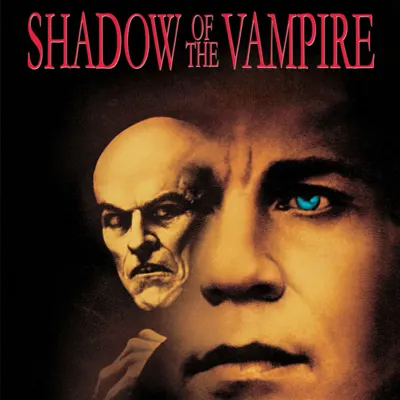
Shadow of the Vampire
In progressNosferatu is the 1922 expressionist horror silent film whose creation is dramatized in the movie Shadow of the Vampire. We watched both these films and discuss both their stories, and the stories of how the vampire came to be in the popular imagination.
Hosted by Liam, Russian Sam, and Halal Sam.
Transcript
Welcome
Welcome back to Gladio Free Europe. It's Liam here, and I'm going to be joined today by Halal Sam.
Hello.
And Russian Sam.
Hi, Na.
We've got a really spooky episode for you guys today. Hopefully, we can, you know, take all your guys' minds away from the horrors of reality for just a few moments by spending the next couple hours talking about some very cool fictitious horrors from the beginning and the end of the 20th century.
We're going to go into the most horrible thing of all.
The Germans.
Yes, and even worse, the way that the Germans enact copyright law.
Spooky.
Nosferatu and Shadow of the Vampire
If anybody hasn't guessed by now, we are going to be going into the myth and the mystique of one of the most famous and one of the best horror movies of all time, which is the absolute classic 1922 Nosferatu. But we're also going to talk about the way that another movie from the year 2000 builds on the legend around that old silent film. That one is Shadow of the Vampire. I'm just going to say right here, Shadow of the Vampire, a movie about Nosferatu, is really one of my favorite horror movies. I saw it probably in high school for the first time, and I've watched it every other year since then, basically. For anybody who hasn't seen it, Nosferatu from 1922 is the first surviving vampire movie to be released. It's just incredibly influential as a work of horror, and it's also just a really cool look at this particular moment in filmmaking.
The company who made it, Prana Film, led by the occultist Albin Grau, was a short-lived experimental company that had this intention of enlightening the world through cinema. And they thought that their first film to do this should be a Nosferatu, which was a horror movie, but they also thought that it was tapping into something interesting and philosophical. Because Grau was this big occultist, he also really wanted these hermetic themes of, you know, life and rebirth coming out from the old esoteric tradition to slip into his movie. But Shadow of the Vampire, released about 80 years later, is a movie about Nosferatu, around the myth.
Yeah, so the premise of Shadow of the Vampire is that you're around Grau and Murnau and all of these guys as they are making Nosferatu, and lo and behold, the guy who plays Count Orlok, the vampire of the movie, is an actual vampire. Which I think is just such a really fun premise. It works so well because there's so much mystery around Nosferatu. It's so much scarier than other films of the era. And so it's pretty easy to think, yeah, maybe it's so scary because they did manage to find a real vampire.
Although, I would like to say that the horror of Nosferatu does not hold up, speaking as someone who literally just watched it like an hour and a half ago. In fact, I found it funnier than I did find it scary.
Yeah, no, no, yeah, yeah. Nosferatu is absolutely a product of his time, but I think that's why it's so interesting. Like, sure, it's not like terrifying today, but there are a few moments that are, I think, kind of chilling. And just the fact that it was the first film that we have still that was doing all that, I think is just really quite interesting.
Like, watching this, you can tell that this was something that was very innovative in its own time, but which now to us seems stale because of how much these themes and tropes have been adopted by the film industry writ large, to a point where they're clichés.
Yeah, yeah, yeah. And the people making Nosferatu knew that they were breaking new ground. And Grau, at least, really thought that he was doing this kind of intellectual artistic service.
Yeah, he thought he was doing high art.
Yeah, he did. Yeah, absolutely. The tragedy of Nosferatu is that the team behind it never was able to collaborate again because they had some very unfortunate legal trouble as soon as it came out that ended up hamstringing all of Albin Grau's grand ambitions.
Vampires before Dracula
But before we get started in the talking about the making of Nosferatu and then the film Shadow of the Vampire by E. Elias Merhige that recounts and dramatizes that process, let's talk about how vampires and the mythology of the vampire first emerged. Because all across Eurasia, there are these ancient legends of the undead. Beings that were once alive and now exist beyond death, but aren't really alive. And usually, these kinds of traditional vampire myths tend to be very almost ambiguous with the nature of the undead. They don't tend to differentiate between different types of undead creatures the way that modern pop culture does. And in a lot of legends, there is this deep link between the undead and animals considered to be unclean or satanic. For instance, bats, wolves, even snakes, and as we'll see in Nosferatu, rats.
Although there is a very interesting dynamic at play here, something that really carries across all the different cultures around the world that have some variant of a blood-sucking creature, namely the blood itself, because people, all the way back in ancient times, understood that if you lose blood, then you die, so they assume that blood is a source of life. And so naturally, when you have this mindset going on, it makes a lot of sense to think about this creature that literally sucks blood, that literally comes back from the dead and sucks the life force out of the living.
Blood-sucking creatures
Yeah, if you just want to focus on blood-sucking creatures, you know, which I think is how we define vampires today, you see them all across European and Near Eastern mythology. You've got the Abhartach from Ireland, which I like because he was a blood-sucking dwarf. You've got Lilith in medieval Jewish folklore, where the story of the Jewish story of Adam's first wife is turned into this kind of bedtime story about a blood-sucking woman. And then in Greece, you have the Lamia, which is probably the closest, clearest influence on modern vampire mythology. The idea of this beautiful, seductive woman who dies and returns from the grave to suck the blood of the living.
Although I will say that my favorite vampire variant comes from China, where apparently they can't walk for some reason, so they get around by hopping around.
Oh, look at the bunny web! That's great.
So, yeah, so clearly, there's this whole global tradition of, you know, blood-sucking undead mythology, which is really cool. Like you said, it's probably because there's this association with blood with life. Therefore, if there is an antagonistic creature that is no longer alive, it's somewhat natural that it would want to suck the life, the blood from others.
I will say, though, is that although all of these various myths exist in so many countries, the vampire as we understand it today is sort of a modern phenomenon because you didn't see the vampire, the Dracula-type vampire, really emerging in Western European imaginations until really the 17th and 18th century.
Where the word vampire comes from
Oh yeah, so let's get into it.
So the word vampire itself, it betrays the concept's foreign origin. It comes from a Slavic word. It comes from the verb for like thrusting something or like sticking something into something. So you have this word popping up across the Slavic world. In Russian, it's called the upyr. In Czech, it's the upir. And in Serbo-Croatian, it's vampir. That's ultimately where the word comes from.
Yeah, and I should add that vampir, vampire, is probably the only Serbo-Croatian word used in English, which is pretty funny. But I guess on that note, though, maybe initially that foreign origin might have been a little bit more conscious because something I've noticed is that a lot of these early vampire reports in the 17th and 18th century were explicitly about foreign beliefs being spread in Western Europe.
Oh, absolutely.
Vampires reach Western Europe
So Western Europe first learned of vampires, well, well, this iteration of vampires in the mid-17th century when a Vatican librarian of Greek origins wrote a book talking about what people in Greece believe. And he mentions this Greek creature called vrykolakas, which is actually a fun fact, a word derived from Slavic. It denotes a creature that's more like a werewolf than a traditional vampire. We have so much early vampire mythology didn't readily distinguish between a werewolf, a vampire, or a ghost.
Yeah, so you had this report in the mid-17th century, but things really start to pick up in the 18th century when the Habsburgs acquired Serbia, which until that point had been under Ottoman rule. And suddenly there was a vampire craze in Western Europe and even the panic in some corners. People were genuinely afraid that, like, the undead were coming for them.
Yeah, no, and I just want to add here: I think it's so interesting that this happens in response basically to the eastern expansion of Habsburg territory because, in a way, the fears of vampires, you know, invading German towns, which is really the central theme of Nosferatu, it seems like a case of the frontier coming home.
Arnold Paole
Well, Russian Sam, tell us about this one Serbian vampire who has one of the most colorful stories from the early 18th century, Arnold Paole.
All right, yeah, so this is a story from the 1730s. Having heard from various quarters that so-called vampires have been responsible for the death of several persons by sucking their blood, I have been commissioned by Her Majesty to throw some light on this question. About five years ago, a Hayduk foot soldier named Arnold Paole broke his neck falling from a hayrick. The said Arnold had heard various people in the course of previous years that had been bitten by a vampire near Kosovo in Turkish Serbia. This is why he himself ate earth taken from the tomb of a vampire and bathed his wounds in the blood of a vampire, as is the custom to quote-unquote cleanse himself of its cursed influence.
I gotta say, that's pretty rad, and I never heard that in any other vampire mythology. You have to use their blood.
Yeah, yeah, it's kind of cool.
But the theme of earth from the tomb of the vampire, that's a really important part of Dracula, as we'll get into.
However, 20 or 30 days after his death, several persons complained that said Arnold Paole had come back to torment them, and that he had caused the deaths of four others. In order to put a stop to this danger, the Hayduk suggested that the vampire be disinterred. This was duly done 40 days after his death, and he was found to be perfectly preserved. His eyes were filled with fresh blood, which also flowed from his ears and nose, soiling his shirt and funeral shroud. His fingernails and toenails had dropped off, and others had grown through in their place, from which it was concluded that he was an arch vampire. So, according to the custom of these regions, a stake was driven through his heart, he gave a great shriek, and an enormous quantity of blood spurted from his body. The body was burned that same day, and the ashes cast from into his tomb.
Isn't that great?
Extremely metal.
Yeah, lots of great elements I'd love to dig into here.
Vampire hunters and kings
Oh, yeah, yeah.
These stories were consumed all across Central Europe at this time. There was this pop sensation about vampires, and it wasn't really for entertainment, because it was sort of a moral panic. There was this genuine fear amidst, you know, all of the rationalism of the Enlightenment that these vampire creatures might exist. Is your daughter going to come home with a vampire? Another thing I want to point out here that I think is really important is that the guy telling the story says that he's been dispatched by Her Majesty to investigate vampires. And Her Majesty in this case is Maria Theresa, the Empress of Austria, because she had actually gotten her personal physician to create a standing vampire committee to send agents across Habsburg territories to figure out if vampires are real. And this wasn't just in Austria. In Prussia, to the north, you had full-time vampire hunters going from village to village, especially in non-German-speaking areas.
One more example of royal interest at this time is that Britain's King George II, apparently, he actually did not send any agents to investigate claims of vampires because he was a complete firm believer. And he said, Oh, yeah, of course, corpses can return from the dead. There's no need to check that out. Of course, I believe it.
Yeah, what mystery is there?
Well, through the power of God, all things are possible, so jot that down.
Revenants
Well, so, like I said, at this time, most vampire mythology still didn't really distinguish vampires from other types of, you know, unclean mythological creatures.
You mean undead?
Yeah, undead and unclean, kind of both, you know. The idea that there were like these unholy beings that walked the earth. There were kind of overlapping myths about witches, about ghosts, about werewolves, like we said, that all were kind of described in the same way. The Romanian word strigoi, which is used a lot in Stoker's Dracula, originally meant witch, but then was pretty quickly expanded to basically describe vampires as we know it, which is kind of funny. And I think that part of how vampires consolidated in Western Europe as this idea of a strictly corporeal creature, so like, you know, like a zombie, not a ghost. It has a body, and always malevolent, it could never be happy. It always had to be angry and evil. It's because there was this pre-existing idea in Western Europe of a revenant, of a legend of a risen corpse that could, for some reason, haunt the living.
Probably the most famous type of revenant in Western pop culture is the Scandinavian draugr, which is basically a zombie as we know it. So you have this existing mythology of risen corpses in Western Europe, and you have these new ideas in Eastern Europe, and they come together to create a genuine panic. And in response to this panic, all across Europe, you have everyday villagers digging up corpses of supposed vampires and horrifically desecrating them in hopes that the vampire will, you know, stay dead this time. Yeah, they're just doing grave-robbing shit.
John Barber
Yeah.
You know what, Halal Sam. Tell us about the story of John Barber, who was an alleged vampire all the way in colonial New England.
So, in, okay, in a Connecticut graveyard dating to the late 18th century, one grave stands out. The coffin had been nailed shut by brass tacks, with more tacks spelling out the initials JB and 55, his age of death. DNA analysis found that the tuberculosis that killed him was so acute that it left lesions on his ribs, and his excruciating illness and death were likely what led his family and friends to suspect that he was a vampire. Commonly known as consumption during the 18th and 19th centuries, tuberculosis caused ulcers in the lungs and left its victims pale, emaciated, and weak. Infected people often had bloodstains at the corners of their mouths from coughing up blood, and their gums would recede, making their teeth appear longer.
Decomposition
This is a good time to mention one other influence on vampire myths, which is just, you know, the human bodily decomposition process. And this was a period where medical knowledge was still basically in its infancy. And so you could imagine that if they find a corpse that for some, you know, environmental reason has not properly decomposed, you might think, oh, this guy might not be entirely dead.
Exactly. Yeah, so the thing of the matter is that people were very familiar with how things look when they die above ground. They weren't familiar with the process of death and decomposition underground. So naturally, when they saw these corpses that they had dug up, they just seemed very unnatural to them. The organs break down and so like the fluids seep out. And this also leads to some other things which cause this misperception, such as, you know, like, for example, the skin drying out, and naturally, the gums and the fingernails look much longer. The lips receding.
This is really gross, but I think that the line about how his fingernails have fallen off and claws have emerged. I think that's just because, you know, the finger bones are probably starting to poke out out of the putrefied flesh.
That would make sense, yep. Yeah, and also a common persistent element of these stories is that when they're stabbed, they scream. And that also makes sense from the point of view of decomposition because basically, as the body decomposes, it's filling up with gas. So naturally, when you stab it and you like push it, then you're going to have a bunch of gas going through the airway. So it does sound like a human screaming.
That's awful. Yeah.
God, that's creepy.
But in any case, you know, because this was the 18th century, people were working with the knowledge they had. And so if you're in this environment, yeah, if you hear the scream of gas leaking out of a corpse, you're probably gonna think it's some kind of, you know, undead vampire. That's in this case, back in New England, when this guy, John Barber, who had already been dead for a few years, was identified as a vampire. They did just what they did in Serbia to Arnold Paole and they dug up this guy's corpse.
And no one really knows why John Barber was the one who was considered to be a vampire, but they saw him as the suspect, even though he was dead, or because he was dead, rather. So together, members of this New England community exhumed John Barber's grave a few years after his death, and they did what they thought would ensure he would never rise again. In Barber's case, the skull and limb bones were placed atop his ribs in a position resembling a pirate's skull and crossbones. In other cemeteries, this arrangement was used as a safeguard to protect the living from a suspected undead bloodsucker. Usually, the heart was also removed and buried elsewhere. But in this case, his organs had already rotted away.
Great stuff.
A common theme of these stories is that these undead go after their family members. And of course, in the case of a disease like tuberculosis, for example, that makes a lot of sense because, like, this guy died of tuberculosis and suddenly it spreads through his family. And then he has the misfortune of being beheaded after his death.
Oh, God, I didn't.
This vampire stuff where people freak out and start staking corpses and disemboweling them and beheading them. This went on for a very long time.
Beliefs that lasted
Famously, in Rhode Island in 1892, you had the Mercy Brown vampire incident, which is basically what it sounds like. A woman died of tuberculosis and other members of her family died, so they disinterred her corpse and just gave it the regular treatment. And then in Eastern Europe, it held up even into the post-war years.
That's crazy.
So, like, in like communist Hungary, people were still believing in vampires.
Yeah, yeah.
The latest example of like a corpse getting the vampire treatment that I came across was in like the 90s in Romania, something like that.
90s? Oh my god, that's wild. That's actually, I can kind of believe that given how deindustrialized and like, yeah, well, that's wild. I had no idea that the popular vampire belief went on that long.
Literary vampires
And I guess, you know, as a response to the 18th century vampire panic that saw so many regular people believing in vampires and doing what they could to fight them, by the 19th century, vampires were really well understood in like general Western European pop culture. And there was this especial romantic, almost philosophical interest among the literary elite in vampires because, because you know, sure, they're scary because they're these monsters, but they're also intriguing in the fact that these are creatures who are no longer alive, but must continue to toil really by you know, sucking the blood of the living. And there's kind of this like cool little, not necessarily a metaphor, but a kind of spiritually interesting concept there, the idea of the dead going after the living. And this is why, starting in the early 19th century, you see this strong literary interest in the vampire.
A really famous early case is that in the same contest that produced Mary Shelley's Frankenstein, Lord Byron wrote The Vampire, a poem about a vampire that returns from the dead to hunt the living. In the more kind of pop culture arena, you've got Varney the Vampire, which is, I believe, one of the longest texts in the English language, which is this like incredibly cheesy horror serial from the 1840s and 50s that really made vampires mainstream. And vampires became so mainstream in Victorian Europe that even, you know, political philosophers at this time were making vampire references. Karl Marx, famously in the 1848 Manifesto for Communism, describes the vampire-like nature of capital as dead labor, you know, continues to suck from the labor of the living.
From a literary standpoint, I think that one of the most important early vampire stories we should mention is Carmilla, which is most famous because it involves a lesbian vampire, but I think it's most important, and that's very interesting. But I think what is especially relevant is that Carmilla is also an aristocratic vampire. And this 1871 story is the first time where you have a vampire who isn't simply a risen decaying corpse, but is actually presented as this immortal aristocrat who can live for centuries constantly seeking new victims to claim.
Dracula
This, of course, is the theme we'll see most strongly just 20 years later in certainly the most famous vampire story of them all, which is Bram Stoker's Dracula from 1897.
I would even argue that Dracula has so much influence over modern pop culture and genre literature that it might even be the most influential novel ever, which is pretty cool. I believe it has more adaptations than the Bible, and Count Dracula, the character, is the single most depicted character in all of cinema.
Wow.
Yeah, no, like you can't, there's basically, when we talk about vampires, there's a before and after this book. It changed everything.
Yeah, absolutely. Yeah, yes. Because the thing about Dracula was that it really established so many of the tropes we associate with vampires today. It brought back some of the old kind of medieval vampire mythology, this link with witches and wolves, but it also shows a lot of modern ideas that weren't necessarily present in previous myths. For instance, the idea that, like, like I said, he's an aristocrat, and also that he can, you know, transform into a bat, which is pretty funny. Pretty cool power. Yeah.
Another interesting thing about Dracula was that it's a very modern novel in a sense, because there's technology used in the story, and the fact that it's epistolary told through letters and news clippings almost makes it kind of like Victorian found footage. It presents these events as real as they're happening, which, even though Dracula isn't that scary by modern standards, it's very engaging. There's a lot, I actually just finished rereading it a couple days ago, and there's some pretty like edge-of-your-seat moments because it's essentially told as it's happening through, like I said, these news clippings and diary entries.
Although these days, it's very difficult to separate Dracula from all of its many, many derivative works, I think we should also note that it is definitely a product of its time because this was the late 19th century. Europe is just rapidly industrializing, and capitalism and colonialism are connecting the world like never before seen. And what I find especially interesting is that, just like in those old Austrian stories, you could see Dracula as a case of the frontier coming home, of this non-British foreign character obtaining some wealth and then seeking to come to the center of capital, London itself.
Dracula is therefore a novel steeped in late Victorian London, and the proximity to the new century with its social and technological innovations plays an important part in the book, both in terms of form and content. Technologies utilized and presented by Stoker under various forms and circumstances. Mina employs a typewriter to put together the different testimonies that will help the hunters to track Dracula down. Dr. Seward makes recordings in his conversations with Renfield. Van Helsing tries to save Lucy's life by means of blood transfusions, etc. These episodes, though, are not merely accidentals, but contribute to increase the insurmountable distance between the evil world of Dracula, which is centuries old and frozen in limbo of his non-death, and the modern world of the novel's heroes who can turn to science and modern means of transportation, such as the train, to eventually overcome their enemy.
Yeah, yeah, this book, Devil's Advocates, about Nosferatu, is interesting because it talks about the ways that, like we just said, Dracula has very modern elements. Nosferatu actually doesn't, interestingly. But Shadow of the Vampire, Merhige's film about the making of Nosferatu, goes right back to this, as we'll talk about later on. Because you have this ancient vampire in the 2000 movie clashing against these 1920s filmmakers with this incredibly cutting-edge set of technology for the time.
Stoker's estate
So, Dracula, when it came out, was a pretty big hit, both with critics and with fans, which is kind of cool. No one really had much negative stuff to say about it. However, an unfortunate profit structure meant that Bram Stoker actually didn't make a lot of money. He didn't make any royalties for the first few thousand copies, and so he only made royalties on the additional printings. And this meant that when he died somewhat suddenly in 1912, his widow Florence Stoker was left in dire financial straits. But despite this, Dracula had spread very rapidly across the Western world. It was one of the most widely read books of pop fiction and was very rapidly entering pop culture. So you have this existing sort of 18th-century vampire mythology, mostly inspired by older Eastern European myths. And now these ideas about vampires are being codified by this book, which is probably making the vampire just as present as ever in the Western imagination.
One decision that Stoker and his wife made right before their deaths was that they didn't want Dracula to be adapted unless they had direct creative control. And in the early 1910s, they were especially against any kind of adaptation into film, which at this time was a very new medium.
Early film
And what's funny about film was that it was seen as kind of dirty at first. It was just seen as this kind of, you know, carnival sideshow novelty. So, a serious author like Bram Stoker, he would never think of allowing his books to be adapted that way. But, you know, despite the snobbery, film in the early 1910s was flourishing. You saw the rapid expansion of the film industry across the US and Europe.
The 1910s also saw the beginning of film as basically a genuine form of art. And people who made it were thinking of it as such, consciously thinking of themselves as making art.
Absolutely. You saw this within 10 years, you see a shift from like the very simple kind of newsreel style footage by the Lumiere brothers in the early 19th century going towards much more serious narrative works. The 1910s also had Germany, especially Berlin, emerging as this global filmmaking center. So by the year 1910, there were already a thousand cinemas in Germany.
Although you should mention at this point, most German films, or most films watched in Germany, were actually being imported from the US or Britain or France.
The Student of Prague
But one film we should mention that ties into Dracula is one that I saw a few weeks ago. The Student of Prague by Hanns Heinz Ewers, starring and produced by Paul Wegener. This movie from 1913, which is two years before Birth of a Nation, is considered maybe the world's first art film because even though it's so early, it had this kind of philosophical intent. And it tells this supernatural story of a man who accidentally summons a doppelganger. And then the two of them, the student of Prague himself and his malicious clone, try to win the heart of the same girl. And it was this huge moment for the German, the early German film industry, because suddenly you had German artists and writers paying attention to cinema. And you had well-established playwrights, especially those attached to the famous theater producer Max Reinhardt, starting to take film seriously. And so you could say that the Student of Prague is the beginnings of the famous German cinema of the teens and 20s, especially the Weimar years, which would have an enormous impact on the history of filmmaking.
We should mention that this film was also very technically innovative, because the fact that it's all about a man being pursued by his own reflection, you had to have the same actor on screen twice. So the actor Paul Wegener, who actually was married to Greta Schroeder, the star of Nosferatu, had to be photographed with really innovative camera techniques.
I should also mention that Hanns Heinz Ewers, the director, he was a mentor for a guy named Henrik Galeen, a young Eastern European filmmaker who had recently arrived in Berlin. Henrik Galeen, very shortly afterward, would write Nosferatu. One last thing to mention about The Student of Prague is that in addition to being a very important early movie, it's also a very important early work of German Expressionism. I'm going to say right here, I am not an artist. I am not an art historian, so I can't say too much about what Expressionism means per se and why it was so innovative, but really broadly speaking, it was this mostly German movement that used heightened aesthetics to emphasize heightened emotion. And there was a lot of artistic interest in Expressionism at this time. And because of that, Sigmund Freud's magazine actually reviewed this movie, The Student of Prague, at a time when film reviews were very uncommon and were really never done by serious journalists.
Shadow of the Vampire director Merhige says he was partially inspired by the intersection of expressionist aesthetics and Freudian psychology. At the start of the 20th century, which I see as the end of the Enlightenment, you have the discovery of the unconscious hand in hand with the birth of psychoanalysis, and all happening side by side with the birth of the motion picture camera. If you look at the history of the cinema, it begins at Nickelodeons and peep shows where men could view women stripping off their clothing. Cinema began with audiences who were highly suspicious exercising a kind of fear and reservation towards its engrossing power. If theater was a legitimate form of art, then cinema was seen as its demonic bastard child.
Film in World War I
And then just one year after the release of the Student of Prague, World War I breaks out, and really every aspect of European society is affected. This has enormous implications on the film industry, namely because American, French, and British films can no longer be imported to Germany.
And how does the German government respond to this? Well, basically, the German government just started throwing money at different projects in different genres and just tried to make a domestic film industry that could substitute for the lack of these foreign imports.
Yeah.
Same thing they tried to do in other industries. Yeah, yeah.
And it wasn't just propaganda being made. I think that the German Empire knew that if they wanted people to watch any kind of cinema, including propaganda films, they had to have entertainment too. So then, like, if you make like a sweet little romance, then maybe people will stay after and watch the newsreel that will, you know, instill German patriotism to support the war effort. So they actually started throwing money at a lot of different projects, even some that were somewhat experimental and very high-minded. And by the end of World War I, Germany was finally actually producing more movies than the US.
The Golem
So one example of a film that ended up getting funded by the German government was the Golem of 1915, which is based on like this pseudo-Jewish folk tale about like a rabbi creating a golem to protect his community from pogrom. But I regret to inform you guys that that's not an actual Jewish story. It's just a German story that they added, like a Jewish tint to to make it more, I don't know, exotic.
That's really funny, I didn't realize that.
Yeah, it was just recorded by some German guy in like the 1820s or something like that, and people started believing it, but it's not actually something that the Prague Jewish community believe or told. So this movie ended up getting directed by Paul Wegener and Henrik Galeen, who would go on to write Nosferatu, as we mentioned previously.
And then just five years later, you had a follow-up called How the Golem Came into the World, which was really the first movie villain origin story, I guess. So How the Golem Came into the World in a way could be compared with modern horror movies that show the beginnings of like Jason Voorhees or Freddy Krueger.
The Weimar film boom
And so the end of World War I was an even bigger event than the start of World War I, I would say, for the German film industry. Because although so much of this flowering of filmmaking happened in the German Empire, once the empire collapsed and the Weimar Republic was established, that was really when the film industry just exploded. And interestingly, despite this change in government, the German film board actually remained intact and kept funding German films despite, or maybe because of, the economic woes of the early Weimar years.
Because of the huge growth of German films in the late teens and early 20s, there was actually this kind of panic in the American, French, and British film industries that they couldn't compete with these new German movies.
Yeah, exactly.
One 1921 news article quoted an anonymous American film executive saying, An influx of such films in the United States would throw thousands of our own out of work because it would be absolutely impossible for the American producers to compete with the German producers. So there's this real fear of German talent, I think it's pretty interesting.
Watch out, they're on their way up in the world. Yeah.
Through some very unfortunate later developments, most German filmmakers would eventually end up in America. But at this time, Berlin is this huge artistic center, both not only for filmmaking, but also for art, literature, theater. And that in the film industry, you're slowly seeing this growth of prestige as people basically begin to accept cinema as a genuine form of art.
A traumatized generation
One other major impact of World War I, in addition to expanding the film industry, a much bigger impact, I would say, was that an entire generation is traumatized. A huge percentage of German young men were killed and wounded. Many of them would become artists and would be profoundly impacted by their wartime experience in their production of art. This meant that in film in particular, there was just a much darker tone than there had been before. Much less nationalism and optimism, and a broad turn towards cynicism and towards the grotesque.
Don't worry, the nationalism will come back. No problems there.
Oh, yes, it would. There also was a lot of political instability this time. This doesn't get much attention in the United States, but I bet most of our listeners probably know that just like in Russia, Germany had its own communist revolution in the 19 teens. Upon the fall of the German Empire, these young, idealistic German communists tried to establish a worker state within Germany. But unlike in Russia, in Germany, they were really brutally crushed. And the gangs that crushed and massacred them were these ultra-nationalists who would basically form the basis of the fascist movement.
Yeah, so as a result of these cascading catastrophes, you had inflation, then you had the Great Depression. Just life wasn't getting any easier for the people of Germany. So people turned to escapism, they turned to the cinema to try to distract themselves from their own woes.
And to quote Merhige, the director of Shadow of the Vampire, it may sound surreal that a society in the grips of rampant inflation and violent political rivalries could be at the same time so creative and produce so much in artistic and cinematographic terms. This apparent contradiction, though, adds another layer of interest to the films produced during these chaotic years. Their metaphors and visual conundrums providing a fascinating, if at times hard to decipher, insight into those tumultuous events. In Ian Roberts' words, quote, Weimar society created the ideal breeding ground for an art form based fundamentally upon the illusion of reality.
Weimar horror
Right, which meant that there was this huge growth of genre films, particularly horror. You had films across the late teens and early 20s really leaning into the grotesque, trying to use the aesthetics of horror as a way to maybe say something about the human condition. A really famous expressionist horror film that I bet a lot of our audiences are familiar with is The Cabinet of Dr. Caligari, which had these beautifully crafted sets just meant to kind of present this dream-like, creepy quality, which has been copied by so many American movies in the hundred years since it's come out. And then across the border in Denmark, you have Haxan, which is another favorite old horror movie of mine, which is this kind of scientific overview of witch mythology that uses really well-done horror makeup and special effects to construct the kinds of hellish fantasies that medieval Europeans believed about witches.
That's a cool one because the scientific angle is something you don't really see in horror today.
But in the early 1920s, and especially in the year 1922, there was this interest across Western Europe in using science to explore fear.
Albin Grau and Prana Film
And obviously, the most famous of these scientific horror endeavors was Nosferatu.
As we mentioned, Nosferatu by Prana Film, this short-lived film company, was created by Albin Grau, this very mysterious, very enigmatic occultist in Imperial and Weimar Germany. He was part of this Pansophist movement that combined Rosicrucianism with Freemasonry. So he was just a big secret society guy. You know, anything esoteric, anything kind of spooky, Albin Grau's your man. Grau attended a lot of conferences by various occultists, including a lot of disciples of Aleister Crowley. And so he blended traditionally European black magic with elements from non-Christian religions, like, you know, Hinduism and even the Jewish Kabbalah. And because Albin Grau was convinced that the new medium film could be an avenue to present his own philosophical vision, he borrowed money from all of his occultist friends and established Prana Film. The name Prana is a Sanskrit word that basically means breath of life, which is sort of an element that's going to recur in Nosferatu, which was unfortunately the only movie that these guys ever actually produced.
Grau was convinced that he could establish this cinematic empire to enlighten the world, talking about, you know, hermetic mysticism and, you know, the most esoteric, occult types of philosophy, and that he genuinely believed that cinema was the way to do this.
But to raise money early on to fund this empire, to fund his grand visions, he had to start with a crowd-pleaser. So he was going to start with a filmed adaptation of the wildly popular novel Dracula.
And it turned out to be a bit of a problem for them when the family of Bram Stoker, who had died pretty recently, said, no, I don't want you to adapt this into a movie. Because at this point, movies were still seen by a lot of people as low art and just kind of not serious in the way that a book can be serious, a novel can be serious. Especially 10 years before Nosferatu, when Bram Stoker died. Because upon Bram Stoker's death, they were still pretty primitive.
There were some early horror shorts, but they were basically totally entertainment. So I think that Bram Stoker's estate had a special reservation about horror film. Because even today, there's this kind of idea that horror is cheaper than other forms of art. And so in the 1910s, 1920s, horror films were basically seen as the lowest of the low.
Yeah, no matter how, even though a lot of these directors very much thought of themselves as making high art, that is not what... A lot of people did not agree with that.
Yeah, especially older people, like the surviving Stoker family members who are probably in their 50s at this point.
Yeah, but despite the fact that you would be facing immense odds to do so, Albin Grau was really dead set on making Dracula, the first film made by Prana. So he saw Dracula not only as a commercially viable property, but also something that was deeply spiritually interesting. Just in general, the concept of a being that can only survive by consuming and destroying another person, just a pure parasite, just like the bacteria that we see under the professor's microscope in Nosferatu, which, by the way, is one of the scenes from the movie that does hold up because I said watch that and I thought, ooh, that looks cool.
Yeah, yeah. That looks cool. And that's about, that ties into the whole scientific element. That Prana film, they really thought they were on this kind of educational venture. That even though it's just, it might seem like a spooky vampire story, it could teach audiences something about the human condition.
Dracula's Death
We should add that Prana Film actually was not the only company to do an unauthorized Dracula adaptation, because just a couple months before Nosferatu was shot, an Austro-Hungarian team produced a movie called Dracula's Death, spelled Dracula with a K. And apparently it had really no connection to the original Dracula at all, unlike Nosferatu, which was an adaptation. But they used the title Dracula because they knew it would bring audiences to the film. Tragically, Dracula's Death is now lost, but it is kind of funny to think that there was actually another team not too far away also ripping off Dracula.
Why Nosferatu
Yeah, so because of all the copyright issues around the name Dracula, Albin Grau chose to name the movie Nosferatu, which is a Romanian word which was reported in 19th-century folkloric writings about vampires. And Bram Stoker had used that word in his novel, who uses it to literally mean undead. But as for the origins of the word itself, it's a little mysterious. Some people think it might be related to the Greek word nosophoros, disease-bearing, but it doesn't really matter.
And we should add, it doesn't really, this word Nosferatu, it doesn't exist in modern Romanian. So even though it was supposedly a Romanian word, and it's been used heavily by English and German writers, there's not actually any evidence of Romanians ever using the word Nosferatu to describe a vampire.
I think it probably just took off because it sounds really spooky.
Grau's backstory
And it has this clear foreign connotation. Going back to our theme of, you know, the frontier coming home, one thing that gets very funny about making a Nosferatu is that because Albin Grau had to insist it wasn't really a complete ripoff of Dracula, he actually constructed this really elaborate backstory to explain how he got the idea for Nosferatu. And the backstory was, six years prior during World War I, a local peasant in Serbia told him a story from his own family. And that this story about his own father rising from the grave supposedly inspired Nosferatu. If you want to, you know, set the mood for us, Russian Sam.
It was during the winter of the year 1916 when we were lodged with the peasants of Serbia. It was a dark room for our billet, lit by a flicking candle. One of my comrades thought to pass the time by asking if any of us believed the stories of vampires. For a moment, there presided a deadly silence, and from the darkest corner of the room, an answer came. Our old peasant host made the sign of a cross and growled, quote, Before this wretched war, I had lived in Romania. You can laugh about the superstition, but I swear on the mother of God that I myself had the horrible thing of meeting an undead or Nosferatu, as vampires are called over there. But one shouldn't speak of them at this hour, he said. By this point, we've grown extremely tense. We pressed him in a single voice, tell us.
He then explained that one day, his own father, who had been cutting branches, was hit by a falling tree. He died without a priest being present and without receiving the holy sacraments. About four weeks after his burial, a great number of people died. At first, it was thought to be the plague, but then several people claimed to have seen the dead man going around, and in each and every farm that he visited, someone would die. There were so many complaints that the authorities were forced to take action. One night, a couple of brave men were sent to the cemetery to dig up the dead man's coffin, which turned out to be empty. This grave was closed, and the next day they all came back to have another look. This time, they did find the vampire at home in his coffin. The priest then said a couple of prayers, and the stake was hammered through the heart of the vampire, who made a lot of noise before it finally came to rest.
The corpse was then cremated, and the ashes were spread in all directions.
Isn't that great? You know, Albin Grau has such a flair for the dramatic. And what I also find really interesting is that story looks almost identical to the story of Arnold Paole 200 years before. And I have to wonder if, you know, he did his homework for this.
Yeah, it's a generic story.
Although, like, this does strike me as a little bit odd, just like there wasn't a priest around. Like, this was like 19th century Romania. Of course, there was a priest.
Well, in any case, Grau was really insistent that that story, this, you know, Romanian peasant fable in Serbia for some reason, was the origin of Nosferatu. And when people asked for proof of this, he actually sent the film magazine Buhne und Film what he insisted was a newspaper transcript of the police case, which I think is hilarious.
Progatza, the 18th of May, 1884. Official report regarding the death of a blood-sucking dead or vampire phantom in Progatza, Romania. After they had dug up the man named Morovic, he was found to have perfectly healthy color without any traces of decomposition, as if he were asleep. The mouth was half open because the teeth, which had become astonishingly long and pointed, prevented it from being closed. After the priest had said three Our Fathers, a stake was planted into the heart of the vampire, on which it died making loud noises. They then cremated the corpse and the ashes were scattered to the four winds.
Yeah, so it's a perfectly plausible story in terms of what was actually going around at the time.
Yeah, we went over this earlier. There are actual explanations for why they thought it was a scream, and yeah.
Yeah, and like we said, apparently people still did genuinely believe in vampires for almost a century, for about a century after this. So it is possible that Albin Grau wasn't lying about hearing the story. But it's clear that he just wanted to make Dracula. And he couldn't make Dracula, so he, like I said, established this very funny backstory to justify it.
Henrik Galeen
But despite the fact that I think Albin Grau was probably the main creative vision behind this, he didn't write Nosferatu. Instead, Nosferatu was written by a young screenwriter named Henrik Galeen, who appears just like Albin Grau in Shadow of the Vampire. What the film doesn't get into is that Henrik Galeen, who also wrote the 1920 The Golem film, he was himself an immigrant. And he was from an Eastern European Jewish family from Ukraine who had actually moved to Berlin during World War I. And I have to assume that if you're like an Eastern shtetl farm kid, Berlin in the 1920s must have been an incredible culture shock for you.
Well, he wasn't a shtetl kid. He was from Lviv. I mean, it was a pretty big city. That's where Trotsky's from.
Oh, really? I know that.
Yeah, no, Lvov is like, it's.
BC Jim once said it's the only city in Western Ukraine. There's some truth to that.
Well, in any case, yeah, so Galeen, he got a job at the German film board when he was a young immigrant, which is kind of interesting. He just very shortly arrived in the country, he starts working in the film industry. So he would write The Golem in 1915 and then its prequel in 1920. And he also started moonlighting as a theater assistant for Max Reinhardt, who as we mentioned was this really influential theater director. Basically every famous German filmmaker, especially the ones who came to America in the 30s, has some connection to Max Reinhardt. Just a quick example, Josef von Sternberg, who did so many early movies with Marlene Dietrich in the 30s, he was a partner with him at the theater. So when Galeen was working at Max Reinhardt's theater, he also was acquainted with F.W. Murnau, the director of Nosferatu, who we'll talk about in a second.
Setting the story in 1838
One thing I also think is kind of interesting about Galeen is that Nosferatu is set earlier in German history, just like the Golem. It's not a contemporary story in the way that Dracula is. Because in the book Dracula, like we said, it's very modern and it's written, it's set right at the time when it's written. And in 1931, when the first American Dracula film was produced, it actually isn't a period piece. It's set in the 30s. I think you even see Dracula get out of car at one point, which is kind of funny because almost every other version of Dracula, going all the way back to Nosferatu in 1922, sets it deeper in the past. Nosferatu itself is set in 1838.
Yeah, it's set in this fictional German town called Wisborg. And I think they filmed it in Wismar. So it's kind of like for some reason they just slightly changed the name.
But what's funny is that because it's set in this town in eastern Germany, it's actually much closer to feudal Transylvania in both geography and custom than London is, which is a really big change. The film, bringing back the time of the action to the early 19th century, makes the gap between the modern world and that inhabited by the vampire much smaller and harder to notice. So much so that the rural world of the Transylvanian peasants does not appear too different after all from the one inhabited by Hutter and Ellen. If in Dracula, religion and folklore are accompanied by science, in Nosferatu, the vampire is destroyed by ancient atavistic forces such as purity and the rays of the sun. And I think that's very interesting because this makes me think that even though it's an adaptation of Dracula, Galeen and Grau were trying to do something very different artistically.
They had a whole different set of themes they're working with. And I think part of it is that there's this hermetic influence, this occult influence on Nosferatu that isn't really there in the source material, which I think shows that this wasn't purely entertainment because these guys really did have an artistic vision.
Murnau
The most famous artist involved in Nosferatu though is the director, Murnau, who you know worked with Galeen before. But unlike Galeen, Murnau was actually from a really wealthy industrialist family. He was the pampered son of a factory owner, and his real name, which I think is kind of funny, was Wilhelm Plumpe.
No way, that's such a Dickensian name.
No way.
Isn't that great?
No, it's like Augustus Gloop or something.
But young Master Plumpe, he wasn't satisfied with his, you know, life of early 20th century luxury. So he ran away from his family, moves to Berlin, meets Galeen, starts working at Max Reinhardt's Theater. He also starts a relationship with a young male writer named Hans Degela, who was also from a somewhat wealthy family, a family who was more supportive of his artistic endeavors and also apparently the fact that he was gay. But early in World War I, both Murnau and Hans Degele volunteered to join the German army, and shortly into the war, Hans was killed. And this left a really profound impact on Murnau's life. And a lot of people have wondered if the reason why he accepted this project about the undead and just involving death so heavily was because of this a few years earlier. Interestingly, their relationship, even though they were two gay men, was actually somewhat public for the 19th, for the early 20th century.
And that when Hans was killed, Hans's mother bequeathed much of her estate to Murnau, which gave him a lot of the money that he used to launch his own career.
That's very sweet.
Yeah, that is nice.
Yeah. No, it's a nice story. Yeah, it's very sad, but it's quite interesting.
Also, probably wouldn't have been as out of place in Weimar, Germany, as we might imagine.
Specifically in Berlin at the time.
Yeah. Yeah. I think that's definitely true.
Max Schreck
There is, of course, one more important figure to mention in the Nosferatu story. And that is probably the most enigmatic of them all. Really a bizarre figure who very little, about whom very little is known. That man, of course, is the actor Max Schreck, who plays the vampire, Count Orlok. You guys probably know, I know you both have a little bit of knowledge of German and Yiddish. What does the name Max Schreck literally mean?
Well, Shrek is the name of the green guy from cinema, so.
Yes, but it means something else in German.
Yeah, in German, it literally means fear.
Liam, you have a great analogy here. Imagine if Rob Zombie was actually named Rob Zombie. Isn't that great? And so that's the thing is that that's this guy's real name. His real legal name was Max Schreck. And he was, people have looked so deeply in this guy's life. He didn't have a very well-recorded life, but it seems like he was just a normal middle-class German kid from Berlin who happened to have a really creepy name and was really good at playing really creepy roles. Even at the time, actually, people wondered if his name might have been a pseudonym.
It does sound like one.
I mean, yeah. It does, right? When Nosferatu first came out, people actually speculated that Murnau might be playing the vampire because he was known for being very tall and lanky.
Yeah, and Schreck's mysterious nature is part of the plot of Shadow of the Vampire, which gets resolved by the fact that he's literally a vampire.
Yeah, which I think is just really clever, because here's a guy who basically comes out of nowhere, plays one amazing role as a vampire, and then no one sees him again. So maybe the mind wonders, you know, it's easy to speculate.
Filming on location
On the topic of the kind of the realism of Nosferatu, it is in some ways like a pretty cheesy 1920 silent film, but I think a lot of it is quite realistic. And one example of this is the fact that it's actually shot outdoors on former Austrian territory, Slovakia. So they didn't go all the way to Transylvania, but they still are in the Carpathian Mountains, which means that the peasants you see in this movie are real peasants. The hovels and cabins and cottages you see are actual like peasant cottages. And that's kind of cool. I think that's very cool. And I think it's also kind of funny because if we want to contrast it with the American Dracula from 31, that Dracula was actually shot 15 minutes from where I'm sitting right now at the Universal Studios backlot in Burbank, California. So I think it's kind of funny.
You've got this one film actually set in this ancient peasant locale where presumably stories of vampires were still believed. And then you've the American film shot in California, which I just think is very funny to me.
I will add that Shadow of the Vampire, although it's pretty believable, it actually was not filmed in Eastern Europe, but they shot in Luxembourg, so at least it's like, it is like an old European country, even if not, you know, as remote of a place.
Special effects
Nosferatu has gotten a lot of attention for all of its technical innovations. Some of these these days seem more funny than scary. The sped up motion of the carriage at the beginning. Famously, they also show a werewolf that use a hyena, which is pretty funny.
Oh, that was so good.
I just like saw that hyena and thought, what a good boy.
The story behind that, apparently, is that Galeen saw a hyena at the Berlin Zoo and was so entranced by how scary it looked to him that he was like, oh my god, we gotta use that. And so they actually, apparently, the script stipulated must be a hyena. And I don't know how they got a hyena, but I wouldn't be surprised if that just was from the Berlin Zoo, if they just asked to borrow it.
They do some weird stuff with like the negatives. When Hutter, who's the version of Jonathan Harker, the protagonist, when he enters Transylvania, there's one cool moment where the screen just goes white in the negative, where it's all overexposed.
That's pretty cool to me. There's also a kind of funny moment that also these days seems more funny than scary, where you have the stop motion of Orlok's coffin magically closing itself. Orlok himself getting out of the grave just vertically. Yeah, so that's a great moment.
Is Nosferatu scary?
And just curious, you guys, the two Sams, did either of you find Nosferatu scary at all, or was it just goofy? What do you think?
I found it mostly goofy. The last 10 minutes is when it starts to really get interesting. And at that point, you start to have some stuff that's actually borderline kind of scary.
Yeah, you get things that are at the very least off-putting.
No, for me, yeah, it's really the last 10 minutes where everything really at the climax of the movie where, you know, Count Orlok goes up to claim the life of Hutter's wife Ellen. Probably the most, one of the most famous shots in Dracula, which is just so well done, is his shadow as he creeps up the stairs and his long claws extending. And then you have the scene where, you know, he enters the room and the blood sucking commences. And then you also have this very modern-looking chase scene that kind of surprised me when I saw it because it looks kind of dated, but it looks like something that's maybe out of a 50s or 60s movie. And what I think is really interesting about the ending, also, which is a big diversion thematically from the plot, is that, so just like in Dracula, the book, Nosferatu ends with the vampire being defeated.
But in this version of the story, the Jonathan Harker character basically has nothing to do with that. Instead, the person who defeats Nosferatu is Ellen, the wife of the protagonist. And what's really interesting is that she kills the vampire through this heroic self-sacrifice because she finds an old book of vampire lore that says that the only way to defeat the vampire and save the town, because there's this vampiric plague spreading across the whole city of Wisborg, the only way to defeat it is by supposedly the sacrifice of a heroic woman. And she does this. And so in the very famous final scene of Nosferatu, when her blood is being sucked by the vampire, it's a willing choice that she makes. She allows the vampire to kill her, knowing that it'll distract him enough that the sun will rise and he'll be killed. I think that actually this is a, I would say honestly, this is an improvement over the source material, because in Dracula, although Mina, Jonathan's wife, isn't helpless, she doesn't really advance the plot anywhere near as much as Ellen in this story.
And there's something even a little profound about that, this kind of sacrifice. And I think to me, this really speaks to Murnau, Galeen, and Grau's genuine artistic intentions with Nosferatu. They really wanted to make a movie that was somewhat thought-provoking. And I think they did a good job with that.
Yeah, I'm inclined to agree. You get some really special early special effects action at the end there when they're showing his demise and he just like disappears off-frame and suddenly there's like a little fire going.
Yeah, the puff of smoke.
Turning to dust
You know, I should add that actually, Nosferatu is the first time we ever saw a vampire turn to dust in the sun. It's such a universal trope these days, but it actually wasn't present in Dracula. You know, by contrast, I think it's kind of funny, in the novel Dracula, he can actually turn into a pile of dust whenever he wants to, which I think is very funny and goofy. And so if he ever wants to slide under a door, Dracula just turns into dust, slides under a door, and then comes back.
The only version of Dracula I know which has this is the, I think it's 1991, the Francis Ford Coppola version. They actually have the dust power.
He can also turn into moonlight, which is pretty cool.
Looking at the camera
Even though Nosferatu, I will admit, has more funny moments than scary moments for modern audiences, those last 10 minutes do have some pretty chilling moments. And I think the reason why the ending of Nosferatu is scary is because Max Schreck's performance as the vampire is so strong that we almost believe he really is one. The one shot that is probably my favorite in Nosferatu is a very brief moment where after Count Orlok enters Ellen's room, he starts sucking her blood. And in this scene, he looks straight up at the camera with his mouth to her neck, which is something you don't really see in silent film.
Yeah, that was that was the part that was very off-putting. And I had already just watched Shadow of the Vampire after this, so it was like a...
No, absolutely. Yeah, and because it feels like documentary footage. It almost seems amateur because that's something that actors aren't supposed to do. And I'm sure this was deliberate. I'm sure Max Schreck and Murnau knew exactly what they were doing. That if they could violate the early rules of filmmaking for this one shot, you might start to forget you're watching a movie.
Would this be the first example in cinema of Breaking the Fourth Wall?
I won't say the first, but definitely an early example. And I think it totally works.
The premiere
And I think that Nosferatu, it's a great movie. It's so good at what it does. And it should be noted that when it was released, it was nearly universally lauded. Just like Dracula, it was a pretty big success. And also, just like Dracula, it ended up not making much money due to legal minutiae for the people involved.
Was it successful in just the German market for Ua, which it was intended for, or beyond that?
You'll see. It had a really wide impact. If you want to start with the release, it's kind of funny, actually, is that it takes us back to the Berlin Zoo, because that was where the premiere was held. There was this occult-themed premiere that was basically a costume party where attendees were supposed to wear early 19th-century clothing like the characters in Nosferatu. Albin Grau is a very theatrical kind of guy, he put this all together. And like I said, it was held at the Berlin Zoo, apparently because that had kind of a scientific connotation, which is a little bit funny to think about. But it was so expensive to book the zoo as the venue that the launch party, the premiere for Nosferatu, actually cost just as much as the film itself.
Jesus Christ.
But yeah, the film was really popular in Germany and eventually outside of Germany. Critics really liked it. The story, the visual elements, and especially Schreck's performance were celebrated. Although, one complaint that I thought was kind of funny was that one German critic argued, complained that you saw too much of the vampire, and it would have been scarier if they didn't show him all the time. So basically, the critic wanted a Blair Witch project some 70 years before it got made.
Yeah, yeah, is it funny? Yeah, yeah.
It's like a 1920s, like less is more kind of attitude, which I think is kind of funny.
The communist review
One review we should mention is the Leipziger's People's Press, which was actually an organ of the Communist Party in the 20s, the German Communist Party. So these guys, being good Marxists, they thought that Nosferatu was a quote-unquote fog to stupefy the masses. They were attacking Grau's spiritualist ties on the down low. They were showing that this points to a rise in non-rational thought at the moment, which was a ploy by the European bourgeoisie to dampen class consciousness and to really, you know, perhaps aestheticize politics to create an aesthetic form of politics.
Well, one thing I think we should jump in here is that Grau himself was not very political. He didn't have any kind of right-wing ties, for instance, but he was part of an occult movement that very unfortunately did include a lot of really creepy nationalists. And a few later Nazis would eventually draw from that same kind of occult well that Grau was drawing from. So I think that even though, yeah, even though these guys seem just like grouchy orthodox Marxists today, I think that the Leipziger People's Press might have had some somewhat reasonable motivations for not liking Nosferatu.
Yeah, so to continue the assessment of the Leipziger People's Press, people, quote, the most proletarian course of action would be to not give any money to a cinema that is showing this propaganda film, financed by industry and intended to deaden minds. This way, the entire pretty plan will fall, and the phantom Nosferatu will himself be devoured by his own rats.
Yeah.
In the words of Phil Greaves, sorry to spoil your fun. Personally, I don't think that Nosferatu had anything to do with the fact that Germany did not become a communist state. But like I said, I can see why these guys might have been apprehensive. But you know, one thing they were dead wrong about is that Nosferatu was absolutely not supported by the German bourgeoisie. Because very shortly after its release, it would essentially be banned.
Florence Stoker's lawsuit
Because just weeks after the premiere at the Berlin Zoo, Florence Stoker, the widow of Bram Stoker, gets a letter in the mail. The anonymous letter said that across Germany, audiences and critics were raving about a new film based on Dracula. And this confused her because she thought that Bram Stoker had asked for no adaptations. Yeah, surely no one would go against his wishes.
Yeah.
And at this time, Florence Stoker had no idea this existed. And immediately, she was furious, you know, because not only did her husband request for no version of Dracula to be made, she was furious that these guys were making money off of her husband's work when she, who is this somewhat recently widowed woman, was not living in a very wealthy circumstance. Even though Dracula was so popular across the world at this point, it hadn't made that much money because it all went to the publishers. So she had a pretty understandable grudge. And so immediately she went to the British Society of Authors, this non-profit that supported writers, and demanded that they take this case to Germany to stop Nosferatu from being distributed. Apparently, actually, she was so insistent that she basically stalked the head of this organization for days, waiting outside his house every day until he agreed to speak with her.
And eventually, she managed to convince this team, the Society of Authors, that they had to sue Prana Film. And they decided that the only way they could win was to bleed Albin Grau dry. And it worked. There was a three-year lawsuit beginning in 1922, just after the release of Nosferatu. So I kind of, you gotta feel bad for these guys, for Galeen and Murnau and Grau, because as soon as their film gets released, they get this letter in the mail that they're being sued. And for the next three years, Albin Grau is in and out of court dealing with this lawsuit. And the unfortunate thing is that the lawsuit went on for so long that he went bankrupt and Prana Film folded. So just months after the release of Nosferatu, the company goes defunct.
What exactly did he think would happen, given that he, like, did they think that it was...
The world was smattered?
Because the film was only released in the German-speaking world, it's possible that he just didn't think that the Stoker family would ever find out. Because at this point, I don't believe it was yet being shown in Britain. It was only being shown in Germany, Austria, and Hungary. So he probably thought it was fine.
That would make sense. Like, I just, I guess Nancy was a victim of his own success then.
Yeah, but like I said, the plan worked, and they really did bleed Prana Film dry. After getting the Society of Authors on her side, Florence Stoker assembled an expert legal team to take the case to Germany. And she didn't just want to, you know, get the money she thought she was owed. She really wanted to punish Prana Film and Albin Grau for this, what she thought as this extreme disrespect to her husband's wishes. And if they couldn't stop the spread of Nosferatu, they would at least bleed the company dry. And this led to a three-year legal battle that was deliberately stretched out as long as possible to increase the expenses that Grau would have to pay. He had a lot of trouble keeping up with these, with the cost of making the film, especially after a judge ordered that Nosferatu had to stop being shown in Germany and all his income dried up because of that.
This was supposed to fund future films for the studio.
Yes, exactly. So it was still making some money in Austria and Hungary where German law didn't apply. And so because of that, he eventually offered a deal to Florence Stoker where he said, if she drops the case, they'll make an offer where they can start showing the film in France, Britain, and America, but she will get all the proceeds from these foreign screenings. So Prana Film would continue to make money in Germany and Eastern Europe, but then she would be able to get all the money from Western Europe and from the USA.
Which is a big market.
Yeah, and these are really generous terms. But no, because Florence Stoker didn't really want to get paid per se. I think she really just wanted to punish them. And so she says no. And by 1923, just a year after Nosferatu comes out, the lawsuit has driven Prana Film into bankruptcy. So all of Grau's visions of a cinematic empire just go up in smoke, just like the vampire at the end of his movie. And to make matters worse, as soon as Prana Film folds, Florence Stoker files a new lawsuit against him personally. And her new lawsuit demands that all copies of Nosferatu be destroyed. And after a year and a half of further legal deliberations, a judge decides that Florence is correct and that Nosferatu must be destroyed. And yeah, just like a vampire, this film that was essentially already dead, no longer being shown, had to be taken out of the vaults, you know, ripped from its tomb and burned.
So every copy that the German police could get their hands on was destroyed. Most lost films have vanished through neglect, but in the case of Nosferatu, we have one of the few instances in film history, and perhaps the only one, in which an obliterating capital punishment is sought for a work of cinematic art strictly on legalistic ground by a person with no knowledge of the work's specific contents or artistic merit.
Nosferatu survives
Yeah, but fittingly enough, as hard as they tried, Nosferatu would not stay dead. Even though German police scoured movie houses and cinema clubs across the 20s, they couldn't destroy every single copy of Nosferatu because if you had already escaped. Just like the vampire, it was impossible to kill. You've got one copy that makes its way to London and is actually being screened under the name Dracula. And I think they've changed the characters' names back to Jonathan Harker and Mina, which is kind of funny. And it was even screened by the British Film Society, but then Florence Stoker told them that actually it was illegal and they stopped, which is kind of funny. And interestingly, Nosferatu also made its way to Minnesota, where it was being screened in German to German-American audiences. But the most famous copy, which I think is the one that we have today, the one that you can see on YouTube, was the French copy, which was actually an early fan translation, which is pretty funny.
You know, in the 20s, some fans of Nosferatu in France got together to translate the intertitles into French and started screening it in Paris cinema clubs. And this copy was basically continuously shown throughout the 20s, 30s, and 40s. And in the late 40s, after the American Universal Horror Films had launched this renewed interest in gothic horror and particularly vampires, some French cinema fans brought Nosferatu to the United States, which really led across the 50s and 60s to this broader, renewed interest in Nosferatu, as well as Weimar cinema in general. And so by this point, by the 1960s, I think it's fair to say that Nosferatu has really entered the canon of film history. You also start seeing a lot of speculation at this point about the making of the film. Why is it so much scarier than other films from the 20s? Why is Max Schreck so believable?
Who was Max Schreck? And this is the mystique that Merhige in 2000 would build upon with Shadow of the Vampire.
The Austrian sound version
One last version of Nosferatu I want to mention, because I find this pretty funny, is that in the early 30s in Austria, Nosferatu was actually converted into a sound film and even had a dubbed audio track. And because audiences in Vienna were perceived to be more sentimental for the audiences in Berlin, they actually filmed a new ending, where this time Ellen survives. So they changed Nosferatu to have a happier ending.
Fucking Austrians.
So notoriously sentimental, the Austrians.
And so this version of Nosferatu was actually screened all across the 30s in Austria until 1938 when something happens. What happens in that year?
Hmm.
I haven't heard anything about this.
The Nazi Anschluss, when the Nazi party, which has already seized control of Germany, takes over Austria.
The Nazis and film
And as soon as the Nazis took power in Germany, they immediately began clamping down on any artistic expression they didn't agree with. There was a right-wing cultural movement across the 20s that had rallied against modern art. And now that these guys had taken power, they began suppressing the art and, in many cases, silencing the artists. The most notorious case of, you know, Nazi artistic intolerance was the degenerate art exhibit, where they showed everything they believed to be non-Aryan about modern art, especially if it happened to be made by a Jewish artist. And so this has just horrific implications, obviously, in so many ways across German society. One aspect is that most German filmmakers flee the country. Much of the talent of the German film industry was Jewish, so they were escaping certain death at the hands of the Nazis. And other filmmakers knew that they could no longer have any kind of artistic future in Germany.
Because Germany under the Nazis was increasingly nightmarish, especially for artists. And they knew they had to get out. Yeah, it's a fascist state. Yeah.
One tiny benefit of the horrors of Nazi oppression is that most of these artists came to America. And a lot of them ended up having very flourishing careers in the U.S. You know, Ernst Lubitsch, Billy Wilder are some famous examples.
Is Nosferatu antisemitic?
We should probably mention here that there is one very unfortunate question about Nosferatu, which comes up a lot. And that's basically whether or not the depiction of Count Orlok in Nosferatu could be considered anti-Semitic.
I don't think so, personally. I don't see it. You could maybe make some claims about tropes about Eastern Europeans, for sure, but not really Jews as much. We should add to the audience that both of you guys are from Jewish families, so you guys probably have a better understanding of what is anti-Semitic than I do. Oh, yeah, no, I'm way more anti-Semitic than you. But in all seriousness, it definitely does borrow a lot of ideas of what these mysterious Eastern Europeans are like.
If you want anti-Semitic German cinema, there's plenty of examples that are actually anti-Semitic. Yeah, yeah.
Speaking of you mentioned Eastern Europeans, we should probably note that Dracula is somewhat racist because the depiction of Eastern Europeans, especially Slovaks and Romani people, is really dehumanizing. They basically describe Slovaks as cavemen, which is kind of interesting. Like these hunched-over creatures wearing skins who obeyed the vampire. Some people have also argued that the character Svengali, this earlier kind of horror character, might have this devious hypnotist might have inspired Dracula. And Svengali actually is an openly Jewish caricature. So maybe there's an earlier anti-Semitic depiction that did influence Dracula, which went on to influence Nosferatu.
Yeah, basically my take is that I don't think that Nosferatu is an anti-Semitic movie, and I don't think that it could be accused of anti-Semitism, but at the same time, I feel like if an anti-Semite were to watch the movie, they'd walk away thinking that Nosferatu is a stand-in for Jews.
I think that you should mention that.
Nazi vampire imagery
I know that you've read about how the Nazis themselves actually used language just like Karl Marx did for a very different purpose. They used vampire imagery as an anti-Semitic metaphor.
Yeah, so this vampire imagery, as Liam mentioned, was quite prominent by the end of the 19th century and it got into a bunch of literary productions. And naturally, the Nazis themselves were not unaffected. So Hitler himself, for example, he was actually a prolific reader of popular fiction, but he obviously picked up on these metaphors because in Mein Kampf, he makes numerous references to Jews as being vampires or bloodsuckers and quote, a race that shuns the sunlight. These and similar metaphors were picked up by the followers slash leader of the Nazi movement more broadly. Yeah, so Rosenberg, who was the editor of Der Sturmer, he would often speak about using these like very biological terms to talk about how Jewish vampirism/slash parasitism is genetic. That is the bacteria that's infecting the German host. And then the tone grew even more shrill once the war actually started because in 1943 you had a Nazi pamphlet called quote-unquote The Jewish Vampire Brings Chaos to the World.
And this brings up an interesting point about the Eastern European association with Nazis. Around this time, you had a lot of partisan groups being associated with vampires and being spoken about as like, oh, oh, they're bloodsuckers who murder Aryans.
Even non-Jews, even non-Jewish Eastern Europeans, you're saying.
Yeah, like the Yugoslav partisans were described as vampires. In fact, to counter these so-called vampire partisans, the Germans ended up setting up an SS werewolf division to do counter-espionage. So basically, the Nazis may have coined the antagonism between vampires and werewolves.
That's hilarious.
I had no idea.
And it's especially funny considering that, as we talked about, early vampire lore didn't really differentiate between vampires and werewolves at all.
Under the Nazis, the werewolf came to have positive Germanic associations where it's like a guardian and a protector of the German people against the Eastern European vampiric scourge.
Which is interesting because the idea of the wolf as a protector and is also presented like steppe cultures and stuff. Yeah, oh, look at Turkey, the best example of that.
Oh, oh, of course. Yeah, we're going a little bit far afield here. One thing I just want to return to is that there is, of course, this notorious, you know, Nazi propaganda item of Jewish people as parasites on German culture. I think that's just so ironic, just considering the many cultural contributions by German Jews, especially before the Holocaust. An example of this is Nosferatu itself, because like so many movies in this period, there was a lot of Jewish talent involved. Because like we mentioned, Henrik Galeen, the screenwriter who had previously written The Golem, he was from an Eastern European Jewish family. And I think that some people have argued that The Golem is basically a movie about the horrors of anti-Semitism. It's about this, you know, beleaguered community that creates this powerful creature to protect themselves.
And also, we should mention the fact that, you know, even though it can be argued that there was an anti-Semitic interpretation of Nosferatu and Dracula, the characters are not Jewish at all.
No, to be a Eastern Europe, to be a European noble, you're gotta be a Gentile.
Yeah, I think that almost by definition, nobility were non-Jewish. Because Albin Grau saw Count Orlok as actually a metaphor for the German hereditary nobility, which he saw had sent so many young men to die in the war, just like Count Orlok sucks the blood of young people. And one thing we should mention, despite the fact that it's possible it's some anti-Semites might have liked Nosferatu, they didn't allow it to be shown. It, like so many films, was suppressed. When the Anschluss happened, the Nazis got their hands on the Austrian sound copies of Nosferatu and banned them. And we should also mention that at the time, no film critics in Vienna or Berlin, which both included a lot of Jewish critics and a lot of openly anti-Semitic critics, none of them seemed to notice potential anti-Semitic implications. This all comes from modern scholarship. So I'm not really sure if audiences at the time thought that Count Orlok was an anti-Semitic depiction.
Yeah, I think it's a stretch. I definitely don't think that anybody involved in the making of Nosferatu had any intentions to defame Jewish people.
The Surrealists
These same scholars, though, who noted the potential anti-Semitic implications of Nosferatu, they certainly weren't saying it was a bad film. And that after World War II, the French Surrealists really were especially interested in it. In the 1960s, they saw it as a liberating cinema, which could free the mind from the shackles of reality. And by entering the deepest recesses of the human brain, Nosferatu could create a genuine dimension of the marvelous, they said, where imagination could reign free. A lot of people had this understanding that Nosferatu was very different from other films from the early 20s. It was uniquely scary or uniquely well-crafted. And I'm not sure if that's true, but it's definitely a really great example of a certain community at a certain time. This genuine flowering of talent in post-war Germany. Also in the 50s, you began to see, especially in France, the tongue-in-cheek suggestion that maybe Nosferatu is so scary because they hired a real vampire.
In the role of the vampire, the credits name the music hall actor Max Schreck, but it is well known that this attribution is his deliberate cover-up. No one has ever been willing to reveal the identity of the extraordinary actor whom brilliant makeup renders absolutely unrecognizable. There have been several guesses, some even mentioning Murnau. But who hides behind the character of Nosferatu? Maybe Nosferatu himself. That's from Le Surrealisme au cinema. And I think right there, that's the seed of Shadow of the Vampire. The proposal that what if this movie is so scary because there's a real vampire involved?
Shadow of the Vampire
So Shadow of the Vampire came out in 2000. It's one of the only films that's about the making of another film. And I think it's just, it really is great. It's a great vampire film, and it's a pretty interesting commentary on the nature of art and filmmaking.
E. Elias Merhige and Begotten
Shadow of the Vampire was directed by E. Elias Merhige, a huge fan of Nosferatu, who first came to prominence with the 1989 horror film Begotten, which, somewhat like Nosferatu, is this very esoteric, low-budget, silent black-and-white film. It's really intriguing. It's very evocative. And really, so much of the film just involves really disturbing imagery that often has much more philosophical significance than you'd see at first glance. And so, just like Nosferatu, Begotten is an enigmatic, silent film with a strong mythological and philosophical influence. Merhige, just like Grau, was a high-minded young artist who wanted to use horror as a means of expressing his intellectual vision, because he saw Begotten as an artistic statement more than a work of entertainment. Here's Paste magazine this year. Though the film is devoid of dialogue, it is not without words entirely. It begins with an intertitle containing morbid prose: quote: Language bearers, photographers, diary makers, you with your memories are dead, frozen, lost in a present that never stops passing.
Here lives the incantation of matter, a language forever. The film then opens on a shuddering figure, gagged and bleeding profusely through several orifices.
Their white garb becomes increasingly muddled and heavy with blood, only exacerbated when the figure begins cutting away internal organs with a straight razor. Though only revealed in the credits, this figure is indeed God killing himself. The ethereal entity's dogged efforts and self-sacrifice only punctuated by nauseating, squelching noises.
Yeah, and that theme of sacrifice, which is so central to Begotten, also, of course, as we mentioned, is a big part of Nosferatu, how Hutter's wife Ellen sacrifices herself to kill the vampire. And In Shadow of the Vampire, which is Merhige's tribute to Nosferatu, we'll also see sacrifice come in again. Merhige wrote the script when he was just 20 years old in the mid-80s and initially envisioned it as a theatrical work before realizing the exorbitant cost of staging such a production. It would actually have cost me at the time a quarter of a million dollars to produce the show, Merhige recounted in a 2009 interview. Much of the film was shot in just 20 days, alternating turns with a construction crew on a desolate plot of land on the border of New York and New Jersey. In addition to shootings in 16mm, Merhige developed a painstaking post-production process in order to achieve the weathered and overexposed aesthetic of the film.
You wouldn't think this was a film from the 80s when you watch it. At first glance, it looks like it's from sixty years earlier. It took the director eight months to build an optical printer from scratch, with each minute of footage generated by the printer often taking 10 hours of labor on Merhige's part, resulting in the post-production process taking three entire years. Despite the monumental effort needed to complete the film, Begotten languished in limbo without a distributor. I would show all its distributors and people out there, and they would say, Listen, if you can show this for free in some high school basement in the Bronx, you're lucky.
Yeah, so just like Nosferatu, Begotten had this underground afterlife, which I think is pretty cool. However, this film has its fair share of famous fans. After playing at the San Francisco International Film Festival in 1990, the film was passed along to critic Susan Sontag, who in turn became the film's champion, going so far as to host private screenings of Begotten in her own home. Nicolas Cage also became entranced by the film, whose influence led to Merhige directing the Academy Award-nominated Shadow of the Vampire in 2000, which starred Willem Dafoe and John Malkovich.
Merhige also, just like Albin Grau, he's got a really strong interest in esoterica and the occult. He's really into hermetism, which is pretty cool, you know, like the medieval Hermes Trismegistus, the kind of medieval occult philosopher. And he says it really began because, as Merhige put it, because Begotten focuses on these cycles of death and rebirth, he created a film that was hermetical without meaning to. It began with Begotten, filmmaker in E. Elias Merhige's 1989 black and white allegory about death and transformation. At one such screening, Merhige met Dennis Jacob, Francis Ford Coppola's script consultant on Apocalypse Now, who said to him, Wow, you've created the first Hermetic film. Merhige, a first-time filmmaker and recent graduate of SUNY Purchase at the time, was sent scrambling to find out what he meant. His investigation led him to Hermes Trismegistus, associated with the Greek god Hermes and Egyptian god Thoth, and author of the so-called Corpus Hermeticum.
In it, he espouses an understanding of the universe based on principles of astrology, alchemy, and theurgy that recognizes not a separation, but a merging of opposites, resulting in transformation and transcendence.
Making Shadow of the Vampire
Right. And that brings us straight to Shadow of the Vampire. Because Merhige, who already had an existing interest in Nosferatu, he realized he had a very similar intellectual interest as the people who made Nosferatu. Initially, like we said, Nicolas Cage produced it. He actually wanted to play Count Orlok, which would have been pretty interesting. But instead, Merhige insisted on Willem Dafoe. And with all due respect to Nicolas Cage, it's an incredible choice because Willem Defoe really, really kills it. You guys liked Shadow of the Vampire, right?
That was fun as hell.
It gets the feeling of that era very right.
It's so good. It's one of my favorite horror films. It's so fun.
It's such a good tribute to the era. They use a lot of 1920s techniques, you know, in the editing of it, in the fade-outs and all that.
One choice they make, which I think is smart from a narrative standpoint, is that they really focus on Murnau as the auteur. So they take away the influence of Grau and Galeen, but I think that it works because it's not really a film about the making of Nosferatu. It's really about constructing the myth around Nosferatu, which I think is kind of cool. And they make a lot of changes that aren't really accurate to reality, but lead to a much better story. Like, for instance, everybody calls Murnau in the film Herr Doktor, as if he's some kind of mad scientist, and he's always wearing a lab coat and goggles, which to me is a clear nod to Prana Film's whole scientific pretensions. The fact that they, you know, put this little microscopic bacteria in the middle of Nosferatu, and the fact that they screened their film at the zoo, because that was seen as educational.
One really interesting choice, though, is that if Murnau becomes this mad scientist, Max Schreck, who is the real vampire playing a vampire, he is actually a much more sympathetic character. Because Murnau, as the mad artist, he tells Greta Schroeder, the actress, that you have to sacrifice for your art. In a sense, Murnau is more vampirical than the vampire himself. And that's a point that Willem Dafoe himself says. He says, We're not so different, you know.
Yeah, yeah.
He also, Murnau also tells Greta Schroeder that the camera will give you eternal life, which is pretty funny.
A sympathetic vampire
Meanwhile, the vampire himself, Max Schreck, he kind of wants to be human, it seems like, because even though he's immortal, he's sort of fading in his own age, and he can no longer remember who he was before he was a vampire. And there's a scene where Murnau is directing him. He tells him to imagine what's something you can't have, what's something you want when he wants him to have a good performance at the site of blood. And what the vampire says is, I want the light of the sun. I haven't seen a sunrise in hundreds of years, which I think is kind of cool.
My favorite moment of Nosferatu, which I thought you were going to mention, is about midway through after he mentions that his desire is to see the sun. He sneaks into the room where they have the projector and he plays the projector directly into his own eye and he watches footage of a sunrise, something he hasn't seen in 400 years. And that's just such a cool moment to me because you really get to see the vampire not just as a monster, but as a living being, or in this case, an undead being, with totally understandable desires and motivations.
Dafoe does a very good job with the role. He actually makes it very comedic at points.
So at one point, Orlok is chatting with the crew, and like they're all convinced that he's a method actor and he's just in character all the time. And so they ask him vampire questions. And like.
Yeah, because they ask him, oh, did you read Dracula? What did you think? And he says, oh, it's made me sad. And why is he sad? Because he doesn't have Dracula, doesn't have any servants. But more than that, he talks about how Dracula remembers how to do all these things that he shouldn't have been able to do for hundreds of years. And how that's he's clearly expressing longing for these things that he hasn't been able to do for a very long time. And he talks about how, yeah, he hasn't been able to eat bread or how to set the table or any of these things. He has a distant memory of his wife, who was the person who made him a vampire. And he says he used to be able to remember her, his, her face, but now that's gone.
And also, this dude is ancient. So at one point, they asked him if he had ever read Plato, and he's just like, read Plato? I knew Plato.
To continue the comedic flow, right after he gives this really touching monologue about how much it sucks to be a vampire, he just grabs a bat flying in the air and eats it.
Ozzy Osbourne, 80 years earlier. Yeah.
Like Grau and Galeen are talking amongst themselves and he's like, maybe he's a real vampire. He ate a bat. And so Grau's like, well, you know, we were all very drunk that night. Yeah.
Well, you know, just to jump on that point about the sympathetic aspects of the vampire, he also mentions in that speech, you know, how like he has so little memory of his own life and his wife, you know, who he believes made him a vampire. And I think that that sympathetic aspect is kind of interesting because across the film, as Max Schreck, the vampire, becomes more sympathetic, we see Murnau, the mad scientist, basically, become more and more monstrous.
I wanted my fictional version of Murnau to start out human and become more and more of a monster as the story progressed and unraveled towards its conclusion in the final scene where we see the true artist as monster reveal himself. Schreck's arc in Shadow of the Vampire was to begin as a monster and end as human. Schreck became more human as soon as we saw him interacting with the crew and struggling like a child to find both acceptance and love and truth from both his director and from the scenes he used to partake in.
One other kind of cool detail is that the camera itself that Murnau uses is also a vampire metaphor. Like I said, Greta Schroeder, the actress, tells him that it's sucking her life away. But then Murnau promises actually this camera will give you an eternal life.
The climax
And then at the end, in probably the best part of Shadow of the Vampire and the climax.
Just for a second, what happens in the climax, just so you guys could tell us?
So in the climax, Greta Schroeder is tied up to the bed and given a bunch of morphine so she doesn't react. And finally, as far as the grand bargain that Murnau had struck with Orlok, Orlok gets to drink her blood and film it.
Yes, he promises her blood to the vampire. And they're filming it, and Murnau makes this horrible Faustian bargain where he allows this woman's life to be taken by this vampire in exchange for a believable performance.
Which she kind of realizes when she is after she's being injected with a drug, and is she hears him saying, you'll have to sacrifice for your art.
Yeah, yeah, she remembers, yeah. And just like in the original Nosferatu, Orlok, Max Schreck, is so invested in sucking up this woman's blood that he doesn't realize the sun is about to rise. Eventually, you know, he understands what's going on and he starts attacking the crew members. He kills Galeen and he kills Grau, but Murnau keeps filming and he even keeps directing him. And there's a moment where, just like in Nosferatu, Count Orlok looks directly at the camera as Murnau tells him, We have to keep doing the scene. But then, as they keep filming and they keep going, the sun finally rushes in. The only survivor besides Murnau manages to open the gate. The light comes in, floods the room. Nosferatu, Count Orlok, Max Schreck, is killed. But one thing I want to mention, just to continue the vampire metaphor, something I found really interesting is that it isn't just Orlok who dies.
The camera film itself burns into dust, just like all of the reels of Nosferatu in real life in the 20s. And I have to think this was totally deliberate on the part of Merhige. And I think that Merhige was trying to say that the camera and filmmaking itself is a spiritually exploitative process. You're sucking away basically someone's energy. You're capturing it in this camera in a way that, of course, like the director says to the actress, will eventually make you immortal. So yeah, that's Shadow of the Vampire. Like we said, a really cool movie. One thing we should probably add is that it's not really an accurate depiction of the actual talent involved, but I think that's okay. Because like I said, it's more about building the myth of Nosferatu than telling the story of Nosferatu.
What really happened to them
If you want to really briefly recount what actually happened, in real life, Galeen and Grau were not killed by Max Schrek.
So, if you want to talk about them, Albin Grau, the producer, he continues rising through German occult circles, becoming a founding member of the Fraternitas Saturni before it was banned by the Nazis. And then he ends up in Buchenwald.
Yeah, you know, talking about real horrors, Albin Grau, even though he wasn't Jewish himself, he was sent to a concentration camp, the Buchenwald camp, where so many people perished. And initially, actually, because he was sent to Buchenwald, most of his friends in the film industry wrongfully assumed that he had been murdered there. But actually, he survived World War II. He survived the Holocaust. And eventually, he just settled in some small Bavarian village where he spent the rest of his life as a painter, which is kind of interesting. Max Schreck, interestingly, he would never have much of a real career after Nosferatu. He got roles here and then, but wasn't a big star, which I think is part of why this mystique built around him. Maybe he really was a vampire. And he died early into the Nazi era. And upon his death, actually, the official film obituary in the Nazi-run papers didn't mention Nosferatu.
It only mentioned his stage roles, which I think shows how experimental art was totally relegated, totally banished by the new Nazi rules. Heinrich Galeen, like we said, he went to America. So he would also die in a small mountain village, just like Grau, but in Vermont, where he retired. And then the last person we should mention is Murnau, the director. So he also went to America, like so many other Weimar directors. And he really quickly achieved a lot of success with Sunrise, this really beautiful artistic film that's sort of about a man almost cheats on his wife, but then decides not to. But it's just shot with this really delicate care and just like Nosferatu with a lot of really innovative film techniques in the late 20s and received a lot of attention, but it never had, it never gained him the kind of prominence within the American film industry that he wanted.
Because Murnau really was an artist, and Hollywood was just too commercial and too constricting for him. So, where does he go after Hollywood? Even further west to the South Seas, Polynesia. Yeah, in 1931, he goes to film Tabu, which is set in a Bora Bora with Pacific Island actors. But a few weeks after arriving back in Hollywood, his chauffeur, who was 14 years old, I should note, crashed in the Pacific Coast Highway and they both died. Yeah, it's really sad. So yeah, so Murnau, he only, so he was this incredible talent, but he only made a few films after Nosferatu because of this horrible, untimely death.
Why it works
So yeah, so again, just to kind of close us off here, Shadow of the Vampire doesn't really tell us too much about the real people involved in these films. Like we should mention that Murnau was not known for being especially imperious, at least not more than other German directors at the time. And Max Schreck was probably not a vampire. But I think it's okay to make these changes because, like I said, Shadow of the Vampire isn't a historical film per se. It's not recounting the process of making this movie. Instead, I would say Shadow of the Vampire is a movie about building the legend around this really excellent film from the 20s. And I would say that just as Nosferatu built onto the canon established by Bram Stoker, Shadow of the Vampire builds onto the canon established by Albin Grau and Murnau and Henrik Galeen and Max Schreck. I think it's clear that Merhige has immense respect for Nosferatu.
It's a film he made really out of love, coming from this deep, really lifelong interest in this film. And I think he just did a great job about it. Halal Sam, if you want to read this one last quote by Merhige, which I think says so much about why Nosferatu is so great. I remember when I was 12 watching Nosferatu and being completely haunted by this film, especially its main character played by Max Schreck. The night scene at the castle, when the vampire shows up at Hutter's bedroom, strikes the most atavistic terror into the hearts of the audience, and it is a scene that has never left me. The vampire's insect-like movements, the stiff and labored motion of the limbs, the unnaturally extended long fingers, the unblinking, piercing, rat-like eyes, and teeth compounded by the enlarged bald head made this creature horrifying and unforgettable. And I think that with Shadow of the Vampire, he just says Merhige does this incredible tribute to what makes Nosferatu scary.
He manages to get this film that is so unique amongst its peers and capture and build onto the horror in just such a cool way. Like we said, Dafoe is just brilliantly cast as the vampire. And you kind of want to believe that, yeah, maybe it's true. Maybe that's why the film is so believable. Because how else could an actor in the 20s get a performance like that? And I just think it's such a wonderful tribute to a classic film. And I would say that Shadow of the Vampire is so successful in paying tribute to Nosferatu that it even makes the original scarier.
Watch them both
I'd just like to add one thing if you're if you've listened to this and you're you've decided that you want to watch both of these wonderful movies, I suggest you watch Nosferatu first because I went in the opposite order and I feel like having seen Nosferatu made Shadow of the Vampire make a lot more sense.
One good thing about the fact that Nosferatu is so old is that you know despite Florence Stoker's wishes it's now completely in the public domain so you can watch Nosferatu on youtube it's really yeah it's a really cool movie even though it's it's so it's almost a century old now and like we said some parts are kind of goofy but i think on the whole it really holds up and that's why i think that a big part of keeping that that mystique alive is the work of Merhige who's really done a great job of keeping Nosferatu relevant and kind of keeping up this myth and i think that even today when you watch Nosferatu whether it's on youtube whether it's on a big screen however you see it when you get to the last 10 minutes of the film especially that one shot where you see the vampire look right at the camera i think you kind of do want to believe and i think maybe even your brain you start to wonder if maybe they really got a real vampire because how else could a film that's so early from an era that today seems so primitive just be so evocative today yeah like i mean they didn't even know what vampires looked like this was the first vampire movie so like how would how could they have made this yeah they had to get a real one if you haven't seen shadow the vampire yet or Nosferatu please watch both they're both really really good movies and i think shadow the vampire in particular deserves a lot more attention it's one of my favorite horror movies and i think it's one that's just such a wonderful homage to a really cool moment in history and i think with that this is Gladio Free Europe signing off hey, this is Liam.
Wrapping up
Just wanted to add that if you guys are liking Gladio Free Europe, this episode, any episode, and just want to hear more, weird history, leave us a review. We're really having fun with this podcast. We'd love it if we could expand even more. So tell your friends, write a review. That's all. Thanks so much.
The show is also on Apple Podcasts, Overcast, Pocket Casts, Podcast Addict, YouTube, RSS and Patreon.