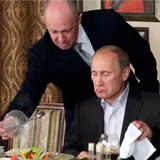
There are decades where nothing happens and there are weeks where decades happen. Vladimir Lenin surprisingly did not say these words about 2014, a year that saw monumental pivots in culture, technology, and world events and arguably never ended at all.
Liam and Russian Sam are joined this week by their good friend Jackson or Grace Cathedral Park, a longtime advocate of the concept of "The Long 2014." They discuss how the last years of the Obama administration inaugurated a lasting vibe shift, from rise of Netflix to the brutal emergence of ISIS, or the ways that the parallel development of Black Lives Matter and the odious GamerGate galvanized masses of young Americans into extremely different forms of political rebellion.
Join Gladio Free Europe for our most recent historical exploration yet, and decide for yourself whether the Long 2014 has yet come to a close.
Transcript
Jackson from Jacksonville
Hello and welcome to Gladio Free Europe. I am your host, Liam, joined as always by my incredible co-host, Sam.
Hello, hello.
And today we have an additional co-host, a very special guest, someone who most of you will know by the name Grace Cathedral Park. However, they are not a woman, they are not religious, and they are not Korean. This is my good friend Jackson, who in fact hails from the town of Jacksonville, Florida.
That's right. I am Jackson from Jacksonville.
First off, some of us are not as familiar with the music of Red House Painters as others. Before we get into anything, can you just lay out how the Grace Cathedral Park name came to be?
Yeah, hilarious story. So I was Japanese to English for the longest time. I've been Japanese to English since like 2015, 2016. It's been a long time. But then I was discovered by some people at a job of mine that I did not want to discover by Twitter. I thought that the takes might be a little too spicy for them. So I changed it to Grace Cathedral Park.
Right, yeah, yeah. And so I feel like often we refer to you in group chats just as Grace, but that is in fact not your name. You are your Jackson.
No, and I often get people when a post kind of pops off. I often get people that I they don't like say it, but I definitely suspect that they think that I am a woman.
Yeah. So, yeah, well, you know, I gotta say, you know, I've gotten that as well. Even though, you know, my display name is just Liam. I've got a mustache in the profile picture, so you never know.
What is the long 2014?
But Jackson, we brought you here today to discuss a really fun topic, something I've been interested in a long time, and something that's a little bit far afield from what Gladio usually discusses. It is the gonna be, I think, the most recent history we have discussed on this show to this point. Specifically, it's about the history of exactly 10 years ago, about the year 2014, something that all of us, all three of us, have noted is a really uniquely pivotal year in the sense that so many developments that happened in that year have echoes in contemporary culture and politics, and that in many ways we are still grappling with the various social and cultural changes that happened in 2014. So, the phrase the long 2014 is widely used on Twitter. There's even a Know Your Meme page about it that I think quotes both you and I.
A lot of people have discussed this, and two of the foremost scholars of the long 2014 concept that I know of: our first, our mutual friend Millennial Amenities, who I am very indebted to in discussing this concept, and of course, my good pal Jackson here, who I think has articulated the concept of the long 2014 significantly better than I have. So, you know, just to start us off here, Jackson, how did you come to this concept? And then, Sam, if you want to chime in, when did you first become aware of the long 2014?
Gotcha. Yeah, I basically saw your post that I think everyone thought of as the genesis of it. You just did a file folder tweet.
Yeah, it was the file folder.
That you've gotten praise and criticism for, I've seen. But I saw that and I just thought it was kind of funny. And it was just something that I kind of thought in the back of my mind. But then, like, a couple months ago, like, I started to see that, like, actually, there is a ton of stuff that started in 2014. There's a ton of stuff that is really significant from 2014. There's a ton of stuff even you don't really consider in this sort of cultural space to be like 2014. A lot of like current political happenings are sort of started in 2014. So I just, I started to kind of get a little bit obsessed with it and tried to make it make sense both in my mind and sort of sort of so I could communicate about it.
And of course, this whole concept is kind of, you know, it's very loosely and crudely drawing from Hobsbawm's concept of the long 19th century. This kind of idea that what we think of as kind of the ethos of the Victorian period really stretches from the French Revolution up until World War I. And this is a little bit different. I think this here, this long 2014 concept is more that, you know, the events of this one particular year are so closely tied to the later 2010s and even the 2020s, culture and politics, that in a sense we can say that this year has not yet really ended. But you know, before we go on too much into why this year is so interesting and everything leading up to it, yeah, Sam, if you want to share a few words on your kind of, you know, your conception of 2014, what 2014 means to you?
Well, I didn't really think about the long 2014 until I saw you posting about it again. But I guess I would say that I feel like 2014 isn't really the genesis of a lot of this stuff that we're going through, but it is very much an inflection point. It's the point where a lot of this stuff that had been bubbling in the background for different amounts of time, I guess, suddenly came to the fore and came together as an amalgamation of a lot of trends, mostly negative in my estimation, that continue all the way to this day. And yeah, I'm sure I don't speak only for myself when I say that I hope we can break out of the long 2014 in the near future.
We may already have.
That's true, that's true, because you know, just to start us off here, you are a skeptic in a sense, or at least rather, you have a more conservative conception of the long 2014 than some of us, because you, Jackson, believe it has ended.
Yeah, I think that I think that among other things, there have been some. It's almost, it's interesting. It's almost like it's almost like saying that the French Revolution has ended, where it's like, yeah, it ended. But we definitely still live with it today. And so I definitely think that I fall more in that line where it is sort of, I think it's over, but the significance of it is, it's like Zhou Enlai said. It's too soon to tell.
Too soon to tell, exactly. I completely agree.
Before 2014
Okay, and so basically, let's just kind of get into this. So we're going to start by kind of recounting the earlier cultural developments before 2014, because I think that there's really two fundamentally important things about 2014 that make it so unique. The first, like Russian Sam said, it was this event horizon for many different political and cultural processes. You start seeing rumbles throughout the 2000s and early 2010s suddenly erupt these various social and political tensions, some of them very, you know, low-stakes cultural changes, some of them major geopolitical turns happening in the year 2014. And the other thing about 2014 is that I think this is fundamentally the year that internet life basically eclipses offline media. And you start seeing the internet world in many ways become more real than the other world. So, okay, let's, you can, why don't you start us off, Jackson?
Let's talk about kind of what was life like pre-2014. What was going on in the Bush and Obama eras culturally that brings us to these changes we're about to talk about?
Obama-era liberalism
Yeah, so I guess if you want to start talking about the Bush and Obama eras as they relate to this sort of cultural inflection point in 2014, you really have to talk about this sort of liberalism, sort of small L liberalism embodied by Obama's presidency that sort of becomes hegemonic. Like it is almost entirely hegemonic at this point. And so this is like a, it's a world where, you know, I mean, a lot of Americans are, but if you're on the internet, you probably aren't. You, you, you don't think it is cool to like Bush. You don't think it is cool to be religious. You don't think it's cool to be a right-winger, like in any real sense.
Yeah.
You really just don't, there's nothing about it that you don't know.
Yeah, no, you're right. And it's, you know, there was this kind of broad consensus on the internet that to be a rational person, you should reject basically, you know, Christian conservatism. I think that there is this, you don't see this that much now, but there was this real concern with religious fundamentalists, fundies, the Christians. You know, there is the now infamous New Atheism movement that for the most part was very much meant to counter the Christian conservatism of the Bush era before descending largely into Islamophobia.
Yeah, and it's funny because you see people nowadays try and rehabilitate new atheism. And in a sense, you're like, you know where that ended up, right? But in another sense, they're kind of recapturing this sort of legacy of this intellectual movement for a lot of people where it really was like an intellectual movement of people, a lot of people who lived in areas where basically everyone was some sort of, you know, Christian and to some extent fundamentalist. It really was a movement that was sort of counter-hegemonic to this like Christian fundamentalism. Like they really were like trying to make it so that like to reclaim some amount of like, you know, cachet for the sort of rationality or sort of like non-fundamentalism.
Yeah, and I would argue that it was also one of the things that made YouTube into a really big thing. Like I remember being in high school and seeing all these videos of atheists debunking creationist talking points. Like, that was very popular at a certain point. And just, I don't think that people who are much who are like even five years younger than I am can really understand that because it seems like so much of a settled issue, but it was very much a point of contestation at the time.
Yeah, no, yeah, right. And I think that, you know, moving past this, this also ties into another thing that was actually shared with even a lot of right-wingers, which was this kind of similar consensus. So, first off, we have this internet consensus that basically religion is cringe. They don't have that language yet, but that's the idea that you should reject kind of Christian conservatism and anything it indicates.
Gay rights and the old culture war
Parallel to this, you have this broad, widespread agreement, really starting with Clinton, Clinton Bush, and early Obama era, basically that bigotry as we understand it was over. And that basically, the only people who were discussing the kind of realities of racism and misogyny in the 2000s were seen as kind of weird academic types. There was a lot of very radical academic language about race and gender and sexuality, but it was not remotely mainstream in this era. And that one of the biggest cultural wars in the Bush and Obama era, which now is kind of coming back, was around gay rights. And really, one of the biggest points of contention was basically whether the broad toleration toward ethnic minorities that you see really after the civil rights movement, whether or not that should be extended to gay people. That I think was really, in many ways, it was kind of the defining political issue of the Bush-Obama era: gay rights.
I'm kind of getting off on a tangent here, but I think it's just kind of setting up.
I think it's important to kind of understand that, like, for the most part, the sort of culture war that we now understand, and it's like the only thing that people can even focus on anymore. Like, this was like, this was an era where it existed, but it was not as developed.
Right.
It was all about like, can we pray in school or like, can we teach evolution under Bush and then gay marriage under Obama?
Yeah, no, I lived in Kansas for a few years, which was actually, you know, ground zero, as you might expect, for the evolution debate. Yeah, and then that's the big thing. So the kind of the biggest, the closest thing we have to culture war is the rejection by educated liberals of this kind of, you know, Bush era platform. And there was widespread rejection of it.
Obama's 2008 coalition
You know, I think there's a lot of kind of vulgar anti-Bushism. You've got, you know, you've got like, you know, Green Day most famously, this broad popularity of, you know, like kind of small L liberalism, which of course reaches its most glorious apex with the Obama campaign, which, you know, in 2008, the Obama campaign was just massively successful in ways that's kind of, that's really kind of hard to think about in hindsight, given how unpopular Obama would become among a lot of demographics by the end of his presidency. Because, you know, although, you know, Obama was still very popular, but in 2008, he was just hegemonically popular in ways that are really impressive. Just to kind of recap that the Obama presidency saw basically, in the earliest years, anybody who was critical about the kind of cultural and economic context of the Bush era voted for Obama, which meant you saw like the beginnings of the Brooklyn gentrifier class voting for Obama, and then you saw Rust Belt workers in Michigan all voting for Obama.
You even saw Indiana and Iowa go for Obama in 2008. It was this massive consensus that if anything seems to kind of confirm the idea that conflicts over race and gender were something of the past and that the religious tenor, the kind of a war on terror ethos of the Bush era was about to end.
Yeah, 100%. And I think that it really speaks to this sort of there is a disaffection in the air at this point. But in 2008 and 2009, and obviously we can't talk about this without understanding like, I mean, the economy just like shits the bed in 2008. There is this disaffection, but there's also like this hope that like, I mean, his platform was hope and change, and it was something that was made fun of even at the time, but it was something that people believed in. Like people really did think that things were going to change. And so there was this sort of massive sort of groundswell around right.
And then I guess, you know, partially because of, you know, the kind of inadequacies of the Obama era to address the economic crisis.
The Tea Party
And, you know, some of that was beyond their control. But then I think mostly because of the effectiveness of right-wing polarization and racial scaremongering, in the very earliest years of the Obama administration, you start seeing a lot of the less enthusiastic Obama supporters, the people from Indiana and Iowa, really quickly turn against liberalism more broadly. And this is, of course, associated with the Tea Party. And so the Tea Party wasn't really a mass movement, I don't think, in the same sense as some of the things that we're about to talk about, but it was this interesting kind of piece of the groundwork of later online radicalization. Anything you want to share about this before we move on to the 2010s?
It's important to understand, like, the Tea Party, just because the Tea Party is something that I think that a lot of the 2014 era movements that we'll talk about later.
Yeah.
It is something that they are like self-consciously not. Like, a lot, even if they agree on a lot of stuff about like race issues or gender issues, or sometimes even like economic issues, even if they agree on that kind of stuff, it is there is a there's a sense in which in polite society and an online society, which in these days, you know, they're still one and the same, somewhat. They you don't want to, you're not a, you're not a funny tea partier. Like, if you are, if you are a rational young person, you are not a tea partier. That's for old people, that's for lames.
Yeah, like the Trump moment was very much a repudiation of the Tea Party style of like Paul Ryan and all those people that got swept into power at this moment. So just a total rejection across the board by pretty much everyone.
Yeah, I mean, it's important to remember that like Marco Rubio and like, and Paul Ryan, as you say, like, those are like the tea partiers. Like, those are guys we think of as like cucks now. Like, we don't like them. Nobody likes them.
No, that's true because basically because, you know, because, yeah, the Trump movement, which we'll, of course, get it, which, you know, that's post-2014, but that was, yeah, it was, I wouldn't say repudiation. I think it was more of like an acceleration, you know, that saw everything behind them as, you know, part of this status quo that they also were rejecting.
Occupy Wall Street
Okay, but so, you know, the early Obama era, you start to see a lot of kind of cultural and geopolitical changes. I think that within the U.S., a lot of this is based around the idea that there's this kind of alienation from politics. And a lot of young people on the left feel that they are inadequately able to affect change. So in 2011, of course, you see Occupy Wall Street. I know I was kind of too young to really be following it that closely, but I know the question, Sam, you actually, when you were still in high school, you had some kind of more, you know, up-close and possible.
I was like, oh, yeah, yeah, it't really exaggerate it. I mean, I was in, what, the 10th grade, I think it was. I just went over to Zuccotti Park because I'm a lifelong New York resident and I hung out there for a bit. Just, you know, very crusty looking people hanging around and hawking pamphlets and all that stuff. It didn't really leave a very strong impression on me, honestly. I like I was like, this was a time when my political awakening was just really burgeoning. So I expected it to be really inspiring. But I just showed up there and I was very underwhelmed by everything, which I think really characterizes what my life would be from that point onwards.
Yeah. Well, so much has been written about Occupy Wall Street that we don't have to go into that much detail, but I think that the important thing is that it was this broad turn toward kind of economic populism from a left-wing perspective that you didn't really see at all in the 2000s. It was this big kind of, you know, change in the direction of the wind that would go on to highly affect later 2010s politics, but it was also a complete failure. It really had no movement, no effect on policy. It only had an effect on the psychologies of young people, especially the kind of older millennial crowd who would become polarized in a very left-wing direction by Occupy Wall Street. And so although Occupy Wall Street was really primary, was really heavily economic, it also coincided with the kind of beginning of academic social justice language around race and gender slowly becoming more mainstream through the internet.
Tumblr social justice
And that's what this ties into something that I think that we'll have to talk really is the foundational pre-2014 cultural change, which is the rise of popular social justice discussion on Tumblr. This is something that I was personally part of, at least I witnessed, I wasn't really, you know, leading these discussions, but there were a lot of very young people, oftentimes like 14 year olds, getting very interested in righting historic wrongs about race and gender on the internet. There is this sudden turn in the early 2010s, I think largely in reaction to the vulgar displays by the Tea Party, the fact that racism and misogyny, in fact, are still major problems. I think that a big ethos across the 2000s was that racism didn't really exist anymore. This was something that a lot of the white liberals on the internet tended to believe. And then starting in the early 2010s, basically single-handedly through Tumblr, you start seeing that consensus change and you start seeing a lot of people who often do not personally experience racism recognize that this is a significant social problem in the United States and that racial inequalities persist.
Well, I'd say it kind of predates the popularization of Tumblr discourse because 2012 was when you had the Trayvon Martin shooting, which was sort of planting the seeds for the later Black Lives Matter movement. In fact, I think the actual hashtag was invented that.
Right, but I'm talking about like 20, yeah, yeah, no, yes, and I agree, but that's separate, but that's after the rise of Tumblr because the rise of Tumblr was very much like 2010, 2011. It was right after Occupy Wall Street, I feel like. Jackson, did you use Tumblr at all? Did you witness this directly?
I did not use Tumblr. I mostly saw it from the outside looking in, mostly by people dunking on it. And so there was kind of a, there's kind of like, there's a pre, this is a spice that goes in the 2014 gumbo, but like there was already like this pre-existing infrastructure like based on like kind of like dunking on like this sort of liberalism.
Yeah. Yes, 100%. And you know, we talked about, yes, yes, totally. And we talked about the new atheist movement.
New atheists and Anita Sarkeesian
One thing that I noticed that a lot of people from the atheist movement started becoming very vocally anti-feminist in the early 2010s. And it was largely seen as a reaction to the supposed liberal excesses of Tumblr. There were a lot of prominent feminists, especially active on Tumblr. A lot of them also did a big factor was media criticism. So I think the most famous person from like the 2012, 2013 era, it's of course Anita Sarkeesian, who was the first major basically feminist critic of the depiction of women in video games, who is still this boogeyman for a lot of right-wingers. I think that, you know, there are some reasons, there's very fair criticisms you can make about this person, but I think that the hatred against her was completely overblown and almost entirely fueled by misogyny. And it was the beginning of this idea that criticism of media was a threat to people who consumed that media.
And also it shows this unspoken assumption that's totally acknowledged now, which is that consumption of media is basically identity. And that what kind of media you enjoy really defines who you are. And therefore, if the media you like is threatened, that might as well be.
And this isn't really polarized in one direction or the other. This is just the general ethos. Like, the people for it believe this, the people against it believe this. There's just not anyone carrying the torch against it that much.
Yeah, I think it's important also to kind of it really cannot be overstated how minor the like Sarkeesian critique of video games is. Like it really, that's like a huge part of understanding this story. It's like, she was basically trying to get video games criticism to a like film studies, like 201 level like understanding of media. And so like it is, it kind of makes later developments seem a lot more like farcical, but also like kind of, it also kind of gets at the psychology going on of like something so, so minor like being a sort of catalyst for this enormous explosion.
Right. And prior to Anita Sarkeesian, there was a lot of discussion about whether or not video games were art. I know that Roger Ebert famously said no, which led to a huge outcry in the early 2010s on the internet. And then I think it's very funny, though, that then a couple years later, when Anita Sarkeesian starts analyzing video games as art, you see the exact same kind of reaction.
100%. And there were even people at the time against Anita Sarkeesian, and this gets into the sort of polarization aspect. There are people who really ought to have said that video games were art because it would make them look better that were like, no, they're not art. They're just fun. They're just, you know, they're just a toy. It's like, they wouldn't have done that if there wasn't some sort of sort of some sort of cycle at play there.
Yeah, right. Okay. And so we're getting close to 2014.
Mitt Romney
You know, we're just talking about the kind of late 2010s developments. Obama would, of course, be re-elected in 2012. I think that Mitt Romney is a very pre-2014 kind of character. He's the classic cuckservative, as you know, a far-right person would say today, because he didn't object as strongly as they would have liked against a lot of the social programs of the Obama era. But at the same time, I think a lot of that is just attitude. His economic policies were incredibly right-wing. He was incredibly homophobic. It's just that he wasn't seen as this kind of populist boat rocker the way that post-2014 conservatives tend to advertise themselves as. He embraced the idea of being this movement conservative, you know.
He's like the last gasp of like, he's kind of like the last gasp of like Bushism. Just because like Bush kind of paints himself, now Bush is sort of a, he has a sort of outsider flair to him, but he sort of paints himself as like, I am the conservative movement and I am, you know, we're nice, but like we are like a movement that is, you know, entrenched in politics and we have something to offer. Maybe you're tired of Clintonism and we can offer an alternative. Whereas, you know, post-Mitt Romney, I mean, that's, that's poison for a right-wing candidate to say.
And I guess in one way, Mitt Romney was a throwback also, because one of the big moments of the campaign that really made liberals point and laugh at him was when during one of the debates, he was talking about how Russia was America's main threat. And in 2012, this was just not on anyone's radar, but a few years later, it absolutely would be.
100%.
The Arab Spring
Yeah, yeah. Well, let's, you know, we should talk about geopolitics and kind of the Obama first term, because of course, you know, the Obama administration did not make the kind of geopolitical changes a lot of the more progressive Obama voters really hoped for. Guantanamo was not closed, and the war in Iraq did not end. You also saw things that were not really effective really related to Obama foreign policy at all that were significant changes. I think a really big one, of course, is the Arab Spring in 2011 and 2012. This is again something that we're still dealing with the ramifications of. A lot of ways, it felt, especially in Egypt, it felt connected to the moment of Occupy Wall Street, which is kind of funny. And I'm sure if you look at the economic areas, there might be some ways that they're both downstream from the 2008 crash.
But I think that the Arab Spring led to this increased interest in Middle Eastern politics for Americans in a way that you didn't see before, which would become very important in 2014.
Yeah, well, first of all, the Arab Spring, it should be noted, it was prefigured by the 2009 protests in Iran over the presidential elections when there was the re-election of Mahmoud Ahmadinejad against his rival, Mir-Hossein Mousavi, who was sort of touted as this Obama-type figure. And this was the first mass protest movement that really utilized Twitter in the way that we associate more with Occupy Wall Street. Like I remember following this in real time and being really blown away by it. And it's just not really remembered as much. But this was being incubated all this time.
Yeah, I think that something that is worth pointing out is that sort of Occupy, or not Occupy, the Arab Spring is sort of, it's a movement that manifests itself online. And crucially, at the time, later in hindsight, we can see it as not as successful. But at the time, they thought that this had work, like that this was like a movement that had been made on the internet, specifically Twitter, and that it had worked. It was a decentralized internet-based movement, and it had managed to topple, you know, what in hindsight kind of looked like kind of moribund sort of like 70s or 80s-style anti-democratic regimes. But in the moment, it looked like this was a very promising way to organize things and it had progressively.
And there was so much enthusiasm about leaderless movements in the 2010s on the back of Occupy Wall Street and the Arab Spring, which I think has aged poorly.
Very poorly.
The rise of the think piece
All right, I think the last big moment we should talk about pre-2014 is the rise of the think piece. So, you know, I think that one thing I think about a lot with kind of the early Obama era culture is the whole kind of Brooklyn flannel PBR scene and how this scene, you know, mostly created by the first generation of millennials, people born in like 1982 and 84, they led to these people created a lot of independent media that would become very widespread. These media outlets like Vice and Vox, that we see this kind of the, like you said, the a lot of culture writing that you didn't really see before. And because it's on the internet and generally freely accessible, has a really wide circulation. This kind of culture writing, I think, has a very interesting push-and-pull relationship with social media, with Twitter and Tumblr.
And it leads to a lot of social justice concepts becoming increasingly mainstream. What are some other effects you think of the whole think piece world?
Yeah, I think that one thing that is really important to understand is that it sort of creates a if it's a word that you can't use without looking a little bit snooty, but it does create like a dialectical relationship between people who sort of see that there are sort of concepts, these sort of very academic, very non non-like, I guess you'd say populist concepts that are getting into the mainstream. And so it seems it makes people sort of sort of reflexively defensive of, or at least identify with, this sort of pseudo-mainstream media. Like, you know, they're more, they're more willing to defend someone like Vox. And this really has to be, like, this is the age of Gawker more than anything as well. But it really makes people identify with some of these alter or like pseudo-alter media landscapes, but it also creates a sort of equal and opposite alienation from them, right?
So if you're seeing concepts that you disagree with that are sort of being, that are sort of getting more airplay than ever, like it's not just the New York Times having to deal with something like this. It is Gawker, it's Vice, it's Vox, it's whatever. If you're seeing this and you don't agree with it, you're going to start to conspiratorially think that like, wow, there's like an entire media ecosystem that is against me and about what I'm for. And, you know, we have to tear it down.
And I think that, yeah, the Anita Sarkeesian stuff is, I think, a great example of this because this is, you know, this kind of proto-wokeness, basically. This was just all, it was, the issue was there was a woman who was talking about sex in video games. And, you know, many gamers who are mostly male had a very negative reaction to this. But gamer media, which is such a goofy concept, was generally on her side. And this led to a lot of dissatisfaction with video game think pieces, which is going to become very important. And I think, you know, it's so funny to think about now, but people writing articles saying things like, we don't need gamers, or let's move past gaming as an identity. These goofy little thoughtless clickbait articles would end up having enormous social ramifications in ways that nobody could predict at the time. It's just so bizarre to think about.
Yeah, I think honestly, like it is, it's a consequence of this time that it is very goofy. But at the time, it didn't, like, a lot of people, including people who were like making the content, didn't think it was goofy. Like, they thought it was like, it was actually like saying something to the people involved in it. So I think that sort of the ramifications of that would be soon discovered for the people that were writing and the people that were consuming that.
Peak liberal hegemony
Right. And I think that a great summary of this kind of whole period is that it was this period of great institutional optimism by liberals because that this kind of you know Obama era consensus, even though Occupy Wall Street was shaking it, many of these precepts, especially the kind of social precepts and the kind of rise of this Tumblr social justice, had seemed to be inevitable. It seemed to be that even though the Republicans held control of the House and the Senate, we were winning and that the media was on our side. And that there was this impression that everyday Americans would largely agree with kind of these incremental platforms of social justice improvements in the minds of many progressive liberals. And so our pal YQK Mindset, Millennial Amenities, the way he describes 2014 is that in his words, the reason for the long 2014 is because it was the high watermark of liberal rules-based world order hegemony.
And I think that's broadly true, both in terms of geopolitics with the global leadership of the United States, which was now more popular in some ways, especially in Europe because of the popularity of Obama. And then, of course, domestically, the hegemony of moderate progressive liberals in media associated with both major media production and these independent outlets like Gawker and Vice that came out of the Brooklyn scene.
Yeah, and I think it's worth saying too that, like, on the geopolitical level, even outside of Europe, America didn't really seem to have too many new enemies. Like, there was still like the axis of evil out there. But, like, for the most part, China is still a, you know, we're on again, off again with China. Russia is still like an ally of the United States, at least officially, or not an ally, but at least someone that we can do business with.
Yeah, right. And Russia's about to hold the Olympics, which really kind of shows the high point of, I think, Russian integration into, you know, Russia.
On the other hand, there was the beginning of these chinks in the armor. Like I mentioned, there was the Romney thing. And then in 2013, you had Russia pass the so-called anti-gay propaganda law, which was outlawing any expressions that portrayed homosexuality in a positive way in the public sphere. And that was a moment when I feel like the liberal media really glommed onto Russia as something negative in a way that they hadn't before.
Right, and that's why there were certainly tensions leading up to the Olympics. I think what got the most attention, and we'll get to this in just a second, but it was the pussy riot movement and these radical Russian feminists. We'll talk about the implications of that in a second. I think, but you know, I think that we've been doing enough groundwork here. It's already been quite a bit.
2014 begins: Flappy Bird
I think it's time to get into the timeline of 2014 itself, because it's amazing how much happened in this one year. Listeners at home, I would recommend try to find a karaoke version of We Didn't Start the Fire and just keep it on loop for the next 40 minutes, okay? All right, we're gonna get into this, okay? I think that the most important event to lead 2014 off, you know, to kick off this monumental change in human society has to be the release and deletion of Flappy Bird from the iTunes store. I remember where I was when it got deleted. No, I'm joking, but I think this was a very interesting event. So Flappy Bird was this stupid little phone game created by a Vietnamese developer named Dong Nguyen. It probably took him just like two weeks to make. It was largely by ripped off assets from Mario.
You play as a little bird flying between the Mario pipes. It was super simple. It was free. And because of that, everybody in America played Flappy Bird. But this poor creator, Mr. Nguyen, he just wasn't able to cope with this sudden amount of scrutiny and attention that his app was getting. For reasons that no one could really explain, this one little game became globally popular.
And also a lot of people were really pissed off at it because it was quite difficult. So they were just going off and yelling at this guy, like, why are you making this garbage?
Right, right. Yeah. And there was some discussion of whether or not it was plagiarizing assets for Mario that attention he didn't expect or want. And then so right at the start of 2014, I think just like two weeks or something after Flappy Bird is launched, Flappy Bird is taken off of the App Store. And this was met by widespread popular outcry. And I think this is one of the most public internet events kind of filtering into the real world. This was one of the first internet events that, you know, people would talk about at the water, well, the water cooler. Regular people were going up to their friends and saying, guys, don't delete Flappy Bird off your phone. If you delete it, you can't get it back.
Yeah, it was sort of monocultural in like the old sense. Like it was something that kind of everyone had sort of a, they, they had a part in, and they also like kind of mostly felt the same about. They had a reaction to that was pretty regular.
And then, you know, moving into February here, not a lot, not that much happens in the very beginning of 2014 besides this and the horrible death of Philip Seymour Hoffman, which, you know, doesn't really, I don't think really fits into this narrative.
Sochi and Ukraine
But then in February, you have, of course, the Sochi Olympics in Russia. And we were saying how there was this inc, although there was increased scrutiny over Russian domestic politics, this, I think, really is this kind of high point between economic integration with the West and Russia. And that's why, you know, there is tension on the ground. We said that there are a lot of very public protests by the group Pussy Riot. And you start seeing kind of increased liberal suspicion of the domestic Putin regime and its various kind of, you know, anti-democratic procedures, which get a lot of attention now. But then just after the Sochi Olympics, attention toward Russia would explode. And there would be this instant severing of diplomatic warmth between Russia and the West, not because of internal Russian politics, but because of internal Ukrainian politics.
Yeah, this was actually happening around the same time as the Olympics themselves. I think they started in like the first week of February. And by that point, Ukraine had popped off. You had the Euromaidan movement happening since November of 2013. And it was sort of like just an Occupy sort of thing where people were in the central square of Kiev and setting up this encampment that was actually in the process of dissolving by this point. But then you had this very unexpected attack on these people by snipers, which was ascribed to the regime of Viktor Yanukovych, who was sort of the pro-Russian president of Ukraine at the time. And this was something that forced him to step down and to go into exile, which meant by an immediate condemnation by Russia next door because Yanukovych was seen as being friendlier to Russian interests.
Yeah, and it's also important to say that, like, up to this point, like, before February 2014, like, this is not really outside of the norm of like post-Soviet Eastern European politics. Like, this kind of stuff happened.
Yeah, the color revolutions of the Russian era before.
Yeah, exactly. But then in 2014 is when this kind of gets a little bit outside of that.
Right. And Sam, you mentioned there were snipers in Maidan Square. The violence would only escalate in eastern Ukraine, in the now famous Donbass region, when there was, you know, when two regions of the east would basically begin their separatist movements. And then very shortly after this, you saw the Russian invasion and annexation of Crimea, basically kind of creating this quasi-war between Russia and Ukraine that would not go fully hot until 2022.
Yeah, it's interesting because the Eastern Ukraine stuff, in a lot of ways, it was modeled on Maidan, where, you know, for years, the people out in the East, they had their own regional grievances and their ideas about the place of the Russian language within Ukrainian society, for example. Like they wanted to secure that as a concrete right. And so you had a lot of very similar, initially peaceful movements crop up in the East where they were saying, oh, you know, if Maidan could work for these more Western Ukrainians, then we can have our own interests met by doing similar things. But very quickly, a mall Santa appeared out of nowhere who led an armed resistance movement that would transform into the Donetsk People's Republic. And I'm not joking about the mall Santa thing. It's Pavel Gubarev, literally a mall Santa up until that point. And he was just catalyzed by all these events.
And thanks to a little Russian help, just swept into the spotlight.
Yeah.
They had a mall Santa and a hot dog. That's pretty crazy. Yeah.
Okay, our whole episode on Prigozhin, yeah, a few months ago.
The Ellen Oscar selfie
Right, and I think we have to mention: so, while all of this is happening in Ukraine, really the beginnings of this brutal and bloody conflict that would lead to this ongoing horrific full-scale war that we see now, during all of this, there was something much more important happening in America. That, of course, is the Ellen Oscar selfie. And so, this again, much has been scribbled about this. It is still one of the most retweeted tweets of all time, which I think is so interesting because that wouldn't happen today. The idea that the Oscars are this incredibly important event that everyone should be paying attention to, that's totally foreign to modern culture. I think that this, the moment of the Ellen Oscar selfie, was kind of showing the eclipse of legacy media of traditional studio Hollywood by social media, which I just find very interesting. It's the kind of the fall of this, you know, water cooler monoculture and the rise of new social media experiences, largely experienced by individuals, not by groups, tailored to individual preferences, and experienced not in movie theaters or on the TV set, but on your phone.
Yeah, it's important to say too that, like, you said, this is like monocultural, but it's legacy media trying to integrate itself into this sort of new media internet ecosystem. And initially, it ends up going fairly well for it. Like, they do seem like they might kind of fit hand in glove, but then some later events will kind of make that a lot more difficult.
No, 100%, right? And, you know, we're talking about here, but the ways that, you know, phone usage leads to kind of increased personalization by corporate advertisers, and which itself is rooted in increased surveillance by advertisers and governments through cell phone usage.
Xinjiang and surveillance
This brings us also, I think, to something else that's often under-discussed about 2014, but began just a few days after the Ellen Oscar selfie. And that was really the beginning of the ongoing Uyghur conflict in Xinjiang, China. I don't want to get too deep into this because it's a very complicated subject. But yeah, Russian Sam, it basically began with a set of basically a terrorist attack in the Chinese province of Xinjiang that was attributed to Uyghur Islamic militants.
Oh, no, this wasn't in Xinjiang. This was in Kunming, where a bunch of people associated with this militant Uyghur Islamist separatist group, they went on a stabbing spree at a train station during the spring festival season.
In Yunnan, right. So I see. So very far. Actually, no, I'm showing my ass here. I didn't realize it's very far from Xinjiang, but it was about this, but yeah, but it was Xinjiang separatists.
Yeah, and that was a moment when the Chinese security apparatus really started to crack down on Xinjiang. And that would have implications for years going forward. And again, we just talked about the increasing ubiquity of phones and how important that is. And in Xinjiang, for example, when I was studying Arabic in Jordan, I had a classmate who was a Kazakh from Xinjiang. So he had a lot of first-hand experience with this stuff. Like they would have these checkpoints set up everywhere where, you know, they'd plug your phone into it and it would just like analyze all the data on your phone at these random places across the city. So, you know, there was just a lot of scrutiny where previously the phone was a symbol for, you know, the liberation of the masses with the Arab Spring and Occupy and all those things. Suddenly there's this awareness that, you know, oh, this is a surveillance device that you carry around with you at all times, which, like, we didn't mention the Snowden leaks, actually.
I feel like the Snowden leaks are a pretty important part of this story.
Yeah, yeah. Well, if you, yeah, I think most people remember this, but this was a report explaining to you the extent of NSA surveillance of Americans. And this was a, you're right, this was a really big deal in the early 2010s. I think it was generally associated with kind of Obama progressivism, but of course, it was very critical of the actions of the Obama administration. And I think this kind of connects to this beginnings of a decoupling between a leftist movement that is skeptical of elected Democratic officials, and then also you begin to see some people on the right start talking about this issue as well, particularly the kind of libertarian right, which now hardly exists, but was a pretty big deal in the early 2010s.
Yeah, it's almost like it's the sort of Snowden. thing is it sort of ties into two things that we talked about where one it is sort of like this moment where like the heart really does go out of Obama-ism now obviously he's still really popular but the heart is kind of it kind of leaves after that because it's like oh he's in charge and like he's not gonna stop this in fact he's gonna persecute this guy and like you know try and get him arrested but then it also ties into this sort of Russian decoupling with the American right because he goes to Russia yeah he goes to Russia and and he he flees to Russia and they they give him asylum there so it really does speak to this sort of this sort of splitting apart of this yeah liberal hegemony right and also it it led to this kind of increased skepticism by kind of rank and file progressives people who were not radical socialists just often just kind of regular liberals but who were increasingly skeptical of the Obama administration and who saw mainstream elected American politicians as you know as kind of insufficiently dedicated to various social causes whether it's economic justice or whether it's you know the the well-being of of minorities I think that a way this kind of ties in that you point out Russian Sam is the Flint water crisis which was really this kind of revolt against elite liberal opinion by everyday progressive liberals.
The Flint water crisis
Yeah, it's just like basically for people who aren't aware, what had happened was the city of Flint, Michigan, it went into an austerity regime where you had these unelected officials trying to balance the budget. And along the way, they decided that, first of all, they were going to switch the source of the water for the city of Flint to this heavily polluted lake. And second of all, they cut the budget and to save like literally a really funny amount of money. It was like $100 a day or something. They stopped putting these anti-corrosive materials in the water processing plant, which meant that suddenly like this polluted water, it was corroding the lead pipes of this city and spreading Legionnaires' disease, which was something that people were made aware of pretty quickly. As early as October 2014, something like that, the local Ford manufacturing plant said that the city needs to switch the water source because their parts were getting corroded by this nasty water.
But at the same time, like people were being told that everything is fine, that just boil your water, everything's going to be great. And this happened a couple of years down the line, but there's that infamous moment in 2016, I want to say, where Obama goes down to Flint to reassure people that everything's okay. And he takes a sip from this cup of water on stage as if to say that, like, oh, you know, if I can take a sip of it, then you can bathe in it. And yeah, like, like, this was a moment, I would say, where you have a lot more people questioning the scientific consensus, so-called. But in a way, like, the polarity of that has shifted, where during the COVID era, this suddenly became like right-wing coated. Whereas in this instance, it is very much left-wing coded.
No, it depends on, you know, I think it depends on what kind of elite skepticism we're talking about.
Malaysia 370
And I think it's kind of brings us to the next one of these 2014 events, where I think you saw a lot of very funny, basically apolitical skepticism of official narratives, and that is the Malaysia 370 disappearance. This was, of course, the crash of a Malaysian airlines flight over the Indian Ocean, leading to the deaths of, I think, quite a lot of people, wasn't it?
It was originally. It was like over 100 people.
Yeah. And it was never fully explained, but for that reason, there's been a ton of speculation ever since then. And just recently, in the last couple of years, there's been a lot of renewed interest in UFO circles by people who are convinced that somehow aliens teleported this flight to another dimension.
Yeah, like it was weird. For some reason, CNN just would not stop talking about this for weeks, basically.
Well, it's great television. It was a genuine mystery.
Yeah, no, that's the thing. It is. Like, you know, I get why people are so crazy about it, you know? And we're like, you know, the UFO stuff is hilarious. It's like, you know, there's bad CGI footage of like a portal opening up and the plane flying through that all these boomers fell for. But I think it's interesting that it kind of shows this kind of increased skepticism of all kinds of narratives that can be channeled into meaningful directions in some ways, but also it can be channeled into unproductive crankery. And I think that, you know, personally, I think that, you know, conspiracies about Malaysia 370 are a good example of that, of, you know, this kind of unhelpful skepticism and speculation that really starts to become rampant on the internet and begins to show the increasing dominance of the internet and social media in public discourse. Right.
And then, of course, just a few days after the Malaysian airline disappearance, you have another equally horrific event, I'd argue, that is much more politicized.
Honestly, like under-discussed as like an 2010's history.
Right. And if you want to explain what this is, Jackson.
Isla Vista and incels
Yeah, so a couple days after this, there's a sort of mass shooting, although it honestly better described as like a vehicular mass assault in Isla Vista, California, by Elliot Rodger, who has sort of, I mean, inexplicably, maybe not inexplicably, but definitely against good taste and against all morality, has sort of become like a figure of obsession on the internet. Elliot Rodger, most people listening to this have probably heard of him. He was sort of, he was invested in this like media atmosphere. He had a YouTube channel and he would post on YouTube. And he was sort of, he was motivated to attack just random people. He tried to attack a sorority, but he failed because he didn't get an answer when he knocked on the door. But he's motivated to do this by like this sort of bubbling up this incel ideology, right? He's motivated by the fact that he can't get a girlfriend.
Yeah, and I think that he's the first kind of major incel figure that anybody who is not very online, who is not active on either Tumblr or 4chan, I'm realizing we haven't mentioned, I don't think, 4chan in all of this episode so far, nobody really knew about incels before Elliot Rodger, unless you were part of those.
Yeah, he sort of, he is this sort of, he does, he's honestly one of the first guys to do this, but like he kind of propels his sort of niche internet style ideology like into the mainstream through this like really like spectacular insofar as it is like a spectacle act of violence.
Yes.
Like he I think he kills like two or three people and he tried to kill way.
Oh, yeah, he failed.
He was, he was like, he couldn't get into the into the sorority house.
Yeah.
But he he he sort of propels this incelism into the mainstream through this sort of internet inflected, but also using mainstream sort of legacy media. He basically propels incelism into this sort of, I mean, an ideology that still has the grip on many people.
Right. And we should mention by 2014, so 4chan is slowly kind of becoming radicalized in a right-wing direction, but there's a lot of kind of like apolitical misogyny on there. There's a lot of kind of semi-ironic racism and even, you know, neo-Nazi stuff most infamously. There's this one board that's mostly associated with kind of early incels, R9K, and there's another board that's associated with basically racists, and that's the infamous /pol/, which was pretty prominent in 2014, but would become increasingly so, I think, across this specific year.
Kanye and Kim
And, you know, on the topic of people who were kind of inexplicably radicalized in a right-wing direction, the very day after the Isla Vista massacre, you have the wedding of Kanye West and Kim Kardashian in Italy.
My main memory of this event is the fact that Jaden Smith was there. He's a very 2014 kind of figure.
Very 2014, famous for his tweets and all that. And he chose to attend the wedding in a Batman costume.
He was random. Yeah.
ISIS
And just after that, you know, just, you know, returning back to violence, very shortly after the wedding of Kim Kardashian and Kanye West, you have ISIS.
Yeah, so this spurs a new round of interest in the Syrian civil war because this thing had been brewing for a couple of years by this point, but most people just weren't really paying that much attention, I'd say. That is, until 2014, you finally have the announcement of the caliphate by Abu Bakr al-Baghdadi. He makes this announcement and this group that had existed for many years before that, Al-Qaeda in Iraq, is rebranded as the Islamic State in Iraq and Syria. And they start this media blitz of really spectacular violence. Like they commit genocide against the Yazidis. They send the Iraqi army running. And they're making a lot of headway in Syria, which makes people zero in on this region much more and would turn it into the focal point of politics, both mainstream and leftist for many years to come.
Right, right, yeah. Because anyone who was very online in kind of left-wing spaces in 2014 remembers that from 2014 to 2016, it's hard to imagine now, but your position on the Syrian civil war was basically considered your most important, the most important barometer of how, of what kind of leftist you are. Because broadly, there were three major factions, you know, so there was no one supported an ISIS, so that's not even really worth discussing.
Well, there was one communist party in Italy that declared support for the people.
Yeah, there's one group or something who's for ISIS. But broadly speaking, the three kind of factions, left-wingers were split between were the Syrian revolutionaries who were supported by the United States, but were kind of being increasingly revealed to have an ideology less different from ISIS than many of their backers in the West would like. Then, of course, you have the Syrian government, which was implicated in a lot of pretty horrific human rights atrocities across the war, you know, which just had sparked the war in the first place, but were seen by many people on the left as a secular alternative to these Islamists and, more importantly, a counterweight to American imperial power. This kind of campism that you see in the far left. And then there's the third option, which are the YPG/PKK, these kind of outwardly socialist militias that got very kind of some degree of U.S.
support from different aspects of the U.S. military effort. And basically, whether you supported the YPG, the Kurdish faction, or the Syrian government was a really big litmus test in 2015, 2016 in a lot of left-wing online spaces.
I think if there's one thing to say about the Middle East and like how it relates to 2014 and the sort of impact of it, is that this is really where it is revealed that this is like the long road. The Middle East is going to be a problem for a very long time, for America at least, and for the rest of the world more broadly. Because second term Obama, there's sort of this understanding that, okay, we're still at war in Afghanistan, but it's very low intensity. And things have simmered down in Iraq. And there's this sort of, there's an Arab Spring, and that makes everything very tense for a second. But that seems to have all kind of fallen in a good direction to a lot of people's understanding. And so there's this sort of seeming apparent stabilization in the Middle East that everyone is very hopeful for.
And then the rise of ISIS just completely shatters that.
Yeah, no, ISIS was just this very new kind of movement. The fact that it controlled territory was doing kind of, you know, 1920s Chinese warlordism in the Middle East, which nobody thought was really possible. And so, yeah, there's so much discussion about ISIS in mainstream circles. There's a lot of renewed calls for U.S. intervention that thankfully never directly happens. You do start seeing an increase in the kind of American drone war, which had begun pre-ISIS and was a really big issue, again, in progressive struggles in the early 2010s, the ethics of drone usage.
Yemen and Boko Haram
And then not long after that, sticking to the Middle East, we have the Houthis rise in Yemen. You know, the Houthis are very prominent now, but they really came to the fore in 2014 in September of that year with the taking of Sanaa, the capital. And later in 2015, you start seeing this erupt into a full regional war with the Saudi invasion, but this is also a pretty big deal. And then, you know, more comparable to ISIS, you have the rise of Boko Haram in Nigeria, which is kind of a, in the media, in terms of its media spectacle, it's kind of like a sideshow to ISIS. Boko Haram were described in very similar terms to ISIS as these fundamentalist, very misogynistic radicals. And I think that in an interesting sense, the fact that Boko Haram was primarily targeting girls' schools had some particularly strong resonance in America in the wake of the Isla Vista shooting by Elliot Rodger.
It was this kind of understanding of this kind of global assault on women's rights that got a lot of attention in mainstream progressive circles.
Yeah, and it really plays into like this whole discourse about the rights of women and the rights of minorities in, you know, online, that there is this sort of real world. There are two real world examples of, you know, and obviously these have very you can view this from a very problematic lens, you know, a very imperialist lens, a very Orientalist lens. But there is people, to people in the day, they sort of see this as, you know, proof that their sort of discourse is rightly guided, like that they are hitting the nail on the head. They have, they have, they have seized on an actual problem in society and that it's worth talking about and it's worth making a focal point of politics.
Islamophobia and Eurabia
But then at the exact same time as all of this, you start seeing a very different kind of reaction to the rise of these militant Islamist groups. There is this global outpouring of Islamophobia that's initially centered around Europe, but then quickly spreads to North America and South Asia that is largely led by a fear of Middle Eastern migrants. There began to have some kind of flow of refugees to Europe from the Middle East starting in 2011 with the Arab Spring. But then beginning with the rise of ISIS in 2014, there was this widespread fear on the political right of violent terrorists who hate the West or whatever sneaking in through these refugee settlement programs into Europe, kind of reigniting earlier racist fears of a so-called Eurabia, this idea that Europe was about to become a Muslim country because of Muslim immigration. And we are, this is like a perfect example of something we are still dealing with the ramifications of today because the rise of the European right, it began in 2014, but it hasn't exactly ended.
And it has had some very interesting effects across the Atlantic.
Yeah, I mean, there's an argument to be made that, like, people forget this now because he doesn't ever talk about it. But, like, a huge part of, especially the early Trump campaign, was like explicitly in the vein of your Le Pens, your Wilders, your UKIPs, where it was explicitly like, look at what's happening to Europe. Do you want that to happen to America with our equivalent of it?
Right. And so even with it.
Never even heard of it now because it was a failure, but Trump tried to ban all Muslim immigration to America.
Yes. No, it was a huge part of early Trumpism that he kind of did a tactical retreat away from that because it really wasn't working. But it was huge at the time. Yeah. And then you start seeing a lot of English language media outlets in America look at the really fearmonger about this issue in Europe. You start so Breitbart Infowars in particular start talking about Europe is being flooded by Muslims, whatever. A lot of really sensationalist, horrifically racist coverage about crimes supposedly committed by migrants. And then you begin to see the rise of conspiratorial thinking about immigration. There was this widespread belief that liberals within European countries had to be somehow funding this movement. The Infowars answer was that it was all about George Soros. We begin to see the George Soros boogeyman, this shadowy billionaire who is funding progressive causes. And then on 4chan, this kind of theory becomes taken in an explicitly anti-Semitic direction.
And we begin to see this kind of reignition of peasant anti-Semitism on right-wing internet circles largely centered around 4chan.
Yeah, I think, you know, interestingly, we were talking about the Malaysia flight, another Malaysia connection with the breakthrough of George Soros as this sort of boogeyman. And he goes from a sort of boogeyman of Malaysian currency speculation.
I forgot about that. You know, and it's funny because, you know, Malaysia has probably had the least history of any kind of Jewish presence of any country, but Malaysia is unfortunately a very anti-Semitic country. And there was a lot of like anti-Semitism focusing on George Soros. I guess, was this starting in the 90s?
Yeah, this was like the late 90s crisis where suddenly all these economies that had been growing at a rapid pace because of currency manipulation schemes that were being done by George Soros, among other figures, it just all came crashing down. But, you know, but because George Soros happens to be of Jewish descent, he was this obvious figure for like 1930s style anti-Semitism.
And then bizarrely, this, you know, this anti-Semitism that must have seemed very anachronistic in 90s Malaysia has this strange afterlife in the 2010s as George Soros is blamed on the toleration of refugees in Europe. And you begin to see this, you know, white nationalist Great Replacement myth that, you know, progressive liberals or possibly the Jews, depending on how far right you are, are responsible for any Muslim person wanting to live in a first world country. And that not only should all Muslims be rejected, but that any settlement of a Muslim person in Europe or North America is part of some kind of devious plan to undermine these places.
I think kind of the funny thing here is that a lot of this stuff was rooted in Zionist discourse. Like a couple of minutes ago, you used the term Eurabia, which is actually a term that was popularized by this woman named Bat Ye'or, who is well known for being an Israeli anti-Muslim polemicist. And she wrote this book, Eurabia, talking about how, you know, because of birth rates, Europe is going to become majority Muslim, and the Saudis are in on it and they're manipulating everything behind the scenes. So basically, all of this discourse that had been laid by Zionists who were trying to skew ideas of Europe in an anti-Muslim direction, therefore in a pro-Israel direction, were suddenly redirected against Jews.
That's ironic, you know. And we should mention also that this kind of Islamophobia is not, you know, it connects to kind of classical anti-Semitism in Europe, but this kind of Islamophobia is found in many countries and in many contexts, largely as a rural, I think in many ways as an echo of this migrant crisis.
Modi
And I think its most extreme example, which didn't get much attention at the time, is the rise of Hindu nationalist politics in India in 2014. This is when we see the election of Narendra Modi from the BJP organization.
This is one of those things that it is really easy to overlook as being a part of 2014. But yeah, like the Modi sort of style of politics taking over India is very much a part of this sort of crackup of this apparent stabilization in geopolitics and this sort of reaction to that crackup, right?
MH17 and the Gaza war
And it takes different forms, right? Like in Europe, it is sort of like, oh, they're invading us and they want to replace us because they, you know, there's all this wealth in this society and they want it and they want to take it from us and all that kind of stuff. Whereas in India, you have a same, you have like a similar reaction, but it is much more, it's more, I mean, it's arguably more frightening just because there are historical, you know precedents of this leading to really really really like scary and and not good you know right there was the basically himself was implicated yeah the 2003 riots that were this basically a pogrom against muslims in northern india yep 2001 i think and he was and he was the minister of Gujarat when that happened yeah so yes yes all right and then you're right around the 2002 we were both in the middle all right and then we have to surprisingly return to malaysia once more a third malaysia reference in one episode and that is because you know we mentioned malaysia 370 the plane that disappeared over the indian ocean guess what malaysia 17 happens again another malaysian airlines flight disappears this one the mystery is much more quickly solved in the sense that it is determined it was shot down by militants over ukraine although there is still some contention about which side shot it down from what i understand there's no use getting into that here again shortly after to keep this just keep this train rolling then in 2014 also you see the gaza war something with very interesting you know echoes today when you know three israeli teenagers were killed by palestinian militants leading to a very you know disproportionate military reaction by the israeli government this has the consequence of reigniting western progressive support for palestine i remember i didn't follow this war at all when i was i was in college at the time.
I was like 18, but i remember seeing a lot of kind of pro-Palestine posters around my college, which I had not really seen before. And that you pointed out, Russian Sam, that the BDS movement did not begin in 2014, but really accelerates after the 2014 Gaza War.
Yeah, like 2014, it was a time when you basically had the most BDS resolutions brought on college campuses. This was the time when there was a lot of focus on SodaStream in particular, which ended successfully because SodaStream stopped manufacturing their devices in a West Bank settlement. So, yeah, that was one success of the BDS movement. But as a result of this war, you just saw this, you know, instantiation of an anti-Israel sentiment. This was a time when American Jews start to look at Israel, maybe not as warmly as their parents would have looked at it. And this was partly the war. This was partly the fact that the prime minister of Israel, Bibi Netanyahu, was so nakedly partisan and anti-Obama.
Yeah. It's a beginning of this polarization on left-right grounds, which you really did not see that strongly on the Israel issue until 2014.
Ferguson and Black Lives Matter
You know, and talking about, you know, both this kind of polarization and these kinds of popular movements along the lines of BDS, I think probably the single most important event of 2014 on American politics is coming up right here. Because shortly after the beginning of the Gaza war, you have the killing of Mike Brown by Ferguson police and the official formation of the Black Lives Matter movement. This is something that was a long time coming. There was a lot of increased attention toward racial inequalities in the early 2010s. You know, we talked about the kind of the ways the more intellectual focus of this on Tumblr and that flowing through into media. But you also, on the ground, you begin to see a lot of organizing against police brutality, beginning with the killing of Trayvon Martin a couple years earlier. That was not by a policeman, that was by a pro-cop vigilante, George Zimmerman.
But then things really come to a head shortly after with the killing of Mike Brown. And so this is really when kind of the movement really consolidates. And it also, another thing that was happening right in the background of this was the police killing of Eric Garner just a few weeks before. One phrase used heavily by Black Lives Matter protesters at the time was, you know, I can't breathe, because Eric Garner was choked to death essentially by police.
And I think it's really interesting to point out too, if the story of 2014 is this sorting into these two camps, right? That this is kind of when woke, as like a word, breaks through. Like this is when there start to be, and we've talked about this, like think pieces written about like, what is woke? What are these people, what do they mean when they say woke? Like, right? What did these protesters mean when they say woke? And so I think it's really interesting that like this is as good a place as any as you can put it for like the mainstreaming of this idea of like wokeness and like and what it means to be woke what right like being aware of social injustice being aware of racism all this kind of stuff yeah and being woke wasn't a new concept that's the really funny thing like it goes back in like black english all the way to like the 50s basically but this was the moment when it broke into the mainstream consciousness and the liberals started saying it yeah and also you know we should mention that part of the associated with this concept breaking through, there is a lot of intra-liberal arguments about Black Lives Matter.
There were many progressives who thought that this was too scary and violent and would, you know, get Republicans elected which that's the kind of argument that you see all the time with any kind of social movement. But that was a big fear by some establishment liberals in 2014, whereas other kind of movement liberals embraced Black Lives Matter. And I think it's interesting that Obama kind of positioned himself in between those two poles of liberalism.
Yeah, no, yeah, I know Obama prevaricated in ways that kind of made everybody mad, but you know, I think he had the most mild statement about it all. About, I believe this was before Ferguson, but I believe during the protests around Trayvon Martin, he made the comment that if I had a son, he would have looked like Trayvon. And a lot of kind of apolitical, not non-movement conservatives who felt threatened by social justice were infuriated by that.
Gamergate
And that kind of is leading us to, I think, the second biggest internal movement in America in changing politics and culture. This is something that is, I think, in complete contrast to Black Lives Matter, is something that I think is incredibly, should be incredibly irrelevant. It's internecine and arcane and just so stupid, but ended up truly having enormous political ramifications on right-wing radicalization. And this, of course, is Gamergate.
Yeah. And it's interesting that you say that it is sort of internicine and sort of like, who cares? But it almost like, it almost reminds me of like intra-Christian discourse around the Reformation. Where it's like, nobody cares about this nowadays. Like, who cares? Like, consubstantiation, transubstantiation, who gives a shit? But, like, in the same way that, like, a lot of people died about that, it's like, no, this actually ended up having like huge ramifications for sort of cultural.
Wait, you're telling me you guys don't care about ethics and video game journalism?
Right.
They are pretty unethical.
And no, and just in the briefest possible, you know, summary here, this started because a man accused his girlfriend, who is a very obscure indie game developer, of cheating on him. And then this quickly blossomed into this kind of witch hunt that this woman had been basically trading sex for video game reviews, which is so funny to imagine that someone would care that much about the review of their like little indie point-and-click game or whatever. But it led to this absolute firestorm, the explosion of the tensions we saw a couple years earlier with the Anita Sarkeesian controversy. And you start seeing widespread fears of progressive media and feminists more broadly trying to destroy video games. There was this fear that, you know, progressives who had no interest in video games saw the gamer movement as dangerous and were conspiring to destroy it. And that, you know, gamers as an identity had to be protected.
It was this reactionary consumer movement of a kind you haven't really seen in recent history and you haven't seen since that had the effect of turning a lot of otherwise apolitical video gamers into right-wingers. A lot of young men of various backgrounds who were skeptical of feminism suddenly found themselves turned into reactionary partisans all because they were mad about the reviews of a video game that was literally called Depression Quest. Like it's the most 2014 thing ever. It's, you know, it's like such a stupid little thing about a game nobody would have ever remembered otherwise. Some like, you know, little artsy point-and-click game created this true firestorm.
Weirdly enough, it kind of branched out to other games of this type that didn't even really have any, like, didn't have anything to do with it. Like, do you remember Gone Home? Remember that game?
Oh, yeah. Was there, I don't remember how it was implicated. Were people mad because it was like a had a lesbian subplot or something?
I think they were just mad that the game was well reviewed and you didn't do anything. It was like a walking simulator.
Yeah, yeah.
And it just, if it fucking exploded for some reason, I don't know why.
Well, I mean, I think I have. There's definitely some reasons why it exploded right.
And I think what's also interesting about Gamergate is that, you know, it's in hindsight, it was so obviously this, you know, mass reactionary panic, this kind of, you know, misogynistic firestorm. But at the time, a lot of people really did believe it was truly about ethics and games journalism. And I think that's why it was so effective and so pernicious. It did not advertise itself as a right-wing movement. It was seen as like gamers' rights and common sense versus woke SJWs. And I bet that if you look, 2014 was probably the height of the usage of the phrase social justice warrior. SJW. That's kind of been replaced by the word woke, but this was an early manifestation. And again, we could just, there's so much we could say about Gamergate, but the broad strokes here are that it was a radicalizing event for a large category of young men.
It activated people who would otherwise be repulsed by the kind of Andrew Tate Manosphere into seeing that as part of this kind of popular front of men's rights against feminism. Something you've talked about, Jackson, is the idea that 2014 led to the age of negative polarization, of adopting beliefs just because they'll piss off your enemies, of owning the libs. And I think that Gamergate is really where this begins to go viral.
No, and not only does it go viral in the sort of manosphere way, but there are a lot of people who in 2011, they're good liberals. You know, they vote for Obama. They sort of consider themselves liberals. They don't agree with any of the sort of Bush package of reactionary cultural views. They are just like straight up racist after 2014. Like they are buying into a lot of the like anti-immigrant hysteria that gets sort of folded into this, like you say, it's a great phrase, popular front from the right. Like they really do like form like a rightist popular front.
Right. And we should mention that it's all about the idea that Tumblr is this taint that's ruining American society, Tumblr social justice. And because you know, Tumblr people on Tumblr, which is kind of a metonymy for all progressives, because they tended to be pro-Black Lives Matter, this meant that if you were pro-Gamergate, you must be anti-Black Lives Matter happening at the same time. We start seeing this, you know, yeah, this you said, this polarization into being racist. And even though all of these people would have been either internet atheists or at least, you know, skeptical of Bush era fundamentalism four years earlier or a little bit longer than that, suddenly they're becoming a lot more tolerant of the Christian right because they don't see them as their primary enemies.
There's this belief that there is, and this kind of gets fed into, and there's already an existing infrastructure of sort of these, you know, I guess you call them like populist rightist like ideologues. But they sort of latch on to this and they're very savvy for this. Like you honestly have to, you have to hand it to them because they saw a good thing coming. But like these sort of like Breitbart, we may have talked about them already, but they latched onto the immigrant thing. Well, they also latch onto the Gamergate thing. Famously, they latch onto it. They make it a, they kind of send it into this like alter mainstream space. And so a lot of really savvy ideologues latch onto this. And it really does create this, this, yeah, this age of negative polarization where if you're mad about the feminists, you know, ruining video games, well, guess what?
The feminists also are not racist. So you should be racist. And like, oh, the feminists are also the ones who are inviting in all the immigrants. So you should hate the immigrants.
Right.
And so like, there's this, there's this ideological sorting, right? There's the woke on the one hand, and then another word that is sort of predates 2014, but really starts to get its modern definition now. The based side, right? There are these people that, like, are you with the woke, or they would say SJWs, right? Or are you with like, you know, the based pets? Like, do you, do you hate the feminists and do you hate, you know, everything they stand for?
Right, right.
Robin Williams to the Sony hack
You know, and we're kind of getting into the end of the timeline here. I think that the ensuing events of 2014 are not as interesting. You have some kind of, you know, interest. There's a few tragic events that maybe we should mention. You know, there's the death of Robin Williams, which is kind of a symbolic, you know, end of a kind of mass culture, I would say. This genuinely universally beloved figure. You have failed popular movements in both Scotland and Hong Kong, these kind of parallel movements for autonomy. You have the outing of Bill Cosby as a rapist, which is kind of this, you know, proto-Me Too, shows the increased dominance of, you know, awareness of misogyny, I guess, in this and sexual assault and sexual harassment in mainstream circles. And then you have the failed Democratic midterms from a liberal perspective, in which, you know, Republicans make this great resurgence.
And that kind of wraps up 2014 in terms of the series of events. I think the very, the last two things that really happened in 2014 are Shirtgate, which was kind of this little Gamergate sideshow where a NASA employee was wearing a shirt with a nude women on it or sexualized depictions of women that led to a big controversy. And then you have the North Korea Sony hack, if anybody remembers that.
Oh, yes, about the movie.
The interview by Seth Rogen and James Franco, yeah. And I think so that those are really the last events of the year 2014.
Streaming
But now I think we should just wrap up this episode by talking about the kinds of cultural developments happening during all of this time that are still continuing today, you know, that show how this moment, I would argue, has not truly ended. I think the biggest one of these, you know, bringing this back to Hollywood and the Sony hack, is the rise of streaming over traditional TV and film viewership. This is kind of, I believe, the first straight to Netflix television and film are released in 2014.
Yeah. No, it was 2013. It was Orange Is the New Black and House of Cards were 2014 is really when this streaming show has really become increasingly mainstream.
Although we should mention that, you know, traditional cable does still have some staying power. I know there's one 2014 cable show that you think is particularly indicative of this at the time.
True Detective
Yes, the first season of True Detective, I think.
Oh, yeah.
I think that they were channeling something that they really weren't aware of with that first season.
It's been a movie because True Detective about two years ago in this podcast, but I can play. It's actually the first season is great. It's goofy in some ways. There's a lot that I don't love, but but tell, but what are your thoughts about you know what it kind of reveals about this moment?
There's, I mean, I could talk about the first season of True Detective for hours. We could do a whole episode about that.
But I know.
The first season of True Detective is really like presages so much of like what will come later, right? Like, obviously, in the specifics of it, there is a, I mean, there's a literal pedophile conspiracy that like the investigator has to uncover, right? So, obvious parallels to Pizzagate.
And there's a conspiracy to cover up the conspiracy, yes.
And so, there is obvious parallels to stuff that comes later, but I also think that like True Detective, the first season is sort of it reflects a sort of like individual response to like this failing consensus, right? Like, what is Rust Cohle and Marty to a lesser extent, but what is Rust Cohle but like an individual who is like trying to navigate like this this decaying like system? Like, he's lit, like Louisiana is literally decayed around him. Like, it is, it is full of like dying towns and like swamps. And he's trying to navigate this and trying to uncover the truth. And he sort of gets the truth, but he can't say the truth. And so, I think that there's a lot. I think this kind of captures this sort of vibe of the age for a while.
And I have to mention, Rust Cohle is one of the funniest character names of all time.
John Oliver
Oh, of course. Yeah, you know, and then you know, speaking of television at this time, we also see the start of the John Oliver Show, which is another kind of swan song of like, you know, major relevant media. I think what's interesting about John Oliver, though, is that, like the Daily Show before it, it is expressly liberal. So, it's beloved, but only by like, you know, half of the American population. Any kind of thoughts on John Oliver or anything that's relevant? I will say, I think that he's probably the best of that whole coterie, but what do you guys think?
Well, it's a sort of snarky liberalism, I guess, which Jon Stewart had pioneered. But John Oliver, he brings it to a whole different level where you don't really make arguments per se, you sort of just ridicule the people who don't agree with you. But also, John Oliver's big innovation, I would say, is the rapid-fire pace of the show. It doesn't even really give you that much time to think about what's being said because he's just jumping around from point to point to a joke and you don't have time to process it. You're just sort of clapping along. So it's a very effective form of propaganda, I'd say, because it sort of shuts down the part of your brain that's for critical thinking.
I think it's true for a lot of political media, but yeah.
I would say that like John Oliver especially is sort of the way to criticize him at the time is that he over-relies on like the it's the current year. Like that was the big refrain from the right.
Yeah.
Like Oliver's thing was it's current year and this is still happening.
Yeah.
Right. And I think that, I mean, obviously that's not really the entirety of what he's saying, but I think that there's some truth to that in that like his show really is sort of like it is mainstream liberalism kind of looking around and being like, what, what went wrong? Like what is going on? Like it still believes in this sort of progressive narrative of like the Obama years, but it's not happening. And so they're kind of like wondering like, what is going on? Like this is supposed to be better. Things were supposed to have gotten better and then they just didn't. So.
Yeah, it's just a total apogee of infotainment of this idea that like you can be entertained and informed at the same time.
Yeah, no, definitely. Yeah. I also think that in his defense, I think that John Oliver basically is kind of the kind of maximum of liberal concern within the liberal capitalist intellectual framework. And I think that he was someone who very much thought that he had all the correct beliefs and was doing all the right things. And I think that you kind of see this contradiction in his ideology where kind of he sees the ways that American political dominance and the dominance of the American ruling class is connected to these various social ills. And I think that he recognized this and was kind of bumping up against the limits of his own ideology on his TV show.
100%. Yeah. Like that's where the current year thing comes from, is sort of like being part of this and being like, well, it should be fixed. And you kind of bump up against the fact that it's like, well, it's not being fixed for a reason. And he kind of, his show is about scoring that certainly.
Vine
Yeah. You know, and on the topic of, you know, quick editing and you know, moving, quickly between topics, we should mention 2014 is the year that Vine was launched, I believe.
Oh, yeah.
Vine was short-lived. It only lasted, I think, I think it shut down in 2017 or 2016, but it was, you know, this, it reached its peak. Actually, it might have started before 2014, but it really.
I believe it started before 2014, but it definitely became very mainstream in 2014. It was this, you know, short-form video that had a kind of in-app editing that introduced very young people into this new kind of entertainment mode, which, of course, now what we see with TikTok has become bigger than anybody could possibly imagine.
Yes, this is the heart of darkness for the short-form video content.
However, I think an important thing is that because this was happening before the polarization of 2014 had really sunk in, which I think really happens with the Trump election, because this is before that, Vine was mostly apolitical. People were not yet using this short-form media to educate or persuade the way people try to do now. It's, you know, it wasn't really a propaganda technique by anybody, it was just haha, funny videos.
Yeah, there's a lot of monocultural sort of nostalgia for Vine.
Yeah. Probably because it was sort of before that.
Right. And I guess we should mention that all these changes happening in 2014, you could still sit them out in a way that you could not after 2016. Really, the gears of 2016 really are beginning to go, or they're fully spinning in 2014. It just took a little bit of time for things to really catch up with the ultra normy crowd.
Guardians of the Galaxy
Speaking of ultra normie content, you know, and kind of the last gasp of like mono culture, I think that the Marvel cinematic universe really reached its peak around 2014. I think the most important Marvel movie from this era is Guardians of the Galaxy, which was just basically universally acclaimed by Marvel fans and not. It was this kind of last moment of optimism from, you know, studio epic blockbusters because it just felt culturally relevant and artistically unique because of, you know, the dialogue had funny quips and there was 70s music, which you didn't expect to see in a movie like this.
Yeah, it is, it is sort of, it's, it's, it's a movie that is, that sort of heralds the coming of like later MCU stuff where it's like, okay, we're not just going to stop with the Avengers or like, you know, the second Avengers, which people didn't like. People forget that. But this is really shows that like this is not only is this here to stay, but like this is going to be what you're going to get from Hollywood from here on out. You're going to get more of a like.
Yeah, definitely. And then, of course, it's like, you know, it's Chris Pratt as his, he's not as big of a star as he was a few years ago. It turns this sitcom actor into a movie star, which you hadn't really seen before. And I think it's kind of related to that. The people were, you know, the people doing the MCU at this time, it's, you know, it's James Gunn and Joss Whedon. There were these vaguely alternative 90s culture guys who had limited appeal across the 2000s, but dedicated small followings. But then in the 2010s were given the reins of this massive media empire and created it in this kind of new direction that now is understood as very lowest common denominator, but felt somewhat new at the time. The dialogue was so casual, you know, that you can kind of see why Marvel fans really fell for this kind of thing, really fell in love with it.
And I think that the reaction to Guardians of the Galaxy in particular was very similar to the reaction we saw, I guess, just last year, to Everything Everywhere All at Once. It was this new kind of science fiction action movie.
"We tortured some folks"
Yeah, and just speaking of We didn't speak and this kind of, you know, vernacular and characteristic bluntness, this was something that led into the wider culture as well. 2014 was also the year when Obama said, casually, you know, we tortured some folks. And that was a huge moment. Just like I saw that live on television. I was in the doctor's office and they had that on the press conference. And I just heard that and my ears perked up.
That's hilarious.
Wait, what the fuck did he just say?
Yeah.
And yeah, I mean, it's just vulgar and blase way of, you know, talking about the fact that this country...
Imperialism.
No, absolutely. Yeah. And also, and again, that shows a classic thing about 2014 is that it's the exposing the limits of liberalism. And that's why it did not seem obvious at the time, but everybody should have expected with the emergence of Black Lives Matter, with the continuing BDS movement, and with continuing criticism of American foreign policy, obviously, there would be this left-wing explosion. But it's surprising that nothing really went mainstream on the left until the 2016 Bernie Sanders campaign, which I think is very much a product of the 2014 changes, just in the same way that the Trump campaign is.
Has 2014 ended?
All right, well, yo, that basically sums up 2014. This was a much longer discussion than I expected, but that just shows that, you know, 2014 gives us so much to talk about. It's the year that I would argue never really ended because these kinds of cultural transformations are still continuing to affect the way politics and culture moves in the United States and increasingly abroad. You know, conservatives in France and Russia are talking about wokeism. It's incredibly embarrassing. And it's all because of 2014. Any closing thoughts from either of you? Because I know we could go on for another three hours, but you know, we have to spare our listeners. What do you think? Any more 2014, you know, any conclusion we can give? Or how about this? Let me pose a question. Russian Sam and Jackson, do you think 2014 has ended? Why or why not?
I personally don't think so because I feel like we're just sort of stuck in a time loop because everyone's attention span is so shot through that no one really has a reference point for anything further back than a couple of years at best really so it just feels like we're in a permanent present and because we entered this moment during the long 2014 it might just continue to be 2014 forever at least culturally if not geopolitical yeah and think we didn't mention this but an interesting aspect of the internet is that even though some things even though things seem to happen very fast and there's immediate access to news and cultural developments. The internet also makes many aspects of our culture much more permanent, which i think slows down the rate of cultural change. And it also gives access to older styles of music, of fashion, in ways that were not as accessible pre-internet.
And now that everybody is internet addicted, I think that everyone is increasingly surrounded by the ghosts of the past. And that slows down the rate of change in the present.
Yeah, just as a personal anecdote, I worked for a bit in a high school last year, and it took me a really long time to stop seeing these kids as my peers because, like, they dress and talk mostly the same way that I had when I was in high school, even though a decade had passed since I graduated. It just took me a very long time to realize, like, you know, you're the adult in the room here. These aren't your friends.
Right. And I feel like if you were, you know, if you were 27 in 1987 and you had been in high school in 1977 and you came back as a teacher, I think the difference in fashion and music would have been much more dramatic.
Definitely. Yeah.
And Jackson, what do you think? Has 2014 ended?
I would say maybe a little bit more on the end date side. I do still think that, I do still think that 2014 is really important to understand the current place we find ourselves in. I basically think that 2014 was the first time we saw a lot of stuff that we kind of live with today, right? Like the online sort of mob that leads to some sort of activation by some apolitical group is something we still see. And obviously all the geopolitical stuff.
And that's why I think that we really have to understand 2014 as the great eclipse. That it was this moment where traditional media reached its peak of relevance. And then without anybody expecting this to happen, so suddenly, social media became dominant. And out of nowhere, you start seeing the language of 4chan and Tumblr start seeping into all sorts of corners of American life in the sense that now people who would never dream of using either of those websites are heavily affected by the discourse that was going on in the early 2010s. And it's all thanks to the transformations of 2014. There was, of course, significant geopolitical changes as well, but these were filtered through a new media environment dominated by cell phone usage and arguably cell phone addiction. And this accelerates political polarization that we're continuing to see. And that's why I think that, you know, until we start seeing any kind of significant change in the way in the direction of American polarization, I think I would say 2014 is still happening.
Yeah, and I think that there definitely is still a lot of that kind of stuff going on. But I would say that 2020 was something that I think it really did maybe not end a lot of the processes that were going on, but it definitely kind of shifted them. It's definitely shifted the way that people sort of feel about these kind of things, right? Because 2014 is like people sort of having to grasp at this eclipse, right? This eclipse that we've talked about, right? These people are trying to deal with this eclipse, but they don't really know that the eclipse has happened yet because it, you know, it just started to happen. So they're not really aware of it. Whereas I think now, I think a lot of people are pretty aware that like the hour of the wolf is coming soon. And we have to kind of save what we can and sort of band together how we're able to and sort of fight over what's left.
Whereas I think 2014 is this really, it's a really interesting time just because it is, it's people doing this, but they don't really know they're doing it, right? Like Gamergate is sort of like the first time that people do this, but they're fighting over fucking video games. Like they don't really know what they're fighting over.
Right. That's why I think it's so funny that you know we this happened at the same time as black lives matter this like genuinely life or death struggle and the gaza war yes it's you know it's the the most insignificant little type of argument you could imagine has this enormous political ramification i think it's just hilarious you know it it certainly does not make americans and gamers look good but you know it's it's very revealing about the kind of the the way that american discourse works how you know consumption is so important to american politics and any threat to the flow of you know consumable resources in this case video games is going to be met by a really negative reaction yeah and and people sort of nowadays they kind of understand that something like gaza or something like ukraine is this is is is a lot more important than you know the video games that they play but they still use the like they still use the sort of language of this time right that we haven't we haven't generated a new language right so we're still using this idiom but we're using it for sort of purposes that i think it really wasn't fit to to to contain yeah no i absolutely agree i remember i think one of them i i can't stop thinking about this one tweet that some totally well-intentioned kid made that was saying something like i'm really tired of people who think they're fighting the good fight by attending pro-Palestine events in person but never post pro-Palestine infographics on their Instagram story and that shows it's this eclipse it's the way that social media has become the primary way many of us interface with others and that is totally a 2014 shift.
Self you know iPhones came out years before, but i think that the dominance of phone culture over other forms of interaction really began in 2014. And talking about how, you know, 2020 is kind of the sequel to 2014, COVID isolation really accelerated that even further.
100%. And I think people, they weren't really aware what they were doing when they were sort of talking about all this 2014 stuff. But I think nowadays there's more of a recognition that, yeah, this is an idiom that we're going to use sort of self-consciously. It is, there is sort of an omni-cause, as some people have said. And like you say, it's not the most useful thing in the world, but there is sort of this recognition of an omni-cause of this sort of broader struggle going on. And I think that I think that people are sort of butting up against the limitations of the language that they have.
Yeah, no.
But they're still using the same methods.
And the language they're using, again, it's all filtered down from Tumblr and 4chan in 2014. And I think it's so funny to think that these terrible websites that I was, you know, like that I was aware of when I was a teenager. I must confess, I was a Tumblr kid. I mostly just talked about Homestuck, but I witnessed a lot of the social justice circles around that time. It's just so funny to think that those kinds of arguments really would have this real-world impact. And I guess it just goes to show that, you know, cultural developments can never really be perceived in their time and that history can never really be written until hindsight. And I think it's so funny that 2014 is history now. And that this is not a news podcast. This is a history podcast. We're analyzing 2014 in the context of history with a historical tool set.
And I'm just, I'm curious to see what the present moment is going to look like 10 more years down the road.
Honestly, if there's anything to be said about 2014, is that like people say that the internet isn't real life, and they're right. But 2014 is where it was like, okay.
Yeah.
This is kind of real life, though.
No, that's exactly right.
At least a little bit.
Yeah, no. 100%. It's where it's, yeah, it's where memes became real. And now we cannot even imagine a world without memes and hope that maybe someday we can be freed from this tyranny.
Wrapping up
All right. Well, I think that that just about wraps it up. Really appreciate you coming on, Jackson. Everybody, please follow Grace Cathedral Park if you don't. He's great. He is Jacksonville's strongest soldier. Thank you, as always, Russian Sam. I know it's really interesting. You know, we've done a few kind of contemporary cultural episodes on the show before, but not in a while. It's funny to wade into that. And yeah, I hope our listeners enjoy this discussion of probably the most important year since what? 1945?
1789, maybe.
All right. Well, I think that just about does it. Have a great night, all you guys. Bye-bye.
Yeah, bye.
The show is also on Apple Podcasts, Overcast, Pocket Casts, Podcast Addict, YouTube, RSS and Patreon.