92
Irish Latin Americans and the San Patricio Battalion
In progressSince the 17th century, nearly 10 million Irish people left their homes for an uncertain life abroad. While stories of Irish settlement in the United States and Canada are well-known, the lives of tens of thousands of Irish people who settled in Latin America are much more obscure.
In the first Gladio Free Europe solo episode, Liam runs through the long history of the Irish presence in Latin America. As early as the time of Shakespeare many Irish people began pledging their service to the formidable Spanish Empire, out of desperation, defiance, or duty to their Catholic faith. These Irish volunteers, later termed "the Wild Geese," were deployed on Spanish military adventures across the entire known world, but saw their most notable success in the American colonies. Some Irishmen would settle in Latin America as members of the colonial elite, while others would shake the foundations of the Spanish empire and push toward independence.
The Irish experience in Latin America would have its most brilliant moment in the middle of the 19th century, after Spain had been evicted from the American continent and a new hegemon emerged. At the start of the Mexican-American war, a group of mistreated Irish recruits and survivors of the great famine defected from American service to join the enemy. Driven by both Catholic and republican ideals, these men would form their own unit to defend the Mexican state against United States aggression. Although the San Patricio Battalion would be short-lived, they played a crucial role in halting the American advance and their sacrifice is a testament to over two centuries of Hispanic-Hibernian cooperation.
Ending song: El Caballo by The Chieftains
Transcript
A solo episode
Welcome back to Gladio Free Europe. I am your host, Liam, joined for the first time, not by Russian Sam. Due to some unfortunate scheduling conflicts, we weren't both able to be on the mic for this one, so we decided that rather than wait another week to do this episode, we are going to try an experiment, which will be the first Gladio Free Europe solo episode. And this episode is going to be something that we've touched on distantly in the past, connecting a few different areas that interest us, but looking at a place we haven't spent much time with before.
The Irish of Latin America
Because for our St. Patrick's Day episode, we are going to be discussing the history of Irish Americans. But not the kind of Irish Americans you might associate with Boston or Chicago, you know, the people who paint rivers green and wear kilts and play Scottish bagpipes. No. This is going to be about the Irish of Latin America. A much smaller community, but one which is disproportionately significant in its colonial and even modern history. This is a topic that's pretty obscure outside Latin America, but it's just incredibly interesting. And it goes to show that despite the immense differences in culture, history, and obviously geography, genuine links have been forged time and time again between people in Latin America and people in Ireland. Sometimes on the basis of Catholicism, other times on the basis of a shared animosity toward England, and other times because people anywhere, no matter their background, can always find common cause and join hands against injustice wherever they see it.
This story has some inspiring characters, but it doesn't have a lot of happy endings. But nevertheless, I think it's a really interesting topic to go into.
Mary Tudor and Philip of Spain
But maybe surprisingly, if we want to understand the history of Irish settlement in Spanish-speaking countries, we have to start with the original Spanish-speaking country. Because as early as the time of Shakespeare, Irish Catholics began serving in the army of the King of Spain. Spain and England were briefly close allies in the middle of the 16th century, when the Catholic Mary Tudor was wedded to the Habsburg Prince Philip, son of the Spanish king and Holy Roman Emperor, Charles V. So this was a complete nightmare situation for English Protestants. They had just recently established themselves as the dominant religion under Henry VIII. They continued this tradition under the brief rule of his son Edward, but when Edward died young, the crown then passed to the king's oldest child, his daughter Mary, whose Spanish mother, Catherine of Aragon, was a close relative of the Habsburg emperor Charles V. Mary, upon marrying her cousin Philip, made major concessions to her new in-laws.
She allowed her cousin Philip to be legally styled as the king of England, which I should note is something that a much later Philip, married to another English queen, never got. He had to stay a prince. This marriage had the potential to completely disrupt the balance of power in Europe by joining together not just two, but three of the most important realms in Western Europe: Spain, Germany, and England, not to mention foreign holdings across Italy and the Netherlands in the Habsburg domains. However, this union would be quite short-lived. Just within four years of the wedding, Mary died without children. She would be succeeded by her much more illustrious sister, Elizabeth, who was a Protestant.
Catholic plots
Catholics chafed under Elizabeth's new rule, and many priests were killed pretty brutally for refusing to conform with the new religious settlement. Secretly, many Catholic families began to plot the overthrow of Elizabeth and replacement with a new monarch of the Catholic Church. This was a time of really exceptional religious animus on both sides. It's almost impossible to understand today. The Protestants genuinely feared and hated their Catholic neighbors, despite the fact that everybody's parents had been Catholic, because it was a relatively recent transition. But this hatred wasn't entirely out of paranoia, because many Catholics really did believe they should and could overthrow the current state of things and restore England to its former Catholic past. And what's really important here is that England's two greatest enemies at this time, France and Spain, were both Catholic, and there were constant fears, not that unfounded, of either France or Spain assisting English Catholics in restoring Catholicism to the kingdom.
Since the time of Henry VIII, sporadic rebellions emerged against Protestant rule. Assassination attempts were constant.
Ireland and the Desmond rebellions
Nowhere was more rebellious than the most Catholic part of the English domain. which, as it turns out, was not in England itself, because the most fervent Catholics subject to English rule were the Irish. England had technically ruled most of Ireland since the Norman era, but exercised pretty light control up until the time of the Tudors. As the government expanded, new bureaucratic positions began infringing upon the rights of those old Norman Irish lords, people descended from the earliest settlers who were now basically indistinguishable from the Irish. The old phrase was that these families had become more Irish than the Irish themselves. So when England went Protestant in the 1500s, these old English settlers stayed Catholic. They resisted many other changes to European society as well, most importantly, insisting upon fighting private feudal wars between the clans of Ireland, just as their medieval ancestors had done for centuries.
So in 1565, Queen Elizabeth had had enough of this. She arrested the Earl of Desmond, who controlled most of southern Ireland, for participating in one of these battles. The vast Desmond lands then fell under the control of the Earl's very rebellious nephew, James Fitzmaurice Fitzgerald, who continued to attack neighboring lords, staging great cattle raids, you know, in this very proud Irish tradition. In 1569, he then launched an open rebellion against England. This rebellion started for political reasons, because Fitzmaurice was angry that local English officials now had legal authorities he believed belonged to him as regent of the Desmond domain. But it quickly took on a sectarian and national character of Irish Catholics against the English Protestants. James Fitzmaurice led two separate rebellions against England in the 1560s and the 1570s, receiving some minor Spanish support the second time around. However, both of these rebellions would fail, and Fitzmaurice was killed in a nameless battle.
Queen Elizabeth would punish the Irish by ramping up the practice of seizing Irish land to hand over to English Protestant colonists. But these heavy-handed tactics did nothing to win over the Irish to the Protestant cause. Instead, they strengthened their resolve and even convinced some English Catholics to side with the Irish.
William Stanley's defection
One of these English Catholic sympathizers particularly stands out, and that's the young aristocrat William Stanley. Stanley was born into one of England's most powerful Catholic families, of which there were several. We should mention that, you know, fears of Catholics taking over weren't totally unfounded because many Catholics were in pretty important positions in the English aristocracy. Stanley sought his fortune abroad as a mercenary, fighting in the Netherlands, which at the time was embroiled in its own rebellion against the King of Spain. We touched on this in our episode on Kepler a few months ago. Rather than choose to support the Dutch, as most English mercenaries did, Stanley threw his lot in with the Catholic Spanish, achieving enough acclaim that he was offered a job by England to serve in their army instead. And his first assignment would be to go to Ireland to put down those Desmond rebellions led by Fitzmaurice.
It seems that Stanley was, by all accounts, a loyal English subject, and that he was not only effective in hunting down these Irish rebels, but he was also pretty eager to take part in the ongoing plantation of Ireland, you know, the establishment of English colonies. Stanley was so brutally effective that despite widespread distrust of Catholics, he was given a huge amount of Irish land from the Queen and a permanent job as a sheriff once the war was over. Despite being an active agent of the colonization of Ireland, Stanley appears to have had pretty warm feelings toward the Irish. He established armed regiments of Irish Catholics to serve England and maintain order in this newly colonized country. But it seems that while training and working with these men, who just a year prior had been his enemies, Stanley began to reconsider his loyalties. We see a strange, slow road to Damascus kind of transition, as Stanley begins to think that he has more in common with these fellow Catholics in Ireland than with his fellow Englishmen back home in London, who were Protestants.
When England and Spain formally went to war with each other in 1585, Stanley went back to the Netherlands with his new Irish army. And here, he made the pretty remarkable, but possibly not surprising, decision to defect to his old Spanish employers. It doesn't seem that Stanley's Irish unit was particularly effective at helping the Spanish maintain control of the Netherlands, but this established a centuries-long tradition of Irishmen expressing their defiance at English rule by defecting to the Spanish enemy.
The flight to Spain
After another failed Irish rebellion known as the Nine Years' War, two Irish earls and many more aristocrats fled to Flanders to seek protection of the Spanish. When new restrictions were placed upon the English and Irish Catholics by the new King James I, many more soldiers defected. And then, during Cromwell's conquest of Ireland decades later, tens of thousands of defeated Irish troops fled to Spanish and French territories. It's around this time, the middle of the 1600s, that Irishmen start to turn up in the most distant Spanish territories of them all. Sailors and soldiers from Galway and Dublin were reported to be in Cuba in the late 17th century and seemed to have been somewhat poorly behaved, often being arrested for rowdy behavior. We also, of course, see many Irish pirates, and at least one of them, the mysterious Turn Joe, sailed for Spain as a privateer.
William Lamport, Mexico's first revolutionary
But the most important Irishman in 17th century Latin America has to be William Lamport, a man from Wexford who was arrested in London for distributing Catholic pamphlets. Like so many other Irishmen, he joined the Spanish army, going by the name Guillén Lombardo, and was actually invited to the Spanish court, only to be disgraced in a sex scandal. At which point he fled to Mexico, entering the local high society, where he saw that the small elite of Mexican-born Spaniards didn't enjoy the same rights as Spaniards from Spain, the peninsulares. And what's perhaps more unusual for this place in time, Lamport, or Lombardo, had great sympathy for the indigenous and African subjects of the Spanish crown as well. He saw the ways that these people were brutally oppressed by the extractive colonial system, and he was friends with at least one elite indigenous Mexican, because in the early centuries of Spanish colonialism, there was still a native Aztec aristocracy that existed largely as compradors underneath the Spanish colonial system.
These guys, just like local-born whites, competed for roles in the government with Spanish-born whites. And it seems at this time, Lamport begins to develop a vision that white Mexicans had not yet really began to contemplate. That was a unified, race-blind Mexican society free from Spanish control. Essentially, the first vision of an independent, unified Mexico. It's hard to know what exactly Lamport did to land him in trouble. It might have just been telling people there should be a Mexican revolution, or it might have been actually organizing some kind of attempted rebellion, you know, holding secret meetings with Mexicans of all social classes to talk about the evils of the Spanish crown. The Spanish authorities accused him of trying to topple the caste system, of ending the peonage of poor Indians, and even of abolishing African slavery. He was sent to prison, and the Spanish authorities claimed that they had found papers in his possession laying out the plans for a potential revolution in Mexico, something which would not actually happen for another 200 years.
And apparently, these papers also included a little fantasy he wrote out, where he imagined the masses of the people of Mexico hailing him, Guillén Lombardo, as their savior and emperor. As a result, he languished for 17 years in a Mexican prison. After which point, he was not released, but then found a much worse fate. Because around 1660, a new wave of religious fervor took over the colony. And despite being a staunch Catholic, Lamport found himself caught up in the brutal Mexican Inquisition. One day, without warning, he was led out of the prison to be burned at the stake. And he only managed to avoid this horrible fate by strangling himself with his own chains. Pretty brutal story, and one that's quite obscure in the US today and in Ireland, but is still remembered in Mexico. And many people in Mexico remember Lombardo as one of the first Mexican revolutionaries. Really interesting figure.
The Boyne and the Wild Geese
But the greatest injection of Irish manpower into the Spanish colonial machine would come a few decades later at the close of the 17th century, after something known as the Battle of the Boyne in Northern Ireland. Here, the Catholic King James II of the Stuart family was defeated by his Protestant successor, William of Orange, thus ensuring permanent Protestant control of the British monarchy up to the present. As agreed to in the terms of the peace treaty, about 20,000 Irish troops would be allowed to flee Ireland to the continent without suffering any consequences. And after this great flight, the new King of England encouraged disgruntled Catholics to emigrate rather than cause trouble back home in Ireland or also Scotland. This led to about a thousand Irish and Scottish mercenaries leaving the homeland every year, mostly to France and Spain, joining the local militaries and often forming their own units.
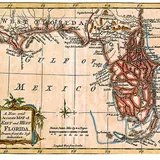
Both the Spanish Hibernian Brigade and the French Irish Brigade would rack up an illustrious war record across the 18th century. Spanish Hibernian soldiers were deployed everywhere in the Spanish Empire, from Flanders to Florida. Many of these veterans permanently settled in Spanish America, particularly Cuba, Puerto Rico, and Chile. There are a handful of Latin American surnames clearly of Irish origin today, and I assume that most of these surnames in Latin America are probably connected to these settlers in the 18th century. You have Reynaldos, which comes from Reynolds, Soliván from Sullivan, and my favorite, which is Kennedy, spelled Q-U-E-N-E-D-Y.
Jacobites abroad
I mentioned that some of these so-called wild geese troops were Scottish as well as Irish, and it's important to note that there was a lot of crossover between this movement and Jacobitism. This was the long-standing attempt to restore the Catholic Stuart dynasty, descendants of the deposed King James, to the throne of England. And again, not unlike Catholic support in the 1500s, a lot of very elite aristocratic families supported this idea. It led to constant and renewed paranoia against Catholics that became sharper in 1715 and again in 1745, when serious rebellions almost restored the Stuarts and therefore Catholicism to England. After 1745, the British realized that the tradition of allowing Irish and Scottish dissidents to gain military experience abroad might be leading to some unintended blowback. So they suddenly made it illegal for Irish and Scots to serve in foreign militaries. But this was a genie that couldn't be put back in the bottle.
By 1745, there were intergenerational families who had served in Spain and Latin America since the early 1600s. It was a very long-standing tradition for elite Irish and Scottish families. They would continue to serve in foreign militaries in defiance of the law.
The Bourbon colonies
And it's important to note that this was also in the 18th century just as the Bourbon dynasty of Spain began to tighten its grip on its Latin American colonies and had a sudden new demand for troops and settlers. Because as more Europeans settled in Mexico, South America, and the Caribbean, alongside greater numbers of enslaved Africans, the Spanish-American project began to shift. In the Habsburg era in the 1600s, when figures like Lamport were around, it looks more like an extraction colony like you'd see in 19th century India or Africa. There weren't that many Europeans around, and it was really all about extracting labor from these oppressed subjects, and of course their natural resources. But then by the 18th century, the demographic balance had changed. You begin to see more people who consider themselves at least culturally Spanish than you do Native Americans. It becomes something much more similar to settler colonialism in the US sense.
And in many of these places, you begin to see a violent displacement of Native Americans that you didn't really see before. The Spanish conquest of northern Mexico, for instance, or then of California in the 18th century, was exceptionally violent in ways not seen since really the initial conquest of Mexico in the 16th century. Due to this shift, there was a new demand for European settlers and European soldiers, leading to the Irish to be in very high demand. And due to the persistence of the racial caste system, which Lamport had hoped to eventually overthrow, these Irishmen were privileged above people of mixed race or native origins, which were the great majority of the population in most Latin American countries. This all means that the Irish were very, very prominent in Latin American society, both in the Spanish military and as merchants in Latin America. There was a disproportionate representation of people with Irish surnames in all levels of the Latin American elite, from Mexico, Florida, and Louisiana in the north down to Chile and Argentina in the south.
Alejandro O'Reilly and Oliver Pollock
Way back in June, in our episode on American River Pirates, we mentioned a couple of these interesting Irish-Spanish subjects. Alejandro O'Reilly was an Irish-born soldier who spent most of his life in Cuba and Puerto Rico. He married into a Havana elite family and oversaw the construction and reconstruction of a lot of pretty important forts across the Caribbean, including Havana's La Cabaña and the famous Castillo de San Juan in Puerto Rico. He went on to become the governor of Spanish Louisiana, where he gained the nickname Bloody O'Reilly for violently putting down a major rebellion by local Creole or Cajun settlers. And he then went on, interestingly, to serve in North Africa in Spanish campaigns over there. Really kind of shows how, you know, globalized the Spanish colonial adventure was and how, you know, an effective colonial administrator could see much of the known world even before the age of steam. It's pretty remarkable.
Another of these guys was named Oliver Pollock, who was an early Irish American with ties to Cuba, Boston, New York, really one of those classic merchants who was just everywhere all the time. He helped secure Spanish support for the American Revolution and is also credited somewhat dubiously with inventing the dollar sign because his financial reports to the Continental Congress used an S with a line through it to represent the Spanish dollar. I guess it's an S for Spain, which, as the story goes, was then adopted for the American dollar as well.
The Latin American revolutions
But Irish Catholics would see much more illustrious service in other American revolutions, not the U.S. Revolution. The Irish Catholic population in the 13 colonies was pretty low. But in the early 19th century, you begin to see men of Irish descent fight on both sides of the Latin American revolutions in Colombia, Chile, Argentina, and Mexico. Some of these figures, like Bernardo O'Higgins, were entirely Hispanic in culture, but had a parent or grandparent who had joined the Spanish as one of the wild geese and settles in Latin America. But they were also joined by fresh off-the-boat Irishmen, people who had very little in common with local Latin Americans besides Catholicism. Interestingly, a lot of these Irish Catholics were actually sent to Ireland by the Brits. England was eager to disrupt Spanish control over the Americas, so they provided guns, money, and men to most of these revolutionary eruptions.
While some of the troops were English, a disproportionate amount of the men sent to Latin America were Irish and Scottish. And the most notorious of all these guys has to be Gregor MacGregor, the famous Scottish-Venezuelan commander turned con man who invented a fictional country in Central America. But I think that's going to have to be a story for another episode, because it's such a big one and very fun.
The Cisplatine War mutiny
To return to the Irish, though, Irish troops were sporadically recruited for conflicts across South America, even into the post-independence period. Most notably, in 1828, in the Cisplatine War, thousands of mercenaries from both Ireland and Germany mutinied against the Brazilian generals who hired them. And although the Brazilians were able to put down this revolt, it was so big and destructive to the city of Rio de Janeiro that they realized they had lost so much blood and treasure they had to abandon their ongoing war with Argentina. So maybe, you know, bringing on thousands of Irish people wouldn't always be a great idea.
The San Patricio Battalion
But the most famous instance of Irishmen fighting under Latin American flag has to be the story of the San Patricio Batallón, when over 100 Irish recruits in the U.S. Army deserted during the Mexican-American War. Rather than return to their homes in the Northeast, these men stayed in Mexico and joined the other side. This would be the only time American defectors formed their own units in an enemy army outside the Civil War.
The Mexican-American War
Starting in 1846 on most likely false pretenses, the Mexican-American War is the kind of adventure that would seem farcical if it didn't have such dire consequences on the ensuing history of Mexico. The U.S. Army at this time had seen no combat with a uniformed enemy since the War of 1812, and its leaders, including future Presidents Franklin Pierce and Zachary Taylor, had little experience with combat, and even less with logistics. Before the shooting had even started, American troops found themselves in the Texas desert, low on water and supplies, riddled with disease, and plagued by insects and scorpions at night. Despite all of this, the Americans had the great luck that the Mexican military at this time was in even worse shape, and the government was essentially in disarray, dealing with recent internal rebellions, widespread corruption, and just general instability. This meant that the U.S. clearly had the upper hand, but every step of the way would be miserable for the enlisted men.
Famine and nativism
This war was also fought at the exact same time that the infamous potato famine was starving out the people of Ireland. Out of a population of around 8 million, 1 million starved to death and over a million more would emigrate, mostly to the United States. Ireland actually wouldn't rebound to its pre-famine population until relatively recently. Although only small numbers of these immigrants would settle outright in Latin America, we begin to see another movement of Irish people into Mexico, not as immigrants, but as soldiers in the army of Zachary Taylor. In the 1840s, anti-Irish and anti-Catholic animus was probably at its highest point in American history. The infamous Know-Nothing Party emerged in American cities to keep growing numbers of immigrants away from the halls of power, spreading propaganda about the inferiority of lazy Catholic alcoholics versus the virtuous and sober Protestants. Many native-born Americans were convinced that these immigrants sought to turn the U.S.
into a Catholic theocracy, possibly using the shadowy Jesuit order to achieve their aims. And this is a belief that would actually persist in paranoid circles basically until the Kennedy administration. More than anything, Catholics were accused of disloyalty, of adhering to the word of the Pope more than to the rule of Uncle Sam. For this reason, when many desperate young Irishmen joined the American army, they were treated with unique scrutiny and cruelty by their officers, many of whom were in fact southerners of Scots-Irish Protestant descent, whose ancestors had a long history of treating Irish Catholics as their inferiors. Widespread mistreatment of Irish recruits, paired with the miserable conditions faced by all soldiers in the Mexican-American War, meant that Irish disloyalty would become a self-fulfilling prophecy.
Ampudia's appeal
And when U.S. troops reached the Rio Grande, which of course is the modern U.S.-Mexico border, the Mexican general Pedro de Ampudia discovered that many of his enemies were not in fact Americans at all. These men had probably now spent more time on the Mexican border than in the United States, as they were very recent immigrants from Ireland. Ampudia could guess the ways they'd been mistreated by their entirely Protestant officer class, so he began distributing leaflets appealing to their shared Catholicism and encouraging these men and encouraging these men to defect. I think this is pretty interesting because I've seen scans of similar pamphlets from much later wars. I know that the North Korean and North Vietnamese troops specifically targeted African Americans in the 20th century by contrasting American racism with the colorblind, universal ethos of communism. So I think it's really interesting that we're seeing something not too dissimilar a full century prior, because Ampudia argued that the American invasion was not just an attempt to subjugate Mexico, but an attempt to destroy the entire Catholic faith.
His pamphlet called this war defiance of God and man and encouraged the Irish, in the name of justice, honor, and your own interests and self-respect, abandon this desperate and unholy cause and become peaceful Mexican citizens. To sweeten the deal, he even offered the Irish defectors 300 acres of land, which had probably recently been seized from rebellious Maya indigenous people who were waging their own insurgency against the Mexican state at this same time. Like I said, it was a very unstable period for Mexico.
Defection at Matamoros
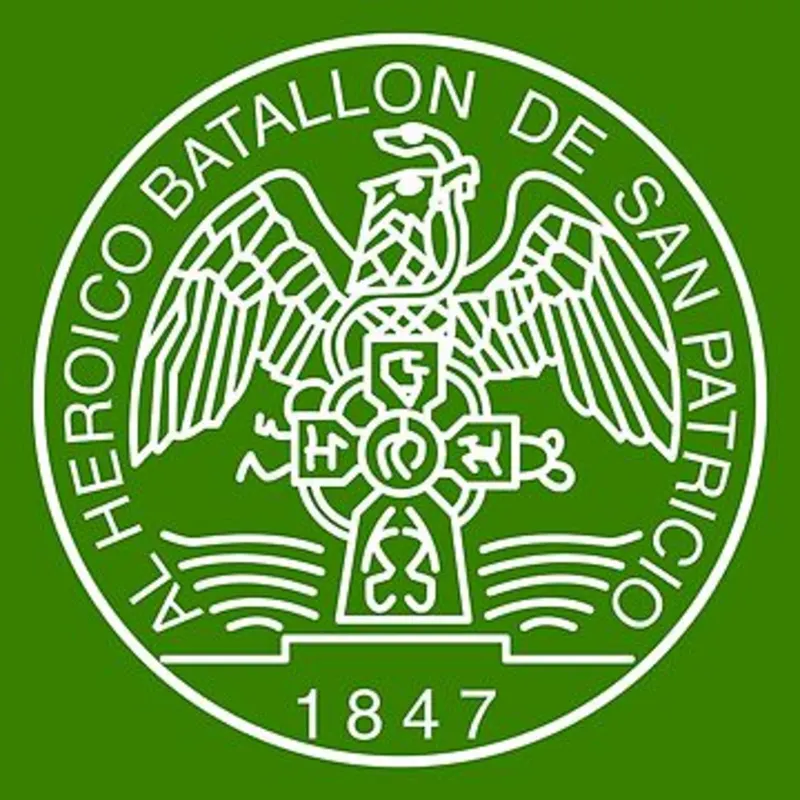
So in April of 1846, before combat had actually even begun between U.S. and Mexican troops, a man known alternatively as John Riley or Thomas Riley convinced his officers to allow the Catholic troops to attend Mass at a nearby Mexican church. Once the Catholic Irish had gathered at this church, they then crossed into the nearby Mexican city of Matamoros, where they were received by General Ampudia himself. At least 120 Irishmen were formally integrated into the Mexican army as El Batallón de San Patricio, St. Patrick's Battalion. And by the time the war had formally begun two weeks later, these men had been outfitted with their own green banner emblazoned with a harp, a symbol of the Ireland since the Middle Ages. It seems that these Irish troops were actually quite effective, and didn't need to be asked twice to fire upon their former commanding officers.
Los Colorados
At the Battle of Buena Vista, the Mexican side was defeated. However, Irish troops in the fight took advantage of the chaos of battle to steal well-needed cannons from the American side, making it ultimately a strategic victory for Mexico. The Irish troops were given the affectionate nickname Los Colorados, you know, the Red Ones, which makes sense if you've ever seen an Irish person who spent too long in the sun. Stories of their bravery and the enticements of land spread back across American lines, causing more and more U.S. troops to defect. Some of these weren't even Irish, actually. There are reports of African-American soldiers joining the battalion, likely slaves brought by southern troops to the front with them, as well as a handful of German and Swiss immigrants, both Catholic and Protestant.
Churubusco
The San Patricio's most famous day would come at the Battle of Churubusco, when a greatly outnumbered Mexican regiment, including the Irish Battalion, attempted to defend the road to Mexico City. According to Mexican officers, it was the Irish Colorados who were the most resistant to surrender, even after it was clear that the battle was lost. Eventually, as the bullets ran out and hundreds of men lay dead on either side, the Mexican forces could fight no longer. When an American officer told the defeated General Anaya to hand over any remaining ammunition, Anaya told him, If we had any ammunition, you wouldn't be here.
The hangings
The Americans arrested Irish defectors with relish, intending to stage a mass lynching before General Winfield Scott intervened to insist upon a formal court-martial. But the end results would be the same. Of the 65 men who had been captured, only a handful were pardoned, with 50 sentenced to death. On September 13th, the same day that American troops entered Mexico City. These men were hanged in the suburb of San Ángel. Interestingly, this was the same day that a group of teenage military cadets became immortalized as the Niños Héroes for dying while defending the Mexican flag atop their military academy. Eleven more San Patricio soldiers were allowed to live, but were given 50 lashes, condemned to six months' hard labor, and left with a permanent brand on their face. a burning D for deserter.
What became of John Riley
One of these survivors was the original Colorado, John Riley, who was granted a comfortable pension by the Mexican government, but then disappears from history. For a long time, historians believed that the Irishman Juan Rele, recorded as dying in Veracruz in 1850, was the same person. But this man seems to be too old to be our John Riley and was buried in a pauper's grave despite John Riley's payment pretty soon before. So it's more likely that John Riley returned to his native Ireland, where that D on his cheek might have been a mark of defiance and not desertion. It's also fun to imagine that he might have stayed in his adopted country, but preferred to avoid the spotlight and was never heard from again, at least by reporters. Regardless of how or when John Riley died, the Batallón de San Patricio would be remembered by Mexican people for over a century, alongside the Niños Héroes and other legendary defenders of the Patria.
Survivors were seen as heroes by the Mexican people, and some of them actually obtained those land grants promised to them in the Yucatan. Others settled in the city of Guadalajara as gunsmiths and military advisors. And it seems that in the year immediately following the Mexican-American War, Irishmen were seen incredibly favorably by the Mexicans, whereas Americans were seen understandably poorly. One American traveler told others that you should pass yourself off as an Irishman if you ever have to do business in Mexico, otherwise it might not end well for you. But back across the border, the treatment of the Irish was quite different. Not only would nativist biases persist against the Irish for decades, but widespread fears of further Irish desertion in future conflicts meant that the U.S. military actually refused to acknowledge the history of the San Patricio Batallón and the execution of the men involved for decades.
And in fact, it wouldn't be until 1915 that the American military formally acknowledged these court-martials, and only as a result of a congressional inquiry.
Assimilation and another path
So in the United States, the story of the Irish after the Mexican-American War is, as all of our listeners probably know, largely a story of assimilation. Although this was a slow and unsteady process, the Irish began to become part of the Anglo-American white power structure in America. And for this reason, as discrimination against the Irish waned, Irish Americans eagerly climbed up the ethnic ladder, now taking part in the ugly bigotry that they were once on the receiving end of. I think that the San Patricios and all of these Irish Latin Americans before them remind us that another path was possible, not just geographically, but also socially and even perhaps morally. Because for many hopeful observers in Europe, the true beacons of progress which emerged in the revolutionary age were not the 13 United States, but instead the many Latin American republics, where the commitment to liberal values and the equality of man really was in many ways taken more seriously.
Many Latin American countries abolished slavery before the United States did, and the two major countries that did not, Brazil and Cuba, remained monarchies up until the late 19th century.
St. Patrick's Day
By the time you're hearing this episode, St. Patrick's Day will have passed. But I hope that as you finish off your shamrock cookies and limited edition green beers, you can think about the other Irish American diaspora. The people who chose justice rather than aggression, or for some, Catholicism over any other loyalty. I think that these men were not perfect, they weren't necessarily heroes, but they remind us that history could have very easily gone a different way. The path of assimilation and all the good and bad that came with it wasn't inevitable, even if that is what happened for most Irish immigrants to the Americas. I think that the story of the St. Patrick's Battalion isn't very popular north of the Rio Grande for obvious reasons, but it's really important to keep in mind. And I just think it's one of my favorite stories in part of a long history of Irish people sympathizing with colonized subjects elsewhere.
And it kind of reminds us that in spite of great differences in culture and geography, solidarity can always be possible. All right. Thank you guys for joining me for this one. Hope you enjoyed. And happy St. Patrick's.
The show is also on Apple Podcasts, Overcast, Pocket Casts, Podcast Addict, YouTube, RSS and Patreon.