American troops descend into a humid jungle, sniped at from the trees from an invisible enemy. Unable to discern insurgents from civilians, the army begins burning villages and destroying entire communities. After years of failures on the battlefield, and extreme criticism of the war at home and abroad, American troops withdraw battered and beaten, leaving piles of native corpses in their wake. Sound familiar? This is the Second Seminole War, one of the largest conflicts fought on American soil and the bloodiest war waged against Native Americans.
This episode of Gladio Free Europe continues our discussion on the conquest and settlement of the Sunshine State, with a focus on the violent but ultimately unsuccessful subjugation of the Seminole Nation. Though little-discussed in modern times, this brutal and genocidal struggle made Florida what it is today. The violent removal of thousands of Seminoles from Florida to Oklahoma would open up the peninsula to white settlement and the expansion of plantation slavery. By the outbreak of the Civil War, Florida would be an essential piece of the Southern economy. The circumstances of Seminole defeat, including the betrayal of Chief Osceola, would be a black stain the reputation of American military, President Andrew Jackson, and the United States at large. And while most Seminoles were deported, Seminole resistance would continue for the next century. Some reseilient Seminoles, led by people such as Billy Bowlegs, would stand their ground in the South Florida swamps until the present day. In Oklahoma, Seminoles like the black warrior John Horse would continue their struggle against colonization and and empire.
Parallel to conflicts with the Seminoles, Florida history would be shaped by many enterprising eccentrics who sought to tame this wild country as they saw fit. Liam, Russian Sam, and Jackson discuss the careers of figures like Jean Lafitte, the New Orleans pirate who had a brief thassalocracy across the Gulf of Mexico, and Zepheniah Kingsley, a bizarre and contradictory Quaker planter who proclaimed the evils of racism while holding dozens of black slaves in bondage, and apparently styled himself not as a white planter but instead as a polygamist African chief. Listen to this latest episode of Gladio Free Europe to understand just why Florida is America's strangest state.
Please forgive the audio glitches in this episode! Ending track is "Seminole," recorded by the Esso Steel Band of Bermuda in 1959.
Transcript
Back to Florida with Jackson
Welcome back to Gladio Free Europe. I am Liam, joined here by Russian Sam and our special correspondent, Jackson from Jacksonville. You know him as Grace Cathedral Park. How are you doing?
I'm doing well. Excited to go back to Florida and sort of talk about the next sort of chapter in this whole story.
Yes, we are continuing our series on the Sunshine State. This is going to be another long one covering a huge amount of space and a huge amount of time. So I think let's just jump in with a quick discussion of one of my favorite figures from Florida history, that being John Horse.
John Horse, Black Seminole
In August 1882, an old soldier was dying at the Veterans Hospital of Mexico City. Like most other patients in his ward, this man had defended the Mexican Republic from successive waves of invaders and harassers. He'd survived incursions by the insatiable gringos of the U.S. military, the swaggering Hussars of the Habsburg Emperor Maximilian, and even the terrifying night raiders of the Comanche. But unlike his compatriots, this man had not been born a Mexican citizen. He was not even born in Europe, like nearly all immigrants to Mexico at this time. Instead, this man was a black Seminole, born to an enslaved African-American mother and a half-Spanish, half-Indigenous father. In his youth, he was one of the fiercest enemies of the United States government, perhaps the most powerful black person in the Western Hemisphere. This man was Seminole Chief Juan Caballo, better known in English sources as John Horse.
John Horse was one of the Seminoles who refused to endure a life of submission in the barren and crowded lands of the Oklahoma Indian Territory, where he had been forcibly marched like so many other Native Americans on the orders of President Andrew Jackson. As a child, John Horse first encountered U.S. troops during the First Seminole War, which was the illegal incursion by Andrew Jackson, which won the Spanish territory of Florida for the proud and energetic New American Republic. After three centuries of failed attempts under the Spanish and British, settler society was finally taking root down the peninsula. John Horse would have been too young to remember the period before U.S. troops occupied Florida lands, and he grew up under the shadow of the military stockades. He first enters the historical record as a young child who, like many local Indians, caught and sold animals from the swamp to feed U.S. troops.
But after he was caught stealing a gopher tortoise that he'd already sold so he could sell it again and get paid twice, this wily teenager was nicknamed Gopher John by soldiers, a name which he'd be referred to throughout his life. Then during the Second Seminole War, a far larger conflict we will soon describe at length, John Horse made a name for himself as a promising young warchief. He took up arms against the same soldiers he'd been raised around to defend his homeland and his freedom as a black man living among the Seminoles. After years of guerrilla struggle in the Florida wetlands and pine forests, John Horse turned himself in to the U.S. Army, offering his services as a scout against the Seminole if it meant preserving his life and his freedom. Despite this military service, John Horse and his family were deported to distant Oklahoma, forced to live with the slave-owning Muscogee Creek Nation, whose leadership despised the Seminole and Black Seminoles in particular.
When some Creeks and even some Seminoles tried to enslave John Horse and other Black Seminoles, he emerged as a warchief once more, defending his people in the battlefields of Oklahoma and in the courts of Washington, D.C. He worked with other Seminoles to argue they were a legally distinct people from the Creeks from which they emerged, although he was unable to convince the American government that black Seminoles were either truly Seminole or truly free. In the 1840s, Attorney General John Mason decreed that black Seminoles were legally the property of the non-black Seminole majority, including men like John Horse, who had been born free. Facing enslavement, John Horse decided no government within the United States could be trusted. He and some of his old allies from the Seminole Wars led hundreds of their kinsmen on an 800-mile exodus through Oklahoma and Texas. After surviving a battle with the feared Comanches and barely escaping arrest by Texas Rangers, John Horse and his Black Seminoles entered Mexican territory.
He hammered out a quick bargain with the Mexican government, pledging to defend the Republic from American filibusters and Comanche raiders alike in exchange for a land grant along the newly formed Texan border. The Black Seminoles of northern Mexico came to be known as the Mascogos and first gained attention in the Mexican press for defending Mexico against a failed internal coup attempt. Later on, a Mexican colonel named Emilio Langberg, himself a Danish immigrant, remarked that these Mascogos were some of the fiercest defenders of the Mexican nation. Decades later, when some Mexican landowners attempted to force the Mascogos off their territory, the aging John Horse traveled to Mexico City to plead his case for his people, just as he had done in the American capital of Washington, D.C., four decades prior. Although he caught pneumonia while in the city and would later die in that veteran's hospital, John Horse and his companions were successful in defending their land claim to the Mexican dictator, Porfirio Díaz.
Hundreds of black Seminole descendants still live in the northern Mexico states to this day and were formally recognized as an indigenous people in 2017. John Horse died in Mexico, fought his way across Texas, and had been forcibly removed to Oklahoma. But he was always a man of Florida. As a free black Native American who spoke both English and Spanish and was raised Catholic, a guy like John Horse could not have existed in any other place in time. His life and his career would be defined by the political developments in Florida, from the initial incursion of Andrew Jackson to the carnage of the Second Seminole War, up through his forced deportation in the Trail of Tears. I don't think any Seminole individual represents the defiant spirit of this nation better than John Horse. And I can't think of anybody who is a better symbol for 19th century Florida.
In our last episode, we ran across 300 years of colonial Florida history, during which time the Seminole and Creek nations, both Muskogee peoples from the Appalachian Mountains, came down to the Gulf of Mexico, which had long been claimed by Spain.
The Panzacola and Pensacola
One of the first Muskogean tribes to make contact with the Spanish were the Panzacola, first recorded in the 17th century as living on what is today the Florida panhandle. Jackson, you are a North Florida guy. I'm a South Florida guy. What do you know about the early history of the Panzacola people and the history of Pensacola?
The Spanish named the local bay after these people, although the Panzacola themselves would soon disappear, possibly ravaged by European diseases and conflicts with other indigenous groups, but maybe also just assimilated into other tribal configurations. We mentioned last episode that the Creeks, the Seminoles, and the Choctaw were all ethnically heterogeneous confederations. Around the turn of the 18th century, the Spanish established a trading post where the Pensacola had once lived that became the city of Pensacola. We mentioned last episode that Pensacola had been the capital of the former colony of West Florida, a territory that had changed hands between the Spanish, the British, and then the Spanish again at the end of the 18th century, and then became a part of the United States in the early 19th century. Pensacola today is not exactly a thriving metropolis, but in the 18th and 19th centuries, it was probably the most significant area of settlement in Florida.
It was very defensible. It was built on a bluff made of clay, perfect for building a sturdy brick fort, and nestled within a comfortably navigable bay, far superior to rival ports like Mobile, Biloxi, and even Tampa.
Yeah, and Jackson, you're the one who first turned me on to how important Pensacola used to be. I think it's kind of like St. Louis or Cairo, Illinois, in that it was a lot bigger of a deal in the 19th century than it is today. St. Louis at least still has the arch, but I figure Pensacola is kind of a harder sell to convince people it ever mattered. Anything you want to add about this?
Yeah, it's kind of interesting because it is sort of like a place like Cairo, Illinois, maybe a little less sort of dire than a place than Cairo, but it is certainly not at all what it was back in the 19th and 18th centuries. But one has to remember that its position was so strategically important because it was at the mouth of a number of different bays that led into rivers that themselves led into and up into dense Native American population, right? So the Spanish and then ultimately the British fostered the city as essentially a perfect trading port for them to project power into the Gulf and to project power up into sort of mainland North America to trade with Native Americans for things like pelts and what were called at the time Indian goods.
Scottish traders and the Indian trade
And also, as we'll see later in the episode, Florida's economy in the 19th century was mostly an agricultural export economy. I mean, it was a slave state. And Pensacola's proximity to most of Floridian agricultural activity made it, at the time, one of the largest ports on the Gulf Coast.
And I think you mentioned in the early years of Florida, in the early American period, and especially in the British and Spanish period, the main economic activity was nothing extractive. It was simply really trading with Native peoples because it wasn't really a settlement colony. It was this, you know, frontier zone where there was very little permanent white settlement. So yeah, most of the money being made was through consensual trade with Native Americans. And we mentioned last episode that most of the white traders, for whatever reason, were Scottish. And so a lot of Scottish names are going to recur in this episode moving forward. These traders made very close relationships with the Creek and the Seminole communities, often marrying into them, trading European goods in exchange for animal skins. This is pretty similar to what we see in like 18th century Quebec around this time, you know.
These guys buy skins which they would then send to the emerging fashion houses of London and Paris to work be worked into early haute couture. I think it's a little bit amusing that these American fur traders would be selling these skins to European merchants in order to buy back coats and tricorn hats made out of these same skins. Like you guys might know that meme about peaches being grown in Argentina, packaged in Thailand, and then sold in the U.S. These kinds of circuitous markets go back pretty far to the like earliest days of capitalism. So according to the historian Peter Brannon, one of these Scottish traders, Lachlan McGillivray, operated North America's largest trading house out of Pensacola. He was married to a chiefly Muscogee woman, and his son was the ambitious Creek chief and southern slave owner, Alexander McGillivray. Men like McGillivray and his sons expanded American plantation agriculture into Florida before it was even part of the United States.
As part of a deliberate policy by both British and American governments, Muscogee Native Americans were instructed in plantation agriculture, which relied upon the brutal exploitation of African slaves.
Slavery comes to Florida
Slavery had been ubiquitous in Florida since the Spanish period, but really exploded after the conquest of Andrew Jackson, himself a southern planter. People from Florida and the Carolinas, both white and black, began pouring into North Florida. Southern whites quickly established a society based on the same values and cash crops as the mainland American South. By the time of the Adams–Onís Treaty, which annexed Florida to the United States, a majority of Floridians were black. The overwhelming number of these people were slaves. However, Florida still had a significant lingering population of free black people, including black Seminoles like John Horse. But across the 19th century and even into the 20th century, the relative racial openness of Spanish colonial Florida would give way to the bichromatic rigidity of Southern American racial dogma. Free black Floridians, some of whom were planters and even slave owners, now found themselves to become increasingly marginalized and legally out of place.
Although these days Florida is seen as only a dubiously southern state, in the 19th century, it was not really distinguishable from Alabama or Georgia. Although it was not the only industry, slave-based agriculture dominated the state and its politics. Cotton in particular was grown heavily around the panhandle. At the onset of the Civil War, slaves around Tallahassee outnumbered free people three to one. In eastern Florida, planters preferred sugar over cotton, often working their slaves in even more brutal conditions than in the cotton fields. Many of the enslaved African Americans in Northeast Florida, around Jacksonville, were actually from the famous Gullah country of coastal Georgia and the South Carolina Lowcountry. So, you know, the traditional range of the Gullah dialect extends even into Northeast Florida.
Zephaniah Kingsley
Probably the most noteworthy slave enterprise in this region was that operated by Zephaniah Kingsley, really one of the kind of weirdest Florida figures in this period. Jackson, do you know much about this guy?
I had not heard of him before doing research for this show, although I believe there are a couple of place names around Jacksonville named after him. It was sort of an interesting sort of look into why there's this guy's name everywhere. Yeah, at least in a couple places.
I think our listeners are going to find a lot of resonances with previous episodes here, like our New Smyrna episode and our kind of failed Utopias episode, we do it with you. Because Zephaniah Kingsley, he was a character. And so, like many other Anglo-settlers of Florida, he was number one from South Carolina, number two, of Scottish descent. And he arrived in East Florida when it was still a Spanish colony. He came from a British loyalist family. What was not typical about his background, however, was that he was a Quaker. And even more unusual, he was a Quaker slave owner and slave trader, as Quakers were typically opposed to slavery. This guy, Zephaniah Kingsley, was thus a really paradoxical character whose religious views and egalitarian values made him, at least on paper, one of the strongest opponents of racism in the 18th century world. Yet, despite publishing pamphlets in which he vociferously opposed the white supremacy of the time, he never ended his career as a slave trader or a slave master.
Perhaps outdoing even Thomas Jefferson in hypocrisy, Kingsley published treatises on the equality of the human races and even the moral superiority of black people over white people while engaging in a forced marriage with a 13-year-old slave girl named Anna. Unlike Jefferson, Kingsley did not attempt to hide his interracial liaisons. He flaunted American law and Christian custom by openly living as a polygamist. Kingsley named at least four women as his wives, marrying them both in European and African traditional ceremonies. While all of his wives would ultimately be freed before his death, none of them had any way whatsoever to say no to this marriage arrangement. Despite the violence and unequal circumstances by which his children were conceived and born, he does seem to have been a pretty good dad, at least by the standards of slave owners in this time, and he provided his mixed-race children with the same education that would be given to white planter heirs.
His primary plantation, known as Laurel Grove, was a bizarre intentional community based around a supposedly benevolent form of slavery. We can maybe compare this to Fanny Wright's commune of Nashoba that we talked about in episode 108. Just like Nashoba, Laurel Grove had the twisted agenda of seeking to civilize pagan Africans by educating them in European customs and technologies within the context of violent slavery. Kingsley trained his slaves to be skilled laborers like blacksmiths or carpenters, which he claimed would be to their benefit, but often led to them being sold to other planters instead. He gave unprecedented personal freedom to his slaves, allowing them to continue to practice traditional African religions, but still forced them to perform back-breaking labor in the Florida heat. He also appointed many of his own slaves to administrative roles, usually only held by whites. And when he was away, often on slave trading voyages to Africa, his enslaved teenage wife Anna would run the plantation on his behalf.
It should be mentioned that many of Kingsley's activities, including his family life, would have been completely illegal anywhere else in the American South. Intermarriage to one black woman, let alone four, was seen as a threat to white supremacy and a plantation economy. But Kingsley, who had spent time in Haiti during the Haitian Revolution, believed that this relative benevolence was actually the way to preserve slave power. He was not in any sense opposed to slavery, despite insisting that black people and white people were equal. He explicitly argued that white people had a paternalistic relationship to black people, which could be facilitated by slavery, and therefore this evil institution could be made just. Again, this makes him a completely bizarre and contradictory figure. It's hard to believe that Zephaniah Kingsley ever actually existed.
I also kind of think that he's really the only true believer in the paternalistic model of slavery. Like, you know, every other slave owner, they just said all that stuff to justify one of the most economic, brutal, and horrific economic systems in modern history. This guy actually thought that those arguments held water. And I find this all very, very interesting. And he's sort of representative, I think, of like the sort of weirdness and not exactly fitting in with the rest of the deep south-ness of Florida in like the early 19th century.
Yeah, and in many ways, also kind of the fact that Florida was a blank slate for white settlers. They could create new forms of society there. Like, you know, we talked about New Smyrna previously. That was this intentional community of Mediterranean immigrants. This was another very strange intentional community. It's certainly not utopian in any sense, but it's this weird, very distinctly American kind of experiment that I'm sure was absolutely horrific to everybody involved, but is somewhat illuminating about Florida in this period.
Yeah, but I mean, maybe pushing back on the idea that this is somehow unique to Florida, like the vice president of Van Buren, Richard Johnson, he was also like notorious in his day because his enslaved common-law wife was like his slave and he had like a ton of children with her, and he also left her in charge of the plantation when he was away. So, this was a thing that was done sometimes, I guess, even outside of Florida.
No, I think the most cynical and probably and really the most clear-eyed view of this picture is that in a world in which white male slave owners had basically unlimited control, they had the authority to flaunt these kinds of restrictions when they so chose.
From Cowford to Jacksonville
On the Atlantic coast, meanwhile, Jacksonville also developed a thriving fishing industry, along with New Smyrna a little bit down the coast. Real Gladioheads, of course, will remember when we did an episode about this several years ago at this point. Now, Jacksonville was especially important because of its location at the mouth of the very fishy St. Johns River. That can be taken halfway down the peninsula to Sanford, Florida, right around Orlando. Now, Jackson, we've mentioned Jacksonville a couple of times before in the previous episode, and you're certainly more familiar with that town than either of us. Is there anything you could say about its early history and foundation?
Nowadays, as a native, it does pain me to say, but nowadays I would say that Jacksonville is kind of a punchline because it's a city of a million people that has essentially no cultural footprint. Like, I'll admit, it really doesn't have a cultural footprint. But the city was basically the only settlement east of Tallahassee of any significant size before the 20th century. And it was also basically the route through which all commerce in eastern Florida flowed. So, before Jacksonville's foundation, it had previously been known as Cowford. That was something I heard growing up a lot, was that Jacksonville used to be called Cowford. And that's just that, that's Cow Ford, you know, where, you know, Cow Ford.
Yeah, and we showed we talked last episode, you know, but like cattle were the basis of the Seminole economy. Florida has been a big cow state for basically its entire history.
Exactly. And so Jacksonville, the present Jacksonville, was essentially this part of the St. Johns that was easy to ford cattle to sell into certain northern Georgian markets, right? So Cowford wasn't exactly a settlement, it was just a geographic location. Present-day Jacksonville was sparsely settled even during Spanish and British times. Refugees from conflicts between the British and the Spanish, and eventually the Americans and the Spanish, often established temporary lodgings on the banks of the St. Johns. So there's archaeological sites that happen in and around Jacksonville occasionally. They often recover evidence of refugee settlement. The site had been the site of a Spanish fort, but it was also the sort of location of something that we mentioned last episode when men from Georgia invaded Spanish Florida, proclaimed their allegiance to revolutionary France, and attempted to overthrow the Spanish government there. However, that didn't really work. That fort sort of passed back into Spanish hands, and settlement was still sparse until the early 19th century.
When in 1820, a sort of hilarious figure, like a cracker squatter and cattle rustler named Isaiah David Hart, traded cattle that he had stolen from the Spanish for land along the St. Johns River. Hart was one of the patriots that we talked about last episode, Anglo-American men from Georgia and the Carolinas that had crossed the porous American border and lived rough lives of cattle driving and marginal plantation agriculture that rebelled against the Spanish in the early 1810s. This involved, for Hart and others like him, basically just doing banditry and cattle raids against the Spanish. Not unlike what you'd see on the borderland regions of Scotland before the union of Scotland and England.
No, it's very Seminole, too. This is a lot. This is like the cattle raids of the Seminoles looked very similar to what was going on in Ulster.
Exactly.
You know, the Táin Bó Cúailnge.
Yeah, a lot of these people, obviously, or not, obviously, but a lot of these people were Scots-Irish as well.
Yeah, I know that. Some of that coming.
So, with the land that he bought with those sort of rustled cattle, he built a boarding house and store at the mouth of the St. Johns. Those key buildings, as well as the settlement strategic and economic location, led to Jacksonville growing rapidly during the first half of the 19th century. Stories like this, where longtime residents living hard-scrabble existences on the margins of civilization turned themselves into country gentlemen that founded towns and cities repeated themselves sort of dozens of times at smaller scale throughout early 19th century Florida, when the wave of Anglo-American settlement and American independence had started spilled over into Spanish and then eventually American Florida. That's sort of the story of Jacksonville's founding, right? And I think that it bears sort of repeating here, just bears saying that this is sort of a story that happens all throughout Florida, right? Like these guys, they're essentially taking flyers on Florida's prospects long term.
And some of them hit it big, and they managed to found communities that still exist to this day. This isn't really a unique story, but I think that Florida, because of its sort of unique mixture of people and populations and histories, and all these different empires that controlled the place, Florida is, I think, has some of the most unique and most interesting stories of this type of any of the like settler areas of American, of modern-day America, right?
Moses Levy and a Florida Zion
And I would like to mention at this point the story of Moses Levy and David Levy Yulee, because it sort of ties in not only the story of Anglo-American expansion, but also because it dovetails with our episode on utopias in America. Moses Levy was a Sephardic Jewish trader and merchant originally born in Morocco, whose family had become courtiers to the Moroccan Sultan Muhammad III and been bestowed the title of Yulee. He made his fortune in the West Indies selling lumber in British Florida and set roots in St. Augustine as well as in the Danish Indies. Upon an apparently tumultuous divorce from his wife, Levy devoted his life to that most American of places, utopia. He became a reformer, arguing for public education, the gradual emancipation of slaves, though he himself was a prodigious slave owner, and interestingly, became an advocate for what is basically like proto-Zionism.
He purchased a vast tract of land near what is now Lake City in 1820 at the same time as Isaiah Hart, and he planned to turn it into a new Jerusalem, a plantation settled by Jewish immigrants from Europe that would serve as a new homeland for the Jewish people.
And again, very similar to New Smyrna here, which was meant to be this refuge for Greek refugees from the Ottoman Empire, right down the road.
Yeah, and about 150 years too early.
Yes, yes. And so Levy actually attempted to find Jewish settlers for this new Jerusalem in Florida. He mostly did it in England, where he, interestingly enough, actually rubbed some of the same shoulders as Robert Owen, as we talked about in our American Utopias episode, in similar reform circles in London and in Manchester and places like that. As Sam said, Jewish opinion is still a couple decades away from even remotely being in favor of something like Zionism. So Levy's land did not exactly, it wasn't exactly successful in its attempt to settle Jewish refugees there. And the area basically just became another plantation for slave labor and settlement for cracker Anglos to trade at. However, Levy's son, David, became a prominent lawyer and landowner himself, and he actually became the first Jewish member of the U.S. House of Representatives, and I believe the first Jewish senator as well, representing, of course, Florida.
He converted to Christianity, but he decided to adopt his family's old honorific of Yulee as his surname. The city of Yulee, which is on the site of Moses Levy's attempt to create a new Jerusalem, and Levy County, which is a little further south, they both bear their names, right? So this is the story of guys that are trading on the margins, founding these settlements that become eventually cities and towns. That's not a story that's unique in the rest of American history. But because of Florida's sort of unique position, I think that only in somewhere like Florida could you see this son of Moroccan Jewish courtiers becoming this sort of trying to establish the new Zion in Florida and his son becoming one of the most accomplished Jewish statesmen in American history until the 20th century.
Gregor MacGregor and the Amelia Island Affair
And of course, there's one more very eccentric Florida figure around this period who's also connected to the Jacksonville region.
Yes. So at the same time that Isaiah Hart was sort of building Jacksonville, at the same time that Moses Levy was trying to create New Zion in Florida, intriguers other than Andrew Jackson had their eyes on Florida. I would assume that many listeners of the show probably are familiar with Gregor MacGregor. He's probably history's greatest con man, but he was also one of Simón Bolívar's sort of coterie of allies who helped him to liberate South America from the Spanish. He was one of Bolívar's generals. He's probably most famous or infamous for his Poyais scheme, where he sold British investors government bonds of a made-up Latin American country called Poyais, and he even managed to trick a number of gullible would-be settlers into sailing for Central America to settle in Poyais. Most of them were.
Original Fire Island.
Yes, he basically did Fyre Festival to these people, and they all died when they got there. The scheme was so brazen and so successful that MacGregor even managed to have the Bank of England invest fairly heavily into the scheme, which led to a minor financial panic in 1825 when the so-called Cazique of Poyais was revealed to be a huckster. So MacGregor was a born scoundrel and confidence man, and he basically attempted to pull Saul Goodman-style schemes for the entirety of his life. He did it well past Poyais's expiration date. But lesser known than his liberating and lesser known than even his scheming is that he was involved in a farcical sort of abortive attempt to wrest Florida away from the Spanish at Amelia Island and what became known as the Amelia Island Affair. So during the wars of Latin American independence, MacGregor sailed for Spanish Florida with a host of men and landed on Amelia Island, where MacGregor claimed that he had been sent by General Bolívar to seize Florida for the revolutionary South American Republic.
He probably was not sent by Bolívar and he was probably just doing another one of his huckstering schemes. He called on all Floridians to rise up to overthrow the Spanish and he fortified his position on Amelia Island, linking up with French privateer and fellow swashbuckling gamesman Louis-Michel Aury. And he basically then after beat a hasty retreat away from Amelia Island and left the garrison in Aury's hands. Amelia Island was basically the perfect locale for these two to meet up. Aury himself was a pirate. He had been a Gulf Coast pirate in the French region and he had sort of been a privateer and a buccaneer in those areas. And obviously MacGregor was this sort of prolific con man. Amelia Island was basically a perfect place for those two to meet up and try to seize Spanish Florida because Amelia Island, because of its secluded nature and because it was essentially a natural harbor, Amelia Island was basically a pirate haven and had been since the sort of Seven Years' War had left Florida in sort of dubious control of first the British, then the Spanish, and then the American.
And this is actually only one of two pirate havens on the Spanish-American frontier if we're going to talk about this episode. Yes. So while Aury's control of Amelia Island was obviously never going to last, it's significant that with MacGregor's friend Bolívar tying up their manpower elsewhere, the Spanish actually weren't the ones who were able to dislodge the intriguers from Amelia Island. And American troops were the ones who actually put an end to the breakaway province of the Bolivarian Republic of New Granada and Venezuela. In many ways, MacGregor's folly on Amelia Island opened the door for Florida's final conquistador, Andrew Jackson, to topple the Spanish and annex the territory to the United States in 1819.
Andrew Jackson's Florida
Right. And this brings us right back to the end of the last episode with the Adams–Onís Treaty attaching Florida all the way down to the bottom of the peninsula to the United States, even though the vast majority of that land was inhabited entirely by the Seminole peoples and scattered pockets of defiant maroons resisting enslavement. So we're just going to jump in right now into our continuing history of the Seminole Wars and the career of Andrew Jackson. But before we really get in, I think we should keep in mind that prior to Andrew Jackson, the cultural landscape of Florida was so completely different from what happened after Jackson, and that the Southeast more broadly had a significant, significant Native American presence. Native Americans living within the Southeast, particularly in Florida, maintained a degree of legitimacy and recognition not only from the U.S. government, but from European governments as well.
Had Jackson not deported the Creek and Seminole peoples, you know, all of the five civilized tribes from the American Southeast, I would argue that culturally, the identity of the American Southeast, particularly Florida, Alabama, and Mississippi, would look a lot more like the American Southwest. There would most likely be a continuing presence of Native American culture and Native American identities. It is only through the policies of Andrew Jackson and the Indian Removal Act of 1830 that this is not the case. Jackson, fittingly enough, you know much more about Andrew Jackson than either of us. Anything you want to share about the guy in general, about the Jacksonian legacy, before we get into Indian removal and the Seminole Wars?
Yeah, so like you said, the Jacksonian sort of model, the Jacksonian method of Indian removal and sort of giving this land to white settlement is basically the reason why we sort of have Florida's relatively diverse, relatively both ethnically, linguistically, racially diverse history that we've talked about in the last episode. His sort of policies are the main reason why that goes away, right? So he not only is Indian removal part of that, but also his sort of heavy-handed ruling of the territory once he takes it over. He's named the first American sort of territorial governor, which he does for a little while and he just kind of gets bored of it and fucks off. But he, his sort of heavy-handed pro-white settlement policies in Florida not only create the like the near political flashpoints for the Second Seminole War, as we're going to talk about in a little bit, but they also create the like economic base, the sort of societal base for that conflict to happen, right?
So he is basically the one who obviously brings Florida into the American Republic.
Yes, he gave us the name Jacksonville.
Exactly, right? And by doing so, he opened the floodgates for Anglo-settlement and expansion of slavery into the territory, right? So the pace of change due to Jackson's seizure of Florida was rapid, right? He was very much into. I was thinking about this recently. He's like a very 20th century character. He's sort of out of place in the 19th century where he was willing to bend basically any rule for like an in-group, and then he was incredibly hard-hearted and did not care about any of the out-groups, right? So he was perfectly willing to bend rules for white settlers in the region, and they flooded into Florida as a result, right? So the main administrative center of Florida changed from St. Augustine and Pensacola into this new settlement of Tallahassee, right? Tallahassee is now a major urban area and is obviously the home of Florida State, but it was basically unsettled in 1819 when the territory acceded into the United States.
It was a rural, sort of uninhabited area, only inhabited very sparsely. The first year of Florida's territorial governance was conducted basically in tents and eventually log cabins as the sort of buildings of state were built in Tallahassee. And as that region grew in political importance, it also grew in economic importance. Middle Florida, the area around Tallahassee, was the most economically and the most, it was the most economically important and the most dense population-wise of the whole state. Those were the settlements that had the southern slave economy that was, it was the most dominant in that region. And like we said, the number of slaves in Florida was skyrocketed after the American accession. And the majority of Florida on the eve of the Seminole Wars, like we said, was black. So all of that being said, that is the sort of base that sparks the Second Seminole War, right?
Because as Anglo-settlers moved into Middle Florida in the 1820s, thanks to Jackson's sort of seizure of the territory and his sort of territorial governance that allowed for easy and quick Anglo-American settlement of the region, those settlers purchased further and further south. And they started to encroach onto still extant and indeed pretty powerful Native American population in and around Paynes Prairie, which is around modern-day Gainesville, especially the populations of the Seminoles and the Creeks. Seminole settlements in Alachua County, in and around Paynes Prairie, as I just said, were significant, and conflict was basically inevitable between land-hungry crackers to the north and the semi-nomadic, warlike raider herdsmen of the Seminole peoples to the south. And that sort of set the stage for this climactic battle of sort of old Florida, of this sort of ethnically, linguistically mixed Florida of the Spanish period, sort of came into conflict with this new American, Anglo-American settler economy of the new Florida.
The road to the Second Seminole War
And so this brings us to the lead up to the Second Seminole War, which really is a much more significant conflict than I think most Americans, even history nerds like us, tend to realize. It's one of the most important wars before the Civil War, I would say. But to understand it, of course, we should do a quick overview of the First Seminole War, which we discussed last episode, just a little, you know, quick crash course. The First Seminole War was a much smaller engagement. It was really simply the illegal invasion and conquest of Florida by Andrew Jackson. It was a relatively limited affair. The largest engagements were actually fought not against the Seminoles, but with the Seminoles against free black maroons at a fort near Pensacola. After seizing this fort with Seminole assistance, Jackson's troops found evidence that the British government was supplying guns to the Seminoles, who again, ironically, were their allies in that most recent battle.
Keeping in mind that Jackson had no legal pretext to be occupying Florida at all, this was still Spanish territory, he argued that the Spanish government was unable to pacify the British-supplied Seminoles. Therefore, the USA had to step in. It's again what you were saying, Jackson, about bending rules to the in-group, enforcing rules for the out-group. As a result, Jackson ordered the destruction of dozens of native villages across the First Seminole War. This didn't incur much outcry in the American press, but some critics began to get squeamish when Jackson hastily executed two Scottish traders in Florida, Alexander Arbuthnot and Robert Ambrister, the latter of whom was actually involved with Gregor MacGregor in the Amelia Island affair. The American and British press did not think Jackson showed sufficient evidence that these two men had done anything illegal before hanging them. Moreover, Jackson had no legal jurisdiction whatsoever to do this.
This incident taught Europe what Native Americans had known for decades, that the expansion of the USA was not going to be limited by the law. Any limits on American expansion could only be set by violent resistance. And this brings us back to the uneasy situation of 1822. All of Florida is now legally claimed by the United States, from Pensacola in the north all the way down the shaft to Cape Sable. In practice, Florida was still a complete frontier outside the northernmost points, primarily populated by native Seminoles and free black maroons who had no interest in being subjugated to a settler state. Some of the white settlers, the famous Florida Crackers, were actually satisfied to live among and near the Seminoles, as these native peoples were a useful source of beef and live cattle. But other whites coveted the Seminoles' land and their vast herds of livestock.
Not to mention, black people living among the Seminoles were typically assumed to be escaped slaves. This made them, in the twisted logic of the planter, the rightful property of any white who could claim them. All whites were nervous about being outnumbered by a native people skilled in warfare who had experience battling the United States and a centuries head start in gaining familiarity with the hostile Florida landscape. The presence of black people among the Seminoles was especially troubling to whites. Free black people anywhere were a social threat to the southern slave regime, but the presence of armed black Seminoles convinced whites that a mass slave revolt was imminent. In 1822, memories of the Haitian Revolution were not too distant. Closer to home, in 1811, dozens of enslaved African Americans living on Louisiana's German coast marched toward New Orleans. Though only two whites were killed, this was the largest slave revolt in U.S. history.
A decade later in South Carolina, a free black man named Denmark Vesey was caught planning a major slave revolt in the city of Charleston, which at this point was majority black. Vesey was worldly and self-educated, having been born in the Danish West Indies and forced to serve for a time in pre-revolutionary Haiti. Though he would ultimately be betrayed by some of his close associates before the plan could be put into action, white southerners were chilled by court testimonies of the plan to link up with free Haitians to gain weapons and supplies. It was believed that with foreign encouragement, whether Haitian or European, enslaved and indigenous peoples could easily be spurred to attack their masters and colonizers. And at this time, British merchants and trading houses continued to be active in Florida. These merchants, who again were mostly Scottish, were heavily involved in land sales and early Florida boosterism, continuing to recruit crackers straight from the borderlands of the old country.
Meanwhile, there wasn't really a comparable Spanish presence of settlers in American Florida, but there is some circumstantial evidence that the Spanish to American handover in 1822 was deliberately bungled to frustrate American ambitions. According to the historian C.S. Monaco, the final Spanish governor, José Coppinger, told the Seminole people that the Americans would not actually have dominion over all Florida, but instead only the lands where the white man has cultivated with the plow and the hoe. In 1822, this settled area really only amounted to the panhandle and the northernmost parts of the peninsula. The Seminoles therefore believed that they would not only be allowed to prosper on the rest of the peninsula, but could do so as independent subjects free from any colonial authority. It's possible that José Coppinger was misinformed, but I think it's more likely that this was a deliberate act of sabotage against the incoming American administration.
I also just have to mention that this Coppinger guy was one of those Irish dudes serving the Latin American armies. They are everywhere in this period. It's kind of fun. And again, connections between African Americans and Native Americans were very troubling to whites. Black migrants brought to the Seminoles a familiarity with white society, as well as the English language. The society they assimilated into was one that was long accustomed to wetlands warfare and stealthy cattle raids. In the minds of paranoid whites, these black settlers were basically, therefore, anti-colonial super soldiers who were uniquely accustomed to resist American encroachment. For all these factors, plus classic white American chauvinism, American officials immediately began the process of marginalizing and dispossessing the Seminoles of Florida, first encouraging them to settle on reservation land further down the peninsula and then coercing them into leaving their land for territory in Arkansas and Oklahoma.
Sam, why don't you jump in and tell us about how conflicts continued to mount between the settlers and the Seminole people?
Removal and resistance
Yeah, so despite the fact that the Seminole were relative newcomers to Florida, they had over the past century become very acclimated to the landscape of the peninsula and had developed a very prosperous cattle industry themselves. They had no interest in leaving their land and in fact they had various cultural traditions physically connecting them to the soil. Most notably, Seminole parents buried the umbilical cords of their children under the floors of their homes. We, I would also guess that because the ancestors of the Seminole had been migratory, they saw Florida as their sanctuary, their promised land. After centuries of evading white settlers, and for the black Seminoles, their enslavers, these people were not going to offer themselves up to federal custody. So after 1830, with the passage of the Indian Removal Act, the Seminoles had received word of the gross mistreatment of the Creek and Cherokee peoples, who in some cases were their own blood relatives.
Across the 20s and 30s, the Seminoles eventually were coerced into signing away all of their claims to the land of Florida. To some extent, treaty negotiations involved deliberate mistranslation and outright lying on behalf of U.S. officials. It was widely believed among both whites and Seminoles that these negotiations had not been in good faith and that the native peoples of Florida had been tricked into giving up much more land than they had intended to. Members of the American military, as well as Whig opponents of Andrew Jackson, decried the chicanery, quote unquote, of these dishonest negotiations. Even before the war began in 1835, there were multiple whistleblowers in the U.S. military who argued that this kind of gross mistreatment would push the Seminole into a violent response. Some U.S. officers, including Major Ethan Allen Hitchcock, wrote privately that any resistance by the Seminoles would be justified. Even Thomas Jesup, the primary leader of U.S.
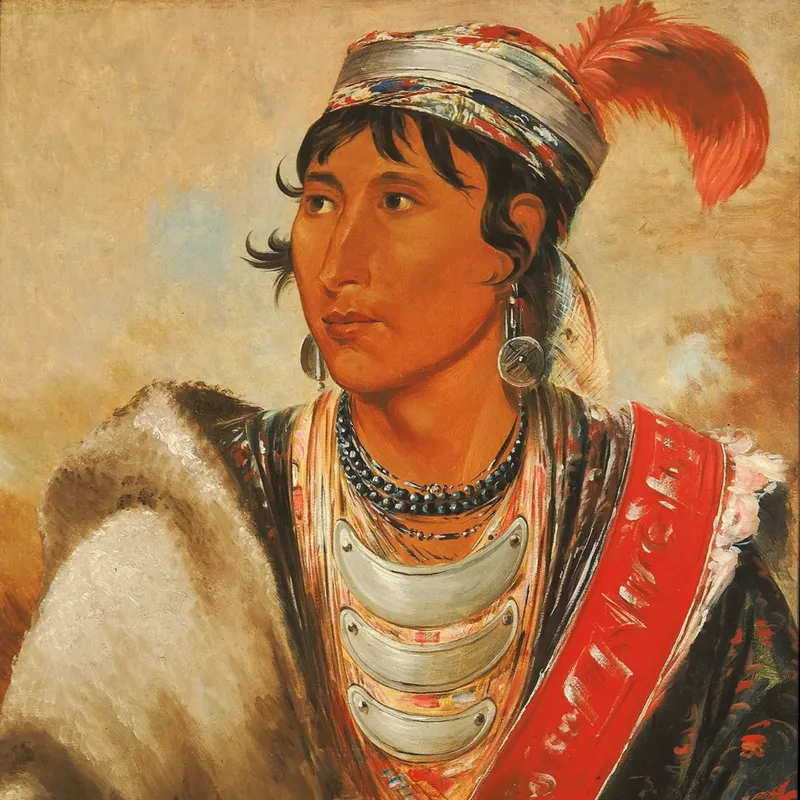
forces during the war, acknowledged that the Seminoles, quote, look upon us as robbers and oppressors and have determined to die on the ground rather than leave it. Yeah. So basically, everybody knew that things were heating up in Florida, but the Jackson administration continued to push for complete deportation. In 1834, near the end of his presidency, Jackson began making preparations for this mass removal, following the model of the removal of the Cherokees, Choctaws, Creeks, and Chickasaw in the mainland southeast. As part of this planned deportation, traders were suddenly ordered to not sell any guns or ammunitions to the Seminole. The young chief Osceola protested this in the letter to local officials, unsuccessfully appealing on the basis of white supremacy. Osceola argued that it was unjust for him, an Indian of partial Scottish ancestry, to be treated like a black slave and not be allowed to carry a gun.
The next year, in 1835, American officials declared that all Seminoles would have to leave Florida forever and accede to the same fate as the Creeks. Soon afterward, these officials were invited to attend a major Seminole gathering in which Seminole men performed a war dance around a massive bonfire. This dance, although the whites did not know it, was most likely intended as a declaration of war.
Osceola's war begins
That August, Seminole leaders including Osceola, Micanopy, and John Horse began carrying out raids against settled plantations and U.S. military supply trains. Low-level raids like this had gone on in Florida for decades, but this was beginning to spiral into something bigger. Local settlers assembled a hasty militia to patrol their farms in Alachua County in northern Florida. These settlers, who were mostly recent immigrants from Scotland and England, were totally outmatched by the Seminoles. Dozens were killed in skirmishes, leading to the deployment of the U.S. military in what would become one of the largest American conflicts before 1860. As the war began to spread across north and central Florida, some Seminoles accepted deportation as a way to avoid conflict. Osceola was furious when a rival chief named Charley Emathla took American money in exchange for deportation westward. In perhaps the most cinematic episode of the Seminole Wars, Osceola tracked down Charley and killed him on the road, probably by his own hand.
He ordered Charley's body to be left unburied as a warning to others and scattered his 40 pieces of silver around the corpse. After killing his rival, Osceola came to be recognized as one of the foremost Seminole chiefs along with Micanopy, and he led successful raids against the U.S. government, at one point killing Indian agent Wiley Thompson. In the early months of the Second Seminole War, hundreds of farms and several forts across northern Florida were abandoned. This was the biggest indigenous pushback to American colonization since King Philip's War two centuries earlier, involving a significantly wider geographic range. The U.S. Army at this point was also only 7,000 people strong, and although it was better armed than the Seminoles, it was probably more poorly trained. It had been over 20 years since the War of 1812 and the First Seminole War, so U.S. troops were extremely green. The most competent officers were European advisors who had fought for or against Napoleon, but these men were unable to train U.S.
regulars fast enough to mount a successful counterattack against Seminole incursions. Due to the U.S. manpower shortage, small numbers of Native Americans, including Shawnees from distant Kansas, were recruited to fight in Florida. Believing the Shawnee to be less civilized than the Seminoles, white officers deliberately spread rumors that these native auxiliaries would cannibalize Seminole men and eat their hearts, then enslave their women and children. This cannibalism was complete fiction, but the part about enslavement was projection on behalf of white Americans. They had been enslaving Seminoles for decades, often with the pretext that these Seminoles had African blood and were therefore their property. We should mention, though, that slavery did also exist among the Seminoles themselves, but perhaps due to their semi-nomadic lifestyle, it wasn't really as all-encompassing or as dehumanizing as slavery in the United States or slavery among the Creek and the Cherokee. Seminole slaves lived and worked alongside their masters as semi-nomadic farmers and served as warriors in times of conflict.
This was not an imitation of American plantation slavery, as we saw previously among the Creeks. Seminole slavery did have a racial component, as all or most Seminole slaves were descended from African captives, formerly of American or Spanish colonies. And we saw previously with Osceola that when dealing with whites, non-black Seminoles sometimes emphasized their supposed superiority over black people. But despite this rhetoric, there doesn't seem to have been any taboo against interracial marriage, and at least in times of war, black Seminoles like John Horse and a man named Abraham achieved major political standing. The historian C.S. Monaco also cautions that there might be some racial prejudices among the Seminole that aren't really perceptible to modern non-native audiences. For instance, the fact that enslaved Black Seminoles cultivated land on independent farms, not their owner's plantation, at first glance seems like a measure of equality, totally different from our understanding of racialized slavery.
However, in Seminole society, it was actually considered demeaning for any man to be farming at all. That was women's work. Slaves were barred from hunting, which was the domain of men. Although free black Seminoles could experience enormous social mobility within the tribe, this only seems to have happened during periods of extreme pressure, like wars against the United States. And after the Seminoles were deported to Oklahoma, these racial distinctions appear to have re-emerged, leading John Horse to bring his men down into Mexico.
The Dade massacre
Black Seminoles, including a major landowner and former U.S. ally named Abraham, were instrumental in the shocking defeat of U.S. regulars in the Dade Battle or Dade Massacre of December 1835. General Francis Dade led about 100 soldiers toward the military outpost of Fort King in Ocala, Florida, but Seminole troops under Micanopy and Abraham were lying in wait. This would be described by Halpatter Tustenuggee, or Chief Alligator, one of the few Seminole leaders who survived the war, in a pretty cool first-hand account. Alligator writes, We'd been preparing for this for more than a year. Just as the day was breaking, we moved out of the swamp into the Pine Barren. I counted by the direction of Jumper, that's another Seminole chief, 180 warriors. Upon approaching the road, each man chose his position on the west side. About nine o'clock in the morning, the command approached. So soon as all the soldiers were opposite, Jumper gave the whoop.
Micanopy fired the first rifle, the signal agreed upon when every Indian arose and fired, which laid upon the ground dead more than half of the white men. The cannon was discharged several times, but the men who loaded it were shot down as soon as the smoke cleared away. So this was a very shocking defeat early in the war. It's kind of like a, you know, along the lines of Custer's Last Stand. And this would lead to Francis Dade becoming kind of a martyr for American expansion. And it made him the namesake of South Florida's Miami-Dade County. This defeat enraged some whites to the point of demanding no mercy against the Indians, while other whites began to wonder if this kind of occupation wasn't worth the cost. Americans had serious difficulties dealing with a guerrilla enemy. To newspaper readers at home in New York or Boston, there were echoes here of the American Revolution, this time in reverse.
Anything you want to add, Jackson, about the Seminole War before we keep going here?
I think it's interesting to consider Osceola as a figure in this story because Osceola was himself, as we've said before, he was sort of half Native American and half Scottish. And in fact, yes, in fact, for most of his life, he was more known as Billy Powell than he was as Osceola. But I think that something is interesting to think about in light of, like we talked about, the relative social mobility of Seminole society, especially in times of war, is that Osceola was not a leader by birth, right? He was not born into a leadership position in the Seminole tribe as a whole, right? He was part of a lineage that had, you could essentially, analogize as noble, right? But he was not the sort of chief leader of the Seminoles at the beginning of the war, and that his sort of charismatic leadership during the Seminole War and his sort of his tactical military achievements were really what put him in the leadership position of the Seminoles as the war went on.
And why he's still sort of remembered as the main Seminole leader of the Seminole Wars, even though he did not really start the war in that position. It's why he's, for example, the mascot of Florida State today, is because of his sort of his charismatic leadership and because of Seminole Society's Seminole Society's willingness and ability to bring in or to grant social mobility to basically leaders of talent.
Yeah, yeah, and I think also it's interesting that there was genuine sympathy toward the plight of the Seminoles even before the war. And as we're going to see with the eventual death of Osceola, I think this kind of tragic legacy grew around him, particularly among Whigs who opposed the war. Because there was a lot of serious opposition at the time, largely on partisan lines.
Yeah, it's worth saying that until the Civil War, basically none of the conflicts that America fought in were like saw the kinds of rally around the flag that we're used to in the 20th and 21st century. Like the Whigs were pretty vehemently against entering the Mexican-American War. Then the Seminole War, there was a lot of pushback by Federalists against the War of 1812. It's hard to remember now because we live in this sort of consolidated nationalist, central-ish republic, but the idea of supporting America's foreign policy right or wrong was definitely not a thing that basically anyone at the time thought was like a given, right? It had to be sort of justified to them because the country was so new.
The first Vietnam War
Yes, and I think that the domestic opposition to the war does bring up a kind of embarrassing and facile comparison that still has to be made because the comparisons are kind of striking. And that is the Second Seminole War as actually the first Vietnam War in American history. Because, you know, it's U.S. troops being sent down into a steamy jungle to defeat an irregular enemy who had mastered guerrilla tactics. And, you know, the Seminole warriors, just like the Viet Cong 130 years later, had this supreme familiarity with the terrain, including the tropical wetlands of South Florida, which at this point, South Florida, basically had no settler population. Warriors were able to shelter across the peninsula into various indigenous settlements, even in towns believed by the Americans to be friendly or acquiescent. As the conflict dragged on, President Andrew Jackson gave the order to burn all or most Seminole settlements, and I'm sure he would have used napalm if he could.
This was a repeat of tactics Jackson had previously used throughout his career in the Creek War and the First Seminole War. We should mention that some Seminoles, including Osceola, were directly related to Creeks who fought against or with Jackson in Georgia or Alabama 20 years prior. Seminoles and Maroons were also able to pass across colonial boundaries to their advantage. And just as we saw in previous episodes of Florida history, Seminoles and Maroons were able to use colonial borders to their advantage. Small numbers of Seminoles were able to shelter in Spanish Cuba and the British Bahamas, especially Andros Island, where they picked up guns and supplies during their stay. And again, just like in Vietnam, actions by the U.S. government generated significant controversy both at home and abroad. Popular opinion on Indian removal soured after white Americans heard reports of the brutality necessary to carry out such a policy.
Whigs opposed the war both in its execution and on principle, as they were generally less enthusiastic about American expansion and more sympathetic toward Native Americans.
Osceola's capture and legend
Two years after the initial rebellion began, however, the U.S. General Joseph Hernandez offered a ceasefire to Osceola near St. Augustine. Hernandez was the child of Spanish immigrants from Menorca, immigrants who had been lured to Florida to join the failed New Smyrna colony. We've mentioned it a couple times now. Although Osceola believed he was meeting Joseph Hernandez under the terms of an honorable truce, he was instead captured and arrested. This was incredibly controversial, even within the U.S. military apparatus. Hernandez and his commanding officer, Thomas Jesup, were both considered dishonorable for this act. Whig journalists began describing Osceola as the noble Prince of Florida, betrayed by democratic chicanery. I think the tragic circumstances of his capture were at least as important as his success in the battlefield in turning Osceola into the great mythical Florida of Florida history. To this day, hundreds of places are named after him.
Not only Osceola County in Florida, or Lake Osceola at the University of Miami, but places as far as Iowa, Michigan, New York, and even Ontario, Canada. These towns were almost all built in the 1830s and 40s and chose their names as a deliberate political provocation against Jackson and the Democratic Party. There's also another final grisly element to the Osceola story. Shortly after his arrest, he died of disease under the care of an eccentric Maryland doctor named Frederick Weedon. Weedon, who after the war would become one of the largest landowners of southern Florida, removed Osceola's head from his body and preserved it in alcohol for the next several years, showing it as a curiosity in his own office, later giving it as a wedding gift to his daughter Henrietta, before it was ultimately sent to a museum and destroyed in fire in the 1860s.
Retreat into the Everglades
Yeah, so after the arrest of Osceola and his subsequent death in captivity, the organized Seminole resistance began to wane. By 1837, the Seminole were less able to conduct large-scale attacks on towns or plantations, and many began to accept deportation in exchange for U.S. clemency. Seminole forces under Chief Alligator and a man named Billy Bowlegs had one last significant victory over U.S. troops in the Battle of Lake Okeechobee, in which they defeated an army under the leadership of the future president Zachary Taylor, nearly three times their size. This halted U.S. military advance into mainland South Florida, allowing the Everglades to become a de facto refuge for the Seminole peoples. And remember that by the early 19th century, the swampy southern parts of Florida were effective devoid of any human life. The indigenous Tequesta and Calusa peoples of South Florida had already been forcibly relocated by a colonial power.
They had been brought to Cuba en masse in the 1760s, upon which point they assimilated into the colonial Caribbean society and basically disappeared completely from the historical record. Some Seminole refugees made it to the bottom of the peninsula and onto the Florida Keys, settling now what's now Miami-Dade and Monroe County in the 1820s and 30s. Thousands of their descendants still live in the region today, comprising the Miccosukee tribe and the Seminole tribes of Florida, not to be confused with the Seminole tribe of Oklahoma. During the Seminole Wars, these people took refuge in the Everglades on forested islands called hammocks, where they could easily hide from marauding American troops. Even today, with modern airboats, finding a missing person in the Everglades is extremely difficult. In the early 19th century, it was nigh impossible. This made the Seminole essentially invulnerable to U.S. detection, especially given that the Everglades today only flow across 20% of their historical span, to give some more idea of just how difficult this would have been.
Other Seminole and the Miccosukee peoples lived on the pine rocklands of the Miami coast, which extended into the limestone archipelago of the Keys.
Yeah, and so basically, this is all to say that in the later, so after the Battle of Lake Okeechobee, the war kind of turned into a stalemate where larger numbers of Seminoles went down into the swamps, not to fight whites necessarily, but just to survive, because they know that whites would be largely unable to pursue them into the wetlands. And the wetlands at this time were significantly larger than the Florida wetlands today. And so, by the time that the Seminoles reached South Florida, there were basically no full-time residents of that area since the Tequesta and the Calusa had been deported. However, they did begin to make sporadic contact with fishermen from Cuba, the Bahamas, and again, New England. I think that this must have been a little bit bewildering for the Seminole, you know, that they had just crossed hundreds of miles of alligator-infested swamps to get away from white settlers.
But as soon as they get to the Florida Keys, they're now finding that there's some white passing traders here too. Possibly because of warm relations between the Seminoles and the Spanish in North Florida before the wars, many Native Americans in the later stage of the Second Seminole War began to be employed on Cuban fishing plantations called ranchos in southwest Florida. These fishermen included both Seminoles and Cuban descendants of the Calusa, who were forced off of the peninsula a couple generations before. According to Seminole oral tradition, these Cubans were men of indigenous appearance who had assimilated into Spanish culture, drinking Spanish coffee and smoking Cuban cigars, but identified themselves as calasa, probably the same word as Calusa. Anglos began referring to so-called Spanish Indians living across the Florida coast, who could either be mestizo descendants of white Cubans and indigenous peoples, or could refer to Seminole fishermen in Spanish service.
White Americans were deeply troubled by the close ties between their indigenous enemies and the Spaniards, and feared, not without reason, that Spanish guns might be falling into Seminole hands.
The Keys and Cuba
This kind of concludes the main theater of the Second Seminole War, but in the Florida Keys, as a consequence of the presence of these Spanish Indians, there would be this interesting smaller second theater that I think is of note. So, mainland South Florida was of very little interest to white settlers throughout most of the 19th century. But the Keys were kind of a different story. Initially, the biggest interest in the Florida Keys was not necessarily economic, but instead strategic, because command of the Florida Keys, particularly Key West, could allow the U.S. military, particularly the U.S. Navy, to command the Straits of Florida. This was the body of water separating Florida from Cuba, which had a lot of economic significance and was also very heavily trafficked by pirates during the early 20th century. Thomas Jefferson, soon before his death, actually wrote a letter to President James Monroe pleading for them to secure Florida, particularly the Florida Keys, as a way to command the Gulf of Mexico.
Many American politicians actually believed that the United States should not only control Florida and the Keys, but also seize Cuba as well. Long before McKinley and Roosevelt in the Spanish-American War, various American politicians entertained seizing the island of Cuba through either cannonball or coin. As slavery opened up divisions in American society, the conquest of Cuba was seen as an easy way to add a new slave state into the Union. We mentioned last episode how many Americans saw the Spanish Empire and its former colonies as languid, derelict, and much too Catholic. Therefore, it was only natural in their minds for Spanish-speaking regions to be settled by industrious white Protestants. After the same industrious white Protestants wrested control of Texas away from the Mexican Republic and instituted their own version of the southern slavocracy, Florida Senator David Yulee, who we mentioned previously, declared that the Gulf of Mexico would be a common basis of expansion.
A permanent military presence along the Gulf, including the long, swampy Gulf Coast of Mexico, could allow the Stars and Stripes to fly over not just Cuba, but also Venezuela and other parts of Latin America. This early imperialist vision, advanced most famously by a secret society called the Knights of the Golden Circle, was entirely focused on the problem of slavery.
Pirates of the Gulf
But these planters had a big problem. While the Gulf Coast might be owned by the United States, its waters were commanded by men of no nation, men who flew many flags, but whose only true allegiance was to the Jolly Roger. By the early 19th century, the Golden Age of piracy was a distant memory, with the romantic image of the Caribbean buccaneer already taking shape in European literature. But due to the weak presence of various colonial powers in Florida around the time of the Spanish-American Wars of Independence, piracy rose again. Florida and the Gulf remained one of the last holdouts of nautical banditry in the Western Hemisphere. Last episode, we mentioned a guy named William Augustus Bowles, a British man who joined the Creek Nation and had a brief career as a pirate. He was one of many such men operating in the Gulf and the Atlantic coast of Florida.
The most famous of these guys was the young French-American pirate Jean Lafitte, a master navigator of the shifting silts of the Mississippi River Delta, who earned the name Terror of the Gulf for his attacks on Spanish vessels sailing between Mexico and Cuba. Interestingly, Lafitte was probably also of Sephardic Jewish descent. His parents were conversos who'd emigrated from Spain to France and then Louisiana to escape persecution by the Spanish. I gotta wonder if he might have seen his piratical career as a kind of revenge. This has some parallels with the Barbary corsairs we mentioned back in episode 53. But Jean Lafitte is most known not as an enemy of Spain, but instead as the British, as he was bribed by Andrew Jackson to defend New Orleans during the War of 1812. For this reason, Jean Lafitte has a pretty heroic reputation in American history, and particularly in the tourist economy of Louisiana.
But I'm not sure if Americans usually realize that after his service in the Battle of New Orleans, Jean Lafitte immediately returned to piracy. In 1819, he was apprehended by American authorities for preying on ships near the Dry Tortugas, again attacking the Spanish, this time on behalf of the newly independent Republic of Mexico. In a great parallel to the Amelia Island affair, Jean Lafitte established a short-lived pirates' republic on Galveston Island off the Texas coast. This settlement, called Campeche, only lasted a few years before being destroyed by a hurricane, but during that brief time, Jean Lafitte got around U.S. prohibitions on the international slave trade by illegally smuggling kidnapped Africans into Louisiana and Florida from his island stronghold. This made Jean Lafitte an enemy of the United States, causing him to relocate from Louisiana down to Cuba. But after Spanish authorities forced him out of Cuba, Jean Lafitte joined yet another war against Spain.
He was one of several pirates commissioned by Simón Bolívar to fight for Spanish American independence. Shortly thereafter, Jean Lafitte approached a Spanish naval vessel that he mistook for an unguarded merchant ship. Lafitte's own ship was blown to pieces and he sank to a watery grave. Although some writers and tour guides for 200 years hence have insisted that he actually faked his death and instead retired peacefully to, of all places, the Blue Ridge Mountains of North Carolina. We mentioned that Jean Lafitte, like many pirates, traded in slaves. However, Florida piracy is interesting due to the recurring examples of pirates who were themselves once enslaved. We mentioned the apocryphal Black Caesar last episode, the most famous resident of the early Florida Keys. But a real-life Black Caesar was the Haitian pirate Henri César, a teenage revolutionary who was apparently aware of the older Black Caesar legend and established his own base in the Florida swamps, from which he plundered passing ships, just like the Black Caesar of legend.
Newspapers from the time describe other pirates in Florida waters, including one crew, possibly also Haitian, who captured a Spanish slaving ship and freed all the Africans on board, upon which they tossed the Spanish slavers into the sea. Historians caution that this story should be understood as part of the general racial paranoia during the period after the Haitian Revolution. It is, however, one of the most concrete examples of any pirates forcing anybody to walk the plank. Returning to the period of the Seminole Wars, the Florida Keys were notorious for being a hotbed of pirates and wreckers. The lack of real political control, first by the Spanish and then the Americans, allowed pirates of many different ethnic backgrounds to seamlessly move across the straits, attacking anybody in between. Local officials in Cuba, who resented Spanish control and feared American encroachment, were often happy to shelter pirates, as we saw with Jean Lafitte.
Whenever Spanish authorities came to Cuba, these pirates would cross to Florida. Whenever American authorities came to Florida, these guys would go back down to Cuba. U.S. Navy commander David Porter complained about entire villages of pirates on the Cuban coast. Whenever either American or Spanish ships sailed by, local children would go on lighting signal fires to warn their piratical parents to hide.
Gasparilla, the invented pirate
In fact, one of these Cuban pirates is the most famous of all Florida buccaneers, that being Gasparilla. Born Jose Gaspar, he was said to have been either an ambitious street urchin in 18th century Spain or the bored scion of a line of hidalgos. Either way, he left the Iberian Peninsula first as a legitimate sailor, but after experiencing terrible treatment by his captain, Gasparilla led a mutiny and turned to piracy. He amassed a fleet that was said to be larger than either the Spanish Armada or the young American Navy, operating first from Havana, then from a base still known as Gasparilla Island to this day. Then in 1821, when Florida passed into U.S. hands, Gasparilla's ship was sunk by the American Navy off the waters of Tampa. Rather than be captured, Gasparilla jumped overboard to join Davey Jones. This is a great story, and it is of huge interest to the Tampa Tourism Board, especially because it now appears that they completely invented it.
There was never actually a pirate named Jose Gaspar. That story was completely fictitious, invented by railroad advertisers trying to promote a more exciting image of Tampa in the later 19th and early 20th century, taking the name from a place already known as Gasparilla Island. However, his Spanish origin probably does reflect the influence of the significant Cuban community of Tampa, going all the way back to the period of the Spanish Indians and the fishing ranchos. Cuban cigar rollers and cigar empresarios were a significant force behind the growth of Tampa after the Seminole Wars. The immigration of the cigar workers meant that Tampa had a distinctly Latin character across the 19th century, probably even more than it does today, making it sort of like Florida's original Miami. The character of Gasparilla drew from a romantic but still stereotypical image of Cubans as both passionate and lawless. The historian André Marcel Don connects the emergence of the Gasparilla myth both to the Cuban War of Independence and constant labor agitation by Cuban workers in Florida.
Within just a few years of the creation of the Gasparilla legend, Tampa began holding the annual Gasparilla Festival that's kind of the local rip-off of Mardi Gras. We've talked a lot about invented tradition in this podcast, but I think an entire civic holiday based on an advertising mascot might take the cake. Many such cases. Read Eric Hobsbawm.
Wreckers and Key West
Returning to the Second Seminole War, moving into its keys theater, when most Seminoles in Florida were forcibly deported. Small numbers of white and black Bahamians moved onto the mainland coast of southeast Florida. This was how the Miami neighborhood of Coconut Grove was established, as we mentioned previously. Some of these new settlers engaged in a little farming and a little fishing, but the real draw of remote South Florida was wrecking. Basically, piracy in slow motion. Wrecking is the ancient practice of coastal peoples taking advantage of mariners in distress, finding and looting ships that have sunk or have been run aground. Wreckers in Florida prided themselves on rescuing stranded sailors who otherwise might have drowned. There's even a statue of these supposedly heroic wreckers in Key West today. In practice, many of these men were happy to kill any survivors they came across to make sure there weren't any witnesses to their looting.
Wreckers were often accused of strategically placing lights to trick sailors into running into a rocky coast, because more shipwrecks meant more merchandise to loot. Interestingly, the Florida Keys, thanks to their proximity to the coast and small amount of arable farmland, were some of the first parts of southern Florida to be heavily populated by whites. This made the Keys an early basis for all economic activity, including wrecking. This was especially true of the final and most famous key, Key West. Key West was interestingly not included in the territories allotted to the United States in the Adams–Onís Treaty. It instead had to be purchased separately by an American businessman during a meeting with Spanish officials in Havana. Some Key Westers will tell you their island was won in a card game, but in reality, the island was purchased for $2,000, which is about $60,000 in today's money. You know, this was not a huge sum, but because the island was so small and uninhabited, it's likely that the Spanish believed they were the ones taking advantage of these gringos.
But the Americans realized this island was strategically positioned as right between Cuba and the Gulf of Mexico. Ships leaving New Orleans or Mobile often passed right by Key West and sometimes ran aground. Wreckers had already been visiting the island when it was still owned by the Spanish, and shortly after the American acquisition, Commodore Matthew Perry, of later Japanese fame, used Key West as a base for anti-piracy patrols, the real-life patrols behind the end of the watery end of Gasparilla in the story. Despite Perry's activities, maritime crime continued right under his nose, and the economy of Key West rapidly grew almost entirely due to the constant robbery and resale of wrecked goods. According to one analysis done in the 1930s, residents of Key West in the 1830s may have actually been the wealthiest Americans per capita, entirely due to the riches of crime trickling down. Eventually, the rise of lighthouses meant that wrecking could no longer sustain the island as its primary industry.
But anybody who spent time on Duval Street knows that the spirit of sleaze has not left Key West.
Indian Key and Chakaika
One more island of note is the now uninhabited Indian Key, southernmost point of conflict in the Seminole Wars. Indian Key was settled in the 1830s by a few farmers and fishermen who included the well-known botanist Henry Perrine. He was probably the first person to realize that tropical plants from all over the world could be cultivated in South Florida. At this time, the Keys were part of Dade County, not yet Monroe County, and Indian Key was actually Dade County's seat. But then, in 1840, during the final years of the Second Seminole War, a Native American leader of indeterminate origin named Chakaika led an attack on the island, killing Henry Perrine and a dozen other settlers. These attackers were identified as Spanish Indians, the men who fished on the Cuban ranchos and may have been of Calusa descent. They had been deported to Cuba in the 1760s, but maintained ties to Florida across several generations.
Chakaika was himself a Spanish speaker, probably of mixed Spanish and indigenous descent, whose life was torn apart during the Second Seminole Wars when his fishing rancho was burned by the Americans, and anybody of any visible indigenous descent was captured and deported to Oklahoma. This forced the Spanish Indians into a raiding existence, just like the Seminoles. Chakaika may or may not have had Seminole ancestry himself, but because of his animosity toward the Americans, he was welcomed by the Seminoles to join the conflict in its last years. After the attack on Indian Key, Chicaika and his Spanish Indians fled into the Everglades. They were pursued on a canoe by members of the U.S. Navy who disguised themselves by wearing Seminole clothing. Chicaika was captured and hanged, and the rest of his small band of Spanish Indians were forcibly marched to Oklahoma with the Seminole. And thus, the last remnants of the great Calusa kingdom of the pre-Columbian era were once again deported from Florida.
Statehood and the Third Seminole War
All right, Jackson, we're kind of winding things down here. Why don't you tell us about what happened in Florida after the Second Seminole War and the road towards statehood, and eventually the U.S. Civil War?
Right, so with the close of the Second Seminole War and the couple hundred remaining Seminoles pushed the margins of Florida's inhabitable lands into the Everglades, those processes of Anglo-settler expansion and slavery entrenchment that we were talking about pre-statehood sped up. It should be noted, however, that encroachments on those marginal lands the remaining Seminoles maintained sparked a third and final Seminole War in the 1850s, when the stubborn and implacable Billy Bowlegs made his last attempt to fight off the Americans. But, thanks to a reduced number of Seminole warriors available for battle, he was unable to do more than wage small-scale, low-intensity conflict with the whites. The U.S. Army, having defeated Billy Bowlegs, then transported most of the undeported Seminole natives to Oklahoma and left a scattered band of around 100 Seminoles to eke out near-hunter-gatherer existences in the almost uninhabitable Everglades. All modern Floridian Seminoles and Miccosukee natives trace their ancestry to those 100 Seminoles who evaded capture by the U.S.
Army in the Third Seminole War.
And then I also think, you know, of that hundred, it could have been even fewer if not for this pretty interesting story where one Seminole woman named Polly Parker basically led a prison escape where she and several other Seminoles were being shipped to New Orleans for ultimate deportation to Oklahoma. During a transfer, I think in Pensacola, she managed to escape the ship with a bunch of her relatives and then trekked down across hundreds of miles of swampland back into South Florida to join her relatives. So, you know, these people were very, very dedicated to stay on their land despite overwhelming attempts at removal.
Exactly. With the Seminole Wars coming to a close, however, Florida was eventually granted statehood in 1845. In kind of a classic pre-Civil War, you get one, I get one bargain, where Iowa was admitted as a free state and Florida would be admitted as a slave state. Florida's antebellum existence basically saw a continuation of the processes we've already talked about, where Anglo-settlement goes hand in hand with slave agriculture, with all the requisite social evils that that entailed, right? The color line became much sharper than it had been throughout the Spanish period and only intensified as statehood was achieved. The Spanish caste system was replaced more and more by hardline American racial codes, and free black life, which had been a part of Florida society since the Spanish entrusted British Maroons with custodianship of Fort Mose, became harder and more circumscribed, right? So there had been this sort of extant free black population that had lived, especially in and around St.
Augustine, even during the American territorial period, that was really clamped down on during statehood. It's here that we see the expansion of Anglo-settlement creep down the Gulf Coast and into the heartland of Florida by way of the St. Johns River. Towns like Palatka, Ocala, and Brooksville, which I will just mention was named after Representative Preston Brooks, who you may be familiar with for his caning of Charles Sumner. They named it in his honor. I mean, God. Those settlements during statehood. And the seeds were sown for the expansion of Florida into the lakes region near Orlando and Miami through the growth of that St. John's River riverboat infrastructure that would eventually make Jacksonville Florida's basically main city after the Civil War.
Yeah.
Sorry, Pensacola. You had your chance.
Florida in the Civil War
Exactly. So it shouldn't be surprising with the expansion of the slave economy that Florida was politically very anti-union and very pro-secession even before the idea became mainstream in the broader South. Yulee, as we've previously talked about, was an early fire eater and advocate for secession to protect slavery. And on the eve of the Civil War, the state was ablaze with secession fever that was comparable to the other states in the deep south. When the Civil War came, Florida jumped eagerly into the Confederacy. I had actually not known this before doing the research for this show, but Florida was the third state to secede from the Union. It seceded ahead of Georgia, and it even seceded ahead of Alabama, which is crazy to think about, sort of given the deep southness of those two states. But it is true. Florida basically dove into the Confederacy.
Yeah, you know, there was significant unionism in the area of Pensacola due to the lingering New England influence. But from what I understand, I think it was the kind of basically one of the states with the most homogeneous support for the Confederacy, possibly, you know, second only to South Carolina.
Exactly. So during the Civil War, Florida was not a major theater of action.
Yeah, also we should mention the population was still very small in this period. It was still quite marginal.
Yeah, right? So Florida's population was marginal, and it was not really of particular strategic importance for either side during the Civil War. So it wasn't really a major theater of action. However, that's not to say that no fighting took place in Florida. It was key, it was a key part of both the Confederacy's war effort as well as the Union strategy to defeat that war effort. Yeah. Florida's cotton economy was strong, of course, and it was a major reason why secession sentiment was so high in the first place. But Florida was also a major agricultural center. We've talked about the cattle and beef industry as being super important to the state, super important to both Anglo-settlers, the crackers, but also to the Seminoles. But also just staple agriculture was important as well, sort of corn and pork and things of this nature. The Confederacy, for this reason, thought of Florida as basically like a southern breadbasket, a land that wasn't threatened by Yankee invasion that could be turned into basically a granary for the Confederacy to alleviate what everybody could tell was imminent food shortages.
Well, Florida was, like we said, sparsely settled and difficult to farm before modern agricultural techniques. It wasn't really able to make up for the shortfall that the Confederacy was experiencing in food, but the state did provide substantial reserves of food to the Confederacy. Most interestingly, I thought it was sort of emblematic of this, is that the coastal nature of Floridian settlement at the time meant that Florida's main export during the war was actually salt. So, Florida's governor, who had the incredibly appropriate name of John Milton, as we will see, he plunged the state into the war effort. He was a like ideological hardline fire eater secessionist. And he basically did a like a mini great leap forward in the salt industry where he put most of the enslaved labor base of the state into salt works, right? Into constructing furnaces to boil salt water and in chopping down trees for fueling those furnaces.
He essentially, like, he essentially built a bunch of backyard salt furnaces in Florida for the war effort. So, like we said, those efforts were significant, but they weren't really enough to supply the Confederacy.
Yeah, and I also want to add here, you know, this is all import substitution only happening because the southern coast was basically totally blockaded by the Union Navy. And I just want to point out here, just I think it's kind of funny. We mentioned earlier in the episode that Southerners just had this weird aversion to sailing and fishing. I kind of wonder if this is that like weird cultural aversion coming back to bite them. You know, like they let the New Englanders do all their fishing for them, and now suddenly New England sailors are blockading all their ports. Like, how do you not plan for this?
Exactly. And so that was sort of the Union's response to the Southern War effort: to try and block off the ports and to stop that food in Florida from reaching the rest of the South. So the Anaconda Plan, which some listeners may be familiar with, was basically the Union's attempt to blockade the Confederacy to prevent shipments of cotton from going to Europe and to prevent shipments of arms and food from going into the South during the Civil War. That involved the choking off of shipments from Florida to the rest of the Confederacy as well as from Europe and places in South America. So the ports of Jacksonville, Pensacola, and Apalachicola were all seized by the Union during the war, and the strategic Tampa Bay was blockaded. Union forces were basically happy to sit behind the fortifications at places like Pensacola and Jacksonville for the most part, and service in Florida was seen as relatively easy.
That's not to say that there was no sort of effort in waging the war in Florida, though. And a number of regiments of U.S. colored troops were actually raised in the region, and raids into the countryside to take territory and seize supplies by the Union were intermittent throughout the war. The largest battle in Florida during the Civil War was at Olustee in February 1864. Olustee's near Lake City. It's in that middle Florida region that was sort of strategically important before the war.
And confusingly, Middle Florida is not in central Florida.
Exactly. It means the middle of North Florida. At Olustee, the Union occupation of Jacksonville, which had actually been sort of recaptured by the Confederacy, then re-recaptured by the Union in 1864. Those troops sought to link up with the Union garrison in Pensacola to cut off the agricultural supplies north into the Confederacy in the waning years of the Civil War. About 5,000 men on either side fought each other, including men of the famous 54th Massachusetts Regiment that some listeners may be familiar with from the movie Glory. The Union lost that battle and they retreated to Jacksonville to wait out the rest of the war. The war basically started to crumble around the Confederacy soon after, though, and the situation basically never became worse in Florida than at Olustee for the Confederacy until Appomattox Courthouse and the end of the Civil War. I would like to note that the governor of Florida, John Milton, we mentioned, at the end of the Civil War, maybe channeling his namesake, thought it better to die gloriously for the Confederacy than to serve in heaven for the Union.
He actually killed himself at the end of the Civil War. He basically thought that he thought that the Union would sort of not look kindly on the Confederacy and took his own life, which was a bad decision.
He probably would have gotten off scot-free.
He wasn't able to lead the counteroffensive.
Exactly.
Yeah, no, no. We're going to see next episode how the guys like John Dalden would find their paradise found once again later in the 19th century.
After the war
Yeah. So the Civil War in Florida is not obviously the main theater. It's not even particularly, I wouldn't even say it's a particularly sort of major part of the state's history at the time, but it did sort of ruin Florida, although to a lesser extent than it had ruined the rest of the South, right? The cotton economy was a no-go at that point, right? Slavery was abolished in 1865, and the economic base of the cotton industry disappeared with it. The political economy of Florida was changed, obviously, massively by that event. So the balance of the state after the Civil War shifted southward, and it basically has not stopped shifting southward since 1865. The panhandle became economically much less important to the state, and in fact became almost economically backwards as citrus took over in inland Florida. Like we mentioned, Pensacola used to be this thriving port on the Gulf Coast, right?
One of the most important ports on the Gulf Coast, second only to New Orleans in the early 19th and late 18th centuries. Pensacola basically never recovered from the Civil War. It declined and has only basically continued to decline since. As the sort of use of a Gulf port that was near cotton country, it just wasn't as economically feasible as it had been in the early 19th century. The other sort of interesting ramification of the Civil War in Florida, though, came not by the sort of broad political changes, but in the sort of people who manned the garrisons in towns that the Union had captured like Jacksonville and Pensacola, because many of those Yankee soldiers who were stationed in the state and sort of marveled at this land of palm trees and citrus groves where like winter never really came, compared that to their sort of dreary Yankee lives in Connecticut, Massachusetts, and started thinking about coming back, right?
Started thinking about returning to Florida and maybe setting up sort of lives in this region that was pretty sparsely populated and looked like there was a lot of opportunity there. So after the Civil War, those Yankee northerners provided basically the main economic base which the state would orient itself towards ever since, right? Both in supplying their homes and workplaces with exotic citrus and sort of beef that was a staple of the American diet at the time, but also by encouraging them to return to the land either as settlers or, as we'll talk about next episode, as tourists.
Yes.
Yes. Those Yankee veterans, in fact, became part of a new wave of Anglo-settlement that we will talk about next episode.
Flight of the snowbirds.
Yes. They were basically the first snowbirds, and they started to push American settlement of Florida further southward after the Civil War. And of course, like we mentioned, Florida was a majority black state at that point.
Yes.
The enslaved population had been obviously freed by the Civil War and was enfranchised by radical Reconstruction, looked forward to promises of peace and equality that the Civil War had given. So the state installed a Reconstruction government, like many others in the Deep South, which sought to navigate those modernizing egalitarian demands of the Union with sort of recalcitrant Redeemer violence and white supremacy that was endemic to the South, which we'll return to next episode when we talk about that.
No, and I think that the best example of this is how in Orange County, Florida, you have, of course, Disney World, Universal, you know, these great theme parks built in the 20th century, masterpieces of American social engineering and this, you know, promise of utopia. You were also not too far off from the town of Ocoee, where in 1920, one of the worst race massacres in American history was fought as one of the last stages of the reentrenchment of white control after Reconstruction. And I think that going into later 19th century and 20th century Florida, it's all about that horrific contrast between this beautiful paradisiac myth-making as Florida becomes the Eden of America, as well as the slow tightening grip of white supremacy in the post-Reconstruction South. And, you know, we already see that Florida was a slave state as much as any slave state. In the post-Civil War years, Florida is going to become a Klan state as much as any Klan state.
Exactly. Like we said, Florida left the Civil War kind of having been violently ripped out of that antebellum society and economy, right? Its entire economy and history of American control was defined by Anglo-settlement, Native American expulsion, and the cotton economy, the slave economy. It was ripped out of that by the Civil War. The cotton kingdom of slaves and masters had been uprooted in the Sunshine State just as it had been uprooted in every other state below the Mason-Dixon. However, because of Florida's unique geography, society, and history, it was kind of put on a different path from the one that it had been on, where it was much closer to the rest of the deep south. And it would walk a much different path in the second half of the 19th century and into the 20th century than states like Mississippi, Alabama, Georgia. It would go down, I think, I think it would be fair to say, go down a much weirder path than any of those than any of those states would, which I, like we said, we'll explore in our next episode.
Closing thoughts
All right. Well, this has been a big one. You know, again, I think that, you know, Florida history is in many ways just American history distilled. It's all of the weirdness of American history magnified. You have guys like Zephaniah Kingsley and Gregor MacGregor, not to mention John Horse and Osceola. And I think that Florida history is rarely studied by non-Floridians, and personally, I think that should change. Even if Florida is in some ways politically marginal, it is very illustrative of broader trends in American history. And it is very rare for something to be less extreme in Florida than elsewhere. So, Florida history is never boring. Well, thank you so much, Jackson, for joining us once again for our second of three Florida episodes. Any closing thoughts here from you or Sam?
No, I can't think of anything. Sorry.
Well, thank you for organizing this one, Guillaume.
All right, well, this has been a big one. Thank you so much for joining us. Thank you, Jackson. Thank you, Sam. Bye-bye.
The show is also on Apple Podcasts, Overcast, Pocket Casts, Podcast Addict, YouTube, RSS and Patreon.