89
Katherina Kepler and the European Witch Hunts
In progressIn 1615, just days before the New Year, famed astronomer Johannes Kepler received the news that would change his life. His mother Katharina had been accused as a witch. Over the next 6 years, the Keplers would battle these charges with every means at their disposal, just as the world around them began to collapse into the carnage of the Thirty Years' War.
Gladio Free Europe continues our foray into the dusky world of European witchcraft with our account of the witch of Katharina Kepler. Liam and Russian Sam explore how at the cusp of modernity, one of the figures most responsible for heralding changes in science and reason found himself battling against the forces of superstition. While a belief in witchcraft is now rightfully considered archaic and irrational, many people in this time attempted to reconcile theories of black magic with modern techniques of logic and rhetoric. This makes Katharina's charges, and her son's attempts to fight them, an amazing chapter of the history of both science and magic in Early Modern Europe.
This episode touches on so many topics and themes explored on this podcast in previous years. The story of Katharina Kepler is a incredible skeleton key for understanding the changes that erupted out of Germany over 400 years ago and, in that bloody process, gave us the modern world.
Transcript
Kepler's mother, accused
Welcome back to Gladio Free Europe. I am Liam, joined here with the incredible Russian Sam.
Hello, hello.
And we are back this week with a story we've been wanting to tell for a while. It's a really interesting episode of 17th century history. It's a place and time we've talked about before, most especially in our episode on the 30 Years' War with Matt Christman and the film The Last Valley. If you remember briefly in that episode, we touched on a small part of that very, very big story. And that is that in the 17th century, the famous astronomer, astrologer, and philosopher Johannes Kepler learned that his mother, Katharina, was being tried as a witch. And as soon as I heard that in, as an offhand reference in one of the books I was reading on the 30 years war, I had to know more. So over the past couple months, Russian Sam and I have looked into this topic, which is a topic that's not exactly obscure, but has only been covered by a handful of professional historians.
But I think it's a topic that is so interesting, not only because it's a great story, but because it reveals so much about the time and the place in which the Keplers lived, which we're going to talk all about in this episode today. And I think that, moreover, given that Kepler was a scientist, but also a strong believer in many concepts that we today would consider occult, I think that the way his ideas clashed with the prevailing notions of witchcraft and Satanism at the time kind of shows that the progression toward rationality was not a straight line. And that many things that the people around the Keplers believed, and many things that Johannes Kepler believed himself, appeared at the time to be a kind of seamless mix of modern methods of rationality and much older superstitions about witchcraft or astrology or the devil. And that's why I think that this little story about two essentially very regular people, one of whom who just happened, both of them who happened to have extraordinary circumstances thrust upon them, really is a great introduction into this period.
Witchcraft as Satanism
And a Russian Sam, you've been interested in witchcraft and the cultural idea of the witch for a while now. Do you want to expand on that before we jump in?
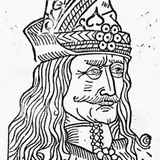
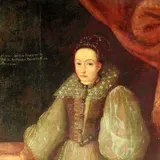
Yeah, it's just something that, you know, it's sort of always in the zeitgeist. We sort of touched on it with the Transylvania episodes where we talked about first Dracula and then more relevantly Elizabeth Báthory because she's often associated with witchcraft and it's something that's often discussed, but it's not often done justice to.
Yes, and Elizabeth Báthory, she was roughly contemporary with the Keplers a little bit earlier, about a generation before. And I think that her story is a really interesting kind of counterpoint to this one. Both of them involve the court process of the Holy Roman Empire, and both involve very extreme charges leveled against different women. I think the difference being, though, that Elizabeth Báthory most likely was guilty, at least of the more mundane charges leveled against her, whereas obviously Katharina was innocent for the simple reason that witchcraft, as these people understood it, did not exist.
Or rather, she was guilty of doing magical practices, but she wasn't doing literal witchcraft.
Right, right, right. Because this is what I think is so important about witchcraft as an accusation in the early modern world is that, you know, there's an understanding today that, you know, witchcraft can just refer to benign, you know, like potion making. It could be this misinterpretation of herbal practice, of traditional herbal remedies. There are certainly very important elements of that in this story, and that is an important element, that is a very important part of the story of witch hunts and witch accusations. But something I think is lost, especially with kind of modern media depictions of witches and the kind of revival of the reappropriation of witch asset identity by modern occultic people, is the fact that in this early modern world, witchcraft was Satanism. And so the accusation leveled against Katharina Kepler was incredibly serious. She was not simply being accused of casting spells.
She was accused of communing with the devil to essentially destroy the world. And that's such an insane and nonsensical accusation to make. But what I really want to get into in this episode is that in the world of the Keplers, that kind of accusation made sense. Not only to the people leveling them, but to the people on the receiving end. This was a world in which belief in witches and belief in Satan was significantly more real than belief in the motion of the planets. All right, so with that being said, Russian Sam, let's just get started. This might be a long one. Any words you want to provide before we jump in?
Yeah, yeah. Just reminding our listeners that we are on Patreon. And if you are enjoying this episode, then please do hit us up over there and donate whatever you feel like parting with so we can buy all kinds of herbs to make our own potions and conquer the world.
That's right. Slowly but surely for the Gladio Empire.
1620: a witch on trial
All right, so grab your tall black hat because we are going to 1620. The same year, some of you might know that the pilgrims landed not on Plymouth Rock, because in Germany, specifically the region of Swabia, what was then the principality of Württemberg, 74-year-old Katharina Kepler was put on trial as a witch. She was accused of slipping a strange drink to her neighbor and making this woman sick. In the eyes of the Leonberg authorities, it was determined that this was not an act of poisoning, this was an act of witchcraft. Katharina Kepler, who was a well-known but not particularly popular old woman, was in league with Satan to destroy her community. In many ways, Katharina Kepler was typical of an accused witch of this era. And this was an era that saw many, many allegations of witchcraft going from Stockholm to Salem. She was a widow, she was a commoner, she was over 40, and she was, of course, a woman.
But there obviously is one important factor that sets her apart from any other accused witch. It was that her son was a very important person. He was, of course, Johannes Kepler, the astronomer, and possibly better known at the time as an astrologer, who had very important connections to the imperial courts in Prague and Vienna. These charges, leveled against Katharina, would completely alter the lives of the Kepler family forever. They would arguably end the golden era of Johannes Kepler's work, possibly cut his scholarship short, and they are, of course, an incredible window into the intellectual worlds of everyday people in the 17th century.
Katharina's early life
So, Russian Sam, tell us about Frau Kepler.
Right, so Katharina Kepler was born as Katharina Guldemann in the small city of Weil der Stadt, which was nestled within the famous Black Forest of Germany. Although this town and the Black Forest were enclosed by the Duchy of Württemberg, Weil der Stadt was an independent imperial town, one of hundreds of such minuscule city-states across Germany in this period. Her parents were innkeepers and, more importantly, Lutherans, in a time when the Reformation wasn't recent history, but something that was very much living and ongoing. Martin Luther himself had died just months before Katharina was born in 1546, and the Peace of Augsburg, which effectively legalized Protestantism in the empire, had not yet been signed.
Right, and so we should mention that Swabia is a predominantly Catholic region, but interestingly, the biggest government in Swabia was Lutheran. However, the Guldemans lived in one of the few places that was legally Catholic. So it's a very odd situation, right? It's a mostly Catholic area ruled by Protestants. However, she is a Protestant in one of the only parts of Swabia that is ruled by Catholics.
It's kind of like being a rural Democrat in like Kansas or something these days.
Yeah, that's a good comparison. It kind of, yeah, that's a good comparison. She was kind of an exception living in an exception. And this kind of shows that, you know, in the incredibly complicated legal world of the Holy Roman Empire, there were many, you know, situations for somebody to be a religious outcast in one place, but not next door.
Right. So because of this, Katharina and her family were probably excluded from whatever meager education was offered to girls in that town, which caused her to be illiterate for the rest of her life. And suffice to say that nobody in Weil der Stadt or in Swabia, for that matter, could have expected that Katharina would be the mother of probably the most famous German of his generation. Katharina managed to escape destitution by marrying the son of the town mayor, a young man named Heinrich Kepler. But although Heinrich's father was locally important, they weren't particularly wealthy. And Heinrich wasn't a very devoted husband or father, for that matter. His son Johannes would describe him as, quote, a man vicious, inflexible, and doomed to a bad end. But excuse this as a result of being born under the wrong configuration of Mars and Venus. There are scattered legal records which attested to his constant involvement in bar brawls.
Eventually, one of these fights caused the city of Weil der Stadt to seize the inn Katharina had inherited from her parents, which deprived her and Heinrich of any income except for an allowance from his more well-off parents.
Heinrich the Landsknecht
Heinrich would then leave Weil der Stadt to find reliable income, really the only way that any man could in the 16th and 17th century Holy Roman Empire, which was fighting in the many wars between the states as a Landsknecht. These were the famous roving plunderers who drove most of their income not from a salary, but from sacking farms and villages on their military campaigns. Across this time, he would come home, usually get Katharina pregnant, and then go off again for much of the year on a campaign. They would have four children across the 1570s as he was constantly out of town, including one small, sickly boy named Johannes, who was born prematurely. It appears that to double down on the chances of her son's survival, Katharina made a very interesting decision, which I think says a lot about her personality and possibly even why she was drawn into this terrible mess decades later.
She chose to have Johannes baptized twice, hedging his bets by giving him a Catholic baptism and a Lutheran baptism.
I don't think that's allowed.
And then when Johannes was just three, his mother, Katharina, left Weil der Stadt with her husband, which is very interesting. There are actually records that in the 17th and 16th centuries, it wasn't that uncommon for wives to follow their soldier husbands on campaigns. The biographies we read said that she might have just been trying to persuade him to come back home, but she could have been taking part in the plunder. Many women did that in this era. But during this absence, Johannes was under the care of his grandparents, and to their horror, he caught smallpox, something that was quite often fatal in that era. He barely survived, but had permanently damaged eyesight, as well as some kind of nerve damage that appears to have stunted his growth and certainly made any kind of career with his hands basically impossible. And this is a very rural setting, you know, this is a very small town nestled in the Black Forest.
So that could have doomed him, seemed to have doomed him, to a life of poverty. But just two years later, Katharina and Heinrich returned and announced that they would be moving with the grandparents to the nearby town of Leonberg, possibly because it was ruled by a Protestant government. Heinrich tried to open another inn, but when this didn't work out, he decided to go back to the war. This time, ironically, fighting on the side of the Catholic Habsburgs against his fellow Protestants in the Netherlands. Because, again, religion was more of a gloss to this conflict rather than the point of it.
Right, right. And just to jump ahead a little bit, it's very easy to see why Johannes Kepler would not be super invested in religious partisanship. He didn't really think that, you know, he had a somewhat ecumenical view for his times.
But this endeavor proved somewhat successful, and with the money that Heinrich sent back from these wars, him and Katharina were able to send their children to school, something which neither of them had a chance to do previously.
Johannes and the comet
When her son Johannes was six, Katharina took him to the highest point in town to see a comet passing overhead. He remembered this as the moment that sparked his interest in astronomy, which would change not only his rifle, which would change not only his life, but the rest of scientific history. He was really good with numbers, and he would entertain guests in his grandparents' inn by doing complicated math problems in his head.
Wow, bar tricks have really improved over the years, I gotta say.
So, so despite being poor, Katharina managed to get him and his brother a seat at the local school, hoping that both of them would become Lutheran clergymen. While his brother was terrible at schoolwork, Johannes had a knack for it, and he had such high marks that his teacher introduced him to the Duke of Württemberg, who decided to pay for his education, first through grammar school and then at the local seminary.
Heinrich disappears
Right, and then so when he was 18, two things happened that would totally disrupt his family life. First off, his father Heinrich had been arrested for an insane charge. He apparently was accused of trying to sell Johannes' younger brother into some form of slavery, which was illegal in the empire. To escape these charges, he would once again join the army, but because he wasn't as young as he used to be, his luck had run out. Heinrich Kepler would go on campaign, like we mentioned, this time fighting for the Habsburgs, and he would never return. We don't know where exactly he died. This was a war with many fronts, but one of the biographies I read said he might have actually died as far away as Naples. So Heinrich Kepler really saw the world, it seems like. But Katharina was now left a widow, and to add to the misery of the situation, she wasn't able to remarry because she had no proof of her husband's death.
She had to turn to her wits to support herself and her four children, one of whom was still a toddler at this point. Like her parents before her, she began to rent out rooms and slowly managed to become even more financially stable than she had been when her husband was still alive. She was able to afford, with the Duke's help, to send young Johannes to the University of Tübingen.
Tübingen and Graz
At Tübingen, Johannes really came into his own. Although he was poorer than most of his classmates and not particularly popular, he loved to be surrounded by this world of learning. He began to read the works of great mathematicians and astronomers, most notably Copernicus and Tycho Brahe. Due to one of his illnesses that had plagued him since he was a child, he had poor eyesight. Because of this, he had a lot of difficulty looking through the primitive 17th century telescopes, which existed at that point, to gaze at the stars. He realized that he could never be a great observer of the stars like Copernicus, but instead of dampening his interest in astronomy, this limitation in one area pushed him to excel more in others. If he couldn't watch the stars move with his eyes, then he could use his brain to understand how they move and perhaps even why.
Upon graduating, he traveled across the empire to the Austrian town of Graz, a stone's throw away from the border with Hungary, where he taught mathematics while continuing to study the movement of the planets on the side.
Kepler the astrologer
Right. And as we hinted in the intro, it actually would not be astronomy that first brought Johannes Kepler to fame. Instead, it was what he described as that discipline's silly little child, astrology. Because when he was 23 or 24, Kepler began selling horoscopes to local newspapers and almanacs. Unlike horoscopes you might find in a newspaper today, these were very specific. You know, it wasn't just there is an auspicious event in your future, or, you know, I see love waiting for you. No. Instead, he would make very specific predictions about world events that might happen, almost kind of like a parlay bet in, you know, sports gambling. So in 1595, he predicted that there would be a particularly harsh winter that year, that the peasants would then rise up against their lords, and then that the Turks would once again attack from the east. And within just a few months, by the start of 1596, all of that had come true.
James Connor, whose book we're sourcing a lot of this from, suggests that actually these were all pretty easy bets to make, and that any particularly informed person could have figured out that the winter was going to be cold, and by observing political and social events, knew that two different wars might be likely. But, you know, at the time, statistics were less developed, you know, so it was hard to know what was a good prediction and what wasn't, which meant that Kepler received a huge amount of acclaim for getting those three guesses right. Many people around the empire started to believe that he was a true astrologer who could predict the future from the stars. So just at age 23, 24, he was suddenly getting new jobs all across Austria to provide horoscopes and even getting more work as a teacher and as an astronomer, too. As his reputation grew, he published a book on astronomy that was tinged with his own philosophical musings that would eventually be read even outside Germany.
So now everybody in his hometowns of Weil der Stadt and Leonberg must have been shocked that, you know, the heretic son of a mercenary was now basically a celebrity throughout the whole Roman Empire.
Marriage and loss
Yeah, and things just kept getting for the young Kepler. He seemed to escape poverty for good by marrying a young woman named Barbara Müller. And as you might guess from her name, she was the daughter of a prosperous mill owner whose business had rented out lots of farmland in eastern Austria. Despite being only 23, Barbara had actually been married twice previously, but each of her past husbands had died within two years of marriage. Her second husband had only been in the ground for a few months when her father insisted that she marry again, possibly worrying that it would be hard to find a new match after her bad luck with the first few couples. So, less than a year after their marriage, Barbara gave birth to a child named Heinrich, named by Johannes after his father. In his diary, Kepler wrote, A son. Heinrich Kepler was born on Arnold.
Heinrich Kepler was born on February 2nd. The stars' constellation promise a noble disposition, a strong body, strong fingers, agile hands, and a capacity for the mathematical and mechanical arts. The ascendant in the quadrant to the sun supports these attributes with Libra full of light, south, and ascension, indicates one who is stubborn, unruly, and one who also admires greatness. But this happiness wouldn't last long at all. Heinrich would die only two months after being born. The following year, the Kepler's had a girl who also died within weeks of the birth. Both he and Barbara were devastated. He would write, quote, No day can soothe my wife's yearning, and the scripture is close to my heart. Oh, vanity of vanities, and all is vanity.
Ferdinand's Counter-Reformation
Right, so just as Johannes Kepler's life seemed to really be improving, this terrible series of tragedy strikes his family, and it's going to keep getting worse. Because by the start of the 17th century, the government of Austria began to really crack down on Lutheranism for the first time. The Habsburgs, as some of you might know, who ruled Austria and were emperors of the entire Holy Roman Empire, envisioned themselves as the first defenders of Catholicism against the Turks before them and the heretics behind them. But in the year 1600, the people of Austria were actually primarily Protestant. It was the reverse of the dynamic you saw in Swabia, where the commoners were Catholic and the Duke was a Lutheran. Here, most people in Austria, from the peasants to the merchants to even members of the nobility, were pretty passionate Lutherans, but the emperor and all the high lords were very, very Catholic.
This was true of Austria, it was true of Bohemia next door, also under Habsburg control, and it was even true of parts of Hungary, as we mentioned in our episode on Transylvania. But, anyways, some Habsburg lords were much more serious about their commitment to Catholicism than others. And few were more serious than the future emperor, Ferdinand II, we also talked all about in our episode with Matt Christman. At this point, he was just 21, freshly out of college, and a first cousin of Rudolf II, the current emperor. His cousin just made Ferdinand Duke of Inner Austria, a region of the empire which, unfortunately for Kepler, included the city of Graz.
Right, so possibly as a result of his very close associations with the Catholic Jesuits, who we talked all about on our episodes about Christianity in Japan, Ferdinand reversed decades of relative toleration with ramping restrictions and penalties on the Protestants of Graz. According to Kepler's diary, when he arranged the funeral service for his infant daughter, he was charged an extra fee because he was Lutheran. This can be understood as part of the Counter-Reformation, which completely reshaped Catholic worship and ultimately made Austria and Bohemia just as staunchly Catholic as the monarchs who ruled it. But as a result of this policy change, Johannes Kepler was once again unsafe as a Protestant in Catholic lands. Just as he had finally established himself, the floor had fallen out from under him. When Lutheran preachers and professors were exiled from Graz, Kepler barely escaped losing his career forever. Ironically, he was probably spared by intercession by the Jesuits themselves.
The same hard-line order that Ferdinand had been associated with. Many Jesuit priests had a strong admiration for the sciences, especially astronomy, and a handful of them were even prominent astronomers themselves who admired Kepler's work and whose work Kepler felt about likewise. Jesuit networks both protected Kepler and also brought his work to the attention of his idol Tycho Brahe, the strange Danish astronomer and alchemist who had recently arrived in Prague. And unlike the Prince Ferdinand, many Jesuits preferred the honey, not vinegar approach to religion. They thought that a gentler treatment of the prominent Lutheran intellectuals could induce them to convert to Catholicism and possibly bring much of the population along with them.
Rudolf II's Prague
Right. And so we should mention that at the turn of the 17th century, there was a moment where Prague was actually the primary seat of Habsburg imperial power, not their usual capital of Vienna in Austria. We mentioned that the emperor at this time was Rudolf II, a really unusual figure. I would say in many ways just as interesting as Tycho Brahe or Kepler, because unlike his Catholic partisan cousin Ferdinand, Rudolf was somewhat ambivalent toward religion. He saw himself as much more concerned with personal intellectual and spiritual matters rather than what he considered the politics of religious sectarianism, which meant he was quite tolerant towards Protestants and even toward Jews. He generally avoided taking much of a stance in sectarian matters at all, preferring to keep to the uneasy status quo of the peace of Augsburg. I truly didn't mention what that was, which was the rule that whoever ran a given state in the empire could determine the state of its religious affairs, which meant that, you know, because his cousin Ferdinand was incredibly Catholic, he had full authority to impose his fervent Catholicism on the population.
But if you go next door to a Protestant principality, you can worship freely. He was fine with that. Most other people in the empire were not. Unfortunately, this awkward compromise between this different faiths of the empire would spiral into the unprecedented bloodshed of the Thirty Years' War. But that would not occur for another 20-ish years once the imperial crown had passed to Ferdinand. Now Rudolf was still emperor, and he sought to turn Prague into one of the great world centers of learning. And he did so by assembling a massive cabinet of curiosities, basically a personal museum, which included strange artifacts like unicorns horns and dinosaur bones from around the world, and also included strange people, particularly interesting thinkers including Tycho Brahe and eventually Kepler.
Tycho Brahe
Now, these two were a really funny match. While Kepler was this small, buttoned-up, constantly concerned about a status type of guy, Brahe was outrageous in every respect. He was born into a powerful Danish family, which controlled the island of Hven as their personal fiefdom, and he had a penchant for challenging his fellow aristocrats and even rival scientists to duels. In fact, when he was quite young, one of these duels would mark him for life. Because when he was around 20 years old, he got into a duel with his cousin after the two of them had a heated argument about who was the better mathematician. This duel would result in him having heavy scarring on his face, as well as leaving an open wound where his nose used to be, which he would cover up with a prosthetic nose made of brass, or gold, possibly, depending on who you ask.
And so, Brahe, he was forced out of Denmark ultimately, partially because of his exceptional cruelty he subjected his peasants on the island to. He was known to travel everywhere with the pet moose that love to drink beer, and he had a dwarf jester who he was convinced was psychic. Brahe's interest in the occult set him apart from Kepler, and Brahe saw himself as an alchemist first and foremost. It seems that all that united these two men was their passion for Lutheranism and the stars.
Right, yeah, because you know, because Kepler is much more like kind of a rationalist in the modern sense in many ways, whereas Tycho Brahe was basically Prospero from the Tempest. He was just a fantasy creature. He was exceptionally larger than life. Okay, so by the time Kepler arrives in Prague, Brahe was already this continental celebrity, much more famous and quite older than Kepler. He was even a close friend of the Emperor Rudolf himself. His family were treated as honored guests in the court, and Brahe was given money to build an observatory in the countryside outside Prague, where he and Kepler would study the movement of Mars, working on this exceptional treatise named after Emperor Rudolph. But then, just a year after Kepler arrived, right as he was really hitting his stride, Tycho Brahe would die in a way that was just as strange and colorful as his life.
Brahe's death
Because while attending a banquet with the emperor, Tycho realized he had to pee. And so, to quote James Connor here, whose book Kepler's Witch is our main source: the rules of civilized behavior at the imperial court were decidedly medieval, requiring that all guests remain seated at the table until the host finished his meal and signaled the end of the banquet. According to an account of the event that appeared at the end of Tycho's personal papers, an account which was possibly penned by Kepler himself, holding his urine longer than was his habit, Brahe remained seated. Although he drank a little overgenerously and experienced pressure on his bladder, he felt less concern for the state of his health than for etiquette. By the time he returned home, he could not urinate anymore. So it seems that Brahe had a serious urinary infection, possibly causing his bladder to entirely rupture, making him unable to pee.
And horrifically, it seems that this kind of internal bladder injury killed him over the next week, basically poisoning him from the inside. Due to the fact that, you know, his death was caused by a kind of poisoning, rumors persisted for centuries that he might have actually been deliberately poisoned, possibly because he was a Lutheran by one of the hardline Catholics at the Habsburg court. But in 2012, the Danish government led an exhumation of his remains, which proved that there was probably no deliberate poisoning, at least none that was detectable in his skeleton. What there was evidence of, however, was mercury.
Yeah, yeah, he had a low-level mercury poisoning, which was probably the result of decades of alchemical work. They just really loved to work with mercury back in those days, and they really poisoned themselves quite often. God, Isaac Newton also ended up getting a pretty bad case of mercury poisoning that killed him ultimately, but that's a different story.
And you know, supposedly the origin of the mad hatter kind of character is an older 18th and 19th century archetype because mercury was used to make hats at that time. And they say that long-term low levels of mercury poisoning could lead to strange changes in personality, which might have something to do with Brahe's behavior. But I feel like if he was already challenging people to duels over math problems when he was 20, then there might have been something else going on there with him.
Imperial mathematician
Regardless, just two days after Brahe's sudden death, Kepler was summoned by the emperor himself. Rudolph appointed Kepler to the incredibly important post of imperial mathematician, which came with it not only immense prestige, but also a very hefty salary. Although Kepler probably noted that his salary was actually only one-fifth of the salary that had been paid to the more famous Brahe. But really, the most important thing about his position was not the fame or the money. I think it was the fact that he was now under the formal protection of Emperor Rudolph. This meant that he was now essentially saved from any kind of potential religious persecution. Because remember, even though he's friends with the emperor, he's still a heretic, a Lutheran, living in Catholic lands. His existence was essentially illegal in Prague. But like many other Protestants and, of course, Jewish people in this community, he persisted.
So for the next decade, Kepler would serve Emperor Rudolph in various ways while publishing more and more works on astronomy and mathematics. This would be his great golden age. He would spend, I think, 10 years becoming probably the most famous German in the world at this time, and the second most famous astronomer in his era, and possibly in all time, after Galileo, who was a contemporary of his. He would entertain himself with occasional visits back to his hometown in Swabia to see his mother, Katharina, as well as his wife's hometown of Graz in Austria. During this time, he began a fantasy novel called Somnium, which stars, interestingly, a young boy whose mother is a witch. But this good fortune could not last forever, because remember, when you're under the protection of the emperor, that protection only lasts as long as the emperor is in power. But by 1611, after about a decade of Kepler having his happy years as imperial mathematician, the emperor was now nearly 60 and not in great health.
And more perilously, he was no longer trusted by his own inner circle, possibly due to his association with strange figures like Kepler.
Rudolf's fall
Right, because at the start of the 17th century, Emperor Rudolph's detachment from religious affairs seemed like it might be pointing towards a more tolerant and peaceful future for the German lands. But ironically, the same detachment that made peace had prevented him from becoming a zealous Catholic, which made him uninterested in forming any kind of lasting peace with the Protestant. To quote Connor once again, quote, Rudolf was busy trying to solve the problem of himself. He was an eccentric and suffered from profound depression. Reclusive, he abandoned much of the business of the empire to his corrupt and treacherous court and hid himself in the labyrinth of his Kunstkammer, his personal imperial museum. Weighed down by sadness, he grew more and more introverted with each year and eventually suffered a breakdown, tormented by hallucinations. Fearful that he was bewitched, he gathered around himself astrologers and alchemists, mathematicians and astronomers, practitioners of magic high and low, and even a few mystical rabbis.
And possibly because he was so detached from politics and religion alike, Rudolph never married. Although he apparently had secretive affairs with both men and women at the court on the side. With no children to inherit the imperial throne, Rudolph's designated heir was his brother Matthias, whom he hated. Because Matthias was in his 50s and also had no children, just behind him in the conga line of succession would be his cousin, Prince Ferdinand, the young Catholic extremist.
Right, and just to kind of pause here for a second, I think that the two figures of Rudolf and Ferdinand, the, you know, the kind of ecumenical, somewhat irreligious, but still very spiritual and superstitious amateur alchemist, versus the, you know, hardline Catholic Ferdinand, I think they're a kind of interesting look at the kind of almost cultural war of this era. And it's kind of funny because, you know, both of these worldviews are incredibly irrationalist from our modern point of view. Yet at the same time, both people like Rudolph, who were interested in science and magic at the same time, and figures like Ferdinand, who were strictly interested in religion, all of them were using modern techniques of rationality to explain their points. And I think this helps us understand that the march towards science and reason was not a straight line. And there could be different incompatible worldviews that each saw themselves as rational and modern and scientific.
Passauers in Prague
After Rudolph lost the war against the Prince Patty of Transylvania and then another against the Ottomans, Matthias and Ferdinand worked together to pressure their cousin to abdicate, ultimately assembling a cavalry force and galloping from Vienna to Prague. Rudolph tried to assemble his own army of Protestant Bohemians to defend his crown from the cousins, and he thought that this might buoy his militia with some cavalry from his ally, the Catholic bishop of Passau. But in classic Rudolph fashion, the ecumenical gesture would make things worse, not better.
Right. This is an amazing story of early modern blowback here. Because, you know, when this Protestant militia was gathered to stop foreign Catholics from entering the city, it didn't matter if the Catholics coming in were allies or enemies. Even though the Catholics from Passau were supposed to defend Prague from the Catholics from Vienna, as soon as the Passauers entered the city, the Protestant militia whipped up by Rudolph began throwing rocks at the cavalrymen, even dragging men off their horses. And eventually, it turned deadly when the militia started running through some of these cavalrymen with their swords. The cavalrymen ultimately immediately pulled back, going across the Charles Bridge, setting up a set of cannons and blasting at the mob of militia, even destroying many civilian homes in Prague. Eventually, these horsemen realized they were outnumbered, and so all of the Passauers who were still alive fled out of the city.
And then the Protestant militia, in their excitement and probable drunkenness, turned from a militia into an angry mob. They barged into monasteries and lynched any monks they could get their hands on, especially Jesuits who were associated with Ferdinand. They even attacked the city's Jewish quarter, home to the most loyal subjects of Rudolf II. And then Kepler's diary records that he heard the screams of men, women, and children all day long, the pounding of cannons, and even the rhythmic clanging of the Prague clock tower as a mechanical grim reaper pounded the bell every hour.
Yeah, this was a very harrowing time to live through, clearly.
But God absolutely, and we haven't even gotten to the 30 years war yet.
Yeah, of course not. And if you haven't heard the 30 Years' War episode before, then go back and listen to it because it's not a great time. It's only getting worse from here.
Yeah, yeah. And so Prince Matthias took advantage of this complete breakdown of law and order in Prague because he rode his own army into the city, again, a Catholic army, which managed to pacify the mob. And because he was able to restore law and order and prevent this mob from killing any more people, even though he was the kind of Catholic conqueror this mob had been whipped up just to fight against, because Matthias was seen as the person who imposed order on this half-ruined city, he was now accepted as the new ruler, not only of Prague, but of the Holy Roman Empire.
Exile and Linz
Rudolph was put under house arrest and, in a fitting but tragic end, would spend the rest of his life confined to that cabinet of curiosities where he spent all his days to begin with. So now with Emperor Rudolph out of the picture, Kepler realized he had to act fast to secure his privileged position because Matthias and Ferdinand were both staunch Catholics and would not tolerate him as imperial mathematician. He first went back to Swabia, probably visiting his mother and then hoping to get a new position out there. But ironically, once he reached the local universities in Swabia, he learned that he was under religious suspicion again, not because he was a Lutheran, but because he wasn't Lutheran enough. This might have been because he was under suspicion after being associated with the Catholic Habsburgs, but most likely it was because his own personal writings included a lot of ecumenical nods.
He seemed to think himself kind of above the, you know, Catholic-Protestant disagreements of his day. And even though he considered himself a Lutheran, just as Emperor Rudolf considered himself a Catholic, he thought that Christian sects should basically accept each other as brothers rather than trying to prove which was the best. And in the increasingly tense religious situation of the early 17th century, this was not an acceptable belief to hold. And to make matters worse, Kepler also was associated with a handful of radical Calvinists whose religion was illegal not only in the Catholic states, but also in the Lutheran states. So Swabia was a no-go. After this happened, he actually briefly considered going to Rome to work with Galileo, only to learn that that wouldn't work because Galileo was, of course, dealing with his own matters with religious authorities. After seeing no other options, Johannes eventually secured a position in the Austrian city of Linz, not too far from either Swabia or his wife's relatives in Graz.
But by the time he returned to share the big news with his wife that he'd found a new job, he learned to his shock and horror that Barbara had contracted a terrible fatal disease known as the Hungarian pox, blamed on the Hungarian horse riders brought into the city by Matthias and Ferdinand. Within just days of Kepler's return, Barbara became weaker and weaker, her mind consumed by thoughts of her several dead children. Kepler wrote in his diary that, despairing of a better future and consumed with the grief of her dearest children, in melancholy and hopelessness, and in the saddest state of spirit, she took her last breath. He made a living as a common school teacher while continuing to publish works on astronomy on the side. Although Catholics, Lutherans, and Calvinists all considered him a heretic, Linz was a relatively tolerant environment. So although his star had fallen since the overthrow of Rudolph, him and his family no longer feared for their life.
Choosing a second wife
Kepler decided that he would be going Kepler decided to remarry pretty quickly, mostly because it was difficult in the early modern period for a single man to take care of his children and earn a living at the same time. In one of the greatest STEM lord moments in history, he assembled the list of 11 debutants he'd met across the Holy Roman Empire, taking notes on attributes like wealth, education, and in his quote, whether, quote, she had a face that made her worthy of love.
Yeah, he actually made a mathematical formula to decide which of these women was ideal by weighing each of these attributes and trying to see like, you know, there must be an ultimate, there must be someone who has the highest average value or whatever. And eventually he decided that highest average value belonged to a woman named Susanna Reuttinger. She seemed like not the most ideal match initially because her parents were dead, meaning she had no dowry to provide. But he was impressed by her education and what he described as her frame, habits, and form of body. He was also glad that she wasn't too young for him, because at 24, she was only 18 years younger. And some of these matches were actually in their teens. But despite all that, they seem to have had a good marriage. He had several more children with her and was excited to introduce his growing family to his mother, Katharina.
But she was happy in the small town of Leonberg and didn't want to leave her life behind because, just like Johannes, she had managed to become something of a local celebrity herself.
Katharina the healer
Right, because in the 20 years since Johannes had left Swabia, his mom had started supplementing her income by making herbal remedies to sell to the neighbors. This was a very common practice for widows at the time, and actually there were two other women in the town who did this as well. But Katharina was exceptionally unlucky because it was this career which eventually drew suspicion towards her. As we mentioned earlier, although she was well known in the area, she was not particularly well liked. She was described most often as zänkisch, which basically means cranky. Despite all this, her cures were very well trusted. She was believed to have a great ability to heal humans and livestock of various ailments. And interestingly, she even began offering Christian blessings for a fee, mostly to animals. She'd go around to the farms outside Leonberg and just say a few prayers.
Even though she was literate, she apparently had a greater knowledge of theology and biblical scripture than other illiterate people around her. And I think this is very important, actually, because this shows us that she was a very staunch Christian, a good Lutheran, no matter what the later accusations would make about her.
Right, and it would seem that she had such a wide knowledge of herbs and remedies because one of her aunts had dabbled in the field and, in fact, had been burned for witchcraft decades before. According to her accusers, this aunt had been a witch and was burned at the stake for communing with the devil. But this last detail was probably invented because there is absolutely no evidence of another member of her family being accused of witchcraft, and especially because the idea that herbal remedies could be a sign of witchcraft was pretty new in Western Europe, all things considered. For centuries, including throughout the entire Middle Ages, people could make potions that had some purported spiritual benefits while remaining totally within the safe confines of Christian orthodoxy. Katharina Kepler surely thought that there was nothing wrong with selling elixirs and poultices to her neighbors. So why did that change?
A history of magic
Now, let's finally get into witchcraft, the thing we've been dancing around this entire episode.
Yes. The practice of magic, it was endemic to Europe, pretty much in all strata of society, as it was to the rest of the world. This impulse hasn't gone away at all. As we can see, magical thinking has been showcased by the rise of witch TikTok.
Yes. A lot of people really want to be peasant-pilled, peasant-brained. And yeah, a very long history of this stuff.
It's theorized that the stunning cave paintings of the Paleolithic, for example, were an early use of hunting magic. People proclaiming to practice magic filled various niches throughout society. There were shamanic types who claimed to commune with the world of spirits to learn how to keep them happy or to placate them when things went awry. Some practiced a type of healing magic, while others just the opposite, selling hexes to be cast on one's enemy. Equally popular was divination, forecasting the future. But most common was the type of everyday magic that Katharina Kepler was practicing. It dealt with quotidian concerns. It was, you know, charms to make your cow give more milk, potions to make the guy next door fall in love with you, that kind of stuff.
Now, right, right, and I think we should mention here that this is a world where without modern methods of, you know, natural sciences, there was no reason really not to believe in magic. Because even if there was no real proof that magic existed, there was certainly no proof that anything else existed. And if you believe that invisible natural forces govern the world, then it would make a lot of sense that everyday people might be able to tap into these forces themselves. During the Middle Ages, this belief that magic was real and magic could be used by people was, again, completely in line with being a good Christian. It really was not until the early modern period that that began to change. This was a long time coming. It was a slow, gradual change, but I think a lot of it really has to do with the Counter-Reformation.
Although we're going to see in this case, it was not only Catholics doing this. Many of the people hunting witches, especially in the English-speaking world, of course, were Protestants.
Right, but Liam, I'm going to have to disagree with you a little bit there about this being a perfectly Christian practice. It's more that the church never really approved of this stuff per se, but for most of the medieval period, it was sort of just chiding people for doing it.
Like, like, well, well, yeah, well, what I would argue is that, well, sure, but what I would say is that Christian practice, individual piety, was very distinct from church doctrine basically until the early modern period. Because just for the, you know, for practical reasons of communication and state infrastructure, the Catholic Church really could not enforce any kind of orthodoxy until the Counter-Reformation, which is kind of ironic, right? It's like in the time period before, like, you know, when the Catholic Church had nominal control over all of European Christianity, west of like Greece, they, on theory, had full control over religious doctrine, but on the ground, there was a huge amount of variety in belief. There was a like, there were some elements that may be somewhat derived from paganism, especially in the British Isles, like the St. Bridget of Ireland. Also in Ireland, the early Middle Ages, there were Christians who were openly polygamous.
And of course, priests all over early modern Europe were openly married until like 1200. It's not until the Reformation splits the Western Christian world that the Catholic Church is finally able to really crack down on religious orthodoxy. And this includes basically banning magic, explaining that this could you cannot be a good Christian and also consider yourself a magician.
Roman and Germanic law on witchcraft
Right, so let's get into it. Biblically speaking, the practice of magic was really proscribed, and this would be used to great effect in the Counter-Reformation period. But it should also be emphasized that witch hunting, as we see demonstrated in this period, was a very recent development and its deployment on a mass scale even more so. The typical view that you encounter, imagined witch hunts as something that's quintessentially medieval, a symptom of Europe succumbing to collapse in the post-Roman world, when in fact that's not at all the case. In fact, it was the Romans themselves who put laws on the books to make malevolent magic a criminal offense. And it was a very common practice. For example, you have those famous curse tablets that are found everywhere from the Balkans all the way to Gaul that basically are like these metal plates that are inscribed with messages saying, oh, God, so-and-so, please curse this person and make such and such happen to them because they suck.
And I don't like that.
Right. And I just want to add here, actually, those curse tablets are actually our best reference points for the Gaulish language. Like almost everything we know about the language of the Gauls is because they constantly left these magical curse tablets around France.
Right. And again, this kind of malevolent magic was illegal in the Roman code. So this could result, engaging in this practice could result in the ancient equivalent of the feds busting down your door because you made an off-color joke about a certain thing happening to Joe Biden.
Yeah.
Yeah. Magic was taken to be real by the Romans, and uses of magic with the intent to cause harm was a secular criminal offense. This is very important because even after the Roman Empire ended, Roman law continued to have a very strong influence on the jurisprudence of the states that arose in its wake. Thus, in medieval times, witchcraft, to the extent that it was criminalized at all, was usually taken under the rubric of secular rather than religious offenses.
And that's really interesting to me because it totally kind of goes against your idea of the church being the people that would, you know, hunt witches.
Right. So such offenses could be legally prosecuted, but under pretty extreme circumstances, and it was quite rare. Just to give one example, the Salic Law, which we mentioned in our Frank's episode, states that if a witch ate a witch, they would be fined 200 shillings. There was also a fine to be imposed on the men who carried the cauldron to the site of the cookout. So...
You know, that's one that kind of got lost in the later Middle Ages in the early modern period. You don't really hear much about witch cannibalism.
I mean, you do hear a lot about witch cannibalism in medieval times in particular.
Yeah, but it kind of got lost eventually, you know, but it seems like by Katharina Kepler's time, that wasn't an accusation thrown out anymore.
I'll have to think about that. Less extreme offenses were not really a legal concern at all. Other Germanic codes were even more lax. To quote Russell's Witchcraft in the Middle Ages, which is one of the books I used for this section, quote, the Pactus Alamannorum, written from 613 to 623.
We just add here that that is very early for any kind of early medieval document. It's amazing this survives at all. And the Alemanni, you know, they gave their name to the modern nation of Germany in French, French, and Spanish languages. They lived actually in Swabia, the exact same place where this was happening to Katharina Kepler about a thousand years later.
Right. So the Pactus Alamannorum imposes a fine on those accusing innocent people of being witches. And the passage of, especially, and the passage was extremely interesting because it contains a prohibition against the seizing and harming of persons by witches by individuals. The first indication of mob violence against witches. An edict of Rothari, 643, that is a king of the Lombards, forbids the burning of women for the crime of cannibalism on the grounds that such a crime is impossible.
And that's really interesting.
Yeah. And in a later redaction of the Salic Law, it was expounded that, quote, if anyone deceived by the devil believes after the matter of the pagans that any man or woman is a witch and eats men, and if on this account he burns the alleged witch or gives her flesh to be eaten or eats it, he shall be punished by capital sentence. Which is not to say that it wasn't a crime or a sin, but enforcement was generally pretty lax unless you were really wilding. In most cases, until the 9th century, people could expect to get maybe up to three years of penance for practicing malevolent witchcraft or idolatry, which was one of the more serious things you could be accused of.
Also, I just gotta say that it's amazing these documents survive because we know so little about the kind of intellectual worlds of 7th century people. These are people very newly coming out of the pagan barbarian period of ancient Germanic history. It's amazing this survives at all.
Yeah, yeah, it's just total luck.
Paganism and the church
The Christianization of Europe would introduce a new element to the problem, namely the persistence of pagan beliefs and practices among the newly Christianized populations. So a conversion to Christianity did not translate to a total break with the old ways, especially not in a pre-literate world lacking strong institutions. As Christianity undertook the contest to replace the faiths of old, the older divinities became recast as demons, and invocations to them and practices associated with them became part of the imaginary of witchcraft. All of these elements acquired a more menacing meaning as the old practices and beliefs of Germanic and Celtic paganism became integral to medieval conceptions of witchcraft. Things got pretty bad to the point where even priests were taking part in pagan sacrifice. Saint Boniface, an 8th century English missionary to the Germanic peoples, reported that he found a priest making sacrifices to Jupiter. Pope Zachary likewise told Boniface that there are priests who, quote, gather about them a like-minded following and carry on their false ministry, not in the Catholic Church, but in the open country, in the huts of farm laborers, where their ignorance and stupid folly can be hidden from the bishops.
Yeah, you just know the situation is really bad when even priests are engaging in these kinds of practices and taking leading roles in them.
Right, but at this point, we should stop to make a clarification. One of the hypotheses popular in the historiography of witchcraft in the early 20th century was that witch hunts were targeting underground pagan cells, which had survived into early modernity despite the public-facing hegemony of Christianity. Which, I'm sorry to burst your bubbles, guys, but that's simply not true. There's no evidence to show that pre-Christian belief systems survived intact through the centuries. Individual beliefs certainly did survive, and belief in them might have marked one for persecution under certain circumstances, as we're about to get into. But these elements were more memes in Dawkins' sense of the terms. They were, you know, these sort of disembodied units rather than a cohesive whole, and they just sort of persisted even as elements within them might change through time.
Yeah, you mentioned witch talk at the beginning of this episode, and unfortunately, there actually are a lot of people today who believe that they are part of some kind of unbroken link to ancient European religions. And again, like, that's not the case. Wicca and similar neo-pagan practices, they're all invented in the 20th century, drawing on 19th-century scholarship of genuine ancient beliefs. Unfortunately, your grandmother was not a witch. I'm very sorry.
Well, that's a relief, I guess. But anyway, the persistence of these old ideas is most evident when it comes to older fertility rites. In a peasant society where the livelihood of your community depends entirely on the fertility and health of your crops and livestock, it would make a certain amount of sense to cover your bases with all possible divinities. If it's good enough for your grandparents, it's good enough for you, after all. We have many indications that fertility cults influenced by older beliefs continued and were viewed as a problem by the church. Let's look at one such example.
The Canon Episcopi
Now, we're about to talk about something called the Canon Episcopi, which is a passage from canon law written around the year 900, which gives us a glimpse into some of these beliefs.
Yeah.
Because it opens by stressing that magic is a tool of the devil, which is one of the most important developments in the conception of witchcraft in medieval and early modern Europe. The idea that it is not simply a superstition, but it is Satanism. This text tells bishops to root out its practitioners from within the church and then gives some specifics. One must not fail to mention that certain accursed women have been turned right back to Satan and led astray by the illusions and fantasies produced by demons. They believe and claim that in the company of Diana, a goddess of the heathens, a countless number of women ride during the hours of darkness on certain animals and during the silence of the dead of night, cross over many stretches of land and obey the commands of Diana as their mistress, and that on particular nights they are summoned to her service.
If only these women had been the only ones to die in their treachery and had not dragged many other people with them into the violent and untimely death of faithlessness. For a countless number, deceived by this mistaken idea, believe that these things are true, and this belief of theirs draws them away from the correct Christian faith and makes them fall into the error of the heathens, which thinks that there is some kind of divinity or godhead apart from the one God.
All right, so let's break this down. It's a really interesting passage because it shows that there's this idea of some kind of witchcraft happening, but the problem isn't that the women are literally doing magic, it's that they're being deceived by the devil to move away from God, and because of this, they're influencing others to move in the same direction. This mention of Diana is also really interesting. She was the Roman, she was the Roman hunter-maiden goddess associated with the moon and fertility, and she had many analogs and cultures across Europe. In another redaction of the Canon Episcopi, she is identified explicitly as the Germanic goddess Holda or Hola.
Yeah, you know, one thing I want to add here is that a lot of modern kind of witch cult stuff that goes back to most of the 20th century, they take all this at face value. They believe that there really was this thousand-year, 2,000-year unbroken cult of Diana related to witchcraft. But unfortunately, this is basically just falling for essentially propaganda. You know, that modern-day people who consider themselves witches are just going along with mistakes or lies that were written by the Catholic Church at this time, because there is no evidence to suggest that any kind of organized paganism did survive. Elements of magic that survived into medieval and early modern Europe were, number one, not necessarily of pagan origin, number two, not necessarily believed to be pagan by their practitioners, and number three, most importantly, not believed to be a contradiction of Christianity, but a part of a normal Christian practice.
You could be a Christian and believe in magic. That's just like Katharina Kepler and so many people in this world.
Right. So continuing with the Canon Episcopi, quote, the devil shows her happy things, sad things, people she knows, people she does not know, and leads her mind astray with every possible diversion. And while only her spirit suffers this, her faithless mind thinks that these things are taking place, not in her mind, but physically. Who is not taken out of himself in sleep and during nocturnal visions and sees many things while he is asleep, which he has never seen while he is awake? Who can be so stupid and so dim that he thinks all these things, which are taking place only in his spirit, are happening to him physically? Therefore, everyone must be told publicly that anyone who believes in such things and things like them has lost his or her faith. And anyone who does not have the correct faith in God does not belong to him, but to the one in whom he does believe, that is the devil.
And again, note the difference from later witchcraft accusations because it's really interesting. In this reading, all this stuff is bad because it's superstition that deludes people and tricks them into turning away from God, not because they're doing magic that literally hurts people.
That's also very interesting, yeah.
Unlike later accusations that take the existence of magic for granted.
The Benandanti
But despite these admonitions, fertility-based folk practices continued to be practiced for a very long time. One late 16th, early 17th century example of this phenomenon was examined by Carlo Ginzburg in his book, The Night Battles, about the so-called Benandanti, the Good Walkers of the Friuli region of northern Italy, who believed their spirits to fly away into the night to battle against evil witches who sought to destroy crops and to, for this, came to be persecuted in the Inquisition. Now, what's really interesting about this is that upon being questioned by the Inquisition, some of the Benandanti claimed that they were doing this in the name of Christ, which showed the syncretism at work that this wasn't just a relic of an older time. It was something that was adapting to the hegemonic beliefs of the time. They were acting in the name of both Christ and this Diana-type figure, whoever she was.
And in another era, the Benandanti might have been left alone, but this happened during the Counter-Reformation, which is really, really important to keep in mind.
And really, I think I also really want to kind of underscore here is that modern discussions of witchcraft and witch hunts often see witch hunts as a primitive superstitious practice, which from a modern perspective they are. But I think a really important thing here is that witch hunting was not counter to the methods of rationality at the time. It was a result of basically new advances in logic and scientific belief being applied to pre-existing beliefs. You got what I'm saying here?
Yeah, absolutely. It's just really striking that you read what people were saying in the 600s, where it's like, yeah, sure, whatever. These people are annoying. Fine them if they start doing cannibalism, I guess, to what we got a thousand years later, which was just pure savagery, the killing of something like 40,000 people throughout Europe on the accusation that they were literally communing with the devil and eating babies and things of that nature is just really grim. And again, it shows that you can't really subscribe to this Whiggish view of history that says that we're always moving forward, like things are bad, but then they got better. It's like, no, sometimes things can get markedly worse.
Yeah, no, this is a great example of a belief where, yeah, where medieval beliefs are more in line with modern practices than early modern beliefs. It's very interesting.
Right. So we should get into what moments it was that could cause one to fall under persecution for these beliefs, which were, by all accounts, pretty ubiquitous throughout society.
Heresy and the witch
According to scholars like Jeffrey Russell and Richard Kieckhefer, witchcraft became a much more serious concern for the church in moments when heresy was viewed as a threat. What had previously been viewed mostly as a nuisance or superstition took on a much more serious character with the rise of organized resistance to the church. A bunch of peasants paying homage to the old gods was problematic, but they were really just endangering their own souls, while organized groups of people challenging the hegemony of the church was a whole different ballgame. You began to see the first official executions for heresy from the early 11th century onwards, which, side note, that's a very long time. I'm surprised it took that long for people to start getting executed for heresy, where before that it was just excommunication, apparently. But things really took a turn for the worse with the rise of Catharism and greater Waldensianism.
Can you fill us in on what those were, Liam?
Right, right. I think we're going to have to talk about both of these in the future because there's such interesting topics. But I think just kind of the real basic summary is that before the Renaissance and the early modern period, in the high middle ages, largely as a result of the scholastic movement, which promoted a lot of kind of internal uses of logic and reason to address problems in Christianity, and also the increased political reorganization by Pope Gregory. I want to see Gregory, I can't remember what number he was. His given name was Hildebrand. There was this increased orthodoxy in the Catholic Church that was almost kind of like a proto-counter-reformation. It was the first step towards modernism in the high middle ages that led to things like the complete abolition of legal polygamy in Europe or the abolition of priests' clerical marriage. A big thing also in this issue was hunting down heretics, but there is a problem of supply here.
There was more interest in getting rid of heresy than there were actual organized heretics. Most people in the high middle ages who had heretical beliefs seem to have had these beliefs due to a lack of education rather than any kind of deliberate disagreement with church orthodoxy. This meant that as the church became more organized in the 12th, 13th century, many beliefs that could be considered heretical sort of dissolved as literacy grew and priests had a better understanding of biblical scripture and Catholic doctrine. But there were some exceptions. The biggest were the Cathars, also known as the Albigensians. They were allegedly an organized cult, possibly even derived from ancient Gnosticism. Whether or not they actually existed is one of the fiercest debates in medieval history these days. Some medieval historians in the late 20th century went as far as to say that this was basically a complete conspiracy, a fabrication by the Catholic Church to essentially assert their power over Christians, especially in southern France.
I don't know if I would go that far. I have not looked into this issue as deeply as I should. It's such an interesting topic that I'm going to learn more about it in the future. I have to. But what happened across this period in the 12th, 13th, 14th century, there was an increased obsession with heresy. And eventually, by the Renaissance, the early modern period, there started to be this kind of unified worldview of many Christians, initially Catholics, but then Protestants as well, which was basically that because their church was the true Christian faith, any belief system outside of that church must be in some way guided by Satan to destroy that church. There was this incredibly widespread conspiracy starting in the late Middle Ages that basically all non-Christians or people believed to be not Christian enough, that being heretics, Jews, witches, Muslims, and imaginary lingering pagans, were working together to undermine the church from the inside.
I think in a lot of ways this resembles modern-day right-wing conspiracy theories. It's like a medieval version of Bircherism or even QAnon. I think you could argue that this even contributes to modern-day conspiracy belief. It could be that there might be a line you can draw there. But in any case, this is the ideological background to early modern beliefs in witches. And I think that's kind of a big part of why religious authorities believed in witches more strongly in the 17th century than they did in the 7th century. Because a unified belief system had emerged that witchcraft existed because there was a worldwide conspiracy to bring down Christianity from the inside, and that witches were essentially Satan's foot soldiers in this conspiracy.
A common stream
Right. And so, in this atmosphere of tension, where the church was on the lookout for challenges to its authority, what had previously been treated as superstition began to be viewed in a much more menacing light. All of this now fell under the rubric of heresy. Quote: Thus, last days, Antichrist, Jews, women's instability, and demons feed into what had become a common stream, convincing the church and secular society that whatever lenience might have been shown towards magic in the past, now was not the time for unwarranted patience or mercy. Diabolism appeared to be rampant and increasing in this battle between good and evil. It behooved Christians to fight on the side of good, supporting the church and supported by her. Shilly-shallying could not be countenanced. That's from P.G. Maxwell-Stuart's Witch Beliefs and Witch Trials in the Middle Ages.
God, I hate it when they hate it when they countenance shilly-shallying like that.
Yeah, so additionally, what had previously been believed to be the beliefs and practices of witches came to be ascribed to the enemies of the church who were smeared with accusations of being devil worshipers, performing various kinds of magic, witches' sabbaths, cannibalism, infanticide, etc. The Waldensians were especially prone to these kinds of accusations. And in fact, this idea of the witch's Sabbath seems to come from accusations made by Inquisitions against the Waldensians in particular that then became a stock part of anti-witch accusations in the early modern period. And all this began to happen in the 14th century.
Philip IV and the Templars
That's when the first serious witch trials began to appear in Western European written record. It should be underlined that this was still a flash in the pan compared to what came during early modernity, but it was the beginning of these waves that would sort of come and go. This early period in particular, in the first half of the 14th century, showcases a really nakedly political and high-profile angle, which would be obscured in other late medieval trials. It should be noted that this was a period of rising social and political tensions across Western Europe, but especially in France, which would in the 1330s become the site of the Hundred Years' War.
Right, and it's kind of funny. So, we're talking this episode about how the chaos that would lead to the 30 Years' War led to witch trials in early modern Germany. It seems like kind of a similar pattern in France three centuries prior.
Yeah, absolutely, because at the turn of the century, the situation in France began to look very unspeakable.
Right, this is the turn of the, I guess, the 14th century, quite early.
Yes, and this was under the reign of the Capetian king Philip IV, who really had a penchant for war and to that end exerted a very strong centralizing pressure during his reign.
Yeah, and just to jump in here, actually, you know, speaking of comparing to the Thirty Years' War again, France in the 14th century was not entirely politically dissimilar from the Holy Roman Empire because it wasn't really a single nation in a modern sense at all. It was a very loose feudal collection of principalities that were slowly coming under the central control of Paris. And it took many centuries for France to become a single kingdom.
Right. So Philip's reign was quite long. It lasted from 1285 to 1314, and he picked fights with many important elements within France, including his nobility and the church. To build a centralized state, of course, you need to keep money flowing upward. And the aforementioned elements of society weren't happy to oblige. By the 14th century, the crown was very heavily in debt. And so Philip was scrambling for ways to make that up. He began by beefing with the church, asserting his temporal superiority in an attempt to squeeze tax revenues and take over church lands, which led to very deep fissures with the papacy, especially problematic considering Pope Boniface VIII, who was pope from 1294 to 1303, made a very strong case for the temporal power of the church.
Right, it's kind of like what you see with Henry VIII 200 years later. It's this, you know, it's a fight really over money of the, you know, the taxation powers of the religious governments versus the secular governments at this time.
Yeah, exactly. And for a while, there was some success in finding ways of coexistence between the papacy and Philip, but he just needed a lot more resources than the church was willing to give up voluntarily.
Right. So what happened was that Philip really began to take some pretty drastic and pretty horrible measures. In 1306, he did the classic medieval trick to make money fast, the infinite money cheat code. He expelled all Jewish people from France, confiscating all of their property, just as the English king Edward II had done maybe 50 or so years prior. And then in the following year, he decided that wasn't enough, so he needed a new group to persecute. And this is why we're bringing up Philip IV here, because he would do something really interesting by inaugurating a series of infamous trials against the Knights Templar. And it really seems like that the process laid out for eventually destroying the entire Templar Order, which once stretched from the Holy Land all the way to Ireland, that process of hunting them down and presenting the Templars as an organized conspiracy, essentially of Satan worshipers, really set the playbook for later witch trials long after the Knights Templar were gone.
The Templars had a lot of money, so they were an obvious scapegoat in this case. And also, to their misfortune, they owned the largest portion of Philip IV's debt.
This is kind of that, you know, that phrase you might have heard where it's like, if you if you owe somebody a million dollars, it's your problem. If you owe somebody a billion dollars, it's their problem. That was the relationship between Philip and the Templars. They had so much economic leverage over him, they were essentially, in his perspective, they were blackmailing him. And what do you do if someone's blackmailing you? You kill them. So on October 13th, 1307, the original Friday the 13th, hundreds of Knights Templar were rounded up by agents of the French crown. They were arrested and tortured into confessing to an incredibly wide range of improprieties, including blasphemy, heresy, and like we mentioned, devil worship. Some of you listening have probably heard the name Baphomet, of this kind of satanic demon you might see mentioned in literature or in occult circles. Baphomet, actually, that name, that figure, the goat-headed demon, comes entirely from these anti-Templar trials.
The most popular belief actually, which is interesting, is that it really is a corruption of the name Muhammad. And in a very roundabout way, through some kind of game of telephone, the Knights Templar, who were formed as a crusading order to fight Muslims, were basically being accused of being secret Muslims themselves. But along the way, that was totally distorted, and the name Muhammad became Baphomet. And rather than being the prophet of Islam, this figure became to be understood by French Christians as some kind of satanic demon. And again, so these accusations we start to see here are quite similar to witch trials. And we would see in this period, for several decades, the Templars would just be basically driven to extinction. There'd be burnings, public executions. And really that what happened here is that Philip IV became very adept at using these accusations to destroy his enemies, something which would be picked up by other secular monarchs as well as by the church in the years following his death and the death of Pope Boniface.
Popes and sorcery
I'm mentioning the death of Pope Boniface because one of the greatest accomplishments Philip IV ever pulled was actually pressuring the papacy to posthumously trying the late pope for sorcery. And continuing in the same playbook, Philip went against Guichard, who was the bishop of Troyes in 1308 for supposedly communing with the devil to kill the queen of France, Queen Joan. According to the accusations, quote, Guichard had boasted repeatedly and in various places that unless Queen Joan restored him to favor, he would destroy her. To this end, like a man plunging into an abyss of evil, he summoned a woman who had the reputation of a fortune teller and sorceress. She advised him to invoke the devil, and so he applied to a Dominican friar, Jean de Fay, who was skilled in the art. When the devil duly appeared, Guichard did homage to him. In return, the devil gave him the necessary instructions to make a waxen image, to baptize it with the queen's name, and to prick it with pins, and if that proved insufficient, throw it into the fire.
That quote is from Norman Cohn's Europe's Inner Demons. This case against Guichard would be dropped when the Pope agreed to disband the Templars in 1312, and Guichard, for whatever reason, nominally became the bishop of Bosnia while remaining in France until his death in 1317.
Yeah, they actually still have those kind of nominal bishoprics today. It's really funny. There are bishops in countries in the Middle East that have no Muslim Christian population. Yeah, it's kind of interesting.
Yeah, but anyway, so after this whole Guichard affair, even though King Philip IV pioneered these witch trials essentially against the papacy, after the death of King Philip and the Pope, the new popes started using this same playbook, especially Pope John XXII, who would be separated by many hundreds of years from Pope John XXIII. So quoting from Kieckhefer's European witch trials here, on three occasions in 1318, 1320, and 1326, Pope John XXII took initiative of the investigation of those persons in southern France who were forming pacts with the devil, employing image magic, abusing the sacraments, and committing other such offenses. In a trial with clear political implications, the Archbishop of Milan and an inquisitor charged that Matteo and Galeazzo Visconti, two of the Pope's main adversaries, had themselves entered a pact with the devil, had invoked the devil on numerous occasions, and had used sorcery against the pope.
Meanwhile, the pope issued commands to the bishops of Ancona and an inquisitor directing them to prosecute other political enemies on the charges of idolatry, heresy, and diabolism. And on two occasions, the pope aided in investigation of sorcery against the French kings. So, hey, talk about blowback here, right? The French king invents this. Now, the next French king is getting, you know, accused of being a witch himself. Here we're seeing that in the late Middle Ages, witch trials really become an established part of basically the cutthroat politics of the age.
The Swiss trials
And then after the middle 14th century, this period of witch trials or Satan mania, whatever you want to call it, satanic panic starts to die down. But then it was still part of the legal framework of Europe. This continued at a low level throughout the Black Death and all the turbulence of the late 14th, early 15th century. And then, starting in the Swiss Alps, the former stomping ground of the heretic Waldensians, you saw a sudden resurgence of witch trials. The Valais canton of Switzerland alone experienced 700 trials and 200 executions between 1420 and 1440. This would spread to the neighboring region Vaud in the coming decade.
And I know you dug up, Sam, that in Vaud, every single person accused of being a witch was executed.
Yeah, it was really intense in the Swiss Alps. And I really can't think of another reason aside from the Waldensian connection because, again, this region, it was sort of a place where heretics like to crop up. The Cathars were from roughly around there. Then you had the Waldensians. And so, because of this, the Swiss Alps ended up experiencing many of these phenomenon much earlier than the rest of continental Europe would. And it seems that they got it out of their system early on. So when the Reformation finally, it came around, it wasn't as common over there.
Right. But the problem was that, yes, by the time of the Reformation, though, the lowlands of Germany didn't have these antibodies.
Back to Germany
They hadn't worked it out of their system yet. And this is really finally bringing us back to the present of this episode. Because in the years leading up to the 30 years' war in Germany, the constant political and religious strife had reached such a breaking point. People seemed so incredibly tense that there is a great desire to blame anybody for the problems being suffered by people at the time. We also mentioned earlier at the beginning of this episode that the first thing that really brought Johannes Kepler to national repute was his ability to predict a particularly cold winter. The thing is, during this period, this was the Little Ice Age, and it was approaching the coldest, you know, with the minimum temperature period of the Little Ice Age. It was a particularly bad time for crops, particularly unpleasant time to be a German peasant. So you can see why people might have thought that things were changing so fast, often for the worst.
Somebody had to be doing something to sabotage our society.
Right, exactly. So let's return back to 1615 to the story where we began.
Right. And because all that is just to lay out what kind of world these people were living in. It's strange, but regular people like Katharina Kepler were in a sense experiencing this domino effect caused by the king of France 300 years earlier trying to, you know, destroy an order of crusading knights to squeeze out some extra gold. It's pretty interesting, right? How these things happen.
Yeah, it's just a very weird domino effect thing where Philip IV just decides that he was going to use this for political advantage. And then word gets around that he's doing this, and lo and behold, there starts to be an entire burgeoning field of literature around it until finally you get the witch hunter's manuals.
Yeah, yo, we didn't even mention the Malleus Maleficarum. I know that you, Russian Sam, you want to talk about this later in another episode, but I guess maybe we should just mention briefly that in the 16th century, so you know, in between the Swiss witch trials of the 15th century in Anneval.
The Malleus Maleficarum was written in the late 15th century, I believe. So it was actually right before the Reformation.
Yeah. Okay, but I guess we're just reading that. That was a text that was basically disregarded at the time as crankery by some strange priest about how to hunt witches. But then after the writer's death, it really took on a new life. This book went on to inflame these kinds of passions we're seeing right here. The passions that were experienced so terribly by the Kepler family. Okay, that's enough background. Let's get into the trial itself.
The trial of Katharina Kepler
That being the witch trial of Katharina Kepler. So according to these charges, in 1615, Katharina gave a potion to one of her regular customers, a glassmaker's wife named Ursula Rheinbold. It was supposed to soothe some of the chronic pain that she had experienced. But when Katharina reached into the cupboard to grab it, she accidentally grabbed something else instead, possibly a cleaning chemical. She did not say in her defense. However, as soon as Ursula, the customer, purchased the wrong potion, she took a sip and spat it out, screaming, God, devil, what is this? It's as bitter as gall. So after she accidentally sipped, you know, the wrong potion, Frau Rheinbold began telling her neighbors about this strange encounter. The local school teacher, a man named Beutelsbacher, remembered a time that Katharina Kepler visited him while he had some friends over, and she had a half-empty bottle of wine in her hand.
Katharina said that this was really good wine, but she couldn't finish it herself, so they should help her finish it. Not wanting to turn down some free wine. One of the guests took a sip, but then two weeks later, that woman died. The teacher himself felt a weird pain in his thigh. And then people around the town of Leonberg started to talk to themselves. Could old Widow Kepler be poisoning us? But then the teacher Beutelsbacher remembered something else. Once his neighbors had arrived at a little get-together, he made sure to lock the door. And his door had two separate locks. So how did Katharina get in the house? People started to wonder: maybe Katharina was not using poison to harass the people of the town. Maybe she was using witchcraft. She had secretly become a mistress of black magic since the death of her husband, and in her, you know, empty nest years since her children had left home, she had begun communing with Satan with the sole purpose of haranguing and harassing the other peasants in this town.
And then, the smoking gun. The local gravedigger said that after Katharina's father died many years ago, she made a very strange request. She asked if he could dig up her father's skull. When the gravedigger asked why, Katharina explained she wanted to plate it in silver and drink wine out of it, as she'd heard learned men were now doing across Germany.
The skull cup
Was this an actual thing, like drinking wine out of your father's skull?
You know what? That's a great question, Sam. So this was kind of the record scratch moment for me, because up until this point, I assumed that all of this had to be nonsense. All these accusations must have been drummed up by the accusers to pad their case against Katharina. But when I started researching this trial, it turns out that actually, of all those claims listed above, that's the only one that's not entirely impossible to believe. Because according to James Connor, as well as Ulinka Rublack, who wrote another book about Kepler's mother, it actually does seem like there were some people in Germany at this time, particularly alchemists, who did handle skulls in this strange way. We actually have no examples of such drinking skulls surviving from the 16th and 17th century. But other literary references suggest that it was believed that some people did, in fact, drink wine out of skulls.
There is, of course, historical precedent for this. The Huns were famous for doing that. And then the Goths and the Gepids many years later, excuse me, no, I believe the Lombards would do this. There's a famous story about a Lombard king making his wife drink out of the skull of her father. But then, about a century after Katharina Kepler's trial, the pirate Blackbeard would find his skull being turned into a drinking glass. So it's not entirely unimaginable, but it's pretty fantastical. It doesn't seem like this skull cup was ever actually made. The gravedigger did not indulge this request. But you could imagine that if, you know, Katharina Kepler has a son who's in this kind of very intellectual, mysterious circles, she maybe starts to develop some kind of an interest in alchemy herself. It's not entirely impossible to think that a regular person might have wanted to do this, as strange as it sounds.
What I think this does point to is the fact that Katharina Kepler was an unusual woman with very strong interests in many subjects. And in this society, unfortunately, that marked her for suspicion. And I think that if she really did want to, you know, drink wine out of her husband's father's skull, although it's creepy, it's a pretty harmless thing to do. But I think that in this kind of society with this much, you know, suspicion and superstition around, interestingly, one other thing that Rublack dug up in her book about Kepler's mother was that in the town of Leonberg itself, although nobody else was making drinking glasses out of skulls, skulls were a common kind of curio you might have in your house. Never the skull of a relative, but some anonymous skull dug up from a cemetery somewhere would often be kind of a conversation piece you might have on the mantelpiece.
A lot of Renaissance paintings include a skull on a shelf because that was just this kind of memento mori that was something that an educated person might want to have around. Additionally, there were some kind of potentially medicinal uses of skulls that are not well known. The most grisly element may be the fact that sometimes bones were ground down to use as ingested medicines in this era. It seems that one of the other kinds of apothecaries in Leonberg actually had a skull in its inventory. We don't know why this apothecary would have owned a skull, but I think this shows that, you know, this belief of Katharina's, as strange and suspicious as it was, that she, you know, she wanted to drink out of her father's skull, it did have some strange kind of analog in German society at this time.
Ursula Rheinbold and the Duke
Right, so it wasn't exactly beyond the pale.
Right. But, anyways, to you know, bring us back to the trial, these accusations quickly escaped the world of village gossip because Ursula Rheinbold, the woman who had been given the wrong potion by mistake, actually had a relative who was the barber of the Duke of Württemberg, and another relative who operated the Duke's favorite hunting lodge. The Duke at this time was a man named Friedrich Achilles, who's pretty obscure except for the fact that he was very young, maybe 22, 24, and was exceptionally short, probably like just like five foot even or less. And when this, you know, young little Duke was staying at this hunting lodge operated by Ursula Rheinbold's relatives, members of the Rheinbold family explain that a local woman was practicing nefarious witchcraft. And again, remember, witchcraft in this context is Satanism. This means that Ursula Rheinbold is speaking to the devil. As James Connor puts it, Ursula's husband managed to win over the Duke and his magistrate Einhorn by buying them endless free drinks.
Once the magistrate was good and drunk, he hastily demanded Ursula Rheinbold and Katharina Kepler meet each other in the local courthouse to work this out. An incredibly shocked Katharina was, you know, interrupted in the middle of the night, possibly pulled out of her bed, to be dragged to the courthouse by the drunken magistrate Einhorn without any kind of legal counsel. They demanded that Katharina answered to these charges of witchcraft. And when she said she was innocent, Ursula Rheinbold's brother, the Duke's barber, drew his sword and waved it at Katharina. When she pleaded for mercy, he said that she had to summon the devil right now and get rid of any curse he'd placed on her. And then, realizing things had gotten out of hand, the magistrate then sobered up and told the family of the Rheinbolds to knock it off and that they'd settle this matter in the morning.
Katharina went home, clearly shaken and terrified by this encounter. She had no legal training and probably didn't know that actually the Rheinbold had broken German law by demanding a hearing on such short notice and intimidating her like that in the courtroom. But rather than mention this, you know, the illegality of this hearing, she made a mistake the next day by making her main argument an attack against Ursula Rheinbold's morals and character. Because according to court documents, Ursula Rheinbold had previously been a prostitute before she was married. Katharina Kepler said she wouldn't hear any kind of allegations like that from a woman of Ursula Rheinbold's reputation. This was a mistake. Even in a town like this, that was seen as a nasty low blow. And people started to think that if Katharina Kepler had to resort to bringing up scandals from 20 years ago, she must be hiding from something that she was doing right now.
Also, Katharina kept insisting on her own piety, a literal kind of holier-than-thou argument, which won her few friends in town. She did, though, make one smart move, which was to offer a countersuit of slander against the Rheinbold family. She went home satisfied, thinking she'd probably dealt with the problem for good. But really, that magistrate Einhorn seemed to genuinely believe that she was a witch. Or he might have thought that being able to adjudicate a witch trial could up his reputation and get him a better posting than the small town of Leonberg.
Charges filed
So, across the next several months, Einhorn worked on his new case, and just before Halloween, he formally filed charges to the young Duke Friedrich Achilles against Katharina Kepler of witchcraft. Meanwhile, Johannes Kepler, her son, did not receive word of these allegations until December 29th, two days after his birthday and two days before the planned New Year celebrations. He immediately arranged for his mother to finally move out of Leonberg and to Linz, something that she had still been resisting despite the high stakes. In the Holy Roman Empire, moving to slow down criminal proceedings was a very common tactic, because given the patchwork nature of the Empire, it was very difficult to extradite people between different states. It might have seemed like a sketchy move, but it gave Johannes Kepler time to debrief his mother on what exactly had happened and to assemble her defense. So, first of all, Kepler knew that the first attempt to bring charges in that night hearing, she was threatened with the sword by the drunken magistrate, was totally illegal.
And because that initial charge had been dropped and new charges were properly refiled, at first it seemed like that wouldn't help Katharina. But one detail really stood out. When Ursula Rheinbold's brother drew his sword in front of Katharina, he wasn't just harassing her. She was demanding that she summon Satan into the courtroom, which actually opened up the Rheinbold to witchcraft charges themselves, funnily enough.
Yeah. That's pretty funny.
So it seems like that once the young duke realized what a mess this trial was becoming, he basically shelved it. He put it to the back of his priorities, which meant, unfortunately, it would take many years for this to resolve. I think likely he thought that by pushing this trial back so far, it would convince the Rheinbold family to drop the case, but really they had no intention. It seems that she really, Ursula Rheinbold, really believed Katharina was a witch. And again, Einhorn, the magistrate who was leading this, he seemed to think that this was a good idea. That, you know, I guess maybe he thought it would be boosted to his career or something. He had no intention of dropping this, so for the next five or six years, the Kepler family would have to be dealing with these charges again and again.
Kepler and Ferdinand II
To make matters worse, during all of this, Kepler was suddenly called back to Prague, the city he'd had to flee five years before. Emperor Matthias had died, succeeded by none other than Ferdinand II, the hardline Catholic who'd caused so much misery for the Kepler family already. So Kepler went to Prague fearing the worst. For all he knew, he was going to be charged with witchcraft himself for associating with an accused witch. But instead, he learned that actually Ferdinand II, despite his, you know, incredible religious disagreements with Kepler, believed that Kepler was, in fact, a very powerful astrologer, and he wanted to give him horoscopes. Kepler was given a new part-time job to provide astrological readings for Ferdinand and his court. Perhaps his most eager client was a figure some of you guys are going to know, the great Bohemian general Albrecht Wenzel Eusebius von Wallenstein, who we've talked about a lot before in this podcast.
In 1618, so two years later, Kepler left Prague to deal further with his mother's problems, just in time to miss the city's famous defenestration that would kick off the 30 years war. He returned to his alma mater, the University of Tübingen, to hammer out a formal professional defense with the help of the best legal minds in Germany, because they realized that in this world, it was very, very difficult to argue against charges of witchcraft. Their best bet was to stick to very boring procedural arguments asserting that this case had not been properly filed, therefore it had to be thrown out. We are not going to get into the details of this specific legal defense. It is very arcane and Byzantine. But the gist of it is that because the Holy Roman Empire was so fragmented, there were many tiny legal differences between each statelet. This meant that there were constantly some kinds of mistakes made between dealing with two different legal systems.
And many cases were simply thrown out because it would turn out that a crime that had been believed to be committed in the state of Munich-Ingolstadt was really committed in the state of Munich-Landshut, for instance. But this was their best line of defense.
The Duke hears the case
By August 1620, the Duke finally heard the case against Katharina Kepler himself. Notes were taken mentioning that the Rheinbold family had indeed attempted to summon the devil into Leonberg, as well as the rough ways that the Rheinbolds had treated Katharina, like you know, drawing their sword in front of her. However, the young Duke was also swayed by the testimony of the Rheinbolds and their supporters, like the teacher, who claimed that Katharina had somehow, you know, entered, walked through a locked door. There was one other witness who had apparently caught the Keplers off guard, a young woman named Barbara, who they didn't expect to testify. According to the court documents, the witness had been to the Kepler's house for sewing and said the Kepler woman had asked her to stay the night. Around midnight, the Kepler woman got out of bed and walked around the room. The seamstress asked why she did that and would not lie in her bed.
The Kepler woman then asked her if she might have a desire to become a witch. There would be much joy and fun in this, the Kepler woman said, where otherwise this world offered neither joy nor comfort. To this, the young girl answered that if one had joy and fun for a long time in this world, one would have to pay for it eternally. But the Kepler woman disagreed. She said there is no such thing as eternal life, because when a human dies, he dies forever, just as a common beast. She wanted to give the woman a man so that she could have joy and voluptuous pleasure all the time.
Wow.
Yeah, do you want to live deliciously, right? It's straight out of The Witch. And so to the shock and horror of the Kepler family, as soon as the Duke heard this testimony, he was convinced. That girl couldn't be making that up. Katharina must be a witch. So Katharina Kepler, who at this point was about 70 years old or older, was locked up in irons and dragged out of the court as a violent criminal, imprisoned finally, as she awaited sentencing.
The threat of torture
And because witchcraft was one of the most serious charges in the early modern world, this sentence could easily be deadly. Johannes Kepler immediately returned to the University of Tübingen to bring the case for review before sentencing. The professors determined that because all of the evidence was only circumstantial, Katharina could not be executed for the crime of witchcraft. However, they could not overturn the ruling. And so after two weeks of imprisonment, the Duke heard this appeal and seemed to agree that it was reasonable. Katharina was moved from jail into house arrest, but she was still yet to be sentenced. She was left to the mercy of the Duke of Württemberg, who was now free to incur any punishment up until the point of death. This included torture. According to Connor, quote, all the usual methods of torture applied to witches: branding with hot irons, the rack, the wheel, and so on.
But one method seemed particular to witchcraft trials, the ordeal by pricking. The belief was that witches had numb spots on their bodies from the devilish growth of extra nipples used to suckle imps. These places on the witch's body were said to be without feeling, insensible to any pain or torment. So one way to determine whether a woman was a witch was to tie her to a wall and, with sharp needles, prick the accused witch over and over in every place imaginable, all in hope of finding one place where she could be pricked without crying in pain. Apparently, there was an entire class of witch hunters called prickers who specialized in this form of torment, which had developed into quite a science. Sometimes the prick sessions would go on for days, and exhausted from screaming, the accused witches just stopped, too hoarse to cry out any longer.
This would then be used to prove that they were indeed witches, and these women would be killed.
Wow, they invented evil acupuncture.
They did, yeah. Eventually, the Duke decided on a pretty unusual sentence. She would have to be tortured unless she confessed that she had indeed committed witchcraft, in which case she would be set free and not actually tortured. But if Katharina would do this, confess to having communed with Satan, it would destroy not only her life forever, but completely ruin the reputation of her son, who was such an important person. He himself could be killed for this. So Katharina decided that actually it would be preferable for her family to be tortured rather than confess, which is a really, you know, a very shocking and mature decision for her to make. It's incredibly self-sacrificing. To really make sure the Duke was serious about this, he ordered his executioner to scare her into a confession before he had to torture a helpless old woman. Clearly, he didn't want to do this, but he felt like he had to.
According to Connor, the devices of torture were then shown to Katharina Kepler. All of the brands, the hot pokers, the rack, the wheel. The executioner would have explained their use in detail and what would happen when someone was burned alive, which he would have said was only the beginning of the eternal burning of hell. He would have explained trial by water and the waters of baptism. He would have explained pricking and shown her the prickers and showed her how they hooked into the skin and tore out the flesh in little bits.
That's actually a really interesting distinction from the earlier types of medieval punishment where this kind of corporal punishment to the point of death was invoked because there the idea was that by torturing someone on earth so heavily, you're basically purging them of their sins so that ultimately they're able to go to heaven. Whereas here it's just like, oh, this is just the start.
Yeah, it's a preview of hell.
Yeah.
But here's, I think, the most interesting part of all of this: is that in light of this horrific intimidation, after five or six years of unbelievable mistreatment and smears, Katharina Kepler still refused to budge. She would not admit to any charges which were not true. Even after the executioner had done his worst, after he shouted and commanded and adjured himself hoarse, after he had shown her all of his tools and explained each one's purpose, and explained she would suffer most horribly if she did not confess and renounce her lord the devil, Katharina was unbowed. She said, Do what you want to me. Even if you were to pull out one vein from my body after another, I would still have nothing to admit. And I think here we get to the most incredible part of this story and why I really wanted to do this episode.
Acquittal
Because something happened here, which I feel like doesn't usually happen in real life. Upon witnessing Katharina's incredible strength of character, the Duke of Württemberg realized maybe he was wrong. And maybe this woman was not, in fact, a witch. At the very least, he decided that she had certainly gone through enough. If she could still be so strong under the threat of torture, it was as good as if she had really suffered the torture. She was done. So in October of 1621, to the surprise of everybody, including Katharina Kepler, Duke Frederick Achilles ordered Katharina to be set free and all charges to be dropped.
Yeah, but not wanting to use the case that he believed his career would be made on. The magistrate Einhorn, who had started all of this, tried to reverse the Duke's decision. But the Duke said that if he wanted to keep her in prison, the magistrates and not the Duke would have to pay for her care. This worked to keep her out of prison, and the charge of witchcraft was finally scrubbed from Johannes Kepler's record. Him and his mother had finally won. But by this point, she was 76 years old and not in particularly good health. Her reputation in Leonberg was totally shattered, and the reputation of her famous son was shaken as well. She would never again make a living as a wise woman. Less than six months after her innocence was upheld, she died in the midst of organizing a libel trial against the Frau Rheinbold who had accused her.
Yeah, it's really, it's really bittersweet, I feel like. You know, six years of her life, she's tortured like this, only for six months of vindication before she dies.
Yeah, I just, like, part of me doesn't understand why she couldn't have just moved permanently to another place and gotten away with the whole affair. I mean, this was the middle of the 30 years' war, and there was nobody who was going to, you know, really send her away.
Yeah, well, yeah, well, remember, though, is that she didn't want when he asked her to move with him to Linz, which was a very tolerant city, she refused to. I think that she really felt connected to her community, even though it was a community that rejected her. And also, remember, it was an adopted home. It was a home she chose. She was born in Weil der Stadt, the Catholic city, and then moved to the Protestant city of Leonberg. She might have thought, you know, like, you know, God wants me in this city. I'm going to stay no matter what happens to me.
Kepler's last years
Yeah. Yeah, and so Johannes Kepler himself was 50 years old by the time all this was over. And it seems like the tribulations that had eventually taken the life of his mother had an unfortunate effect on his health as well. As we mentioned, the 30 years' war was really now beginning in earnest. And for the next decade of his life, Kepler would watch this conflict escalate to an unimaginable scope and scale, completely ravaging the empire that had been his home for all of his life. Although thankfully the highlands of Austria and Bavaria were mostly spared from the main fighting and pillaging, at one point an army of peasants threatened the capture of Linz. During all of this, Johannes Kepler once again needed money. Because he was significantly older than his second wife, Susanna, the two of them continued to have children throughout his 50s. And the only way he could provide for his growing family was by providing the occasional horoscope and traveling to Prague, or by touring Germany amidst all of this carnage to sell his books and basically make speaking fees, apparently.
In 1630, about a decade after he finally resolved the trial against his mother, he arrived in the city of Regensburg, but immediately contracted an illness. He got sick so fast, he didn't even have time to write in his diary, what he believed he was sick of. And he died several weeks later, aged 58, leaving behind six children, ranging from the ages of 28 to 3. Only one of his children would live to see the end of the Thirty Years' War.
The witch hunts escalate
But perhaps worst of all, Kepler and his children would see the witch hunts escalate across the 30 years' war. While his mother was saved from the fate of burning at the great cost that all of this had imposed upon the family, about 10,000 other people would be executed as witches across Germany in this century. To zoom out a bit more, during the early modern period, there were something like 90,000 people accused of witchcraft in Western and Central Europe, of whom approximately half would perish. And despite Kepler's ability to affect great change in the world of astronomy, his attempts to outsmart the logic of the witch hunters were a miserable failure. There's just no outlawing people who believe in witches, I guess.
Right, and I think that's one thing I want to emphasize here: is that the belief in witches and the system of witch trials, it's easy to see them as primitive, but in a strange way, they were using the most modern methods of logic and law available at the time. Even this thing like the pricking method was probably understood in a strange way as scientific. And I think this kind of shows, you know, that it's easy to see your era as the most enlightened era. I'm sure that people in this time probably thought that. But that, you know, that, like you said, Whiggish history is not a correct model. There is no linear march to progress. And that, you know, sometimes the tool set available to people at the time can be used for very, very bad ends, as was learned by Katharina Kepler and tens of thousands of other people.
Many of them also helpless older women, just like her.
Season of the witch
Yeah, so this topic has really tickled our fancy, and we're going to be doing more episodes about witchcraft in the early modern period in the near future.
Yes, that is. I think that 2024 is going to be the season of the witch for Gladio Free Europe. And we have a couple movie episodes we have planned involving the topic of witchcraft around the world, and as well as just the role of the witch in not just popular culture, but really the kind of popular consciousness of people across the world in Europe and far beyond. It's such an interesting topic and one that's so good for understanding other kinds of panics and social processes that helped shape the modern world. From the development of anthropology and religious studies to much less, much more unfortunate subjects like conspiratorial anti-Semitism and even QAnon. I think all of this has its roots in a strange way in the cultural image of the witch.
Yeah, yeah, absolutely. So, any closing thoughts, Liam?
Basically, that the 30 Years' War was a really, really bad time to live in. It's kind of funny, you know, like even if you, if you, even if you survive the card, the religious violence, even if you survive the warfare, even if you manage to survive being accused of being a witch, you're just gonna get sick and die at any time. Like, we were talking about Kepler's children were constantly dying. I think he and his two wives had something like 10 children altogether. And I want to say only four or five of them lived past childhood, and only one of them lived to a reasonably old age. That was just how hard life was in this period. And this was a place in this period where life was particularly hard.
Yeah, yeah. So count your lucky stars that you're born in the 21st century. We're going to live to see horrors beyond comprehension of the people of this time quite soon. But on the other hand, at least we're not dying of plague or whatever yet.
Yeah, most of us at least, yeah. All right, well, on that very optimistic note, this has been Gladio Free Europe. Thank you guys all for joining us. This is a really interesting episode to research. I hope you guys had a good time hearing this story. Have a great night. All right. Bye-bye.
The show is also on Apple Podcasts, Overcast, Pocket Casts, Podcast Addict, YouTube, RSS and Patreon.