76
River Pirates on the American Frontier
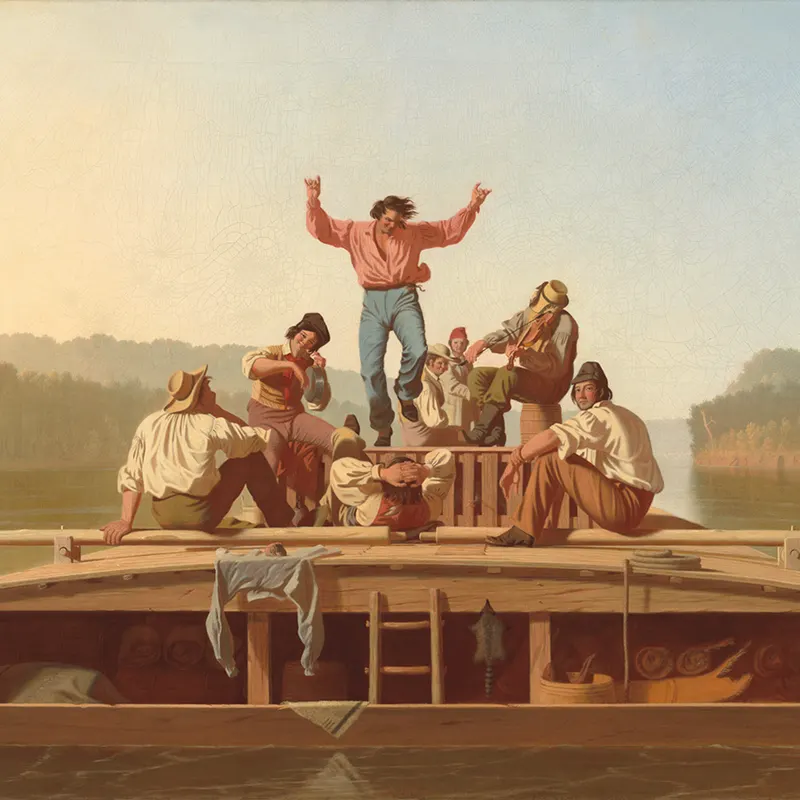
In progressAt the close of 18th century, the Mississippi River ran dark with blood and whiskey. This great artery of North America was a lawless frontier contested by Spain, France, Britain, the United States, as well as indigenous governments like the Choctaw and Chickasaw that had no intention of vacating land that had been theirs for generations. But there was one more ingredient in this cauldron of conflict. River pirates took advantage of this chaos, playing all these sides against each other in pursuit of gold and glory. From the time of the American Revolution up until the 1830s, the Mississippi and Ohio Rivers were dominated pirates just as ambitious and exciting as the buccaneers who ruled the Caribbean a century before.
On this week's Gladio Free Europe, Liam and Russian Sam give an overview of the unique political and social situation that existed on the frontier, with some discussion the nature of outlawry as well as the surprising amount of support the Spanish Empire lent to the American Revolution, particularly on the far-western frontier. Join us for a look at the old old west and the river pirates who once were the true masters of the waters. Characters include gentleman thief turned frontier warlord Philip Alston, Gaelic-Chickasaw freedom fighter James Colbert, the psychopathic hillbilly Harpe Brothers, and an ambitious young pirate named John Murrell who tried to incite a nationwide slave revolt to overthrow the planters and allow his pirates to dominate the South. Expect double-crossings and back-stabbings, a surprising amount of polygamy, and too many severed heads to count.
Transcript
The old, old West
Welcome back to Gladio Free Europe. I am Liam, joined as always by Russian Sam.
Hello, hello.
And we have a pretty fun episode today. We are going back to the old, old west. And I'm talking cowboys and trains. I'm talking a West that was much older than that and not as Western. Because this episode is going to be about the American frontier as it existed at the turn of the 19th century. The early years of America. When American territory ended at the Mississippi River and Spain controlled everything west of that.
Yeah, you just got me wondering if there were like a bunch of cranky old men around in like the 1850s talking about how like the guys out in the new west are a bunch of pansies and back in my day we were scalping 50 Indians.
Oh no, I would not be surprised, especially because some of the guys we're going to talk about here later had strange connections to the newer Old West, places like Texas and California. Because it all really, the expansion of America comes through this frontier zone. And so this episode, you know, you can tell by the title, we're going to be talking about pirates. That's the main thrust here. But it's really about this unique political and social situation that existed in early America, where the frontier along the Mississippi and Ohio rivers almost served as its own country unto itself, with distinct cultures, a very unique economy, and most importantly, no rule of law. It was a place where outlaws thrived, but only because, in a sense, everybody was an outlaw. There was really no effective legal authority on the far western frontier of the United States at this time, or what was also the far eastern frontier of New Spain.
If you were living on the frontier, you were subject to whoever was locally powerful, whether if it was a squadron of colonial soldiers, whether if it was a bandit or river pirate, or whether it was a particularly ambitious local Native American leader, because some Native American chiefs at this time tried to create polities where they brought settlers under their authority, demanding taxes and tribute. This was that kind of situation. If you look at maps of the 18th century, you'll see that before the Seven Years' War, North America was split pretty cleanly between Spain, France, and Britain. Then after the Seven Years' War, it was just Spain and Britain. After the American Revolution, it was Spain and the United States. But this is not an accurate way to understand power, especially not power as tenuous as the European control on the back country. Because in this time and in this place, real power only existed in the form of whatever coercion could be projected.
This kind of power projection was brutal, medieval. It took the form of cattle raids, burn houses, kidnappings, enslavement. It's the kind of violence you might be familiar with if you've read Beowulf or Blood Meridian, or if you're a different kind of nerd, if you've played Mount & Blade. These days, the former Western Frontier is obviously part of the U.S. and totally dominated by English speakers. Mississippi and Missouri are just as American as Pennsylvania and New York. But this wasn't the case at all back then. Things were remarkably heterogeneous in the late 18th century. And it would take a really sharp-eyed observer to see why Anglos would eventually have this political advantage in settling this contested region.
The inland waterways
And that advantage was the inland waterways of America. People in Pennsylvania, which was one of the most heavily populated British colonies, could get on a raft in Pittsburgh, take the Ohio River all the way down to Cairo, Illinois, then merge into the Mississippi, and go all the way down to New Orleans. It's a cheat code powered entirely by natural hydronomy.
Yeah, I know, while we were prepping for this episode, we just got to talking about the Mexican-American War for whatever reason. I was just wondering why exactly the Anglos had such a massive advantage compared to Mexico when it finally gained its independence. And as it turns out, it's all down to the waterways because Mexico wasn't as blessed in geography as the United States. They had to actually go over land to all these distant territories. And because of that, they just didn't have the means to actually control their frontier.
Exactly. Geographic determinism is pretty passe these days, understandably, you know, because political processes have a lot of different causes. You can't just say it's just because of the river. But this river had such an enormous role in the English-speaking settlement of the Americas. From the perspective of the Spanish, if they wanted to settle the American interior from their bases of power in Havana and Mexico City, people would either have to go over land all across the Texan desert and plains to get to somewhere like Louisiana or Missouri. If they were going from Cuba, they'd have to go all the way across the Caribbean and the Gulf of Mexico and then sail up the river against the current. But like we said for the English, the most densely populated area of English America, the Northeast, you know, like the Mid-Atlantic in New England, was incredibly close to these waterways.
That gave them incredible access to what is now the Midwest and the South. And this just has enormous consequences for the later history, with terrible ramifications for the Spanish and the French who had colonized it previously, but especially for the many Native American peoples who had lived in these areas for centuries or more.
The Choctaw and the Chickasaw
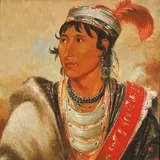
The really big Native American groups living in this region are the Choctaw and the Chickasaw that we're going to talk about both at length. They would initially cooperate with the English settlers against the Spanish and French who were there first, but pretty quickly realized that these English settlers were just coming in numbers that were not sustainable for the survival of indigenous societies. And we all know how this story ends. The Choctaw and the Chickasaw would be among the five civilized tribes who were evicted from the southeast and brutally sent to live in Oklahoma during the Trail of Tears in which many thousands of people would perish. But we're not there yet. We are talking about the late 18th century, early 19th century. This is an era when it's actually prohibited for English settlers to settle in these Native American territories, but a lot of them are doing it anyway.
The keelboat age
They're coming in boats called flatboats or sometimes keelboats, these very simple pre-steamboat kind of vessels, which means that this era is sometimes called the keelboat age or the flatboat age. And I'm just going to say it needs a better name because this is a really, really exciting time in American history. It was an exceptionally brutal time, but it was one where the absence of legal authority allowed for a lot of kind of political eccentricity and adventure that you would never see again after this frontier was closed. Yeah, just don't try this at home. Yeah, exactly. So let's talk about this frontier, what the keelboat age looked like. And you know what? Let's start around, let's say like 1770, before the American Revolution, when France had been evicted from the continent and Spain and England vied for control, with the border between their territories being the Mississippi River and the Choctaw and the Chickasaw living in between.
Boatmen of the frontier
Spain, it had a really tenuous connection to this area and consequently their control over it was very, very weak. But the Mississippi River really allowed for contact between their outposts and the rest of the Spanish Empire. So there was some contact. A lot of the recorded boatmen on these rivers had Spanish names and they were probably originally from either Mexico or Cuba. Many others were French Canadians, which, I mean, that might sound surprising now, but it all comes down to the fact that the French-Canadian boatmen would travel all the time in the inner waterways of the Americas from their bases up in the north, and they would go all the way down to the Gulf of St. Lawrence into the Great Lakes and then drag their cargo a few hundred miles overland to one of the many rivers that run all the way down to the Gulf of Mexico, which helped them in their endeavors to export furs and whatnot, which were all the rage in Europe. Yeah.
Historian Leland Baldwin describes these boatmen as constituting a class and a culture of their own, having at best a faint loyalty to one of the colonial governments claiming control of the 18th century West, and at worst a very fierce animosity to any kind of law, because law, of course, meant taxes, and these guys didn't really want to dish out any of their hard-earned money to these guys coming in from outside and trying to collect it.
Yeah, yeah, they're probably a pretty rough and tumble bunch. I think the French name for them was something like mangeurs de lard, which means bacon eaters. And supposedly, they would often not take any payment in cash for traveling along the river. Instead, just asking for payment in pork and whiskey. Probably the most famous of these guys was an American named Mike Fink, Pennsylvania Dutch, who, like so many others, floated down the river from Pittsburgh and became the self-proclaimed king of the keelboaters. He may or may not have had some kind of tussle with Davy Crockett, a pretty famous settler from around this time, you know, from the Texas, you know, fame. But what we do know for certain about Mike Fink was that his nickname was the snapping turtle, because he was this real tough, hard-drinking guy who was always getting in physical fights with his co-workers and even his clients.
So he would have been the one complaining about the guys in the New West, in other words.
Yes, that is absolutely him. He also apparently drank more whiskey than water, you know, which is not that surprising given how muddy the Mississippi and Ohio rivers are. You know, you've heard the phrase muddy Mississippi. A few years ago, Bear Grylls, the you know, survivor man guy, he went up, man versus wild, rather, he went up on a raft in the Mississippi River, entirely surviving off of Mississippi river water. But, you know, what he had to use like a triple filtration system, you know, just because he was so worried about mud and parasites and all that. But these guys.
And of course, it's much more polluted than now than it would have been back in those days.
That's true. Yeah. That's true. Maybe he has more valid concerns than they did. But these guys in the late 18th century, they didn't do any of that. There's one great story where some fancy city boy gets on a raft, you know, from somewhere like Philadelphia or Pittsburgh, going down to New Orleans, and he tries to drink a glass of water from the river, but it's totally brown. So he starts, he just stirs it, hoping to get to separate the water from the mud. And then his health captain explains that, oh, no, no, actually, you want the sand because, quote, the sand in the water scours out the bowels, and the more one drinks of it, the healthier he becomes.
Hashtag raw water living.
Exactly, yeah, yeah, yeah.
Daniel Boone and the Cumberland Gap
So in the around the time of the Seven Years' War, when the French were kicked out of North America and it was just the English and the Spanish, this territory was mostly underpopulated. But then one big breakthrough happened in settler politics, which was that a guy named Daniel Boone, not to be confused with Davy Crockett, another pioneer, discovered the Cumberland Gap, which made it really easy to travel from the upper south, like Virginia, North Carolina, through the Appalachians into what is now Kentucky, reach the Ohio River, and then float west toward Cairo, Illinois, where it becomes the Mississippi, and then down to places like New Orleans, and then eventually Mississippi and Texas.
Frontier ancestors
And you have some familiar history going back to this, Sam, don't you?
Yeah, yeah, okay. So, my dad's family, part of my dad's family, has been in the U.S. for a pretty long time. And we did some genealogical digging a while back, and it turns out that they were early German settlers to North Carolina who didn't like it. Maybe they couldn't compete against slave power, you know. I think that's a reasonable suggestion. So they went north. And the way they did it was that they crossed the Cumberland Gap. Actually, we're part of the same party that included the ancestors of Harry Truman. So he's something like my eighth cousin. When I was a kid, my dad said that we were descended from Daniel Boone himself. That's not true. It turns out that actually we're descended from Neddy Boone, his much less successful brother. And really the only thing Neddy Boone is known for are his last words, which were, I bet there's not an Indian within 100 miles of these woods.
No way.
Yeah, he was killed by some Shawnee people on a hunting trip. Very funny. And another ancestor of mine, he was actually killed by another group of Native Americans and was scalped. And his son apparently was raised, I believe it might have been the Osage people. His son was raised by them for a few years before returning to white society. It's kind of like, you know, like The Searchers and movies like that. It's a really interesting kind of frontier story that happens pretty often. So yeah, that's my own little tiny connection to this piece of history.
Illegal settlement
Interestingly, before the American Revolution, this kind of settlement that my dad's family and a lot of families did over the Cumberland Gap was actually illegal. Because really important here, the British had a much stronger vested interest in maintaining friendly relations with the Choctaw and the Chickasaw people than the settlers themselves did. So they prohibited settlement into native land. They tried to preserve that peace. These settlers didn't care. And this ended up being one of the major contributing factors to frontiersmen supporting the American Revolution. It wasn't because they were like upset about the British or monarchy or cared about democracy. They wanted to take Indian land.
Although they probably didn't like paying taxes.
They probably didn't like to pay taxes and they really wanted to take land that already belonged to the Chickasaw. So even though there weren't that many settlers of any colonial power living on the frontier in the late 18th century, it was a really important strategic choke point for all the reasons what we're saying. You know, it allows control, it allows transport from the heavily populated Northeast down to the wealthy trade cities like New Orleans and eventually Havana, Veracruz, Mexico City. Once, you know, because the Mississippi River, it is the great artery of the American North American continent. And so every power wanted this area. And then things would really explode geopolitically with the American Revolution.
Spain and the American Revolution
Right, so you guys know the basic details of the story. At least I hope you already know it. But you might have heard in your history classes that French participation in the American Revolution was absolutely massive to the point where the French really were pivotal at many key moments. But what people might not realize is that this was part of a larger proxy war between Britain and France. But what even fewer people realize is that the Spanish were also involved in their own way.
Yeah, and I gotta say, I didn't realize the extent of Spanish involvement in the American Revolution until I started researching for this episode. And I especially didn't expect how much involvement was happening on the frontier. Because you never think about Spanish speakers living in colonial Kentucky or Missouri or Illinois, but they did. Like, there's a reason why there's a city in Missouri called New Madrid. This is why.
Right.
Yeah, so just setting the stage, in the late 18th century, Spain was no longer the Spanish juggernaut of Charles V's time. It was a massive colonial empire way past its prime. But after the Seven Years' War, the Spanish started to reassert their presence in mainland North America to try to keep up with the British. They had an enormously long frontier with the British, which stretched all the way from South Alaska all the way across the continent, which of course included the Louisiana territories that had previously been held by France and which would be regained by France only to be sold to America.
Louisiana Purchase. Yeah, no, I was going to say, like, it's crazy that the Spanish Empire, everything about it is kind of mind-boggling. It was so big and it lasted for so long. But I think one of the craziest aspects is just how enormous their northern frontier is. And of course, how like artificial and farcical that was. It was real, on paper, it was meaningless. There was no ability for the Spanish government, you know, internationally based in Madrid, locally based in Mexico City, to guard these borders as far north as Alaska. It's just crazy to think about.
They really tried. They tried as best as they could. And I think, in a way, this participation here in the American Revolution is basically the last stand of Spanish imperialism this far north. Making our way back to English holdings, the 13 colonies declared their independence, of course, but Britain maintained a solid control of Florida. And at this time, this included the coast of Mississippi and Alabama as well.
Yeah, you know, I'll say if you want to learn a little bit more about British Florida that brief period, we talked all about that in our episode on the New Smyrna colony when some foolish and brutal British businessmen brought over a whole bunch of Greek and Spanish indentured servants.
I mean, so they had this massive empire on paper, at least. It included places as far afield as Arkansas and Illinois and even up to Missouri. And that's why there's a town called New Madrid up in Missouri, as I was shocked to learn.
Yeah. Yeah, and so this territory is basically the same as the Louisiana Purchase. Like you said, it eventually became part of the U.S. It was largely based out of Havana and Mexico City, but especially Havana. The Spanish really intended this colony to be kind of an economic extension of their Caribbean Empire because New Orleans and Cuba have always had very strong connections. You know, just kind of look at examples here. In the early 20th century, there was a twice-a-day ferry from New Orleans to Havana, which had a big influence on jazz. And then in the mid-60s, a whole bunch of Cuban exiles lived in New Orleans, which had very interesting implications for later JFK conspiracy theories.
Yeah.
Spanish Louisiana
So, oh. But the thing about the Spanish Empire was that it was really not a settlement colony in this area of the Spanish Empire. There was not significant Spanish settlement in, like, Missouri, in Mississippi, you know. Instead, there were small numbers of Spanish soldiers and Spanish merchants, many of them who were actually born in Cuba or Mexico. But most settlers living there, nearly all the Europeans, were not Spanish speakers. They were Spanish subjects, but they were Anglos coming down over the Cumberland Gap and then down the Mississippi River. Or they were French, because New Orleans was first colonized by the French about a century before this. And there was already a pretty big French population. And then also, you mentioned, there were the Acadians. There were the French speakers from what was previously French Canada sent by the British down into Louisiana. Interestingly, there were also a lot of Germans around here, which I wouldn't have expected.
And many of them were Protestants too. And these guys were not that happy with the shift from French to Spanish governance. The Spanish were more hardcore about enforcing Catholicism. And there was also just, you know, general resentment to any kind of government. It's the same kind of factors you see in the American Revolution. So there was actually a New Orleans Revolution in the 1750s that I never knew about, where a whole bunch of predominantly German settlers revolted against the new Spanish government, took to the frontier, and saw, we see for the first time Mississippi River piracy, where these German and Swiss guys are plundering Spanish vessels all the way up and down the Mississippi River, probably with the help of a lot of French Canadians, to frustrate the Spanish colonial effort.
Irishmen in Spanish service
And one interesting thing here is that this rebellion in the 1760s would be put down by a guy with the great name of Alejandro O'Reilly, who, as you can probably guess, was of Irish extraction. Do you know anything about this Irish-Spanish Latin American connection, Sam? Because I think it's a really fun topic.
Not nearly as much, but I do know that one of the major politicians in mid-19th century Spain was a guy named Leopoldo O'Donnell. He was prime minister several times, and he was the prime minister who presided over the invasion of Morocco in 1858, basically.
Oh, I didn't realize that. But that's not super surprising.
It sounds kind of crazy, but there were actually a whole bunch of Irish people in Spanish service during the 18th and 19th centuries. And to a lesser extent, Scottish people as well.
Because it was the whole the enemy of my enemy is my friend thing.
Yeah, yeah, and I mean, just so we're clear, many of these people had Irish names, but they had come over to Spain in the centuries before, after failed invasions in Ireland, and Spain just happened to give them refuge. So because of that, like a century later, you had all these Leopoldo O'Donnells running around and making a name for themselves.
Yeah, exactly. Although a lot of them actually were first generation. They were Irish born. And then they pledged themselves for careerist reasons for Spain. And a lot of times entire families would do this. So, like this guy, Alejandro O'Reilly, his family was really well connected with the Spanish military elite. And they were all over the Americas. One of his cousins was Hugo O'Connor, who was the first Spanish governor of Tucson, Arizona. Another one was Juan McKenna, who was probably born Sean McKenna and was one of many Irishmen to take part in the Chilean War of Independence alongside Bernardo O'Higgins.
Yeah, you can also guess his background.
Which is really kind of interesting here. They were always a small proportion of the population of Spanish America, but very overrepresented in trade and in the military. And because of that, many of these guys had connections with the new, growing Irish diaspora across the Americas. And it's believed that actually these Irish guys were pretty essential in securing Spanish support for the American Revolution when that broke out. Because, you know, again, it's the enemy of my enemy. The Spanish hated the British. The Irish hated the British. The American revolutionaries might not have been too cool with Irish Catholics, or Spanish Catholics for that matter, but they also hated the British.
Spanish support for the Revolution
Sam, I think you know more about the extent of Spanish support for the American Revolution than I do. A lot of it was facilitated by a guy named Oliver Pollock, who is an Irishman active in both New Orleans and Havana, as well as New York. But what, and so he helped secure these deals, but what did these deals look like?
Well, I know of one in particular. This was basically during the Battle of Yorktown in 1781, the big pivotal moment of the Revolution, when after which point the British decided that they were going to call it quits, but they were actually running dangerously low on supplies. So a bunch of Spaniards down in Havana, or perhaps Irishmen, who knows, were raising quite a bit of money, something like 500,000 Ducats, I think, was Ducat the currency of the time. I might be too EU for brain poison to talk about this, but it sounds good. Yeah, but they collected a lot of money and sent it over to George Washington's army, basically, is the gist of it.
Yeah, yeah. And there was also a lot of organizational support as well on the frontier. And so the frontier support was less important than the financial support. It was really more of a sideshow, I think, to the broader American Revolution. But it's a really fun sideshow. And this is going to take up the bulk of this episode, explaining what the ways the Spanish participated in the war effort. One thing they did was that they created these American militias of Americans who had settled in Spanish territory. One famous thing about Spanish America was that it was much less rigid in its racism than English society tended to be. This means that when Spain created these militias, which were entirely English-speaking, as far as I understand, of American settlers, they were interracial. They included white settlers and a lot of free African Americans. According to the historian Ed Beers, the idea was that they would take over British possessions, and then hopefully, you know, if these guys could take over British land across the border, then maybe Spain wouldn't have to deal with them anymore.
Yeah, you also mentioned that they sent money over to Philadelphia to raise an American army under a general named George Rogers Clark, which was supposed to conquer British outposts in Illinois, which was a sparsely populated area at the time, but again, something that the Spanish laid claim over. So they saw it as in their interest to secure all these territories. And in fact, during the Treaty of Paris, they actually tried to cement their claims to all of these northwestern territories. But the Americans and the British teamed up to basically squeeze them out during the negotiations.
That happens time and time again: that the linguistic affiliation between Americans and Brits alone is enough to actually shape world politics. Like, didn't Bismarck say that, like, the most consequential fact of the 19th century is that the United States speaks English? Something like that?
Yeah, I mean, someone said that. Yeah, it sounds about right. But I mean, I don't think it's necessarily a linguistic thing either. I think it's more just like this is messy enough. If just the two of us are there, let's not introduce a third colonial element that might have designs on the region.
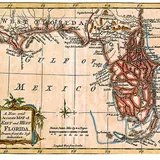
Maybe, yeah. But at the time, the Spanish very much had designs on this frontier area. Even though their hold was quite tenuous over the Mississippi River, they knew that it was incredibly important. And they thought that maybe they could retake British Florida, which had previously been a Spanish possession centuries before, especially because Florida was so underexplored, nobody really knew what was there. You know, if there might be, you know, now we know it's basically just a swamp, but at the time, there could be, you know, great riches hiding there in the jungles or whatever, in the in the mangroves. So Spain was.
And it was also a very recent loss, so the wound was fresh. The British took over Florida in like 1765.
Settlers between empires
So here's the thing: the Americans in Philadelphia, the revolutionary government, was very excited and welcomed this Spanish support. They were totally cool with creating Spanish-American armies to take British frontier forts. But another group of people was not so cool with this. And these were the American settlers themselves living in the frontier. People who often were subjects of both the British crown and the Spanish crown simultaneously because they had properties on both sides of the Mississippi River. These guys tended to prefer British rule to Spanish rule for a couple reasons. Number one, it's because Spain was very Catholic and a lot of English-speaking Protestants at this time were very anti-Catholic. But number two was because the Spanish were actually perceived as a closer colonial authority than the British were, which is very interesting. And because think about it, you know, Britain's based in London. When the American Revolution breaks out, the new authority is based in Philadelphia.
Whereas the Spanish have a presence in New Orleans, and then they have a presence in Havana. And this means that when the American Revolution breaks out, when Spain starts creating these settler armies to take over British settlements, some settlers eagerly join the Spanish as part of the American Revolution. You know, it's because the Americans and the Spanish are on one side. But other American settlers don't. Other American settlers see Spain as a more immediate overlord than Britain. So they say, let's work with Britain instead. If they're all the way in London, they're not going to ask us to pay taxes. Anything like that.
Philip Alston, gentleman pirate
And the most interesting of all these guys is Philip Alston, the 19th, the late 18th century gentleman river pirate.
Yeah, you don't really hear that name too often these days, but historian Otto Arthur Rothert wrote that Alston, quote, looms large in the romance and gossip of the latter part of the 18th and early part of the 19th centuries. He was a gentleman by birth, education, and early association. He comes down to us handsome in figure and grand in manner, wearing broadcloth, ruffles, and lace. He had an air of chivalry to women and of aloofness, superiority, and mystery to men.
Yeah, and so he was part of the slave-owning settler elite of the Carolinas. And if you know anything about the Carolinas, they had probably the most aristocratic and also the most brutal of any slave-holding elite, partially because these colonies were actually founded by white Caribbean settlers, interestingly. In a weird way, North and South Carolina have been called colonies of Barbados because so many of the people there were slave owners who couldn't deal with the competition in the Caribbean. So they brought their slaves to the continent where there was less economic competition. And the Alston family, perfect example of this. Possibly because there was too much competition even on the mainland, the Alston brothers pretty quickly decided to leave South Carolina and take up a life of crime, doing so initially in probably the most kind of pampered life of crime you could do, which was counterfeiting.
They were first, Philip and John Alston were first accused of counterfeiting in 1770 in South Carolina, then accused the next year in North Carolina, and then accused again the year after that in Virginia. So it seems like they were basically just, you know, escaping the law as much as they could. With the constables hot on their trail, Philip and John Alston cross the Cumberland Gap, get on the Ohio River, illegally travel through Native American lands before landing in British West Florida, where they established themselves in the city of Natchez, Mississippi, not that long before the American Revolution. You never really hear about Natchez these days, but it was pretty important in the 18th century because it was the closest city to New Orleans. It was also an English-controlled city, whereas New Orleans was Spanish. And if you were going down the Mississippi River, you were gonna pass through Natchez first.
So pretty strategically important. It was also, but despite that, it wasn't a big town. It probably only had a population of about 1,500, a third of whom were enslaved. Philip Alston pretty quickly became the biggest high roller around, largely due to his huge pockets full of counterfeit money. He also, though, was much more friendly with Native Americans than a lot of early frontier settlers. And this is something that, unfortunately, only compounds his bad reputation in the 19th century. He was really good friends with members of the Choctaw nation, who also were friendly with the British, but not so friendly with other American settlers. This means that when the American Revolution eventually breaks out, it would make a lot of sense for Philip Alston to work with the Choctaw against other settlers on behalf of the British and against the Spanish.
The Choctaw
Yeah, so the Choctaw, they are the descendants of the great Mississippian civilization in all likelihood. They probably crossed the Mississippi River after the urban civilization over there collapsed and they came to clash with pre-existing peoples like the Chickasaw. And these clashes took on more of a character of a proxy war between the French and Spanish as colonization really went underway and as well as British interests when push came to shove. This got to large numbers of people from other nations being brought into Choctaw territory to work as slaves. Eventually, the English and Scottish settlers began to move into Choctaw territory, and many of them would marry into these native elite circles, with the Choctaw adopting the British practice of African slavery to a very large extent.
Yeah, yeah, and this is a really interesting aspect you see about the so-called five civilized tribes. They were called that largely because they had very strong blood ties to the settler states. And these kinds of blood ties were a huge part of why these marriage ties were why these tribes were supposedly considered more civilized than other native peoples. And, you know, unfortunately, a major mark of this civilization was the practice of racialized slavery. And so we should mention here, Philip Alston, big-time slave owner. Even though he had left the kind of fancier slave-owning society of the Carolinas, he established himself as a frontier slave owner. And although, you know, on the frontier, people usually had fewer slaves because they had less money around, it was often a worse life for the individual enslaved person because if times got tough in the frontier and your master went hungry, you were going hungry too, you know?
Yeah, but this was really not a great environment. Yeah, but this was often great for the masters themselves for the same reason why the Barbados planters decided to move to the Carolinas. Suddenly you're a big fish in the small pond, and so you have a lot more control relative to where you might have had further out east.
Because it was such a small pond, he probably really saw himself as, you know, someone who didn't need to pay taxes or follow the law. A real kind of like right-wing proto-libertarian kind of figure. I think that's kind of the best way to understand Philip Alston, a rich guy who thinks he's God. And so, for this reason, he teams up with the leader of the Choctaw at this time, whose name is unknown, unfortunately, to create this mixed white and Choctaw militia to fight the Spanish on behalf of the British crown against the American Revolution. So, and a lot of the people he'd be fighting were other American settlers who were in favor of the revolution. I think it's also not a coincidence here that the Spanish militias were interracial, including a lot of black people, whereas the British militias were largely made up of slave owners.
I think that to take a step back here, the issue of slavery and the American Revolution is discussed. The general rule is that the British were actually more open to participation of free black people and more opposed to slavery than the Americans. But there are little exceptions to that, and this is one of the exceptions, because the frontier really was somewhere else, and that the assumptions you might have about American society don't necessarily apply here.
The siege of Fort Panmure
So, during the kind of the frontier campaign of the American Revolution, these pro-British militias surrounded a Spanish fort called Fort Panmure, where about 70 Spanish soldiers, ethnically who might have been American, they might have been Anglo-Americans, they might have been Irish, they probably weren't actually from Spain, but 70 of them were held out. Initially, the rebels tried to take the Spanish fort by just charging it head-on, but then it turned out that the Spanish had a cannon, and one of their commanders was instantly blown up by this cannon. And as they, you know, picked up his chunks off the ground, they realized they probably shouldn't do that again. So instead, they decided to wait out the siege. And it seemed like a great idea at first. I mean, just keep besieging the guy, don't get shot, and you're golden, right? Well, after two weeks, Alston's militias themselves started to run out of food.
And then, in an incredible stroke of good luck, they saw a pro-American messenger riding towards the fort with a letter from the Continental Army to the Spanish commander of the garrison. The militia pulled this guy off his horse and realized that they had a great opportunity on their hands, that they were going to give a different kind of message to the Spanish commander instead. Historian Ed Beers described it as follows: Quote, John Alston, a skilled forger, was called in. Addressing a letter to the commandant, it was pointed out that, quote, further resistance was useless, that the insurgents had secretly undermined the fort and deposited therein a large supply of powder brought in by American pack horses from Pensacola, and that very night had been fixed for the explosion.
Yeah, and the fighting is yesterday, they're basically saying, Yeah, like guys, get out of here, they're about to blow up your fort.
And this worked. The Spanish incredibly foolishly surrendered, and these pro-British militiamen, including the Alston brothers, rushed into the fort, took all its inhabitants prisoner, and started looting the place. According to Beers, they even stole the personal belongings of the Spanish commander, you know, shaking the coins out of his jacket, stuff like that.
Yeah, yeah.
And so during this siege and this plunder, though, they then started occupying this fort for themselves. They were thinking, man, this American Revolution, it's gonna be over in a week, right? Come on, we're kicking out the Spanish out of Fort Panmure. I bet the Brits are gonna be taking over Philadelphia and New York any day now.
Yeah, I trust a plan.
Turning pirate
Then they received word that actually things weren't going as well in any other campaign of this war. Things were going so badly that the British, it was 1781, the British had just lost Yorktown, thanks in no small part due to Spanish support, and now were about to intrigue with the Americans in Paris to figure out the new post-war settlement in which the United States would be recognized as an independent country. It seems like Philip Alston didn't really care about whether he was an American or British citizen or not, but he did not want to be a Spanish citizen. And he really didn't want to give this fort he just captured back to the Spanish, especially because while he was capturing Fort Panmure, his home back in Natchez was occupied by Spain. Before the treaty was signed, there was going to be this kind of a quick peace arrangement to give Natchez back to the British and give Fort Panmure back to the Spanish.
And this would have required trusting the Spanish to return the Alston brothers' property. And the Alston brothers weren't going to go along with that. So this was the moment when both Philip and John Alston really become pirates. They leave Fort Panmure only to take to the river and start plundering Spanish ships, even though the war is technically over. As a result, the Spanish burned their plantation, freed all their slaves, and captured John's children as hostages. Philip Alston here realized that he could no longer rely on any authority other than his own, whether it was British authority, Spanish, or American authority. He really became an outlaw, answering only to the brute force of the frontier. And the two brothers escaped up the river, at one point plundering the Spanish church and stealing a golden crucifix. During this plundering, though, John Alston is captured and basically drops out of the historical record.
So he might have died for all we know right around this time. And we never know what happened to his children.
Or maybe he became Jebediah Springfield. Who knows?
That's true. But Philip Alston, who's really kind of the main character of this whole episode, he pressed further north. And so, just for some dual geography lesson here, if you're in Natchez, Mississippi, and you keep going north on the Mississippi River, going up the river, eventually you're going to get to Cairo, Illinois, where the Ohio meets the Mississippi. You can go left and go really deep in the frontier, or you can go east toward American civilization. And that's where he chose to go. Eventually, he landed on the border of Kentucky and Illinois at a place called Cave-In-Rock, which is pretty famous for being the home or the hideout of a lot of different river pirates. He's the most famous, probably, of them. He stayed there with a bunch of his Choctaw allies for a couple years. And during this time, they learned some even worse news.
Not only had the British lost the American Revolution, but they were actually going to surrender British West Florida, including the city of Natchez, to Spain. So, you know, if he ever was going to return to his home, he'd have to do so as a Spanish subject.
James Colbert and the Chickasaw
But there was one glimmer of hope for Philip Alston. You know, if his great enemy was Spain, he wasn't alone. Because a strange guy named James Logan Colbert had started his own war against Spain not that long after the end of the American Revolution.
Can you tell us about James Colbert?
Well, the details of him are kind of sketchy, but it seems like he was probably a Scottish Highlander, and according to legend, he was a Jacobite rebel who fled to Americas when things went south. So he was probably a native Gaelic speaker who went to the frontier like many other Scottish settlers, and he had very little affinity for the British or the Spanish. Instead, he decided he was going to throw in his lot with the Chickasaw, the other major indigenous nation related to the Mississippian culture and longtime enemies of the Choctaw.
Yeah, he apparently became completely fluent in the Chickasaw language, and apparently he spoke it better as a second language than English, you know, which is kind of interesting. You know, and he was a pretty prominent guy within the Chickasaw leadership. And I'm curious if there's, because he was a native Gaelic speaker, I gotta wonder if there are any Gaelic words that are used in Chickasaw today. But the reason he was so influential is because he married three different Chickasaw noblewomen simultaneously, many of them presumably the daughters of major kind of tribal advisors, because he himself was then given a position on this, on the tribal council, even though he was just some white guy. Chickasaw tribal membership was also matrilineal, which meant that even though he was a foreigner, his children with his three wives were full Chickasaw citizens. And two of them would later become chiefs of the Chickasaw.
But that's not until after this guy's dead. These children at this point, Levi and George Colbert, were probably in the raiding party that came upon Philip Alston and his Choctaw allies when they were hiding out in Cave-In-Rock. Because Cave-In-Rock was, at this part of the frontier, was mostly controlled by the Chickasaw people. And they were probably wondering, you know, because the Choctaw were their longtime enemies, what were the Choctaw doing in this rock? And why was this guy, Philip Alston, there?
Yeah, so although the Chickasaw and the Choctaw were enemies for a very long time, they found that they had common interests when it came to the Spanish. Both of these tribes had really unusually warm relations with English-speaking settlers, and helped by figures like Philip Alston and James Colbert, they successfully built ties with the English-speaking community. Which, of course, helps to explain why these two tribes would later be included in the five civilized tribes rubric that we mentioned earlier.
A golden age of river piracy
So from this base of Cave-In-Rock, they assembled a pretty significant army, apparently about 600 people, probably two-thirds of whom were Native American, to act as river pirates. And so this mixed group of river pirates totally dominated the Mississippi and Ohio rivers. It was a golden age of piracy on the river. Any Spanish ships would be captured and plundered. But, you know, you can never really trust pirates to only plunder one side. So a lot of these guys, including Philip Alston himself, really started capturing any ship that came by, including British ships and including ships from the United States. Even with his plantation gone, Philip Alston was able to start a new life for himself as a farmer along the banks of the Ohio River. His wife and his children were with him. He quite possibly might have been at least a de facto polygamist.
The timing of his various marriages is kind of funky. We don't know if he abandoned one wife and then married another, or if he was living with multiple women simultaneously. This is a recurring theme here. These guys, you know, these are creeps, they love doing stuff like that.
Alston's Lick
He started basically his own town, which is kind of funny, called Alston's Lick, due to a salt lick that he discovered nearby. He built a mine, he established a tavern, he built a church in which he was the preacher, and he built a school in which he was the only teacher. It really kind of seems like he was the like little feudal tyrant of this one stretch of western Kentucky, which is, you know, when I said that he's kind of like a right-wing libertarian dream, you know what I mean? Like, this is, I think he really kind of represents like the most adventurous, but also the most kind of detestable aspects of America, you know? And I also kind of think that we were just talking about the Sengoku period of Japan last week. This guy was doing Sengoku America when he was, you know, becoming a warlord of southwest Kentucky.
But, you know, we said that he's, you know, somewhat detestable.
Slavery on the frontier
A lot of reasons, you know, he's a pirate, did a lot of killing, did a lot of plundering. But he also did a lot of enslaving because he was, after all, a white southern guy with a lot of money. And you really couldn't be a rich white southerner unless you were deeply invested in the slave trade. And so I think the darkest stain in his record, or his soul even, was that in 1786, Philip Alston sailed back into his old hometown in Natchez on a pirate raid and ran into a guy named King, whom he had previously enslaved, who used to own. And although this guy, King, was probably living as a free man in Spanish territory, Philip Alston decided that he was still his property. So he kidnapped this guy and brought him back to his lair of Alston's Lick. And we never know what happens to King after that.
So he probably died in captivity, which is just incredibly brutal. Philip Alston kept on as a pirate well into his 50s and 60s, and also as a counterfeiter. He never gave up with that. He had a friend named Duff, who was a really big counterfeiter, and the two of them worked together to mint fake American coins, fake Spanish coins, fake British coins. They flooded the economy with fake money that made him very rich. Eventually, though, more and more settlers started coming across the Cumberland Gap and then floating west on the Ohio River, especially because, as a consequence of the American Revolution, white settlers were no longer prohibited in taking Chickasaw and Choctaw land. So I kind of wonder if around this time if these people maybe started regretting working with settlers at all, you know, because these guys were never actually looking after them. The last thing we know about Philip Alston is that he was involved in one little final kind of swan song, which was the Yazoo scandal, in which a whole bunch of land on both sides of the Spanish and American border was sold by the government of Georgia, even though they didn't legally own it.
And this guy was right in the center of it. So yeah, one last little, you know, last hurrah. He died in the year 1800, probably completely happy and totally unpunished for any of his many, many crimes.
The Harpe brothers
But the name Alston would remain synonymous with river piracy for another generation, largely due to the notoriety of the Harpe gang.
Yeah, so Philip had a son named Peter Alston, who was probably born in Natchez, but he followed in his father and uncle's footsteps across the frontier. He grew up without a conception of law, most likely, and probably no concept of morality aside from what his father preached in his makeshift church and school. He also followed in their footsteps career-wise. He became an outlaw and a river pirate, and he had his own colorful but much shorter career in the early 19th century. But to get to Peter Alston's brief and very violent life, we should introduce another outlaw family, which was probably even more brutal than the Alstons, if you can believe that.
These were the brothers Wiley and Micajah Harpe, who are some of the most brutal bandits in American history and often considered America's first serial killers because they were so prolific and so brutal in their violence. These guys are pretty well known. I think a lot of our listeners might have heard the name the Harpe Brothers before, so we're not going to go as deep into these guys as we have been with some other pirates. But if you really want to know about their exploits, the best and also somewhat dubious source on them is this really fun 1855 book that I read parts of for this episode, which is called the very wordy title, Legends of the War of Independence and of the Earlier Settlement of the West. Despite the title, it's this riveting thriller basically from the perspective of an American revolutionary soldier tracking down the Harpe brothers on their various crimes.
And although it's heavily fictionalized, and I don't think that the specific stories are necessarily true, they were recorded like almost a century after they happened, 80 years. We do know for sure a few things about the behavior and the character of the Harpe brothers. And that was that, unlike the high-rolling Alstons, these guys were real salt-of-the-earth petty thugs. They grew up dirt-poor in the backcountry, with records so poor we don't even know if they were actually brothers or if they might have been cousins. Just like Philip Alston, though, they were British loyalists, just because the British gave them carte blanche to plunder farms of suspected American revolutionaries. And this plundering was about as brutal as it could have been. They widely murdered people they came across, and they also practiced very widespread sexual violence. Micajah Harpe in particular was a notorious rapist, and his MO was capturing women, declaring them as his wives, and then dragging them off like some kind of ogre.
Really, really, yeah, really brutal stuff. Really one of the nastiest figures in American history. They probably spent a lot of time hiding among indigenous peoples like Philip Alston had done, but I'm saying probably because I kind of wonder if this might be a weird 19th century kind of racialist embellishment. Because one of the books I was reading from this time, they mentioned somewhat disapprovingly in their defense that other 19th century historians had thought that the brothers were so brutal, they had to have some non-European ancestry because they were committing a level of violence that white Europeans at this time saw as inherently against their own imagined racial character, which I think is ridiculous. Most likely, these guys were fresh off the boat from Scotland. It's absurd. But, anyways, whether or not you take these various anecdotes at face value, and I hope you don't take the racist ones at face value, the Harpes definitely killed a lot of people during the American Revolution, became very notorious.
So, for this reason, in 1799, around the same time that Philip Alston is dying, these guys make their way to Cumberland Gap and decide to become outlaws on the frontier. The first thing they do is go to the city of Knoxville, which had recently been established, and they steal all the horses they can and then set fire to the place to create a chaos. It was around this time that a local farmer named Edward Thiel stumbled upon Micajah Harpe and his harem, as well as his huge collection of stolen horses, and assembled a posse to catch him. They apparently caught both of the Harpe brothers and had him in handcuffs, even. But on the way to the local jail, they somehow made their escape, collected their captive families, and made their way towards the banks of the Ohio River. On one of their nights on the road, they were stopped for a party described as, quote, a rowdy groggery with some men who might have been partners in crime.
One of those attending, Mr. Johnson, asked the brothers if they might be the Harpes who the lawmen were looking for. The next morning, Johnson was seen at the bottom of the Ohio River. His body was cut open with stones shoved inside of him to weigh it down.
Yeah, really nasty stuff. Yeah, so by the time the posse discovered this, the Harpes were long, long gone. They floated west on a makeshift raft as far as the river would take them. And eventually they landed on the perfect hiding spot. It was a cavern not far from the confluence of the Ohio and Mississippi rivers. This was Cave-In-Rock, the very same place where Philip Alston hid out with his Choctaw allies 20 years earlier.
Which, again, the geography of the place really explains why it became such a popular place, because you literally just take the river as far as it'll go and you're right there.
Yeah, no, it's yeah, it's a perfect hideout for any kind of criminal.
Cave-In-Rock and Samuel Mason
And so Philip Alston's probably dead by now, but his son, Peter Alston is carrying on the torch. He's probably in his mid-20s around this time. But he was probably less successful of a pirate than his dad because he wasn't the one running the show. It seems that the preeminent pirate based in Cave-In-Rock at this time was another guy named Samuel Mason, a horse thief turned American revolutionary hero, turned judge. So, you know, if Philip Alston is this like British aristocrat, you know, who becomes like a nobleman of the seas or of the river, rather, Samuel Mason, different kind of figure. He instead is a middle-aged businessman with a pretty respectable life in a different kind of way, a more frontier life, doesn't have any fancy roots, who made an honest living of himself and then got bored and said, you know what? I'm going to become a pirate at 50 years old.
So that's what he does. I think this is what a midlife crisis looks like in the 18th century.
A guy named Stede Bonnet did the same kind of thing in the Caribbean.
Oh, yeah, that was the guy who was involved with Blackbeard, whom Blackbeard later left marooned.
This guy, you want to maroon him too, Samuel Mason. He seems to have been pretty annoying. He was a real huckster. He did whatever he could to scam people and make a living. Whether it was counterfeiting with that guy Duff who previously worked with Philip Alston, whether it was piracy or even just as an entrepreneur, which I think is kind of funny. He did a lot of honest business too, was always a constant self-promoter. So initially, he welcomes the Harpe brothers, who apparently came with their multiple wives and many children. They joined up with his criminal enterprise, but there was tension pretty quickly between Samuel Mason and the Harpes. Maybe it was because Samuel Mason fought in the Revolutionary War and these guys fought for the British. Maybe it was because the Harpes were too brutal for him, or maybe it was just squabbling over loot.
But for whatever reason, after I think just a few months of living in Cave-In-Rock, Samuel Mason kicks out the Harpe brothers, who then make the very bad mistake of deciding to return back to Knoxville, the city they had previously basically burned down.
The death of Micajah Harpe
Because as soon as they get there, they are apprehended. There is a bloody shootout. Wiley Harpe, true to his name, manages to wiggle away, leaving his brother, who is shot from his horse. It's really brutal. Micajah Harpe is shot, dragged down, and then immediately, the relatives of all of the people he's murdered and raped and abused come on him and apparently start hacking him with tomahawks, just chopping him apart while he's still alive. And this is, this is getting into folklore territory here. I'm a little skeptical if this is really true, but the story goes: as Micajah Harpe was being chopped apart by his own victims, essentially, he, for the first time, started to feel bad about killing so many people, and fearing for his soul, began going on a long, bloody confession of all of the different crimes he'd committed. Something like 20 different murders and innumerable beatings and rapes and kidnappings.
The most, probably the most disturbing of all of these is that he said that just a couple years before this, one night he was out in the woods with his baby daughter who was crying too much, and he got so mad at her annoying crying that he just murdered his own child right there. And this, yeah, this confession was so disturbing that one of the settlers couldn't hear anymore, and at this point, upon hearing this, cut his throat with a knife to shut him up for good. His head was cut off, put on a stick, and displayed for several years along a road that is now called Harpe's Head Road. They let the flesh rot off the skull, and apparently was a local landmark for several years. I'm curious if Wiley Harpe ever saw it.
Mr. Wilson's Liquor Vault
I don't know. Because Wiley Harpe would live for several years longer as a horse thief and again as a river pirate. He returned to Cave-In-Rock after being gone for about a year and a half. And by the time he gets back, he sees that Samuel Mason has tried to become a legitimate businessman. And something I find very funny is that he knew this because there were billboards placed all along the Ohio River advertising Cave-In-Rock as a legitimate business known as Mr. Wilson's Liquor Vault and Entertainment House, which was a tavern, possibly also a brothel, based out of Cave-In-Rock. But as soon as Wiley Harpe gets there, this all falls apart. And Mr. Wilson, that being a pseudonym for Samuel Mason, goes back to his old ways. Which is kind of a problem because during the year and a half that Wiley Harpe had been back in Kentucky, you know, until his brother was killed, Samuel Mason had really seriously tried to go clean.
And in doing so, he had promised to the Spanish, who at this point controlled Natchez, that he would become a Spanish subject, and in return, he would only attack American ships. He would never go after Spanish ships. Wiley Harpe joins his gang again, but doesn't want to play by those rules. Harpe either didn't know or didn't care about this, and so Mason got right back into the old lifestyle. And so it went south much quicker than it normally did, which led all three of these gentlemen to find themselves inside of a jail cell in New Madrid.
Arrested in New Madrid
Yeah, yeah, that all three of them as in Samuel Mason, Wiley Harpe, and Peter Alston, the young son of Philip Alston. The Spanish judge sent them to New Orleans for trial, and New Orleans is about two weeks down the river from Natchez. And it would be captained by a Spanish officer named McCoy, who I have to assume is one of the many Irishmen in Spanish service. During this long boat ride, three things happen, and we don't know in what order. Samuel Mason and Wiley Harpe would become enemies, possibly blaming the other one for their capture. Peter Alston decided to side with Wiley Harpe over his old boss Mason. Maybe he was tired of playing second fiddle. You know, he thought he deserved his father's empire. And then, at one point, the three of them all managed to escape this boat and swim to shore, either separately or together.
So I gotta say, McCoy really dropped the ball here. How do you let all three of your prisoners escape? But no matter in what order this happened, these guys were on the run for about a year and a half, and a huge bounty would be placed on Samuel Mason's head as the leader of the operation. We don't really know what these three guys were doing for the next year and a half. But a lot happens politically. Spanish Louisiana briefly becomes French Louisiana under Napoleon, and then Napoleon sells this territory to President Thomas Jefferson, and it becomes the Louisiana Purchase. New authorities come in, and the Spanish judges and the Spanish governors are replaced by American judges and American governors, which is probably why, about a year and a half after that river boat escape, a guy comes into the office of the new American governor with a package.
Samuel Mason's head
That guy is Peter Alston. He demands the bounty for the capture of Samuel Mason. And when the judge says, how do I know that you actually captured Samuel Mason? Peter Alston shows that his package is in fact the severed head of Samuel Mason.
Yeah, upon which, instead of paying the bounty like Philip Alston expected, like Peter Alston expected, the Americans said, Oh my god, you're one of the outlaws. We've got to arrest you. And a chase ensues. Peter Alston escapes New Orleans, links up with Wiley Harpe, which then leads to both of them getting arrested. So in 1804, Peter Alston and Wiley Harpe are tried in a federal court and hanged publicly in the small town of old Greenville, Mississippi. A young militia officer named Andrew Jackson may have been in attendance for this hanging. This death really marks the end of the golden age of piracy on the Mississippi and Ohio Rivers, because it really was all tied up in the operation of the Alstons and Samuel Mason.
James Ford and the Reverse Underground Railroad
But there'd still be some lingering examples of piracy. The heads of Alston and Harpe would be put on pikes, just like the head of Micajah Harpe, you know, and said, you know, as a warning. But it wasn't much of a real deterrent. Because although the American legal system was slowly expanding over the American frontier, there was still this power vacuum that allowed for smaller-scale pirate operations to exist. One of them was a guy named John Ford, sometimes known as James Ford. He went by a lot of names. And he probably is the most personally reprehensible of any of these pirates. Actually, maybe not as bad as Micajah Harpe, but he's up there. Because Ford had a very peculiar operation. It was something that's now been nicknamed the Reverse Underground Railroad. You can probably guess what that is, Sam.
Oh, yeah. My God. Yeah.
Yeah, he would go into the North where slavery had been abolished, kidnap free black people, and sell them into slavery in the South. You might have heard of Solomon Northup, who has the memoir 12 years a slave, you know, very famous. They did a movie about it like 10 years ago. James Ford was one of the guys who was doing this. He was a real sleazy son of a bitch, described by his son-in-law as looking like a surly bulldog or perhaps a lion-tamer who entered criminality because what he was doing was actually illegal. And I gotta say, in a moral sense, enslaving somebody who was born free, I don't think is any more evil than enslaving somebody who's born into bondage, but in a legal sense, this was beyond the pale. And this caused him to actually be basically exiled from polite southern society of other slave owners and resort to a life of crime.
So, just like Samuel Mason, he was well into middle age when he became a pirate. He was probably about 45 in like 1820s and would do this for another 10 or 20 years. He took over the old hideout of Cave-In-Rock and formed his own gang of pirates. By this point, the old counterfeiting expert Duff was dead, but a new group called the Sturvin, the new group called the Sturdivant Gang had been established, and he worked with them to make and distribute fake coins. He got into a lot of violent scuffles with local sheriffs, and it seems like two of his sons both died in these shootings. So he really, you know, destroyed his whole family for this pursuit. And he was exceptionally brutal, not only to the people he was enslaving, but even his own men. Because in 1833, a guy named Alonzo Pennington got tired of this treatment and killed Ford, ending his career.
John Murrell
There would be one more other pirate, though, who I think might be the most interesting of all of these. He was a guy who's somewhat remembered from folk songs. I think I heard his name like once, but didn't know too much about him. And he was a guy named John Murrell, who claimed to have a crew of 2,500 men, both white and black, which is very important to his character and his career. It might have been as few as 80 people, but still pretty significant. And this was in the 1840s. And he really was the last of all the Great River Pirates. Because, you know, 1890s, this area is just totally the frontier, no law at all. 1820s, when Ford is active, it's now American territory. There's the beginning of American law. 1840s, places like the Mississippi River are as much as the United States as Philadelphia, you know?
Can you take it from here during the Second Great Awakening?
Yeah, and so he took to a life of preaching during the Second Great Awakening. Murrell would pose as a traveling preacher and he would speak to mixed-race audiences while his associates stole their horses and picked their pockets. The mixed-race part is very important because Murrell was a white guy who deliberately crossed the color line in the old South. Granted, he did so for less than noble reasons, but, you know, progress.
Yeah, it was very opportunistic colorblindness, you know. I don't think it was necessarily because he was a good person. I think he is a more romantic figure than someone like James Ford, but not a great guy. Regardless, interestingly, so he was anti-slavery for a very funny reason. Really, he wasn't anti-slavery. He was just simply pro-slave revolt. Because, kind of like a proto-Charles Manson, he thought that increased racial violence in America in the form of slave rebellions would lead to chaos and a power vacuum that he could take advantage of. Because he was constantly being pursued by racist white southerners, he thought that if these guys were overthrown, he'd have one less problem to deal with and could expand his pirate empire maybe across the entire Atlantic, like someone like Blackbeard had done. You know, very ambitious guy and very young, too. He was in his mid-20s during all this.
And so when he was not plundering ships with his 80-man crew, he would go around cities in the South handing out anti-slavery pamphlets as well as supposedly propaganda meant to incite slave revolts among black people. And this was the probably the biggest thing you couldn't do in the ante-bellum South. You know, if you really wanted to get the white aristocracy mad at you, it's going to be this.
Yeah, I mean, we really have to say critical support applies here, like in no other case.
Oh, yeah. Yeah. No, no, that's right. No, this guy, he's the best of all these. Like, I would love to be on John Murrell's crew. Also, the fact that he was so young is kind of funny. This guy's like 25 years old with like dozens of men working for him. That's crazy. Really, yeah. They don't make, like I said, they don't make him like these two. He was a real folk devil across the South because of his opposition to slavery and his active support for slave rebellions. His face and name were on wanted posters from Mississippi to Tennessee. And at one point, because he was assumed to be a big gambler and a big drinker, the city of Vicksburg closed all of its casinos and bars in hopes of keeping him away. I think it's very funny.
Yeah, just closing all your bars to keep one guy away.
That's I know, isn't that great? Yeah, no, John Murrell, he was a big dude.
Murrell's fall
But then in 1835, his career is cut short when he was arrested for his role in facilitating a slave escape. He would spend a decade in prison in which he'd be treated terribly by the guards, who saw him as the greatest threat to white society and white supremacy. He was beaten badly, probably causing him to develop some kind of terminal illness. And so when he was only 38 years old, he was released simply because he was on death's door. And tragically, he died before he would see the end of slavery. And his great dream of a giant pirate empire would, of course, never come to pass. Instead, all he would see would be the complete dissolution of frontier piracy. Because by the 1850s, the steamboat era had very much begun. The U.S. Coast Guard was now patrolling the river to stop any kind of piracy. And people like Murrell were now part of the past.
So, unlike somebody like Philip Alston, who died at the height of his career, surrounded by comrades and ill-begotten wealth, Murrell dies penniless and alone in a boarding house in Knoxville.
Yeah, and one final rebuke of him: his body would be disinterred after he was buried, and they cut his head off. But by now, the Americans had become too civilized to put their heads on sticks on the roadside. So instead, it was merely pickled and shown in circuses across the U.S. for the next 50 years.
Yeah, I wouldn't be surprised if Murrell's head is still on display in some weird, you know, sideshow somewhere in America, or maybe in the back room of some museum.
Apparently, his thumb is still on display in the Tennessee State Museum.
Oh, well, there you have it. All right. Well, hey, if any of our listeners want to go to the Tennessee State Museum, let me know how his thumb's looking. And if anybody has any leads on where the head of John Murrell might be, also let us know. Because this guy, I think he does deserve a critical reevaluation. And I think his head probably deserves to be buried. So yeah, so.
The end of river piracy
Alright, well, that basically concludes these stories of these various river pirates. You know, I feel like river piracy is something that you might see as a footnote in stories about the American frontier, but was really a much more essential part of American statecraft and American American economy than you might expect during this time. The keelboat age, which again, really boring name, really should be known as the River Pirate Age, I think, because it was just this really significant cultural and social moment that shows a lot about the state of power in any society. You know, if you've ever taken any kind of introduction to political ethics class, you're going to learn about the idea of a monopoly on violence. And I think that this is a great example of what a world looks like and what that monopoly does not exist. Instead, power only exists in the form of whatever people are willing to use or capable to use, whether they are, you know, venal pirates like Philip Alston or just deranged killers like Micajah Harpe.
And eventually this situation was only able to end due to the final extension of American law and the force of law over this region. And it looks a lot like the eradication of piracy in the Roman Mediterranean, for instance, in the Roman Empire, or in the British Empire, how they successfully eradicated piracy in the Caribbean in the middle of the 18th century. Well, yeah, I hope this was a fun little, you know, set of frontier stories. If you guys are interested in learning more about any of these figures, a lot has been written on the Harpe Brothers, and a lot of local histories, history professors based in places like Tennessee and Mississippi and Illinois have spent their careers researching the history of these guys as well as the various marshals who hounded them. There's really a lot to dig into here, and we just kind of scratched the surface, but it's a really, really fascinating era.
I gotta say, I never realized to what extent the Spanish were involved in the early American frontier and in support in the American Revolution. Really an interesting topic. And it lets you know that although this, you know, the Americans had this incredible geographic advantage with their control over the upper waterway, it wasn't necessarily inevitable that the United States government would come to control this vast stretch of territory. It certainly could have remained in the hands of peoples like the Choctaw and the Chickasaw. It could have remained in the hands of the Spanish. And I think that these guys, like Philip Alston, show you that in the time before American society was fully solidified, things really did look a little bit different. Things might have potentially been better. I don't know. But they could have gone a different way.
Wrapping up
Yeah, yeah. So once again, don't try this at home, but hopefully you enjoyed this episode enough to maybe pitch us a little bit of money on our Patreon. We've had it up for a little while, so if you thought that this episode was worth your time, then please throw us a few bucks. We'd be really thankful.
Yeah, we'd really appreciate it. We've got some very fun episodes coming up soon. Later this month, or perhaps in July, we will be continuing the story of Christianity in Japan with an account of the brutal Shimabara Rebellion, the last stand of the Japanese Christians, as well as an in-depth social overview of what Japanese Christian culture and society looked like. Because it really was this really interesting synthesis that was tragically stamped out. And then we're going to be going into the Caucasus, I think for the first time, to talk about the history of ancient and medieval Georgia, which is something that I feel like most Americans know basically nothing about, you know? So, yeah, guys, stay tuned, and we hope you're enjoying.
The show is also on Apple Podcasts, Overcast, Pocket Casts, Podcast Addict, YouTube, RSS and Patreon.