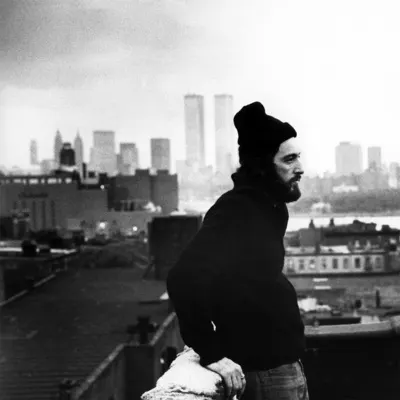
We meet with lifelong New Yorker Derek Putin to discuss Serpico, a story of sleaze and scandal in the 70s NYPD. We talk about the iconic 1973 movie starring Al Pacino and the man who inspired it, a rare good cop who's crusade against corruption earned him a bullet in the face.
This episode explores other scandals that plagued the NYPD across the late 20th century and how they've shaped the force today, ending with Frank Serpico's own words on policing and what, if anything, can be done to fix it.
Hosted by Liam, Russian Sam, and Derek.
Transcript
Welcome, Derek
And we're back with another episode of Gladio Free Europe. I am Liam, joined here today by Russian Sam.
Hello.
And we also have a very special guest here today, the one and only Derek Putin.
Hello, and thank you for having me.
Of course, of course. A lot of our listeners will know Derek as the former co-host of one of my favorite podcasts, Law of Wisconsin Insumies. Really cool guy that I've known for a while, you know, through the Twitter sphere. Derek, how would you like to introduce yourself?
Well, I'm still on the loose. I haven't been yet charged for my crimes, but we'll see. I might say something incriminating here. I had mentioned to somebody before that I know how to unlock the cabinets on MTA buses and change the signs, so yeah, I probably shouldn't actually do that.
Because you are so familiar with so many secrets of New York City governance, we thought that you'd be an amazing guest to talk about this week's episode, which is the story of Frank Serpico, the famous NYPD officer who uncovered in the early 70s a huge amount of corruption existing in all levels of the NYPD. Thank you so much for coming on to this episode. This is going to be really fun. You know, before we get started, can you just talk maybe a little bit about what kind of experiences you have working for the greatest city in the world, the Big Apple?
Yeah, so I lived in New York for about 32 years, and I worked for the city for a whole, I think, seven months. So, I mean, there's the stories are more about why I wasn't there for that long. Yeah. But still, they're pretty good. And yeah, I'm stoked to go into them. But let's abide by your outline.
Serpico
Yeah, sure, sure. So, yeah, you know, let's just get started. So the movie we watched this week was the film Serpico, directed by Sidney Lumet from 1973. It came out just a couple years after Frank Serpico himself led this campaign, eventually testifying before a group known as the Knapp Commission, and along the way, suffering some pretty wild consequences from his actions. That we'll we'll get into. Just to start, did you guys like the movie?
Oh, it was great. I loved it. Al Pacino does a very good job with the role. He he brings that sort of unhinged energy to the character that like really makes you feel for him while also understanding that like that he's like literally being driven crazy by the fact that he's trying to you know alert the authorities about the massive corruption he's seeing everywhere around him. It almost ended with his death, but man is alive today and on Twitter posting very wholesome content. You should follow him if you aren't.
Yeah, I liked it a lot. I feel like it was a little sort of like derivative of real life in that you know they basically lifted 50 Cent's story. He was shot in the face, left to bleed out, superstar rap career, the whole nine yards.
That's true, yeah.
Yeah, kid from New York, you know, involved indirectly in the in the drug trade. Yeah, no, but for real, I liked it a lot. I'm not like a big film expert, but obviously Pacino was great. I really liked the outfits. I obviously wasn't alive when like that stuff was like current, but just like the crazy lapels.
Oh, absolutely. Yeah, yeah. No, I know just the Serpico look. Yes, I know, I know, I know.
And what's funny is that that's like really true to life. He did, even in by the standards of the 70s, he was known as kind of a flamboyant dresser. He was seen as like the hippie cop. And what's funny is that from the reports I was reading from his co-workers, even before he became a whistleblower, a lot of them just didn't trust him because he was this long-haired guy with like a you know a mustache and a headband.
Yeah, throughout the movie, he's just constantly being under suspicion of being gay.
Yeah, oh yeah, one of the funniest scenes in the movie in the bathroom early on. Yeah, he was just, yeah, yeah, going down at a guy.
Well, yeah, yeah, so the movie Serpico is really cool.
Sidney Lumet
And like you said, it's by Sidney Lumet, who's this 70s director, really known for creating films that really are with the zeitgeist of the times. So in the 50s, he first came onto the scene with 12 Angry Men that I'm sure a lot of people have seen. He went on to do Dog Day Afternoon. Now he's doing Serpico in the early 70s. And right after this, he would do Network, which is probably his most celebrated feature. We've talked a little bit about Sydney Pollack movies, and I think there's some kind of overlap in not only in era, but also in kind of in the content that they go into and the themes. Just I feel like Sidney Lumet personally is a better director, and his movies tend to be a little more grounded and also therefore a little bit more meaningful.
You know, one thing that is, you were talking about the bathroom scene I remembered, and just sort of about him being Serpico being a rebel iconoclast. I noticed he was like talking with the shoe shop guy, I think, and the shoe shop guy's like telling him, oh, you need to like have Sunday dinner with your mom and dad and all that. And they also ask him, Are you Catholic? And he says, I was just baptized very dismissively. And again, I don't think any of us were around during that time, but I he was probably being like more dismissive than usual for the time towards organized religion.
That's true, and that totally flew from my head, but I'm sure you're right.
Yeah.
New York in the 70s
And I think, like, as an artifact of the times, you know, it is such a cool look at what New York was like in this now pretty notorious period of the city's history. Yeah, well, the really wild stuff wouldn't come along until a few years after the movie came out. But it was coming up because really, because this was right when, you know, the kind of urban decay of New York was really underway, when, you know, crime was rising, when the corruption in all levels was getting out of control, obviously, and the city was unwilling and unable to pay for so many basic services for its citizens. So increasing numbers of people, especially in poorer neighborhoods, start turning to crime. People start leaving the city. Suddenly, the tax base is gone. They can't afford basic services. A couple years after the movie came out, the city would almost declare bankruptcy.
Famously, the government would refuse to give any kind of bailout. So the New York Times headline in 1975 was Ford to City Drop Dead. But it was just a really, really messy time for New York. But at the same time, in hindsight, probably the most fun, most cool, most interesting time of New York history.
Yeah, there was, especially in the area that Frank Serpico moved to, Greenwich Village, just that sort of general lower Manhattan area, there was a huge amount of like different creatives living there. Like you go like a little further south, you get to Soho, where Lou Reed lived, and like that was the peak of his creative period. You go like further out, you get to where like the Ramones, the New York Dolls were getting their start. I think at least one or two of the New York Dolls were Staten Island, but same idea, but generally like quality of like basic services and infrastructure was going down ever since like the tail end of the John Lindsay era. And John Lindsay was kind of like if Bill de Blasio was like a better guy, not a better mayor, but like had a better heart. Like he would, yeah, he would like go out and he would try to really like make inroads and like make amends with underrepresented communities, which is pretty much like primarily black and Latino neighborhoods during like the big riots of like the late 60s.
In slight diversion there, but the big Newark riot of 67, 68, I forget which, was actually started by a Staten Island guy.
Really? That's funny. Staten Island's been, you know, pulling the strings of history for decades behind the scenes.
Yeah, you know, these outside agitators from Staten Island are just out of control, you know.
That's really funny. I didn't know that.
John Lindsay
Well, yeah, well, so John Lindsay, you know, he's a really important character in this story because he was, he basically ended up becoming an ally of Frank Serpico. Because once Frank Serpico got started in his campaign of exposing corruption, he actually got the support of the mayor. And later on, many decades later, another mayor would try something similar. It would be possibly even less successful. And in a funny way, would lead, there would be another very different kind of riot under that guy's tenure. Now, you know, with Eric Adams, it's kind of hard to imagine someone like him who's so closely tied to the NYPD supporting this kind of program. But I guess, as we'll talk about later on, Eric Adams does have a funny little Serpico connection.
Who was Frank Serpico?
Yeah, so yeah, Frank Serpico himself, he is the hero of this story. Like we said, he was known as this kind of like hippie cop. He's from Greenwich Village. He has long hair, a headband.
Oh, no, he wasn't from Greenwich Village. He moved to Greenwich Village.
You're right. He lived in Greenwich Village. He was actually originally from Brooklyn. And I couldn't figure out where in Brooklyn specifically he was from, but it was some kind of tough, heavily Italian-American neighborhood. His parents were both born in Italy. In the movie, you know, his mom doesn't even speak English, which I assume was accurate. He was fluent in Italian, which helped him very quickly become fluent in Spanish too. And what Serpico would later on say was that growing up in the 50s, kind of echoing the famous line from Goodfellas: basically, when you were a kid growing up in his neighborhood, you could only aspire to be a gangster or a cop. And he saw that life often didn't end up well for gangsters, so he chose to be a cop. The guys I grew up with, he recalls, some went to jail. I grew up in a gang environment and I used to shine shoes and I got robbed a couple of times.
I'd see the cops on the corner. He was my authority figure, and that was the only reality I knew.
Yeah, so when Serpico was just 22, he would sign up for the NYPD, start down, start up as a beat cop, and he initially had this big interest in actually taking down organized crime, which, you know, in the early 60s and into the 70s was like a huge part of the city.
Also, another thing that we should probably bring back personally.
Organized crime or cracking down on it?
Oh, I was thinking the crime, but oh, not the organization? Yeah.
Plainclothes
Well, in any case, after seven years in the V, Serpico would be promoted. This is a big scene in the movie, where he becomes a plainclothes undercover officer. And in New York, in the... This has been, I guess, I think this would have been the mid-60s, 66, those were the coolest guys in the PD. Because the plainclothes officers, they just went around doing whatever they wanted, observing crimes. They didn't seem to have as much of a set beat as the other guys. And so he just kind of like, in the movie, he just hangs around parks. You know, he like looks for kids making trouble and all that. I'm sure probably a lot of the stuff he did was probably basically just harassing young black kids. But in any case, he, across his career as an undercover officer, he started developing a more conscientious attitude toward policing.
Because surprise, surprise, in New York in the 60s, basically every other plainclothes officer was crooked.
Corruption everywhere
And the movie really captures this stark really masterfully, where first we see Serpico, the fresh-faced graduate of the academy, going into the precinct. And at first, it's just like little stuff, like getting free food in the deli, for example.
Yeah, yeah, that was funny. He goes to the deli and the sandwich sucks. And he's like, hey, he wants to ask for some more, like, you know, some better pastrami. And then the other guys are like, oh, maybe don't complain. You know, we have an arrangement. We help him out. The deli helps us out.
He just becomes more and more aware of the fact that, you know, these guys whom he had idolized when he was younger weren't really living up to their heroic image.
Exactly, yeah.
And so he definitely had this rude awakening. His whole life, he's seen cops as the saviors of his neighborhood, the ones delivering people like him from crime. Then he finds out that cops are completely intermeshed with the various types of crime going on in New York City. Something I think is kind of funny that isn't really part of the movie is that the main type of corruption that he encountered was actually just involving guys shooting craps. Because whenever people would gamble and throw dice, that was crime. And traditionally, the cops would just go around looking for people playing dice. And if and they would just ask who's the winner, and then instead of arresting anyone, the winner would just pay up all his money, all his earnings to the cop.
Yeah, well, now we have gambling taxes, so what's the difference, really?
Yeah, no, that makes sense, actually, just thinking about how my parents and grandparents and all would talk about just like shooting craps and card games. And they always, like, it's not something that you would see, you know, growing up in like the mid to late 90s onward. But yeah, if you were like, if you were Serpico's age, maybe like 10-15 years younger, yeah, that makes sense.
And yeah, and that, and the thing was, like, that was like a huge part of the income for these guys. It was totally normalized that you'd take money and you were a weirdo if you didn't. And that's what Serpico quickly realizes: is that way before he starts reporting anybody, just the fact that he wouldn't take any money sort of put a target on his back. It meant that he wasn't like the other guys, you know.
David Durk
But pretty quickly, and this is not in the movie, he met somebody else who was dissatisfied with the amount of low-level corruption going on among the undercover officers. This was a guy named David Durk. Don't get that name wrong. David Durk, not David Duke.
Not David Derp either.
Yes. And David Durk, not Duke or Dirp, was the son of a doctor. So he was this like, you know, so he was actually a pretty good contrast from Serpico, because Serpico is this, you know, Brooklyn kid who moves to Greenwich Village, long hair and a beard, whereas David Durk was this clean-cut Upper West Side boy whose dad was a doctor. And he had a kind of crazy, or a very different kind of life story because he was actually basically a PR guy for the NYPD. Because something I didn't realize before I started researching this was that in the 50s and 60s, way before Serpico would do what he did, there was already a low opinion of police across the country. A lot of African Americans and a lot of young white liberals were really upset at the entire institution of policing because they had seen the ways that cops across the country were brutalizing civil rights protesters in the 50s and 60s.
Pretty kind of funny parallels today. And so this really hurt the reputation of police everywhere, not just in the South. And so because there were these fears of a drop in recruitment, the NYPD hired this guy, David Durk, to go around to colleges in the Northeast, promoting the idea of a career in the police. So middle-class white kids would be potentially inclined to work for the NYPD rather than, you know, shunning them altogether.
That makes sense. There's some...
Becoming a cop
We can maybe move from that a little later to how they like recruit and hire now, because there's a lot there that will inform you of the state of policing in big cities. It's a lot of it you can just directly look up. Like the requirements are all out there and it's Google any more pretty data from like newyork.gov website, but I think it's like 60 credit hours. It is not a full bachelor's or associates, which is kind of interesting because there's a scene in the movie where Frank Serpico is taking Spanish. They're reading like Don Quixote, and then he like he flirts with this girl and they start a relationship. So he's just like trying, like, to striving to be like upwardly mobile in both like class and level of education because, again, remember, his mom doesn't even speak English.
Yeah, yeah, and he was from a pretty poor background, unlike Durk.
Yeah.
Durk was the Princeton guy, right? Or was that someone else?
Yeah, yeah. So they kind of fictionalize Durk. I think that the guy, I can't remember the actor's name. I think it's, I want to say Tony Roberts, the guy from Annie Hall. He's sort of an equivalent to Durk. In real life, Durk was there sort of from the beginning, and I'm not sure why they basically cut him from the movie. And I'm curious if he has any thoughts on that. Because Durk himself, he was a pretty big part of the story. And speaking of recruitment, even though he was involved in NYPD recruitment, he recognized that there were enormous problems with corruption and racism and brutality in the department. One big difference between Durk and Serpico is that Durk would stay in the NYPD for basically his entire life. And he really was convinced that you could change this group from within. He would say on his tours across colleges that to any kids who are really interested in helping people and sincerely believe that the cops are pigs, then they should join the police and improve it from within.
So like that's something you hear a lot, especially in like, you know, lefty political stuff. Like, can you change something from within? And yeah, this is a pretty, this story of Serpico and Durk is pretty depressing if that's your outlook.
I think nowadays, if you score too high in an intelligence test, you cannot get in.
Yeah, that's what they say, that they don't want people who are too smart joining the police because they're more likely to ask questions or whatever. And yeah, I believe that, yeah.
Yeah, some really great incentive structures there.
Yeah.
Serpico and Durk team up
So eventually, these guys, Durk and Serpico, they do link up. Durk was a little bit superior over Serpico, so he thought that he was someone that he could trust. And he was. He was the only guy in the plainclothes department who was really interested in doing something about corruption. And so from the start, Serpico was a little bit skeptical that the NYPD themselves would be interested in solving this problem. But Durk thought there was no issue. Because, you know, because Durk had worked with the NYPD brass for a decade, he thought he knew these guys, and he thought that, like him, they actually wanted to do good for the people of New York. But pretty quickly, as Durk starts filing these reports of the kinds of corruption they're seeing, he just doesn't get an answer at all. And then after a year of not getting an answer, Serpico himself files a report because he's given this new assignment in the Bronx tasked with arresting gamblers, you know, the guys shooting craps we mentioned before.
But this time, Serpico sees something so shocking that he has to directly himself go to his superiors and report this. When I first joined the division, my lieutenant asked me whether I knew what plainclothes was all about. He took out some bills and handed them to me. I said, what's that for? Get yourself a hat. He said, I don't need a hat. That's very fun, like, you know, Goodfellas type exchange. But yeah, basically, the cops weren't actually making arrests. They were just, like we said, they were going around to the guys shooting craps and they were just taking money from whoever won in exchange for not harassing them.
At that point, it's not even police. It's just pure mafia shit.
Yeah, no, it's straight up. Yeah, it's basically protection money.
Yeah, yeah, like, yeah, give us your money and we'll leave you alone.
And what really freaked him out was that on another day, there was a guy, they went to day, busted up a gambling ring, but this time, nobody had any money they could pay up, or they couldn't pay up enough. So, what these cops did was that they grabbed the guy and took him back to his apartment and beat him up until he could cough up some money. And so, yeah, so Frank Serpico would say that when the guy came out, he had some money, it came to $40 a head. I told them I didn't want it, but they just stuffed it in my pocket anyway. And that is when he filed this report. This actually ended up going, becoming an actual criminal case. And these officers were put on trial. And I believe they actually were found guilty in 67. This was anonymous, however, people pretty quickly realized that Serpico was involved.
Serpico would later claim that after filing this report in 67, one officer shoved a pistol into his stomach and told him to never rock the boat again. David Durk, meanwhile, he was out shooting one day, and the officer next to him said that he wished Durk was the target.
Wow, tough crowd.
Yeah, yeah. That's some kind of funny foreshadowing there for sure. I don't know.
They have a lot, a lot of a grasp of subtlety.
Well, in any case, after this, you know, these two incidences, Serpico and Serpico and Durk knew they had to go elsewhere. So, they couldn't trust the police. They realized they had to go straight to the top. The one person they believed might be able to help them was John Lindsay, the mayor that we mentioned before. You know, he was this, John Lindsay was known as a kind of a clean-cut, anti-corruption guy. He was somebody who had big political ambitions like many New York mayors, and like many New York mayors, all of his ambitions were successfully dashed because, just like Bloomberg and de Blasio and Giuliani, he was a failed presidential candidate. He was also, interestingly, I believe, the last wealthy, like old Dutch stock mayor of New York, which is kind of interesting. He was from one of those like old 17th-century families. But he seemed genuinely committed to actually doing something about this.
The Knapp Commission
So, what happened initially was that Serpico and Durk contacted the New York Times, and with the New York Times, they arranged this big study of corruption that ended up proving everything Serpico had already complained about. And this quickly got the attention of the mayor, who formed this 1971 commission known as the Knapp Commission, which was the, I believe, the biggest police corruption initiative ever undertaken in U.S. history, which was a standing committee that existed to root out any examples of corruption. There was a specific interest in finding out ways that the NYPD was aiding and abetting organized crime, but they looked at corruption anywhere. They found examples of cops, you know, involved in drugs and vice, taking money here and there, tons of stuff.
Ed Koch
Interestingly, one of the biggest supporters of this commission was a New York congressman named Ed Koch.
That's the father of the Koch brothers, right?
No, no, no, no, no, no, no, no, no, no, not at all. No, no, no. Ed Koch would be the mayor in the 80s, and he was the mayor, I want to say, right before Giuliani.
No, right before Dinkins.
Oh, you're right. Sorry, sorry, yeah, I'm so sorry, before Dinkins, between them. So Koch was, you're right. He was sort of, you could say a mix of Giuliani and Dinkins because he was a pro-cop guy, but also a, he was a Democrat, so unlike Giuliani.
Oh, if I can add something about Ed Koch, yeah. So Andrew Cuomo's father, Mario, was running against Ed Koch for mayor of New York, and he pretty, at least for the time, I don't know how well known this is now, or like outside like the Northeast, but he had this gay bashing campaign slogan against Koch because he was like, yeah, it was a lifelong bachelor. I don't think there was anything ever confirmed, but that's just like what people tend to assume about politicians. Like, but yes, don't worry about against me, but it was vote for Cuomo, not the Homo.
Yeah, the classic lot.
Yeah.
And it worked because they voted for Cuomo. He would end, so Koch, this was, I guess, for governor, but Koch would end up being mayor, and we'll get into that. But this time, when John Lindsay was there, he was the one behind this, and Ed Koch was his biggest supporter in Congress, because this was kind of a national issue. This kind of commission was discussed in police departments all across the country, and a lot of cops were very unnerved by this level of scrutiny. What's interesting was that Ed Koch actually petitioned for the governor, who was future Vice President Nelson Rockefeller, to authorize state power to broaden the scope of this committee. But Rockefeller refused. He seemed to not be interested in messing with the power of police at all, which I think sounds a lot like a lot of politicians today. But in any case, they got to it.
Bugging the police
And so, starting in 71, the Knapp Commission started hiring all these guys to go undercover within the undercover force, which is pretty wild. So, they had basically double, triple agents working within the NYPD trying to find and record examples of corruption. But they had one big problem here. So, you know, when you're trying to find someone who's a criminal and you're using undercover tactics, the correct, the traditional method is to use a bug, like a hidden microphone. But, you know, Derek, if you were using a, would you feel safe if you were trying to indict somebody and you had a bug hidden on your body?
No, and that was the exact issue. Serpico gets roughed up a couple of times because they're trying to like search him for a bug, especially because this was like 1969 or so through 71 and technology like just wasn't that compact.
Exactly. It was really dangerous because if they found a mic on you, you're dead. You know, these like a lot of these like wise guys or whatever you're trying to interview. So in general, undercover work was always tricky. But in this specific case, it was even trickier because the guys that they were supposed to be surveilling were themselves undercover officers. So the people they had to be secretly recording were the people who knew exactly what a bug would look like and where it would be on your body. So, what the Knapp Commission ended up doing was that they found this guy who was like a bugging expert or who invented what apparently was the first, or one of the first at least, wireless microphones, which is kind of funny.
Oh, so like, so they'd be able to be sitting in a van and listening, that kind of thing?
Exactly. So, they would have a mic hidden on somebody, but they would still have the audio would actually be recorded somewhere else. So, it's kind of grim, but the intention was if the agent was discovered and killed, or at least had their mic destroyed, they would still be getting the audio. And that way, if a crime ended up being committed, like for instance, killing the agent, they would be able to have incriminating evidence against it. You mentioned the van thing. This is basically why that exists. So, I think that you know, TV writers around the world should thank this guy. His name was Teddy Ratnoff for making their lives a lot easier, you know, making it a lot easier to quickly cut from a crime happening to the guys in the van outside watching it.
Yeah, I love his name too. Teddy Ratnoff is the name of a guy who's inventing a new bug for uncovering people.
Well, rats hate bugs. It's nature, you know?
Exactly, yeah, yeah. So, the New York Times would describe Ratnoff as a shadowy figure whose equipment is said to be so sophisticated that he is sought after by law enforcement agencies around the world. But I looked up this guy to see if there's any other coverage, and really all I could find was that a couple years before, a Pulp magazine described Ratnoff as the man who bugged Jackie O's bra.
Who's Jackie O? Sorry for betraying my ignorance here.
Short for Jackie Orgasm, famous porn star.
No, no, it was the original Jackie O. I actually looked it up. I tried to find that Pulp magazine in question, and I think he really did bug Jackie O's bra, but it wasn't as scandalous as it seems. I think that he was just, he mic'd her up for some TV interview.
Yeah, that doesn't sound nearly as titillating.
Yeah, no, no, no, yeah. Teddy Ratnoff, in any case, he would figure out how to solve this problem with his mics. And this was actually a huge help to the commission. And it ended up in the short term giving them the ability to uncover, to record and uncover hundreds, if not thousands, of specific examples of corruption.
Grass eaters and meat eaters
One thing that they realized was that there were two types of corrupt cops. They called one group of guys the grass eaters, who were the low-level corrupt dudes who would just go around collecting money from gamblers, from pimps, the way that Serpico had observed. But a whole other category of corrupt cops were the meat eaters, and those were the guys who were actively involved in committing serious crimes.
So, capos versus bosses.
Yeah, you could say that, yeah. And so the meat eaters, they weren't just taking money as bribes. They were essentially double agents doing illegal work for criminals, including oftentimes the mafia, while also being cops on the LAPD payroll. One perfect example was this guy named Bill Phillips, who is currently serving a life sentence in prison for murder for, I believe, unrelated charges.
Bill Phillips
But he was this classic dirty cop. Bill Phillips was a white dude working in Harlem who was notoriously brutal. He shot and killed an unarmed black man in, I want to say, like 1960. And because this was 1960, not only was there no public outcry, he ended up getting a commendation for the event, which he claimed was self-defense. Due to Ratnoff's equipment, a young officer named Michael Armstrong, who ended up writing a book about the Knapp Commission, realized that Bill Phillips was basically a double agent and that he was working on the side doing security for various New York City criminals and giving them a tip whenever the NYPD was about to bust them. His most important client, who I believe was somewhat famous in her own right, was actually this high-powered Manhattan madam, this young Dutch woman named Xaviera Hollander, who owned the most exclusive brothel in New York.
I wouldn't expect the Dutch woman to be named Xaviera, if we're being honest.
I think it was a pseudonym. In any case, they realized that this guy, Bill Phillips, who was her security, was totally corrupt. And like I said, he would give her a tip whenever they're about to bust down her operation. So they realized, and so basically this guy, they figured out he was the classic meat eater because instead of just taking bribes, he was actively aiding and abetting this major criminal conspiracy. They were going to charge him and just, you know, he was going to be one of the cops brought down by the commission. But Michael Armstrong realized that he actually might be a really good asset. Because if this guy was a classic meat eater, if he was someone who was very corrupt, then unlike Serpico, who was sort of an outsider in the department, this guy, Bill Phillips, would be trusted by these cops. So he essentially became a triple agent for the NYPD.
He was a cop pretending to be crooked and working for these mob associates while at the same time reporting back everything he was doing to the NYPD and assisting in getting hundreds of other guys found out.
So, how did they keep him on the level? I mean, as much as you can keep an obvious scumbag like that on the level.
Well, I guess ultimately they, I suppose they didn't because. So, what happened was that he eventually would get Xaviera Hollander arrested. She would be deported to the Netherlands. And pretty soon after this, another officer who was working with Xaviera would kill himself, believing that he would soon be arrested. I'm not really sure what the details here are, but not long after this, Bill Phillips would be charged with either the murder or attempted murder of another cop. What Bill Phillips claimed was that he was targeted because of his role in the investigation and that he shot this guy in self-defense. But in any case, he got locked up for it. So, you know, kind of this is a little bit of a dark turn here, but if we're talking about people who suffered because of their role in this investigation, even though he was a pretty awful guy, Bill Phillips might be a case of that.
Interesting.
There was a 2008 Village Voice piece I read that actually was an interview with him from behind bars where he just swore up and down that he was targeted unfairly because of his role in this commission. And that absolutely could be true.
Yeah, like not having any more detail, it sounds very, very, very plausible.
The Happy Hooker
Yeah, yeah. Like we said, Xaviera would end up being deported. She, unlike this guy, has kind of a happy ending because pretty soon after she got sent back to the Netherlands, she published this best-selling memoir known as The Happy Hooker and ended up getting a weekly sex advice column in Penthouse for years.
Hate the Dutch.
She also would get a movie deal in 1975, I believe, with the British actress Lynn Redgrave playing her. But I was looking this up, and actually, it turns out the Hollywood movie was beaten by a year by a porn adaptation of her book published illegally.
Oh my god. And yeah, just like Serpico, Xaviera is still around today. And just like Serpico, also, she's on Twitter.
Oh, really?
Yeah, yeah. So anyone wants to keep up with Xaviera Hollander, just yeah, look her up.
The real Xaviera Hollander heads.
Yeah. In any case, we said, yeah, Bill Phillips ends up being involved in a shooting, another shooting, and this time he would get arrested.
Surveilling the Panthers
Also, as part of this investigation, like we said, so many people involved in the mob were found out, so many examples of corruption. One interesting little angle here also was that it was discovered as part of the Knapp investigation that the NYPD had been using illegal methods to surveil the Black Panthers.
What? No way.
Yeah, yeah, and obviously no surprise there. But as part of this investigation, some information had to be thrown out of court. So you could say that in a very roundabout way, Serpico might have stopped the hammer from coming down as hard as it did on black activists in America.
He's pro-Kaepernick, isn't he?
Yeah, he is. He is. We actually, we can read this in a second. He wrote an article in 2014 about his support for the Black Lives Matter movement because, you know, nobody knows better than Serpico the ways that American police have been and continue to be just unbelievably brutal. I guess so. We can talk about in the movie.
Serpico is shot
So tell us, Russian Sam, so what happens to Serpico, as the investigation gets underway?
So, Serpico is running around with this fictionalized version of Durk trying to get the ear of the police commissioner and then all these different avenues that keep getting exhausted because it's just not the right time, or these people are themselves involved in these graft networks. But ultimately, when he does go public with it, when he does go to the Times, he's of course singled out. And as the movie tells it, he was at a stakeout with some of these other cops, who of course would have despised him by this point because they would have seen him as someone who betrayed the police. They sent him up into this building to do a drug bust, and so he knocks on the door and he just gets shot in the face by one of these drug dealers. It seems like a common misconception is that the cops themselves shot Serpico, but it seems far more likely that they just let it happen rather than being directly.
I think it was really fantastic. In the lead-up, obviously, this is the fictional version of the movie, but somebody mentions that they're just going to have him as the point guy one too many times and a bullet's gonna get him. And like, from all indications, it seems like it is. And honestly, like, if you were a crooked cop and you wanted to get rid of a rat, that's probably the safest way to do it: put that guy in danger.
Yes, absolutely. And you know what? Let's hear Serpico in his own words here. Russian Sam.
I had recently been transferred to the narcotics division of the New York City Police Department, and we were moving in on a drug dealer on the fourth floor of a walk-up tenement in the Hispanic section of Brooklyn. The police officer backing me up instructed me to just get the apartment door open and, quote, leave the rest to me. I knocked on the door with the other two officers behind me. When the door opened, I pushed my way and snapped the chain. The suspect slammed the door on me, wedging in my head and right shoulder and arm. I couldn't move, but I aimed my snub-nosed Smith and Wesson revolver at the perp. In the movie version, it's much more Hollywood than this.
Yeah, oh, and just to interject here, you are reading his own words here. That's Serpico complaining that the movie version was so Hollywood, not us. I think I kind of like the idea that, like, even though, you know, you're portrayed as this hero and martyr in a movie, you still gotta point out that, like, okay, come on, it wasn't always, it wasn't just like that.
Yeah, well, he's clearly a man of integrity. He wouldn't want people to have the wrong idea of him.
Oh, yeah, yeah, yeah, yeah, yeah, no, for sure.
So, continuing from the article. From behind me, no help came. At that moment, my anger got the better of me. I made the almost fatal mistake of taking my eye off the perp and screaming to the officer on my left, What the hell are you waiting for? Give me a hand with the door. I turned back to face a gun blast in my face. When I regained consciousness, I was on my back in a pool of blood, trying to assess the damage from the gunshot wound in my cheek. Was this a case of a small entry, big exit, as often happens with bullets? Was the back of my head missing? I heard a voice saying, Don't worry, you'll be alright. You'll be alright. And when I opened my eyes, I saw an old Hispanic man looking down at me. My backup, so-called, was nowhere in sight.
They hadn't even called for an ambulance either. I later learned the old man did. I still don't know exactly what happened on that day. There was never any real investigation.
Fucking bleak.
So yeah, so basically, just like in the movie, he was shot. Probably wasn't shot by the NYPD themselves, but it really seems like they're putting him in a dangerous situation with the hope that he would die.
Yeah, he just got very lucky that he got shot with a very small caliber bullet.
Yeah, shot in the face and survived, which is, you know, pretty impressive, I gotta say.
Aftermath
He would, after his shooting, he would continue to testify, but as the movie attests to, eventually he would leave the country. He felt unsafe, and he would move to Switzerland for a while. The commission would end. A whole bunch of cops would be exposed. But at the same time, by launching this commission, John Lindsay basically ended his political career. Because although he had some allies in the U.S. Congress, like Ed Koch, this was really unpopular with a lot of New Yorkers, especially white New Yorkers and people who had cops in their family. There was one instance around this time when a black revolutionary would kill a cop, and when John Lindsay tried to go to this guy's funeral, other cops booed and hissed him, and they wouldn't let him go to the funeral, which is a huge, you know, embarrassment for Lindsay. He eventually would be out of there, and pretty soon after, Ed Koch himself would become mayor.
And unlike Lindsay, Ed Koch, who came in in the late 70s, not directly after Lindsay, but pretty soon after, he was much more of a friend to the police. And part of his kind of pitch for a stronger NYPD was that he believed that the Knapp Commission had succeeded, so they didn't have to worry about corruption anymore. But it really seems like that as soon as that commission wrapped up, the NYPD would just went totally back to their old tricks. They might have been a little bit less flagrant about taking small bribes, but when it came to things like brutality and racial harassment, nothing had changed at all.
The backlash
Yeah, maybe to play devil's advocate for white ethnics and their resentment. One way to read this is to look at the Knapp Commission's failure to really do anything about the larger problem rather than just clamping down on these on these small fish who are taking a couple of dollars here and there rather than the ones who are actually organizing these networks.
Oh, like the mafia, or what do you mean?
Like just cops getting busted for like taking like a $20 bribe or whatever, instead of you know, the fact that you have like these higher-up officers actively collaborating with the mob. Those guys weren't really touched.
No, I guess, but I think it also is that a lot of New Yorkers are dumbasses who just freak out whenever anyone touches the police. I'm not a New Yorker, you guys are.
New Yorkers and the NYPD
I'm just curious, what do you guys think about popular opinion of the NYPD? Do most normies think that the NYPD can do no harm, or is there a lot of resentment?
I'd say there is a somewhat guarded attitude. Like it's not like people actively hate the police, but they're sort of seen as an inconvenience, really. Although now that the story has been this rise in violent crime in these last couple of years, which does seem to have some basis in truth, now there is more of a rally around the flag effect.
Well, people in general and like general is really tough because like you just have like so many different like racial groups, socioeconomic strands. Because like if I was to like talk about somehow like what one of my black friends says is like it's very like you know he lives in Rafair in the North Bronx, but like also at the same time, like cops have, you know, hassled him for just being like a young black man. Like, he was like, he was like 24 or something. He was telling me one time. He was walking to his class at the City University of New York, and some cops hassled him because they thought, quote unquote, thought that he was a truant high schooler. But like, generally, to sum it up, tweet length would be people want law and order, but at the same time, they think rightfully that cops are low intellect scumbags.
Yeah, yeah, absolutely. And I think what's kind of interesting to me is that in this case, it seems like the NYPD was clearly exposed as breaking down law and order as much as they were maintaining it. And but what happened was that even though there was this huge investigation, there wasn't really the kind of long-term backlash against the NYPD that you might expect.
Crime and Ed Koch
There was a lot of outcry at the time, especially from minorities and from white liberals, but other people in the city didn't really care. And what happened quite soon afterwards that I think is a really interesting parallel to our moment right now is that after this brief moment of criticism of the police, there was a spike in crime in the middle late 70s. And as crime continued to rise, people started trusting the NYPD more than they ever had because they were scared. And due to this new fear, which was somewhat exaggerated, but somewhat grounded in actual danger at the time, the new mayor, Ed Koch, he was able to expand the powers and the funding of the NYPD like never before. And as you, I'm sure, could expect, they would never roll back the funding at all. And it would just continue to get bigger and bigger after Ed Koch's president mayorship or whatever.
And one thing I find interesting is that one of the things he did was banning loud music on the subway, which clearly seems to be targeting a certain group with that. And it's considered one of the first examples of broken windows policing, way back in like 1978 or something.
So that confirms what I was thinking about the rise of crime, or at least gives very strong evidence to it. So police obviously control a lot of the narrative around crime. Like they've done what they call work slowdowns. And what they find often, like there's fewer arrests because it's often just like they're doing like, you know, very minor things in black and brown neighborhoods. But it's like, oh, look at all this graffiti type stuff. Then that like that gets sensationalized by the news, like Democrat and Republican, because it's like, there's no real left news channel. Come on. Yeah, so that's a real, like, obviously we're not talking about unsolved problem, but that's a real problem. Like, police are inextricably linked with like the image of crime and stability. And again, like, we discussed how police are, like, the structure of policing is meant to incentivize these sort of like uncreative rule followers.
Yeah, that's these patterns are repeating. Like, plenty of people are saying that we're in sort of a resurgence or a repeat of the 70s, and there's seemingly something to that.
Who becomes a cop
Actually, so I went to CUNY for a few years, and I knew a couple of guys there who wanted to be cops. I didn't keep up with them because they were real annoying, dumbasses, but they were like the type of guy, like I was 17, 18, 19. And these guys were like 23, 24, which feels ancient when you are that age. And they're still trying to get their 60 credits for NYPD. I don't know for sure, but I don't, it doesn't have like any real requirements. So you could just take like gym 101 and then like US History 101, 102, like writing, like elementary division, crap like that, and get up there. But like these are guys who are like, they're often full-time students and they just couldn't hack it. One of these guys that I found out was in my phys ed class, literally in gym 101 with me.
And I ran into him on campus one time and I was like, hey Frank, what's up? I haven't seen you anymore. He's like, oh, I stopped going to the gym class because the teacher was disrespecting me. And it's like, did you withdraw at least so you get your money back? He's like, I don't do that. Like, these are like, he disrespected me guys who take six years to get as full-time students. Like, I'm not trying to do any like class-based sneering here. These are just like, that's sort of what it selects for. Like, short-tempered, like, real, like, follower, he disrespected me types. In a lot of them, so obviously, it's known there's this sort of pattern of shuffling problem cops around, but when they have some tenure, also, they'll often transfer out of the city where you're going to be expected to do some sort of work to some suburb, usually, usually actually Suffolk County, where these guys just get paid like minimum 90 grand a year to just sit around in their squad cars, maybe like busting up like one teenage party in fucking Cold Spring Harbor somewhere where some teenagers broke into the parents' liquor cabinet and our tax dollars.
I mean, there was a very successful presidential campaign on the idea of welfare queens, and they were just going after the wrong guys.
Legalized corruption
Yeah, so you don't really see the kind of corruption you saw in the days of Serpico with cops taking bribes and whatnot these days because corruption has basically been legalized because these people they just basically have the right to take as many overtime hours as they want. So they just like say they're on overtime while they're napping in their patrol car.
No, that's a really good point. That basically for financial reasons, they don't need to. And I haven't thought about that, but you could sort of argue that like the lack of corruption, as hard as these guys like Serpico tried, they ultimately failed. And the only reason corruption, as we that kind of corruption, slowly went down is because life got too comfy. It's like how, you know, part of why the mafia went down, it wasn't just because of RICO, it was also because these guys became upper middle class. They didn't need, they weren't living in the same neighborhoods. They didn't need to be criminals to make money. They could just go to real estate instead.
The lead theory
Well, speaking of what certain things went down, do we want to get into the lead ban theory?
Oh, yeah, that's a great one.
Do you mean that the theory that because there's less lead paint and leaded gasoline, there's just less violence and corruption in general in society?
Yeah, it's like it seems very unobvious, but the data works. So I find it compelling, especially because like you hear what people who lived in like minority neighborhoods have to say about the Giuliani and Bloomberg admins versus everybody else.
Yeah, I was really skeptical about the lead paint theory at first, but one thing that I've, I think, I've chewed my girlfriend's ear off about this before. What really kind of made me think there might be something to that is that there was this one study that was about, I want to say like 1920s Indiana, and that there was one small town, there's two small towns, and in one small town, every barn was painted with like some kind of oil-based paint. And then the other town next door, every barn was painted with lead paint. And it turns out that the lead paint town had like eight times the murder rate.
Jeez.
Yeah, I guess, and you can always massage data, like to pretty much say whatever the hell you want. But the pattern of like they ban lead and then like 15 to 18 years later, like crime starts going down by a lot. That's like all over the globe. It's been seen like US, been seen in Iran. Like there's probably something to it.
I think this, yeah, yeah. And I think there's actually, I believe there's actually a similar causal relationship with microplastics and Twitter usage.
Yeah, that's why I have the Chase Platinum Card heavy metal for me, baby.
Yeah, yeah, no, I'm making sure. Yeah, I'm only eating, yeah, only Amex cards, the, the, the credit card I eat a week. Yeah, none of that Mastercard for me.
I mean, listen, if microplastics were bad for you, they wouldn't be in the environment, okay? I don't think these companies would do that to us.
That's a good point.
Yeah, you know, if you actually, if you think about it, they're so ubiquitous that they're basically part of nature now. And like, I'm not going to be out here opposing nature. That's crazy.
Yeah, exactly.
Crack and the NYPD
Like, whatever happened to environmentalism, guys.
You know, speaking of strange substances, often including terrifying amounts of petroleum products, this early 80s, this was right when the crack cocaine epidemic hit New York.
Oh, I thought you were going to say Dave Loach. Sorry, I had to do it once. I had to do it once. I'm so sorry.
No, of course. So, yeah, so this has been crack hit. We could do a whole series on crack in the future. Maybe we might have to. There's so much there with crazy, so many weird little connections with the arrival of crack cocaine. But in any context, this ended up being really, really good for the NYPD. Like we said, so Koch was actively expanding NYPD powers. This gave him an even better excuse to do it. One, but at the same time, it also made a lot of cops pretty rich because, surprise, surprise, at least a dozen cops were actively being paid off by crack dealers at this time. And so this was in 84, about a decade after the Knapp Commission, suddenly it's discovered that the exact same kind of corruption they were trying to ferret out in Serpico's time was still going on. And like I said, you'd think this would be a black eye for the NYPD, but it really wasn't.
And the funniest part about this scandal, the 84 scandal, was that they were prosecuting these guys and they assigned a special prosecutor to the case, and then they had to throw the whole thing out and try again because it turned out that this special prosecutor was himself being paid off by drug dealers.
Yeah, and I'm sure that drugs were disappearing from the evidence lockers all the time.
Oh, yeah, yeah, I know, absolutely. Yeah, no, and honestly, I wouldn't even be surprised if some of these guys were, you know, sampling the goods just because that was the time, you know?
Yeah, of course.
Why do you think there was no fentanyl in there?
God, those stories rule so much. They're just touching a package of fentanyl, they're going to die of an overdose.
Yeah, no.
Yeah, they turn into a pillar of salt if they touch fentanyl.
David Dinkins
Yeah, well, I guess eventually, I guess there kind of was a ramification from this one scandal because it was one of many reasons that in the mid-80s, David Dinkins, right, in the late 80s, David Dinkins, first African-American mayor of New York City, would be elected.
Yeah, and little-known fact, he was affiliated with DSA.
He was, that's true, yeah, yeah. Very funny to think about. He was no radical leftist at all, but as soon as he came in, he was basically seen as an enemy by the NYPD.
Yeah, just a lot of race baiting around him and this idea that he wasn't doing anything about crime, even though crime level started to fall under his tenure specifically.
Yeah, and it was in his, yes, it was in his, yeah, in the early 90s is when crime finally starts going down in New York, you know. I don't think he had anything really to do with that, but he certainly didn't do anything to increase crime. He was, you know, he was an obvious scapegoat, especially because he was black. And so instantly, as soon as he took office, he was an enemy. They basically, Dan Wick, he saw him as an enemy.
The Buddy Boys scandal
But his really big mistake was that in 1992, there was yet another scandal. This was something called the Buddy Boys scandal.
Great name.
Where, just like in 1984, it turned out that all these cops were taking bribes, just like in Serpico's time. But this time, it was an entire division that had been implicated. So in the wake of this scandal, Dinkins actually appointed a new commission to investigate it, known I believe as the Mollen Commission, I want to say. And what he actually did was after, during and after this commission, he also tried to create a standing body for investigating claims of police corruption. And what really pissed off the cops was that, in addition to investigating bribe-taking, he also wanted to look into the endemic levels of brutality and racism and disproportionate targeting of young black people by police. Can you guys guess how the NYPD reacted to this proposal?
With the sort of dignity and stoic repose that you would expect from a member of the British royal family. Like, you know, the one who got carried around on the throne by his former imperial subjects of color.
The police riot
Oh, yeah. There was a literal riot in 1992 called the Patrolman's Benevolent Association Riot. So in 92, there was a huge rally that was kind of an organized thing for just like, you know, cops being cops. They do this all the time.
And Giuliani, Rudy Giuliani, former, I want to say, was he former police chief?
He was the guy who was prosecuting the mob. That's how he got a name for himself.
That's what it was. Yeah, yeah, yeah.
Okay. And at this time, he was a current mayoral candidate. So open enemy of Dinkins. He showed up to this event, and it basically sounds like Dinkins and Giuliani incited them to riot. And so, 4,000 NYPD officers started just running around New York, just smashing windows, basically. It's crazy. There were cops against cops. They tore down police barricades in an attempt to rush the city hall and basically attack Dinkins.
Well, that's what defunding the police does. Take note.
According to this is a New York Times, rioters were observed to be openly drinking, smashing cars, and physically attacking journalists. They chanted racial epithets to African-American Mayor Dinkins. There were 300 uniformed officers on duty meant to contain the event, but they did little to actually control the riot. They ended up not actually making it inside the City Hall because, God, who knows what they would do if they did. But it was a crazy event. And as soon as it happens, Dinkins condemned it. What's kind of funny is that Dinkins totally blamed Giuliani for this, but it honestly seems like because Dinkins was somewhat unpopular, especially among police families. So by condemning Giuliani for his involvement in the riot, this probably actually boosted Giuliani's chances.
That's grim stuff, man. Yeah.
Giuliani
And eventually, Giuliani would win. And we saw a little bit of this with Koch, but really with Giuliani's takeover of New York City, the cops just totally have free reign, as they basically continue to have today. Funding would go up and up, especially across the 90s and early 2000s. There was one pretty interesting event that's straight out of GTA 4. In 1995, I want to say, there was a major bank robbery in North Hollywood, just a few minutes from where I'm sitting right now. And the bank robbers, these two Eastern European guys, they had so many guns and so much ammo that the police weren't able to control them. And as a response to this, departments nationwide started acquiring military equipment. Then a few years after this, 9-11 hits, way more funding, way more equipment, and 9-11 is really what makes the NYPD what it is today.
The NYPD today
You guys live in New York. Can you tell our listeners who don't, like, what is the NYPD like now? How is it different from other departments?
I don't have any others to really compare it to, but the NYPD looks kind of like the military, but fatter. Well, fat isn't part of the equipment, but they have, like, if you go to a transit hub, like if you go to, you know, Times Square, Penn Station, Grand Central, like these entry points, yeah, people say, like, oh, yeah, I saw, you know, these guys, you know, in Kevlar with assault rifles there. That's like your intro.
Yeah, Penn Station is crazy, but that's thankfully not the norm. Most cops are just in their uniform and they have a handgun in their holster. But they might have, but they probably have assault gear in the car.
Which, and again, that wasn't the case before. The idea that basically all cops should essentially be a one-man SWAT team if they need to be, that was a post-95 with the North Hollywood bank robbery and a post-9-11 development. It just seems totally crazy just from a practical standpoint because it's like, there's no way in hell you're going to get the average police officer competent in this many skills.
No, yeah, look at what happened in Brooklyn like two weeks ago. In any case, which I've been saying all night that phrase.
Durk's last years
You know, Serpico would leave the NYPD. He spent, he's been in Europe for, I think he's back in the US now, but he spent a lot of time in Europe just watching this from the sidelines. But his partner, David Durk, he would stick with the force. And, you know, his whole mantra was, you know, saying that you can change it from inside. But I don't think history has affirmed that at all.
I had a very black-pilled thought today, which was how many young kids watched Serpico and that motivated them to join the police only for them to become the same kind of cop that Serpico would have been fighting against?
Certainly quite a few. I'm sure. You know, actually, Russian Sam, do you want to read this little paragraph about David Durk's sad final years?
So he would stay with the force, I think, until the 80s or 90s, but he would never be promoted. They would keep transferring him around, and he believes this was a punishment from his role in the Knapp Commission. And then, right before he died in 2011, he was interviewed by his old college paper about his experiences. Durk contends that a variety of supervisors and political figures discouraged him from reporting corruption at the highest levels of corporate and political life in the city. Told by the department that he would, quote, not be welcomed back for additional police assignments, he said, he retired in 1985 with a yearly pension of around $17,000. I was defrocked and defenestrated. He says, God, that's awful. That's so low. Durk believes that a better educated police force would think more critically about its role in society. Over the years, he's lectured at Harvard, served as an adjunct instructor at Yale, taught night courses to New York City civil servants, and consulted with several police departments.
He says that he's been sought out many times by police officers who want to expose corruption non-deforts. But when Durk tells them his story, they think twice, quoting Durk here, they say, Why should I do this? Look what happened to you. I don't have a rebuttal.
Who controls the crime narrative
That part is very sad. And you just hear these kinds of stories from time to time about a cop getting killed by other cops because they were trying to report corruption within their department. It's just this stuff hasn't really ended. And I get the sense that now, with the reverence that the police are getting in the discourse with regards to the rise in violent crime, we're going to see a lot more of that, a lot more of that impunity.
Yeah, yeah. I think it's always like the rise that we're seeing now in violent crime isn't even that significant. And in a lot of cities, crime continues to go down. But there's been this nationwide upswing of support for police that's basically a racist response to Black Lives Matter. And I think that's going to have a pretty big political impact on the future of American discourse.
Yeah, and it would not surprise me at all if some part of this rise in crime is itself a result of the police doing work stoppages because they suddenly don't feel respected.
Absolutely. Yeah, yeah, no, no, because here's the thing: it's like, who's lazier than a cop? You know, if they have a reason to not do their job, then forget it, you know?
Yeah, when de Blasio was still mayor, they had a couple of these instances where they just straight up wouldn't do their job for a couple of days at a time because they were mad about something he said or another.
Didn't they like dox his daughter because she was involved in a Black Lives Matter protest?
Yeah, that was right after George Floyd's death. Really creepy stuff.
No, and that's the thing. It's like, you know, I mean, no disrespect to Frank Serpico. He is an incredible guy, but despite his best efforts, he was only one guy. And two guys with Durk. And these two everyday cops, as much as they tried so hard to sound the alarm bells, they were unable to, their efforts were unable to break the powers of police. They weren't able to change the kind of, you know, social material foundations that give cops so much power. And as cops are given more and more power by figures like Ed Koch and Giuliani, I don't know what can be done to turn back the clock, to reduce their stranglehold over city politics.
Yeah, I don't know either. And really the problem here is that to some extent, they really are a necessary institution. They definitely shouldn't have as much power and there should be much more oversight, but they know that they are needed and they take full advantage of that.
Unions and cop families
Yeah, but you could say that about like, you could say that about firemen and garbage guys, but you don't have like garbage collectors, you know, murdering people in the street and saying you can't do anything about it because you got to get rid of the garbage.
Statistically, garbage collector is a far more dangerous job than cop.
If we were doing this based on allocating funding based on danger, I think that lumberjacks and 7-Eleven clerks would be the highest paid workers in America.
Yeah, we gotta back the boys in blue. The boys in blue being the sanitation workers.
Have you guys seen the uniforms that they have? They're very swanky.
Oh, really? Well, if you don't mind asking, did you have a uniform at the MTA?
No, but they gave me a vest when I was going out on site for things.
Oh, that's cool. You should have done a riot with that vest.
Yeah, I didn't get anything cool. So they're obviously in everything aside the police and maybe the fire departments, they're trying to really erode the power of unions. I was really like, I was at this awful, basically, quasi-tech support job there before I joined the MTA. And it was just like, I was drinking every day. I was just, you know, miserable, miserable to be around. And they like, I just ignored everything negative. I just was like, oh, you know, this is not going to be like tech support, not going to be, why doesn't the button work for 11 hours a day? So, so I jumped, but you like, if you don't know the, like, how to move around those like organizations, you, you're basically, like, lost at sea without, like, a map. Like, there's some language that says whether a position is union or not. I do not believe that you can move with from a union role to a non-union role.
So, you know, if you're non-union, it's whatever, like, as you build tenure, you're like, your position gets stronger, but you know, without much tenure, non-union, like, you're upshit creek without a paddle. And then they, like, further stratify this stuff. Like, they make the pensions, like, worse and worse. If you join, say, so I know education better for pensions, but if you join Department of Ed today versus like if you joined in the 90s, like you get a much worse pension. You have to, like, stay there for longer for less money. And, like, Bloomberg really accelerated that. They changed it from Department of Education to the Board of Education. I was, again, too young to know the details, but it was something because my mother worked in schools, was very pissed about. But aside those, it's like sort of also like you have cop families. That's a big part of the population.
That's like, especially in New York, with like, there's like what, like, 40,000 cops or something?
I think 80.
Like, it is. That's like almost 1%.
That's crazy. And that's what all of those people have, like, you know, 10, 15 relatives.
Cop families are a huge voting block.
Yeah, exactly. A funny thing about those, though, and like this transcends beyond like different ethnic groups, which in NYPD is primarily Irish, Italians, and Jews. So, like, yeah, it's much more racially integrated than most police departments in the country, I'd say.
Well, I think it's clear that, like, that the problem of racism in police can't be solved by having a few more black cops. It's like, you know, African-American cops are clearly fully capable of furthering these, you know, terrible inequalities.
Oh, of course, because these problems are really socioeconomic problems, which happen to disproportionately target people of certain races rather than exactly.
Yeah, the race, the perpetuator, doesn't necessarily make it less bad if you're the person being victimized. You know, and there's always like it's much more nuanced than, like, obviously, like, white people are the ones who are like most benefiting from this, but it's there's like way more dimensions that's not strictly hierarchical. So, you know, like white people than everybody else, and you know, you get power, especially when this institution, the NYPD, already filters for dumb muscle, who's not gonna expect. And probably, I don't have anything to back this up, but I believe that you're probably more likely to join the police force if you were bullied so you can take it back out on your tormentors. I'm trying to remember the reason why, but I know that a lot of cop union guys or cops in general, they're for some reason registered Democrats, even though generally they're gonna be like the right of Republicans.
Even though they, yeah, they vote right, they guess, I guess just because it's a blue state, it's a blue city.
Well, Republicans can't really win in New York City all that much.
Yeah, New York City is basically the Afghanistan of federal American politics.
New York mayors
So it's the graveyard of political ambitions. Right, yeah, I know we talked about Lindsay, yeah, yeah, Giuliani. Okay, mayor of New York City is prestigious.
Yeah, there's a lot more in the state, like not everybody even in city bands. Like there was a big thing, I think, 2017 about some guy in like a very progressive, hippie-ish area, either Williamsburg or the East Village, having like a Nazi flag in his window and people trying to throw him out. So you sort of cap out. It's hard to go from mayor to governor and everybody outside of like New York, LA, San Francisco, Chicago is going to see like the mayor of New York is, you know, either like some evil commie lib or like a pretentious urban snob. So like you, in terms of like government to office, you really can't go anywhere. You just like walk into the CNN office and start like making nice eight figures a year.
So sad.
I think Eric Adams is going to be the exception here. That man is going places.
Serpico today
Well, before we talk about the lovely Eric Adams, let's finish off Serpico's continuing story. Because obviously, Serpico himself is still around. He is very aware of all of the issues we're talking about, and he's been commenting on them. Unlike Durk, who stayed in the force, Serpico left and has been a speaker on police abuses for about 50 years now. And so in 2014, with the emergence of Black Lives Matter, he made this really impassioned piece that we quoted a chunk of earlier that first gave his perspective on the shooting that the NYPD was implicated in. And then also he explained the way that why he believed these problems continued and why his efforts were not as effective as he wanted them to be.
Even now, I do not know for certain why I was left trapped in that door by my fellow police officers. But the narcotics division was rotten to the core, with many guys taking money from the very drug dealers they were supposed to bust. I had refused to take bribes and had testified against my fellow officers. The days when I served and you could get away with anything, when cops were better at accounting than at law enforcement, keeping meticulous records of the people they were shaking down, stealing drugs and money from dealers on a regular basis, all that no longer exists as systematically as it once did, though it certainly does in some places. Times have changed. It's harder to be a venal cop these days. But an even more serious problem, police violence, has probably grown worse. And it's out of control for the same reason that graft once was, a lack of accountability.
I tried to be an honest cop in a force full of bribe takers, but as I found out the hard way, police departments are useless at investigating themselves. And that's exactly the problem facing ordinary people across the country, including perhaps Ferguson, Missouri, which has been a lightning rod for discontent, even though the circumstances under which African-American youth, Michael Brown, was shot remain unclear. Law enforcement agencies need to eliminate those who would use and abuse the power of the law as they see fit. As I said to the Knapp Commission 43 years ago, we must create an atmosphere where the crooked cop fears the honest cop and not the other way around. An honest cop should be able to speak out against unjust or illegal behavior by fellow officers without fear of ridicule or reprisals. Those who speak out should be rewarded and respected by their superiors, not punished.
We're not there yet.
Yeah, raises the question: will we ever be there? Like, I wish that the world was set up in a way that you could respect cops because you do need some kind of law enforcement. But the problem is both what Frank Serpico said: that you cannot trust this organization to like inspect and like discipline itself, and also they control so much of the narrative around like crime and urban safety. Like again, like in especially in like minority neighborhoods, like when the NYPD did those PR like fueled work slowdowns, violent crimes and such, they also went down, but it was this huge PR win because you're like, you know, oh, look at like all these like fucked up cars that aren't getting to look at, you know, this graffiti, this like broken storefronts. Like they very like, they did a fantastic job of setting up this false dichotomy where it's like you don't like you don't prosecute these evil cops like Serpico's saying it that way, but that's what like especially somebody like Daniel Pantaleo, the man who murdered Eric Garner, you know, straight up evil.
Like, I think he was let go, but he's still suing and he's probably gonna get, you know, somewhere in the six figures, I bet. I'm not a lawyer, I have no expertise, but like everything just sucks so much that I don't think either of you gentlemen would bet against me.
It's gonna get a lot worse before it gets better, I'll tell you that much.
Yeah, no, I think it's really a case where they just have so much influence over city governments that unless that influence is wrested away, there's no chance for any oversight. Like, you can't make the police better if the police are this powerful. They will always roll back, whatever reforms you attempt.
Eric Adams
Yeah, and speaking of influence over government, now they have literally their own man in the mayoral post with Eric Adams, who is.
Yeah, oh, but you know what? Don't fear, because what did Eric Adams do just a few weeks ago?
Yeah, so this is a story from February of this year. Frank Serpico finally gets his formal Medal of Honor certificate from the NYPD. The legendary police whistleblower got his proper police Medal of Honor and its accompanying certificate after Mayor Adams stepped in and said he'd make sure Serpico got the accolade, ending Serpico's five-year fight with the department. Serpico announced his receipt of the honor on Twitter Thursday. Serpico, 85, a Brooklyn native, has been waiting for formal recognition ever since he was shot in the face in February 1971, nine months before the Knapp Commission testimony exposing corruption in the department. When he originally got this medal in 1972, it was unceremoniously handed to him over a countertop without any fanfare or accompanying certificate. In 2014, Serpico told McShane that he was, quote, still waiting for the NYPD to overcome their pettiness and animosity. Serpico was shot just below the eye after he was forced to open a door in Brooklyn in a Brooklyn drug den.
He returned fire and wounded the gunman, and has always maintained that cops with him never made an official officer down call. In December, Serpico tweeted that the News' 50th anniversary article about his Knapp Commission testimony didn't mention the fight over the medal. Adams, then the mayor-elect, responded, quote, Serpico's bravery inspired my law enforcement career. Frank, we're going to make sure you get your medal. On Thursday, the certificate arrived in a large package at Serpico's doorstep. Serpico tweeted a short video of a quote 21 gun salute unveiling the certificate using popped bubble wrap instead of gunshots.
Oh, that's so cute. He's such a sweet old man.
I'm serious. Follow him on Twitter. You won't be disappointed.
Yeah, everyone should. And yeah, and follow Derek Putin on Twitter while you're at it.
If you say so, I do want to point out one thing he said. You know, Brooklyn native waiting for his medal. I mean, that's basically me as well. Just kidding. I was born on the Upper East Side.
Derek, when New York becomes a fiefdom governed by Gladio Free Europe, inshallah, we will get you your medal.
Absolutely. Yeah, yeah, yeah.
You'll be one of our satraps. You know, I think that this whole thing with Eric Adams, it's a lot like Ed Koch, how you have this politician expressing support for whistleblowers, but then as soon as they get this kind of power, they just only do what they can to actually help the police. Like, you know, Eric Adams, he is the NYPD's man. He's their Manchurian candidate in the mayor's office.
Well, I think Adams has got it figured out, honestly. Like, he can make these symbolic gestures to Serpico and figures like him.
Yeah, no, no, I heard that he posed in front of a mural of Assata Shakur somewhere.
Oh, yeah, in some school.
Devil. I know. I know. Yeah, that's welcome.
I think that's also like, you know, politics is increasingly about speaking out of both sides of your mouth. And I'm sure there are some guys in the NYPD who are dumb enough and racist enough that they hate Eric Adams and they think he's like pro-Black Lives Matter. But I think that the guys running the show, they know what's going on here. And they know that Eric Adams can, he can outright call for abolishing the police. He can speak in a protest and say that, you know, we need horizontal rhizomatic structures for law enforcement or whatever.
I want to hear Eric Adams say rhizomatic, honestly.
But they know that the very next day he's going to sign a bill increasing their budget and making it so every single officer has a surface-to-air missile.
Yeah, he's been talking lately about having metal detectors in the subway after the shooting a couple of weeks ago. And this has got to be the greatest kickback the cops have ever gotten.
Oh, yeah, no, it's great. I think it's awesome how like, you know, if like in any other industry, if you like fuck up this badly, they'll probably like, you know, take away some of your authority, maybe give it to somebody else. But this is a case, no, where the NYPD essentially allowed, they either allowed shooting to happen or at the very least did very little to stop it. And now they're only going to be rewarded.
Yeah, they're getting over $10 billion per year at this point. And yeah, if they were an army, they'd be one of the biggest armies in the world. And their budget is also pretty high up there in those terms.
Right, right. And this is why we need a Gladio-free world, not a Gladio-filled world.
Gladio Free Europe is the only podcast brave enough to call for the end of the strategy of tension.
Well, that is right.
Derek's New York
And okay, again, Derek, I think that brings us pretty close to a close. Derek, thank you so much for coming on tonight.
This is fun. Thank you so much. I had a blast.
Well, I was going to ask you if you have any last, you know, little New York stories, Big Apple Baby, that you want to share with us before we wrap up.
Well, I like came of age after the city started getting really Disneyfied. Like, we would, when I was like four or five, which would have been like around the start of the Giuliani era, like, we would, like, if we drove through Alphabet City, my parents were always like, this is the dangerous part of town. You know, don't go around here. But like, I remember, I saw like, if we were passing through Harlem for whatever reason, my father was always like, yeah, this is all going to be white people in 20 years. And he's like, basically right. Like, you just see like this sort of like the overflow from the paris site, because it's considered prestigious. And people like who they can't afford 99th Street. They go up to 100th Street. And, you know, next year they can't afford 100th. They move up and up and up. Pretty obvious.
Like, how it's going to change with the ways that capital is just so much more strongly concentrated in a few hands. And I don't really know.
And honestly, I do not like to think about it because it's just very bleak, but yeah, no, and you know, I'm in LA and we're seeing that just the same process here. And because housing is getting so expensive in LA, there's a direct correlation with homelessness just totally spiraling out of control. And as a response to rising homelessness, instead of making housing more affordable, you know, doing any kind of comprehensive rent control, they're just giving the police more money to rough up homeless people.
Yeah, well, that actually brings me to my pet cause, which is that everybody should be homeless. That sounds like it's a joke, but I'm actually like being somewhat serious in a Swiftian sense because this is a problem that is very easy to solve. I think that right now we actually already have enough like unused housing stock to just give everybody a home without even like doing some like, oh, they're gonna have to put Jody Frank in the Central Park penthouse type deals, which, you know, it's been seen like these sort of on the face of it to an American mind, these policies are seen as quite counterintuitive, but they actually work. Like for homelessness, this gives, yeah, caseworkers like they don't have to like track somebody down, somebody in a stable position. Yeah.
Yeah, and that's a huge part. Like, yeah, like, you know, one thing, one kind of like concern-trolling thing people say is that, oh, homeless people don't need housing, they need addiction services. But how the hell are you going to like give somebody access to methadone or whatever if you don't even know where they are?
Yeah, so it's like we need a strong parental fake here to come in and explain because society has failed homeless people so much, now everybody has to be homeless.
So we need a like a housing regime, you're saying a housing Stalin.
Yeah, so President Miroslav can handle it. I've gotten to like share a lot of things that I think are interesting or cool or just good stories I have. So for last words, all I'd like to say is, Bebo?
All right, well, thank you for those very wise words of wisdom, sir.
My pleasure. I hope that I was an entertaining guest. Thank you so much.
Wrapping up
All right. Well, yeah, I wish this story we told tonight had a happy ending. But yeah, hopefully everyone think twice before authorizing more authorities to your police force. If anyone listening to us is a mayor of a major urban city, don't do that, okay?
Well, Eric Adams is getting constrained. Everybody should be homeless because he doesn't have a home in New York City, or so they say.
That's true, that's true, yeah, yeah, yeah. God, he's such a weird and delightful figure. I just wish he weren't fucked up about it.
You know, actually, maybe Eric Adams really is this anti-police agent. Because look at the way he's trying to target obesity. Who's going to suffer from that more than cops?
All right, well, this has been Gladio Free Europe. If any of you guys are liking this podcast of ours, first, please follow our lovely guest on Twitter, Derek Putin. He's a lovely guy. And second, give us a review on iTunes or whatever. So people know that we're good, if you think so.
I will give this a five-star review under several alternate accounts. Gotta pump those numbers up.
All right. Well, thank you, Derek. Thank you for coming on. And everybody, I hope you enjoyed the show.
The show is also on Apple Podcasts, Overcast, Pocket Casts, Podcast Addict, YouTube, RSS and Patreon.