85
Transylvania P. 1
In progressAmericans are known for many things. Geographic insight of Eastern Europe is not one of them. Yet every American over age six can tell you which Romanian region is the home of Count Dracula. Thanks to the incredible popularity of Bram Stoker's 1897 novel, Transylvania has a unique place in the American and British popular consciousness, totally beyond that of any other province in this part of the world. To see how this came to pass, we have to understand the ways that Dracula is a snapshot of Victorian fears, fascinations, and colonial psychoses and explore the real history of this long-contested region.
In this two-part series, Liam and Russian Sam pore over the ancient tomes to uncover both the history of Transylvania and the strange, circuitous path that gave this region its uniquely macabre reputation, from the first invasions of the Magyars that terrified Christian Europe, to the establishment of German colonies that may have inspired by the Pied Piper legend, and ultimately the blood, brutal career of Vlad the Impaler. Although he never actually ruled Transylvania, the real-life Dracula's persecution of German-speakers became one of Europe's first media spectacles, giving this proud eastern boyar an afterlife that he still enjoys today.
Don't forget the garlic as you join Gladio Free Europe on this excursion down the Danube, as we venture into the land beyond the forest.
Transcript
Greetings from Georgia
Hello and welcome back to Gladio Free Europe. I am Liam joined here by the incredible Russian Sam who I should mention is coming to us from a pretty exotic locale.
Yeah, Gamarjoba from Lavluisa Cartvelo. I got tired of America, so I really needed a break and I decided to come back here.
To typically to the nation of Georgia, yeah.
Yeah, yeah, no, it's cool.
I think it's kind of interesting because you're basically on the edge of what for many centuries was part of the Ottoman world, part of the Russian world, part of the Byzantine world, Persia even. It's a real crossroads.
Yeah, and yeah, as we talked about in the vacation episode we did, it's very much a crossroads.
Is Georgia in Europe?
I'm not sure if I mentioned this story on that episode, but my dad, he's been reading some interesting websites as of late because boomers absolutely should not get access to the internet unadulterated. And he had a phase where he was just constantly talking about European civilization or whatever. And he was just always trying to, you know, tell me about how Europe is under threat. So I got into this sort of troll mood where I was constantly listing countries and asking him if they're part of Europe or not. So it was just like Russia, yeah, yeah, that's Europe, of course. And then Turkey, obviously, that's not Europe. Azerbaijan, that's Turkey Light, also clearly not part of Europe. But Armenia is Europe because they're Christian, of course. So then I got to Georgia. And so I asked my dad, so what do you think about Georgia? Is it part of Europe?
And he just thinks about it for a second, and he says, nope, no way. And as it turns out, Georgia is not part of Europe because they do not respect their woman there, according to his conception.
Yeah, yeah, I think actually, you know, your dad's like, you know, crazy, you know, sense of weird regional values and all that, I think that's actually really important to this episode specifically, because that kind of shows the way that people, whether they're Westerners or Russians, have these basically colonial perceptions of places beyond their borders, often not even that far beyond their borders, where they bring all these prejudices about what, you know, the East or Asia means to them, even if it's a place that's not very Eastern at all relative to where they are. And I think that the way that these prejudices and assumptions inform the way people think they know about the world, I think that's really interesting. And that's really kind of what brought me to this topic.
Why Transylvania?
This episode is going to be about another crossroads, another place that has been the edge of many empires. In a way, you could say it's actually about, you know, you're in the eastern edge of the Ottoman Byzantine world. This is about the western edge of that world. Because we are going to be talking about Transylvania today. So, Transylvania, it's a super interesting place for so many reasons. I gotta say, I think the most interesting thing about Transylvania is that it's probably the only region of Europe within a specific country that any American knows by name, right?
Yeah, yeah, more or less. Maybe like the Somme or the Rhineland or something like that, but beyond that.
Maybe, but I think a lot more Americans have heard of Transylvania than the Rhineland.
Transylvania and Rocky Horror
And obviously, Transylvania is, you know, this goes without saying, it is this ultimate byword for horror. I think that, you know, there's one perfect example of how Transylvania is, you know, understood specifically in the American and really the English language imagination more broadly. And that is the Rocky Horror Show. You seen it, Sam?
No, somehow I've managed to avoid that one so far, but just check it out.
Well, guys, it opens up with this, you know, innocent, naive, very heterosexual newlywed couple traveling, going straight from their wedding, driving through a dark forest, and they find this spooky castle, which I guess is supposed to be in the middle of the United States somewhere, like in like Pennsylvania or something. But, you know, they go in and they find out that this spooky castle is the home of this very interesting androgynous person named Frank N. Furter, who explains that they come from the town of transsexual Transylvania. And obviously they're going for the pun there, but I think that the fact that it makes sense for this kind of gothic character to come from Transylvania, even entirely as a joke, that really says something about the role of this part of the world in the American imagination that no other world region has. If you just take a step back for a second, it's so crazy that there is a region that's kind of like that.
No other part of Europe has any kind of reputation among Americans. Like, do you think people have heard of Bucovina, Galicia, Silesia, right? Why is Transylvania?
Well, Galicia, maybe, maybe, but I think probably not, right?
And I think my hunch is that Transylvania really stands alone. It defies all of Americans', you know, classic geographic ignorance. And that's why I think that this is an interesting discussion to have today. We are not going to be talking just about the history of Transylvania, as interesting as this is. I want to interrogate why Transylvania, of all places in the world, developed such a crazy, specific, unique, and really strong impression in British and American minds. I'm sure that Transylvania is probably more recognizable than either the broader nations of Hungary or Romania that, you know, have previously held it. I'm sure that even though most Americans have heard of Transylvania, very few of them know that it's part of Romania today. Even fewer know that for most of its history, it was part of Hungary. And that, you know, it's the so much of the history of Transylvania is about the contest between Romanian and Hungarian-speaking peoples.
Dracula and colonial fears
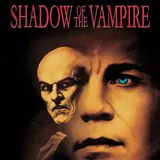
In a way, the reason why Transylvania is so famous has a very easy answer. Transylvania is seen as the scary place because Transylvania is the setting of Dracula. Bram Stoker's book, published in 1897, just completely revolutionized horror fiction. It's probably the most adapted book of all time. A couple years ago, we did our episode on Shadow of the Vampire, one of my favorite Dracula adaptations, which is about, you know, the making of Nosferatu by Murnau back in 1922. It's a great book. It's really fun. I actually just read it again for the second time this year. It's really, yeah, it's exciting, it's thrilling. So you can see why that book gave such an impression to readers of this place. But I think the more interesting question is: why did Bram Stoker think that Transylvania was this natural place of wonder and mystery and horror? I think that if we want to understand that question, which is what this episode is really going to be unpacking, we have to look at the kind of broader thematic and even geopolitical context that gave us Dracula.
The context of, you know, European colonialism, the Brits trying to situate their place in the world, their attempts to differentiate themselves culturally and even racially from other peoples of Europe. It's really interesting. A lot of it's kind of unpleasant, you know, and that as nice as Dracula is, many have noted that there are some very unfortunate colonialist, even potentially, you know, veiled anti-Semitic implications there with the way that Eastern Europeans are treated and differentiated, you know, from the naive British Christians.
Yeah, very much as racial others, we should add.
Totally. You know, hey, and just, you know, bringing this back to the Rocky Horror Picture Show, I think that in a way, the Rocky Horror Show kind of is a parody of Dracula, and it kind of presents the straight couple in contrast to the mostly gay people living in this scary castle, basically in the same way that Bram Stoker presents, you know, innocent Brits versus wily Eastern Europeans, right? It's this idea that, like, there's this kind of innocent corruptibility of the West, and then there is this decadent cruelty and mysterious confusion of the East. And that's really what Dracula, once you take away the vampires, once you strip away all of the Gothic imagery, that's what Dracula is about. And I think that if we look at the development of Transylvania as kind of a historical idea in the minds of people in the West, we can really understand a lot about how 19th century Europeans understood themselves.
That's why I thought that this is going to be a fun kind of road to go down. This is going to be a weird episode. We're going to take a lot of strange, you know, rocky detours and go down some spooky forest paths, but I think this is going to be a pretty fun one for this Halloween.
Okay, but before we get into this, we should mention that Gladio Free Europe is on Patreon. We'd love it if you guys could, you know, shell out a couple bucks if you are enjoying what you're listening to, or if you have any suggestions, please, please, by all means.
Yeah, and on a totally unrelated note, we have a very important trip to London coming up soon. So if you guys could help us pitch in to buy some coffins full of dirt, that would be great.
Yes, yes, we must be surrounded by the soil of our homelands.
Yes, all right. Okay, so let's get started.
The end of Europe
Okay, so, you know, first off, we have to go over the history of Transylvania itself before we can go into the history of, you know, perceptions of Transylvania. We don't have time to go super, super deep into Transylvanian history, but I think that's all right because really we are talking about the idea of Transylvania, which developed much later. Just a quick example here is that of this idea. It's clear from Dracula and from other media about Eastern Europe produced at the end of the 19th century. It's that Transylvania and Eastern Europe more broadly is a part of the world that is remote, impoverished, frozen in time, and of course haunted. I think that in subtle ways, elements of this narrative about Eastern Europe still survives today, especially when people talk about the Balkans. Like a lot of, you know, journalistic coverage of the Yugoslav wars, for instance, basically suggested that these places are primitive.
That's why they have these kind of ethnic squabbles. They are less intellectually developed than Western Europeans. I think there are very many people in Europe today, in Western Europe, still have this attitude. I think Americans might not really differentiate Eastern and Western Europe that much. You know, from our perspective, it's all kind of the same thing. But these influences still kind of seep in unconsciously. But at the close of the 19th century, the difference between Eastern and Western Europe seemed incredibly stark. And from Bram Stoker's point of view, you know, through the mouth of Jonathan Harker, we can see that Transylvania specifically was kind of seen as the end of Europe because historically, the western half of Hungary, or what is today the modern nation of Hungary, had been part of the Austrian Empire for a longer period of time than Transylvania. Transylvania spent a couple hundred years as kind of a nominal Ottoman territory.
Dracula's opening lines
So, you know, Sam, why don't we read the first opening line of Dracula? Because this really gets exactly at what we're talking about here.
Left Munich at 8:35 p.m. on May 1st, arriving in Vienna early next morning. Should have arrived at 6:46, but the train was an hour late. Budapest seems a wonderful place, but from a glimpse which I got of it from the train and the little I could walk through the streets, I feared to go very far from the station, as I had arrived late and would start as near the correct time as possible. The impression I had was that we were leaving the west and entering the east. The most western of splendid bridges over the Danube, which is here of noble width and depth, took us among the traditions of Turkish rule.
Right, the traditions of Turkish rule. And I think that's very much kind of how, you know, the turn of the century Western Europeans understood the Balkans, especially. Transylvania isn't exactly in the Balkans, but it's, you know, it's in the same neighborhood. And I think that one thing we should also mention is that the context that gave us Dracula was a time when all these new nation-states were being carved out of the Balkan region. This is why, you know, the word Balkanization exists. From the middle of the 19th century up until the 1990s, you had all of these breakaway republics and kingdoms being declared in this part of the world, mostly out of former Ottoman or eventually former Austrian territories. There was this kind of general interest and confusion in this part of the world. So there were all of these world regions that Europeans would have been hearing about without really knowing much about them.
You know, we mentioned in East in kind of Central Europe, there was also, you know, Silesia, Moravia, all of these world regions that were being discussed, especially in the context of like, you know, the Balkan Wars of the late 19th century or the Paris Peace Conference in World War I. People were hearing about different countries competing over these territories, territories like the Banat in Serbia and Hungary and Croatia, Voivodina, stuff like that. And yeah, it was understood that, like, you know, in these places that were kind of in between the traditions of Turkish rule and the Habsburg tradition, there was this kind of mixture of cultures, this mixture of sensibilities that basically made people in Transylvania and the Balkans fundamentally less European than their Western neighbors.
A diverse borderland
One thing that seems to have kind of confused and even startled or almost discomforted Western Europeans was the fact that Eastern Europe historically has been a very, very ethnically diverse place in ways that Western Europe mostly has not been. And in the context of 19th century nationalism, this was generally understood as a bad thing. It was understood that, you know, multiple ethnic groups either could not or should not coexist within a single kingdom or nation-state. This assumption basically brought down the Habsburg Empire, which was all about different nationalities living under, you know, joint Habsburg rule. But Western Europeans, you know, in Paris and London, they saw this as an aberration. And so that's why they were so confused and, again, even discomforted when they saw that Transylvania was this incredibly mixed place, predominantly Romanian speaking, but historically part of Hungary with many Hungarian speakers. And then even also, kind of interestingly, a really large German population, even though Transylvania is really, really far from Germany.
Historically, these Germans are super important to Transylvanian history and also, as we'll mention, really important to the kind of Western development of the Transylvanian idea because they were in contact with Germans elsewhere in Western Europe. Can you tell us about these guys?
Yeah, and also their presence, and also their presence in this part of the world is also laced with horror because one of the versions of the Pied Piper Tale, where, you know, a guy shows up in the town and says that, oh, you know, you have a rat problem. I can just get them out of the town, so just pay me and I'll take care of it. So he plays his flute and guides all of the rats out of the town, but the townsfolks decide that they're going to screw him. So he decides to one-up them by playing his flute once again, but this time enticing the children of the town to follow in his footsteps. And in one of the versions of the story, these children were settled in what is today Transylvania and set up the Saxon community that we're right now talking about.
Oh, yeah, yeah, Saxons who, you know, you're going to want to sit down for this one, not actually from Saxony. Their name is a misnomer. It's kind of funny. But there are many other ethnic groups we should mention that have historically lived in Transylvania, especially during the Middle Ages and early modern periods. Like we said, there are large numbers even today of Romani people who feature prominently in Dracula, as well as kind of in the kind of pop cultural conception of this part of the world, I think. I think that Americans, you know, they have an idea that so-called gypsies come from this part of the world. And I think that, although we should mention a lot of that perception is probably shaped by Dracula itself. There also historically was a very significant Jewish community in Transylvania. There were Jewish people speaking many different languages too, because you had this, because as Transylvania is this historic crossroads, you have Yiddish-speaking Jewish people coming in from Austria, from Poland, from the Russian Empire, and you also have Sephardic, Spanish, or Turkish-speaking Jewish people coming in from the Ottoman Empire.
Tragically, this community was basically almost entirely murdered in the Holocaust, and many survivors were actually deported by ensuing Romanian governments, which is beyond despicable. But it just shows that Transylvania was this remarkably diverse place in so many ways. And in a sense, it still is. The Jewish communities are gone, the German community is mostly gone. But it's still got this very strong presence of Hungarians, Romanians, and Romani people, which I think is just really kind of interesting.
Transylvania and Hungary
Transylvania today is a major region of Romania. Historically, however, like we said, it was actually part of the Kingdom of Hungary, which in the Middle Ages was much, much bigger than Hungary is today. After World War I, the Hungarian Kingdom, which was part of the Austrian Empire, was basically torn apart as a punishment for Austrian participation in World War I, carving out new countries like Slovakia and Croatia that had been Hungarian territories before then, and giving this very large chunk of Hungary called Transylvania to Romania. There is a lot of bad blood about this today, which I think Americans probably don't realize. It's still a real sore spot in the Hungarian kind of popular consciousness.
Yeah, they're always talking about the Treaty of Trianon.
Yeah, yeah, in 1919, absolutely. One legacy, though, is that when this happened, there were a lot of Hungarian speakers left over in these parts that were carved away. There are Hungarian communities in Ukraine, in Slovakia, and especially in Romania. We've actually believed, I think we've mentioned once years ago, like maybe a year ago in this podcast, that the Hungarian community of Romania is mostly comprised of one group of people, a kind of a subgroup of Hungarians called the Székelys. You know, the comedian Louis C.K., his last name is actually this ethnic group. They are Hungarians from Transylvania, now part of Romania.
The Magyar invasions
But yeah, so let's talk about kind of basically the let's get into the kind of the development of the medieval Hungarian kingdom and how this very large kingdom came to exist in the Middle Ages. I think actually, in terms of population, during like around the high middle ages, Hungary probably had the biggest population of any kingdom, maybe after the Byzantine Empire, which is really kind of crazy to imagine. It had more people than France, you know, more people than any Spanish kingdom, more people than England, and more people than any of the independent German principalities. It was established kind of unusually through a somewhat late, basically migration of barbarians. Because as some of our listeners might know, in the 9th and 10th century, all these nomadic horsemen coming out of the Central Asian steppe introduced the Hungarian language to Europe. The early Hungarians, or you know, Magyars or Magyars, as they're called in their language, were frequently compared by other Europeans to the much more ancient Huns.
Medieval Byzantine writers called them Ungari, but because they were kind of confused with Huns, eventually their name was changed from Ungari to Hungary. An H was added on just out of mistake, which I think is kind of funny, and the name stuck. Linguistic theories suggest that the Magyars originated actually quite far in East Asia. Their language is part of the Uralic family, the same family as Finnish, but it probably actually originates much closer to Mongolia or even Korea, really, really far east in Siberia. But over, you know, centuries and millennia, Hungarian speakers slowly pushed west, mixing with many Central Asian peoples along the way, especially many Turkic-speaking cultures, and eventually, like we said, around the year 900, came pouring from, I think, the area of Ukraine and Russia into what's known as the Pannonian Basin. That is kind of the geographic name for Hungary and including Transylvania in that.
And we should mention that when they settled in Hungary, the Hungarians weren't exactly content just to remain in this land. Because just like the Vikings hammering Europe from the north, Hungarians from the east undertook raids all across Central and Western Europe. Just a couple years after establishing themselves on Pannonia, they destroyed a Holy Roman army and were able to basically run rampant across northern Italy, which was part of the Holy Roman Empire, for a couple years, pillaging monasteries, destroying towns, basically doing Viking stuff, but on horseback, you know, instead of by boat. It seems that in the 10th century, Hungarian raiders were reported as far north as the border of Denmark, as far south as the very bottom of Italy, and even as far west as Spain. It's crazy. You know, they were just incredibly mobile. They were very fearsome horsemen. And so, just like the Huns 500 years before them, and just like the Mongols 500 years later, they were just this scourge of Europe that left this very fearsome mark on the historical record.
And this is a reputation that today a lot of Hungarians are very proud of. They really emphasize their kind of, you know, their identity as these fearsome nomadic Central Asian horsemen.
Yeah, even though most Hungarians today are mostly descended from German and Slavic populations.
Yeah, yeah, oh yeah, yeah, because this was a tiny group of foreign conquerors. It's the same thing you see, you know, with like the Goths and the Franks. You know, a tiny group, basically a mercenary elite, takes over a country, but manages to establish a new identity and introduce a new, and in this case, introduce a new language. We can talk in another episode, I think, about the ways that a modern Hungarian national identity began to use linguistic and anthropological theories. It's really, it's an interesting area, but that's way too far afield for now.
Christian Hungary and Latin
So we should mention that just like the Vikings, eventually these Hungarian raiders did settle down. They became Christian. There was initially some question about what kind of Christian they would become, because their state is kind of halfway between the East Orthodox world of the Byzantines and Russia and the Catholic world of, you know, Germany and Italy and England. They eventually chose Catholicism to the annoyance of the Greeks. And these new Catholic kings actually were so enthusiastic about becoming Catholic that they turned Latin their official language. And I believe it actually remained the official language of Hungary until the Austrian takeover in the 16th century and maybe beyond. I believe it was still an official language when Austro-Hungary was formed in 1848.
That's crazy. Wow, yeah. That's just wild to think about.
Just spitballing here, I wonder if part of why they adopted Latin rather than using Hungarian for their laws was because the conquering population of Hungary, you know, Magyars was so small, the vast majority of their subjects spoke other languages. They spoke Slavic languages, some of them spoke Romanian, some of them spoke Turkic languages. It seems like there's always been a long presence of Turkic speakers in Hungary, both predating the Hungarian arrival and after, because other steppe peoples had kind of beat them there. Eventually, most of the Slavic speakers of Hungary would become Hungarian speakers, which has an interesting result of giving many Slavic words to the Hungarian language, because so many Slavic peasants who spoke languages like Russian and related to Russian or Ukrainian or Serbian began speaking Hungarian, but gave their own words to the Hungarian language. But the legacy of Latin kind of allowed the various ethnic minority, the other ethnic minorities, especially those with a little bit more money, to kind of maintain a linguistic autonomy.
You saw Romanian and especially German-speaking communities keep to their own language ways for a very long time in ways that Slavic-speaking peasants didn't.
Beyond the forest
And one kind of funny consequence of the use of Hungarian Latin is that the name Transylvania, as you might expect, is a Latin word. It's Latin for beyond the forest because Transylvania is separated from the rest of Hungary by a heavily forested range of low mountains called the Apuseni or Sunset Mountains in Romanian.
Yeah, even the name sounds spooky.
It does, right? Sunset Mountains, totally. And also, we should mention, the Sunset Mountains are famous for their huge cave systems, rich with minerals. The copper deposits meant that Transylvania was actually one of the most important parts of Europe in the late Neolithic and early Bronze Age, because many early Bronze Age cultures relied heavily on this as a source of bronze. You know, we've talked a very long time ago about the Proto-Indo-Europeans who spread modern languages, the ancestors of, you know, Romanian, Greek, English, but not Hungarian, into Europe. They very quickly moved into this area. This was a very important part of Neolithic Europe, probably because of these mineral deposits, in no small part. Then later on in the Middle Ages in the early modern period, gold deposits were found in Transylvania, in these mountains. And then to the east of Transylvania, so the west are the Sunset Mountains, and to the east are the Carpathians, the much mightier mountains that we've also talked about before in our episodes on Ukraine.
Yeah, and shout out Forgotten Ancestors with Jim.
Yeah, with our good friend BC Jim. Love that guy. Because, yeah, because if you go across the Carpathian Mountains, then you're in either Hungary. I'm sorry, then you're either in Romania or Ukraine. All right, so during Bram Stoker's time, there was this impression that Transylvania, and maybe Hungary more broadly, because it was surrounded on most sides by mountains, it was specifically insulated from change. It was basically frozen in time in ways that other parts of Europe were not. This is not true at all. I think that the fact that Romania, I'm sorry, the fact that Transylvania is so ethnically diverse speaks to how many different cultures were always kind of crossing through. The fact that it was always part of so many empires. I really don't think there's anything that's specifically remote about Transylvania at all. It's just that the presence of these mountains has historically meant that it's been, it has had a strong kind of geographic self-conception.
There's been this understanding that even though Transylvania has always been very ethnically mixed, it has its own kind of shared regional traditions and customs. And there's a long history of the various ethnic groups locking arms in many ways to deal with foreigners. You know, like once you get, once you kind of join the Transylvanian club, you got to work together to keep out, you know, the other groups trying to get in here.
The Székelys
So, okay, so the dominant group of medieval Transylvania was, of course, the Hungarians, who we should mention, are basically split into two groups. They are the main Magyars, but then beginning in the 13th century, you start to see references to another group, the Székelys, who believe themselves to be actually older than the Hungarians, because a big part of their national mythology is that although the Hungarians are not connected to the Huns, these guys, the Székelys, they are. And medieval...
Oh, so it's sort of like a Jews and Samaritans type of thing.
I guess so, yeah, yeah. And so the medieval references suggest that, you know, when the Hungarians got there, there were a group of Huns called the Székelys living there who eventually adopted the Hungarian language. They lost the Hunnic language, I guess, you know. This is probably not the case. There's really no reason to believe it, but you never know, right? Like it could be, you know, where there's smoke, there's fire kind of thing. The only evidence in any direction is that recent genetic surveys showed that Székely peoples actually do have slightly elevated levels of Central Asian ancestry compared to other Hungarians. So they might have an additional ancestral Central Asian component. But I'm also kind of a little bit hesitant to, you know, draw anything from that, especially because, as we're going to talk about in this episode, other communities of Central Asian extraction would settle in Transylvania after the Székelys were supposed to have emerged.
So you don't know, there's many ways that this additional Asian ancestry could have come to Transylvania, to the Székelys. A big thing about them is that a very interesting, kind of unique historical experience was that they, as an ethnic group, were actually exempt from feudalism. They were not required to pay any kind of taxation in cash or in kind to the Hungarian king, because instead, they simply provided military service. The entire community was therefore sort of like a military elite. They were like, you know, almost like low-ranking knights de facto. They spent most of the year as independent free farmers, sometimes hiring Slavic or Romanian-speaking peasants to work their fields. But then, whenever a war happened, the Székelys would be called upon to defend Hungary. This gave the Székelys a very martial reputation within Hungary, which Bram Stoker is very excited to talk about when he's describing Dracula.
We should mention that the fictional character of Dracula, not the real Vlad the Impaler, who we'll mention, the fictional Dracula is specifically described as being a Székely. This is his own ethnic group. Probably just because Bram Stoker thought that these guys were like the, you know, the toughest of the bunch in Hungary and Transylvania.
The Transylvanian Saxons
And another group who was exempt from feudalism were the Germans, specifically the Saxons. Let's talk about those guys, Sam.
As we mentioned, there's the Pied Piper myth, but going back to the historical record, we see that in medieval times that there were a bunch of Germans who came from the Rhineland in the late 12th century on the invitation of Hungarian kings. And it's one of those really frustrating details of medieval history because the Transylvanian Saxons did not actually come from Saxony.
Yeah, it's like Huns and Hungarians.
Yeah, yeah. Yeah, so they spoke a language that was closest to that of Luxembourg today, from what I understand, because they were situated on the border between France and Germany. And like the Székelys, these guys weren't either nobility or peasants. They were the free city folk. And initially, these settlements would have been led by German noblemen, but these guys very quickly assimilated into Hungarian cultures. While the commoners remained a distinct ethnic group, Waldoff and their seven fortified towns, which give Transylvania its German name, Siebenbürgen. So just a few...
Yeah, yeah, I kind of... Go ahead.
The Mongol invasion
Yeah, so just a few centuries after the fearsome Hungarians came storming off from the steppe, they get a taste of their own medicine because around this time, the Mongols would show up to ravage that part of the world.
Oh, yeah. You know, we should mention actually just showing for kind of situated in the timeline here. Right around the same time that historical records mention the existence of Székelys, and just a few decades after the Germans started arriving in Transylvania, the Mongols come too. So this is a really dynamic like 50-so years from the late 1100s to the early 1200s.
Right, so in 1241, which was a year after the sack of Kiev, the Mongols moved further west, and they very easily destroyed the Royal Hungarian army, just as the ancestors of the Hungarians themselves had cut through the forces of the Holy Roman Empire. But now it was the Mongols who had free reign to pillage and plunder across this land, possibly bringing gunpowder to Europe for the first time. While Transylvania was mostly spared this destruction, Central Hungary was absolutely devastated. Over half of all the villages there were either abandoned or destroyed. Even the old capital of Esztergom was sacked. The king and his court were holed up in their fortified palaces, while the Mongols killed and enslaved basically the entire population outside of the walls. At this point, King Béla moved his court temporarily to the new town of Buda, which is now part of Budapest. And this was mostly populated by German knights and merchants.
But these guys, if you're still paying attention, actually were from Saxony. And probably the origin of the name confusion with the so-called Saxons of Transylvania, even though, again, totally different migration waves.
Now, we mentioned that Trent. Yeah, yeah, we mentioned that Transylvania was mostly spared the destruction of the Mongols. A lot of this was geographic because those mountains, you know, it's pretty hard to, you know, do a horse invasion through there. It's kind of amazing the Hungarians got there in the first place. Also, that there was this long tradition of kind of community self-defense, of militias of commoners, Székelys and Germans, and some high and Hungarians kind of linking arms to deal with any kind of foreign threat. This probably worked. At the very least, they deterred the Mongols from getting in there.
Cumans and Jassics
This also meant that because Transylvania was not destroyed by the Mongols, it became this point of refuge for peoples across the Kingdom of Hungary and even some beyond. You saw people from all over the country pouring into Transylvania, and you also saw people from farther east in Europe, from places already conquered by the Mongols, going in for safety. These included Turkic-speaking groups like the Cumans, who were, I think, really cool. The Cumans were in the earlier Middle Ages a really fearsome group in Ukraine, basically the dominant group in Ukraine, probably the main ancestors of the Crimean Tatars, who are still around today. And then you also have a group that I had never even heard of before until this episode, called the Jassic people. Have you heard of these guys, Sam? Because this is crazy. I had no idea.
No, no, I hadn't.
The Jassic people were Alans, who were descendants of the ancient Scythians and Sarmatians, who were still living in, I think, like the kind of Pontus region of Russia at this point, relatives of the Ossetians who still survive today in the Caucasus. So they spoke a language distantly related to Persian, descended from ancient Scythian, and anyways, they came into Hungary at this time too. The Hungarians, just as they had done with other ethnic groups, they incorporated them into the state with specific ethnic privileges similar to that of the Székelys. Like, you don't have to give us any farming stuff, any grain, but you do have to fight for us. This led to tensions, especially between the peoples who had kind of already joined the Transylvanian club and peoples trying to come in. There was just like, hey, man, like, this is our place. You need to get out of here.
And that because Transylvania became basically the center of power of the entire Hungarian kingdom during this period, because the rest of Hungary was so devastated, this led to a lot of tension, a lot of competition over these important mineral resources. And because, you know, this was where so much of the power was based that, you know, anybody in Transylvania had disproportionate influence over Hungarian politics, including these newcomers. Probably the most important we should mention are those guys, the Cumans, the Turkic speakers. They did assimilate many aspects of Hungarian culture. They adopted Christianity. Many of them began speaking Hungarian. Today, their descendants are completely indistinguishable from other Hungarians, but they were still seen as foreigners. Additionally, some of them, they were a mix of, when they came in, they were a mix of pagan and Muslim. And the fact that there were Muslims among them around the same time as the Crusades led to a lot of unease among Hungarian Christians.
But some Hungarian Christians actually were quite fine with the Cumans, especially because a lot of, due to heavy amounts of intermarriage, by the late 13th century, a lot of Hungarians had some Cuman ancestry, and this went straight to the top.
Ladislaus the Cuman
Right. So in the 1280s, you had the young king Ladislaus, whose mother and regent was a Cuman, and he was widely believed to favor this aspect of his heritage over the Magyar side. He was simply referred to as the Cuman because of his hairstyle, because as Liam dug up, he apparently wore it in braids, and because of the circumcision choices that made him seem much more of a steppe nomad than a medieval Christian king. In a sense, you could say that he was bringing the Hungarians back to their less settled origins, but his contemporaries didn't see it in that way. Ladislaus the Cuman was basically a pagan. So wild stories began to circulate about how he had a sister who had become a nun, but she was yanked out so that she could be given away in marriage to his allies. Another story was told that he assembled his own oriental harem of Cuman women who would publicly have sex with his concubines in front of the bishops and court.
Yeah.
So as we're going to see later with the later Transylvanian and Wallachian rulers, these lurid stories were probably invented by Ladislaus' enemies, but they were widely believed at the time, which meant that when the Mongols actually came back in 1286, many Hungarian noblemen believed that it was an inside job. Ladislaus must have invited his friends back from the old country. So, hoping to deflect from these allegations, Ladislaus took to the field to confront the Mongols, whose army was probably mostly comprised of Russian and Ukrainian vassals at this point, but which still relied on steppe tactics. And because Ladislaus knew these tactics well, he was able to anticipate the Mongols' moves in ways that few other Christian monarchs at the time could do. He baited the Mongols into entering snowy areas where their horses couldn't feed, and then directed them towards towns he'd already evacuated, which seems like a very strategy that the Russians would employ against Napoleon a couple of centuries later.
That's interesting.
Yeah, maybe they learned it from him, you know.
A lot of the army would have been Russians.
Yeah, yeah. So it seems like he led this Mongol-Russian invasion force around Hungary like a donkey with the carrot hanging on the stick, only attacking the army on conditions that he knew would be favorable to his own army. After about a full year of this, the Mongol invasion was battered and starving. So they retreated back to Mongolian territory, where the Russian and Ukrainian subjects immediately staged a revolt against the Khans, which led to this ill-fated venture.
Yeah. Yeah, so this was really one of the greatest victories of the medieval Hungarian kingdom, because very few countries managed to successfully defeat a Mongol invasion, you know? This was the 1280s, so the Mongols were kind of past their prime, but still, they were the goddamn Mongols. So you'd think that this would have given Ladislaus the reputation of being a great patriotic leader, which I think he kind of does today in like revisionist Hungarian narratives. But the rumors that he favored foreigners persisted and still do persist today in the Hungarian imagination. Because while Ladislaus was dealing with this invasion force, a small rebellion broke out in Slovakia, which, like you mentioned, was part of Hungary for most of its history. Because Ladislaus' main army was tied up with dealing with the Mongols, Ladislaus had this clever idea that seemed like a great idea at the time, which was that, you know, he was capturing so many Mongol prisoners of war that what if he could put these prisoners to use?
While his main army was dealing with the rest of the Mongols, maybe these Mongol prisoners could get a little deal where they could earn their freedom by becoming his knights and dealing with this rebellion. But this would be a huge mistake because even though it might have made sense at the time, sending Mongol invaders to deal with a rebellion of your own subjects had terrible optics, even if these subjects were, you know, actively, violently rebelling against you. When they saw these Mongols being sent by the king to deal with these rebels, people thought that all of the Mongols must have been in league with Ladislaus. Word spread among the barons that he was an agent of the Mongols, and this tiny rebellion in Slovakia became a full-scale rebellion, which basically led to a state of civil war in Hungary that would persist really for decades, long beyond Ladislaus' death, arguably persisting in some form or another until the 15th century.
There would be many, or 16th century really, there would be many, you know, important kings of Hungary after Ladislaus, but I think that his reign marked the end of the kind of stability of the Hungarian realm that had existed up until this point. Because this huge rebellion broke out against him based on the rumor that he was an agent of the Mongols. And what really also really freaked people out was that one of his advisors was a Cuman who was believed to have only, who had claimed to have adopted Christianity, but was believed to be like a crypto-Muslim. And so, you know, so the Mongol prisoners and with the suspected Muslim guy in his palace, right? Like things seemed really bad. So these rebellious noblemen started appealing to outsiders for help, specifically to Westerners. There was even rumors that the Pope was going to declare a crusade against Hungary because they saw Ladislaus as, you know, this crypto-pagan.
We should mention that, you know, the idea of a crusade against Hungary was pretty dire news because the crusade against the Byzantines in 1204 was still within living memory, and that basically destroyed the Byzantine Empire forever. It only existed in kind of like a rump state beyond that point.
Andrew the Venetian
Eventually, Ladislaus' cousin Andrew from Venice, simply known as Andrew the Venetian, which also mentioned Venice was the state that spearheaded the Byzantine crusade, they landed an invasion force in Hungary, a mix of Hungarian exiles and Venetians, with a ton of financial help from these Italian banking families. They fought and bribed their way into the inner circle of Hungarian power. And it seems like they convinced some of his own bodyguards to betray him. Because very soon after Andrew arrives in Hungary, Ladislaus was murdered by a group of Cumans who he thought were his friends. And he died at just 27 years old.
So yeah, it's a great entry into the 27 Club.
Yeah, wow. What a life.
Oh, I know. Yeah.
So, he was replaced by this guy, Andrew, the Venetian, who was not a terrible king, but was less able generally than the man he replaced. Because, like we said, he was unable to. So, he, you know, this civil war had brought Andrew to power. He was unable to put the toothpaste back in the tube. He never was able to, you know, bring Hungary back under his full control. And Transylvania in this time became especially autonomous. Also, Western influence became more pronounced and would really never leave Hungary. Italian noblemen would start projecting their ambitions onto Hungary. French noblemen would, and then especially the Austrians. Hungary would become a powerful country again. It just never would have that same amount of stability. There would just be a constant amount of civil wars and attempted usurpations and rebellions.
Hungary turns west
The main, probably the biggest consequence of the overthrow of Ladislaus, this very Eastern-looking monarch, was that Hungary became much more Western-facing from this point. I think that today, many Hungarians would probably consider themselves part of the West, whatever that means, especially because they're Catholic. I don't think that would have, if that kind of identity existed at all in the Middle Ages, I don't think it would have existed before this point.
Well, the idea of Christendom existed, but the West, no, I don't think so.
Right, but I mean like the idea that like Hungary has a fundamental commonality with like Germany and with France that it does not share with Russia. I think that many Hungarians believe this today. I don't think they would have believed it in the Middle Ages. I think that this perception probably starts to take shape after you start seeing French and Italian and eventually Austrian kings become kings of Hungary. It really incorporates Hungary into the kind of Western social world.
The Romanians
And so around this time, this is the 14th century, we also start to get a really good understanding, really for the first time, of the ethnic group that today is dominant in Transylvania, politically and demographically. That, of course, being the Romanians. One thing that's crazy about Romanian history is that we know very little about this group's origins. In like, you know, nationalism and folklore, they claim to be descendants of the ancient Dacians who were taught Latin by the Romans. That's probably true to some extent, just because there's a lot of territorial continuity between Romanian-speaking areas and ancient Dacia. But we just don't know because there really is very, very little medieval record about the Romanians until this kind of period of civil war in Hungary, when you really start to hear a lot about Romanians. They were about 70% of the population of Transylvania today. In the Middle Ages, they were probably like 20%, with Hungarians being the bulk, and then Germans probably, maybe in between.
Germans might have been more populous than Romanians at this point. Obviously, Romanians speak a Romance language, you know, distantly related to Spanish, French, Italian. We don't really know if this language was native to the modern-day region of Romania or if it might have been introduced to Romania from elsewhere in the former Roman world. There are related languages spoken today in Greece and Albania known as Aromanian with an A. So maybe the major Romanian language came out of that same neighborhood. For what it's worth, genetics does indicate that Romanian speakers have more Balkan, like southern Balkan ancestry than Hungarians do. So they could have some origin kind of more in the south. We don't know. It doesn't really matter. Anyways, during the reign of Andrew of Venice, the usurper, it seems that large numbers of Romanian speakers were invited into Transylvania to be poor laborers. Because remember, the Saxons and the Székelys and then the Cumans were free from feudal obligations.
They needed other people to basically be the peasants. So that kind of makes sense that they would need, you know, poor shepherds and farmers. Shepherds are important here because Romanians to this day have a very strong self-conception of themselves as a shepherd people. This is really, really important to the Romanian national identity. And I think, you know, shepherds are pretty important to a lot of medieval economies and identities, but I think that nowhere were they more important than Romania. I think there was even kind of an impression that to be a true Romanian, especially in the early modern period up until like the 18th century, 19th century, was to be a shepherd, which is kind of interesting. They were not exempt from feudalism, but they did have their own special rights, which let them bring their sheep up and down the mountains in the winter and the summer.
So the, you know, because in the winter, the mountains get so cold the animals would freeze. So that they were allowed to graze their sheep on other people's land in the winter, which was very important to their identity. And you see similar stuff in Switzerland. It's called transhumance. Anyways, just as is the case with the Saxons, any Romanians who managed to make any money would usually assimilate into Hungarian society. They would join the nobility, and before long, their kids and grandkids would just be indistinguishable from other Hungarians. So just like the Saxons, the people who remained part of this distinct ethnic group tended to be less wealthy. But the Romanians were generally much less wealthier than the Saxons were. Because, you know, the Saxons were city folk, the Székelys were free farmers. The Romanians, who did not adopt Hungarian customs, were the peasants and the shepherds.
Orthodox peasants in revolt
This meant that tensions between Romanians and Hungarians and Germans had a distinct ethnic, social, economic, and even religious flavor. Because I'm sure you know, Sam, Romania today is an Eastern Orthodox country, like Greece, like Russia, like Ukraine, yada yada. Whereas Hungarians and Germans, at least in this context, were mostly, were almost entirely Catholic.
Yeah.
So this meant that, you know, there was this, there's many reasons for tensions between these groups. The Romanians tended to clash more with the other groups of Transylvania than those other groups clashed with each other, which meant that eventually in the 16th century, we're kind of jumping ahead here, a major Romanian peasant revolt would break out. And this peasant revolt, about 100 years before the German peasants' revolt in the 16th century, led to Saxons, Székelys, and Hungarian aristocrats linking arms in this three-way alliance against this peasant-Romanian Orthodox threat. And these peasants would be crushed terribly, largely due to the efforts of the powerful Báthory family. You've heard those guys, right, Sam?
Oh, yeah, of course.
Oh, yeah. The Báthorys are interesting because they were Hungarian. As far as anyone could tell, they were just as Hungarian as anybody else, but they were founded by German settlers. So it's a perfect example. Like, you know, they were like German settlers who got rich, so they just became Hungarian. Anyways, as a result of the destruction of this rebellion, mostly by the military might of the Báthory family, the Romanian peasants would be reduced to an even more meager servitude than before, causing many of them to basically permanently resent their membership in any Hungarian state and leading to very unfortunate, very fierce, very long-term ethnic tensions between Romanians and Hungarians that, in a sense, kind of exist to today. And the immediate consequence in the 15th century, and like this is like 1450-ish, was that survivors of this peasant rebellion sought help or sought inspiration maybe from independent Romanian speakers not living within the boundaries of Hungary, but living outside of it.
Enter Vlad the Impaler
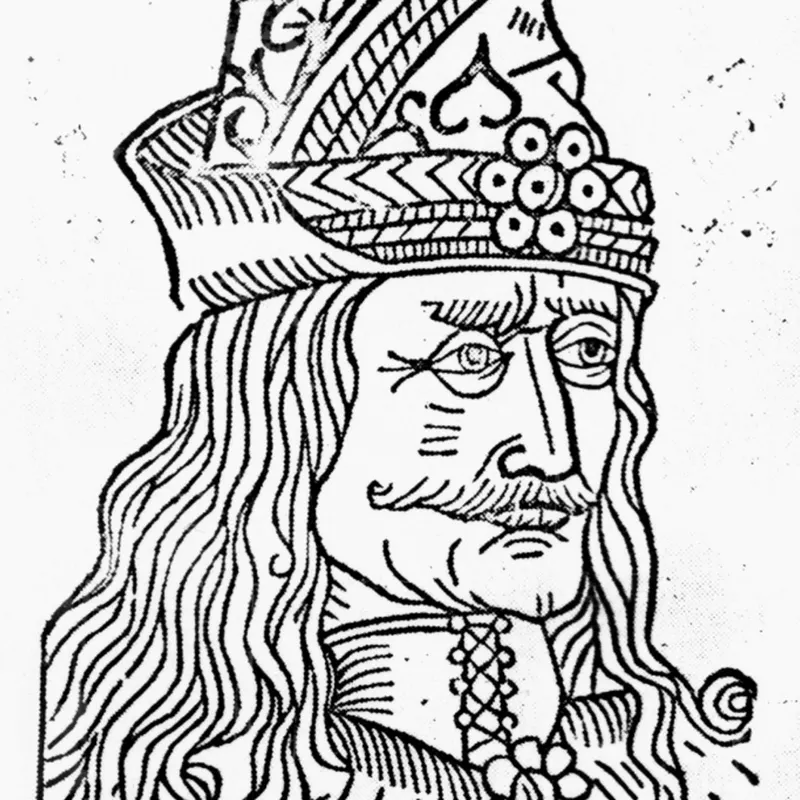
Particularly one Romanian in particular. Probably the one Romanian anybody has ever heard of in America. Who that's, you already know who it's going to be. That's Vlad Dracul, Vlad Țepeș, Vlad the Impaler. All right, so there's one big shocker about Dracula, the real Dracula, which I didn't realize, or I guess I kind of realized, but it never really struck me until putting this episode together, was that he was not Transylvanian in the slightest. He was Wallachian. He was from the country next door, the independent state, not part of Hungary. But the development of his historical myth is intrinsically tied to that, the history of Transylvania. Bram Stoker chose to change his character to make him a Hungarian-speaking Székely instead of a Romanian, a Transylvanian instead of a Wallachian, but the real Dracula was an enemy of Transylvania.
Wallachia and Moldavia
Let's, before we get, we'll talk about Dracula in a second, but let's kind of talk about Wallachia first and its next-door kind of twin brother, Moldavia.
Right, so we aren't sure when exactly these states were created, but Wallachia emerged sometime around the 14th century, initially as a vassal of either Hungary or Bulgaria, depending on the conditions of the time. Its founder was a legendary prince named Radu the Black, and Radu is Romanian for joy, and also related to the Slavic word. And in Russian, we say radost, for example, for joy.
Oh, yeah, you know, I was thinking it didn't look like any like, you know, Spanish word for happiness, like, you know, Feliz or whatever, so it makes sense that it's a Slavic import word.
Now, we're not sure if he exactly existed. That's a big debate in the historiography, but in the ensuing centuries, Radu became one of the most popular names for the Romanian aristocracy. Now, Wallachia was one of two independent Romanian principalities, the other being Moldavia, Moldova, established by a more well-connected Romanian hero named Dragoș. Now, an important thing to note is that both of these countries were Orthodox, like their Bulgarian and Russian and Byzantine Greek neighbors, unlike Hungary, which was, if you're keeping track, Catholic. So, Hungarian rulers attempted to convert Romanian peasants into Catholicism, but without much success.
Yeah, like we said, this added some like, you know, sectarian fuel onto the fires of these existing economic and ethnic tensions, you know, especially in the Middle Ages. Once you add a religious element to your ethnic conflict, it's going to get much, much more unpleasant.
Yeah, yeah. Just a couple of centuries later, the same thing was happening on territory of what is now Ukraine with the Polish aristocracy attempting to turn the Ukrainian peasants into Catholics, but that's a whole different topic. So, anyway, there was a lot of struggle over this, and wouldn't you know it, there was the Romanian revolt in Transylvania.
Yeah, that we already mentioned.
Yeah. And so by the time this revolt broke out, it seems that Wallachia and Moldavia no longer had even any nominal allegiance to Hungary. And they certainly didn't have any allegiance to Bulgaria, because Bulgaria, after the... beginning of the 14th century or 15th century basically ceases to exist. It had become fully subsumed into the new Ottoman Empire. It actually, kind of interestingly, was part of the Ottoman Empire even before Byzantium was conquered, which is kind of interesting. Like the Ottomans completely encircled the territory of Constantinople before taking the great city itself.
Nicopolis and the Order of the Dragon
As a result of this rapid and basically terrifying Ottoman advance from the point of view of Western Europeans, Pope Boniface IX declared a crusade, probably the last major attempted crusade, to retake the Balkans from the Muslims around the year, I think, 1396. So this attempt at a crusade would be a complete disaster, really kind of an ignominious end to the entire crusading period, because at the infamous Battle of Nicopolis, Christian monarchs lost a desperate struggle against this Turkish advance. So with this crusade totally mired in the mud, clearly the Pope no longer had any influence to, you know, incur military successes against the foreign infidel. So the secular monarchs worked kind of among themselves to develop their own kind of defense pact against the Ottomans. This was spearheaded by King Sigismund of Hungary, who would later become Holy Roman Emperor. And he formed a chivalric order based on those of Western Europe, in Eastern Europe, with the expressed purpose of joining hands between Western Catholics and Eastern Orthodox monarchs to defend together against the Ottomans.
This group, which was, you know, backed by Italian and German capital, was called the Order of the Dragon and was most and you know, included the Holy Roman Empire, Hungary, as well as both Wallachia and Moldavia. It seems that the independent Romanian principalities had very little relations with Western Europe until this point, so the formation of this alliance was clearly a really big deal. Vlad the Impaler's father, who we're going to call Vlad the Elder in this episode, he most likely adopted the name Dracula as a way of expressing his pride in this foreign alliance. He was so excited to have the backing of, you know, the Holy Roman Empire behind his tiny state that he started calling himself Vlad of the Order of the Dragon, or for short, Vlad Dracula.
Vlad's youth
He took his membership in this order so seriously that in 1442, he stood his ground when the Ottoman Sultan Murad II demanded Wallachia support the Ottomans in a potential future invasion of Hungary. Murad told Vlad the Elder that he either had to submit or his two sons would be captured and brought to Constantinople as hostages. And Vlad said, take my kids, please. So Vlad's sons.
Yeah, great father.
Vlad's sons were raised in the Turkish court, these two kids being Vlad Jr., future Vlad the Impaler, and also his brother Radu the Handsome, probably named after that earlier Radu who allegedly founded Wallachia. Not too long after this, the king of Hungary, believing Vlad the Elder to be unreliable, invaded Wallachia himself and installed another guy as ruler. And incredibly confusingly, this new ruler of Wallachia, who overthrew Vlad the Elder, was also named Vlad. But thankfully, the historical record refers to him as Vladislav, which is a little easier. So, yeah, Vlad the Elder died in 1448 with Vladislav ruling his throne. And this meant that his claim to the throne would pass on to Vlad the Impaler, who was a teenager at this time. With Ottoman help, the young Vlad the Impaler invaded Wallachia to take out the rival Vladislav. It was this interesting kind of proxy war where the Ottomans and the Hungarians each had a Vlad on their side, right?
Like, you know, and so the.
Yeah, like Russia, Ukraine today.
Oh, that's true, yeah.
Volodymyr and Vladimir.
Yeah, you're right. Wow. Eventually, the Hungarians seemed pretty ready to sell out their own guy, Vladislav, and recognize Vlad the Impaler if they made a favorable deal. But Vlad the Impaler was not really known for being particularly compromising. So when the Hungarians told him to take a deal, he told them to get stuffed, specifically with a wooden stake. This meant that the Hungarians doubled down their support of Vladislav and they eventually defeated Vlad the Impaler's army, sent him back to Turkey. But he would really just nurse this grudge for the next several years. He trained to be a much more effective soldier in the Ottoman army, and then eventually left Turkey basically for good to fight in Moldavia. We said the kind of the twin brother of Wallachia, the other independent Romanian state, where one of his relatives had taken the throne and was trying, was fighting his own civil war.
So, and around the same time, Radu's Vlad's brother Radu came even closer to his Ottoman captors/slash hosts. He converted to Islam and he became a janissary officer. He also maybe, this is very speculative, might have become the boyfriend of the 20-year-old Emperor Mehmed II of the Ottomans. It's all speculation and rumor. This is usually used to defame both of them, but these allegations were made. Hard to know if this is just an insult or if there ever actually was anything going on between them, but Radu and Mehmed were certainly very close. And then in 1453, Mehmed II took the great city of Constantinople, effectively ending basically 2,000 years of the Roman legacy. Mehmed started becoming known as Mehmed the Conqueror, and he proclaimed himself the new emperor of Rome.
Vlad takes Wallachia
Not long after this, Vlad the Impaler, we don't really know how he did this, but he accomplished his own conquest, finally taking Wallachia, avenging the betrayal of his father, and taking this throne for himself that the Hungarians had stolen. Vlad immediately had Vladislav executed, as well as many dozens or possibly hundreds of noblemen who had allowed his father or helped his father to be overthrown. We don't know if these guys were impaled, but I think there's a pretty good chance. According to Greek historians at this time, Vlad totally reshuffled the power structure, basically firing everybody that he suspected might be disloyal, and if he really suspected anything, he would have them killed. He also was incredibly harsh toward commoners, especially those accused of any kind of petty crimes, to show that he meant business and that he just had hundreds, maybe thousands, of common thieves killed by being impaled with long wooden sticks and left to rot in the sun.
This was probably a show of force because many of the commoners of Wallachia just saw Vlad as this Turkicized foreigner. So he was going to say, you might not like me, but you have to deal with me. This is what I'll do if you resist, right?
Campaigns against the Saxons
So later in his career, Vlad the Impaler would become a sort of anti-Turkish resistance hero in the Balkans, but in the early years of his reign, he was really friendly with the Ottomans, instead, hoping to project into Hungary, specifically into Transylvania. And this is a really important part of the development of Vlad the Impaler as a character, as a part of the European imagination. His entire reputation, as existed before Dracula, was defined by his campaigns in Transylvania, particularly his brutal treatment of the local German population, the Saxons. He was alleged to have deported entire villages of Germans into his own territory of Wallachia, along the Carpathians. And unlike the earlier victims, these foreigners were certainly impaled.
Yeah, there's no question here. It was, he definitely stuck sticks up them. It's a really brutal way to die. Yep, so in terms of his reputation, attacking the German speakers seemed to be a mistake because this happened at the exact same time that German speakers in Germany were inventing the printing press.
Printed horror stories
So...
Right, because Vlad the Impaler, this is super important, was a contemporary of Johannes Gutenberg. The very first generation of printed books in all of Europe included printed books about the lurid stories of Vlad the Impaler's crimes against the Germans of Transylvania. This is really what gave him the reputation that he has basically to the present. That he's this uniquely cruel ruler who killed innocent people because he just relished in their suffering and suffering in the most, you know, one of the most horrific ways you can imagine. This, you know, a wooden stake being shoved up the entire length of your body, and you slowly die as you bleed to death as you know, you feel your organs rupture from this terrible wooden stick. It's unbelievably brutal. Yeah, yeah, not a great way to go. So, one of the pamphlets published at the time in Austria described that after impaling hundreds of innocent people on stakes, Vlad ate a feast among the so-called forest of corpses as blood rained down on the food.
When the blood began to pool on his plate, he dipped his bread into it and ate it. This anecdote is obviously made up. It's just some supervillain shit. But it caused some scholars to confidently state that the real Dracula must have traditionally been considered a vampire. And so Bram Stoker discovered all of these old sources and was inspired to write his novel. But this does not seem to be the case because in the 1400s, the German audience had not yet been exposed to vampire stories from Eastern Europe. This was probably just a macabre anecdote and not an indication that Vlad Dracul was in fact the living dead. It now seems that until the publication of Stoker's novel in 1897, Count Dracula was never associated with vampires at all. But he was associated with Satan.
Not much better, in my opinion.
So there was a pair of Italian Renaissance paintings depicting him as Pontius Pilate, ordering the death of Christ, which was probably commissioned by German princes.
Yeah, you know, it's kind of funny to imagine there's this like, you know, panic about this foreign ruler, which is kind of like, I guess this has happened before, but it's like, it's kind of interesting. It seems very modern, right? Like, people are reading the news from a foreign country and being like, oh my god, Vlad the Impaler must go.
Yeah, do you think there was a type of German who was just like critical support for Vlad the Impaler?
Oh, there might have been, yeah. I don't know. Probably so, yeah, because eventually he would become this, you know, anti-Ottoman hero, right? Like, he's a bastard, but he's our bastard.
Defying the Ottomans
That kind of idea. And that's kind of what happened, because a couple years into this Transylvanian campaign, eventually the Hungarian king Matthias Corvinus would reassert power over Transylvania, send Vlad packing, although he would manage to permanently annex a couple parts of Transylvania into Wallachia. And after this, he would turn his sights and his stakes toward the east, where he would famously defy the Ottomans whom he had once served. The famous story is that two Turkish emissaries were sent demanding tribute. Previously, he had always paid the tribute politely, but now, especially after his Western ambitions had been crushed, he would no longer, you know, take this standing up. So, one popular story, sometimes referring to Saxons or Italians, just some kind of foreign emissaries, is that when these two emissaries came to his court, he demanded they take off their hats or possibly turbans as a show of respect.
But they refused to. So instead, he said, all right, and ordered his knights to nail their hats to their head.
Not a great way to go either. This guy was really creative with his punishment.
Oh, yeah, no, again, yeah, yeah. And yeah, and so I think that's probably embellished, but in any case, he did likely kill these two emissaries. And instead of waiting for an Ottoman response, he knew this was a declaration of war, so he took the initiative and he immediately took his troops across the Danube, in Bram Stoker's words, crossed the river into Turkey land and began raiding Ottoman territory. He, because he spoke fluent Turkish, he was able to trick border fortresses into thinking he was on their side, let them open the gates, and then immediately capture or slaughter everybody inside. Those who were not slaughtered probably didn't actually end up any better than those who were killed, right? Like, those who were killed were the lucky ones, because those who were captured would be impaled on stakes. One somewhat vampiric trait of Vlad the Impaler was that he really loved doing nighttime raids, which were not very common in the Middle Ages and early modern period.
It's really hard to organize a you know attack by torchlight, but he did it several times. He would, you know, go into Ottoman camps at night and drag away struggling, you know, Ottoman soldiers just to impale them as a warning to others. He also killed a lot of local Christians because due to his fearsome reputation and also the fact that he was just a foreigner, many local Christians in Bulgaria didn't want Vlad the Impaler ruling over them. They would rather stick with the Ottomans than take their chances with this guy. And so, just like with those Saxons a few years earlier, he would basically slaughter entire villages. At one point, he actually almost got his hands on Mehmed the Conqueror, but it seems that the Sultan was able to get away from this camp just hours before his armies got there. And when they found out that they missed him, they decided that instead they would leave kind of an intimidating warning.
The forest of corpses
According to Greek writers, he assembled a forest of corpses that night to intimidate the Turks when they just kept doing this?
Oh, yeah, yeah, yeah. The forest of corpses was very much his MO.
Ah, wow, yeah. So, to read from this source, the Sultan's army entered into the area of the impalement. There were large stakes on which, as it was said, about 20,000 men, women, and children had been spitted. Quite a sight for the Turks and the Sultan himself. The Sultan was seized with amazement and said that it was not possible to try and deprive of his country the man who had done such great deeds, who had such diabolical understanding of how to govern his realm and its people. And as it's said, that a man who had done such things was worth much. The rest of the Turks were dumbfounded when they saw the multitude of men on the stakes. There were infants too affixed to their mothers on the stake, and birds that made their nests in their entrails. So, yeah.
Oh, I know. Really, really, yeah. Awful, awful guy.
My god.
Yeah, yeah.
Radu and Vlad's fall
And one thing we should mention about this, a very interesting kind of romantic element to this campaign was that one of the main Ottoman leaders fighting against Vlad the Impaler was actually Vlad's own brother, Radu. This was the comrade, maybe a little more than a comrade, of the young Sultan Mehmed. And to Vlad's shock, his traitorous brother, as is described by Bram Stoker, the traitorous brother Radu, managed to convince many local Wallachian rulers to defect to his cause away from Vlad. And I think that this kind of is an important lesson, right? That you can catch more boyars with honey than with sharpened wooden stakes. So eventually enough nobles deserted Vlad that he realized that even if he could defeat the Ottomans on the field, he wouldn't be able to actually control his restless lords. So he basically abandoned the throne, fleeing up into the mountains and eventually into Hungary.
He hoped that the Hungarians would help him restore power in Wallachia, but instead they arrested him for his previous allegiance to the Ottomans, but probably really just because he was such a wild card. And so Vlad was kept captive for around 14 years. Apparently he would convert from Orthodox Christianity to Catholicism, in order to move up from the prison to house arrest. And eventually he was even allowed to roam freely across Hungary in exchange for fighting the Hungarian army, for fighting in the Hungarian army. Probably as a reward for a decisive but brutally won battle in Bosnia, Vlad was recognized as the true ruler of Wallachia. But by this point, Radu had died, so he was never actually able to win back his throne. He tried to, but the Ottomans supported another candidate in his stead. During this war, Vlad was surrounded and slaughtered by an Ottoman army after decades of successfully evading and outsmarting the Turks.
Russians, Germans, and Italian sources on Vlad's death all differ, but it seems that it wasn't at all pleasant, as appropriate for a man of his stature. Probably a situation of life by the stake, die by the stake. His head was either taken by the Ottomans or the Hungarians, and the skull was held on display for decades. A monastery in Romania claimed to hold the rest of Vlad's remains, and Romanian archaeologists dug up his grave in the 1930s after Bram Stoker's novel had made the name Dracula much more famous. To their shock and excitement, the grave was empty.
Spooky.
Vlad and Count Dracula
So, Vlad Dracul, it yeah, so Vlad Dracul is a really well-known figure today because of Bram Stoker's novel. But it's now believed that the real stories of Dracula might have much less influence on the development of Count Dracula than you might expect. So, it might be a case of coincidences. Right, as we should know, Dracula is, because it's such a popular book, is one of the most examined novels of all time. But in the earlier decades of the 20th century, it was examined with a little bit less rigor than you might expect today. So, a lot of people in the 50s, 60s, 70s really excitedly explained how basically Vlad Dracul was Dracula. And the two kind of myths of the fictional Dracula and the real-life Vlad Dracul started to influence each other. People began to assume that every aspect of the fictional Dracula was inspired by Vlad Dracul, and even worse, they began to attribute to Vlad the Impaler basically aspects of the fictional character's personality.
Later on, other scholars, especially Elizabeth Miller in the 90s, realized that this was actually not correct, especially if you go back to the original notes and even the text of Dracula, the notes of Bram Stoker, his papers. He certainly knew about Vlad the Impaler, but he didn't know that much about him. And if you look at the development of the novel across its various drafts, it's clear that the character of Count Dracula existed before he had even learned about Vlad the Impaler. I think one example of this is the fact that there actually is no reference to impalement in the entire book. There are stories, you know, Dracula is staked in the heart at the end, but there isn't really any indication that this is connected to the practice of impalement. It's kind of a different thing physically, you know, a short wooden stake in the heart versus, you know, your entire body being stuck up a long wooden pole.
It's a little different.
Yeah, and as we mentioned in the episode we did two years ago about Shadow of the Vampire, this was historically how you dealt with vampires. So this seems to have been the thing that Stoker adopted from real-life folklore.
Yeah, yeah, and additionally, you know, we mentioned that the character of Count Dracula in the novel rules over Transylvania, not Wallachia, which is a different part. They're very discrete separate regions. They have a very shared history, but they were very much different places. He was an enemy of Transylvanians. Also, what we mentioned that in the text, Dracula is explicitly described as a Székely, a Hungarian speaker. Yet the real Dracula was famously Romanian. He did not have great terms with Hungarians at all. I think that the most kind of convincing argument that the kind of links between Vlad the Impaler and Count Dracula were added very late in the book's development is that in the earlier drafts of the book, he's not called Dracula at all. And Elizabeth Miller argues that really the main thing from the Vlad the Impaler myth that Bram Stoker imported was just the name Dracula.
It's a pretty cool name, right? Like, come on, it sounds cool.
In fact, it's a really good idea that he did, because you're not going to believe this, but in the first draft of Dracula, the villain's name is simply Count Vampire.
Very creative.
Right.
Wrapping up part one
Yeah.
All right. So I think this is probably a good place to leave off this week. We've really done, we've really established quite a lot about the history of Transylvania up to this point. Next week, we can continue this a little bit more with the further development of Transylvanian history and eventually get into the development of Transylvania as kind of a media concept with the rise of Romantic and Gothic fiction and eventually, of course, the publication of Bram Stoker's Dracula. So really, so the end, where we're leaving off today, it's kind of the late 15th century. Vlad the Impaler, the feared, the fearsome, the terrible, the great, has been killed by the Ottomans, leaving Wallachia at the mercy of Ottomans for quite a long time. Hungary is slowly rebuilding itself after a terrible civil war, whereas we saw the King Ladislaus of Hungary overthrown by his cousin Andrew, leading to basically 100 years of chaos.
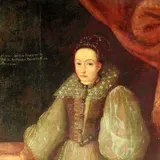
Now it's slowly kind of being pieced back together after a century, but the Ottoman threat is still ever-present. Transylvania is becoming even more autonomous, and there's one family that really holds the keys out there. That, of course, is the Báthory family. And as we'll talk about next episode, the Báthorys are going to really enter the historical record and the broader public consciousness in a very colorful way. That being with the infamous, the possibly innocent, hard-to-know, a lot of historical debate about this, the supposedly blood-sucking countess Elizabeth Báthory. And we'll talk about what impact she may or may not have had on the development of Dracula next week. All right. Any closing thoughts this week, Sam, before we pick this one back up?
I knew that Dracula had a bloody reputation, but I didn't realize that this guy was just a full-on psycho-psycho and not just a very effective general. But yeah, beyond that, I guess, you can just really tell why in the later days of more racial science, this region of the world had a reputation for being barbaric. Because when this is your reference point for the kinds of things people do over there, you're just going to default to, oh, yeah, those people are really fucked up.
German colonists and the East
Right, right. And one thing that we're not really going to get into in this two-parter is that, but we probably should mention is that all of these historical stories had very unfortunate impacts on later nationalism. And one kind of interesting aspect with the Transylvanian Saxons is that there was this very kind of strange idea that I think that many Americans don't really understand, which is that there was this very widespread Eastern German diaspora. Of course, you have the Transylvanian Saxons, but you also have German communities in Poland, in Ukraine, even pretty far into Russia in the Russian Empire. Even in Kazakhstan, there were German communities. Most of them would be deported to Germany after World War II as, you know, kind of a collective ethnic punishment. But the reason why that was deemed necessary was because these Eastern German communities featured very prominently in German nationalist historiography before and up to the Nazis.
There was this idea that the Germans were this uniquely civilized people, more civilized than these barbaric Easterners. Over time, as we move into the 19th century, this perception of Romanians and Hungarians and Poles as more foreign and less civilized takes on a racial element. The Germans saw themselves as the most European, whereas they perceived Slavs and Romanians and Hungarians as somehow less than. Of course, obviously, Jewish and Romani people got the worst of this in this racial hierarchy. And I think that in a weird way, the kind of development of the Vlad the Impaler myth in the 15th century, I think, does kind of contribute to that. This idea that these innocent German colonists, they are the Jonathan Harkers of this world. They are the newlywed straight couple from the beginning of Rocky Horror Picture Show, right? They're these, you know, innocents whom readers elsewhere can project themselves onto.
Readers in Germany and even beyond in France and England learning about these 15th century stories of Vlad the Impaler, they saw the Germans as like themselves, and they saw the Romanians as these inferior foreigners. And I think that's kind of interesting as we're talking about the development of colonialist narratives. I think that you're really seeing the start of something right here.
Yeah, yeah, absolutely. The Drang nach Osten would have a legacy long after its actual yeah, that's a German for the drive toward the East. It's kind of this inverse version of manifest destiny with implications that were exactly as genocidal.
But all right, but hey, we're getting a little, hey, this is a Halloween episode. It's supposed to be scary in a fun way, not scary in a sad way. So I think that's enough talk about genocide. All right, so thank you guys for joining us. Again, if you want to, you know, drop us a few bucks on Patreon, we'd really love that, you know, although that blood that we need does not come cheap. And yeah, we'll be back very soon with our follow-up talking about the later development of the Transylvanian idea. We've got some really fun anecdotes we're going to use next time, some fun little diversions. So stay tuned. All right, bye-bye.
The show is also on Apple Podcasts, Overcast, Pocket Casts, Podcast Addict, YouTube, RSS and Patreon.