86
Transylvania P. 2
In progressWe return to the dark foothills of the Carpathians in our continuing history of Transylvania. This episode focuses on Europe's most infamous countess, Elizabeth Bathory, accused of torturing and killing up to 600 hundred young girls gathered from across Central Europe. While it's now agreed that Elizabeth Bathory was not a vampire, and didn't even bathe in anyone's blood, whether or not she was a serial killer has led to some interesting debate.
Join us as we lay out the facts of the Bathory case and decide for yourself if this enigmatic nobleman woman was Transylvania's Jeffrey Dahmer or the innocent victim of a Habsburg conspiracy. Afterward, we chart the the development of the 19th century interest in both vampires and Eastern Europe, beginning with Lord Byron and culminating in Bram Stoker's 1897 masterpiece Dracula—not only one of the most influential novels ever composed, but also an amazing window into the imperial anxieties of late Victorian Britain.
Protect your neck, kid! We're back to Transylvania.
Transcript
Back to Transylvania
Welcome back to Gladio Free Europe. I am Liam, joined here with Russian Sam.
Hello, hello.
And we are about to dive right back into the continuing history of Transylvania. Last week, we talked about the early history of this part, this contested territory that's been traded between Hungary and Romania over the centuries, and how it is, of course, the setting of the terrifying first chapters of Dracula. So we are going to be explaining today both what happened in Transylvania over the ensuing history after the real life of Vlad the Impaler, who to some extent inspired the character of Count Dracula by Bram Stoker. And then we're going to talk about the way that the idea of Transylvania as this uniquely morbid and uniquely dark and oppressive and backwards part of the world began to develop in the Western European and the American imagination, giving us the modern idea of Transylvania as this basically fantastical vampire land. But before we begin this episode, we're just going to remind you guys once again that we are on Patreon.
We are not charging money for this podcast, but nevertheless, if you feel like you're getting something out of it, we would really appreciate any contribution you would be so kind as to give us. So, please, there's a lot of candy going on clearance sale right now. So, if you want to help us out.
Yes, yes, yes. I know.
I only had a little bit of candy this Halloween and I had a kind of quiet Halloween at home. How about you, Russian Sam?
Yeah, I just got back from Georgia, and I'm still kind of time-lagged, so I still haven't totally fully recuperated.
All right, well, yes, yes, please. Let's get Russian Sam lots of candy so he can, you know, reverse his jet lag. All right, okay, and let's just dive right in.
Hungary partitioned
Russian Sam, tell us about what did Transylvania and Hungary more broadly look like not long after the death of Vlad the Impaler.
All right, so shortly after the point where we leave off last episode, Hungary ends up getting partitioned. Western Hungary would become a Habsburg domain, which was still independent of Austrian control, but which was inherently connected to the Holy Roman Empire. Meanwhile, southern and central Hungary, including the area of Budapest, would come under the control of the Ottoman Empire directly. But over in Eastern Hungary, the region centered around Transylvania, it remained independent, being ruled by kings of the Zapolya dynasty and backed up by the power of the Transylvanian Bathory family.
The Zapolyas.
These guys, I think, is it "Bathory," "Battery"? I don't know.
I've heard "Battery," but yeah, I'm not sure.
Yeah, I'm not sure either. I don't know Hungarian, unfortunately. So please forgive any missteps I make in pronunciation.
But to continue, the Zapolyas had a really complicated relationship with the Ottomans because they were never really formally Ottoman vassals, but their independence relied on de facto Ottoman protection. The Ottomans were unwilling to pledge resources to conquer and occupy Transylvania, but they were still interested in maintaining an independent buffer state between themselves and the Habsburgs. So, not unlike the situation in England and Scotland, many wealthy families owned lands on both sides of the royal border and had very complicated relations with both kings: the Zapolya kings of Eastern Hungary and the Habsburg kings of the Austrian family. This area of Hungary under Habsburg control was known as Royal Hungary, and the Báthory family would be split with one branch being based in Transylvania and another in Royal Hungary. But they always had stronger allegiance to their kinsmen than to either of the rival kings of Hungary.
Right, so this kind of meant that the Báthorys were seen with suspicion by both of their two kings. It was basically understood that the Báthorys were looking out for themselves, not for Royal Hungary or for Transylvania.
Family interests, not national interests.
Transylvanian Unitarianism
So because Eastern Hungary was really politically and geographically cut off from the rest of the country, it began to develop a lot of unique cultural and religious traditions. One important result here was that, unlike in Western Hungary, Transylvania became predominantly Protestant at this time, specifically the most radical kind of Protestantism, Unitarianism. You want to tell us about these guys, Liam?
Of course, yeah, so it's kind of interesting. It had a very kind of circuitous, you know, route to Transylvania. Unitarianism, which basically is the very radical idea that there is one God, not a Trinity. Jesus Christ is the Son of God, but he is not himself God. This first emerges among some pretty obscure Italian reformers who weren't really directly connected to the entire Reformation. Some, a handful of priests. But eventually it became quite big in Eastern Europe. And the one figure who's pretty important here is this Italian doctor named Giorgio Biandrata, who was actually a medical doctor, not a priest, who went to medical school in France around the same time that the Reformation was picking up steam and the famous French scholar John Calvin was being exiled for his very radical Protestant teachings. Calvin would be sent to Switzerland, and Biandrata, this young doctor, would follow him.
He would go to Switzerland to practice medicine there. He would meet John Calvin, but apparently the two of them didn't really get along. And maybe as a result of this dispute, Biandrata began learning about these strange Unitarian ideas coming out of Italy. And eventually, he learned that there was already a community of Unitarians all the way over in Poland. A group of priests called the Polish Brethren had also read these same Italian texts, especially by a guy named Sozzini. And because Poland was not exactly part of really the Western world at this time, they kind of did their own thing in terms of religion and politics. Papal authority did not really extend that much to Poland the way that it might have to France. So it was easier for very radical forms of Protestantism to emerge. And we should mention that Poland at this time was an enormous country.
It was the Polish-Lithuanian Commonwealth. It was not just the modern nation of Poland, but also controlled huge slices of modern-day Ukraine, Belarus, and I think all of the Baltic states, basically. So, okay, so there's just going to use some Italian scholars, some Polish priests. They all start to agree that the Trinity does not exist. They have a new conception of Jesus, which is often actually compared to the Muslim understanding of Jesus. And whether or not there was any actual Islamic influence here is a very interesting point of debate. Regardless if it's a direct influence or a coincidence, just like Muslims, Unitarians believe that Jesus was a prophet and a messenger of God who was sent to earth and was the Son of God, but was not himself divine. He was a demigod, not a true God, you could say. They differ greatly, different Unitarian groups differ greatly about what this demi-god status entails, but the general understanding was that he was simply a human whose father was God.
He did not have an immortal life prior to his birth to Mary, and he probably is not going to come back. He's dead. He's in heaven. Because Poland was seen as a haven for Unitarians, Biandrata eventually left Switzerland after some dispute with Calvin and goes all the way to Poland, initially to work as the personal doctor for an Italian queen mother, but she actually would die before he even arrived. In addition, he quickly learned that right after he got there, the Polish authorities began cracking down on Unitarians too. Without anywhere else to go, they crossed the border into the Zapolya kingdom of Eastern Hungary, into Transylvania. There, Biandrata allies with a local priest named Ferenc Dávid, who basically becomes the bishop, so to speak, of Unitarianism in Transylvania. And we should remember that Transylvania was a pretty diverse place at this time. You have the Hungarians, who are mostly the nobility.
You have the Székelys, who are Hungarian speakers, but consider themselves a different group. They're mostly the free farmers. You have the Germans in the cities, and then you have the Romanian peasants. Generally speaking, Romanian peasants didn't really want anything to do with Unitarianism. Hungarian nobles also didn't really want anything to do with it. But the Germans and especially the Székelys were very interested in this new theology. Eventually, most of the Székely community would become Unitarian and I think are still generally Unitarian to this day. And interestingly, eventually, as time went on, a Transylvanian prince named John Sigismund Zapolya would eventually convert to Unitarian himself. So it would go straight to the top. And this would have been kind of terrifying from the point of view of the Catholic Church. You just have the most radical form of Protestantism you could imagine taking root over a pretty important country.
And this is just 50 years less. This is probably 30 years after the time of Martin Luther. So it's a very quick religious transition. And this really kind of sets the tone of Transylvania to be kind of a unique place because this religious specific, this specific religious character really becomes uniquely Transylvanian and helps develop this independent identity.
Mohács and two kings
Right, so we mentioned at the top of the episode that Hungary was partitioned at this time. Now, let's rewind a little bit to set the stage for how Transylvania and the other parts of Hungary were partitioned exactly. So around 30 years prior, the Ottomans had won decisively at the Battle of Mohács in 1526. This would set about a series of events which ended with the partition of Hungary between Ottoman and Habsburg domains for centuries to come. The Hungarian king Louis II would die on the battlefield, which meant that Hungary needed a new king. Now, we...
Right, and we mentioned back in our 63rd episode, Thirty Years' War with Matt Christman, that elective monarchy was a really big deal across the Middle Ages and the early modern period. It meant that succession did not go directly from father to son, but instead the nobility of any given kingdom would elect their new monarch. The Holy Roman Empire had a system like this. The Bohemian kingdom had a system like this, and so did Hungary.
These elections were much less clean affairs than an election might be today. The Diet, which is like the parliament, called to officiate it, and in this time, after the Battle of Mohács, they ended up being split between two kings. One of them would be John Zapolya, who was from Transylvania, and the other would be the legendary Habsburg king, Ferdinand II, who was able to, thank you, Ferdinand I, who was able to stake his claim to the Hungarian throne based on his marriage to Louis's sister. And like all great succession disputes, this one came to some pretty nasty blows. Ferdinand was quite wealthy due to his recently acquired and quite ill-gotten New World wealth. And so he was able to mobilize massive numbers of mercenaries to cement his claim thanks to all the money, you know, the gold and silver coming in from Mexico and Peru. John was not able to fight Ferdinand alone, so he was pushed back into Transylvania and eventually, out of the country altogether.
So, then, with no other option, in 1528, John Zapolya was pushed to do the unthinkable. He signed a treaty with the hated Ottoman Turks. Ferdinand would now have to contend with these two forces in concert.
Yeah, so this state of affairs would continue for 10 years until John and Ferdinand finally grew tired of the whole affair and signed a secret treaty. John would live out the remainder of his days as the king of Hungary, and upon his death, Ferdinand would become the successor to this crown. This worked out because John had no son, but as fate would have it, John would have a son very soon, also named John. This was the John Sigismund Zapolya. But he was only just conceived at this time. John the father, however, would not live to raise the boy because in July 1540, only a week after the birth, John died. Despite the fact that John I and Ferdinand had signed this agreement, the Transylvanian nobility had other ideas. They spirited the infant away and pulled strings in the diet to have John II crowned as king of Hungary.
This would be a prudent move by the Zapolyas, as it turned out, because by 1541, the Ottomans were themselves tired of the war, and having taken Buda, they were in a very advantageous position to finally end it diplomatically. They chose to partition. Royal Hungary, the northern and western parts of the kingdom, would become Habsburg territory. The central parts of the country would become Ottoman. And John II would rule the principality of Transylvania, paying annual tribute to the Ottomans.
Yeah, I think that's what I want to mention here that I think specifically, John basically made a team made an additional deal that he would stop considering himself or stop claiming to be the king of Hungary and instead be a humble prince in exchange basically for his control over Transylvania being recognized. It was kind of an interesting settlement where, like, you know, he basically said, I'll stop calling myself the king if you're not.
Well, I mean, he didn't say anything because he was an infant at this time.
You're right, his ministers, I guess, yeah.
Yeah. Yeah, but basically, yeah, so they kind of abandoned their claim to the rest of the country and they had their territory recognized over eastern Hungary, now just simply known as Transylvania.
The Báthory family
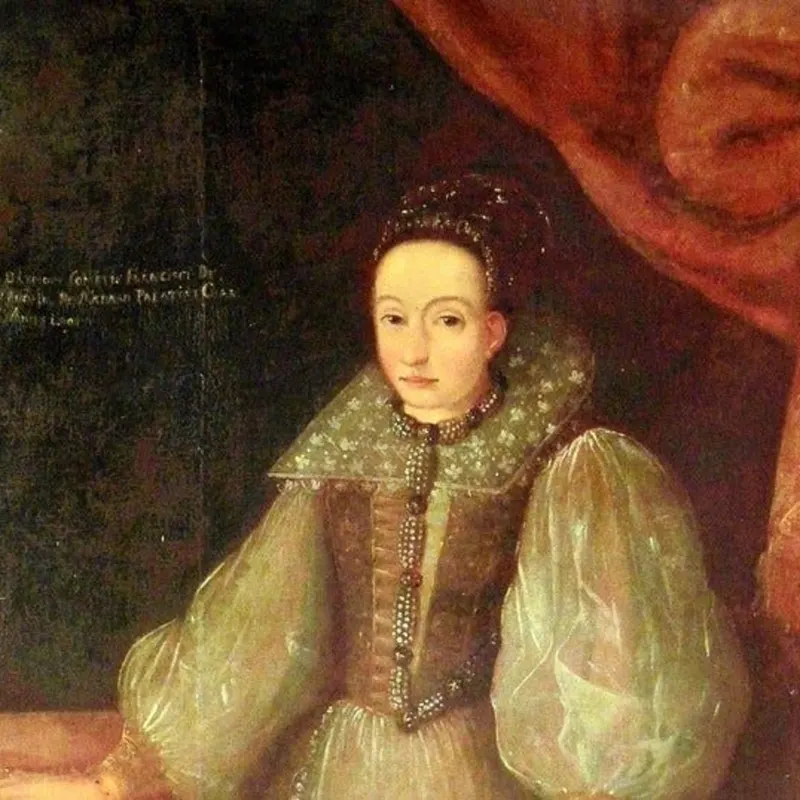
And this tradition is really important because it heavily affected one of the main characters of this episode. Because the Báthory family, who we already mentioned, during these chaotic circumstances, they would be split both geographically and politically because they had territory in both all parts of Hungary. Some of them would back Ferdinand Habsburg, others would back the Zapolyas. But after a few decades of separation, these two branches on each side of the border would be reunited by the wedding of two different Báthorys, George and Anna Báthory. Their union would produce the focus of this episode in 1560 with the birth of the most famous Báthory of all. Someone who is not famous for any of their family's great military conquests, who never sat on the throne like some of them. They had Transylvania, they had Poland, but instead famous for quite another reason. This, of course, being the so-called Countess of Blood, Lady Dracula, Elizabeth Báthory.
Right, so let's get into the Báthory family. Just like the Draculas, they were part of the Order of the Dragon, which, as we mentioned in the previous episode, was set up to defend Southeastern Europe from the Turks. While Dracula's father would base his last name after the word dragon in Latin, the Báthorys would design the family crest in an Ouroboros dragon biting its own tail. And also, much like Dracula, despite being really heavily associated with Transylvania today, she would be born in Royal Hungary. While her parents came from Transylvania and the Báthorys were the ruling Transylvanian family, she would marry into the Nádasdy family of modern-day Slovakia and spend most of her adult life there. In one of the quick little note, just to remind you guys that Slovakia spent most of its history as basically a province of Hungary. And so ethnically and culturally Hungarian families like the Nádasdys basically had complete control over Slovakia.
So in one of the letters to her husband, and we have remarkably well-preserved correspondence between her and her husband, for by a stroke of historical luck, which you can't say for most figures of this time, so she complained that, quote, nothing good can come from Transylvania. So she was clearly not a big fan of her ancestral land.
Slovakia, vampire country
Yeah, a friend of the pod Turan explorer pointed out that Slovakia, where she was active, really deserves a lot more credit as a vampire place, you know, a vampire homeland. Because this is where Nosferatu was filmed in 1922, and then this is in 1979, where Werner Herzog filmed his version of Nosferatu. He actually had to acquire special permission to cross the Iron Curtain to get into Czechoslovakia. And then, you know, we talked about Shadow of the Vampire a couple years ago. That is also set in Slovakia. You know, it's following the footsteps of Murnau, doing Nosferatu. So, you know, yeah, I think, yeah, Slovakia, it's a pretty obscure country, but it deserves a little more credit. So it seems like Elizabeth Báthory had a pretty normal upbringing. If anything, she might have been unusually happy, or at least unusually, you know, free-spirited. The evidence we have suggests that she was raised with more leeway than most young noblewomen usually were.
She was taught kind of traditionally masculine habits like horse riding, probably just because her parents thought, you know, why not? You know, let's give her this freedom.
Yeah, from what I've read, the Hungarian nobility actually raised their sons and daughters in very similar ways until like puberty, basically. So I guess that's a remnant of the steppe ancestry, maybe.
Yeah, maybe so.
Yeah, who knows?
Yeah, yeah.
A teenage bride
And then when she was only 12 years old, she was engaged to Ferenc the Black, as he'd come to be known, a 17-year-old Hungarian nobleman who would go on to become a pretty important national hero. But these days, probably mostly known just for his association to his more famous wife. And they wouldn't legally get married for several years, but interestingly, as soon as they were engaged, she was packed off, packed away to live in her husband's household. At this point, both of his parents had already died. I think his mother died just around the same time that she was getting there. And it seems like she was basically raised as a 12-year-old by the various servants, retainers, ladies in waiting of her future husband. She was very isolated here, and she was also very constrained. She did not have the same kind of freedom as a woman that she had growing up.
It was a much more constrained life. Interestingly, this also kind of looks a lot like the more famous story of Empress Sisi of Austria, if you're familiar. She had a very kind of free-spirited childhood, but then as a teenager, married into the Habsburgs, and suddenly that all went away. It seems like, as this, you know, a young, like literally 12-year-old fiancé, she was pretty dissatisfied. And during this time, she was very isolated, and rumors began to circulate that are probably not true, but are an important part of the kind of Báthory myth that due to her isolation, she began an affair with another teenager, a servant, in the Nádasdy household. And in some version of the story, she became pregnant. And she carried the child to term, but then her future husband's family, to avoid the scandal, had this illegitimate child sent packing to be raised by peasants in a remote Transylvanian village.
Ferenc went through with marrying her anyway because this was such a politically important marriage, the union of these two very important dynasties. But then she was forced to watch as her lover, sometimes known as Laszlo, was castrated and eaten alive by dogs. According to Kimberly Craft, who wrote the book Infamous Lady, which is probably the best source on the historic Báthory, all of these stories date to the 19th century. They're based on local folklore, so they're probably not true. But it's still interesting to consider. What we know for sure is that both the Báthory and Nádasdy families certainly were incredibly influential in Central Europe. So this marriage really was a big deal. Even, you know, so regardless of whether or not some illicit affair occurred, it would have taken quite a lot to split up this union. They eventually got married when she was 14 or 15, and her husband was about 20.
And after their wedding, which was opulent even by the standards of European nobility, their combined assets were so much, they actually had more land than the Habsburg Empire, Emperor, which is pretty crazy. Elizabeth and Ferenc, they would not appear to be particularly close or happy throughout their marriage. He would spend much of his time away on campaign against the Ottomans, which made him famous across Hungary, but which meant that he would spend very little time at home. Later, Elizabeth would be furious to learn that he would also take long trips, not just for war, but for pleasure. Clearly, he used any excuse to get out of the house. Their problems were probably partially caused or exacerbated by their trouble with having children. Because across her 20s, Elizabeth went to another countess named Eva Lupkovitz, who provided her with herbal and magical remedies to help them conceive.
This supposed witchcraft had been of great interest to the later assessment of Báthory, although in her own lifetime, this kind of local magic healing wasn't considered objectionable by religious authorities.
The finishing school
Yeah, so unusually for the time, Elizabeth Báthory was very charitable, particularly towards poor women. Her letters indicate that she allowed widoweds and orphaned girls to live in some of her many castles. These women were usually allowed to stay for an extended period of time if they began to work in the household as servants. So eventually Elizabeth would have several children with Ferenc, maybe helped by the folk magic and herbal remedies, but maybe not. But when the children were all young, he would suddenly die. Later, observers would speculate that it might have been foul play, either poisoning by his wife or by his powerful rivals in Vienna, but he probably just got sick, according to what Liam has researched. Now, after his death, Elizabeth Báthory would take advantage of her wealth and became and her generally good reputation to begin a new career, which was common for aristocratic widows.
She founded a gymnasium. She would take in young women from the countryside of the lower nobility to learn etiquette. This was basically a finishing school of the time.
Yeah, so some of the students were from the lower nobility. I think most of them were actually technically commoners from like wealthy peasant backgrounds, basically, like the upper crust, as wealthy as you could be while still being legally a peasant. They were mostly Slovak speakers, because this was in Slovakia. And so a big part of the reason they got there would be to learn Hungarian, the language of the nobility. A few others were Polish, a couple were Jewish, and a small handful were from wealthier families. But usually this was like a means for the basically the middle class of a feudal society to gain upward mobility. These were, you know, daughters of wealthy peasants, possibly of merchants, but always of families much less powerful than the Báthorys. These are people who were totally at the whim of the great dynasties of Hungary, like the Báthorys and the Nádasdys and the Habsburgs.
But they were not entirely powerless. And I think that would basically become Báthory's great error. She might have thought that if these girls went missing, they would not be missed, but they were. And we should mention that, you know, while many of the facts of this case are in great dispute, there is one fundamentally agreed-upon fact, which was that at this finishing school, many women, girls really, most of them, some of them as young as like 10, disappeared, and many others were found dead. I think about 38 is the conservative estimate, died or disappeared mysteriously in just a span of maybe six years.
Yeah, yeah. From Ferenc died in 1604, I believe, and she was finally caught in 16.
Yeah, yeah, so six years.
Yeah, yeah, yeah.
Caught
So let's talk about how she got caught, because it's a great story. In 1610, the Habsburg court, straight, an order straight from the emperor, organized a formal investigation. And on New Year's Eve, pretty dramatic, a group of noblemen stormed her castle in Slovakia. These noblemen included some of her in-laws and even her son's teacher, which is kind of interesting. And they say, as soon as they got into the castle, they found the corpse of a young girl, and then they caught two servants in the act of torturing two other girls, one of whom would die soon after. Some versions of the story say that Elizabeth Báthory herself was caught red-handed in the act of torture. This probably isn't true, but regardless, she was arrested. Her servants would be carried off to Vienna, but as an important noblewoman, that would have been considered beneath Elizabeth Báthory. She would be confined to house arrest and eventually through the ensuing trial and for the rest of her life, she would be basically doomed to house arrest.
She would never leave her castle again after New Year's Eve that night. Her four accomplices were tried and executed. She was never formally tried, which is interesting. But because all of the evidence pointed towards her, she was convicted nonetheless and, like we said, sentenced to house arrest. She spent the rest of her days basically wandering her great castle alone, haunted by the ghosts of these 38 young girls. Some say as high as 300. Because this was the 1500s, early 1600s, she would not live very long after her arrest. She was in her 50s when she was arrested, and she would die before she was 60. So, this means that not long after this, you know, celebrated series of trials, the Elizabeth Báthory story would pass from current events into myth and legend, and wild stories would quickly begin to circulate across the Habsburg world, eventually into the broader German-speaking world, and become a well-known part of the kind of folklore of Transylvania and the European folk memory more broadly.
The blood bath legend
Eventually, one particularly famous part of the story came to develop, that she was jealous of the youth and beauty of these common-born girls. And so she was so jealous that she began to take baths in her victim's blood to stay eternally youthful. This is not true. Of all the things that we know are definitely not true of the Báthory story, this is clearly an embellishment and wouldn't really become part of the narrative until the 18th and 19th century. But we have to ask an important question here, which is that if this part of the Báthory story is not true, then which parts are true? Is it possible that all of these allegations were really just some kind of, you know, 17th century QAnon?
A Habsburg conspiracy?
Yeah. Some people think that it's an open and shut case of framing that she was a victim of ancient sexism.
And I feel like for a while that was kind of the received wisdom. Earlier theories suggested that it was actually a conspiracy by the Habsburgs, you know, because the Báthorys had long been on very bad terms with their overlords. First, they supported the Zapolyas, then they were also Protestant, not Catholic. And I think it's important to mention that of these allegations made at the time, a lot of them clearly were embellished.
Can you share some of these stories of madness and cruelty, Sam?
Yeah, so quoting from Craft here, the Countess's enemies described Báthorys as, quote, an insane asylum of dysfunctional inbred lunatics. They claim her brother, István, for example, was a sadistic, treacherous sex fiend, and a drunkard who would be found running naked in marketplaces after a binge. Her uncle, Gabor, dressed in armor and fought off invisible attackers while shouting in unknown languages and foaming at the mouth. Her aunt, Clara, was a bisexual who practiced witchcraft, killed her husbands, and taught Elizabeth how to torture servants and make love to women. Her father refused to leave a favorite chair, whether to sleep, eat, or bathe. And as a child, Elizabeth herself witnessed the bizarre execution of a peasant who, when accused of selling his child to the Turks, was sewn alive into the body of a horse.
Yeah, so clearly the deck was stacked against Elizabeth Báthory. A lot of people had a lot of reason for wanting to bring her down. So you can definitely see that there is a narrative in which she was this persecuted girl boss who was too powerful in this very male-dominated world. Again, she was also a Protestant in a Catholic world. She was a Hungarian speaker in a German world. So you can see why the Habsburgs and later, you know, male historians might be defaming this person. But that doesn't really seem to hold up when you look at the facts here. First off, if there was any Habsburg conspiracy against her, it was not a very well-thought-out conspiracy. Because after she had been convicted, none of her lands were confiscated. She was given basically a slap on the wrist. She was only confined to her luxurious estate. You know, she was not punished in any serious way beyond that.
Additionally, according to Kimberly Craft, although many of these claims are quite ludicrous, some of them might not be as ludicrous as you might think.
Cruel times
That last story about the peasant being sewn into the body of a horse, the only reason that probably didn't happen is that in this society, the horse would have been worth more than the peasant. Instead, it seems that Transylvanian and Hungarian nobility at this time were actually quite infamous for their very creative methods of punishment and execution. Elizabeth Báthory probably would have witnessed executions about that barbaric and oftentimes perplexing, because there was this general belief that if you really wanted to deter somebody from committing a crime, you had to punish the crime with them in the most brutal methods possible. In one case, a peasant rebel was executed on the orders of her uncle by being placed naked on an iron chair over a bed of coals. He slowly roasted alive. And there's one last detail, probably an embellishment, which was that as his flesh started to burn, other hungry prisoners began to rush forward and attempt to cannibalize him.
And the grimmest part is that Elizabeth Báthory, as a little girl, might have witnessed this, because it was common practice for aristocrats and their children to basically have front-row seats to these kinds of executions. So Kimberly Craft asks us: what kind of psychological role could this have on somebody? If you are raised in such an extremely violent time and an extremely violent place, it's not hard to imagine that, you know, growing up in this kind of environment might sort of fry your circuits, right?
Yeah, but from what I've seen, she didn't have a particularly cruel childhood compared to the baseline of the time, and yet she still went on to commit these killings.
Ferenc the Black
It seems that if we're going to look for a route to all this, we ought to look at her husband Ferenc, because he was known to be an especially ruthless soldier and master. Near the end of his life, he and a Saxon lieutenant named Schwarzenberg were sent to deal with some rebellious French mercenaries stationed near the Austrian border. During the skirmish with the rebels, Schwarzenberg would be killed. Ferenc was so enraged that he ordered all of the rebels to be killed with, quote, inhuman cruelty, in the words of contemporary observers. Given the standards of the time, this must have been some pretty crazy methods of killings.
And we also know that he was very cruel in the household as well. One of the things that he taught to Elizabeth was a method of punishing servants, which he called kicking the stars. What he would do is you would take a piece of paper, you soak it in oil, and you would put it between the fingers of the offending party. This paper would then be set on fire, and the peasant in this way would be punished for whatever transgression they had committed. Which other stories said that he had a glove made with claws built into it, or like a clawed gauntlet that he would wear and use it to cut into the flesh of disobedient servant girls. Another story was that at one point he covered a servant in honey and made her stand in the hot sun naked while insects swarmed around her, biting her for hours until she was finally let inside.
And so, you know, while these might be made up, because it's hard to know, it's really hard to separate fact from fiction here, especially in accounts made after both their deaths. Kimberly Craft argues that none of them are really that implausible given this environment.
Was she guilty?
She thinks that Elizabeth Báthory probably was genuinely guilty. She was not a vampire, but she was a serial killer and really one of the first serial killers we can understand. We're never going to know why she would have done this, but the evidence is pretty overwhelming that she was in fact guilty. Many different witnesses would be questioned in the Habsburg trial, and they independently gave similar testimonies. It seems that around 38 women were killed. Many more were alleged, but those were probably less reliable, reliable testimonies. And it seems that they were killed in a variety of ways, but most often, the two most common methods were by piercing these women's veins with a long needle to cause a slow death by blood loss, or perhaps even worse, marching girls out naked into the winter snow at midnight and throwing a bucket of ice-cold water onto them to almost immediately kill them with hypothermia.
Yeah, and when these girls would inevitably die, the pretext would be that they had succumbed to cholera or whatever other disease would be ravaging the region at the time.
And so we're never going to know why Elizabeth Báthory did this. I'm going to guess it probably wasn't anything about stealing the youth of these girls. I think that's a later and somewhat suspicious kind of sexist development. But, you know, some kind of sexual angle has long been suspected. It's possible, you know. It seems that she definitely took some kind of sadistic and maybe sexual pleasure out of inflicting pain. Because she ran a school, this was usually, and she had many servants. This was usually done under the pretext of normal punishment for misdeeds. But these punishments would go far beyond any kind of normal bounds of, you know, discipline. And like we said, many of these punishments ended in murder, sometimes accidental death during torture, other times deliberate killing.
And it should be noted that not all of her servants were victims. Some of them were her accomplices. Many witnesses would blame the start of the killings on a housekeeper named Anna Darvulia, who apparently punished household members and students with methods that were unusually cruel, even for the time. To quote Craft once again, Anna's favorite method of torture included beating someone repeatedly, up to 500 times in some cases, until death finally occurred. She served as a quote gatekeeper for the Countess, as well as a personal advisor. She, in fact, was reputedly the one who had advised the Countess to take only peasant girls who, quote, had not yet tasted the pleasures of love. This appears to be in line with Elizabeth's modus operandi. The disappearance of a few Slovak peasant girls would not have been a political bother to Elizabeth, nor merit the attention of authorities.
The servants were in agreement that both Lord and Lady participated with her more than once. It is likely that Ferenc also shared his own techniques discovered on the battlefield. Anna Darvulia soon learned how to strangle servants in the quote Turkish style of execution.
Ah, grim stuff. So I know, yeah, and we should mention a thank you to Gulash Guy for recommending Kimberly Craft's book here. It was really helpful.
Yeah, so the torture inflicted by Bathory and Anna Darvulia was sometimes more psychological than physical. One of the household servants was a German woman named Mrs. Medel, whom Elizabeth made to dress up like a little girl and carry around a piece of wood as a baby doll for her own amusement. When Mrs. Medl refused, Bathory beat her with this wood and screamed, Suckle your child, you whore, don't let it cry.
Really puts the log lady from Twin Peaks in a new light.
Yeah.
Right. So, in short, there might have been some elaborate conspiracy to take down a powerful noblewoman, but even if that was the case, it doesn't seem like these allegations were completely unfounded. I think this is a pretty good where there's smoke, there's fire story. And I think that, like we said, she basically was an early serial killer.
Probably not a vampire.
Probably. We'll never know for sure, but nevertheless.
Báthory the vampire
Yeah. Just like Vlad Dracula, Elizabeth Báthory would be associated with vampirism after the fact. The bloodbathing story that's so central to her myth today took shape in the 18th century, 100 years later. And this was at the height of the vampire panic in the Habsburg Empire. So while it doesn't seem like Dracula was ever associated with vampires until Bram Stoker's novel, Elizabeth Báthory was, because a Catholic priest named László Turóczi, who was probably biased against the Báthorys for their Protestantism, claimed in one of his books that she had made an anti-wrinkle cream with the blood of her victims. This story became much more dramatic in ensuing decades, to be that actually she would fill entire bathtubs with the blood of her victims and then take baths in them. We should mention also that this was not just, these stories were not meant just to scare people.
These stories were mostly composed by people who genuinely believed in the existence of vampires. And they thought that, you know, using the methods of rationality available to them at the time, there are people who drink the blood of others to remain alive forever. And if Elizabeth Báthory was killing all of these people, the most logical explanation would be that because she was trying to, she was a vampire. She was trying to, you know, extend her life.
Yeah, it was pretty interesting. Eventually, in 1780, the Habsburg Empire would launch a formal investigation into vampire stories, including stories of Elizabeth Báthory, under the orders of Empress Maria Theresa. And it would be declared that vampires did not exist.
I guess that sounds not too... Yeah. This would lead to kind of a chilling effect of vampire stories across really the Western world, you know. And generally, by the early 19th century, vampires were understood to safely be part of the past. They were something that was believed only by naive, ignorant Easterners, people in the Ottoman world, not people in the Habsburg world or in France or England. And I think this is kind of interesting here because it's after this point, around the early 19th century, that vampires are generally agreed to be completely fictitious. They are safely relegated to the world of fiction. And almost immediately after this happens, you do start to see the rise of vampire fiction. Eventually, this fiction, as we're going to talk about in the second half of this episode, is going to come full circle, go back to Elizabeth Báthory's homeland of Transylvania with the work of Bram Stoker.
But that's about a century away. So let's talk about what happens both in Eastern Europe and in the literary developments in Western Europe that basically give us Dracula.
Transylvania as the Orient
So not long after Báthory's arrest, the remainder of Hungary would come under the control of the Austrian Habsburgs, who would continue to control the area until the First World War. But Transylvania would be imagined by the Austrians and their Western neighbors as the edge of the so-called civilized world, the beginning of the Orient. Stereotypes of the Balkans and Eastern Habsburg territories began to develop. Transylvania, much like Galicia and Bukovina and the Banat, existed on the edges of Western European awareness as these brutal backswards and bloody backwaters. Strangely, if you really want to understand the modern obsession with Transylvania, you have to look into geopolitics of the later Victorian age. And to understand this, we should start not in Eastern Europe, but thousands of miles beyond that, in Asia. Because of their joint victory at Waterloo, the British and the Russian Empire has each expanded enormously. Most of this expansion was in Asia, as Britain tightened its grip over the Indian subcontinent and Russia moved into Central Asia, places like Kazakhstan and Uzbekistan today.
This kind of competition became known as the Great Game, and it's a very interesting topic unto itself.
Yeah, and in the West, there was competition over Eastern Europe. Conflicts like the Crimean War pitted Britain and Russia against each other, in this case, with Britain intervening basically to protect Ottoman territories in the Balkans.
Romanticism
Now, on a cultural level, the defeat of Napoleon at Waterloo was also sort of the final nail in the coffin of the Enlightenment, which gave way to the Romantic movement, which tended to be marked by a complete sincerity, an embrace rather than a rejection of emotion, and a reconsideration of the Enlightenment idea that reason should triumph over feeling. Our good friend B.C. Jim described the difference between Enlightenment values and romantic values as facts and logic versus vibes, which I feel is a very good summation.
Yeah, yeah. I think personally, I think romanticism has a very mixed track record. It had a profound influence on nationalism and is therefore in a roundabout way responsible, arguably, for all of the terrible consequences of, you know, the 20th century. But I think the application of these feelings and moods toward art rather than politics, that's a lot more positive. Romantic arts and literature really defined the cultural output of the 19th century. And I think it's not really controversial to say that, you know, Romantic composers, like, you know, starting with Beethoven, ending with Mahler and Shostakovich, are some of the finest accomplishments of the entire human species. So Romanticism really gave us a lot of good stuff, but it gave us some bad too. And we're bringing up Romanticism because Dracula, the novel, obviously involves romantic tropes and themes, but also because I would argue that the reasons why British readers in the late 19th century found Dracula compelling were fundamentally rooted in the assumptions of the Romantic era that did not exist in the previous Enlightenment era.
It's actually an interesting topic of conversation, I feel like, just because Dracula is also very much a modernist work in that it incorporates all of these technologies, which would have been very recent at the time. And Dr. Seward records his, he's a podcaster. He records video, audio logs.
Yeah, yeah, exactly.
So it's this sort of weird fusion of the modern with the romantic, this sort of idea of these two worlds coming into collision, which I feel like is really the core of Dracula here. This modern, the modern West coming into conflict with the backwards East.
Yeah, no, totally, totally. And I think that basically we're going to talk about this, but a big part about Romanticism is basically the idea that the backwards East is itself interesting and deserving of attention, which was not really part of earlier scholarship and art.
Horror as a Romantic genre
But I think the bigger influence of romanticism here, this is, I'm going to make a bold swing here, but I think this is right. I'm going to argue here that horror as a self-conscious genre could only work in a romantic context. Because that, as crazy as this sounds, the idea that a book could be thrilling or scary simply because those feelings are exciting, I think is a romantic concept. Prior to Romanticism, scary and macabre imagery was usually only really used for allegorical purposes. There was not an understanding that to scare the reader was an achievement unto itself. But with the rise of the novel, especially and its development in the early Romantic era, this really starts to become an acceptable function of art. And again, like this does not really jibe with the more buttoned-up ethos of 18th century artists and composers. If you don't believe me, here's an illustration of what I'm talking about.
Everybody knows Bach's Toccata and Fugue in D minor. We played it last episode. Here it is again. It's the Dracula theme, right? You've heard this. So, this piece was written in 1704. When it came out, it made absolutely zero impact at the time. So, even though it was a piece by Bach, this celebrated composer, it earned so little attention that it didn't seem to have received any published comment at all until 1840, when Felix Mendelssohn, the famous Romantic composer, made a big push to bring Bach back. And the minute Mendelssohn put his feet in the pedals and his fingers on the keys for this Toccata and fugue, it became an enormous hit. People went crazy for the darkness and the gravity of this piece in ways that they had not done a century prior when it debuted. And I think this is because audiences in the 19th century had very different tastes and expectations than audiences in the 18th century.
I think that these changes mostly stuck, and that the thematic developments of the Romantic era and the ways that Romanticism changed how we approach art have totally transformed and permanently transformed basically artistic production in the world.
Beauty in the East
So, this Romantic period also led to a new appreciation of beauty for its own sake, including beauty in places that might have been neglected by European observers up until this point. There was, of course, nature. While this isn't a big part of Dracula, the appreciation of nature, the Swiss Alps in particular, is a huge part of Frankenstein. The Romantics also found beauty in the culture or time periods that had once been deemed lesser. The Middle Ages, which were viewed pretty disdainfully all through the 17th and 18th centuries under the influence of the Whig notion of history, based on the idea that Europe had evolved past its medieval heritage, with the implication that non-European societies were still medieval, it began to make a comeback. The Romantic period also saw a renewed interest in medieval chivalric literature and Icelandic sagas and knights, Vikings, barbarians, and this often came with a lot of unfortunate nationalist baggage, but Romantic art from this period also defined most of what modern people think of when they think about the past.
A related right, right? And again, it's like it's genre fiction in general, including historical fiction, really is a product of Romanticism, I would say.
Yeah, so a related aspect of this was this general newfound interest in foreign cultures, particularly the so-called East, which at this point basically meant anything east of Berlin, which today we would call that Orientalism under the influence of Edward Said. But this was also the name of an artistic movement that became popular at this time, which had a very complicated legacy, but it was nevertheless always a subset of Romanticism. And Romanticism, like any other movement, was unable to be unsullied by the political realities of its day, so it came with it bearing some political implications as well. The most obvious example in the early years was how Romantics basically modeled their politics off the emotion of a certain situation. Some English Romantics, for example, supported Napoleon in his wars, for example, because his will to power was so exciting and inspiring to them.
Lord Byron and The Giaour
After Waterloo, these guys needed other sources of inspiration. And one of the most famous Romantic writers, the stormy and handsome Lord Byron, would take advantage of this mood at the time to go to Greece and join the independence movement against the Ottomans.
Yeah, so Byron was already famous when he left England. He was basically driven out by his constant sexual impropriety, and he used his new platform to broadcast support for the Greek cause and write poems, most of them kind of short, mini-epic poems, based on Greek life and modern Greek folklore. In an era when modern Greece was mostly denigrated in favor of the classical Greek heritage, I think it's fair to say that Lord Byron was really the only Westerner who was actively trying to promote and recover what Greece actually was like. This really kind of went against the prevailing notion that Greek society had decayed immeasurably since ancient times. He said that Greek society today, even though it was very different from the Greece of Socrates, was still worthy of a lot of examination. And that's why he cared so much about folklore. We mentioned in our episode of Nosferatu two years ago that vampires as a you know Euro pan-European concept come initially from the Balkans, particularly Greece and Serbia.
Across the 17th and 18th centuries, they become widespread initially across the Habsburg Empire, as we talked about, yada yada. Vampire is probably the only Serbian word used in English. But so by the time of Byron's career, like we said, genuine belief in vampires had come and gone. They were now safely understood as fiction. He visits the Balkans, sees that out here, people very much still believe in vampires. He began to speculate, incorrectly, that the Ottomans had introduced vampire stories into Europe, and therefore they had to have had some kind of Islamic, in his words, Arabian origin. Because of this, he left us two vampire stories, both strongly rooted in Greek and Turkish folkloric tradition. First is his epic poem, The Giaour, which was an early Orientalist work about a Christian who seeks revenge against an Ottoman aristocrat for killing the woman he loves. And at the end of the story, the Christian hero ambushes and kills his Ottoman enemy, but uses very underhanded tactics to do so.
And then, at the last lines of the poem, the narrator predicts that as a result of this, you know, treacherous killing, this man, at the end of his life, will rise from his grave again, doomed to be a vampire. But first on earth, as vampire sent, thy corpse shall from its tomb be rent, then ghastly haunt thy native place, and suck the blood of all thy race. There from thy daughter, sister, wife, at midnight, drain the stream of life. Yet go to the banquet, which perforce must feed thy livid, living corse. The victim's ere they yet expire, shall know the demon for their sire. As cursing thee, thou cursing them, thy flowers are withering on the stem. But one that thy crime must fall, the youngest, best beloved of all, shall bless thee with the father's name. That word shall wrap thy heart in flame. Yet thou must end thy task and mark her cheek's last tinge, her eye's last spark, and the last glassy glance must view, which freezes o'er its lifeless blue.
Then, with unhallowed hand, shall tear the tresses of her yellow hair, of which in life a lock when shorn, affection's fondest pledge was worn, and now is borne away by thee, memorial of thine agony. Yet with thine own best blood shall drip, thy gnashing tooth, thy haggard lip, then stalking to thy sullen grave, go with the ghouls and afrits rave, till these in horror shrink away from spectre more accursed than they.
Yeah, it's a kind of a tongue twister.
Yeah.
Yeah, but it's yeah, if you didn't get that, basically, yeah, it's the narrator is saying that as a result of this guy's killing, the murder he committed, he now must rise from the grave as a vampire, kill his own family, realize that he is killing his own daughter, and then must wander the earth for all eternity, in which even the ghouls will fear him. You know, all will see him as a monster.
Yeah, and it should be noted that ghouls and afrits, these are specifically like Arab creatures. Like, we use ghoul today in English, but that's originally an Arabic word. And then the Afrit, we don't really talk about these guys anymore, but from what I understand, they're basically a type of particularly malevolent jinn, which again, they're known over there, not so much over here.
Polidori's The Vampyre
Yeah, so that's the first vampire story Byron gave us. The second is a lot more involved and a lot less vollemeric. And it's also a lot less written by Byron because it's a collaboration with a guy named Polidori, known as the Vampire. And Polidori's influence seems to be much more important than Byron's influence. But because Byron is the most famous name here, it's usually attributed to him. And apparently, the vampire was part of the same ghost story contest that gave us Mary Shelley's Frankenstein. And so after Lord Byron told his story orally, Polidori expanded it and published it. And again, it seems that Polidori really wrote most of it, but because Byron was so much more famous, the publishers at the time, 1819, made sure to emphasize that this was Byron. He was so famous, they really, you know, that would sell. And I think it's kind of funny that I found the first edition, and it actually opens with this kind of goofy description of the author's habits.
That's kind of funny. He retired to rest at three, got up at two, and employed himself a long time over his toilet. That he had never went to sleep without a pair of pistols and a dagger by his side, and that he never ate animal food.
Yeah, strange guy, Lord Byron.
And then the publisher goes on to explain the context that produced this story, the famous ghost story contest. One evening, Lord Byron, Mr. P.B. Shelley, and two ladies began relating ghost stories. When his lordship, having recited the beginnings of Christabel, the whole took so strong a hold of Mr. Shelley's mind that he suddenly started up and ran out of the room. Lord Byron followed, and discovering him leaning against a mantelpiece with cold drops of perspiration trickling down his face, after having given him something to refresh him, upon inquiring into the cause of his alarm, they found that his wild imagination had pictured him with the bosoms of one of the ladies covered with eyes. It was afterwards proposed that each of the company present should write a tale depending on some supernatural agency, which was undertaken by Lord Byron and one of the ladies before mentioned.
Yeah, so I guess if you really want to scare Percy Shelley, imagine bosoms with eyes on them. Apparently, that was his biggest fear. Pretty funny.
I think it's also kind of funny that, you know, Mary Shelley isn't even mentioned by name here, even though today I think she's pretty decidedly more famous than her husband. But here she's described as one of two ladies. And also, of course, that her story Frankenstein is obviously the most famous product of that contest.
Wait, so wait, so this was the conversation that also gave us Frankenstein. Wow.
Yeah, yeah. So Byron told a story about a woman with breasts with eyes on her breasts, and that scared Shelley so much that as an apology, they said, okay, we'll all tell scary stories now to scare the rest of us.
Yeah. Yeah. Pretty funny.
So, The Vampire is not that well known today, but it's pretty interesting, and it was very influential at the time, and really should be understood as the clearest forerunner to Dracula, a really strong inspiration. Except that instead of being a full novel, it's like 20 pages. And unlike earlier vampire stories, in which vampires are really much closer to our idea of a zombie, of this like semi-mindless, decaying corpse, this vampire is an aristocratic seducer, a cultivated Scottish nobleman named Lord Ruthven, who is described as the handsomest guy in London. Every woman is throwing herself at his feet, but he's totally indifferent to their advances, kind of like an 1810s Edward Cullen. He's described as entirely devoid of emotion. The deadly hue of his face never gained a warmer tint, either from the blush of modesty or from the strong emotion of passion, though its form and outline were beautiful.
Another young man, Aubrey, who looks a little like the poor naive Jonathan Harker, is inspired by the mysterious nobleman and invites Lord Ruthven to join him on his grand tour. They travel through the Low Countries and France and Italy, making and losing huge amounts of money gambling along the way. Lord Ruthven never drops his poker face, and pretty soon after this, he discovers that Ruthven had a terrible habit of seducing the most innocent young woman, but not for sexual reasons. Instead, he had a much darker interest in ruining their reputation for his own amusement.
And so, yeah, after this kind of shocking discovery about his new friend, Aubrey eventually makes it not to Transylvania, but to Greece, where a couple local peasants mention that these two guys should be careful wandering around at night, because you know, this is vampire territory. Aubrey laughs this off, and he immediately falls in love with a local girl named Ianthe, who seems to be particularly sheltered and virtuous. And she's described in the book somewhat nauseatingly as an infantile being.
Yeah, yeah, right. And Aubrey doesn't realize yet that this makes Ianthe look a lot like Lord Ruthven's typical victims, the innocent girls he seduces just for his own cruel amusement. One night, against the advice of his Greek host, Aubrey rides out into a thunderstorm. He takes shelter in a ruined house and discovers to his horror that the dead body of Ianthe, who was bleeding from a wound on her neck that would have been left by teeth. Depressed by this terrible turn of events, Aubrey convinces Ruthven to return back to England, but on the way, they're ambushed by bandits. Ruthven is shot, and although it's a bad wound and his death seems imminent, he doesn't seem to mind very much. With his dying breath, Ruthven makes a strange request: Don't tell anyone back in England that I'm dead. Aubrey plans to bury Ruthven's corpse the next morning, but sees that the body is gone.
Maybe it had been carried away by wolves. Eventually, Aubrey makes his way back to England and returns to balls and banquets of London and High Society. And who does he see but Lord Ruthven, still alive? The shock causes Aubrey to suffer a complete nervous breakdown. When he tries to explain to his family that Lord Ruthven is hiding some terrible secret, they think he's crazy. And to Aubrey's horror, he sees that his young sister is Ruthven's next target.
Right, so on the very last page of this story, Aubrey becomes weaker and weaker. It's as if each night he has less blood than he did the day before. And then he can't intervene as Lord Ruthven marries his innocent little sister and takes her away from London. And so the story ends with the narrator explaining that he, the narrator, has been Aubrey all along, and that he's actually narrating this all with his dying hand. And then he dies, and there is a great last line added by an additional narrator, which is that Mr. Aubrey died immediately after. The guardians hastened to protect Miss Aubrey, but when they arrived, it was too late. Lord Ruthven had disappeared, and Aubrey's sister had been glutted by the thirst of, in all caps, a vampire. Ooh.
Yeah, I love the all-caps ending. It's like a 19th-century jump scare, I think it's meant to be.
Yeah. It's pretty good ingredients for a horror story here. And I think it's probably the most obvious influence as literary work on Dracula.
I think it's really funny. A big part of it is because there's this aristocratic vampire character who is now pretty genuinely agreed to just obviously be a self-insert for Lord Byron. I think it's just hilarious. Like, this is obviously how Lord Byron saw himself. I'm this, you know, dark and brooding guy who, you know, I ruin the lives of all these women because I'm just, I'm so mysterious.
Vampire mania
That's me. And, you know, like so many Byron stories, this would be incredibly famous, very celebrated all across the English-speaking world and beyond. What I find especially interesting is that the very same year it was published, there was this bizarre American parody published anonymously called The Black Vampire about a young Haitian boy who is murdered by his cruel slave owner, but then rises from the grave to take revenge. A couple years later, in 1821, a German play known as Der Vampyr would be made about it. And then in 1828, two different composers, Heinrich Marschner and Peter Lindpaintner, came out with competing opera versions, which I think is pretty funny. 20 years after this, the famous Swedish writer Viktor Rydberg first made a name for himself by expanding the story into a novel now set in Scandinavia. So a real vampire mania.
Yeah, there really was. And with every adaptation, the story strayed more and more from its kind of folkloric Balkan roots, taking us away from Greece, Serbia, Transylvania. And I think that really the biggest mark on Stoker is the idea that the vampire could be someone elegant and beautiful, not just this risen corpse in search of blood. Subsequent vampire stories followed this aristocratic trend.
Varney and Carmilla
Probably the most interesting, or at least the most noteworthy, is the famously long and infamously bad Varney the Vampire series of Penny Dreadfuls, started in 1847. These were written by James Malcolm Rymer, most likely, under a pseudonym, who is more famous for creating the character of Sweeney Todd. These were not great, I understand. I think they were very inconsistent. They were terribly written, but they did give us the idea of a vampire who can turn into a bat, which is, you know, a very important part of the vampire myth. Then a more famous and much more well-regarded vampire story is Carmilla by Sheridan Le Fanu from the 1870s. This one does bring the story of the vampire story back to Habsburg lands, but instead of in the you know dark Eastern Carpathians, it's set in the Alps, so not as exotic of a setting.
But you also forgot to mention an important detail, Liam. She's a lesbian vampire.
Oh, of course, you're right. Yeah, yeah. You know, that's, of course, there's been a lot of attempts to connect Carmilla to Elizabeth Báthory for that reason.
Yeah. You know, the lesbian vampire stereotype is very ancient, clearly.
Gothic fiction
So we should mention that what all of these stories share are elements of what is considered Gothic fiction. A really important kind of parallel development to Romanticism, which is usually considered under the Romantic umbrella, but actually predates it, going back as far as the 18th century. In a weird way, you could argue that Gothic, that the Gothic legacy kind of survives today in the present in a way that pure Romanticism does not, you know, because not that many people these days earnestly write essays about the beauty of a mountain the way that people might have done in the Romantic era, but lots of people write stories about, for instance, a naive young person entering a dangerous situation in which they are thrust into some dark gothic game. So like the specific narrative elements of Gothism have, I would argue, have had a longer staying power than some elements of Romanticism.
So many popular stories today can be considered gothic. They are built with the exact same tools as Dracula or Carmilla or so many gothic stories. Wuthering Heights, for instance. So just as examples, you know, of different kinds of Gothic stories today. There's The Shining, Old Boy, Vertigo, Chinatown, Eyes Wide Shut. All of these stories have these similar narrative elements. Usually, some kind of confinement or containment, some kind of very heightened emotion in the Romantic mold, usually some kind of macabre danger or at least extreme cruelty. Really, just like these are these really tend to be high-stakes stories that are not exactly adventures and usually do not involve dramatic changes in location. They tend to be a lot about discovery, ancient secrets. It's a really specific set of tropes, but they work really well together and they survive to the present.
Right, and we should mention that Gothic art and fiction aren't really named for the ancient Goths, who we've spoken about a fair bit on this podcast, but instead after the much later Gothic architecture. These are the great cathedrals of the high and late Middle Ages, which by the 19th century had been darkened by soot and lost the bright pigments which had once colored their walls. The term gothic was first used in fiction to compare the stark emotion and the menacing danger present in their books to the hard edges and imposing size of the medieval architecture. Really, it was a strained metaphor that stuck. The Gothic mean gothic means a lot of things and is today basically just anything that's dark or macabre. But in the 19th century, Gothic fiction had a lot of shared elements. Like all romantic fiction, this would include heightened emotions. Often there was an emphasis on the most brutal or unpleasant aspects of human-emotional relationships.
There was lots of cruelty, betrayal, neglect, and a general emphasis on the destruction that can wreck one's life. Secrets also play a huge role, often leading to an innocent protagonist discovering some making some shocking revelation of murder or incest or a mentally ill person locked up in an attic. Usually, some form of high stakes, often life or death, is present as well. If there's not an element of murder, there is usually some kind of captivity or at least some kind of social consequence that the reader would be unlikely to encounter in real life. There might be a historical setting or a setting which was heavily informed by the historical context or traditions of the place. Lots of old families, ancient grudges, ruined castles, and even if the setting was contemporary. So, some Gothic literature, including Dracula, was set in remote or foreign places believed to be snapshots of history as opposed to the modern world.
Right. Yeah.
And just kind of to really put a cap on all of this, it's that there are three very closely related but different trends in literature that all contribute to Dracula. These are Romanticism, Gothicism, and Orientalism. And really, it's when you put all three together, vampires are actually kind of an obvious intersection.
The Great Game and the Orient
Right. So, in the second part of the 19th century, Western Europeans had a firm grasp on certain world regions, or at least they thought they did. Each of these regions would correspond to some empire or imperial position. There was Europe, which in the minds of the English public basically ended in Vienna, and then there was Russia to the east. To the south of Russia, you have the Ottoman Empire, and then Persia, and then, of course, British India. Beyond that is China and Japan. Each of these places had their own sets of assumptions and stereotypes in the minds of the Victorians, but the places in between were hardly known.
Right. And so, as that great game, the competition between Russia and Britain, brought obscure countries like Afghanistan, Vietnam, into the newspapers, interest in these more obscure places grew. And so, and so Orientalists and Imperialists and Adventurers would entertain the public with stories about these dark reaches of the world. Some of these stories were true, others were completely imagined. One of these adventurers is particularly interesting because of his direct influence on Dracula.
Ármin Vámbéry
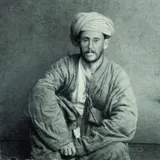
This is a guy whose adventures across the Middle East and Central Asia are really only a small part of his legacy. He is an incredibly interesting and multifaceted figure who I think we're going to have to do a future episode on. I had not heard of him until this research, and I'm amazed I hadn't heard of him before. He's important here because his writings about his own neighborhood are a major point of origin for the Anglo-ide of Transylvania. And this guy's name, if you can't already don't already know, was Ármin Vámbéry. Now, some of our listeners will have heard of that name in passing, even if they don't know him, because Vámbéry is mentioned briefly in Dracula as a friend of the famed vampire hunter, Dr. Van Helsing. When Stoker's novel was published in 1897, many readers in England would have immediately picked up on this nod, because the most educated of them would have read Vámbéry's anthropological work on Hungarian linguistics and Transylvanian anthropology, which was one of Stoker's biggest sources for Dracula.
To what extent Bram Stoker really knew Vámbéry has been debated. They had certainly met in person a couple of times, but they didn't appear to have struck up a friendship. Stoker was much more of a fan than a peer. What we can surmise is that part of why he was so interested in Vámbéry's work was that his own brother, George Stoker, was actually serving in the Ottoman Empire as a military doctor while Bram was still in college, about 20 years before Dracula would be written. According to his own book describing his experiences, George Stoker never visited Transylvania, but did spend a lot of time in the neighborhood, including the Bulgarian city of Varna, where Dracula boards the doomed ship, the Demeter.
Yeah, and so most of the readers of Dracula in 1897 would know Vámbéry as a memoirist and a diplomat who had spent his youth traveling across Asia, particularly obscure countries like Kazakhstan and Uzbekistan, in the vast and turbulent expanse between the Russian Empire and British India. He was a close personal friend of Prince Edward, who would later become King Edward of the Edwardian period. Edward was the godfather of Vámbéry's son Rustam, named for the famous Persian hero. And interestingly, almost immediately after Edward became king, one of his first acts was to name Vámbéry to the Royal Victorian Order, a society whose other members were mostly kings and dukes and emperors.
It's especially interesting that Vámbéry is able to achieve such great heights because he was born into very unlikely circumstances. He was born into a poor Jewish family in rural Slovakia, kind of Elizabeth Báthory country. But he really became just this incredibly influential figure who was also, it was revealed after his death, a British spy most of the time. But he never actually became a British citizen. He was always a loyal Habsburg subject and very proud of his Transylvanian and Slovakian heritage. An interesting thing about him is that he was a strict rationalist who always kind of saw the folklore of Transylvania as a bad thing. But regardless, his descriptions of Transylvanian folklore certainly did have an influence on popular Victorian perceptions of Eastern Europe. And eventually, other writers from Britain would travel to Transylvania themselves, and these people would have an even bigger influence on the development of Dracula than even Vámbéry himself would have.
Emily Gerard
One of these was the Scottish writer Emily Gerard, who would move to Transylvania because she was married to a Habsburg cavalry officer. And her books, which would be published a decade before Dracula, are the first known usage of the term nosferatu. They also promoted the idea that Romanian peasants widely believed in the existence of vampires. She wrote about Transylvania not because it was uniquely superstitious, but because it was just what she knew.
Right, right, because she lived there. And so, again, that's kind of important to note: like, this is basically the reason why I think Transylvania became the setting of Dracula and not like Wallachia or Bucovina or Galicia. And it's why Transylvania then therefore developed this unique reputation that no other region in Eastern Europe has. Like, you mentioned last episode, it's kind of crazy that Americans have even heard of Transylvania at all. I think one of the biggest reasons simply is because this one widely read British writer happens to write a book about Transylvania and not a book about Galicia or Bucovina.
Yeah, so you know what to expect with this portrayal. She depicted a bunch of really superstitious peasants who thought the devil was hiding behind every tree stump and all these vampires are running around and there are witches and all of these dark creatures of the forest, yada, yada, yada, that kind of stuff. It's a very condescending portrayal in a lot of ways. It's kind of a.
Yeah, you know, it really is. It's very Orientalist. It really depicts the local Romanian and Hungarian people of Transylvania as, you know, intellectually inferior to the enlightened Brits. But regardless, it really was an enormous influence on Dracula, and he basically includes some of her stories nearly verbatim.
One kind of odd, sort of out-of-place mention in Dracula in the beginning, probably the first chapter. There's some mention that on, I think it's like Walpurgis Night or something, the hills glow with golden treasure that's been buried there over the years. And that's just simply lifted completely from Emily Gerard. That story.
Jules Verne's Carpathian castle
Yeah. There's one more we should mention. One final influence on the development of Dracula that I have to say I'd never heard of before. And that is an 1892 novel by Jules Verne, you know, the famous French author, you know, around the world in 80 days, plenty of other famous books, which was something called The Carpathian Castle. And this, as far as I know, is the only work of Gothic literature besides Dracula to be set in Transylvania. So, from what I understand, there's no mention of vampires in this novel, but there's a sort of understanding of the region, probably informed by Gerard, of Transylvania as a place of superstition and fear of the devil in particular. Neither of us have read this one, but the plot summary makes it sound like an episode of Scooby-Doo, if we're being honest. The idea is that there's a ghost of an Italian opera singer which is believed to haunt an old house.
But as events unfold, it turns out that her voice is being played by a phonograph, and what the peasants believe to be a ghost is actually a black and white movie projection on a wall.
Yeah.
So, what kind of scam was being pulled here exactly? Do you know, Liam?
I'm not sure what the motivation of the villain of the story is, but I think it's really interesting as kind of a not just a, you know, not just prefiguring the setting of Dracula, but also that thematic thing you're talking about about, you know, modern, 19th century modernism versus like medieval superstition, right?
Yeah, absolutely. This is a very clear example of that.
I know. And I don't know if Bram Stoker read this book. It was published in English in 1893. Dracula came out in 1897. I don't think it was a huge hit. So it's very possible. He might have, he might not have, but I think there's a somewhat chance that, you know, you can imagine that he read this book about this ghost in a Transylvanian castle, was really digging it, and then he gets to the ending where it's all fake and thinks, wouldn't this be scarier if the ghost was real?
What made Dracula
And I think that fundamentally, really kind of, you know, putting it, really kind of wrapping this whole thing up here, I think the idea that irrational beliefs are inherently interesting and deserving of study, both in an anthropological sense and in an emotional sense, that is really that final observation is what leads to Dracula. And I think therefore the creation of Dracula is fundamentally connected to the interest in Transylvania as a unique place. And I think that that's why, you know, Dracula is, it's a very interesting book. It's really exciting. It's genuinely scary. And it's so unique in many ways. And I think that's just because there are so many influences coming into it. Romanticism, Gothicism, Orientalism, genuine history, 19th-century modernism. I think that it's when you put all of these ingredients together, you make something very specific that creates this mood and tone that more than a century of subsequent writers have attempted with varying degrees of success to replicate.
And I just think that the fact that Transylvania remains such a strong part of the Western cultural memory really is a testament both to the strength of Bram Stoker's writing and to the strength of these historical intellectual influences in Europe.
Yeah.
Dracula and Orientalism
Well, Liam, thank you so much for all the great work you've put into researching this episode and the previous one as well. This was all Liam's heavy lifting. I was occupied in Georgia while he was putting this one together.
Yeah, you were at the other end of the Ottoman Byzantine world. I guess just kind of as a closing thought, I think it's really interesting how, you know, ultimately Dracula is a work of Orientalism and arguably imperialism. It's very condescending, you know, in its own way, but it's to cultures and peoples who are usually not expected to be the victims of imperialism and Orientalism now. You know, it's like no one thinks about Romanians and Hungarians as, you know, victims of imperialism, although they themselves sometimes think of themselves that way. And I think this kind of just shows us, you know, the way that like there is definitely, I don't want to end on a bummer, but there is kind of a darker side to the horror of Dracula, which is that it is based on a lot of very kind of unfortunate assumptions about the West versus the rest, that I think many people today still subscribe to, even if the, you know, the boundaries of the West and the rest have expanded.
And yeah, I'm kind of curious, like, if do you think that the success of Dracula in the popular consciousness today says something about like, you know, lingering imperial attitudes, or do you think that's totally independent of its success, Sam?
Well, I think today it's very much reach because Anglophone audiences are unfortunately just becoming more and more ignorant across the board. So in the event that they are reading Dracula, I don't think that they're picking it up and thinking about the imperial connotations of othering peoples out east, really.
Yeah, no, certainly not deliberately, but I do kind of wonder if there are other assumptions about foreignness and immigrants that still have resonance today, even if the victims of these assumptions are different.
Well, I mean, I guess, like, this sort of Orientalist attitude towards Eastern Europe is still present to some degree today, I'd say, where you, you know, have this idea, although now it's taken on a totally different tinge, but of Eastern Europe as like this other place, this place where, you know, you have all of these decaying commie blocks, as you would call them, out in the horizon with a bunch of these people who have now, who have been socially retarded, but this time not because of feudalism, but because of decades behind the Iron Curtain, as you would say. So I would say.
Yeah, that's true. It's a similar perception, yeah.
Yeah, yeah. So I'd say that this impulse is still alive, even if the justification for it has shifted.
Yeah, and I think also the character of Dracula as this, like, you know, a wealthy foreigner who tries to assimilate into a society in which he cannot because of his foreignness. I think that like the modern version would be like either, you know, a like a Latin American wealthy gangster, like a Pablo Escobar type, an El Chapo, or maybe like an Arab oil sheikh. That's kind of who Dracula and Vitesse.
Or, you know, in a British context, he would still be Transylvanian just because that's true.
Yeah, a lot of there's still surviving prejudice against Romanians today.
Yeah. Yeah, and just the English are incredible, man. They are really mad about like Eastern Europe at this point. Like, like, they're still mad about the Poles, of course. And now that more people from the Balkans are starting to make their way over to Britain, they are just.
Oh, yeah, and I've heard there's all this prejudice against Albanians in Britain today.
No, it's crazy.
I know, and I guess, you know, maybe just to kind of wrap this up then, it's, you know, like in a way, you know, like so many works of Orientalism, they don't just, they say much less about the East than about the West that produced it. And I think that therefore, Dracula is just this incredible skeleton key for understanding so many social, political, and psychological fears of Victorians. And that's why it's kind of amazing that it actually was produced in the Victorian era and is not like some kind of, you know, parody of that time. Like we talked way back about how the Iron Giant, that cartooned, is an amazing parody of like the anxieties of the 50s. Dracula is a parody of the anxieties of the 1890s, but completely accidentally.
Yeah, yeah, for sure.
All right, well, like I said, we've kept this audience enough. Thank you guys so much for listening today to Transylvania Part 2. This was really fun. Elizabeth Báthory, probably not innocent, but still probably not a vampire. If you guys have any suggestions for future episodes, please let us know. Probably going to go back to Transylvania one of these days because there's so much interesting history there. But thanks for listening, guys. This has been a blast.
The show is also on Apple Podcasts, Overcast, Pocket Casts, Podcast Addict, YouTube, RSS and Patreon.