75
Christianity in Japan - Warlords at Worship
In progressWhat do pocket watches, Korean prisoners, and samurai armor have in common? All of them help explain the close relationship between Portuguese merchants and Japanese warlords in the late 1500s. In this episode of Gladio Free Europe, we see how Portuguese Catholics entered the inner circles of Japan's most powerful men before a sudden change of heart turned this glamorous foreign religion into an underground cult.
This episode focuses on the ways different feudal daimyo responded to the sudden arrival of Christianity. A few noblemen converted outright. Some welcomed the missionaries just to get access to their foreign guns. One very important warlord distrusted the Jesuits, would set Japan on a course to ultimately eradicate Christianity in the islands.
While accounts of early East-West contact typically focus on European merchants and missionaries visiting Asia, this period saw people and goods and ideas move in both directions. We'll We go over the career of early Japanese Christians in Europe, such as a mysterious figure named Bernardo as well as an official diplomatic mission sent by three Christian warlords to the Papal States. And we can't forget the famous African samurai Yasuke, who arrived with the Jesuits only to become a close ally of the great unifier Oda Nobunaga. He and another Catholic would be a witness to Nobunaga's shocking betrayal, which would ultimately spell the doom of the Japanese Catholics.
Stay tuned for our upcoming final episode of this series, chronicling the long period of Christian persecutions that ended with a brutal last stand in the city of Shimabara.
Transcript
The 26 martyrs
And we are back with Gladio Free Europe. I am Liam, joined as always by Russian Sam.
Hello, hello.
And today we are back to the land of Japan, continuing our story of the spread of the Christian religion across the Empire of the Sun. I think the best place to jump in for this story is to skip ahead a few years to the city of Nagasaki in February, 1597, on a hill that would eventually come to be known as the Japanese Calvary. Because on one cloudy day, 26 wooden crosses had been erected on that hill. And in imitation of Christian teachings, 26 Catholic missionaries were strapped to them, exposed to the elements to die. Many of these men were members of the Jesuit order that we talked about last episode, who introduced the Catholic religion about 40 years prior. Others were from the rival Franciscan order, and others still were lay preachers. But all of them had been accused of treason against the imperial throne of Japan.
And on the orders of the great warlord, Toyotomi Hideyoshi, they'll be put to death. Now, these alleged traitors came from many different backgrounds. There were some who were of European extraction, as well as some Indians and Filipinos. Even one man from Mexico. But most of them were Japanese. One of these martyrs was a man named Miki, who had taken the Spanish and Portuguese name of Paolo. Today, Catholics know him as Saint Paul Miki. As he was dying upon the cross, he made this pronouncement to the crowd.
Jesuit Nagasaki
That these killings happened in Nagasaki was a terrible blow for Japanese Catholics, because just 10 years before this moment, the city was in fact directly owned by the Catholic Church.
So, where were you left off in the last episode? The Jesuits had formally taken control of Nagasaki in 1580, but as we explained last time, this was more pro forma than an actual control on the ground, because first of all, the Jesuits were very hesitant to assume temporal power. They were in fact rebuked by this. This was transferred as a way to secure the territory from the rival Ryuzoji clan, who were eyeing the port, and the Omura clan, which had become Christian, they thought that by signing over this control on paper to the Jesuits, even as they retained their own men on the ground and ran day-to-day affairs for all intents and purposes, they thought that this would be a safeguard to prevent the conquest of the port.
Yeah, and so in the historiography, this period of Nagasaki's history is sometimes called the Portuguese period because many of the Jesuits were themselves from Portugal. But you shouldn't assume that this was actually a Portuguese colony along the likes of Macau and Malacca. It was a much more complicated situation.
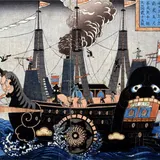
Right, and this was largely motivated by the fact that everyone in Japan was going crazy for the so-called kurofune ships, the black ships of the Portuguese, which would come every year bringing all manner of wares from China, from the Americas, from Europe, and people were just crazy for that stuff, so much so that, as we intimated in the last episode, the Jesuits won some converts by insinuating that they were, in fact, in control of Portuguese trade to a much greater extent than they were in reality.
Jesuits had constant contact with Portuguese traders because they came to Japan on the same ships. They had very different goals from the traders. They were spreading religion, you know, more than money, although I'm sure many of them had their hands in that trade as well. There was kind of an interdependent relationship between the merchants and the Jesuits. The Japanese needed the Jesuits to contact the merchants. Meanwhile, the Jesuits basically relied on the merchants to give a material interest to the Japanese to allow them to preach.
Yeah, and so because of this, Nagasaki becomes sort of the flower of Japanese Christendom for as long as it exists.
The Ryuzoji clan
Yeah, together, the Jesuits in Nagasaki and the Christian Omura clan surrounding that area worked to kind of maintain control over a large chunk of the island of Kyushu in the south of Japan, especially to fight off the rival Ryuzoji clan. According to the Jesuits, the Ryuzoji were the ultimate example of, you know, pagan brutality. They were seen as the least honorable, the most aggressive of all the various Japanese clans. Obviously, that's because these sources are incredibly biased, but some of the stories that the Jesuits would write about them are kind of crazy. One well-known story is that a Ryuzoji lord invaded the territory of a rival daimyo, and they claimed that if he would surrender, he could keep running his castle as their vassals. The smaller daimyo agrees, and as soon as he opened the gates, the Ryuzoji come in, kill him, and his entire extended family, just completely wiping out the clan, just to take one little castle.
And so to the Jesuits, this one clan was seen as the ultimate example or the antithesis to Christian virtue. Whereas they were always looking to their other more friendly daimyo, even those who might not necessarily be Christian, as exemplars of Christian virtue, which they hoped would spread across Japan.
Right, and so even though they owned Nagasaki on paper, in practice, their existence was very tenuous and it was constantly under threat because, again, this is the Sengoku period. This is a time when it was everyone against everyone else. There was not yet a central authority. Although this would change very soon thereafter.
Yes, oh yes, it would.
Yeah.
Portuguese trade and tempura
Despite the constant violence of the Sengoku period, it was a very prosperous period for all these Japanese ports because so much more trade was coming in, both trade with Portugal as well as trade from other parts of Asia. Interestingly, the one area they were not able to get much direct trade from was Ming China, because in response to the Japanese Wako pirate raid you talked about last episode, the Chinese government really limited their exports, especially fancy silk. However, suddenly you have all these Portuguese traders as well as rogue Japanese and Filipino and Korean merchants across the South China Sea who were able to circumvent that embargo by dealing with China first and then selling it to Japan. There's a lot of the kind of fun little artifacts of this Portuguese influence on Nagasaki and southern Japan more broadly that you still see today. Many Japanese restaurants in the United States and all across the world sell tempura, which that in fact is actually a Portuguese word based on an earlier Portuguese tradition of battering food.
There's also a really popular Portuguese-derived sponge cake in Japan that I think is called something like castira, castera, which literally means Castilian because it was a Portuguese cake itself based on a Spanish recipe, which was then brought to Japan.
Slavery in Sengoku Japan
But unfortunately, fried goodies and cakes weren't the only thing that was being traded. Although they also had a voracious appetite for Chinese silks and for spices and everything like that, Nagasaki also became a port of the slave trade, which let's get into the slave trade in Japan just a little bit so we can set some context.
Right, because at this point, slavery was pretty widely practiced and was legally sanctioned in Japan. Stories of slaves were very common in literature, in plays, going back as far as the Ashikaga period, prior to the Sengoku era. And that the person could become a slave for many different reasons. There were even cases of people selling their own siblings and children into slavery because they couldn't feed them. Many people were also captured as slaves in wars, or they were enslaved as punishment for debts. You could even inherit the status of slavery, which...
Yeah, but let's focus on kidnapping for a second here, because I draw as part of international raids or within Japan itself, during the Sengoku period, because there was no central legal authority, the powerful could do what they pleased, and so a lot of people just started being kidnapped by lords to enslave them. And the slave problem would also compound when Hideyoshi invaded Korea, as we're going to get into later in this episode.
Yeah, but that's very far from here.
Yeah, yeah, yeah.
Yeah, so slaves were coming in from Japan itself. They were being imported by the Wako pirates, who often took people as booty. And although Hideyoshi made an effort into tamping down on the enslavement of abducted Japanese, it continued to exist. And honestly, all of this is pretty run-of-the-mill stuff for people familiar with slavery. And in fact, even though Japanese legal codes well into the Edo period would retain the status of slavery and didn't really question it, it seems that with time, the practice seemed to have lapsed out of existence, more or less.
Yeah, just like you saw in Western Europe, for instance.
Portuguese slavers
But I think that the really important thing with slavery in this context, though, is that the Japanese weren't the only ones doing it. Because by the time the Portuguese had landed in Japan, there was a centuries-long practice of Portuguese merchants enslaving people all across their various trade ports and colonial possessions, primarily but not exclusively in Africa. As early as 1555, the church was complaining that merchants would take slave girls back to them to Portugal. And it was understood that the practice of slavery might hinder Christianization, which the church and some of the aristocrats saw as the greater spiritual purpose of this very early European colonial expansion. So in 1571, just a few years before the establishment of Jesuit Nagasaki, King Sebastian of Portugal issued an edict prohibiting basically all slave capturing by merchants, which, as you might expect, was completely ineffective. And slavery persists in Portuguese colonies for about 300 more years.
And it clearly didn't work because when Hideyoshi conquered Kyushu in 1587, he sent the following letter to the Jesuits: quote: It has come to our attention that Portuguese, Siamese, and Cambodians who come to our shores to trade are buying many people and taking them captives to their kingdoms, ripping Japanese away from their homeland, families, children, and friends. This is insufferable. Thus, would the Padre ensure that the Japanese who have up until now been sold in India and other distant places be returned to Japan? So, as a consequence, the Portuguese moved to limit the enslavement of both Japanese and Chinese people by Portuguese merchants. There was a lot of grumbling from the merchant class, but it seems like many of the Jesuits supported this move. Although the Jesuit port of Japan facilitated a lot of slavery, many of the local Jesuits had their qualms about the practice.
Pedro Martins, the bishop of Japan, until 1598, actually declared that any participants in the slave trade would be excommunicated. Although, as a little wrinkle, though, he also gave a little carve out, which was that prisoners captured in war could still be enslaved, which was very helpful to the Japanese at this time, who were currently capturing lots of slaves in Korea.
And the Jesuits, they were very hardcore about this. Just to read a quote from a conference that they held on the matter. The Portuguese excused their behavior by saying that they have legally purchased the Koreans or Japanese and so freed them from a worse form of slavery and guaranteed them a better one. The common people sometimes adopt as children or even allow them to marry their own daughters or relatives. The slaves are also in their own right all the property which they have acquired for themselves and they may use it as they wish. By contrast, the Portuguese treat them like dogs. And this is from a paper by Nelson, Slavery in Medieval Japan. So once again, very, very anti-slavery, at least in this context.
Don't look at what the Jesuits were doing in the antebellum south.
Yeah, but as a consequence of the kind of entrenchment of Portuguese merchants in Japan, there was this huge influx of foreign goods and people into the islands in ways that you really hadn't seen before. And like in, you know, so there was, like you said, the tempura, there was the sponge cake. There were a lot of very interesting effects on Japanese culture and to an extent Japanese folk memory due to all of this exchange, including this exchange in people.
Yasuke
Because there's one very famous story from Japan around this period directly connected to the Portuguese trade and Nagasaki. A story that some of our listeners have probably heard of, which is most likely a result of the Portuguese practice of slavery. And that is the story of a guy named Yasuke, the African-born samurai in Sengoku, Japan. He was brought to Japan probably initially from Mozambique around 1579, in the employment of the most senior Jesuit in Japan, that guy Valignano, who you might have mentioned previously. He was a valet and a bodyguard, and his boss was actually one of the most prominent polemicists against Buddhism. He was also the co-worker, you could say, of Luís Fróis, who was the Jesuit who was the closest, one of the closest confidants of Oda Nobunaga. This meant that due to his association with Valignano and Fróis, Yasuke himself came to know the great warlord Oda Nobunaga.
He learned Japanese, the two became quite close. Apparently, living in, you know, early modern Japan, Oda Nobunaga had never seen somebody with such dark skin before. He initially thought that he was covered in ink and had to make sure that he was, you know, really was that color. It wasn't a trick. Because Alessandro Valignano was a big proponent of using honey rather than vinegar to convert people. When he saw that Oda Nobunaga and Yasuke were becoming quite friendly, he allowed Yasuke to serve this great warlord as a retainer and leave Jesuit service, potentially leaving Jesuit slavery. His legal status was unclear. Sources on Yasuke's life are very scant, but it seems like he was able to become a full-fledged samurai and was given a katana by Oda Nobunaga. He would follow him across Japan on all his campaigns, probably adhering to Catholicism and visiting the various churches that were being built around Japan at this time.
By 1582, it seems that about 200 churches had been built in Japan, and over 100,000 people in Japan were adherents. Most of them were in the southernmost island of Kyushu in the main island chain, and they really came from all classes of society. People seemed to convert to Christianity for very different reasons. They were elite converts who were attracted by this, you know, the glamour of this foreign religion and the potential connections to the gun trade, but they were also a lot of very poor converts, people among the peasantry and the urban working class, who thought that this new religion offered a kind of potential eternal salvation that they saw as more immediate and more spiritually rewarding than the enlightenment promised by Buddhism.
Nobunaga and the Jesuits
The Jesuits came to understand that even though Oda Nobunaga would never himself become a Christian, he was friendly to Catholicism in ways that many other great daimyo were not. So they realized that basically their hopes were tied up with this guy. They had been by his side since the 1560s when he secured their right to preach in Kyoto. And as we mentioned, there was that guy, Luís Fróis, who seems to have genuinely been one of Nobunaga's good friends. He had previously come to Kyoto in hopes of convincing the emperor that the entire country should become Christian from the top down. But that mission was a complete failure, and his fortunes would only start to improve once Oda Nobunaga himself would enter Kyoto and proclaim himself as essentially the new overlord of all of Japan.
Yeah, in 1569, Nobunaga issued the following edict: I hereby authorize the Padre to stay in Kyoto. He will not be molested throughout any of the provinces. If by any chance anybody does him any wrong, I will see that through justice and done and punish most severely whoever harms him. And although Fróis is not explicitly given permission to proselytize, it's very heavily implied, so it's not difficult to see why the Jesuits took such a liking to this guy.
But we really have to ask ourselves: why was this warlord so interested in cementing an alliance with a bunch of strange foreigners who spoke of bringing a new faith to their homeland?
The Ikko-ikki
And this is when we have to talk about the Ikko-ikki.
Right. We might actually have to come back and do a full episode on these guys, because it's really, really interesting. But to give a super quick rundown, the Ikko-ikki were a group of Buddhist peasant militias who were able to overthrow the feudal yoke all across different regions of Japan and establish their own basically peasant governments in the wake of the Onin War in the 15th century. That was the civil war that basically kick-started the entire Sengoku period and destroyed whatever top-down authority there had once been in Japan.
Yeah, and as the name implies, they were creating ikki or mutual defense leagues to protect themselves from outside encroachment. This was largely in the alliance of local peasants, merchants, priests, small landholders, etc. Just people who saw what was happening in the outside world and how many ravenous wolves were swirling around them and decided that they were going to take their fate into their own hands. And although the ikki had existed for hundreds of years before this, they usually had the character of peasant rebellions. But with the Sengoku period, they had their heyday, and it was the time when they would exercise power for generations. But the most famous of the ikki would be the Ikko-ikki. These were Buddhist temple militias which blossomed into a robust Buddhist theocratic state, for lack of a better term.
Yeah, and they belonged to something that was called the true Pure Land School of Buddhism, which was this offshoot of a bigger movement called just Pure Land Buddhism, based on the idea of dying and being reborn on a higher plane of existence, a plane called a pure land that was established by a Buddha in which all people could easily achieve enlightenment and potentially themselves become a Buddha. The true Pure Land School, because it was very radical and very militant, has often been compared to the radical reformed movements among the Protestants at this time, like the Anabaptists. And like those guys, the true Pure Land School was based around this promise of salvation in the next life and emphasized faith as more important than good works. Buddhists generally believed that salvation in the form of enlightenment was not possible for most people. If it is, it would be only possible through incredibly hard work over many different reincarnated lifetimes.
Only a very select few would actually be able to reach enlightenment. They believed that if you followed the path of the Buddha Amida, that was all you needed to be reborn into a pure land and eventually reach enlightenment. And what separates the true Pure Land School from the broader Pure Land movement was that they thought that just simply chanting the name Amida over and over and over could get you into a pure land and eventually help you become Buddhist.
I think it was enough to just say, I accept Amida once and you're sort of just in the club automatically.
Oh, maybe so, yeah, yeah, yeah. Either way, basically what it was was that part of popularity was that it was a movement that did not demand that much of its adherents and promised quite a lot. It promised spiritually, you know, being reborn in this very heavenly world where you could eventually become a Buddha. And then, in the short term, though, they did not have any qualms against using violence to establish a world in which more people could accept the teachings of the Amida Buddha and eventually become enlightened. This was the kind of theological underpinnings behind these militia movements. And so, these militias had existed for a very long time, but now they had a new fervor. You know, I was saying that people often compare this to the radical Protestants. Think about the Peasants' War in Germany, Thomas Müntzer. Very similar ideas going on here. You have this material oppression being experienced by the peasants, but now you add this little extra shot of spiritual juice, and these movements are going to fight a lot harder.
And they were particularly a big problem to Oda Nobunaga as he sought to unify Japan. Because, you know, dealing with a daimyo and you know, convincing him to lay down his arms and join your growing state is one thing, but dealing with very radical religious, basically, fanatics who might not want to compromise with your vision of the future is a lot harder.
Yeah, it also didn't help that these guys were constantly in alliances with Nobunaga's rivals, so he really had it out for them when he finally did get around to dealing with them, and they would just be mercilessly annihilated. Something like 40,000 of them would be burned alive in their main temple complex when Nobunaga finally conquered it.
So this right, and so in effect here, what this means, and the reason we're saying all this, is because by going after the Ikko-ikki, while giving freedom to the Jesuits to proselytize, he had effectively thrown in his lot with Christianity over these Buddhist institutions. This indicates that he was much more open to non-Buddhist foreign religions than other leaders in Japan before or since, which really gave this incredible leeway to the Jesuits and other Christian proselytizers at this time.
Christian daimyo
A consequence, several daimyo, especially in the southern island of Kyushu, would themselves become Christians. Oda Nobunaga never would, but members of his family absolutely did. Of the ones in Kyushu, we already talked about that guy, Omura Sumitada. He was the one who gave the Jesuits Nagasaki. He was known in Jesuit records as Don Bartolomeo. We told that story about how he destroyed a statue of a Buddhist war god.
Otomo Sorin
But an even more important Christian lord was Otomo Sorin. He was one of the most powerful daimyo in all of Japan at this time, and really one of the most important figures in this era behind Nobunaga and Hideyoshi, who we'll talk about later. And so he was a guy a little bit like the Christian Roman Emperor Constantine because he was a great friend to Christianity, but doesn't appear to have actually converted until later in his life. He was definitely a Christian at the time of his death, but sources differ if this was a deathbed conversion or if he had become Christian about a full decade earlier. And I think that part of the reason for this confusion, is because, interestingly, prior to his conversion, Otomo Sorin was actually a Buddhist monk.
Yeah, we're going to get into this in the next episode when we finally explore Japanese Christian beliefs, but suffice it to say, there was a lot of syncretism going on. So, Sorin, he was able to cultivate a very wide network of foreign allies, from pirates to later the missionaries. He took power comparatively young at the age of 20, and he was just grinding from the get-go. He sought out an audience with Francis Xavier and Anjiro not long after he took power, and while he was not going to convert for many years, Sorin gave them a huge amount of leeway in proselytizing. Francis Xavier mistook him for a king, which was a mistake that he was not very quick to correct, because again, these guys were all bullshitting each other as much as they could. And so, Xavier wrote that Sorin, quote, has a great liking for the Portuguese, and that when Francis Xavier mentioned that he had met the king of Portugal, Sorin, quote, wrote to him asking to be admitted into a number of his friends and sent him a rich suit of armor as a token of friendship.
Yeah, sadly, we don't know what happened to that suit of armor, but news of Otomo Sorin definitely reached Portugal. Because not too long after meeting the Daimyo, Francis Xavier returned to the Portuguese colony of Goa in India and brought with him a group of very early Japanese converts.
Bernardo in Europe
One of them was Sorin's emissary. So, you know, one thing we should add here is that traditionally, most histories see this period as one where the Portuguese are discovering or even imposing themselves on Asia, particularly in Japan. But it's a little bit more complicated. There was contact going in both directions. And I think the best example of this is that emissary from Otomo Sorin. Because very shortly after this emissary arrived in the Portuguese port of Goa, another Japanese person who possibly was the same guy goes all the way to Europe.
His name was Bernardo.
Well, at least he's known to us as Bernardo. We don't know what his birth name is, but so according to Xavier's writings, he decided that Bernardo should visit the Portuguese colonies in Asia and ultimately Portugal itself so that he could attest to Francis Xavier's progress and to see what he described as the Japanese religion and all its majesty. So Bernardo, he got on a ship and he sailed to Europe with two other Christians, including another Japanese man who was named Matthias, who perished along the way. Which travel back in those days was not very safe. It was very hazardous to one's health. So that happens a lot.
Yes, when Bernardo gets to Portugal, he seems to be really into the place. He met with the local Jesuits and he formally joined the Jesuit order as time passed. And as an aside, he was also accepted at the College of Coimbra. So after getting the 16th century version of an associate's degree in theology, he went to Rome where he met with the big daddy himself, Ignatius Loyola.
Yeah, this is the art of the guy that he was the soldier who got his leg half blown off and then founded the Jesuit order.
But unfortunately, Bernardo, he would never return to Japan. He traveled across the Mediterranean port cities, talking about Japan to anybody who would listen and sharing his optimism about the future of Catholic proselytism in his home country. And ultimately, just like Matthias before him, all this traveling took its toll and he perished of an illness, probably acquired on one of these voyages. But Bernardo, he made a huge splash in elite Catholic circles in southern Europe. His trip was more than anything what allowed Japan to enter popular consciousness and to convince Catholics all over Europe that even if things were going poorly at home with the Reformation and all that, the Italian wars and all that good stuff, that there was real hope for Catholicism in the Far East, just as Britain was lost to the Catholic fold, Catholicism would gain another island stronghold.
Sorin's wars and the first cannon
And so back in Japan, after dispatching his messages to the Portuguese, our friend Otomo Sorin began using his new foreign connections and guns to seize land from his rivals, the Mori clan. During one of these wars, his brother was captured by the enemy warlord, Mori Motonari, who interestingly is actually the basis of the main character of the movie Ran by Kurosawa, if you've seen that. This lord of the Mori forced Sorin's brother to kill himself, Kmitsufuku, and Otomo Sorin responded by ruthlessly tearing through Mori holdings. Interestingly, part of his success was that he was able to get a Portuguese mercenary ship on his side. All they really did was just stalk the coast with their guns out, but that was a great psychological effect. And apparently, it seems to have given this real morale boost to the Otomo side against the Mori side. Like, see, like, you guys might think you're these great pirates, but us, we have this giant black ship, you know?
Also, in probably more practical terms, he also was able to buy a cannon from the Portuguese that would be nicknamed the Kunikuzushi, Destroyer of Provinces, and probably the first cannon to enter Japanese soil. However, although they were able to push the Mori pretty basically to the edges of Kyushu, they couldn't totally get them off the island because eventually the shogun at the time intervened to stop the war between these clans. For whatever reason, maybe angry with the Portuguese for not helping him finish the job against the Mori, soon after this, Otomo Sorin took the orders of a Buddhist monk while still acting as a daimyo. This wasn't unheard of in Japan, but really unusual.
And you might think that, you know, adopting hardcore Buddhism would make him less warlike, yeah?
Knowing what I know about Buddhism, I don't think so. Yeah, certainly not in Japan.
Right, no, because he spent the rest of his life violently forging the most powerful state on the island of Kyushu. He would allow Jesuit missionaries free passage across his growing domain, just as Oda Nobunaga would do around the same time. And by 1580, he held probably about half of the island.
A public baptism
He wavered between Buddhism and Catholicism across this entire period, but in 1575, he made the big step of allowing his son to be baptized. This was the first infant baptism of any young Japanese nobleman. And the really important thing here is that he made it a public event. Lords from all across Japan were invited to see the ceremony, which, according to the book Deus Destroyed, had a huge psychological effect in improving the social status of Catholicism among the elite. Basically, becoming Christian was a status symbol. And, you know, in order to keep up with the Joneses, many different daimyo started to allow members of their own families to be baptized as well. The most likely date for Otomo Sorin's baptism was three years after the birth of his son. He was about 50. And this is probably when he got baptized because this is when Portuguese records start referring to him by a Portuguese name, Francisco, which usually indicates taking a foreign baptismal name.
He began looting Buddhist temples and Shinto shrines around the same time, too, but you actually might not want to read too much into that because many different daimyo would raise money that way. It was a common practice. It doesn't necessarily indicate his religious beliefs. But Otomo Sorin was clearly an ally of the Jesuits and a much more powerful ally than Omura Sumitada, the guy who gave them Nagasaki.
Arima Harunobu of Shimabara
But we should mention that there was one other important Japanese daimyo, much less powerful, but really interesting. I think a very cool guy. He was the boy wonder, Arima Harunobu, who was just four years old when he succeeded his father, Yoshisada, as head of the Arima clan and became the lord of a city you're gonna want to remember. Because this was the city of Shimabara. His father, Yoshisada, had been very accommodating to the missionaries and eventually became a Christian himself, but he died very shortly after his conversion. So when Harunobu became the daimyo, he was so young that all the real power was held by various advisors who were much more hostile to Christianity as a rule. So Harunobu's court tried to rein in the influence of the Catholics, but then his territory was invaded by the Ryuzoji clan, those guys again. So reading between the lines here, it seems like Harunobu's regents realized that they needed all the supports that they could muster, including the Christian community, which was now starting to blossom, as well as the neighboring Jesuits in Nagasaki.
So, because of this, Shimabara totally reversed course. Harunobu was baptized, or maybe re-baptized, it's hard to tell. And he got the unusual Catholic name Protatius. His soldiers began ransacking Buddhist temples to fund the war, as again, many of these guys did, as well as to buy Portuguese guns. Apparently, even small roadside shrines were destroyed and picked apart for any coins that could be shaken out of the collection box. Monks were expelled from the domain altogether and replaced by priests. Alessandro Valignano himself would visit Shimabara and actually establish a seminary there to train native priests, which meant that this pretty small city would probably become the most fervently Catholic city in all of Japan. And this would persist for a very long time. It would be ultimately the final holdout of Japanese Catholicism. This also meant that 13-year-old Harunobu would have regular encounters with Westerners that other young daimyo wouldn't have.
He was clearly a very inquisitive kid who made a real effort to learn about the outside world and seemed particularly interested in the material things that the Jesuits had, which the Japanese didn't.
Clocks from Al-Jazari to Nuremberg
You know, we talked last episode about how when Francis Xavier first visited Japan, he wowed the various lords by showing them a mechanical clock. Well, who do you think would be more amazed by something like that, a cool clock, than a nerdy teenager like Harunobu? Just like the guns, clocks were invented in Song China, but they were improved upon further down the Silk Road, first by an Iraqi guy named Al-Jazari, who was confusingly from the region of Al-Jazeera. And he's a guy who received a lot of attention in popular history over the last few years because he's probably the most fun example of the remarkable scholars of the Islamic Golden Age. We don't have time to get too much into his life right now, but he was this like amazing wizard of mechanics, along the same lines as someone like Hero of Alexandria before him, or even Leonardo da Vinci after him.
He developed water pumps inspired by Chinese designs. He built automatons, probably most famously, including an entire mechanical band that could pluck strings to a beat powered by a water wheel. But he also built a lot of clocks. These were all powered by water as well. And by the time of his death in the early 13th century, clocks of a similar design had found their way to Europe. A century later, clockmakers in Italy and England were making clocks smaller and more accurate than Al Jazari could do. Maybe because he was too busy building his automatons. And by the 15th century, Westerners figured out how to make spring-powered clocks. German inventors added the minute hand, and by 1560, they were even accurate enough to add a second hand. By the 1570s, they were handheld. These early pocket watches were known as Nuremberg eggs, which is kind of cute.
And they were quickly sold to noblemen across Europe. And perhaps not only in Europe. Because the reason I'm giving this little, you know, having this little clock tangent here is because within just 20 years of these early pocket watches being developed in Germany, they're in Japan. Even in out-of-the-way towns like Shimabara. And when Arima Harunobu saw these tiny little pocket watches for the first time, he actually paid to establish a pocket watch factory, essentially, in Japan.
The Christian alliance
Yeah, but unfortunately, he got the timing a bit off because in 1582, the Ryuzoji attacked once again. So, by, yeah, so by this year, he was in a very precarious position. You know, he just blew all his money on a pocket watch workshop, you know, when he's suddenly being invaded.
By fewer clocks.
Yeah, yeah.
And he decided that the best use of his remaining funds after that error was to build stronger ties with the other Christian warlords of Kyushu. This meant that these three guys we've been discussing: Arima, Omura, and Otomo, would all get together in 1582 to form a pact against the Ryuzoji clan. It was a military alliance, but it was also a kind of a broader strategic, diplomatic institution which they really thought could project the power and the prestige of Japanese Christians to the outside world. The main thing they wanted to do was speak to the Christians in Europe directly. And to do that, they would go straight to the top and assemble their own embassy to Rome.
The Tenshō Embassy
And this contact would enter history under the name of the Tenshō Embassy, because just like a Bernardo Japanese man who came to Europe before them, a group of Japanese ambassadors were selected by these daimyo to visit the major Catholic monarchies as well as the papacy. A man named Itō Mancio was selected to head the delegation. So the delegates went with Valignano across the sea to the Portuguese colonies in Africa before finally sailing around the horn into Lisbon. From whence they visited Rome and received many great honors. They would remain in Europe for eight whole years. And in this time, they met two successive popes, as well as King Philip II of Spain, who had recently also become the king of the Portuguese Empire, which suddenly united basically all European colonies in the Americas, Africa, and Asia up until that point.
Yeah, because really the Spanish and Portuguese were the only ones doing the colonial game at this point, at least effectively. And now they, you know, both their crowns were worn by one guy.
And just like Bernardo before them, the men of the Tenshō Embassy took orders as Jesuits, probably from the Society's Superior General himself, Claudio Acquaviva. But unlike Bernardo, after spending nearly a decade of traveling, these guys finally returned to Japan, which meant that these were likely the first Japanese people to see Europe for themselves and to report back. This gave the Japanese an understanding of the Western world, not mediated by the bias of the Jesuits, and it appears to have given the Japanese a greater understanding of the military and economic power of the Europeans and the threat that they could one day pose to Japan. Interestingly, once these guys got back to Japan, some of them would actually leave the Jesuit order, possibly renouncing Christianity. Maybe this was because it was, you know, long-seated frustrations about how the Jesuit order made it difficult for Japanese people to advance, but it might also be because the Japan they returned to was significantly more hostile to Christianity than the Japan they had left.
The Honnō-ji incident
And that was largely due to the rise of a guy named Toyotomi Hideyoshi. As the Tenshō Embassy was packing up its things to go over to Europe in 1582, this would only be the second most important event in Japanese Christianity to happen in that year, because only a few months after the delegates left, there was an earth-shattering event which took place in the Buddhist temple of Honnō-ji.
Right, because Oda Nobunaga, the great daimyo, the friend of the Catholics, was betrayed by one of his generals for reasons that are still to this day pretty obscure. Akechi Mitsuhide seems to have had a personal grudge against Nobunaga for reasons that seem incredibly petty. He might have offended Nobunaga by serving fish that was a little bit too old, or maybe he was mad that Nobunaga pressured him to drink too much sake at a party. In any case, a falling out happened, and he responded with shocking violence. Because one night in June, while Oda Nobunaga took a stop from his military campaigns to pay respect at Honnō-ji, Mitsuhide's army surrounded the temple and demanded that the daimyo surrender. And funny enough, two Catholics were actually present for this: Nobunaga's friend, Luís Fróis, as well as the samurai Yasuke.
Fróis would write about the event. As our church in Miyako was situated only a street away from the place where Nobunaga was staying, some Christians came just as I was vesting to say an early mass and told me to wait because there was a commotion in front of the palace and it seemed to be something serious as fighting had broken out there. We at once began to hear musket shots and see flames. After this, another report came and we learned that it had not been a brawl, but that Akechi had turned traitor and enemy of Nobunaga and had him surrounded. When Akechi's men reached the palace gates, they at once entered as nobody was there to resist them because there had been no suspicion of their treachery. Nobunaga had just washed his hands and face and was drying himself with a towel when they found him and shot him in the side with an arrow.
Pulling the arrow out, he came out carrying a naginata, a sword with a long blade made after the fashion of a scythe. He fought for some time, but after receiving a shot in the arm, he retreated into his chamber and shut the doors. Some say he cut his belly, while others believe he set fire to the palace and perished in the flames. What we do know, however, is that of the man who made everyone tremble, not only at the sound of his voice, but even at the mention of his name, there did not remain a single hair which was not reduced to dust and ashes.
What became of Yasuke
And returning to Yasuke here, we mentioned that he drops out of the historical record in 1582. He was with Nobunaga. He was helping to fight off these people. And there are some conflicting testimony about his ultimate fate.
Some say that when he was captured, he was released because he was a foreigner and they didn't think that he had any business being executed. Like, he didn't deserve the honor of getting a proper execution. But he also just sort of drops out of the historical record totally at this point, which seems very suspicious because the Jesuits probably would have gotten a hold of him once again. He had nowhere else to go, frankly. So it seems to me like he probably would have been killed after this event. It's very possible.
Yeah, and you gotta think that as Luís Fróis was watching the temple of Honnō-ji burn, he must have been wondering if his own ambitions were going up in smoke as well. Because, like we said, so much of the Jesuits' interest was tied up with Nobunaga. Now he was dead.
Hideyoshi rises
And just as they feared, the guy who would succeed him as overlord of Japan would not be friendly to Christianity. Because in the chaotic years immediately after this infamous betrayal, Japan would once again descend into complete civil war. This breakdown of authority had really big ramifications on missionary activity because they no longer had this, you know, the peace to move between cities. They could be much more easily captured, and there was no promise that whatever lord might capture them, you know, had any interest in letting them spread their religion. Otomo Sorin himself made one really bad move during this time, which was that, you know how he controlled half of the island of Kyushu? He started a war to take over the rest of the island against a clan who was much more powerful than he thought. And realizing he might lose all his land, Otomo Sorin sought help from the most powerful lord of the mainland.
That was the guy we mentioned, Toyotomi Hideyoshi, who really is one of the most enigmatic and important figures in Japanese history and probably the single most significant enemy to the spread of Christianity in Japan. Hideyoshi's reign lasted for almost 20 years, just short of that, but he really made the most of his time. At the time of Nobunaga's death, he was already one of the most powerful samurai. He was probably around 45 years old. Unlike Nobunaga, who had a noble background, even if it was minor nobility, Hideyoshi was probably from a peasant background in Nagoya, where his father had been a penurious spearman serving a minor samurai. He began to work for Oda Nobunaga when they were both young men, possibly as a cook or a carpenter, depending on which version you hear. And the open-minded Nobunaga, he really took a liking to this peasant and made him his confidant.
Hideyoshi would ultimately prove himself in many different fields, including both warfare and administration, and it was this latter part which would be important. Yeah, hey, remember in our last episode, we talked about how Nobunaga's nickname was the Fool of Owari, and it's believed that he got that nickname because he was so friendly with people from lower classes, whether they were former slaves like Yasuke, whether they were foreign preachers like Luís Fróis, or whether they were peasants like Hideyoshi.
Right. Hideyoshi's greatest skill was rolling negotiation. A huge part of Nobunaga's success across his short career was that Hideyoshi would make secret deals with many of his enemies, in this way, bringing conflicts to an end prematurely. He was a really big fan of bribing local lords to support Nobunaga rather than beating them in the field directly. This, of course, went against all of the romanticized ideals of the samurai, but it was obviously a much wiser decision. Hideyoshi was also an impeccable general and was especially adept at facilitating retreats. He would basically have his army lose battles a little bit and in this way to sort of bring the enemy at ease and wait for them to slip up, at which point he would mount a massive counteroffensive and destroy them totally. Because of all this, he's got a very complicated reputation in Japanese popular history because he is seen as a much more effective ruler in many ways than Nobunaga, but without any of his supposed honor or valor.
He was just kind of the brutal force of the state who would break a lot of traditions in strengthening the state.
I think there are a lot of figures you can see in Western history that look kind of like him, you know, whether it's Thomas Cromwell who we've talked about before, or Wallenstein, we've talked about a lot, because these are guys who bucked the standards of the time in service of these kind of modernizing political reforms, which gener in many ways benefited a lot of people, but also, you know, cracked a lot of eggs.
In short, he was a PMC in both senses of the term.
That's right, he was, yeah. And also, because he would end up taking over Oda Nobunaga's mantle, there have long been many insinuations that he might have somehow been involved in the Oda Nobunaga assassination, you know? Kind of like a Lyndon Johnson figure that way. There's no way to know for sure, but he certainly gained a lot from the Honnō-ji incident, because as soon as it happened, he was ready. He immediately began forming alliances with various lords who had previously sworn themselves to Nobunaga, particularly through marrying their daughters. He was a big-time polygamist, at a time actually when that was fading in Japan, and the Jesuits certainly took note of that. As a pretty big flex, he never claimed to be anything other than the son of a peasant. He did not claim to be descended from the emperor or a shogun, like a lot of other samurai, but instead really emphasized his self-made nature.
And his various marriages kind of strengthened his bloodline after the fact.
Yeah, he didn't even have a surname. I believe Nobunaga ended up giving him his.
That's right, yeah, yeah.
Hideyoshi's wives
There's a lot of legends about him, and also about his wives. One of them, Kaihime, was said to have been a warrior woman, and the story is that during the siege of her father's castle, she killed an enemy soldier and brought his head to Hideyoshi. And he was so impressed by that that he said, oh my god, I have to marry you. You're amazing. He also was very close to the Maeda clan, who, interestingly, had ruled the city of Nagoya that he was born in. He totally turned the tables, made them his vassals after, you know, previously being their subject, and he married the oldest of the Maeda daughters, and then kind of weirdly adopted the others, which must have been a very strange family dynamic.
Well, the Japanese are very big on adoption. It's just the thing you do over there.
They are, yeah, yeah. And yeah, one of his daughters/slash sisters-in-law was a woman named Go. And she's interesting because she was a Christian. So this shows that very early in his kind of you know campaign to unify Japan, he would have been coming into pretty constant contact with Christians. He would have realized that Christianity was rapidly spreading through the elite circles in Japan, and they were now Christians in the most powerful, you know, Japanese court. And it doesn't seem like he was that pleased with that. Nobunaga seems to have been have had a very optimistic attitude towards Christianity, but Hideyoshi wasn't so sure.
Hideyoshi meets the Jesuits
But his real biggest encounter with Christianity would come in 1587, the same year that Otomo Sorin, the great Christian nobleman, asked him for help fending off his rivals. He immediately enters the city of Nagasaki, realizes that the Jesuits are in charge, asks, hey, what's going on? And has an audience with these Jesuits. And they make the mistake of immediately trying to convert him, you know, not starting with the pleasantries. In his meeting with them, Hideyoshi said, quote, Well, I do know that the Padres are better than the bonzes, for you maintain a different purity of life, and the filth in which he is so absorbed in all other bonzes is not your practice. I am pleased by everything this scholar of yours preaches, and I feel no other obstacle to becoming a Christian than its prohibition against keeping many wives. If you stretch the point for me, I would probably turn Christian myself.
And that kind of reminds me of that famous story from medieval Russia where the Rus almost became Muslim, but they found out they couldn't drink. They're like, ah, never mind.
Yeah, but in reality, this was probably just vain flattery. At the same meeting, the Jesuit representative, Fróis, became much less careful with his words and began playing the same old game of insinuating that the Jesuits were themselves very powerful and that they could secure weapons and manpower for Hideyoshi's war efforts, something that he had himself inquired about. The Japanese Christians who were present at the audience were very alarmed, to say the least. Remember, this is, consider the dynamics of this, a militarily powerful religious order was a potential source of subversion in a country which had only experienced this exact same thing with the Ikko-ikki. So the thinking is that Hideyoshi was trying to bait them into talking about how powerful they are and in this way to gain a pretense to knock them down a few pegs.
Right. And this would basically end up happening because he initially declared that he would allow the Jesuits to keep control of Nagasaki, but pretty quickly reneged in that promise. There's a few reasons he might have done this. It's possible that maybe he thought that the great trade and diplomatic connections brought by these foreigners wasn't just an asset, but potentially a threat. Because word was just now coming about the extent of Spanish and Portuguese colonial power across Asia. There were a lot of Japanese merchants in places like the Philippines and Indonesia and Malaysia. They would reported that in all these colonies, first the merchants came to sell the guns, then the priests would came to, you know, hand out the Bibles, and then the Spanish soldiers came to declare that whatever country this was now belonged to the King of Spain. And Hideyoshi probably began to wonder if this same process was happening in Japan.
The Jesuits tried to assuage his fears by saying that they existed independent of any royal authority. In addition, most of the merchants were from Portugal, not Spain. But they didn't tell him that at this point, both Spain and Portugal were ruled by the same Habsburg king.
Yeah, and although Hideyoshi, he was very erratic and very megalomaniacal, especially towards the later stages of his life, so he was kind of paranoid, but he wasn't necessarily wrong in this case. In Deus Destroyed, Elison talks about how basically there was sort of a conspiracy afoot, for lack of a better term. Although the head of the Jesuits at the time, Coelho, was in constant contact with the Viceroy of the Philippines and had asked repeatedly for a garrison of Spanish troops to defend Nagasaki. Meanwhile, other Jesuits in Manila and Portugal were debating the possibilities of a land invasion of China. Now, these were all very unrealistic flights of fancy, and Coelho would be reprimanded time and again for his foolish conduct by the Jesuits themselves. But all of this kind of erratic behavior really raised alarm bells.
Coelho's gunship
Yeah, and Coelho would make actually another really big mistake, which was that eventually he was granted an audience about Hideyoshi, just some kind of routine meeting to talk about the power stream agreement between the Jesuits and his government. And he made the mistake of showing up in a gunship with visible cannons. This might have just been a foolish mistake, but it was read as a show of force. And Hideyoshi was especially anxious about this because there was another much larger ship out there in the ocean. And he was worried that if he accepted the smaller ship, maybe the larger one would instantly start bombarding him, you know? Maybe that was the start of this Spanish and Portuguese invasion. As soon as a smaller ship came in, he said that he wanted to inspect the larger one out in the harbor. So, you know, presumably kind of annoyed, Coelho went back in the ship, sailed out to the larger ship, asked if they could dock at the harbor for inspection, and then the captain of that larger ship said, no, fuck off.
No, I'm not going to let this guy inspect my ship, especially because this is a very tiny port. They probably wouldn't be, it's not deep enough. So Coelho goes back, reports this to Hideyoshi, and then Hideyoshi seems to think that maybe things are just as bad as he feared. Maybe that merchant ship out there doesn't want to be inspected because it's hiding something. Maybe there are guns on board ready to be used against Japan. Maybe there's a whole army hiding underneath the decks. And that very same night, Toyotomi Hideyoshi would meet with his advisors and proclaim a new law that would completely reverse the standing of Christianity in Japan.
The expulsion edict
Yeah, to paraphrase it, he declared that Japan is the land of the gods and that any introduction of foreign gods was undesirable. He went on to clarify that participating in the destruction of Buddhist temples and stirring up the lower classes, the Jesuits had violated the laws of Japan. And so, in light of these offenses, all Jesuits were to be banished from Japan. They had only 20 days to gather their things and leave. Which he didn't really follow through with that, spoiler alert, but he was a very erratic man. This probably came about as a result of a night of drinking on the town. So he basically issued this proclamation, and although it sent shockwaves through the communities of Japanese Christians, it wasn't really followed up on. First, they told him that it wouldn't be possible for them to leave sooner than in six months' time because the ship wasn't going to be coming for that long, and so he let them wait around.
And when the ship finally did arrive, only something like three out of 120 Jesuits in Japan actually left, and he didn't seem very interested in pursuing that further.
It was, yeah, it was a flex. It was, it was, you know, showing the Jesuits that he could do this.
Yeah.
Yeah, he also deliberately avoided targeting native Japanese converts with the same ferocity, even though he did. Remember, like, yeah, like his adopted daughter was one of them. Like, you know, you know, you don't want to, you know, lead to fights at the dinner table.
Yeah, in practice, he did issue proclamations to the effect of if you are a daimyo who is above a certain rank, then you have to ask for permission to convert to Christianity, and you have to give up your domain if you do become Christian. And this did happen to one man, Takayama Ukon. He actually was stripped of his domain because he refused to renounce Christianity. But for the most part, they were just left to continue their existence.
Yeah, you know, one speculation is that he might have really just been trying to kind of cut out the Jesuit middleman in the trade with the Portuguese. Because there wasn't really any good reason why s the port why the Jesuits were necessary, you know, to to mediate all this. I'm sure many of the merchants would have liked to directly go deal with the the various Japanese buyers, but instead they all had to go through the Jesuit port of of Nagasaki. By seizing the port of Nagasaki, he suddenly had direct control over all the Portuguese trade.
Well, it's also difficult to cut out the Jesuits at this point just because they're the only ones who have a mastery of both Portuguese and Japanese to an appropriate level, so you kind of do need to keep these guys around to keep the trade going, which explains why they weren't actually expelled. But nevertheless, it's definitely trying to instill some fear in them.
Right, and it's part of the broader process of state building, of getting rid of any kind of local threats to your rule, you know, whether it's a rebellious daimyo or this, you know, powerful foreign religion which seeks to check your power.
The sword hunt
That's probably also why the very next year, he totally ended the threat of the Ikko-ikki for good with his famous sword hunt, in which he sent his tax collectors all around every village of Japan demanding swords from any peasants who had them, with the promise that all of the metal would be melted down to build a giant statue of the Buddha, even bigger than the Buddha statue in the city of Nara. This worked in the sense that the Ikko-ikki would never rise again. All these swords were collected, but instead of being used to build a Buddha statue, they went into the personal collection of his army. And he was going to use this army for quite a lot.
Japan unified
Over the next several years, Hideyoshi would finally solidify his control over all of the main Japanese islands. I think every basically every island that's part of modern-day Japan, except for Hokkaido and Okinawa and the outlying islands, would be brought under his rule. There have been periods before where all these islands claimed to support the emperor in earlier Japanese history, but this was really the first time that Japan became a unified state. It was a huge turning point in Japanese history. Oda Nobunaga couldn't do it. Hideyoshi got it done. You would think that after, you know, finally unifying Japan and effectively ending this extended violent Sengoku period, maybe you'd want to stop fighting, right?
Well, not exactly.
No, right, so Otobo's throwing all over again, you know, become a Buddhist monk, keep fighting, unify the islands of Japan, and keep fighting. But, you know, once you've done all this unification, you can't really do much fighting in Japan anymore. You're gonna look abroad. Hideyoshi began formulating a plan to conquer all of China, as well as their vassal state, the nation of Korea. This was basically unheard of, you know, in the course of Japanese history. There was no previous example of Japanese rulers seeking to project their power onto other countries, except for events like, you know, piracy raids on China and Korea. But it seems like due to this unification, Hideyoshi was now conceiving of himself as this great ruler, sort of in the mold of the Chinese emperors. He thought that his connections to the Portuguese gave him this great technological and economic edge over the other Asian countries that he might have thought were kind of, you know, lagging behind.
Hideyoshi's letter to Manila
So he basically declared his intentions to conquer much of the known world in this really incredible letter sent in 1591 to the Spanish Viceroy of the Philippines. One thing I'll say is that he never went to war against the Spanish Empire, who, you know, had the Philippine islands not too far away from Japan. I kind of wonder what how things would have gone if he did, how that would have altered the court's history, if he had, you know, basically ejected the first major European colony out of Asia. But instead, no, he thought that he could work with the Spanish and hoped that they would support him in his ambitions on the Asian continent. And he alludes to this in this famous letter.
As you have noted in your letter, my country, which is comprised of 60 odd provinces, has known for many years more days of disorder than days of peace. Rowdies have been given to fomenting intrigue, and bands of warriors have formed cliques to defy court orders. Ever since my youth, I have been constantly concerned over this deplorable situation. I studied the art of self-cultivation and the secret of governing the country. Through profound planning and forethought, and according to the three principles of benevolence, wisdom, and courage, I cared for the warriors on the one hand and looked after the common people on the other. While administering justice, I was able to establish security. Thus, before many years had passed, the unity of the nation was set on firm foundation, and now foreign nations, far and near, without exception, bring tribute to us. Though our own country is now safe and secure, I nevertheless entertain hopes of ruling the great Ming nation.
I can reach the Middle Kingdom aboard my palace ship within a short time. It will be as easy as pointing to the palm of my hand. I shall use the occasion to visit your country regardless of the distance or the differences between us. Ours is the land of the gods, and God is mind. Everything in nature comes into existence because of mind. Without God, there can be no spirituality. Without God, there can be no way. God rules in times of prosperity as in times of decline. God is positive and negative and unfathomable. Thus, God is the root and source of all existence. This God is spoken of by Buddhism in India, Confucianism in China, and Shinto in Japan. To know Shinto is to know Buddhism as well as Confucianism. In your land, one doctrine is taught to the exclusion of others. And as you have not yet been informed, the Confucian philosophy of humanity and righteousness.
Thus, there is no respect to God and Buddha, and no distinction between sovereign and ministers. Through heresies, you intend to destroy the righteous law. A few years ago, the so-called fathers came to my country seeking to bewitch our men and women, both in laity and clergy. At that time, punishment was administered to them, and it will be repeated if there should be any return to our domain and to propagate their faith. It will not matter what sect or denomination they represent. They shall be destroyed. It will be too late to repent. If you entertain any desire of establishing amity with this land, the seas have been rid of the pirate menace, and merchants are permitted to come and go. Remember this.
God, I love that, man. From the perspective of the Europeans, it's like this great villain speech. But if you look at it, there's just so much there that's so shockingly modern. He's basically, you know, using the same kind of pan-Asian rhetoric that the Japanese Empire would use centuries later in World War II. He's, you know, positioning various competing religions in Asia against Christianity. He's also talking about the separation of church and state, effectively, and how that's that he wanted to establish that as a political principle in Japan, even though it didn't exist in Europe. Really, just a truly remarkable document.
Yeah, and once again, you really get a sense of how megalomaniacal this guy was.
Oh, yeah, no. That's the thing. It's like, yeah, Hideyoshi, not a nice guy, but you really gotta respect the chutzpah. Really interesting figure, much less of a romantic figure than Oda Nobunaga. But like I said, he was far more effective. He got very close to finishing the job that Oda Nobunaga started. And really, the only reason he couldn't seal the deal of finally ending this period of instability and establishing his own permanent, you know, shogunate dynasty was because he went too far. He thought that unifying Japan wasn't enough. He mistakenly thought that Japan was totally secure under his heel. And he said, let's go abroad. Let's take China and Korea.
The Imjin War
Yeah, so in 1592, Hideyoshi would begin his invasion of Korea, the famous Imjin War. He really aspired to expand Japanese power outward and to subjugate the Chinese emperor. Nobunaga supposedly wanted to invade Korea back in his own time, but he had died long before he was capable of such a feat. So originally the plan was to call the Korean ambassadors over and to get them to sign on to an invasion of China. When Korea refused to join this Japanese war effort, Joseon's fate was really sealed. And Hideyoshi, who he was kind of forced to do this by circumstances, he was ruling over a country full of samurai, which were which was now largely pacified. He needed an escape valve to put these men to use now that their skills were no longer needed in Japan. And if they were to remain in Japan, of course, that's a potential source of instability for this whole unification project.
And this was a lot of men, to be clear. The Imjin War would involve something like 300,000 Japanese ultimately. And so expanding outwards would put these men to very good use while helping to aggrandize Japan.
And just add on here, if you remember our episode on Sicily way back when, this was the exact same pressure that caused medieval North African Muslims to invade Sicily. They had all these really restless soldiers, and they realized that letting them attack this neighboring Christian country and settle there and establish their own domains meant that they wouldn't be a threat to the Sultan anymore.
Right, exactly. And Hideyoshi was really reassured by the fact that Korea was a basket case at this point, and it was thought that the Japanese would have no trouble taking the peninsula in their special military operation. Really, were it not for a few ingenious men like Admiral Yi, it's very likely that Japan would have gotten the job done. If not taking China, then at least taking a very large chunk of Korea.
Yeah, yeah, and that figure, Admiral Yi, he's like the big Korean popular hero. He's like this incredibly significant nationalist figure, and this shows how this war looms incredibly large in the histories of both Japan and Korea. And interestingly, as we'll talk about in a minute, this is not a tangent to the story of Christianity in Japan. Christians would play a huge role in the Imjin War, and the consequences of this war would fall very heavily on the Christian community.
Eventually, China was fed up with this disaster on its doorstep by the fact that this guy was ravaging one of their tributary states while also saying that he was going to move on China next. So they sent a massive invasion army to to push to push the Japanese back to further southern lines. In fact, if you actually look at a map of this, it's actually in some ways kind of similar to what happened in the Korean War when when yeah, when when China stepped in the famous comparison. There were a lot more players in this one.
Like for example, the famous Nurhaci, who would later found the Qing dynasty, was a participant in all this fighting.
Yeah, yeah, yeah, so the Manchus were actually fighting against Japanese at this point on the same side as the Chinese.
That's crazy, yeah, yeah.
And yeah, things got so bad that apparently Hideyoshi actually petitioned the king of Spain, Philip II, for military aid. Like, hey, man, you know, I said I was gonna conquer the whole world, but maybe, you know, if you like, send me some ships and some men and some guns, we can split up the world. But Philip II said no.
But although they weren't able to get military aid from the Spanish, they were able to get a lot of economic resources through their practices, namely slave raiding. Something like over 40,000 Korean slaves would be taken, and many of those would be sent overseas, sold to the same slavers whom Hideyoshi had rebuked back in 1587.
Christian generals in disgrace
There was just a lot going on in this war, and we can't do it justice here, unfortunately. But for our purposes, the most important aspect is the conduct of Christian generals during the war. There were a few incidents which really showed Christians in a bad light. For example, Otomo Yoshimune of the Otomo clan, one of the paramount Christian clans in Japan, he actually burned his own fort in Pungsan as another army by another Christian general. Konishi Yukinaga was retreating, and this was before the battle lines had even reached him, so it just left a really bad taste in everyone's mouth that this guy just abandoned his post, basically, even though he was not under direct danger.
Yeah, so in this way, like the Otomo clan, who had really made a name for themselves in Hideyoshi's Japan, they were really humiliated in the spotlight. And because they were the first major daimyo to embrace Christianity, they just were not doing the religion any favors. Yeah, and I think this is, yeah, this is really essential here. Basically, that Christianity was no longer politically helpful for the Japanese nobility. You know, a decade before, you know, when Otomo Sorin was having his son baptized, to accept Christianity showed that you were cosmopolitan and connected to the rest of the world, you know, it was his status symbol. But now, during the Imjin War, to be a Christian was to associate yourself with defeat and humiliation, and to, most importantly, attract the ire of the increasingly anti-Buddhist warlord Hideyoshi.
Yeah, and just to add another addendum, Konishi, that general who was retreating in the first place, a couple of years after the war ended, he would disgrace himself by failing to commit seppuku after a rebellion against Tokugawa Ieyasu had failed. And so he had to be executed in a really demeaning manner because of that, which, again, this is a class of society and a culture that really highly values these martial values and things of that nature. So it was just a really bad look. It just made Christians look like cowards.
Hideyoshi would retreat back to Japan and attempt to regroup his forces while also attempting to consolidate his power on the home front, dealing with potential internal divisions. This would eventually bring us back to where we started with this episode, with the execution of those 26 Japanese martyrs on the hill over Nagasaki.
The San Felipe incident
But to get there, we have to go into one other little aspect of this story, a kind of funny one here, which is that we talked about last episode how there was a pre-existing rivalry between the Jesuits and the older Franciscan Catholic order. Part of why the Jesuits were founded was because their leader had had a conflict with the Franciscans while he was in the Holy Land. Now, this rivalry would become incredibly important, possibly the most important it would ever be. Because in 1596, in between his two main campaigns in Korea, Hideyoshi had a very strange encounter with a group of those Franciscans when a Spanish trade galleon known as the San Felipe going from the Philippines to Mexico was blown off course and landed near Hiroshima. The crew survived, and as did the passengers, whom the Japanese quickly learned were Catholic priests, but were not Jesuits. They were Franciscans.
Yeah, and so they started to speak to all of the people aboard the crew, the Japanese officials, that is, and they came away with some very interesting tidbits. First, from the Franciscans, they heard that the Jesuits are not to be trusted under any circumstances, and that the Jesuits' activities in Latin America were a prelude to full-on annexation. If you look at places like Paraguay, for instance, the Jesuits did have a lot of direct political control, which eventually translated to Spanish control.
Mm-hmm.
Yeah. And also, the captain of the ship, he was not a very careful speaker, for lack of a better word. So we just started blustering about, like, who do you think you are? I'm of the Spanish Empire. We destroy people like you. Like, first we send in the Christians, and then we take over. That's our MO. And you can't just impound me like this. I'm a very important person. I want to speak to your manager.
Yeah, and all this was really bad news for the Christians in Japan because word got back to Hideyoshi about everything that the officials had heard from the Spaniards aboard. And they also learned that Spain and Portugal were now unified under one king. So it seemed like this was the first point when Hideyoshi really understood the extent of European imperialism, both in Asia and in the New World. And Hideyoshi began to wonder if Christians within Japan could be working on behalf of these Europeans, if they were a fifth column of sorts, and if the Christian generals who fumbled the invasion of Japan might be trying to sabotage Japanese society from within.
The martyrs
So in 1597, believing that Jesuit activity was somehow trying to precipitate a Spanish and Portuguese invasion of Japan, he ordered the banishment of all Jesuits and executed those 26 martyrs to make an example of them. This would instantly turn essentially all Christians in Japan, including native Japanese, into enemies of the state. Many Japanese would have to conceal their religious identities or abandon them altogether. This edict in 1597 really destroyed the hopes of Japanese Christianity to survive long term, but they weren't going to go without a fight. And our next episode is going to focus on what the persisting Japanese Christian culture was going to look like as it went underground, and how it actually took about 40 years for it to really be completely eradicated. And how the ultimate eradication of Japanese Catholicism would not be a slow, sad, steady decline, but instead a shockingly violent burnout known as the Shimabara Rebellion.
Turning inward
But more broadly for the history of Japan, this turn against the Jesuits and the result of the Imjin War, which was not over yet, but about to be, was that Japan would once again turn more inward into the famous political and social isolation that marks the 17th, 18th, and early 19th centuries of Japanese history. Japan would become so isolated in these couple hundred years that many Japanese people would wrongfully assume it had always been that way. But instead, this period of Japanese history brought Japan in so much contact with the outside world so quickly that it was a shock to the system. And Hideyoshi, trying to maintain stability the best way he could, completely reversed course by destroying anything which he thought might be a threat to the new stability he had established. That included foreign religions, and that included proclaiming that Japan was the land of the gods, a place where other religions would not be permitted.
You know, we talked about in our first episode how centuries, many centuries before, over a thousand years before, Buddhism itself was a foreign religion which had basically become established by popular consensus. Now, though, with the establishment of modern statecraft, eradicating foreign religions to enforce consensus was possible. And that's why I think that this period of Japanese history is really important or really interesting to look at from the, you know, the perspective of state building. Because in a lot of ways, what he was doing at this time was really similar to what figures like Henry VIII and Charles V and Queen Elizabeth were doing in Europe. They both had these same kinds of material struggles with very similar outcomes.
Yeah, and that's what we'll get into in the next episode. It might not be unrelated that these events were happening at the same time in these places. Wink, wink, nudge, nudge.
That's right, yeah, yeah. And I think the craziest part about all this is that this huge event where all these Christian missionaries were publicly killed, I'm sure Hideyoshi thought this would be the end of Japanese Christianity. But in fact, these executions only are the halfway mark in the period that's been called Japan's Christian century. Because the end of Japanese Christianity would become far more violent than Hideyoshi could have imagined. And we'll get that story to you guys very, very soon. Bye-bye.
The show is also on Apple Podcasts, Overcast, Pocket Casts, Podcast Addict, YouTube, RSS and Patreon.