
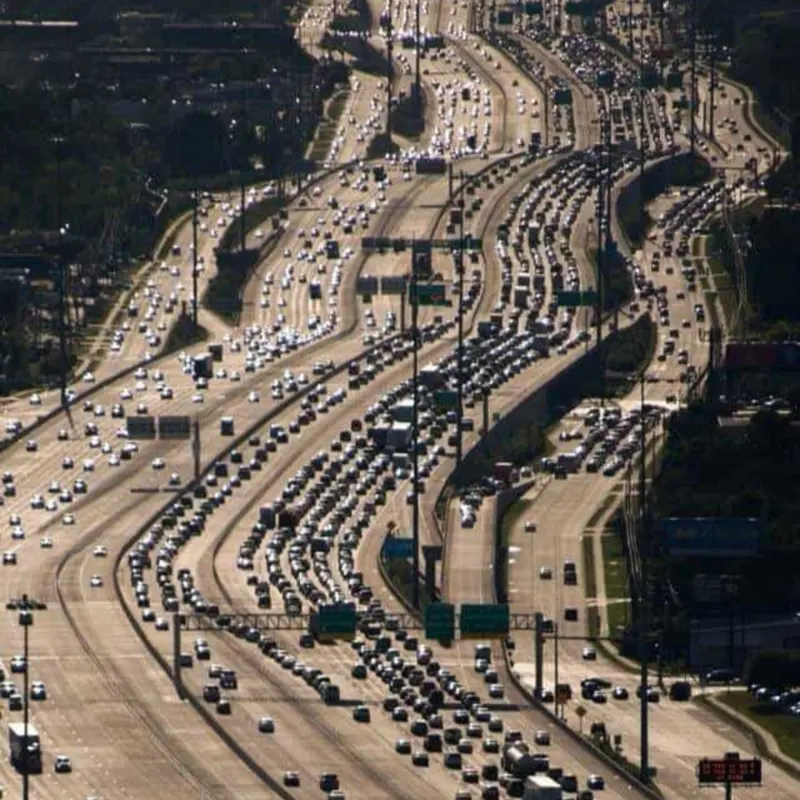
As far back as the Neolithic, the rhythms of life in city and country have led to vastly divergent attitudes, anxieties, and aspirations. But what happens when new technologies of communication and commerce begin applying these sets of characteristics not to entire communities, but to individual consumers? Jackson @Gracecthdrlprk returns to Gladio Free Europe to discuss a typology of American life, examining two new and rival tribes currently coming into form.
Shaped by recent capitalistic trends in education, land use, and advertising, these two sets of citizens are the urbane and self-critical “America A” and the exurban and self-satisfied “America B.” The hosts of Gladio Free Europe developed this concept across the last several years, and Jackson had just come out with a riveting essay on just what these categories are, and how their nuance can lead to more thoughtful analysis of the United States.
America A, derived from the logic of the city, is a mindset and values system that purports to celebrate openness to experience, purity of thought and deed, and education over ownership. These preoccupations can even be seen in many Americans who do not live in the city, but instead orient toward the anxieties of urban life. America B, the logic of the sprawling exurbs, emphasizes common sense, hard work, practicality, and material attainment over intellectual reward. Both of these categories include Americans of all classes, all colors, and all political persuasions. Both are fundamentally bourgeois, deriving from different relations to capitalistic production. And both are fundamentally American, the modern expressions of tendencies reaching far back into this country’s history.
While these categories do not describe all Americans, they offer new means of understanding social division within the United States, and might help explain otherwise puzzling cultural trends and political developments. And though both of these tribes can be petty and petulant, hideously self-absorbed in light of the oppression and exploitation required to maintained their ravenous consumption, they each offer a persuasive vision of what the good life ought to entail.
Transcript
Back with Grace Cathedral Park
Welcome back to Gladio Free Europe. I am Liam, joined here by the incredible Russian Sam.
Hello, hello.
As well as a very special, very frequent collaborator, our great friend, Grace Cathedral Park.
Hello.
We are taking a break from our exploration of the Bronze Age collapse and the fall of Troy to instead look at the impending destruction of another society, that being our own. Some of you may know that earlier this week, Grace Cathedral Park, or Jackson, came out with a really incredible article on his new substack, New Moral World, about a fascinating division in American society. The distinction between two new groups of affinity called America A and America B. The reason the three of us are really interested in this concept is because we created it. At some point in 2023, I began tweeting about America A versus America B, beginning as a joke derived from what little I knew of Polish history. But over time, in a large part due to the efforts of Jackson, we began formulating this concept into an actual theory about various distinctions that shape the landscape of the culture and politics of the United States.
Where America A and B came from
Specifically, the three of us and some of our close friends on Twitter were interested in figuring out why certain cultural changes and certain electoral results, mostly in the past 10 or 15 years, defied expectations. For instance, in the 2020 election, various demographics voted in ways both contrary to the polls as well as contrary to expectations about what they happen to believe. Many news outlets since 2020 observed that education and urbanism have increasing salience in determining political partisanship at the expense of other kinds of identities. We are going to argue that even more than politics are shaped by these two new, increasingly divergent categories. There is a division that we have identified that has not previously been described. Within the lifetimes of our three hosts, since the 1990s, really, two new and opposing clusters of values, habits, and attitudes have emerged. We call these two affiliations America A and America B.
Defining the two Americas
To anybody who is unfamiliar, America A, in our usage, entails the personalities and preoccupations of the urban middle class, people who cherish education and aspiration, who are highly concerned with correct thought and correct behavior, and who are mostly, but not always, politically progressive. By contrast, America B entails the personalities and preoccupations of the ex-urban middle class, people who value property ownership over education, who respect common sense and practicality, and who are mostly but not always politically more conservative. America A is demographically smaller than America B. These people are mostly concentrated in cities and inner-ring suburbs. However, America A is dominant in the sense that people of this affiliation overwhelmingly influence our cultural production and drive so much of our political discourse to a significantly greater extent than the people we describe as America B. And this is not only true for leftists and liberals who have the personality traits we're about to describe.
It also applies to conservatives. The terms of right-wing political debate are largely set by college-educated advocates who have the same kinds of habits and preoccupations as their liberal neighbors. Not only does America A produce much of our culture, but they are also the primary audience for so many books, films, and TV series, particularly those books, films, and TV series which generate the most critical discussion, all of the so-called prestige series. America B, concentrated again more in the outer suburbs or the exurbs, is demographically larger, but doesn't have the same influence over cultural production. A lot of American media might be made for America B, obvious examples being network television, country music, and certain Paramount Plus original series. However, again, they do not have the same influence over national or international American media and culture. Part of why we came to be interested in these categories is that we noticed in certain ways the habits and aesthetics we attribute to America B have become more popular, more geographically prominent, including in more urbanized and more politically progressive areas.
Additionally, lots and lots of people on Twitter have begun using the terms America A and America B lately. Because these terms came from my tweets a few years ago, this is a little bit surreal to me. It's flattering to see lots of people take this concept and run with it, but also a little bit troubling. What happens if my own creation falls into the wrong hands, you know? So, to solve this problem, our great friend Jackson debuted an article in his new substack based on this concept that three of us have formulated, again, with input from a lot of our friends on Twitter over the past several years. We're going to argue that this America A and America B divide is a genuinely useful and novel way of understanding American society. It may very well be more useful than pre-existing social categories in understanding what exactly is happening to the United States and where this country might be going.
How Jackson got here
Jackson, if you don't mind, could you describe how you came to be interested in this whole America A, America B idea and why you decided that now was the time to actually write the article?
Yeah, so obviously we kind of came up with this together. So that was kind of part of what drew me to it. But I also think that kind of the reason why I took it and ran with it a little bit was that like, basically, politics as long as I've been like a voting age have been like kind of out of whack a little bit. Like every election, it seems like something happens that nobody was predicting. Or like something, some sort of big trend happens. And everybody has to be like, wow, this completely upends our previous like political heuristics. And you would not expect this, but even as political polling gets more and more refined, political upsets in this country seem to be more common than ever. And this happens both for unexpected victories for Republicans and for progressives.
Yeah, no, just this week, Francesca Hong, after being projected to win by 20 points, just lost by under 4,000 votes. So it's still very, very up in the air.
Yeah, and you couple that with like a pop culture that is objectively becoming less hegemonic, right? Like I even can remember like television that everybody had watched, right? Or like a series that everybody knew about. Everybody from like the most sort of, you know, lived out urban dweller to like just people who live in the suburbs in like Florida or whatever. Everybody watched the same thing. And that has gone away a lot. Like there are things that come across your feed or that like come across your attention that you're like, I've literally never heard of this person before. Like I have not encountered a single person who has ever told me about this. Like the archetypal one is Jelly Roll, right? Like this just came out of nowhere. I had never heard of this guy and I don't know anybody who listens to him at all. And yet seemingly he is the most famous person in the country now.
So it just you see this, you see this culture that is sort of becoming less homogenous at the same time as like politics are making less sense. And I think that like trying to get at the heart of that in a way that is not like not as reductive, because like obviously this is still reductive, but I think that trying to get at it in a sense that was less reductive was like something that would help me and us like understand everything.
Right. And I do think we have identified here two groups that are coherent and significant. And even though they do not operate on the basis of acknowledged identity, most young people in America, when they are informed of America A and America B, most of them will know which of these communities they feel kinship with. And this is interesting because these are not the same kinds of affinities you often see discussed in American politics. We are not describing a political ideology here. We are not describing categories of geography or class of ethnicity. Instead, we are talking about sets of values and sets of aesthetics and sets of personality traits that cluster together in two significant groups. I think that both of these groups are largely created by and defined by consumption and spending. And this is why they're both fundamentally middle-class phenomena. We are often describing different ways people spend their money and spend their time.
This will have political implications and can help explain political divisions in this country. But there are people of all political persuasions who comprise both America A and America B.
And I think you talk about it not being an ideology. And something I wanted to get across in the thing was that it's not an ideology in the political sense, right? Like it's not like Republican, Democrat, or even liberal communist or whatever. But it is an ideology in the small I sense, right? Like it is an ideology of how you view the world, right? It is, it's culture on the level of like, how do you feel about people that are late to something? Or like, how do you feel about giving gifts? Or like, how do you feel about consumption habits? Like, how do you feel about wealth display, right? Like, these are things that are very important in any culture, but they're something that are not like overtly political, right? Like, they're more the water that like a fish swims in rather than like the actual sort of differences between them.
That makes sense. Yeah. And yeah. And so we're going to get into both these categories right now. But just as a very, again, as a very quick summary of what each of these groups are, America A is how we define the habits and traits mostly associated with young people who live in cities. Many people who don't live in cities and who are not young still aspire to these same kinds of traits and values, sometimes without even realizing it. America B represents the aspirations and values of ex-urban homeowners. That being said, you don't need to live in a McMansion suburb to be America B. There are people who live in New York City who aspire to these same kinds of values that we're about to do.
Oh, yes.
Sam's New York and the suburbs
Yeah, well, no, no, so Sam, you know, you have lived in New York City your whole life. You've met a lot of people who also have lived in New York their whole lives, who nonetheless can be described very much so as America B.
Yeah, so I mean, it's not a secret to you guys that I'm of Soviet descent. I very much grew up entangled in that community, within that community. And let me just say, we are, as a group, extremely America B. Like, just for whatever reason, we assimilated into sort of like the Italian-American affiliation. Well, sort of this Italian American that white ethnics in the city are want to do. So now a lot of the people I went to, like middle and high school with, they're like, you know, the gelled up hair and big gold chain types of dudes, even though, like, you know, by like, for all intents and purposes, you would expect them to not be that kind. They, even though they very much grew up in the city and they grew up in families that are very much urban, even from the old country, their biggest aspiration is to move out to New Jersey and get out of New York City, which is a hellhole that's crime-infested, apparently.
And then, you know, I spent most of my life in the suburbs. I grew up, I guess I could say I come from a borderland zone. I spent most of my life in suburbs of Kansas City and Miami. I knew a lot of people who had also lived their entire lives in the suburbs. Their greatest aspiration was to get their ass to the city. But the key thing is that being America A, it's not so much about living in the city or moving to the city. It's seeing the city and what it represents as something aspirational, or even just internalizing the kinds of values that prevail among urban young people due to media exposure and social media silos. The idea that modern media is fragmenting the once-dominant monoculture into various subgroups is nothing new. But I have not yet seen it argued that we're seeing the creation of these new and largely coherent categories of values and aesthetics, which we I think genuinely do see in America A and America B.
Who wants the city
Jackson, you very eloquently described these two categories in your article. I'd really recommend everybody listening here to check this out as soon as you're done. If you could, in brief, what is America A and what is America B to you?
Yeah, so I would just say that, like, America A is, like we said, the aesthetics and values and ideology of the city. It's always fraught to do this a little bit, but it is sort of associated with openness, urbanity, cosmopolitanism, neuroticism, like self-consciousness a lot of the time.
Yes.
It's basically that, right? It is the ideology of self-conscious, open, sort of city dwelling, right? So it doesn't necessarily.
And again, and this is not to say that city people are always open or even mostly, you know, necessarily more open than others, but it's that these are a set of values that we can identify that are associated with and identified with life in the city.
Yeah, you don't, like, not everybody who lives in New York City, for example, is that way.
But as Samsung is a person who's not a person, yes.
Yeah, exactly. But the people who are that way want to be in New York City, right? They want to be in like an environment of that description for like a number of, you know, economic and cultural reasons. The main argument really of the article is that it is an orientation towards the city, right? It is someone who believes that their destiny or like their orientation in life should be towards the city. So that doesn't always necessarily mean that you are like, you know, the most open and educated and like, you know, cosmopolitan person ever. Like, I'm not, I don't mean to say that they're like, you know, more, they're smarter or whatever, but it just means that you are sort of you face that way, right? You think of your life in relation to the city and its values, right? So for example, like if you live in a suburb of like a major city and you are someone who is America A, you are probably spending a lot of time in the actual city, like of your own volition, right?
Like you want to be in this sort of happening, sort of energetic, culturally significant area more than people who live in this literal same area who don't want to go to the city at all because they see it as, you know, too frank.
Yeah, no, and well, I guess, I don't know if we meant maybe this was in the article, but a lot of this can be defined as, like, how do you want to spend your weekend? Would you like to go to museums and bars and walk around neighborhoods? Or would you prefer to stay at home, enjoy the luxuries you've created within your castle, and you know, mow your own land?
And that's like the, to get into the corollary to America A, right? That America B, we kind of define as like the, Sam, great word, the Weltanschauung of the outer ring suburbs, like the ex-urban culture, right? And an interesting thing I kind of have thought about this group of people is that they are both simultaneously sort of, they desire the culture of the suburb itself, right? They don't just move out to the suburbs for the material prosperity that it can give them, although that is a huge part of it. But they value the culture that that material prosperity generates in and of itself, right? And this is kind of a departure from other waves of suburbanization in American society and American history. You don't necessarily move into the suburbs for any other reason or affinity other than that it gives you a higher standard of living.
America B kind of does. Like, they like the culture of the suburbs. They think of the suburbs as a place that is like an aspirational place, right? But at the same time, conversely, they don't see the suburbs as the suburbs, right? They see the suburbs as the country, right? They think of it as more sort of natural, sort of more wild, right? Sort of more private.
Yes. Well, many people have identified how conservatives will pretend to be rural when they are really suburban. And I think that this is less of an explicitly conservative trend as it is a trend of people who live in and greatly cherish the experience of outer suburbs and may not necessarily understand the difference between a wild space and a suburb adjacent to a forest.
Yes. And so the kind of corollary to that is that America B is typified by an ideology that is of that ex-urban suburban sort of rural, but not really living, right? So they tend to be more sort of less open to new experience, right? They like things to be the way that they expect them to be. They tend to be less self-conscious. They tend to think in, they tend to conceive of things in ways that are not as self-conscious. Even if they are sort of wild and out there, they're still conceiving of them as like sort of simple and non-examined. And I think that that is like the main if I could jump in here.
I think also is that a big emphasis in what we're describing as America B is constantly chasing comfort and satisfaction without necessarily much consideration for potential trade-offs there. Whereas America A, by contrast, which is highly neurotic and highly self-conscious, will agonize endlessly over whether or not some kind of added comfort could come at some invisible cost.
Exactly. And I think that, you know, the tone of the piece is like, it's pretty explicit that, like, that's not an attitude we really respect like too much. Like, that is not like, I don't think you should live your life that way, frankly.
But, yes, and so while all three of us orient more toward the traits we are describing as America A, we also wanted this piece really to be a pox on both the houses because so much of what is unpleasant about American society, especially among young people, especially as expressed on social media, is related to the various anxieties of America A.
Yes.
Moral perfectionism
There is this real obsession with moral and political perfection you see in America A that you don't necessarily see among people who are America B. This is usually coming from a very good place. This is usually from a place of empathy, not wanting to harm others, to be sensitive toward cultural difference and especially to past and existing wrongdoing. This is something that we all think is very good, but sometimes these attitudes can have unhelpful or even potentially harmful implications when people focus too much on perceived moral perfection without really considering the various implications there. And this is not only a matter of politics. So much recent social media discussion is this obsession with interpersonal discourse, with morality, with what you describe in the piece, Jackson, as manners. There's something that does feel very Victorian about a lot of the online social media discussion generated by young people, whether it's about the habits of bringing the right birthday gift to somebody, how many days you should wait before texting back someone that you've gone on a date with, these kinds of very tedious discussions about proper comportment that you really don't see to the same extent among the people we describe as America B.
You can also make a clumsy but not necessarily unhelpful comparison with America A and the ethos and behavior of the New England Puritans. This would be very irresponsible of us, but I think we could maybe draw a line in the values and preoccupations of contemporary young urban dwellers with the early settlers of colonial New England, who brought with them their infamously puritanical attitude, often a very punitive attitude toward those different from them, but also a strong emphasis on education and egalitarianism that I think we really do see in the people we describe as America A today. I think this could be a great place to introduce one of the biggest intellectual influences going into your piece, Jackson. That being David Hackett Fischer's 1980s monograph, Albion's Seed, one of our favorite books of American history that is genuinely useful at understanding not only the history of the United States, but various cultural divisions which still exist and maybe to an extent inform these personality and aesthetic categories we're describing here.
For those who are not aware, this article was written 89% by Jackson. And it's a very well-written article. It's really well thought out. You really should be proud of it. It's gotten some traction online because it's a great piece. But this is a concept that we developed together over the past few years. I borrowed the phrase America, I came up with the phrase America B because I was borrowing it from Polish politics. It was identified that there was a strong cultural distinction from West to East, where the West was traditionally more industrialized and urbanized, the East was traditionally more rural. The strange thing with the Polish case is that these distinctions survived changes in demographics and even changes in geography as the actual shape of the Polish nation was completely transformed from World War I to the end of World War II, but this east to west distinction still survives.
In the same way, the kind of distinction we're talking about here with America A and America B, I think is somewhat durable because it is not inherently tied to ethnicity or to class or to gender or even to geography. It is this kind of unmoored affiliation of personality that's a kind of typology that hasn't really been described before as far as we know. But bringing this back to Albion's Seed, other kinds of social typologies have been described at length in American history, and David Hackett Fischer's work was especially informative for us.
Albion's Seed and folkways
We've talked about this before, and anybody who's read the book knows this or knows anything about it, that like, like, Albion's Seed is not unimpeachable, right? There's a lot in it. There's a lot in it that is just like outright has been shown to not be completely correct, like in the subsequent forty years.
Yeah, I think his most flagrant error is that he describes the Cornish language as Gaelic at one point.
Yeah, I mean, he, like, come on, man. He, he, he, he also does a thing that you really shouldn't do where he, like, there's something that is disputed, and he will be like, this is why it happened, because it, like, kind of fits his argument. It's like, you really shouldn't do that. Like, famously, he gives like an etymology of Hoosier where it's like, it's a little more complicated than that, man. But, well, yeah.
Well, and also, if anyone's unfamiliar, Albion's Seed argues that existing trends in American culture and especially historical trends in American politics can be traced to pre-colonial cultural distinctions within Britain and to a much lesser extent, Northern Ireland. He argues that value systems prevailing in American history were often inherited from the various cultural groups that first settled those places in the colonial period. Over time, these groups and their descendants set the tone for both culture and politics in certain places, which would then inform later patterns of settlement. So, the habits of the Massachusetts Puritans would expand to all of what is now New England, and then beyond to other northern states, as attitudes from New England would then spread westward into places like the Great Lakes region, which then, by the time of the Civil War, was distinctly pro-Union and had nothing in common culturally or economically with the slave-powered South.
Again, there are a lot of big generalizations here in David Hackett Fischer's work. We try to avoid that by describing individuals rather than demographics here. Anybody can be America A or America B based on their aspirations and their habits and their aesthetic preferences and consumption choices.
Another thing, like we talked about how, like, the Puritans, a lot of their attitude kind of is reminiscent of America A, and I think that there is, you know, there's at least a family resemblance there, and probably a family lineage as well. But his description of the Virginians and especially the backcountry in the book, it did kind of inform our sort of conception of America B as well, given that I think that you get a lot of the notions of freedom or like notions of the good life get passed down from these groups, right? So like in Virginia, of course, owning property, in this case, like human property, is sort of seen as this like apotheosis of social status, right? It's the best thing you can do. It's the greatest thing that you could do. But also, like, they also, you see in America B like this sort of tendency towards wanting to live unencumbered of other people, right?
And occasionally that is maybe often a bad thing, but sometimes can be kind of noble and can be kind of something that is certainly a worthy aspiration to, you know, not have to rely on like charity or not have to rely on other people to live your life, right? There's something there. Independence is, I think, something is a noble aspiration. And that comes from, Fisher argues, I think convincingly, that the people of the back country, right, like Scots-Irish sort of people that had been, that came later than the rest of the immigrant groups, that that is an ideal that comes from them. I think that was kind of an important influence on our thinking.
Yeah, and I think that even if contemporary America B is largely not rural, these are people who, I think you say in the piece, they get their steaks from the grocery store. They do still have this emphasis on practicality and self-reliance that you don't necessarily see with America A. Sometimes this can be very beneficial. I think practical skills are obviously good to have. I think that the emphasis on comfort and satisfaction often can lead to more personal happiness than the America A obsession with personal perfection. However, the flip side here is that America B tends to put their own needs over others in ways that can often be exceedingly nasty, in ways that inform the general political conservatism of America B, and in ways that actually can meaningfully hurt others, especially those who are identified as being wholly outside the community. I think that America A is less hostile to people seen as complete outsiders, but often overemphasize distinctions in attitude or distinctions in belief in ways that can be somewhat nasty.
Consumption and status
Let's move on now away from values, even if that's the most interesting and possibly most important element here. And let's talk about aesthetics, because that is the most obvious difference between America A and America B. And this is probably most of the America A, America B discussion generated online. So, Sam, what would you characterize as America A aesthetics and America A intellectual preference, or let's say cultural preferences versus America B?
Yeah, well, I mean, I guess if you wanted to really give a TLDR version of it, America A aesthetics would be sort of a Williamsburg barbecue place where you pay $50 for like three pieces of meat and a biscuit, which is lit up with these really retro light bulbs. I forgot what they're called. And then America B would be just like very sterile, like hospital type lighting. And you're going to, I don't know, like the food court at Buc-ee's. Does Buc-ee's even have a food court? I don't know. I've never been to Buc-ee's.
Yeah, yeah. In the article, we contrasted a photo of a huge crowd of Texans lining up for, gathering for a Keith Urban concert at a Buc-ee's gas station, contrasted with hundreds upon hundreds of New Yorkers waiting for a perfectly normal scoop of ice cream at an ice cream shop they saw on TikTok.
Yeah. Yeah. And yeah, yeah. So, I mean, that really, like, drives the point home. That's what it's, that's what it boils down to. And I mean, again, I feel like a lot of people are really misreading this to think that, oh, America A, America B is just red state versus blue state when that is very clearly not what's going on.
And again, also, these are heavily defined by different forms of consumption. How do you spend your money? And this is why these are predominantly habits of the middle and upper middle classes. So one thing also I think is that as you described in the piece, Jackson, people who are America A are much more likely to want to spend their money based on perceived experiences, whether these are expensive international vacations or simply the experience of living in an economically and culturally significant city as opposed to a suburb. America B folks are much more likely to want to spend their money on buying a big-ass house, even if it's three hours away from everything, and buying big ass trucks that they might one day need to use the bed of, or just this strong emphasis on having lots of stuff because it makes your life more comfortable and, you know, hopefully more pleasant.
I think another sort of just addendum to what Sam was describing, right? America B, like America B aesthetic to me, like the apotheosis of it, is like SEC school rush, right? Like that is, that is the prototypical like America B aesthetic. So like everything you could see at like a frat or sorority house, like in a like the University of Alabama or whatever. Like that, yeah. It sits somewhere between like southern frats and like New Jersey suburban aesthetic choices. And those worlds are increasingly colliding like in real life as well. Like I think it was that the University of Alabama other than kids from Alabama, I believe, this might be wrong, but it's spiritually correct, even if it's not literally correct. But I believe the second most common state for Alabama students to come from other than Alabama is New Jersey, right? So like these are these are worlds that are aesthetically aligned, but they're also like increasingly just actually aligned.
Like they are sorting in a sort of they are sorting physically as well as sort of aesthetically.
Economics and sorting
And what I find very fascinating is that the economics of both America A and America B, these two economic markets are developing simultaneously and have been for maybe the past 20, 30 years. Something I find fascinating is how since the 1990s, there have been two extremely divergent trends in American real estate development. There has been urban revival as huge high-rises and luxury condominiums are built all across American urban centers, as formerly impoverished areas are somewhat controversially economically revitalized due to new, often college-educated, more affluent migrants moving in, you know, the odious gentrifiers. On the flip side of this, you also, for the past 30 years, have seen increasing economic sprawl. I think this really kind of came to an apex right before the 2008 financial crash, as all of these huge McMansions were built three hours away from Dallas or Las Vegas or Salt Lake. But these trends are continuing.
People continue to move to cities because that is what they aspire to, whereas other people continue to move to distant exurbs because that is the life they aspire to. Our main contention here is that these kinds of habits are correlated with aesthetic choices, with other consumption habits, with attitudes toward education and politics and one's place in society, and sometimes in values and interpersonal interactions. I think you say in the piece, Jackson, that the very fact that we are examining this, and the very fact that our audience is interested in this topic, in applying this kind of historical methodology to the modern United States, that is extremely America A. I would go so far as to say that having strong habits, especially dorkier, what you might call wordcel habits and hobbies, that is very America A. I think that one of the most significant elements of this divide is that America A tends to be more college educated or perhaps aspires to education in ways more than America B.
Jackson, what do you think are some of the social and cultural implications of this education gap here?
Education
A big one that kind of I talk about in the piece a little bit, but is probably could be foregrounded more, is that like this does tend to have like actually like diverging economic consequences as well, right? So I say in the piece a little bit that like America A, and this is not a hard and fast rule, but like America A tends to sort of what you would call like the it is it is an emulation of and sort of downstream from like the haute bourgeois sort of culture in America.
Yes.
So like either the management and handling of money or cultural production itself, the media.
Yes.
And this is mostly a result of education, right? Like these are these are jobs that require a fair amount of education. Maybe not like technically, but they do at least socially. And whereas to contrast that, America B sort of, they tend towards, again, not hard and fast, but it's there. They tend towards sort of selling of things, right? Not necessarily financial, but like just being a middleman, right? Like being someone who sells someone something is a very America B thing to go into.
And generally speaking, people who are America B are less likely to have compunctions about earning and spending money. They're less likely to have any moral considerations there. And this is not always true, but this tends to be the case. And I think also that even though America B folks tend to be politically conservative, they are in many ways not very small C conservative.
Yes.
And that they don't seem to be that interested in, first off, conserving history and tradition, really, in meaningful ways. And they also lack many values we traditionally associate with rural and or at least hinterland people in the United States, even if they see themselves as rural.
Or even conserving those values themselves. Like they often think about it.
Yeah, but they don't. And so, you know, and again, a lot of this goes back to attitudes about spending money. You described this in the piece, but there is a traditional egalitarian streak in American politics that doesn't really exist in America B when it comes to attitudes about spending money. Could you expand on that?
Yeah, so like I say this in the piece, and I think it's really interesting that American culture is very materialistic, and it is very, like, it is very prosperous, and has been basically since the inauguration of the United States. But we have this sort of aversion to overt displays of wealth, right? Very Protestant, very Puritan. You're allowed to have a lot of money. You should have a lot of money. In fact, you definitely should have a lot of money. a lot of money. But you really shouldn't display it too much, right? It's not a, it is a very, it's a very bourgeois attitude, right? It's not aristocratic. And that's held through 250 plus years of American history. However, it's kind of going away because America B, like we've talked about, there's sort of it is the culture of suburban consumerism. And that kind of culture eventually leads itself towards more overt, more materialistic displays of their wealth, right?
Displaying wealth
So in previous generations, if you would have displayed your wealth just in your home or you would have displayed your wealth by dressing well, but like not really ostentatiously, that has kind of declined, especially in America B, in favor of these really like new, very like culturally, honestly, very like culturally trendsetting, you might even say, like very forward looking views of it being okay to like do displays of wealth, right? Like you think of these.
And I think this is entirely downstream of the fact that America B people tend to be much less self-conscious in any regard than America A. America A people are still extremely classist, extremely snobbish, spend lots of money on lots of different expensive things, but do so in a way they consider more tasteful than America B. And I think that so much of this distinction here between these categories often does come down to taste. America A is highly preoccupied with proper cultural signaling, arguably signifying class in ways independent of spending money. Whereas America B, they have no shame about wanting to have lots of toys because it's fun to have lots of toys. I think one of the most obvious ways that taste is expressed differently in America A and America B is infamously in the names people give to their children. What are your thoughts on this, Jackson?
Yeah, we talk about this, and this is the most fun thing to do.
Yeah, it's the most fun. It's probably the most widely described divergence in America A, America B.
100%. Like, it is probably the one that most people like, it's the most evocative to people because it is so obvious that America A names sort of tend towards conservatism with a small C, right? So you have names like names, like flower names for girls or like sort of names that are not necessarily like antiquated, but are they are a little older, like Theodore is a great like America A like boy name. And it's because the attitude towards naming in America A is so self-conscious and it is so aesthetic, but it's aesthetic in a like sort of in the sense that like a novel is like an aesthetic experience. Like it communicates some meaning, right? And so they want their names to be.
This is gonna sound snobbish here, but I do think a lot of this is downstream from the fact that America A is fundamentally more educated, more literate, and more interested in basically heritage and tradition. Both of those concepts are very right-wing coded to use those words. I think in practice, people who are America A, even though they tend to be more politically progressive, are significantly more likely to be interested in maintaining cultural continuity with the past and especially in preserving traditional crafts and activities. The one example that we've both described at length is how American folk music, something that just putting my cards on the table here, my family is very heavily invested in, is something that is largely conserved by old hippies and their millennial and Gen Z children and grandchildren, who often are extremely politically progressive, often radically so, but they are the ones learning hillbilly folk music, playing the banjos.
Yeah, well, my favorite example of this that you're constantly harping on is that to the extent that like trad wife aesthetics actually exist in the real world, the women who dress like that tend to be like very politically liberal.
So a lot of the most disgusting guys on the internet talk about how they really want a trad wife who wears traditional dresses. In reality, not to stereotype too much, young women who are very interested in historical aesthetics, who read lots of Jane Austen novels, who enjoy the Netflix series Bridgerton, are generally speaking more likely to be what we would call America A and are more likely to be politically progressive.
Yes.
And this is true for so many other kinds of habits that one might consider more traditional. And without patting ourselves on the back too much, I think that the community of people who actually engage with historical literature, academic literature, with archaeology, who have a genuine interest in the past, not simply because they want to use the past to litigate contemporary politics, are also way more likely to be politically progressive.
History and names
I said this in the piece that like both sides think that history is for the living, and they're right too, because it is. But like America A history for the living is that like, okay, we have like a duty to the past, right? Like we have to like, there are certain things that impart meaning unto the world that are from the past that deserve to be conserved for whatever reason. But then like the America B sort of instantiation of this is that it's instrumental, right? Like the past is instrumental. It's essentially just another good that is part of the sort of suburban lifestyle.
Yeah. Also, you know, we've been putting this off. Jackson, you have to explain to the audience what are America B names, or perhaps why are America B names?
Yes. So the contrast to your sort of staid, old, kind of earthy America A names are America B naming customs, which tend to be almost wholly they're aesthetic, but in the sense that they are like they're pure representation, right? There's no, there's not really much meaning behind an America B name, right? They tend to be neologisms for the most part. They tend to be newer names. They tend to be names like Braelynn is a great America B name.
Yeah.
Any sort of Lynn, especially if you spell it weird, is a very America B name. Lee is a very sort of America B partner.
Well, especially L E I G H or any kind of EIGH.
Yes.
Especially in a woman's name.
Yes. And so these, and also like occupational surnames like Hunter or Carter, those tend to be America B names as well, right? So it's the lovely.
The single best line in the piece is when you say, you know, just give us a Pardoner and then they're on their way to Canterbury.
Yes, yes, right? It's all very, it is all very Chaucerian in a way. And I think it's that there's this prevailing belief among there's this prevailing belief in the America B milieu that a name has one function and that's to sound cool. And there isn't this understanding, or I shouldn't say understanding, there isn't the expectation that a name should communicate any kind of heritage or value or meaning beyond what it sounds like.
And I think the names thing, this also leads some people to misunderstand the class character of America A and America B. And they make the huge graven error of thinking that America A is rich and America B is poor. Because sometimes the names and aesthetics associated with America, the America B milieu, are described as classless or trashy. That value judgment has no bearing on the actual class character of these two milieus. I think, even speaking in pure stereotypes, here, the most stereotypical America A person one can imagine is a penniless urban barista with stick-and-poke tattoos, whereas the most stereotypical America B person is a boomer boater who loves going out on the lake. Both of these groups, however, are largely defined by middle-class consumption, driven by those within these milieus who have the money to spend and thus have the money to shape these kinds of habits.
Yeah, I think on this point, like a lot of a lot of the time people think that, like, oh, America B just means, you know, like Hicks or whatever. And it's like, well, no. Like the reason that so, that a vast like swath territorially of the country resemble America B is because they are closer to these people both culturally and just literally physically than America A is, right? Like there are just, because of these settlement patterns, because of these sort of wealth ways, they just are culturally much closer to like a lot of the country, right? So if someone is like not actually middle class, like they're actually just like a like dubiously secure working class person in most of America, right? They're going to run into America B people more often just by virtue of those people living near the places that they live, right?
Those people sort of speaking in a similar idiom to them. But it doesn't really necessarily mean that like they are perfectly identified with this sort of archetypal America B subject that we've described, right? It is ultimately a, they're both ultimately upper middle class phenomena that trickle down to certain types of people. And so I think, I think some people think that like America B is just sort of beating up on the classless rubes. And like, there's some of that, but like, not really. Like, a lot of it is just that this is a upper middle class phenomenon that has trickled down to certain types of people. And it has trickled down in like an uneven fashion. And the extent to which more of the country resembles this sort of typology is the extent to which this group of people is expanding both at the top and at the bottom.
The good and bad of each
All right, so we are going to finish this piece with a fun little game Sam has prepared for us. But before we get there, Jackson, you know, by now I think you've done a great job introducing what America A and America B are. And Sam's game for us is about to put that theory to the test. But before we get to that part, I was wondering if you might be able to describe, in brief, what do you find commendable and regrettable about both America A and America B?
Yeah, right. So like, I think we've been pretty open that like a lot of them, we kind of align with America A traits personally. Like we think it is good to be open. We think it is good to be cosmopolitan.
Right.
We think we the three of us here we emphasize education over ownership and earning. We think that is more important in living a fulfilling life. And so like some people sometimes think that that is like that we think that they're good and the other people are bad, but like that's not really true, right? There are a ton of America A traits that are really bad, right? Like we talked about the manneredness of society, right? Like not even just manners in like a classical sense, but like we were talking about earlier, like this propensity to police like minor aspects of social interaction is incredibly America A, and it is like one of the worst parts of being alive in 2026. Like it is so annoying. And it can be like genuinely harmful and like hurtful, and I think makes it has led to some very bad like political outcomes as well.
But like also, I think that like obviously we talked about neuroticism like being an aspect of it, but like they can be genuinely neurotic in a way that is not helpful and is like kind of harmful to themselves. Like it is, it is bad to think about yourself too much. Like it just, it very much is. And that definitely is seen kind of in spades in America A. But on the flip side of that, I think that while we're often accused of saying that like America B is sort of irredeemable and bad, and there are a lot of things that are really bad.
At the very least, essentially just, yes.
It is the culture of American Sunbelt consumer suburbanism. And I think that all three of us are pretty open that we dislike that mode of being. We think it is bad. We think it is probably going to lead us in a bad direction.
No, but I will say, in a very real sense, I think that the America B trend of focusing on one's own needs or even just one's own petty preferences of comfort above all else is can be dangerous and honestly monstrous in the face of horrific and widening social inequalities in the first world's continuing exploitation of the third, and in light of climate change, people who desire to consume more and more and more, just as we can sustain less and less. Like, it is increasingly galling to have America B taste in the face of what is obviously coming down the pike.
But saying that, like, that's it's not all bad, right? We've talked about like how we sort of admire some of their sort of preferences towards independence, right? This preferences towards self-reliance. That is a that is a deep, it's deeply American cultural value, and it's one that I don't think is necessarily bad, although it has some bad, has some bad instantiations. But I would also put that, like, there is, and I talk about this in the piece, like, there is a deep sense of in American history, and I think just in the history of politics that we all ascribe to, a deep history of like populist sort of appeals to the broad mass of people as you know, good-hearted, that what they're doing is good, and they shouldn't have to live under like exploitation of people who are just sort of idlers and don't really work with their hands or they don't work at all, right?
Like this sort of, this sort of William Jennings Bryan, 19th century populist sort of politics.
And I think also, you know, Jackson, I actually had a bet running on how long it would take you to mention William Jennings Bryan, and it just paid off. So thank you.
Yes. Yes. So, of course, no problem. But, like, that is, I think, a very America B ideal, right? This ideal that the people are good. What the people are doing is sort of maybe it's not always 100% good, but like, as a whole, the people are good, and you can trust them to have, you know, the best interests of, you know, whether it be the country or just society in general. You can trust them to have their best interests at heart, basically. I think that that is an ideal that is seen a lot in America B. And I think that maybe we don't always agree with that. Like, maybe there are complicating aspects to that. Like, it is a good ideal to shoot for, right? Like, this idea that you can trust like, you know, the common man or whatever. Like, I think that that is an ideal that is, you know, it is something that is certainly an aspiration that I find to be kind of inspiring and noble.
And I think that it is one that you find in America B. And I think it's not all that.
In many ways, America B tends to be more anti-egalitarian because there's more of an emphasis on earning and spending money. But at the same time, it's also very anti-elitist. There is this belief that while, you know, if you have money, you ought to spend it and show off your money. Traits such as expertise or education or tradition or even, you know, good birth don't really matter as much to America B. It's just all about what do you have and what do you do with it.
Yeah, we talked about this at some other point, but like a very America B attitude would be to like be personally bigoted about like an abstract group of people, but that if that if a member of that group lived in your suburb, they listened to Ella Langley, right? They had the big car, like a very America B attitude towards that person would to be, like, essentially be like, oh, okay, cool, like another person like me. Like, that is a, that is a, that is a fellow member of my sort of milieu. And I think that that is, like, you know, that's obviously incredibly problematic, and we should probably try and not have our lives live that way. But it's at least better than the alternative, and it certainly is a sort of new attitude in American society that I think is better than ones that have come before it.
No, and then on the flip side here, I think that the most awful, the most hideous racists on the internet tend to be these very dorky, very America A people who have this twisted, misaimed interest in stuff like archaeogenetics and Germanic paganism in support of a very nerdy kind of racism that would be basically incomprehensible to the average America B folks. You know, and then another example you give in the piece is how anybody who converts to Eastern Orthodox Christianity because it's more based is fundamentally America A. Or just like any sort of like any sort of like right-wing ideology where like you're expected to read something about it, like that's an America A like activity. And that's why, you know, it's that we mentioned how like the word trad is strongly associated with conservatives, especially, you know, extreme reactionaries. In practice, the only people conserving traditions and conserving ideological tendencies are these bookish, urbane America A people who are in fact overwhelmingly progressive.
America A conservatives
However, because America A are the ones who read books, America A conservatives have significant and disproportionate influence over right-wing politics.
On the topic of like things about America A that are like not very good or like not worthwhile, it's a culture of self-consciousness and like it's a culture of occasionally neuroticism and it's a culture of thinking about yourself in relation to everyone else. Like the typical America A political fixation is how do my politics come off to every man voter? Like how do I appear to normal people basically? Like actually that might be like the best way to sum up their sort of mentality is like how do I appear to normal people? Because it sort of takes for granted that you're not normal to say that. But despite that, there is like this weird sort of over-engineered tone deafness that you can get sometimes in people that are like that have this sort of mentality, right? Like a sort of like I have thought so deeply that my thinking has led me astray in a lot of ways.
Like, I actually have missed a lot of what I should be thinking here, right? Like, this does kind of dovetail with, like, you know, kind of really like low IQ sort of takes about, like, oh, like, liberals are in a bubble. Like, that's, like, not exactly what we're saying here, but, like, there's some truth to that, right? Like, there is, like, the, like, the city as like a place is sort of, it, it is sort of defined by not being everything else. So, like, you, you are kind of in this milieu that doesn't really get out much. And I think that, I think that America A at its worst is, like, sort of can think itself into a mode of being that is really weird. And it is, like, yeah, like, you do actually come off as very weird to most people. Like, this is a strange thing, and I don't really know why you're doing it.
And I think this is true for many conservatives. The Republican Party is, for the most part, led in its elected officials, and especially in its supposed thought leaders, by these urban reactionaries whose attitudes about interacting with others are more similar to other urban people than to ex-urban conservatives in many ways. These are the reactionaries who eat Korean food.
Yeah, and I think if the timing of the piece is appropriate at all, it's because the Republican Party has kind of lost some of its A-ness lately, but it's still there. It's very much still there. Like, the people who are in charge are still very much of this mold. Although they are kind of declining as sort of the lunatics run the asylum.
And because this is an audio-only platform, we have to say that when you're saying anus, that is A-N-E-S-S.
A-N-E-S-S, yes.
Game: America A or America B?
Okay, we've, I think, defined these categories pretty well now. Sam, now it is time for your America A, America B game for Jackson.
Yeah, yeah, so I mean, we spent this episode establishing the typology of what constitutes America A and America B, but in the real world, you know, these categories can be quite fluid. No one is really like an ideal representative of any given demographic. You know, people are messy. We all contain multitudes. So to that end, I decided to formulate a bunch of scenarios that my co-hosts are going to debate and determine.
Yeah, no, and Sam made a whole great list of them. We might have to post some of the rest of these online. Let's do five of these and then we might share some others on after.
Let's go. First one: A guy becomes an artisanal sourdough bread baker of local renown after deeply researching sourdough preparation techniques. He began his journey because, quote, store-bought bread makes you gay.
Okay, I think this guy's America A. Even though he's homophobic here, I think that number one, getting into this sourdough hobbyism, especially given the historical traditions involved in sourdough, that's very America A to me. There's another thing here, though. I think that the specific anxiety that store-bought bread makes you gay, even though that's very conservative, that seems to be kind of an America A concern. It's a very like, you know, the kind, it's like a very crunchy kind of attitude. It involves a lot of anxiety and self-searching. I think a true America B person who is extremely homophobic and hears that store-bought bread makes you gay, it's still going to eat store-bought bread because it's easier and it's convenient.
Yeah, I would definitely also go with America A here. I would also point out that I think that obviously sourdough codes very sort of a I would say too that like getting really deep into researching it, because you can just be a sourdough guy but not really do much about it. Like, it's not that hard. But like if you get really into researching it, like you know all of like the scientific stuff about it, that is a deeply America A thing, right? Because they want to know everything about what they're into. Whereas like America B is kind of they're more willing to just like kind of they do have hobbies occasionally, but like a lot of it it is sort of they're they're based around consumption. They're not really based around sort of mastering something. And I think finding community, especially on the internet, because of a hobby or an interest, that is a very, very America A experience.
Yeah, I actually disagree with you guys. I think this guy is America B just because this kind of homophobia is too parochial for an America A type. I don't know.
I think that it depends on, like you said, if it is a super parochial homophobia, like where it is sort of like pure lizard brain, then I think you might have more of a point there for sure.
All right. A mom's book club has met bi-weekly for seven years. They now exclusively read AI-generated monster romance novels.
I think that this one is America B, right? Because I think that while the book club is sort of, it's centered around, it is a hobby that is centered around like literacy, right? It is centered around reading books. Not really caring about the provenance of the books.
Yes.
Or even like the quality, really, is a very like America B concept.
Yes, it's functionalist perspective.
Yeah.
And I think that having more, any kind of moral anxiety over AI usage, super A.
Yes.
So therefore, anyone who enthusiastically enjoys AI-generated monster romance novels, even if they're reading books, which seems kind of A, they are fundamentally B.
I would also put that, like, the book club feels very A, but it is ultimately a consumption hobby. Like, it is a, like, kind of thing where you are just like, there is a new book that you have to read. You go out and you buy the book, you read the book, you talk about it, and then you move on to the next one. That feels kind of B a little bit to me.
All right. Moving on to the next one. You name your daughter Scout because To Kill a Mockingbird is your favorite novel.
Okay, and this is a tricky one because, you know, Scout, it's an occupational name. It's like Carter. It's like Hunter. So that seems kind of America B, but I think that naming your child after a fictional character that is not a character that exists as a Funko Pop, that's America A.
Yes, I would agree wholeheartedly. I think that especially if you, if not just because To Kill a Mockingbird is your favorite novel, but because specifically Scout in the book is someone that you want your daughter to emulate, like you think that that is a name that imparts meaning to your child. I think that is deeply America A.
Also, I did that almost definitionally. I just checked on the Funko Pop website and I can confirm there is no Scout Finch Funko Pop.
Exactly.
Definitely America A then.
Okay, all right. All right. Yeah. A woman starts a neighborhood group chat so people can coordinate picnics, childcare, and other pro-social neighborhood concerns. Three months later, most messages are locals trying to ID unfamiliar cars.
Yeah. I would go. What do you think, Jackson?
I would go America B here, right? I think that the initial fake out of like, you know, oh, like this woman wants to start like a community like in her neighborhood, that that kind of is America A, although there are America B, like, they don't hate community, right? In fact, they kind of fetishize it a little bit. But the fact that it has so quickly sort of devolved into, you know, sort of xenophobia of the most based sort, right? Like, especially conspiratorial xenophobia, like, oh, like, there is some sort of pattern here, like, in the cars that we need to, like, suss out. That's, that seems very B to me.
Yeah, you know, and just this whole concern over, you know, outsiders of the community drawing this hard line between one yard and the other, that unfortunately is America B at its nastiest. And I think also there are often very strange and unexpected, you know, class and race implications of strangers coming into our area. So this has got to be B to me.
Yeah, yeah. Like, I think the initial woman was probably A, if, like, that was her intention, but then suddenly she lives in a very B area, as it turns out, and the concerns of the people around her don't match up with her own, which is a very tragic sort of story.
Yes, yes.
All right, let's do a couple more of these. These are fun. A couple moves to rural Vermont, because crime is out of control in New York City, and they're worried that for the safety of their children, they enrolled their kids in a Montessori school with a 90-minute one-way drive.
This one is probably the toughest.
Yeah, this one's tough. This is a hard one. I think ultimately, this is slightly more A than B, even though they are leaving the city for a distant exurb, and it's going to involve heavy driving. That seems very B, but I think being this invested in children's education, especially in a Montessori school, that seems very, very A-coded to me. So, I think that the fact that it's a Montessori school, not a church school, not homeschooling, I think that tips the balance to like 55% A.
Yeah, I would also say that this is like, this kind of proves that like people contain multitudes, and like just to hard categorize anyone as one or the other is not really like very proper. But I would say that it probably skews a little more towards A as well, just because I think that, like you said, an obsession with your child's education is honestly probably kind of a B concern at this point, just because of the sort of backlash to like public schools being very B coded. But to be so concerned with your child's education that you don't think that you can do it yourself, you still think that a specialist needs to handle it, but it needs to be a specialist that you have researched and whose method you find to be more compelling than public school. That is a very America A method of thinking.
And you know what? I think they also might gain a couple more percentage points in A because they did indeed choose to move to Vermont.
Yes.
Another state. America A, neurotic conservative, many such cases.
Moving on. A white man learns from his 23andMe results that he is 6.25% Yoruba. He begins to identify as Yoruba and becomes fluent in the language, his journey culminating in a trip to the motherland.
This one throws me for a loop. Yeah, so this is a white guy who has distant Yoruba West African ancestry and gets really into it. This is a tricky one. I think that because he enthusiastically identifies as Yoruba and then becomes fluent in the language, like if he studies this, if he learns to speak Yoruba, learns the tones, learns the grammar, I think that's gotta be America A. I think that this kind of engagement with heritage in a very personal genealogical way is more universal. Like you see people who are America A and America B do this, but the effort involved seems very America A to me. I'm also curious how exactly he identifies himself and, you know, how he approaches his African heritage, I think also is going to help us understand if this guy's A or B. But it seems just if you learn the language, it seems more A to me.
Yeah, I would agree. I think the idea of doing genealogy as like a thing that will tell you about yourself is, like you said, it's done by people of both persuasions, but that almost feels kind of B to me, because it sort of feels like it feels like someone who thinks of themselves as not being self-created, right? They just, they are created by, they're created, they just are, and they, they, they, they, they, they may learn things about themselves that they didn't know, and that that will sort of affect them. That, that feels kind of B to me a little bit. But I think that, like you said, going through the trouble of like learning what like Yoruba means is I think you've already hit like an A threshold a little bit there because I think that I think that an America B person would take this to mean that they were black, and as a result, that that gives them sort of they cannot be racist anymore, they can get away with any act of racism, yeah, yes, whereas whereas being like, okay, let me actually try and understand like what that means, let me like connect with that heritage, that is like again, this is where it's not really a value judgment.
That is still kind of like strange and kind of, I guess you would say cringe, maybe, but it's also like it is something that it involves a sort of it involves a an understanding that your identity is something that you have to discover and that you have to sort of like do research into to discover. Whereas I feel like an America B person would just be like, oh, okay, this is my identity. It just is.
Yeah, even though I wrote this scenario, I couldn't make a decision for myself. So I'm just going to give you guys a cop-out answer and say that this guy is Nigeria X.
Final thoughts
All right. Well, thank you, Sam, for putting this together. And I got to say thank you, Jackson, for coming on. This is a really fun piece, and I really enjoyed having a role in its creation and helping you brainstorm this article. It's got a very well-theorized argument, and I do think that there is genuine utility here in these categories that we've come up with in understanding contemporary American society and the various directions in which it is moving. Just to end this, Jackson, if there's one great takeaway you want your readers to have from the article, which hopefully all of our listeners will now read, what would that be?
Yeah, I guess if I wanted to put it like simply, like just one main takeaway, is that I don't think that America A, America B stuff is like the end-all, be-all, right? There's obviously other things that are more important.
Oh, and we haven't even said, we never want to imply that all Americans are sorted into either of these two categories.
No, not at all.
We are simply describing two oppositional categories which each describe some Americans.
Yes. And maybe we would say that like more and more are becoming this way, but we wouldn't say that everyone is. So I would say that like, I don't want people to think of this as like Harry Potter sorting, right? I don't think that you don't think this explains everything. I don't think that this is like, oh, I'm so America B or like that's not really what I wanted from this, right? I thought we both kind of conceived of this as sort of, to use like a very America A term, as like a superstructural thing on top of like, you know, deeper currents in American society, right? It's ultimately downstream of the economy, it's downstream of class, it's downstream of social constructions of all various sorts, right? What I wanted it to be. These are two superstructural categories ultimately and fundamentally shaped by material production. But if I wanted, then, if I wanted it to be anything, I wanted it to just sort of attempt to demystify something that has sort of not been named, but it has been pointed out before, right?
Like it has people have been noticing that these trends have been happening. I see them talk about all the time.
Yeah, so again, this is a typology for categories that already, and I'm going to argue, kind of objectively empirically.
And I just.
They have just not been described yet.
I wanted to just kind of describe these phenomena in a way that gave them a name so that people would be able to use that to maybe more precisely talk about it, right? So I think if the piece had any sort of impetus, it was to try and make things maybe a little more precise. Because people had been using the terms, but they were sort of using them in a way that was kind of illegible to me. And I think that I kind of hope that this would maybe bring some legibility back to the discussion. Because it certainly, I would go so far as to say, like, it definitely points to something real. And I think if it points to something real, we should probably name it correctly.
Yes, very well said. All right. Well, thank you, Jackson. Always a pleasure to have you on. This is a fun discussion, and I hope our audience enjoys. We will be back very soon returning to the lofty walls of Troy. But I think this is a very fun little quick side episode. I do think that these distinctions we're talking about are not only socially meaningful, but do contribute to genuinely troubling divisions in our society. I think a lot of the characteristics in both of these personality types are pretty unfortunate and can lead this country into different and regrettable directions. However, as true America A denizens, we really do think that proper belief, proper practice, and reading the right books can maybe just a little bit help us heal this divide and bring something resembling a society back to this American continent. All right. Any closing thoughts, Jackson, before we go?
I think they've all been mostly said. I would just say to check out New Moral World. We should have some more stuff coming out there soon. So there's always room for hope, as I would just leave us with.
That's a beautiful sentiment. Thank you, Jackson.
The show is also on Apple Podcasts, Overcast, Pocket Casts, Podcast Addict, YouTube, RSS and Patreon.