Every aspect of our modern lives is commodified and decimalized, from the minutes of our labor to the food upon our table. All goods and services we consume are produced and handled by professionals, who spend their lives developing their mobile arsenal of mental and tactile skills because they can outsource the production of food and shelter to other workers. Yet until 300 years ago, this way of life was completely alien to everyone outside a small population of urban merchants and artisans.
Liam and Russian Sam are joined once again by Jackson @gracecthdralprk to explore the city before capitalism, when urban people were small, ambitious, and literate minority distinct from the peasants and princes who lived outside the city walls. This episode of Gladio Free Europe dives into early modern city life, and particularly the artisan system that was the engine of pre-capitalistic production. Drawing on the works of Yuri Slezkine, Sean Wilentz, and E.P. Thompson, this discussion looks at the early relationship between city and country, and the development of an artisan political consciousness, especially in the early United States.
As the 19th century progressed and wage labor began to take hold across industrializing economies, the artisans recognized that their way of life was collapsing and refused to go without a fight. Artisan radicalism would fail, their early 19th century militancy laid the foundation for later working class agitation. The values and aspirations of these ambitious craftsmen would come to define the logic of the entire world.
Transcript
Jackson returns
Hello and welcome to Gladio Free Europe. I am Liam, joined as always by the impeccable Russian Sam.
Hello.
And our good friend returning to the podcast, Jackson. How are you doing?
Hello. How's everyone doing?
This is going to be such a good episode. We've been working on this one for months. This was 80% your idea too. It's such a cool topic, something that we've alluded to really throughout the entire three-year span of this podcast, but something we've never really dealt with in full before. That being the birth of capitalism at the start of the 19th century and the end of the older artisanal systems that came before it. You brought this idea to us. You brought us this whole reading list that was so fun to go through. And I'm just really excited to dive in. Before we get started, Jackson, how are you doing? And what first brought you to this topic?
How Jackson came to this topic
The beginnings of wage labor and the end of the basically medieval craft system.
Yeah, so obviously doing okay. Things are going good here. A rare and blistering sun is shining down on Grace Cathedral Park, as always. But yeah, the, all right, I have to confess that the impetus for this was being told to read a book that we will get into for a graduate level seminar. But I will say that it's sort of a question that I think is really fundamental to anybody that is interested in both history and then also interested in Marx or Marx adjacent politics or sort of theory.
Yeah, really, yeah, just the development of the modern world. You don't have to have any interest in Marxist doctrine to find this kind of analysis really educational.
Yeah, like it's sort of a if you're someone who is thinking about modernism or you're thinking about the modern world and you have a historical sort of lens or you're thinking historically, I think it's a really easy thing to think or like a really natural thing to think to be like, okay, well, how did that actually start?
Yeah.
And I think that this, what we'll talk about today, is a really good look into maybe not the whole of that, but at least one part of that story.
What this episode covers
Right, yeah. And I guess we should say off the bat, we're going to take some big swings here. We're going to make some bold claims that many historians support. Some historians do not. This topic, the development of capitalism, is very much a historical battlefield, and there are a lot of differing perspectives here. We are sharing some of the perspectives we find most persuasive and most interesting, but these aren't, of course, the only perspectives here. Same goes, we discussed Pirenne earlier this year. We're bringing him up again. A lot of times historians make these really strong arguments where they're maybe 95% correct. And I think that these are the kinds of arguments we're going to be looking at today.
Yeah, I think it's worth saying maybe at the outset that I would say that we're not really going to deal too heavily with the transition debate. That's not really what this episode is so much about as it is about, you know, this is a, let's just say this is a loaded term nowadays, but almost sort of like dealing with the lived experiences, if you will, of the people who are living in these times that are sort of transitory between capitalism and capitalism.
Yeah, we're going to be doing standpoint epistemology for the artisans.
Right, yes, exactly.
Yeah, no, this is, yeah, this is artisan politics here. And the reason why this episode I think is gonna be really fun, even if you have zero interest in economic history, is because we're not gonna be tossing a whole bunch of, you know, econometric data at you about converting, you know, sheets of wool into woolen coats. No, we're looking at the lives of people in early capitalist environments, particularly in early modern Europe and most especially early America, New York City in particular, and what these transitions meant to them. And, you know, the transition to capitalism happened in many different ways and in many different places. We're just going to look at how certain people responded to this. This being the development of wage labor and the creation of the modern world.
A world that runs on the city
Because just to really say off the outset, the modern world from a really trans-historical perspective is quite weird because today, nearly everybody on the planet lives by the rules and the pace of the city. You can be in Brooklyn or Bangladesh. Your life is going to be dependent on commercial relationships with strangers, much less dependent on relationships with kin or neighbors. This is not how the world worked for most of human history. Today, the food you eat is probably produced in different places and passes between dozens of hands before it reaches your table. Even if you're a real farm-to-table connoisseur, or even if you live in a more traditional economy where most of your food is produced locally, it's still going to be purchased with hard currency that circulates throughout the entire global economy.
And Mr. Ted Kaczynski, you are plugged into this, whether you like it or not.
Exactly. Even people in the most deep and remote villages in the Amazon rainforest are almost always still connected in some sense to the capitalized world system. This kind of interdependence feels completely natural to most people today. We rarely stop to think about how unusual it is. But just 200 years ago, this kind of professionalized existence would have been basically foreign to anybody on earth except for a small population of urban merchants and artisans. Because before the Industrial Revolution, when capitalist markets had not yet spread like a brushfire across all the world's countries, most of our lives didn't follow the rules of the city, but of the village.
Village life
Because what we really have to underscore here to understand all of this is that before capitalism, most people were farmers. Many of them were landless peasants. This is true in Europe. This is true to a certain extent even in the Americas, in Mesoamerica and Peru, and this is absolutely true across Asia and parts of Africa. This agrarian system that developed in different ways and in different times, but has a lot of interesting trans-historical similarities. Agrarian people traditionally live in small settlements consisting of closely affiliated extended families, usually where they're linked to every one of their neighbors through bonds of marriage, bonds of kinship, and bonds of shared obligation. Life in the agrarian village revolves around cooperation, not because people are particularly selfless, but because working together is completely necessary if you want to survive. And there is a dark side of this, which is that anybody outside of this cooperative system is almost inevitably treated with extreme distrust and oftentimes hostility.
And within the village, people who violate any kind of social or often sexual norms will be violently punished. Even conversation in agrarian societies tends to follow its own very strict rules. Just like life, the pace of speech in the village tends to be slow, polite, and resistant to change. Many countries still stereotype rural people as taking their time when they speak, relying on metaphors and parables to make a point. The Arabic spoken in rural parts of Morocco and Jordan is seen as slow and old-fashioned by the fast-talking merchants of Casablanca or Amman. In America, we've got the classic song Arkansas Traveler about a city-fied outsider who wanders onto an old man's farm. He asks, Do you know where this road goes? To which the farmer replies, I've lived here all my life and it ain't gone nowhere yet.
The first cities and artisans
Right. And so, you know, although the village was clearly the default since the earliest days of farming, the bounty of agriculture has allowed certain people to live away from the farm in large and concentrated settlements. Going back as far as the Neolithic and the Bronze Age, proto-cities like Çatalhöyük and Old Jericho emerged, where certain residents grew crops outside the city walls, while others began to take on more specialized duties as merchants, priests, bricklayers, and as the centuries progressed, bronze workers and scribes. The presence of crop fields outside or just within the city walls shows that these people still spent a lot of time farming. The division of labor wasn't yet as developed as it would become. But we begin to see in the early Bronze Age that Near Eastern cities are producing huge numbers of identical goods, like the famous beveled rim bowls of Ur, which are these, you know, ugly, simple clay bowls that you can find all across the ancient Near East.
To farmers living in surrounding areas, cities like Ur were their Ikea, a place you could go to get cheap, reliable goods that you could, you know, proliferate throughout the countryside. The existence of these basically interchangeable goods in the Bronze Age suggests a level of professionalism only possible with a complete division of labor, where certain individuals are able to spend all day producing goods for sale, honing their skills, and instilling others into these craft societies, leading to the development of intergenerational artisan economies. These early artisans were only able to survive by trading their goods for food produced outside the city, usually intermediated by early merchants. So, you know, by the time the world's most notorious copper salesman, Ea-nasir, got caught peddling shoddy ingots, his ancestors had probably been living as full-time artisans and city people for more than 2,000 years. That's how far back these systems stretch.
Yeah, and it also stretches really far into the future. This dynamic is going to come up when we start talking about Chants Democratic, but this is basically the lay of the land in early 19th century America before industrial capitalism really took off. It was expected that farmers would be making their own utensils, their own bowls, like pretty much everything they would be making because they were very cash poor. They were expected to be self-sufficient.
No, and whatever they couldn't make themselves would be produced by urban artisans and often traded either directly for food or for some kind of early currency. And because that's the thing is that there was this interdependence where city people needed the food from the countryside and country people needed the goods from the city. Country people would have had only intermittent contact with the world beyond their valley or grove, unlike the more mobile artisans and merchants. Life in the countryside typically involved a little bit more social hierarchy as well.
Lords, peasants, and townspeople
Across the world in the pre-industrial period, you see manorial systems, you know, what we might call feudalism, even though that's a very loaded term. Princes and priests hold a physical and spiritual authority over the people who grow their food. And more often than not, especially in the Roman world and the kingdoms that succeeded Rome, these cultivators were not free farmers called yeomen, but instead were serfs or slaves. But the city was different from all of this, because although cities might not have been particularly egalitarian, they didn't have the same kinds of sharp social distinctions in property, because city dwellers usually had very little property at all. Instead, their livelihood came from employable skills, which gave them economic leverage over poor peasants. Products made in the cities, like fabrics or farming tools, were so valuable to the people in the countryside that the artisans who produced them were generally better fed than the people who grew their food.
The modest wealth of ancient and medieval city people was still nothing compared to the splendor of the royals and aristocrats, but the common experience of this kind of mobility and this craft economy united city dwellers internally, meaning that the economic distinctions within the city were generally a lot smaller than the economic distinctions outside of the city. City dwellers, rich or poor, formed kind of a class of their own, in contrast both to the rural elite, the nobility, and the toiling rural poor, the peasantry.
Slezkine's Apollonians and Mercurians
Yeah, and this is where Yuri Slezkine comes in. His book, The Jewish Century, is one that we depend on heavily for this episode. In it, Slezkine argues that the pre-industrial peoples could be neatly divided into these categories of Apollonian and Mercurian. Borrowing a bit from Nietzsche, Slezkine saw the Apollonian people as those who followed the classically heroic creeds of obedience, tradition, and martial valor. While Nietzsche contrasted the sons of Apollo with the children of Dionysus, who care less about social norms and duties and more about having a good time, Slezkine thought that this was a false distinction. A Dionysian is just an Apollonian on the weekend. Really, the great spiritual divide in human history would be seen between Apollo and Mercury. Mercury was the messenger of the gods, of travelers, and of tradesmen, and whose name shares the same Latin root as the word merchant. Slezkine writes that, quote, Hermes had nothing except his wit.
Apollo, his big brother and condescending antipode, possessed most things in the universe because he was the god of both livestock and agriculture. As the patron of food production, Apollo owed much of the land, directed the flow of time, and inspired true poets. He was both manly and eternally young, athletic and artistic, prophetic and dignified. He contrasts this with Mercury, the god of all those who do not herd animals, till the soil, or live by the sword. The patron of rule breakers, border crossers, and go-betweens, the protector of people who lived by their craft, wit, and art. And so, Slezkine creates this distinction to compare and contrast different kinds of human cultures. The Jewish century draws a lot of parallels between the medieval and early modern Ashkenazi Jews to other historically mercantile minorities like the Chinese in Southeast Asia, to the Armenians in the Ottoman Empire, to the Lebanese in Haiti, etc.
Yeah, and I think that if anything, my biggest critique is that I think he kind of overstates his case about this being a cultural thing rather than an occupational thing. You know, because he mentions plenty of examples in his own book of these, you know, so-called Mercurian peoples who are not minorities in any sense. For instance, you know, the Balkans, the Baltic German merchants of the Hanseatic League, the Italian merchants in the early modern period. There's many, many examples. But I think he gets at something really meaningful with this social distinction between those who work the fields and those who work with their minds and their hands. I think there is this really interesting fundamental distinction in occupation that leads to really different social outcomes among peoples who have those different social niches. But, Jackson, what do you think?
Yeah, I probably share a lot of people's hesitations on Slezkine. He has some weird points where he sort of basically comes out and says that Mercurians are like better people than Apollonians, which is kind of strange. But I will say that I think his structure sort of explains something true about different sort of early modern or modern-ish societies, which is that they sort of rely on a group who doesn't really have kinship ties to the rest of the people that they're dealing with in order to carry out capitalist development. That is something that is, I mean, Marx talks about how capitalism sort of all that's solid melts into air, right? But people don't really want the things that are solid to melt into air. Like there's a lot pushing against that.
Yeah.
And Slezkine manages to kind of offer an explanation of how those things are able to melt into air despite all of that pressure in the opposite direction, right? There are these people that basically do not have as strong ties to those kinship ties that previously ran society that are more able to sort of insert themselves into this capitalist logic. Now, I think he overstates his case in that, of course, there are plenty of what he would term Apollonian sort of capitalists or Apollonian merchants. It's not a sort of total method of social organization. But I think he does point to something important, which is that there is an opening for people who have less ties to these traditional ways of living that are able to capitalism or to start capitalism at maybe not, you know, completely better than or like way ahead of everyone else, but are at least, you know, start on second base rather than starting first.
Yeah, well, Slezkine, he is really going back to this word again, going back to his lived experience. He opens the book talking about how his own family came out of this shtetl milieu, and with the Russian Revolution, they were able to become these intelligentsia types, where previously they had been the kinds of people he's describing in his book. So he does kind of overgeneralize the extent to which the Jewish experience in the former Russian Empire can be applicable to other mercantile minorities elsewhere. But nevertheless, I have to say, I'm a huge fan of Slezkine just because he's doing a sort of thing that you don't really see a lot of in Anglo-academia. Because frankly, I think people are really cowards where he's not afraid to just like say shit and see what sticks to the wall. You know, he's much more narrativizing.
Yeah, yeah, no, that's the thing. Yeah, he's he is very cavalier in a lot of his claims, some of which I agree with and some of which I don't. But I think that he has a lot of claims that very much hold up. And he takes a bird's eye view of pre-modern societies in ways that I think really clarify how the modern world came to be. And just that being that there was this great social divide between people who work the soil and people who work with the written word and with money. And that eventually the money people, the word people, would be the people who developed the modern world with the development of capitalism. And peasant life would, for better or for worse, I think generally for better, would completely dissolve, but it would be a brutal process that many people would resist fighting for their lives.
Slezkine also, he doesn't really come out and say this, but I think if you read sort of a negative, it's really clear in his work. Slezkine is definitely a believer in something that I believe is like a useful lens, which is like structural anti-Semitism rather than like particular anti-Semitism. Like he, he's, yeah.
Right, no, and we're, yeah, no, and we're going to get into this in a minute, but one thing that's kind of interesting, you see that like peasant attitudes toward Christian merchants have some very surprising similarities to the kind of like, you know, noxious anti-Semitism you even still see today, unfortunately. I think there really definitely is this interesting structural component. And you know, that's why like his book is about specifically Jewish history, but what I think is most instructive in it is what he has to say about urban-rural distinctions more broadly, of which there is sometimes an ethnic component, but not necessarily always. What's clearly most true about Slezkine's argument is that Mercurian city dwellers of any kind of background, the vast majority of whom in European history were Christians, had this enormously outsized influence on social development, given how small of a community they were. Not just in the development of, you know, like of capitalistic markets, but also intellectual development.
The Renaissance, the Reformation. These were largely driven not by peasants, not even by princes, but by these Mercurian artisans and merchants. And so Slezkine draws out this distinction pretty clearly about halfway through his first chapter, where he explains that the difference between Apollonians and Mercurians is the all-important difference between those who grow food and those who create artifacts and concepts. And I think that whole thing, you know, the artifact and the concept, they don't really seem to necessarily go together, but when you consider the mobility and the inherent intellectual nature of the merchant and the craftsman, this association makes sense. And if, you know, of course, the urban-rural divide is still hugely relevant today. This is a big part of modern American politics and the politics of many, many countries. But in the past, the difference between farmer and townsperson, or Apollonian and Mercurian, was like the difference between, you know, a lion and a tiger.
They were different species. They might have had a completely symbiotic relationship where both depended upon each other, but there was a huge degree of mutual distrust. After the fall of Rome, there was a precipitous decline in living standards and especially urban living across Europe. We discussed this heavily in our episodes on the Belgian historian Henri Pirenne. The Roman way of life was not eradicated, but it transformed in ways where living in a city became much less usual. And this meant that city people who had been the backbone of Roman civilization were now seen as these kinds of almost internal foreigners by farmers and especially by the clergymen who saw themselves as on the same side as the farmers. And in many cases, they were literal foreigners, like the Syrians and all these people, were, you know, again, like, there often, there often was some kind of ethnic component where people living in towns and cities were culturally distinct from the peoples growing food outside.
That just distinction was not always there. It depends on what time and place you're looking at.
Isidore of Seville
But okay, Sam, tell us about Isidore of Seville, because I think he's just a great window into the medieval mindset and off, honestly, what I think is some elements of the medieval mindset that are pretty awful.
Yeah, yeah, just a really fascinating figure. And Isidore of Seville, he lived about a century after Rome collapsed. And some people consider him to be the last genius of the ancient world, while others make him the first genius of medieval Christendom. It really depends on which side of the debate you fall in. But regardless, his work that he's known for is Origins, which is basically the first encyclopedia that reaches us to our modern times. It's basically intended to be a complete summa, that is, a full account of the world and its components, top to bottom, from matters of high theology down to the seasonal behavior of ants. And Isidore noticed that in the wake of Rome's collapse, society was beginning to coalesce into three equally valuable classes. According to Isidore, there were the peasants who worked the land and fed the rest, there were the aristocrats who ruled and protected the peasants, and then there were the clergy who did the all-important work of praying for their souls and writing books, like the Origins.
Right, right. And so, you know, later medieval writers who followed Isidore would divide the world into those who pray, those who work, those who fight.
Yes, exactly. But conspicuously absent from Isidore's scheme are the townspeople, who were a small but absolutely necessary part of the medieval system. The urban centers were, in fact, still the primary centers of culture and economy in southern Europe, particularly in the Visigothic kingdom of Spain, where Isidore himself lived. City people produced the books and the silk and the jewelry and all that finery that the clergy and the nobility used to display their wealth. And they also provided the peasants with farming tools and clothing and all kinds of foreign goods that they may need. But in Isidore's medieval schema, the urban way of life was an aberration. The people who counted time in minutes and not months and worked with silver rather than with soil could not truly be godly. By asserting their economic and political independence, the tiny medieval middle class threatened the legitimacy of the princes and offended the sensibilities of the peasants.
While the rural landowners insisted that their power was naturally granted by God, those city people were venal, untrustworthy, and almost non-Christian. It's just, you know, dependent on where your material interests lay.
Slezkine will probably note that it's not a coincidence that Isidore of Seville was also viciously anti-Semitic. Almost like Slezkine's argument in the Jewish century is sort of, he basically argues that Mercurians and urbanites are, they're not exactly one-to-one the same, but they are like that. A lot of the same sort of structures that dominate the way that things are talked about in both cases are, they carry over. I think somewhere that Slezkine is sort of lacking, and I think that is, I think we would all agree that sort of this is sort of his myopia from trying to do a like cultural history rather than like an economically based history is that he sort of mistakes a distrust of the city for a distrust of Mercurianism as like a cultural phenomenon.
No, and I think that's right. It's kind of he's showing his limitations as a cultural historian, not a social historian. Whereas, you know, the other historians we're looking at in this episode are very much social. They're much less particular in their analysis.
But, I mean, like, there's also, you know, like an actual ethnic component here that does need to be looked at, especially when you look at the Eastern European context. Just off the top of my head, in 18th century Europe, you saw a lot of very similar complaints about Jewish merchants and artisans that you would see, for example, in 19th century America directed against the Chinese, where it's like, you know, oh, these Jews, they're clannish. They work and live in these really poor environments. So like they're not consuming like the rest of us. They're able to out-compete us because they are just monomaniacally set on this goal. So they're not like, you know, fully ensold, you might say, even. And so like a lot of artisan non-artisan violence, it had like this very strong ethnic component. And of course, like, like it wasn't just the Jews, mind you, in Poland of that era.
You had like all kinds of these little weird Mercurian diasporic communities. Like you had Dutchmen, you had Scots, like you basically had everyone with their own little cliques. And, you know, it just so happened that the Jews were the most visible component of this. So anti-Semitism caught on in ways that other anti-diasporic sentiments wouldn't have been.
Yeah, there's this theological basis for prejudice that wouldn't make sense with the Scots.
No, but I think that, but again, though, I think that the, I don't think that his ethnic lens doesn't really explain the fact that this kind of prejudice is also often, it's just as often Mercurian versus Mercurian as it is Mercurian versus Apollonian. And I think it really is more about a distinction of occupation and way of life rather than a distinction in culture. And I think, again, it's just because he is a cultural historian, not a social historian. So he necessarily has a more particular viewpoint. I think it's a really important viewpoint, but I think it's not entirely sufficient for understanding these pre-modern distinctions. But it's a great start. And it's a great, that's why I think his book is really useful.
Medieval cities
But let's kind of, you know, moving forward here, because I want to, we have to get through, you know, the, how capitalism actually developed. Let's look at what cities actually looked like. Let's say in like the beginning of the high Middle Ages, once new trade networks that did not exist in the Roman era had begun to develop and new cities for the first time begin to sprout up. You have, for instance, the burh system of Anglo-Saxon England, where all these new market towns are set up even before the Normans got on the scene. Normandy itself was a pretty important trade region in early medieval and high medieval France, especially because of its close connections with both England and Scandinavia, where the Normans originally came from. The Danish port of Hedeby was quite important. There were even visitors as far off as Islamic Spain, but the real center of economic activity around the year 1000, really up until the 18th, 19th century, was the Low Countries.
The Low Countries, as we mentioned in our Pirenne episodes, are, of course, Henri Pirenne's birthplace. So he writes very heavily about his own neighborhood. As well, he should, because the Low Countries were the most economically productive place in the Middle Ages, maybe second only to parts of Northern Italy. But they're so interesting because unlike Northern Italy, which was this continuation of the Roman trade system, trade systems of Belgium, the Netherlands, and Luxembourg were basically invented out of whole cloth by these peasants who, for various reasons, created a new life for themselves as merchants and urban artisans in places where no urbanism had existed before. And in his book, Medieval Cities, Pirenne talks about how this would have been an incredibly difficult decision for these peasants to make. Leaving behind the stability of life in the countryside to form a new system of urban living is just incredibly risky.
You're turning your back on traditional means of food production by making a gamble that you might be able to develop new skills to buy food when the entire idea of buying food is foreign. And you know, there's this inherent hostility to urban living. One thing that you want to underline, Jackson, is that many people often see urbanism and the shift from peasants into urban workers as this natural development and often a very unilaterally positive development.
But this right, we'll get into this a lot later. This is sort of a hobby horse of mine. This is something a sticking point for me. But there's like a narrative that goes around these days, but also in the 19th century and even in the 18th century, that urbanism, especially proletarianism, is on the whole is a positive. And there's been a lot of debate among historians about whether that was objectively the case. I don't think we'll get as much into that in this episode, but something we'll talk about a lot later is that for a lot of people, even if that was true in the objective sense, it was not felt that way. It was really not felt at all. It sucked. It was not a life that they wanted to live. And even if the life that they were thinking of going back to was worse in every way, nevertheless, they thought about going back to it.
But we'll talk about that a little more later.
The urban middle class
Yeah, no, for sure. I think that, you know, I just kind of moving on to the kind of understanding the medieval system and how it developed. It's that generally speaking, as we mentioned, social distinctions within cities were surprisingly small. There was no really urban nobility for the most part, with only a few exceptions, which meant that rich people in a city, the only distinction between them and poor people, was material wealth. Ancestry, privilege, legal rights didn't matter in the same way. And in a sense, they were all in it together. They knew that they shared these bonds of values and bonds of economic interdependence that they didn't fully share with people living outside the walls, whether princes or peasants. And so there definitely was this sense of urban civic identity that we see across the Middle Ages, especially in the Renaissance in Italy, most famously. And that there's kind of this, it wasn't understood in these terms, but it's the beginning of what we might consider this kind of class consciousness of the middle classes of the medieval world.
And really, there were two overlapping classes that made up city people, and they included both rich and poor among them. And these are the merchants and the artisans. And really, artisans are who we're focusing on in this episode. Artisans are an interesting group because there's something that historians mostly look at in the kind of context we're doing, which is in their transformation into something else. Because artisans kind of split into capitalists on one end and the working class, as we know it, on the other. They came out of this older artisan system. But artisans themselves very much had this political and economic identity. And a lot of early writings on the development of capitalism focus heavily on the conditions of the artisans, and especially in the 19th century. This is obviously true of the writings of Marx and Engels, but even of writers like Charles Dickens.
They provide a really interesting look at the artisan system as it's basically dissolving. But when the artisan system was at its height, let's say in the late Middle Ages, in the early modern period, the period of the great medieval Guilds, we can see that artisans are typically less prosperous and less mobile than the merchants, but are much better off than the peasants outside the walls. And although they might not travel to buy and sell things in the same way that merchants do, they are accustomed to currency and often accustomed to writing in ways that were totally alien to farmers in this period.
Literacy and mobility
And so we can find examples of urban literacy in somewhat surprising places in the High Middle Ages. Like in Novgorod, Russia, and Bergen, Norway, there are these remarkable caches of birch bark letters in both cities where people would write very heartfelt love letters or passionate religious inscriptions and then things like you know body poems and shopping lists. It's really charming that this survives. And this is so unusual because you wouldn't find this in the countryside at all. But it shows that even in these very provincial cities, merchants and artisans were part of this world of letters that peasants were not privy to.
Right. I think that it bears talking about a very famous example of this from Novgorod is the little boy. I think his name is Trophim, who on female.
There you go.
His name was Onfim. And he sort of like was doodling his, he was basically doing his homework and doodling in the margin about him being, you know, like this sort of warrior.
A knight.
Yeah, a knight. Exactly. And like, I think it were, it's, that's really cute and it's really endearing. And I think it sort of gets to the sort of the maybe the all-men or brothers-ness of history. But it also gets at the fact that, I mean, Onfim, we don't really know much about him. We do know that he was literate or at least becoming literate, and that is not really something that anybody in the countryside would have the opportunity to do.
Absolutely. And in the early Middle Ages, even the era, the aristocrats were not literate. Like, you know, Charlemagne famously conquered half of Europe, but he was never able to memorize the alphabet.
Right. And it's, I think it goes into this sort of, it speaks to this divide between urbanity and rurality at this point. That a king, like one of the, I mean, the greatest king of the medieval era, or like the early medieval era, did not ever learn to read. But there are boys who are sort of dreaming about being knights that do learn how to read. And so it really speaks to this divide between the town and the country.
Yes, no, totally. And then we're saying one thing also I really want to emphasize is that city people tended to be much more mobile than people living in the countryside. They took travels quite frequently because medieval trade networks were so well lubricated that people could travel essentially for pleasure with some degree of safety, often even traveling on pilgrimages into Islamic lands, even during the era of the Crusades, just because there were such developed systems of transit developed by merchants to ferry goods produced by artisans. And so often, even people from less wealthy backgrounds were able to make use of these connections in ways rural people generally could not. There's a great example of this one English townswoman from the end of the 14th, beginning of the 15th century named Margery Kempe, who does not seem to have been particularly wealthy. She was the daughter of one middling merchant and the wife of another middling merchant.
But in her lifetime, before the age of I think like 45, she had traveled to London, Canterbury, Venice, Jerusalem, Rome, Aachen, and Santiago de Compostela in Spain across three different trips just for her own spiritual fulfillment. You know, and like even though we mentioned how city people were seen as ungodly by priests and peasants in the countryside, they absolutely did not see themselves this way. And city people were extremely concerned with their own immortal souls, possibly because they believed working with money was somehow not godly. So they were especially worried about being good Christians.
Gutenberg, Leonardo, and Cromwell
We shouldn't be surprised that the greatest hunger for Bible translations in lay languages came from townspeople, the German burghers. The printing press, which Martin Luther acknowledged was central to his reformation, was an invention created by and for artisans. Johannes Gutenberg was an artisan who owned and operated a small print shop. He, in this way, was not very different from a shoemaker or a cabinet maker. He was just a regular guy plying his trade. It just so happened, though, that the trade he plied would completely change the world. And even the great artists of the Renaissance, like Leonardo da Vinci and Michelangelo, and Jan van Eyck, would have been considered particularly elegant middle-class artisans. Their work might have given them an audience of dukes and kings, but this was also true of armorers, tailors, and architects. They were people performing a job for the wealthy without necessarily being super high status themselves.
Leonardo and Luther were both commoners, and this means that in the 16th century, they were considered much closer in status to a peddler or a shoemaker than to any of their princely patrons. So, even these guys that completely changed the modern world, they were still part of this small, weird group of urban mercurians who were treated with great distrust by the 95% rural majority outside the town walls.
Yeah, I think you have said something in the past about how Holbein, who like, you know, produced these, you know, really beautiful portraits of like the nobility of England and the Low Countries in the sort of age of Reformation.
Yeah, in the Tudor era, yeah, yeah.
He was essentially seen as like a plumber, like a guy you hired to do a job.
Yeah, no, we're always talking about Wolf Hall on this podcast because, man, dude, the books are so good. The show is great. The new season of the show just started, actually. But it's, I think that Hilary Mantel very much understood this distinction between prince and artisan, you know, what we might call, you know, Mercurian versus Apollonian. And, you know, Thomas Cromwell, he is a guy whose father is a blacksmith, who is very much this mobile intellectual guy who works with, not because of, his power is not based on his connection to the soil or his connection to any ancient pedigree. His power is instead simply based on his own abilities, incredibly Mercurian. He famously declined the chance to fabricate a family tree, making him a nobleman. He wanted to insist that he was just a guy who happened to be very skilled. This is the same thing to an extent of the painters and the astrologers of humble background who were active in King Henry's court. It's really interesting.
You know, this is going way, way far afield, but I think that one of the most interesting transformations of the early modern era, the development of absolutist monarchies, basically involves Mercurian advisors and merchants taking on the social authority that was previously held by aristocrats under the king and really streamlining the hierarchy of power in medieval Europe in something that was arguably historically progressive, or at the very least, much more efficient and led to the development of much stronger states.
Masters, journeymen, and apprentices
But hey, while we're talking about hierarchy, Sam and Jackson, tell us about what the artisan system actually looked like. Because this is, you know, we really have to get into this and we haven't even discussed yet what an artisan is.
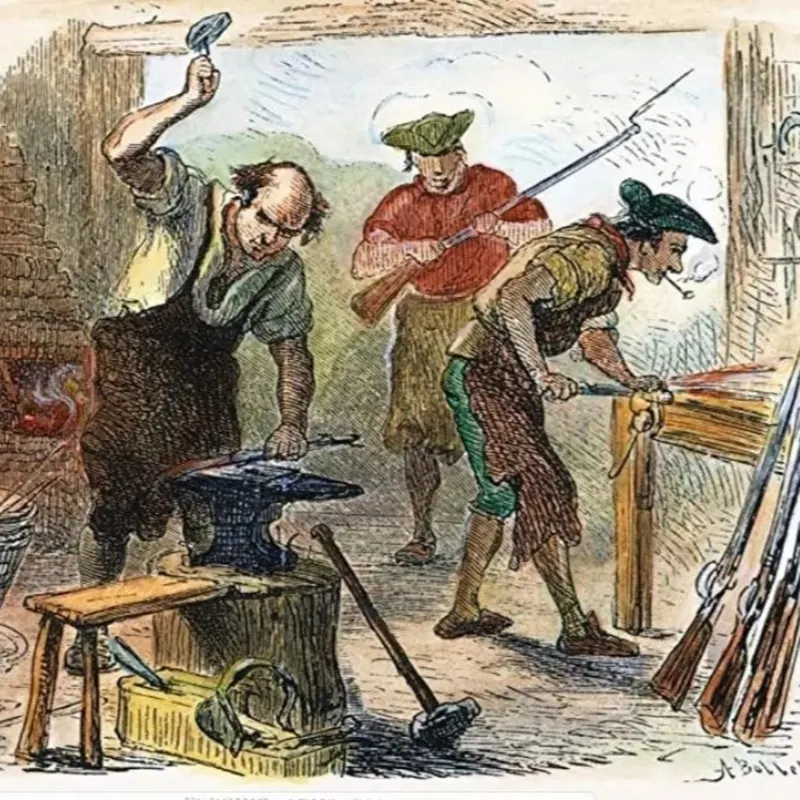
Right, okay, yeah. So we're dealing with three major terms here: these are the master, the journeyman, and the apprentice. On the lowest rung of the social ladder, you had the apprentices who were basically the students. They were unpaid laborers who often boarded with the families of their masters while they learned the craft that they were studying. These were the unpaid interns of the day. After that, you had the journeyman. Once an apprentice got some training, they became a journeyman who was, you know, someone who was paid a wage, but he was usually an independent craftsman unto himself. He wasn't really proletarian per se because there was an expectation of advancement and possible profit sharing. The journeymen were expected to be young and married men. They often lived with their master and his family, just like the apprentices. And it was very common for an apprentice to marry his master's sister or daughter, which would legally sort of bind the family together with a very real kinship tie and securing the future of the business.
Exactly. Yeah. And so the thing is, like, so apprentices and journeymen often were spiritually and physically connected to the family of the master. And the master, that is the tip-top, the tip of the iceberg of the artisan system. They were always a small percent of artisans, but they were the people for whom this system most highly supported. Many of them would become the first capitalists because these were guys who owned their own workshops and were legally and economically at the top of their game. They had specific legal privileges not afforded to journeymen, and they also tended to be the most successful at their trade. So it's unsurprising that as we move into the 19th century, many masters begin no longer taking on apprentices, no longer promoting their journeymen to masters, and instead begin hiring wage laborers and find themselves becoming the first generation of capitalists.
Yeah, yeah. Wilentz talks about this moment, and it was a really messy transition. You had a lot of people, for example, complaining about the fact that, you know, traditionally the apprentice was in the master's household so he can actually learn to craft. But increasingly, the masters by the 1820s, by the 1830s, were viewing these boys as just like free labor, not really teaching them anything so they can't actually rise above their rank and challenge them later on, you know? So this was like what proletarianization looked like in practice.
Yeah, it's worth saying that this system is for good and for ill, in both senses of the word, very paternalistic and very paternalist.
Yes. Yes. Right.
It's the master is the father. And like, in some instances, can be like a good father. Like there are plenty of good fathers, right? And so the master can occasionally be a very good father, but we'll get into this maybe later, that it is very much a system that is ripe and is sort of ready for a sort of someone operating in bad faith to take very bad advantage.
Who the guilds kept out
Yes. Yes, yes, absolutely. Yeah, you know, and so I think that before we talk about the dissolution of the artisan system, which is going to be kind of the back half of this episode, let's just talk about more in depth how it worked and honestly, like the reason why a lot of people were discontented with it, even before it started falling apart. Because the artisans and the medieval guild system within which the artisans operated was really, really good for the masters, but wasn't always good for the journeymen and apprentices who had not yet reached that level. It took decades often of work to basically build the connections and often like the skill set necessary to prove yourself as a master. You couldn't just say you were a master. You had to be recognized as a master. But I think more importantly, it was entirely about who you know.
And that meant that many, many people who lived in the city and were very Mercurian in their own way were totally barred from taking part in this system and were relegated to much more menial jobs. These included ethnic minorities. These included women, basically always, and this included country people in many cases, recent immigrants from the countryside who were completely, culturally, and identically and linguistically the same as the city people, but they came out of this Apollonian milieu. And so even if they might have been these, you know, really ambitious, grasping, want-to-be merchants or artisans, they were not allowed to break in because they were not trusted. They were not given any jobs.
Yeah, maybe a more contemporary example, just to give our listeners a reference point, would be like the Okies in California and like the Depression years.
Totally. Yeah, no, exactly. Yeah. Like there was, you know, the same way there was prejudice against, you know, rural people in the 20th century moving into cities, there was much more of that in the medieval and early modern period. And the guilds were very strong, which was really good for the people within them, but they had a lot of very strange rules too.
Guild rules
One of my favorite rules about the French medieval guilds was that any advertising was banned because, in the interest of social harmony, you were only allowed to succeed based on the quality of the goods you produced. So, if you were a tailor, you were only allowed to be successful through word of mouth. You couldn't advertise how good of a tailor you were. Customers had to figure that out on their own. So, signs were not allowed to have any text on them. You couldn't call out to customers from your store. And famously, in the city of Paris, you couldn't make any noise at all to attract the attention of passersby. So, a merchant, a tailor, could be fined for coughing too loudly if it was thought to, you know, as an attempt to attract a customer.
Just coughing aggressively at a customer to get his attention.
Evil May Day and anti-Flemish riots
I'm not sure that would go over well these days. And we also talked earlier about how there was a big tradition of kind of a you know, mercurian versus mercurian violence, especially along ethnic lines, where merchants or artisans of one ethnic background would very often band together to kick out competition of a different ethnic background. And usually, because of, you know, this wasn't just about purely social prejudice. I think it was kind of had an economic angle because there was rarely, you know, intermarriage and partnership across religious or in America, racial lines, which meant that the oftentimes the you know the economic interests of one group would appear in some ways to be totally at odds with another. So, the only outcome would be complete exclusion. And you know, this was most famously and most viciously, obviously, meted out against Jewish people in early modern and medieval Europe.
But, you know, many foreign Christians didn't fare much better as well. There was sporadic violence against Flemish wool workers across the Middle Ages in England, going all the way up until the Tudor period. And in 1517, the same year that Martin Luther published his 95 Theses, thousands of London apprentices and journeymen attacked their Dutch-born neighbors living in the city of London in what became known as Evil May Day, because all of these English journeymen and apprentices were convinced that they were losing out on work contracts to the Dutch and they had to kick them out of London altogether.
It's worth pointing out also that killing Flemish merchants and wool workers is sort of a early modern English tradition. Like basically anytime something pops off in London, they will be lynching some Flemish guys.
Totally.
Yeah, during the Peasants' War in the late 14th century, one of the only things, not the only things, but one of the major things that the sort of crowd of revolting peasants does in the city after they march in is to hang a bunch of Flemish wool merchants. And then after the Great Fire of London in the late 17th century, they, again, they're looking for people to blame. And there's a bunch of guys that are speaking this language that is, it's like English, but it's really weird. And so they won't sort of hang them sort of as a just something to let steam off in London. They love to do it. The English, they love to do a cheeky attack on the Flemish quarter.
A cheeky lynching.
Exactly.
But yeah, this wasn't a purely English pathology either. I mean, in Constantinople, for example, just off the top of my head, like the Frankish quarter basically, they got raided all the time under very similar circumstances by the locals.
Yeah, no. Just going out of limb here, I kind of wonder if there might be a tiny little sort of materialist angle where the English had some understanding that Dutch merchants were coming from a place that was usually just a little bit more economically developed, where market systems were a little bit more sophisticated. I wouldn't be surprised if some of these Dutch merchants might have either out-competed the English or, at the very least, were associated with a more developed form of early capital. So, you know, they were seen as like the future in, or not the future, they were seen as kind of everything going wrong in our lives. They work by a different system. We don't want that kind of more institutionalized, more financialized system to come here because that will disrupt our way of life. And I think, again, that's kind of one of the nastiest aspects of the artisan system and the guild system is that it was very conservative in one sense, and that it did whatever it could to preserve things, to keep things the same, often with violent ramifications on anybody else who they thought were somehow trying to change things.
Yes, but even if it wasn't really a structural threat, like even if the Flemish merchants weren't doing anything different, it's like these people are still your direct competitors. So it's like if you're able to whip a mob up as like, you know, you're an English master and you see that like your market share is going down because like these people speaking this weird language that almost sounds like English but isn't English are all around. You can just like, you know, tell your journeymen that these people are like taking food out of their mouths and just rile them up. And that way, you know, drive the competition out of town.
And no, exactly. And speaking about driving out competition, like, you know, the prejudice against country people, you know, it was almost as vicious as the prejudice of country people against city people. And that one thing that Henri Pirenne talks about is how medieval cities tended to have very fiercely guarded privileges within their kingdom or duchy that ensured that certain handicrafts could only be practiced by urban artisans and not artisans in the countryside because they were so terrified about any kind of competition from these strange Apollonian outsiders. He describes this as kind of this monopoly which guaranteed their existence, where these cities would be loyal to their king, who they often had very little in common with economically and socially in exchange for protection from peasant competition, basically. You know, I think that this is kind of not irrelevant to the fact that if we briefly skip forward to the beginnings of capitalism and the end of the system, the first capitalistic factories were not opened up in the big trading cities.
It wasn't in London, it wasn't in New York, it was instead in unexpected remote places like Lancashire, like Lanarkshire in Scotland, or Lowell, Massachusetts, where there wasn't as much artisanal guild-style labor power.
The Ciompi Revolt
All right, you know, and I think on the subject of this kind of urban-rural mutual distrust, let's talk briefly about, I think, my favorite example of internal divisions within the artisan system, the kind of most explosive clash, even more, I would argue, than Evil Mayday.
Sam, do you know much about the Ciompi Revolt? No, I don't actually.
Well, Jackson, are you familiar? Because what are my favorite aspects of like Italian history?
Yeah, it was, we can go into this, but it was kind of a sort of a beta uprising in Florence.
Yes, it absolutely was. So basically, in very short, there was this, you know, infamous labor shortage after the Black Death, which had very interesting ramifications on the development of the European economic system. And the city of Florence, which would eventually become really the heart of the Renaissance, was suddenly flooded by these new peasant-born wool workers who knew that there were jobs to be found in the city because so many people had died. These guys were known as the Ciompi, which might have been some kind of onomatopoeia based on the sounds that their shoes made. It might have been based on some verb for like beating wool or something. I don't know. But in any case, these were, like you said, they were betas. They were poor, unmarried, basically friendless young guys who came into Florence from the Tuscan countryside without knowing anybody. They had no family ties.
They had no economic ties to the guilds, but they were real Mercurians. They really wanted to get ahead. They were ambitious. They were driven. They really desperately wanted to be part of this artisan system. But the existing families in Florence, like the famous Medicis, they looked at these guys and they probably smelled these guys and they said, yeah, no, get out of here. And so they totally discriminated against the Ciompi, who again, these were like these young, restless young men. And after a few years, this system became kind of unstable. They were taxing the Ciompi beyond what they could pay. And very few of the Ciompi were being admitted into the Florentine guilds. So they decided if these powers that be, which they called the popolo grasso, the fat people of Florence, if they're not going to help us, then we're going to help ourselves. And eventually there was this violent uprising in the city of Florence led by the poor.
They had these mysterious anonymous leaders calling themselves the Eight Saints who actually successfully took over the city briefly. They set up their own guild system just for the Ciompi because they weren't allowed in the other guilds. And they were kind of in the driver's seat for a couple of years until there was a coup led by the popolo grasso to kick these guys out. And then, you know, this leads directly to the ascension of the Medici a generation later. So it's really interesting. And it became this real kind of cautionary tale within the medieval Republican system because many of these guild towns basically ran local politics and used some kind of republican system, especially in Italy. But suddenly, after the Ciompi revolt, they became a little more hesitant about democracy. Because one thing we're going to see as we move into the second half of this episode is that artisans often have democratic attitudes that are a little too radical for their merchant betters.
The artisan way of life
Yeah, Jackson, you want to maybe tell us a little bit about what really distinguishes artisan life?
Yeah, so artisan life is kind of, it's defined by a couple different aspects that I think are maybe not as relatable from a sort of modern contemporary 21st century standpoint.
Well, I disagree actually. I think this way of life is actually making a comeback with freelancing and all that stuff. It's much more present than it was in our past.
The artist masters certainly have reclaimed some of this. But in any case, the artisanal way of life is defined by a couple sort of different features. The first one is that it is mostly self-directed. Artisans are able to essentially direct their own work days by themselves. Oftentimes, lower sort of journeymen, journeymen that have just graduated from apprenticeship, they have to consult with their masters on it. But for the most part, they get to decide what the actual workday is going to look like. So, things like breaks, meals, sometimes reading the Bible or even performing literature. Wilentz in Chants Democratic talks about a guy who would entertain his compatriots by reciting Hamlet and Romeo and Juliet from memory while they worked. Those kinds of sort of micro breaks were a regular part of artisanal life.
Yes, no, they absolutely were. And one thing we mentioned actually in our recent episode with our friend John about the history of alcoholism is that one of the, I think, the darkest aspects of artisan life is that it was just a complete bacchanalia. It was just, you basically were expected to be an alcoholic. Because you were able to work at your own pace, you could just be drunk all the time. And this often had terrible ramifications on these guys and their families, but it's just how life was.
Right. And that kind of speaks to a second sort of defining aspect of artisanal life, which is kind of related, but like their independence, right? Now, journeymen had to work for masters, like there was a sort of paternal relationship there. But even journeymen had a sort of, before the sort of Republican revolutions of the 18th century, sort of pseudo-Republican sort of sense of being able to direct their own lives outside of work time. So, for example, when they go on break, they would just get really drunk and they sort of defended their ability to drink. And this is genuinely sort of hair-raising, like cups of just like straight gin. Like, oh, I had like an entire tankard full of gin to be drunk on your work break, which is not my idea of a good time, but it was something that they sort of passionately defended their right to do.
Right, no, and like guys in New York, in addition to drinking, they tend to be a pretty rowdy bunch because they lived by their own clock, which, you know, and they lived by their own rules. So, like, you know, open patronage of prostitutes was very common among artisans. Going to bull baiting and cockfights and attending like other kinds of blood sports were basically totally accepted, especially.
Sometimes they just get very rowdy and go around skinning cats on the streets, that kind of stuff.
Oh, no, yeah, it's crazy. Well, because I think the journeymen, they're basically like the football hooligans of their time. Just they instead of being, you know, organized by like a sports allegiance, they were organized by this kind of proto-class consciousness where they had this similar economic condition and they were mostly unmarried guys in their 20s and 30s who didn't really have any obligations beyond supporting themselves.
Right, 100%. And honestly, something that I think is sort of maybe carried on in the sort of football hooligan tradition. Maybe this is a topic for another episode, but they sort of identify each other based on their industry, right? So there will be sort of all the hatters will go with all the hatters. All the clog makers will go with all the clog makers. So they sort of self-segregate based on what industry they're involved in.
Yeah, and I mean, with the further parallel to hooliganism, sometimes like these different journeymen would just get into brawls with, you know, the other guys.
Constantly, yeah.
No, in late 18th, early 19th century New York, like physical fights between journeymen were incredibly common. And also, it was kind of, there's this unspoken tradition that if a journeyman came across an apprentice on the street, he could just beat him up for fun. So you had these like 30-year-old guys going around like socking 14-year-old boys. That was just normal.
Yeah, it was certainly a different time. Yes.
That's one way to put it.
Working on the whole
Tell us about working in a whole, because this is something that I did not really know about until you directed this one book, which we'll mention in a second, to my attention.
Right. So, sort of, the modern economy is sort of laid out in workers who will work on one part of a task, right? They will. So, for example, if you're in the Ford factory and you're the guy who pulls the lever to sort of stamp, you know, part number 5765, your job is to pull the lever and to only pull the lever. That is not how artisan work was done. In fact, they really jealously guarded the ability to do the entirety of a job. So, instead of having one guy cut some sort of like pattern out of leather, say, to make shoes, they really jealously guarded having one journeyman be able to make the entire shoe from start to finish. So, he would have to learn all of the different parts of the process of making a shoe. They did not, they really did not want to have that be broken down into separate tasks.
And eventually, and we'll get into this, the masters, sort of proto-capitalist, sort of marketized masters, start to get this idea to convert their work into piecemeal in these sort of what come to be known as sweated workshops. The journeymen violently oppose this. In some cases, actually, physically violently.
Yeah, and I mean, this is what Adam Smith was talking about, where he described how, like, with the division of labor, you can have like a factory making like 10,000 pins in a day, versus if it's just one guy making the pin through the day, then it's just like, you know, like you'll make a couple of pens. But just like these increasing fragmentations of like duties within the workshop, you're able to create much more surplus, which is good for the consumers, but it's very bad for the producers, as we're about to get into.
No, yeah, exactly. And like the assembly line was this remarkable invention from the standpoint of consumers in America. You know, people are able to buy a car for much cheaper than they ever could, but all of the people working for Henry Ford, all they knew how to do was unskilled labor. They knew how to do very simple tasks, and they might have been amazing at those simple tasks, but they didn't know how to actually build a car themselves. If they were fired, they suddenly would not have really any employable skills that could be their livelihood. In the artisan system, if you lost your job, that doesn't matter that much because you're still a shoemaker. You still know how to make a shoe from top to bottom. You can just move to another neighborhood and set up shop.
Yeah, and this just, you know, breeds dependence on the capitalist system, where previously the Republican ideal, well, both the political ideal as well as the artisanal, like you are an independent man. You control your own livelihood through your own skills. But if you're just like a guy who pulls a lever all day instead of the guy who like assembles an entire shoe, then suddenly that becomes a much more precarious prospect.
Profit and the customary price
Right. And of course, there's one major, huge distinction between artisan life and the capitalistic life that we all live under now. Jackson, if you want to go into this one. Because I think this is really the linchpin.
Right. And this one is sort of maybe the most alien to the modern observer, which is that artisans are kind of profit agnostic, right? They're not against the idea of profiting. In fact, they all kind of would like to profit, but they and they were happy to profit, but they were ultimately not primarily concerned with profit, right?
Profit was not about subsistence.
Exactly.
They were, they were, yeah, like in the same way that, like, you know, people living out in the countryside, whether you're in America or Europe, they saw themselves as subsistence farmers, yeomen, who only made enough to feed themselves, but hopefully that was a lot. Guys in the city, they were like yeoman, urban workers, yeoman artisans, where they only wanted enough to support themselves, but you know, what they thought was enough to support themselves might have been quite high.
Right? They wanted prosperity, but they didn't necessarily want like overawing wealth, right?
They didn't want to be yes, and there was this, there was, yeah, and then again, like, there was this as late as like an early 19th century New York, there was still this kind of anti-competition sense. Undercutting somebody by working for lower wages or even working for too long hours was seen as like unsportsmanlike. You were not supposed to out-compete your fellow artisan. You were supposed to charge, what do they call it, like the customary co, the customary price or something for anything you sold. And it was also, you know, because it was based on subsistence, it was totally acceptable until the early 19th century to accept payment in the form of a bottle of rum or a turkey instead of hard currency because you were just going to spend that on that anyway.
Right. And it's worth noting that like the traditional, when you say traditional, you kind of maybe get this idea that it was sort of like in everybody's heads or whatever, like something that sort of is kept socially. But no, like the artisans actually had like a really developed system of traditional prices for goods. E.P. Thompson, who we'll talk about his book a little bit in the coming sections, but he wrote this book called Making of the English Working Class, which is sort of similar to the Wilentz book about New York, but in the British context. He talks about how in London in this time period, artisans like had their own book that listed the traditional prices for certain goods and services. So, like, if you were wondering, like, hey, I'm, you know, like, I'm a glazier, I need to make someone's windows, how much should I charge them?
That you didn't just have to know that. Like, there was like a written record of what the artisans considered a sort of sporting fair price that everybody could agree with.
Yeah, and I mean, this really continues to this day. I mean, right now we have a lot of talk about tariffs, talk about the 19th century, and the bone of the matter is that, like, Chinese production processes are just like so much more efficient that they're able to give us consumer goods for much cheaper than equivalent American factories would be able to. So, it just looks like unfair competition to the manufacturers here, you know? It's like, well, what do you mean the Chinese are flooding the market with their cheap little trinkets? Why can't I sell my trinkets for a much higher price?
No, and especially, you know, this is outside the balances episode, but industrialization just caused that on such a huge scale. Suddenly, if you were a shoemaker, factory-made shoes were just like able to out-compete you like a hundred to one. There was just nothing you could do. So, especially in the later 19th century, that's really when so many artisans just had to completely call it quits and get a job as a factory worker if they could get a job at all.
Sean Wilentz's Chants Democratic
But I think that really, you know, there's one text that we're basing basically most of this episode on, especially in the second half. This is really what gave Jackson you the idea for this episode. It's such a fun read. It's a little bit dry in parts, but it's just an introduction to a world I knew nothing about that now I find so interesting. And that is, of course, Chants Democratic by Sean Wilentz, a really interesting 20th century historian. He's still around today. He's a lot of YouTube lectures. He has a lot of strong opinions. He's sometimes a political commentator these days. He has this very interesting kind of pro-labor bent, and he looks at early labor organizers and early artisans in a very non-condescending way. And he explains that these guys, especially in early 19th century New York, were absolutely conscious of themselves as an artisan class, knew that capitalism was developing, and vehemently opposed it with all the means at their capability.
Yeah, so kind of embarrassingly, sort of got into Wilentz through a course on in graduate school about the sort of class as like a lens of historical analysis. So reading all the sort of canonical works of sort of class history. And this one kind of stuck out to me because, you know, I think if you study history, especially if you study European history, you get a sense that class is a driving factor, maybe the driving factor, way more. You are way more exposed to that as like the driving factor of European history. American history, that is not quite as much of the topic, right? If you are going to study 19th century history, you're way more likely to study sort of the expansion of democracy, maybe study the marketization of the economy, maybe study sort of slavery as it interacts with both of those things. But Wilentz, I think, does a really good job and a really interesting job in a way that has, I mean, I think what I speak for everyone here, has lodged itself within my brain of sort of making New York of the 19th century this sort of, you can insert a sort of clip from Gangs of New York here.
We've got the Daybreak Boys and the Swamp Angels. They work the River Looten ships. The frog haul of Shanghai sailors down around the bloody angle. Shirttales was rough for a while, but they become a bunch of jackrolling dandies. The New York of the 19th century as a place where these sort of very familiar to Europeanists, but maybe not so familiar to Americanists, those same things are happening, right? This same sort of process of proletarianization, this sort of industrialization, this sort of sort of not really reaction, but also not really sort of maybe transcendent sort of position or positioning towards insurgent capitalism. That all of those things are happening in Europe that you're all aware of are also happening in America. So it really sort of centers that in America in a really interesting way.
American artisans
100%. And I think there's some big differences between the European artisan system and the American artisan system. I think the biggest is that you really don't have organized trade guilds. The way that, you know, trade guilds still exist in Europe. They've just become these like random charitable societies. It's like kind of this sort of like ostensibly middle class version of the Elk's Lodge. That's like the worshipful guilds of London, you know. But you don't have that in America. And in America, it's much more of a blank slate. So early artisans are able to very quickly stake out their ground and establish their own system that's not a guild system, but it's still exclusionary. It's still this kind of labor cartel imposing artificial scarcity. And you also have the really unfortunate element, even in the north, of slavery and especially in the north, indentured servitude, where totally unpaid workers are, in a way, incorporated into the artisan system without ever having any means to advance within it.
This is obviously terrible for these guys. They're performing slave labor, but it's also in a way bad for journeymen workers because they have to compete against people who are unpaid and will probably work for their master forever without any expectation of advancement. So even before the development of wage labor, you have these kind of internal pressures sort of cracking up the artisan system as soon as it arrives in America. So, you know, facing exclusion from the artisan system and depressed wages, if we look at the kind of the by the 18th century, in the decades prior to the American Revolution, journeymen are increasingly dissatisfied. Many of them will leave the new cities of New York and Boston to find a life in the countryside. Sometimes as rural artisan, the word tramp actually comes from rural artisans who left the city to tramp around the countryside looking for work, often unsuccessfully.
But a lot of them would rather become yeoman farmers in the backcountry. You know, we never really think about urban to rural migration today. It's not very common in a modern context, but this is basically the story of westward expansion. It's disaffected urban workers who can't hack it in New York or Boston or Philadelphia, so they go out into the West. And so, you know, this led to, of course, violent, terrible conflicts with Native Americans as these urban workers were occupying land that people already lived on. And it even led to tensions with the British crown because the Brits wanted to maintain warmer relations with powerful Native tribes. They didn't want random journeymen going out and stealing their land and destabilizing these relationships.
Artisans and the Revolution
And then relations between the artisans and the British crown, even successful artisans, continued to sour across the 18th century in the later colonial period because artisan simply because America's cities were so prosperous that they were an obvious source for taxation. After the Seven Years War, the British government was completely indebted. They needed a way to pay for their war debts, so they began squeezing American artisans and merchants. Additionally, with the French out of the way and even many Native American allies of the French significantly weakened, American settlers felt like they didn't really need British help anymore to the same extent. So beginning in the 1760s, a decade and a half before the American Revolution, you begin to see a lot of agitation for the issue of independence almost entirely within artisan circles. For instance, you know, Paul Revere was famously a silversmith. Samuel Adams was a maltster who, you know, was kind of like a brewer, basically.
And Benjamin Franklin was kind of like the international god of artisans in the 18th century. He was this independent manufacturer who made these various useful inventions that became, that were purchased even as far off in Europe, like the Franklin stove, and really made headlines with his various experiments that he did on the side.
Something to keep in mind about the American Revolution. I think that American Revolution historiography is a really like contentious area, maybe best left for another day. But I think it bears repeating your point about how the real engines of the revolution, before it reaches the sort of military phase, and there's all sorts of things that we could talk about about the sort of nature of the revolution after it reaches the military phase. But before it reaches the military phase, it is mostly a phenomenon of these sort of port cities in the Northeast that are the most heavily artisan.
Absolutely. No, and this goes back to the kind of the New Deal era. Historians in the 30s and 40s who really first began looking at American history through the lens of class, one of their biggest topics of interest was the American Revolution. You know, that's where all this started. And, you know, so there was this early recognition that artisans were a self-conscious group and they were the group most likely to be involved in independence. You know, a lot of talk now is about the role of the Enlightenment intellectuals and southern planters in the American Revolution, but they really didn't take the driver's seat until after the wheels were already turning. And the wheels first began to turn because of these disaffected artisans like Paul Revere, whose interests in independence were really much more about small-scale economic issues than any high-minded concerns about democracy or nationhood. Going into modern times, you know.
Alternatively, they were radical egalitarians who, you know, wanted to eke out their own living and saw like the British as stand-ins for their guys are literate, they're Mercurian, these guys are reading Thomas Paine and Locke. These Enlightenment intellectual ideas have great purchase among the artisans.
Deism, Paine, and artisan Jacobinism
And as Sean Wilentz talks about in his book Chants Democratic, which we're basing so much of this on, even after the American Revolution, the artisans kept up this Enlightenment tradition after it had kind of begun to fade among the elite. Like one thing I found very interesting that he talks about in passing is that deism, something that we associate with like, you know, late 18th century intellectuals like Thomas Jefferson, actually had this kind of renewal of support among the New York middle class among the artisans in like 1820. This kind of like really interesting like resurgence of like Jacobinism, as he would call it, in the post-Napoleonic era.
Well, deism is really the ultimate artisan sect, just because it's, you know, God as watchmaker.
Yes, yes, yes, yes, God is an artisan. Yes.
And it's worth saying that we talked about Thomas Paine. Thomas Paine gets brought up as like, you know, he's this enlightenment figure. He writes common sense. He's, you know, every sort of, if you're paying attention in high school history in America, you're going to learn about Thomas Paine.
Oh, yeah, yeah.
But he has like a career after all of that where he is essentially the English language Jacobin. He is the guy who expounds on the sort of French Revolution ideology for English language people. And he basically has a long tale of his career as an artisan, sort of like idées fixes. Like he has a sort of like his writings, especially about the rights of man and about, I mean, common sense included, have this sort of long afterlife after he's sort of the story is he's sort of jettisoned because he's anti-religion in America. But he has this sort of long tale where Paineite is like this thing that gets thrown at people as being they're basically English language Jacobins. So like this, this ideology that's often ascribed to the upper classes, the sort of you know, planter Thomas Jefferson guys, it is as much of a live issue within artisan circles at this time as it is among the sort of big enlightened figures.
Yeah, Paine is like the Trotsky of the American Revolution.
No, yeah, yeah. And, you know, just like Trotsky, the artisans, despite their great role in their instrumental role in starting the revolution, they were totally sidelined.
Sidelined after independence
The contemporary historian William Hogeland talks about how this happened in Philadelphia in the months after the Declaration of Independence was signed. But in a lot of places, you saw these.
No, no, before too. 1776. It's just a really fascinating book. It's basically all about how these intellectual nerds were basically able to maneuver these sons of liberty, these patriots who were much more radically inclined in their demands to basically intimidate all the delegations to actually vote for independence only for these Sam Adamses of the delegation to say, haha, psych, and just leave the revolution to bourgeois rights.
I believe you mean John Adams, but no, yes, yes, 100%.
Yes, I'm sorry.
No, no, no. Yeah, but I think also one thing that you kind of alluded to when we were talking about this, Jackson, is how looking at the artisan radicalism in the revolutionary era, and especially in the decades after, really shows you that there are really important similarities between certain aspects of the American Revolution and the French Revolution in ways that might often go unnoticed. And that even though the American Revolution was in no sense a proletarian or working class revolution, it did in some aspects have this populist class character.
Yeah, right. Like, and also, like, they sort of the artisans are sort of self-consciously revolutionary, and they do sort of have this sort of tradition of radicalism that they will draw on. Like, this is sort of before the French Revolution becomes the sort of epoch-defining revolution. The English Revolution, the sort of Cromwell Roundheads versus Cavaliers fights, are as much of a long, or as much of a live wire in the discourse as what we would think of as a French Revolution is in ours. And artisans are aware of this. Like, they are aware of the English Revolution. They see themselves as inheritors, oftentimes, of the roundheads. Wilentz talks about in a sort of local election in 1830, artisans who are sort of artisans who are partisans of the sort of artisan class party, the working men, they basically protest vote for like heroes of the English Revolution.
So, like, some people will vote for Praise-God Barebone as sort of like a protest vote. It's sort of similar to like, I don't know, voting for Marx, Engels, and Lenin as in today's sort of politics.
No, absolutely, voting for Hawksburye.
Exactly.
No, no, 100%.
The right to vote
And I think it's like that's kind of the thing of this. Like, one thing that you see across the 19th century, just like today, is that with the American Revolution and later with the ascension of the Democrats under Jackson, kind of really getting ahead of ourselves here, but in both of these cases, artisans are a huge factor in these political movements, but then they are basically immediately betrayed. So after the U.S. Constitution is signed, states, basically every state constitution denies artisans the right to vote because artisans almost to a man did not own land. They were usually renters in the city whose land was either owned no land at all or they owned only urban land, which was not taxed highly enough to be given the franchise. So, you know, it's like, you know, famously in the outset of American independence, it wasn't just white men who could only vote, it was specifically property-owning white men who were almost definitionally rural people.
Many artisans were very big fans of Thomas Jefferson, who had this somewhat egalitarian outlook, especially compared to the high federalists like Hamilton. Jefferson really advocated for more democratic participation in society, and he claimed to stand for both the small farmer who could vote and the artisan who could not. So, for this reason, even though artisans could not formally participate in politics, they had a lot of mass agitation in the early American period after the Revolution in favor of the Jeffersonian party, the Democratic Republicans. And for this reason, this artisan association, support for the Democratic Republicans in the late 18th century, became sort of synonymous with support for the French Revolution, which fiercely divided the guys who had just won the American Revolution.
Yeah, and I mean, there's also a really fascinating dynamic here where this discourse, it's sort of points towards the idea, and of course, this was a very contested idea, that the American Project was the first worker state of some degree, because that's what the Jeffersonian vision really is. It's, you know, like the yeoman farmer or the artisan in the cities who, you know, ekes out his humble living, living in a relatively egalitarian milieu with time to work under all virtues. And I would argue that, you know, in practice, American society never in any sense can actually be considered a worker state. However, all these artisans, especially in New York and Philadelphia, they thought it was supposed to be.
Yes. And they had this understanding of what Wilentz calls artisan republicanism. This was true even with the signing of the Constitution, which basically, you know, screwed them over. It excluded all of them from voting. They still supported this American ideal because they were convinced that because they had, you know, agitated for this, because this was their movement, it was going to support them. But as we're going to see, the artisans are going to be betrayed again and again and again. The artisans will become big supporters of the Jacksonian movement about 20 years after the Jeffersonian period. It's under Jackson that the artisans, as non-landowning white men, first gained the right to vote, which is a huge victory for the artisans. Suddenly, like you know, urban politics is completely transformed. You know, one thing that immediately happens is that New York City was previously mostly controlled by these guys, by the Adamsites, supporters of John Quincy Adams.
Suddenly, all the artisans can vote. Those guys are instantly voted out of power.
Tammany Hall and the societies
And Tammany Hall, which we've discussed a few times before, is first set up by these basically early Jackson supporters known as the Bucktails, who would become the Democratic Party. They were called the Democratic Party because, at least when it came to white guys, they were Democratic. They supported the growth of the franchise. But at the same time, as soon as Tammany Hall got set up, Tammany Hall became basically identical to the old Adamsite system. And the artisans, despite now being able to vote, were really not much closer to the real levers of power than before. Circa, and this is now like 1830.
Right. And I think something that Tammany Hall sort of exemplifies, which is sort of a really key thing to understand about American politics at this point, is that societies, separate from parties and separate from sort of organizations that we would know today, are like the driving factor in the politics of America.
Yeah, like they're kind of Democrats start out as like an Elks Club kind of thing.
Yeah, literally, like the Tocqueville sort of democracy in America is like basically about this. Like the fact that American democracy at this point is defined by societies, right? And some of these societies like Tammany are sort of democratic in the sense that you don't have to be born into them. They're democratic in the sense that like, you know, anybody with money can be a member. Like they're democratic also in the sense that they sort of do this sort of classic, you know, gangs of New York. They'll give you a turkey on Thanksgiving. They'll sort of give you free liquor on election day as long as you vote for them. But also, like the societies like Tammany include a lot of people that initially cannot vote and that eventually do become voters and sort of maintain their sort of allegiance as a result of their inclusion at earlier times, right?
And these societies sort of channel discontent towards moneyed interests within places like New York City, right? Like Tammany Hall is in charge of the politics of New York City in a way that they sort of get to that position by denouncing the sort of moneyed, aristocratic interests within the city, right? They sort of are, they set themselves up as like a counter elite or like a sort of insurgent elite or a political elite against these sort of entrenched, aristocratic, a lot of them not Anglo-Saxon sort of Dutch landed elites that that is a major part of the sort of politics of a city like New York City at this point and of America as a whole.
Yeah, and there are major parallels to today's political moment in many ways, what you just described.
Oh, no, yeah, that's I think one thing that's really interesting about looking at the 1820, 1830s and so the support and the working men's support and then immediate betrayal by the new Jacksonian Democrats. It's the first time that a like, you know, left-wing organization, if you can call it one, was disillusioned with the Democratic Party, which would happen many times again throughout the 20th and 21st centuries.
Right. Like at the birth of the Democratic Party, too, which is like.
Yeah, exactly. No, it's in the earliest moments of the Democratic Party, basically. You know, the artisans supported them. They really were interested in Jackson, then quickly found out that Jackson had no real interest in them. He did give them the right to vote, which was, you know, that's genuine, but he didn't give them, you know, a lot else. And so that's not long after the Democratic Party was started, there was a new dissident party against the Democrats. It was not the Whigs, it was something else that actually predated the Whigs.
A secret third thing, if you will.
Right, the working man.
The Working Men's Party
Yeah, so I had no idea about this until I read Wilentz. But in 1829, a group of New York artisans created the Working Man's Party. We're actually planning on going into this in greater depth in another episode, but there's this really interesting new system where the first party to challenge the sudden emergence of Jacksonian hegemony were these radically left-wing artisans who really, I think, are the closest thing to like a modern left-wing organization you can see this early in American history. I think they're much more recognizably modern in their values and their interests than any faction that was around in the American Revolutionary period. And but the thing is, though, is that although these guys had, I would argue, were incredibly well-intentioned, were you know radically progressive and egalitarian, especially for their time, they were fundamentally fighting a losing battle. They were in a sense almost conservative because they were trying to preserve the artisan system against pressures to destroy it, against the early rise of capitalism.
And they're, even though in many ways they look a lot like modern progressives, they had some different kinds of interests and values than people today. Like, you know, tell us about the whole idea of producerism, Jackson, because I think this is really important to understanding 19th century politics.
Producerism
In the same vein as the sort of point about America as like a worker state, American ideology at the beginning of the 19th century is basically based around producerism, right? That there is that the country should be run in favor of producers. Now, that's a different, broader idea than that the country should be run by the workers or the peasants or whoever. It sort of includes all groups of people that make something. That can be construed to mean different groups of people based on your political inclination, right? So if you are a sort of capital-inclined person, capitalists are producers, right? Now, in like our modern discourse, we wouldn't say that they're necessarily producers, but at the time, they were thought of as like contributing a very like necessary thing to society, which is the sort of organization of and operation of industry. It's a new thing.
It needed to be set up, and the capitalists were the ones that did it. So they were sort of, some people saw them as sort of worthy producers that were, that should be, you know, supported and have a say in government. Whereas if you were anti-capital aligned or sort of more skeptical of capital, those producers would be the sort of yeoman farmers, right? The people who go off onto the land, they own a little bit of it, and they are able to produce a surplus and they improve the land and they sort of do the yeoman dream, right? So American politics, especially in the early 19th century, are really based around, at least in discourse, who do you think are producers? Who is a real producer? And the sort of Democratic-Republicans, especially as they become more the Democrats, they sort of hone in on this group of bankers and merchants that live in these coastal cities and are often sort of not, like we said, not Anglo-Saxon.
They're the Dutch Patroons.
Exactly, the Patroons.
It all goes back to the riots against the Flemish.
Literally, yes. They are bankers, right? They basically just move money around on, you know, sheets of paper. So they become a very popular target for this sort of producerist ideology, right? That these bankers don't do anything. A capitalist does something. They build a factory. But the bankers literally don't do anything. They just finance all of this. So they become an easy and early target for this producerist ideology.
All right. Well, you know, I think what's so interesting and kind of tragic about the Workingmen's Party is that although they had this explosive emergence in New York City politics and briefly had a lot of real influence in the city, this influence was happening right when the rug was completely being pulled out from under the entire artisan class. And basically, most of the guys lived active in the Working Men's Party, which was the artisan party. By the end of their lives, artisan life would be basically untenable in America.
Sweated workshops
So I think, you know, Sam, you dug up some really interesting early description about the transition from the artisan system to wage labor. Before we get into any, you know, long 19th-century quotes, anything you want to say, Jackson, about how the artisan system slipped away or maybe just, you know, transformed into capitalist wage labor?
The sort of transition from the artisan way of life to the sort of factory way of life, it sort of starts in sort of bits and pieces, right? Instead of going all the way from, okay, day one, we've got an artisanal sort of journeyman master workshop, the next day we've got a full-fledged factory, it starts to get nibbled away at, right? So there's a rise, especially in places like New York, of these things called sweated workshops, right? Which where artisanal processes and artisans are working, but some of their individual parts are sort of being simplified or being sent to outworkers, right? These people who work in maybe smaller shops or maybe even in their homes against this sort of ideal of artisans sort of doing the whole project. So these are sort of the first undermining of the artisanal system. Some workshops are mechanized fairly early on, but most of them essentially remain the same thing as they were previously.
But now they just have a sort of, they've had a market logic imposed on them, right? They are sort of simplifying the process and they're trying to extract as much sort of surplus out of it as possible. And in places like England, which is talked about in E.P. Thompson's Rise of the English Working Class, the outworking weavers, like the people who work outside of the main workshops in these sort of outworking, sweated workshops, they have their lives almost completely transformed and pretty much uniformly for the worse, right? Weaving goes from something that families would do mostly on their own time. They would do it with each other. They would have time for breaks. Now it was still hard work. It was still stuff that they had to do all day, but they could mostly work to their own rhythm. They're being put more and more into actual workshops where they are put to outworking together, or they're having to complete more and more work in their homes at a more like breakneck pace, right?
Right. No, and this is what Pirenne talks about. The idea of like this kind of urban work being done in the countryside, this really freaked out people centuries prior. But now, especially in America, where there is no guild system where labor power isn't as strong for the most part, this can happen. But of course, it happens elsewhere. Because by the 19th century, guilds, as we know them, for various reasons, aren't really as strong as institutions as they used to be. So this can happen. And certain enterprising masters disregard the traditional cooperative ethos of the artisan system and they begin doing things that really undercut their fellow artisans by undercutting wages, by hiring children and women, which is really good for, in some ways, kind of good for children and women. The working conditions are terrible, but it gives them economic power they didn't have previously. But it comes at a pretty awful cost to their former cooperators, now competitors in the artisan system.
Right. It's sort of, it speaks to, I think, the artisan system's paternalism, which has both sort of negative and positive aspects to it, right? That there is sort of the, it's positive in that, oh, okay, you know, we're all a family. We're all going to work together. Like, we're all going to work on this thing together in this sort of outworking facility. We will do this together as a family. That is sort of maybe on the surface a nice idea, but it's also one that comes with a really like clear and sort of enforced imbalance of power that the transition away from that system equalizes, but sort of equalizes in a bad way, right? Everybody loses power and they sort of get put on the sort of same bottom line.
Right. No, it's like just looking at it specifically from the perspective of like Irish Catholics in New York. Suddenly they go from being totally excluded from the economic system to now being a cog in the machine like anybody else. Because, you know, like Irish immigrants, they would not be allowed to become artisans, but they could very easily get a job in a factory. This was Gina's kind of like shameful work compared to being an artisan. It was much, much more poorly paid work, but it was a real means of living for very poor people. So, so you know what?
Engels on the handicraftsman
So now we're kind of getting close to the end of this now. I think what could be kind of fun is to let's like hear some descriptions of what this transition looked like to people experiencing it at the time. Often people who were honestly doing this transition. They were, you know, they were the ones holding the weapon. And that included a certain Friedrich Engels, who really early in his career provided some really vivid illustration of the birth of wage labor as it was developing.
Yeah, so Engels, he was famously, you know, the son of a factory owner who became really woke and became involved in the nascent socialist movement and 1848 and all that stuff. And about a year before him and Marx actually sat down and wrote the Communist Manifesto, he wrote this different text that I think in some ways is superior as a political text to the manifesto, which is much more of a propaganda tract, where it's basically like a question and answer sort of format to like, what's the deal with communism? What do you guys stand for? And, you know, he's tackling these questions that people living in the middle of the 19th century would be asking as they live through this really great transition, one of which was, of course, the move from handicrafts, as he puts it, to capitalist manufacturing. So in answer to one of these questions, Engels wrote, quote, in contrast to the proletarian, the so-called handicraftsman, as he still existed almost everywhere in the past 18th century and still exists here and there at present, is a proletarian at most temporarily.
His goal is to acquire capital himself wherein to exploit other workers. He can achieve this goal where guilds still exist or where freedom from guild restrictions has not yet led to the introduction of a factory-style method into the crafts, nor yet to fierce competition. But as soon as the factory system has been introduced into the crafts and competition flourishes fully, this perspective dwindles away and the handicraftsman becomes more and more proletarian. The handicraftsman therefore frees himself from becoming either bourgeois or entering the middle class in general, or becoming a proletarian because of competition, as it is now more often the case. In which case, he can free himself by joining the proletarian movement, i.e., the more or less communist movement.
Yeah, no, it's very fair. Like, hey, hey, man, man, yeah, you're an artisan and it's not working for you. Great news. You can start a revolution. It's going to go great. Buy my pamphlet. But look, yeah, it's the thing though. It's like, you know, in that context, yeah, like that's what you had to do. Obviously, things didn't go out, didn't go that way. But no, it's like he's certainly not wrong in his prescription advice. It just that wasn't really a practically available solution for these artisans being sorted downward into proletarian status. Instead, there was this kind of slow, unpleasant shift across the 19th century where all of these journeymen and apprentices who set their entire economic hopes on becoming a master artisan, a master craftsman, realized this kind of life was no longer going to be possible. Like we mentioned, this is what impelled so much westward expansion.
It also led to a lot of political tensions in the cities now that these guys could vote. I think that we probably should not get too deep into electoral politics because this is something we want to talk about maybe in a future episode, like early left-wing American politics, basically. But there were really interesting clashes between artisans and the Democratic Party, the party which they had previously supported. But the long, really, there's the short of it is that although these artisans really desperately tried to maintain their historic privileges and really their way of life, this generally cozier, safer system than wage labor, they absolutely would fail. And I think that one of the biggest reasons why they would fail is that even before the rise of industrial machinery, you begin to see these kind of what they call the workshop, the factories without machines, which are just so efficient in their production of goods that the skilled artisans have no means of competing with them.
The bastard workshop
Right, the so-called bastard workshop.
Yes, which is a great name, dude.
Yeah, it's sort of it sort of has a dual meaning because it's sort of, I think it's intended to mean like bastard in like the same sense that like a bastard sword is kind of like you can do it one-handed or two-handed, but also just like, yeah, man, it was a fucking bastard. Suck to be there.
Yeah, and also like, you know, if you're an illegitimate son, then maybe, you know, this is how you make your living. So triple entendre.
That's true. Yeah. Yeah.
Well, you know, all these guys. So like, so basically what this means is that many people who were in the middle 19th century, especially after the Working Men's Party of the 1830s, they were still working in this artisan system. But throughout their lives, it was changing into something much closer to modern industrial capitalism. We've talked already about the sweated workshops in which, you know, there was already some kind of transition away from the artisan system, but this is this even more so. So, basically, you know, Jackson, you did all the research here. Please lead us away. Tell us about the bastard workshop and what it eventually felt.
Yeah, right. So, we talked about the sweated workshops as sort of these early attempts to impose a sort of proto-Fordist sort of assembly line character on artisanal work. The bastard workshop, as it sort of finally comes to fruition in the middle of the 19th century, they were sort of places where artisans who had once done that sort of traditional artisan work where they would direct their own work, work from start to finish, work on it, you know, for a somewhat healthy sum, but not exactly a sort of outrageous profit. They were sort of, they had fully become broken and sort of this market logic imposed on them. They are sort of, they are still journeymen, they are still artisans, they still conceive of themselves as artisans. They haven't quite really acclimated themselves to being proletarian yet, but they are, you know, they have their pace of their work has been upped.
They're sort of working on piecemeal products. They are squeezed in break times, right? They are, even things like their drinking has been sort of outlawed. Like, there are a series of laws in the 19th century that say that, you know, workmen can no longer be drunk on the job, which, you know.
Yes, no, we mentioned last episode. Yeah, there's a direct correlation with the rise of new working conditions, more structured, rigid working conditions, and temperance.
Right. It almost, I think it probably is worth saying that the early days of capitalism are not really about machine industrialization, or at least not totally.
No, exactly. You see machine industrialization happening in like Manchester, in Lowell, Massachusetts, in like certain places, but it's like it's there's early examples, but that's not the name of the game for most industrial workers. They're working in a factory setting, but they're still working with their hands. It's like in a sweatshop, it's like a modern sweatshop. You know, it's like they're organized like workers, like soldiers in the barracks, as Marx would say, but that doesn't mean they're using modern means of production, like modern, you know, modern tools.
Right. It's mostly about like a logic. Like it's mostly about like a way of organizing labor.
And it's no, yes. It's cutting out overhead. It's making things much more efficient, making things cheaper for customers, but in ways that are generally a worse deal for the workers than the origin system, but also more egalitarian. They'll hire people that would have been previously excluded, like ethnic minorities and women, but the conditions are so terrible that you can't give them any credit for giving these people work. They're exploiting them in horrific ways. It's just that previously, some of these people would have been unable to be exploited at all because of the prejudices of the time.
Exactly. And like the, we've talked a lot about the like profit as sort of artisans as profit agnostic, right?
Yeah.
The sort of introduction of industrialism almost has more to do with the introduction of the profit motive and the sort of expansion of industry towards profit at all or at least most costs. That is the real sort of change, is sort of the, if you want to think about it in the terms of Chants Democratic, the American Revolution sort of unleashes this market profit-driven idea, but also mode of production and sort of class, these merchants and these large landowners to a lesser extent, although they also operate under a profit motive. These guys are in the seat. They're in the driver's seat after the American Revolution. That logic is imposed, I mean, the bourgeois logic is imposed on the artisan system. And as a result, it transforms it away from this sort of, okay, I'm going to get up and, you know, I'll do a little work, then I'll go get drunk, then I'll, you know, do a little more work, then I'll read some Hamlet, then I'll do a little more work, then I'll read the Bible, then I'll go to bed.
That goes away, and it's eight hours on, break, you know, four more hours on, go on.
No, right. I think it's there's no question that profitability increased massively with the rise of these, you know, factories without machines. Like the people involved became just fabulously wealthy. And a lot of them were often like young guys. It's kind of interesting. Like, I think, you know, like we'll mention him at the end of a future episode, but both Robert Owen and his father-in-law both got started quite young. They were these enterprising young artisans who realized, wait a minute, if I just save up a little bit of money, I can set up a totally new kind of workshop. I'm breaking all the rules here, but it's going to make me really rich. And so there is clearly this increase in profitability.
Did capitalism raise living standards?
But I think a bigger open question is: did this kind of new system lead to an increased standard of living for the urban poor in any of these cities? Many kind of what they would call Whiggish historians would say, would argue, yes, absolutely. You know, the development of capitalism was this not a necessary evil, a necessary good that liberated people from the impoverishment of both rural life and urban slum life and brought them to these like new cheaper, you know, new cheaper goods, higher wages. But a lot of historians with more of a Marxist bent think that's very much not the case.
Right. I think that E.P. Thompson and the making of the English working class is where, as well as my goat that I am pouring honey on, Eric Hobsbawm, have sort of not uncontroversially, but I think personally pretty convincingly argued that, yes, industrialization and especially sort of this transition to capitalist production did in fact bring about higher wages, higher real wages as well, for the workers, even the workers, the sort of classical sort of bedraggled proletarians in these sort of bastard workshops. That yes, it did in fact make their real wages higher. That is an empirical truth that no one will really argue against too forcefully. However, I think they have argued pretty convincingly that that doesn't really tell the whole story, right? The loss of freedom and self-direction of especially working men, but also working women that were working in the home, we've already talked about, but was certainly sort of widely felt.
The amount of work that someone could do sort of decreased, especially if you were an artisan, right? Now your job can be done by all these different sort of people that have to do less and have to know less to do it. So the amount of work on offer sort of decreased. And then the stability of employment, if you could find it, also just really sharply decreased, right? Things were a lot more hand-to-mouth. Things were a lot less certain. They sort of traded this sort of steady but low quality of life for a potentially higher real wage, although even that is sort of less stability.
And I think a huge difference between European versus American economic development here is the fact that in America, if you were really dissatisfied with urban life because of these changing conditions, you could always risk it out west. That wasn't so much of an option if you were an English worker. Maybe you could, you know, do your own settler colonialism in Australia. But, you know, for the most part, the existence of America as a colonial entity, a settler colonial entity, had a really different effect on labor because there was always a way out. You could try a new life for yourself. Although the ironic thing is that.
Well, it also had that same effect on English labor, also. I mean, hell, back in those days, New York was teeming with Englishmen. Thought that maybe they could make a better living for themselves in America.
British immigrants and the first strikes
I think what's interesting about Wilentz is that there were a lot of recent British immigrants, not just Irish Catholics, but like English and Scottish Protestants living in America who experienced surprising amounts of prejudice because of like lingering bad feelings about the American Revolution and then the War of 1812. But because they were like a half a generation ahead in their capitalistic development, they were coming with new ideas. They were like often these English immigrants and Scottish immigrants were very eager to basically become capitalists. But on the flip side, many of these British immigrants had understood how to resist capitalism as it was developing. And one thing that Wilentz points out that I thought was really interesting is it appears that strike tactics as we know them were imported to America by British immigrants who had previously led wildcat strikes against these kinds of like, you know, factories without machines.
And that there was one organization, this artisan, like anti-capitalist group known as the Black Cat, from which some modern anarchist groups take their name. That was this British import because just as the techniques of capitalism were developing, the tactics of capital, the tactics of the emerging bourgeoisie, the tactics of the emerging proletariat were coming to be as well. And I think that's pretty cool.
Capitalists and workers from one root
You know, I think we're kind of going pretty long here. I think that we're kind of reaching the end of this. I'll let you share any more thoughts you have, Jackson. But I think one thing I think is really important to understand and what really ties all this together is that both the working class and the capitalist class, the two classes that define global society today, they both come out of this same medieval artisan system. They are both Mercurian. They have some similar values and similar tactics, and they both develop at the same time. And I think that looking at 19th century cities are so interesting because they're simultaneously centers of capitalistic organization and centers of proletarian working class organization and artisan organization. First, you have the 1830s working men's society, this radical artisan group, and then a couple decades later, you have like American Marxists forming their own societies in like 1860s New York.
And then I think it's like this is in a very crude sense, it shows how the capitalist and the worker really are coming out of the same milieu from the artisan system. They're just being sorted in completely different directions, but they still have some values in common. They are mobile. They're not bound to older ties necessarily of kinship. They might have different senses of honor. And there's this great sense of intellectual independence, which I think is fundamental to being an urban Mercurian. And one thing that Slezkine is totally right about is that we are all Mercurians today. The rules of the city are now the rules of the entire world. This was not the case at all until capitalism became hegemonic. And this was not at all the case until quite late into the 19th century.
Right. And I think your point about the sort of the modern world being born out of the city, or the modern world being born out of maybe it'd be more correct to say the sort of imposition of the city Mercurian logic on the entire world.
Yes. Yeah. That's really true.
And I think it's worth saying that like the sort of the bourgeois proletarian sort of conflict that Marx talks about and has sort of been main feature of history ever since. It really is sort of the it A, it is sort of the battle between the sort of winners and the losers of the city, essentially. Like the people who win out on the sort of Mercurian city idea are the sort of eventual the bourgeoisie and the people who sort of have to do the increasingly worse jobs are the proletarians or who will become the more and more of the proletarians. But I think your point about the sort of medieval origins of this system is I think worth dwelling on for a second just because to kind of ties back to everything that we talked about at the beginning, the lived experiences, to use a sort of modern term, of the people who are in this system, they also think of themselves in sort of medieval terms, especially at the beginning.
Like they see themselves as having emerged from a medieval system that was, if they are sort of, they are the winners of the city, is you know wholly good to have emerged out of, right? They are sort of happy to leave it by. But if they are the losers of the city, they are sort of reluctant to let that medieval sort of life go by, right? They sort of do not see their lives as having been made that much better, right? They are still like an intense nostalgia for, in some cases, the artisans have a nostalgia for the sort of artisanal bonds that held them together in the pre-modern city. But people that move into the cities to work in those new factories, to work in those sweated workshops, they really miss and they really try and hold on to a sense of this sort of lost folk tradition that they had to leave behind as they move into the cities. Right?
So, like the folk traditions of, for example, rural England, they continue into the modern era, right? There are neighborhoods in the sort of spinning towns of England that continue some of the local traditions that spring up in the medieval era in the English countryside. And obviously, the Irish and German immigrants that moved to America from their countrysides very much continue their culture. So I think a sort of Whiggish, like you said, history of this period, I think, correctly points out that relatively this sort of work was more desirable than not. But that sort of a proletarian consciousness, an idea that this is what life is, and we can either continue it or we can transcend it, did not really develop for some time. That for a lot of the early period, people had a sort of still fundamentally, you might say, Apollonian idea while they were in the process of becoming the sort of Mercurian city dweller that everybody is these days.
Right. And even, like, you know, Thomas Skidmore is one of the most interesting kind of social reformers of this period. He's this kind of proto-socialist in the Working Men's Party in the 1830s. He said that he basically had this medieval viewpoint where he said, it's not natural for us as working men to live in the city rather than living by the soil. To live by the soil is like man's natural right given by God. We've made this sacrifice to live in the city. Therefore, we need to use the political means at our disposal to make this sacrifice worth it because the world needs us, you know? So we have to like take things into our own hands to make sure that we are given our fair share.
Exactly. And I think the later 19th century is sort of the history of people coming to terms with the fact that, you know, Mercury is here to stay. Like he's not going anywhere. And they have to, they have to deal with that fact. They have to either come to terms with it, sort of reform it to be worthwhile, or in some cases, start to plan on how to overthrow that system and to institute a new sort of more progressive next stage of society.
Right, no, right. And I think that, you know, like obviously that overthrow never did not end up shaping out. Even though capitalistic society has changed so much, I think that everybody kind of agrees, even people who are anti-capitalistic, they broadly agree that the logic of Mercurianism should stay with us and is worth preserving because that same logic of the capitalist class is also the logic of the working class today. It's considerations about independence, about personal growth, about self-improvement, a different kind of sense of familial obligation, a more modern sense about providing for your family rather than your children providing for your bloodline. And I think that I agree that Slezkine is a little bit too smug about Mercurians being better than Apollonians, but everybody listening to this podcast, whether they see themselves this way or not, is a Mercurian. Our value systems are much closer to the values of medieval city dwellers than to medieval peasants.
And I think that regardless of what kinds of economic transformations take place in the next few hundred years, I don't think the values of Mercury are going anywhere.
A Christmas Carol
All right, well, this has been a great one, Jackson. Thank you so much for taking part. Thank you, Russian Sam, as always. One last little closing note that I was just thinking about right before we started recording this. You know, the holidays are coming up. It's Thanksgiving pretty soon. And then, you know, Christmas, New Year's, all that right around the corner. I think that our listeners, you know, everybody, at least if you live in the US or Britain, you're probably going to have some exposure to a Christmas Carol this year. The great little short story by Charles Dickens that's made so immortal by so many films. Take a look at it with a more, let's say, more Mercurian eye this year, because that's a pretty interesting story because it's the only popular narrative that's arguably about the development of capitalism. You can see across the course of the story as you go through Scrooge's life, the fall of the artisan system and the birth of wage labor, the transition from Fezziwig to Uncle Scrooge.
So I would encourage any listeners to do that to all these.
And look out for sort of ending Scrooge, possibly inventing Owenism with his sort of more kind-hearted approach to his enterprise.
Yes, that's right. And I think it has a great little nod to an upcoming episode. All right. Well, thank you, Jackson. Thank you, Russian Sam. All right. Stay Mercurial.
The show is also on Apple Podcasts, Overcast, Pocket Casts, Podcast Addict, YouTube, RSS and Patreon.