100
Gladio Free Europe: A Retrospective
In progressMany podcasts were conceived during the pandemic, but few have proved as long-lasting as our humble broadcasts. After over three years of honing the craft and sharing so many stories, the whole gang reunites to assess our body of work. Liam, Abram, and the Sams have an engaging chat about what Gladio has meant to us and recall some of our favorite episodes.
A special shout-out goes out to our listeners. You have given us the resolve to keep putting these out and I hope that you find our work engaging and entertaining. Here's to a hundred more episodes!
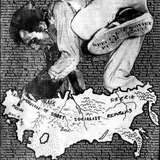
E01 Yegor Letov and the National Bolshevik Party
E14 Les Rallizes Dénudés ft. Zach
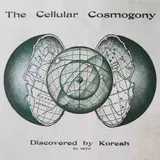
E58 Cyrus Teed and Koreshanity
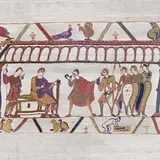
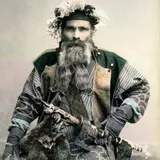
E87 The Meiji Restoration and Hokkaido ft. John Bellamy Poster
Transcript
The band back together
Welcome back to Gladio Free Europe. We have brought the band back together with this one. I am Liam, joined here by Russian Sam.
Hello, hello.
American Sam.
Hello.
And the Alvin to our chipmunks, Abram.
It's good to be back.
All right, so this is episode 100. It took us three years and three months, but we made it. Really crazy, really amazing. I'm feeling all sorts of things. We figured for this episode, rather than just doing a normal exploration of history, you know, rather than going into the, you know, history of scuba diving or talking about our favorite movie about pre-Columbian Mesoamerica, we would do a long-term retrospective on the past three years of Gladio, looking at, you know, our favorite episodes or really just episodes that were kind of most important to the development of this podcast. And so we made a list of ones that we think are kind of most interesting or most fun to go over that we've all assembled. And we've all brought a few episodes today that we really think are a great look at how this podcast has developed. Because really, you know, three years, it's a long time.
How Gladio started
Abram, what do you think about kind of what gave us the idea for this way back in 2021? How do you and how do you compare where we were then to where you think we are now?
Well, the idea was just you, me, and American Sam just hung out in Zoom because we were bored, you know, in COVID. And, you know, we would just talk. We were talking about like history and, you know, just other random things of our interest. So, yeah, we just said, yeah, let's do a podcast. We invited Russian Sam along, and we also invited a friend of Liam's who has been on the podcast on the Soy Cuba episode.
Yes, yes, my good friend Jamie. There was one first attempt before we started recording anything, or at least before all of us started recording everything, because we tried to do an episode, but it turned out that not all of us had our mics properly set up, so we couldn't actually use the audio. We just watched some movies and we're like, yeah, let's just watch something and then record ourselves talking about it for an hour and, you know, see how that goes. And the first one we did was, yeah, the Tekashi 6ix9ine documentary on Hulu that had just come out.
Yes, yes.
So yeah, Gladio Free Europe began with the four of us plus my friend Jamie attempting to do an episode about Tekashi 6ix9ine. Sam's, do either of you have any memories of that one?
I just remember I wasn't very engaged with that one because this isn't really my cup of tea and I just found Tekashi extremely annoying to the point where I wasn't able to actually pay attention to her.
That's funny because you're the only like lifelong New Yorker among us. You think as a real bodega boy, you'd be very interested.
Yeah, like to me, you guys seem like Hindered Spurts.
Yeah, you're both white ethnics.
What are your thoughts, American Sam, about the Tekashi 6ix9ine episode?
He is a cultural figure who has not really maintained relevance, to put it mildly, or aged well. No.
Remember, right after we did that episode, or the would-have been episode, he put out his tour, and his 2022 tour, I remember having, it was like in like Zagreb, Croatia, Ulaanbaatar, Mongolia.
Yeah, and before we started doing this episode, I was looking at what's been going on in Tekashi's life since then, and he just keeps catching assault charges in the Dominican Republic. So he is not doing well. And then after that, we had a couple other, what we call the pilot episodes that we recorded, I think mostly with other friends of ours, that we ended up briefly hosting on our website, but we took them down because they were rough, both in the production and especially kind of in how we laid out ideas and went over these topics. They were interesting episodes that we got into some interesting information with them, but they just weren't really up to snuff for the standards that we would set with our first episode, that being the Yegor Letov episode.
Yeah, I mean, we eventually moved away from this, but a lot of those early episodes were just like us, okay, let's take a movie and then we'll just go scene by scene and say this happened, this happened, this happened, and try and inject a little, you know, banter in between each scene. Sometimes it worked for like some parts, but overall, the episodes kind of felt, you know, not really fun to listen to if you hadn't seen the movie just because we concentrate so much on it.
No, yeah, and I think that like just figuring out the showmanship was something that we kind of struggled with in the initial episodes. Just learning how to turn our ideas into an interesting production. You know, that's easy to follow, it's easy to listen to. And we're still, we're still, this is a, you know, an ongoing process. I think that every year of Gladio, I think, is much more listenable than the year before, I think, in general. I think we've gotten very good at laying out information and storytelling. We weren't exactly there in the first episode, and that's why some of our earliest episodes are no longer on the website.
I mean, I will say, a lot of podcasts are also terrible in the first few episodes. I was listening to this one podcast by just somebody on Twitter, and they normally do like, you know, philosophy type content, but for one episode, they decided to do a commentary track episode or like a movie. And then, you know, I download the movie and then I queue up the commentary track and hit play. And what they do is they just say what's happening on screen as it's happening on screen, which is like, you know, just reminded me of our early episodes where we just have a general idea of what we should do, but also, for whatever reason, just default into doing the opposite.
What each of us brings
I think also we should just mention before we start talking about specific episodes, the context in the late pandemic when we came up with the idea to do this episode, it was that basically everybody was doing a podcast in 2021. But I like to think that we had one of the few that actually had legs. That's why we've been able to continue for three years. Because just, you know, I think the four of us all bring something cool and unique to the table for this show in terms of our interests, in our backgrounds. I studied history in undergrad, not as much, but I don't have any kind of advanced degree in history, but I have always kept up a pretty diverse interest in different time periods. And then also I have a background in film, which comes out in several episodes. Russian Sam, you've got a much more rigorous backgrounds in history than I do.
And you're also, as many of our listeners know, just a wizard with learning foreign languages, which has really been this amazing asset to our show.
Oh, God, that is so helpful. We are already like four Americans doing this, and having someone who can actually speak at multiple languages fluently and translate things does definitely put us well from beyond others, I'd say.
Yeah, well, I mean, like, I don't want to toot my horn too much. I'm not as great as these guys make me seem. I'm very rusty in most of my languages nowadays because they haven't had much use. But this podcast is great because it does give me an output to actually use these languages when otherwise I'm not in the stage of my life where I would, you know, be very actively using like Arabic and German and whatnot.
And Abram, did you see the newest Mad Max movie, Furiosa? You know, the history man, the guy with like the history of the world written upon his face? Yeah, yeah, that's who you are with like arcane pop culture and internet history.
Yeah, I mean, you kind of glossed over this, but really the thing that all four of us are is we're really big fans of just reading Wikipedia for hours all day.
Yes, 100%.
Yeah, no, yeah, yeah, yeah.
Yes, we are. Yeah.
We are Wiki warriors. We are PDF paladins, 100%.
And I think that's really more than anything what makes us, if we have any qualifications to do this podcast, it's the fact that we all of us have a genuine interest in the history of the world and we love sharing with others.
Episode 1: Yegor Letov and the Nazbols
And so let's start right now by talking about our first serious foray into history when we looked at the fall of the Soviet Union with our first episode. And I'll let the two Sams talk about this one because they, and Abram too, because you know, you three were much more involved in the first episode than I was. But it was a long time coming.
I will just say like the background for this episode because this was going to be our episode one, the first official one. So what happened was we recorded that episode four times. So the first time was just me and the Sams, and then that was really rough and not that great, so we didn't bother with it. Second time was all four of us, and again, really rough, didn't really bother with it. Third time, I just wrote a script for that episode and recorded it by myself and then just dropped it in our group chat and had everybody listen. And then the fourth time was, yeah, going through that script, except now it's all four of us doing it. And that's what that episode became. But the idea to do that topic for an episode came from American Sam because he was the one who was most interested in Letov and the music in general.
Yeah, I've been interested in Letov for years too, because, you know, like I'm Russian Sam, so I'm the Russian guy. And yeah, I was just listening to Vsyo idyot po planu. Everything's going according to plan on the group for several years at that point. And then when this time, like we broached the topic of making this podcast, I knew that American Sam was also super into Letov, had gotten into Letov during the pandemic.
Yeah, I'm not sure how many of your listeners are super active on Twitter, but American Sam, you've been a pretty big Twitter presence for quite a few years now, since like, what, 2017, maybe? And a lot of what you post is really heavily about the Middle East and the former Soviet Union. And so that's kind of a big part of your interest in this topic and this kind of podcast in general, or those two regions.
Absolutely. I'm not like a huge music. I mean, I love music. I'm obviously care about it.
Especially if it's the mountain goats.
Yes, of course. Thank you to my wife for that one. But I'm not like very knowledgeable about the technical aspects of it or anything. The thing is, it's not really what makes Letov so interesting. It's the context he arose out of and what he kind of embodied with his writing.
And we should mention, if anyone has not heard our first episode, you should. It's quite good. This was about Yegor Letov, who was this punk rock musician from late Soviet Siberia, who was very involved in the infamous Nazbol movement. So the Nazbols, national Bolsheviks, were this kind of satirical, radical political movement who blended Soviet aesthetics with aesthetics of Nazism. And a lot of this was intended as a critique of Soviet society as it existed, saying like you guys are kind of like the Nazis in this, you know, late Soviet decadence. It blossomed into something very different from that over the years. But this is that's kind of how it began.
The term has kind of become a pejorative, I mean, it's become a thing that you on that people on Twitter fling at someone that they disagree, you know, you're a Nazbol, you're this or that. It's kind of lost a lot of meaning. The only case where you actually have this movement actually makes sense is in late Soviet and post-Soviet Russia. That is the only place that this movement really truly makes sense. Divorced from that context, it doesn't make sense as an insult. Because the idea of like the all the fascist aesthetics, you know, starting a band named Adolf Hitler, as they famously or infamously did, is only is like the most shocking thing you can do in that era of Russia, you know, when the Great Patriotic War veterans are still alive and their presence is so deeply felt and you know, there's still places that haven't really recovered in Belarus, etc.
It's it makes a little more sense in that context than say doing that in, I don't know, the Netherlands or Manchester or something. Specifically with like, you know, other places.
There was the punk movement in the 80s, you know, in Western Europe and America, where a lot of them did employ like fascist aesthetics and you know, did fly swastikas and stuff and just didn't have the kind of teeth over here that would in Soviet Russia.
Exactly.
Right. Yeah, no, because Nazism was a genuinely existential threat to every Soviet citizen in the way that it was not for Americans.
And that's the thing that that's right. It's like, it's, it's that, like, you know, to recuperate the most shocking aesthetics imaginable, it's like, you know, the most direct thing you can compare it to is the use of like satanic aesthetics in like early 80s metal, I guess, but with a lot more bite. And it was really not meant as a political statement at all, you know, which is kind of funny. That's because like, you know, anybody today, and you don't really, this is incredibly niche, but anybody today, any, you know, internet-poisoned asshole who calls themself a Nazbol today, they're not in on the joke.
Yeah, although I will say that calling someone a Nazbol probably does have a lot more weight to it now than it would have when this episode comes out, because there's been a lot of developments in the field of internet ideology. And I think that our good friend Dugin, who was one of the figures behind the National Bolshevik Party, along with Letov and Limonov, he's been making inroads with a particular section of internet users, not to name any names here, but it's definitely become palpable.
No, yeah, yeah. And I think that that was going on for many years before we started this episode. But I think that a bigger change, you know, in terms of like doing geopolitically, was the fact that there's a lot more attention paid to Russian politics now. Because what, like nine months after we did that episode, the Russian-Ukraine war began.
Yeah, well, I think that this episode really does reflect on the context from which the podcast emerged because one of the big through lines of that episode was talking about the bleakness of the current American experience and drawing parallels between to the '80s Siberia, yeah.
Yeah, and of course, this was like near the end of the pandemic, like this was after the Delta wave of that winter, it was right when vaccines were getting rolled out, so there was still very much this feeling of ennui that all of us were heavily oppressed by, I think.
Yeah, you felt like everything was falling apart around you.
No, absolutely. No, and that's still very much the case. Like, I think, like, you know, American malaise is as prominent now as it was under Carter, potentially much more so in many, many ways. And that's why I think it's like, I think the scope of despair in the late Soviet Union, and especially the post-Soviet Union, is so much worse than anything we can understand in America. But there are just these kind of faint little echoes in the hollowing out of American society that I think does make this period of Eastern European history a little bit relatable for contemporary Americans.
Yeah, I mean, I'll look at the examples with other countries, but only in the Soviet Union is it as geopolitically relevant at the world stage because it was a superpower. It was the second, it was the second most important economy in the world. It controlled a massive slice of Eurasia, indirectly or directly. So it's that you can talk about like malaise in, say, Argentina or something, but it's not nearly as consequential and doesn't have the same impact as it would in a place like here or in the Soviet Union.
Any closing thoughts, Abram, on episode one before we can move on?
I mean, we mentioned this in an episode, but I should just point out is the base for the Nazbol party were fans of Letov's band. So like that's why he was recruited to be like a founding member of that party. That is the reason why you should listen to that. It's just like he was the most famous, right? Like I mean, Limonov was a poet. I don't know how famous his poetry was, but like he didn't have like a group of punk teenagers waiting for him to like found a party and do something.
Episodes 3 and 9: Wag the Dog and S1m0ne
All right. Well, you know, so speaking of media, let's go on to episode three and episode nine. These are two very Abram-focused episodes. You dug up two movies I had never heard of that I realized later had probably been influencing so much of what I'd seen many years later. These two movies being Wag the Dog and Simone. So please, Abram, share your thoughts on both of these.
So first off, I should just point out these pics really differentiate me from Liam because there's like two kinds of forgettable movies. There's movies that are generically bad, which, you know, just means like every part of it is just like kind of sub-par, like, not great acting, you know, not great writing, like, story kind of doesn't make sense or is just generally boring. And then there's generically good movies, which are like everything about them is like pretty good. And then, you know, watch it, and then you finish, and it's like, hey, that was a really good movie. I really enjoyed that. But for whatever reason, you also completely forget about that movie. And the movies I pick tend to be generically bad movies, and the movies Liam picks tend to be generically good, which is why most of the movies are like, they're not ones people have heard of, just because, yeah, they're the kind of stuff that go by the wayside.
No, yeah, you're right. Like, we like, you know, a Liam episode was I literally did an episode in Casablanca a few, you know, which I think we, which, you know, it was a good episode. That was fun.
I'm talking stuff more like Quo Vadis, which is like.
I like that one. Especially.
Yeah, especially given how much American Sam looks like Emperor Nero in that movie.
Yeah, I mean, like I say, it's a good movie, but it's one of those movies that, like, you understand why people don't really talk much about it.
Well, Abram, tell us about both these movies and how you learned about them, because I had never heard of either until we recorded this episode.
Simone, I learned about just because I don't actually remember. I think it was just one of those movies that it's like the butt of a joke, just because it's like a movie Al Pacino did in 2000s that didn't do well and nobody really remembers about. And Wag the Dog is one of those movies that's not a joke, but it's also talked about in a similar way because it's like a very odd De Niro movie. It was around the time, you know, Goodfellas and Casino and he did this, which is like very different. As this weird, you know, political fixer.
I know, I think one thing we talked about a lot in that episode also was how much of that movie seems to prefigure the Lewinsky-Clinton scandal that happened like just a year later, even down to like the beret, the beret worn by Monica Lewinsky at one point.
Yeah, I mean, I in the show notes, I put like a bunch of political cartoons from that time because you know, so many people are making the connection that you know this is just like that movie that came out a couple years ago, right?
And again, we should, if anyone hasn't listened to that episode, Wag the Dog is about Robert De Niro is a political fixer who enlists the help of a movie producer played by Dustin Hoffman to stage a fake war to distract from a presidential sex scandal.
With Albania, mind you. So, yeah, this episode or these two episodes were, I would say, our first good low-effort episodes. I would say the first good high-effort episode is episode one. But these were like episode three. Like, this was a very low-effort one. Like, I put some notes together, but for the most part, it was just the first half was us, you know, go throw over the plot and then talk about some things like as we go. And then in the back half, I just pulled out some newspaper articles from the time and also just some like Usenet comments. That wasn't like a lot of effort. That was only really like a couple hours over a couple of days. But yeah, that was the first one where we looked back and was like, this was really good, and we didn't put too much effort into it.
And Simone was sort of the same deal. Like, we just watched the movie, and then, you know, I had, I think Pam was on that episode. It was like me, Pam, and Liam. And then we just kind of talked about the movie and talked about like particular things in the movie that reminded us of like things that are happening in real life since then.
Yeah, no, and I think much like the Letov episode, our episode very much prefigured a lot of later developments that would happen related to Simone, because this was obviously before the huge AI boom.
We mentioned things like, oh, Hatsune Miku is like an example of a pop star that's like computer generated, and also Hatsune Miku played a show in the exact same theater that Simone plays a show in in that.
And Simone is a movie from the early 2000s starring Al Pacino bizarrely. And that's.
Brief overview of the plot, if you haven't listened to that episode. Basically, what happens is Al Pacino is the movie director and his lead actress leaves and then he meets a computer guy who gives him like a computer program that just lets him replace her with complete digital actress. And that's how he finishes the movie. But people watch the movie and they're like, who the hell is this Simone? She's like an incredible actress. And then people are obsessed and he has to try to hide the fact that she's not real. Yeah, it's a movie that's not great. It feels like it's supposed to be a comedy, but like there aren't really jokes in it. It has a structure of a comedy, but it's not like a laugh out loud funny movie, which is why nobody really remembers it. But yeah, it had things in it like that.
It's like, oh, replacing an actor with just a digital copy. That's something that's happened since then. In the Star Wars movies with Peter Cushing and Rogue One. So that was the inspiration to do that episode. But after that episode came out, the rise of generative AI like really exploded. So since then, now we have all sorts of AI musicians and AI influencers and not many AI actors yet, but that's probably in the pipeline too.
No, and the closest thing to that is the whole issue of digital necromancy, people call it. How in a lot of movie franchises now, a lot of newer installments will use a CGI-generated likeness of an actor who has passed away to put them in the sequel beyond their death. And I think this, you know, this really says so much about the state of the American film industry, but it also is, I think, the best analog to Simone. It's how, like, you know, you can have a movie star without actually having a human actor playing the part.
Yeah, in the case of real life, it's because we're so attached to these franchises that even though the actors in them have long gone, we're still just like recycling the same IP.
Right, no, exactly. I think it says so much about the state of American culture that, you know, we can't, that, you know, these movies must survive beyond the lives of not only their creators, but any single person involved in their production. There's so many examples like, you know, the newest Alien has Ian Holm brought back from the dead.
The most recent Ghostbusters movie has Egon Spengler.
Yes, thank you. That's the Egon Spengler Brought Back from the Dead.
Thank you.
I just happen to hate the original Ghostbusters, so I don't understand the nostalgia for what is ultimately a very mediocre 80s movie.
That was like a weird Gen X movie where so many Gen X people grew up with the cartoon. They have such a fondness for it, they keep bringing it back, even though nobody younger than 40 has that kind of fondness.
Yeah, yeah, I think we could talk all day about whether or not we like the original Ghostbusters. Any more thoughts on Wag the Dog and Simone, Abram?
Usenet and lost comment sections
Wag the Dog. One thing I really enjoyed about the movie is I went into the Usenet comments. So, you know, for research, usually when we do research, it's like look up Wikipedia, then look up a book, then look up newspaper articles, and then try to dig up first-hand accounts. Of course, anything that's sufficiently old, there's no first-hand accounts at all because there's so little left recorded. But there are newspapers. For that, we were lucky in that era of the internet still kind of exists. Stuff after that really doesn't exist. So at a certain point, I wanted to do a 9-11 episode, which would have been three years after the Lewinsky scandal. And my thought was: you know, there were a lot of message boards on the internet at that time. Let's just dig up some old message boards and see the comments.
No, the famous one of the guy with the Thom Yorke from Radiohead avatar saying, you know, watch Bush start a war over this, like five minutes after the second tower goes down.
Because I remember there were the big online networks, right? Like there was AOL, Yahoo! , MSN. They all had like gigantic forums. Those are all gone now. A lot of TV channels had their own forums, like MTV.com had one that was really big.
That's interesting.
There was also a huge, huge one on CNN.com, like millions of comments.
I had no idea.
And also, every article from CNN.com in 2001 had comment sections.
Yes, they all did. They all did.
It's pretty insignificant, but I think we still should mention that the loss of internet comment sections on articles is kind of this like de-democratizing event that happened. And we should also remember when exactly this moment came. It came as an in response to the panic around Trump and how the internet did juju magic too.
I actually think you're wrong about that, Sam. I think it happened a couple years before that. In a certain year, we've talked about.
Yeah, it happened when around when Facebook did the real name thing for comment sections is when I think it started to die as it previously was. So in the early days, like you had WordPress comments, and there's just like no built-in spam filter. Just like a lot of those comment threads were full of spam. Especially if like you go to like an old article, like a two-year-old article where like no human is still looking at this, the only people looking at it are like bots putting in links to malware. So the big thing that happened was they switched from WordPress comments to Facebook comments. And then that's like, okay, well, you need a Facebook account to comment on our website. And that was like a big shift, I want to say around 2009. And then after that, comment threads just kind of died because sure you had real people now, but you know, people are still comment like vitriolic shit like during that time.
Especially because, I mean, Obama was president and there was like a lot of very right-wing vitriol around that. So I think, yeah, a lot of websites are just like, yeah, fuck this. We don't really, like, we, the people managing this website, aren't actually getting anything from reading these comments, so fuck it.
Yeah, the only places that still have comments in terms of mainstream big sites, the New York Times, which obviously has tremendous resources to moderate the shit out of that comment section, which they do ruthlessly. So a lot of entertainment news sites also have comments still, and you get a lot of people claiming to be like industry insiders leaking information in the comments, which is kind of funny.
You know, what's funny is like the joke was that YouTube comments were the worst of the worst in like 2010. And then like 15 years later, now it's like YouTube comments are much better than like regular website comments.
Yeah, like basically YouTube comments just became Twitter.
Yeah, no, I love reading like, you know, greetings from Molly on like a song. Who's still listening in 2024?
Oh, no, the like YouTube comments from like 10 years ago that are still there. Oh, it was fun.
Oh, no, absolutely. No, 100%.
The myth of a peaceful Europe
All right. Any closing thoughts before we move on?
Yeah, this is a more morbid thought, but like the Bosnian war and the Kosovo war and you know, like the Bosnian genocide is the only one that's like politically correct to deny. And what I mean by that is that for Europeans, like Western Europeans, you know, wealthy Europeans, the mythology of Europe is that there was World War I, then it was World War II, and after that, there were no more conflicts, no more wars, no more ethnic conflicts, unending peace since 1945. And obviously, right, like Yugoslavians in Europe, there's like two wars, there was like millions displaced, thousands killed in ethnic conflicts. This really came out in the Ukraine invasion by Russia in 2022 because you would see them, like educated Europeans, you know, some with like blue checks, you know, back when blue checks meant something, just like posting, like, we haven't seen anything like this since World War II.
We haven't seen like Europe go to war since World War II. And it's like, that's not true. Like, in my lifetime, in our lifetime, there was war in Europe.
You're implying this already, Abram, but I think that the issue with why this myth is so pernicious is because the implication is, oh, because, you know, war isn't something that us civilized white people do. That's for the rest of you. It's like, we solved our problems. We finally solved our problems. We understand war is bad, diplomacy is good. We do diplomacy, they do war. They want to believe it's true. So even though, you know, a million people were displaced in those two wars, you know, you just move on and pretend it never happened.
Wait, what was your quote about the people of the former Yugoslavia?
It was that they were white, but not Western.
Oh, yeah. Well, no, no, no, right, yeah. And then that's the whole issue with like Eastern Europe, Eastern European nationalism. It's that, yeah, they feel like, you know, that they've they have this, like, they've internalized, you know, white supremacy, but they never actually benefited from like, you know, colonial racist structures. And there's this chip on their shoulder. And you see this all the time with like Polish and Ukrainian and especially Romanian posters online. I feel like there's a lot of like it's this wounded nationalism. They feel like they're better than the rest of the world, but they don't see that economically. And I think that that tension really gets these nationalists mad.
Episode 13: Migration and memory
All right, well, say on the topic of nationalism, let's move on to episode 13, one of my favorite early episodes. This is one where we looked at an interesting topic that we've talked about time and time again, that being the concept of barbarian migrations. So this is a real, you know, step away from our modern history in our earlier episodes. This one was looking heavily at the migrations around the fall of Rome, such as the Anglo-Saxons, as well as the Vikings, and even the migrations of Turkic-speaking peoples from Central Asia into Anatolia. All of these migrations are historically really interesting, but what really we discussed was kind of the ways that these ancient events have become historical battlegrounds in the present. Because just like the war in Yugoslavia, these migrations are often either contrary to or directly tied to modern-day nationalist myths. And so, for instance, in Britain, there is kind of a reluctance to focus too much on the foreignness of Anglo and Saxon, you know, migrants, Germanic-speaking peoples coming in around the time of the fall of Rome, because there is a strong interest in British nativism.
That all peoples of Britain, including English speakers, are native to the island. This has strong anti-immigrant implications, of course, but also has very strong implications for English colonialism over Scotland and Wales. It's this idea that we're all Brits, it only makes sense that we are united, and that because England is the most populous and the most prosperous of all the countries of Britain, it surely must be the leading partner of this union. And, you know, we also talked, of course, about a lot about Turkish migrations and how there you kind of have the opposite, where, you know, Turkish people today draw their ancestry from a very wide variety of sources from many different ancient peoples, but there's this huge focus on the last migration of the Central Asian Turks, and that Turkish nationalism basically revolves around the idea of Turkish people being these temporarily embarrassed steppe nomads who happen to live on the Mediterranean.
Yeah, I'd just like to say that this episode is really the genesis of the new gladio that we have today because this was the first one where we weren't discussing a piece of media. So, like, this is pretty much all we do now. Like, it's been a while since we've had a media episode. So, we've really strayed far from our roots. But I do think that it's a worthy endeavor because we're helping to, you know, use our own hobbyist interests and/or academic training to bring this kind of an information to a wider audience who otherwise might not have been exposed to it.
Yeah, yeah, no, and I think especially I was reading a lot of the historian Guy Halsall, at this time, who he's great. If you want to know about the fall of Rome, he is your man. And Guy Halsall's material is very nuanced and looks very deep at how these ancient tribal identities emerged and dissolved and how they morphed into the kind of medieval national identities that often we are still living with today. And how one thing that we talked about in that episode was that it's so hard to kind of avoid modern-day nationalist baggage when talking about these ancient events because you tend it's you naturally approach them from a nationalist framework because we live under a you know world of nationalism. So for instance, there's this famous discredited model called the billiard ball theory, which saw migrations across history as being discrete permanent groups existing across space and across the generations that are basically interchangeable.
This means that like you know, you can extrapolate the beliefs of Anglo-Saxons who spoke a Germanic language from looking at the beliefs of the Norse Vikings centuries later because they spoke a similar language and they came from a similar place. So therefore you can assume they are like the same people. And that kind of understanding was totally unexamined throughout most of the 20th century. And historians in the generation before Guy Halsall were the ones to challenge this. And I think that in the current generation of historians, they've really put that to bed. And identities are very slippery. And I think it was kind of cool just to look at that in that episode. And this was kind of the basis for later episodes about medieval cultural identities and how that affected the modern world.
Episode 14: Les Rallizes Dénudés
But let's go straight to the modern world now. Let's talk about episode 14. This is a great Abram episode. This one is about one of the most interesting bands in Japanese musical history.
Yeah. So why did we do this episode? If you've ever read Metal Forums, you may have seen this name mentioned a few times. Because on music forums in general, people like to talk about musicians and the dumb shit they do. Nobody does more dumb shit than rappers and metal bands. The difference between rappers and metal bands is rappers, most of the dumb shit they do is very sincere. With metal bands, it's very performative. But the story of Rallizes is different because it's both performative and sincere. So on the one hand, you have Mizutani, who is the guy who wanted to be cool, right? Like he had the long hair, he had the glasses, he didn't talk on interviews, and when he did talk, he basically just lied to try and make himself sound more sophisticated than he actually is.
Yeah, and if you might have seen this man's face before, if you live in a major American city, you may have once or twice seen somebody wearing a t-shirt from their album Heavier Than a Death in the Family, which is just this like very kind of feminine looking photo of him with red, with like artificially painted on red lips in his glasses and long hair.
There's a photo of Lady Gaga on her Instagram from like 2016 wearing a Les Rallizes shirt.
Yeah.
Other things he did drugs, right? Like he spoke in French slang, which is how the name of the band came out. Like it's not, it's like fake French, but yeah. And of course, he started our band, and he wanted the music to be the most extreme music possible, right? Which is a very classic thing that young people want to try to do, especially if they get into rock and metal music. And he obviously was, you know, you hear in the episode, it was so extreme that they couldn't even record it on vinyl, so they became like a band that just performs. They don't have any recorded music.
No, almost all their albums are, yeah, they're all like their bootlegs.
And then you have Wakabayashi, who was, you know, just there because I think he was just there hanging out because he liked music and liked hanging out with like that general group. And then he left and hijacked a plane, you know, because he believed in communist revolution. So two very different guys.
Yeah, and that's, and let's, yeah, and that's really makes this episode worth watching: is this incredible story about how members of this Japanese punk band, kind of a metal band, in the 60s and 70s, went on to hijack a plane for the glory of North Korea with the attempt of bringing it to North Korea, but they didn't quite make it all the way.
Another thing is, both of these guys are mentioned in two very different books. So Mizutani is heavily talked about in Japrocksampler, like the book about Japanese rock from 1950 to 1970, and Wakabayashi in Destiny: The Secret Operations of the Yodogo, which is like a book about that group of Red Army faction members who hijacked the plane and have been living in North Korea ever since. And you know, they're both great books. So if you want to learn more about Japanese rock or communist radicals, you know, check those books out. So just the contrast between those two guys really amused me. And, you know, also, we had my friend Zach on that episode because he wasn't like familiar with that story, but he lives in Japan. He's into that kind of music. So he's like aware. Plus, he like helped give us some more context about that kind of music, which was fun.
Yeah. No, and I think Ujuta, it's such a fun story. I know I first learned about this because I discovered these guys because YouTube would always recommend one of their songs, Night of the Assassins, once you're listening to something else. That was like the YouTube algorithm just loved that song. And then there were some the Japanese Red Army appeared in a movie that I saw about Carlos the Jackal, this very interesting Venezuelan radical from the same era. So I was really excited to get into this, and I thought you did a great job digging up all this information about them.
Obviously, we didn't get into their lives after they diverged. Like, that's what those two books are about. So, if you want to learn more, what happens after, like, go into those books. But, you know, obviously, those lives are ongoing. And since that episode came out, there have been developments. Wakabayashi has been featured in a Japanese documentary about that group of defectors living in North Korea. And there's no English subtitle, so I've never been able to watch it. And in Mizutani's world, we ended that episode on a bootleg of Night of the Assassins because that's the only because there was no official release, right? Like there was a band that performed live. So that was the only thing we could do. But since then, somebody has been uploading official releases to Bandcamp. So there were up to nine album releases on Bandcamp. The last one was uploaded a week ago from when we're recording this episode.
That's exciting.
Yeah, yeah. A lot of development in those guys' lives since then. Oh, also, one last thing. Wakabayashi did not have a Wikipedia article like when we recorded that episode, but now he does. So that's another like big thing.
Yeah, I like to think, you know, maybe we had like 5% to do with that.
Yeah, maybe. I mean, it did happen like a few months after we did that episode. So it's possible. Also, this episode is one of the ones where I didn't prepare too much. Like, I prepared a script for that general idea. Like, I didn't have an intro or outro, so we just like talked about music. You know, just a peek behind the curtain of how these episodes are made. Some parts are very, like, very mannered. Like, you know, we're going to talk about this and this and this and this. And then some parts are just like, yeah, let's just sit around and talk. And then, you know, I'll cut out the bad parts, leave the good parts in, and then hopefully turn out great.
Episode 28: Quo Vadis
All right. So you mentioned earlier, Abram, that I like generically good movies like Quo Vadis. Let's talk about that one, because that was a pretty fun episode recorded with the help of American Sam's lovely spouse, Maggie, who was really, really a great help for that one.
Oh, absolutely.
Along with Russian Sam, I am cursed to be born with the terminal Judaism. So I never really grew up knowing much about the church or the early church for that matter, or really that much having to do with Jesus aside from the stuff you kind of get through osmosis from American culture.
No, no, and so yeah, I wasn't raised, you know, religious at all, so that was like very new to me as well. And then, you know, yeah, we're close elitists.
Yeah. Yeah. Yeah.
And you know, since starting this podcast, I've learned so much more about the history of Christianity, which is really just such an amazingly interesting topic and so many reasons. And I do think this is a pretty fun movie to explore also. One thing I really like is how it really is pretty even-handed for a 50s Christian movie in showing you both the Christian and the pagan perspective. Because one of the main characters in this movie is the virtuous pagan uncle of the Christian protagonist.
Yeah, yeah, no, it's a very rare depiction of paganism as anything other than baying hordes of icon worshipers and stuff. It was fun to get into the topic of the early church, which is something I didn't really know much of anything about, to be honest. My wife helped me with that one quite a bit, Maggie. But the movie allowed us to get into that because that is the background of a lot of this. And the idea of restorationism, the idea of looking back to the church, which is to the early church, to the first disciples of Jesus and their teachings and their experiences, which is a huge part of the Second Great Awakening and the Great Awakening, every Great Awakening, actually.
Yeah, and Protestants come up a lot in this podcast, especially early Protestants. And I think this is a great basis for understanding a lot of the ideas they're working with. And these, you know, because so many Protestants, they saw themselves as the early Christians reborn, and they saw their persecution at the hands of, you know, French or Spanish or German authorities in the 16th and 17th century as exactly the same as being persecuted by the Roman Emperor Nero or Diocletian.
Exactly. Exactly. It really, it makes so much more sense to think of it in their actions in that context, that they're kind of seeing themselves as martyrs or the faith against these new pagans, these new barbarians, you know, the believers of the corrupt Catholic Church and the authorities in, you know, as you said, Habsburg, Germany, or Spain, or whatever have you. It's just a very fun look. And it is also true that I do happen to look a little bit like Nero, just a little bit.
That certainly helps.
The character of Nero, in particular, his portrayal is really a very good example of kind of how he is seen in popular culture. If, I mean, the average American doesn't think about Nero, but you know what I mean when I say that, right? Him eating the grapes and all that.
Yeah, exactly.
Yeah, yeah, I know, 100%. And then this is played by Peter Ustinov, the British actor, who does a great performance. He's also known for being, I believe, one of the last witnesses to the Indian president Indira Gandhi, who was assassinated while preparing to be interviewed by him. I also thought it was kind of a cool little detail.
I also think it's cool that she was assassinated. Sorry, cut that, cut that.
That's a whole story into itself. You know, we're big fans of the Radio War Nerd podcast, and they've discussed her assassination at length. It's a really crazy story.
It's absolutely insane. Her bodyguards, oh my god.
Yeah, I know. It's a very Roman kind of story. And one thing also that Quo Vadis made me think about is that the link between pagan philosophy and Christianity is so strong. And I think that the movie does kind of allude to that in its positive portrayal of virtuous pagans. Because if you think about it, contemporary Christianity, although obviously it originates from Judaism, it's so, so influenced from Greek thought that I think that in a way, Christianity is kind of a branch of ancient Greek philosophy. We don't think of it as such because in its meteoric rise to power in the first millennium, it basically shoved out any other forms of Greek philosophy that were not explicitly Christian. But the influence of writers, especially like Plato and his disciples, on Christianity is just so fundamental every step of the way. And watching this movie really helped me understand that.
And I know, Russian Sam, you've been thinking about doing a whole series of episodes on Platonism and Gnosticism because it's such a great topic and it's really helpful for understanding early Christianity.
Yeah, yeah, absolutely. And I also found out yesterday to my amusement that the portion of Plato's, I mean, the cosmology of Platonism comes from the same dialogue as Atlantis comes from. So there's definitely a lot to dig in there. So hopefully we'll have that out soon-ish.
Episode 41: Spiritualism
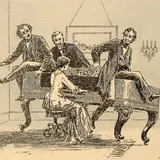
All right, well, while we're on the topic of the spiritual realm, let's talk about episode 41 on spiritualism, because that was a fun one. This was just me and Abram, and we talked about the Victorian obsession with ghosts and seances. Because this was something that I feel like has a lot of relevance in pop culture. You know, crystal balls, fortune tellers, Ouija boards.
Yes, Ouija boards, yeah.
And this all comes from this really interesting social craze. This basically a fad that had really interesting implications on later thought, I would say. So, what are your thoughts, Abram, on this whole spiritual obsession in the 1800s?
I mean, it's interesting because, you know, I had always heard that like the founding fathers were deists and just like not really understood what that means. Like, it means they believe in God, but they don't subscribe to any religion. It's weird because they were educated, but a lot of people are also uneducated. And for that reason, they're also deists because, you know, they couldn't read the Bible and they weren't living near a church. So they had a general belief in like the supernatural and like the divine and you know, a creator, but they didn't actually like know anything like about Noah or Jesus or like Adam or any of that. So, I had always heard about that, and you know, I just came across this website that really went into the old newspaper articles about spiritualism from the 1800s, and you know, just went through it, got reading, and you know, I found it kind of interesting.
The wives of two U.S. presidents were like heavily into, but it's also not something that I had heard in like U.S. history. You know, that was really the impetus for us to do that episode.
Yeah, I know there was a Canadian prime minister who was obsessed with all of this and would try to consult the spirits to make political decisions in the 19th century. It was huge. And that, no, I remember talking, one thing that I thought was really fun that kind of connects to Simone and the whole AI thing and bringing back dead ghostbusters as actual ghosts is the fact that people would consult with dead political figures and celebrities in the 19th century. I know you found this great article where apparently John Wilkes Booth actually was very remorseful for killing Lincoln, as it turned out, as was learned in a seance.
Yeah, that was like probably the funniest one. I mean, the ones that aren't so funny is that, you know, people grieve, their loved ones were gone, and they want some way to just like know that they were okay. And then, you know, like a huckster, sometimes a huckster, sometimes like a genuine believer, will come into town and then, you know, try hold a seance or do some kind of ritual and just to connect with the dead and tell them, like, oh, your loved one is fine.
Which is something that continued right up into the 1990s and even early 2000s with like radio psychics, right, like hotlines, that sort of thing. At what point did elite interest in the occult and seances and such start being seen as abnormal and weird? Like, when does that shift happen? I mean, famously in Canada, William Lyon Mackenzie King was like trying to contact his dead mother and holding seances about what he should say in his letter to Hitler and all that. I think it might have just been seen as kind of goofy, but it was something a lot of people genuinely believed in, even if they thought, even, you know, it might have been embarrassing, but I think people still did believe it was legitimate.
Yeah, I mean, I guess this would be a good topic to get into for a future episode, but like, when did it become like super important that a president is a Christian? At what point did it go from like, you know, it's okay that these are like Quakers or like deists or, you know, some kind of weird, not Christian or weird Christian, to being like, no, you have to be like a Protestant Christian or we're not voting for you.
Maybe around the time of the Mormons?
I think that American Christianity is such a flexible label that it encompasses basically any amount of belief as long as you call yourself a Christian. And except for some earliest founding father figures, I think every American president would have identified as a Christian, just not necessarily, not in really any meaningful way. And I think that during, like, especially after the First Great Awakening, there was this allowance for eccentricity in belief as long as it was under the Christian label, whatever that happened to be. That's to say, so Mormonism, for instance, like that was like, it was considered nearly acceptable and it's considered very acceptable now. And I think it helps that Mormons do assert that they are Christians.
Yeah, no, even though they are explicitly polytheistic.
They flew a little too close to the sun once the polygamy doctrine became known.
Right, but I think, but it was polygamy, not anything theological.
Exactly.
Oh, no, exactly. It was what they did, not what they believed.
Episode 58: Cyrus Teed and Koreshanity
And I think that's a good segue here, because another episode I wanted to talk about that was closely related was episode 58 on Cyrus Teed, this really interesting cult leader who was very much part of the spiritualist movement. You can connect him to Mormonism too, because he came from the exact same region of upstate New York that Mormonism was birthed out of. And his wife, I believe, was second cousins with Joseph Smith. He believed that the world was hollow, a belief that many cranks have kept up well into the 20th century. And he really genuinely believed this. He created a group of followers around this belief, and he attempted to scientifically prove that the universe basically was an egg and that we were living on the inside of a hollow sphere. Russian Sam, you did a lot of research on this one. Do you have any thoughts on Cyrus Teed and his religion, Koreshanity?
Yeah, yeah. This is one of the ones that really dwells with you for a while because it's one of those, you know, super weird chapters of Americana that you don't really think about, but then when you actually hear about it, suddenly so many pieces fall into place. Like, this is a great bellwether for the general direction that American society of this era was going in. This simultaneous supreme rationality and the Industrial Revolution, while at the same time, there were, you know, guys who talked about how they got a divine message when they got electrocuted, and this person told them that they shouldn't have sex and they should build the capital of the world in Florida and things like that. And these tensions, like these two streams, they exist within American life pretty much until today, sort of. And it's always been this struggle to balance them.
And here you have someone who was trying to synthesize them in a very explicit way where it's like, yeah, the earth is hollow. Yeah, we live inside the egg. Let me do some experiments to actually prove it. And yeah, like this has parallels, and on that specific episode. We talked about the flat earthers in particular and the parallels then there. But yeah, it's just such a fascinating chapter of American history. And I really recommend going into that one.
Yeah, no, absolutely. And the morbidity is so interesting because this episode begins with us describing how in the early 20th century, this cult leader, who was, I think, pretty benign as cult leaders go, Cyrus Teed, nicknamed who called himself Koresh, which is the Hebrew version of Cyrus from the Bible. He saw himself as you know, Cyrus reborn for some reason.
Yeah, much more benign than the other Koresh.
Yes, he was very much so. He died in his Florida compound in the early 20th century, and his followers were so convinced that he was immortal that they put his body in a bathtub and stayed around it in the humid Florida heat for a week, waiting for him to rise from the dead. And like so many cults, this was this great disappointment leading to conflict within the cult. You know, the first doubters were accused of being traitors, of you're not holding to the faith. But eventually, within about another, by the second week, everyone realized that Cyrus Teed wasn't coming back. And I think just looking at the internal dynamics there is a very fun story. So I'd really recommend listening to our Koreshanity episode, which is episode 58.
Episode 47: Dirty Harry
All right. One we really want to get into is another Abram movie episode about a movie that I had never seen, but is, I think, really fundamental to understanding not just the definition, the further development of American cinema, but really the further development of American intellectual life in some very unfortunate ways. And that is the very interesting movie, Dirty Harry from 1971.
Yeah, this was a fun one. Same with Liam. Like, I'd heard of this movie and just never watched it. In my mind, it was kind of like the Death Wish movies, which weren't that great, but they were, you know, those kinds of vigilante justice movies from the 70s. And then I watched the first few of that series and I was like, wait, these are actually quite good, but there's like specific things worth talking about. The fact that they name-dropped specific Supreme Court justices that Republicans were aggravated about at the time.
That is very, yeah, a little spooky. Like, uh-uh.
Yeah, then, of course, like, we pulled up newspaper articles, Nixon quoted basically saying this exact same thing, which is like, you know, these Supreme Court justices, they're making it so cops can't arrest people anymore, yada yada yada. And that's like what the movie was about.
Absolutely. And it was his anthem to the Nixonian law and order turn.
I wanted to put this in the episode, but I couldn't really find anything good. And from the 60s to the 70s, Westerns died out, and then cop movies became the thing. And what happened was they just took Western scripts and just shot them as like modern-day cop movies. And a lot of those movies, because like I said, they were, you know, they made money and they were okay, but they weren't like very interesting. So they were not really talked about in history books. So when books try to talk about that trend of when you went from Westerns to cop movies, they throw Dirty Harry in there and say, oh, you know, Clint Eastwood played a cowboy and now he plays a cop. So this is like an example of that trend. Even though, Liam, you saw the movie, there's nothing Western about that story.
No, no, yeah, no, it's just that there's violence, which you associate with Western films, that that's it. He's a gunslinger.
Yeah, I mean, the best example I have is not a good example, which is why we didn't put it in the episode because the movie came out in 85. And I needed to find like movies that came out like 1970 to 1975 for that trend. But I'll just give you this example: a super simple cowboy western story is there's a small town, you know, regular folk, they're being terrorized by like a gang of outlaws, like, you know, like 20 or something, right? Outlaws. And there's usually a sheriff. Sheriff can't do anything because there's like 20 of them and one of him. And then the hero just comes to town and you know, because he's the main character in the movie, he can just shoot all of them without getting hurt. And that's that's the entire movie. That is the plot of Death Wish 3. Except Death Wish 3 takes place in present-day 1985 in the middle of Brooklyn, New York.
It's an especially funny movie because you would think it's like, okay, you can't just go around shooting people in the middle of New York in broad daylight in front of all these witnesses and like cops never show up. But cops never show up because like there are no cops in those Western stories. So it's like when you just adapt a Western present day, it doesn't really make logical sense.
Not at all. I think that the most interesting link from Westerns to crime films in the 60s, 70s tradition is not looking at like individual stories that might have been repurposed. It's looking at like individual filmmakers and writers who switched from one genre to the other. And I think the best example here has to be Elmore Leonard, because he wrote some very interesting, very nuanced Westerns, most famously 3:10 to Yuma. He also wrote the script for Hombre with Paul Newman, but then years later, his later work would be adapted into Jackie Brown and Get Shorty, but it's all the same guy. And if anyone's seen the TV show Justified from a few years ago, that's all based on various Elmore Leonard crime stories. And that's kind of like that show kind of bridges the gap from a Western to urban crime.
I also looked at like history of buddy cop movies. And Dirty Harry is listed as like an early buddy cop movie just because he has a partner.
That's funny. He has a partner who totally, you know, condescends, who's seen as this like, you know, coastal lib.
Yeah, who's also like not present in the most important scenes.
Yeah, yeah. And they make fun of him because he has a college degree and he like runs away from combat or whatever. You know, one other thing I want to mention about Dirty Harry that you taught me that I had no idea about was the fact that it's never been fully confirmed, but according to John Milius, who wrote it, one of the other uncredited screenwriters was Terrence Malick before he directed anything. And I think that's so funny because I can hardly think of a movie less like the vibe of a Terrence Malick movie than Dirty Harry, you know, this like fast-paced, hard-boiled urban crime story. Is there even a single shot of a sunset?
The specific Terrence Malick connection, which is especially funny, is that he wrote the story about Dirty Harry trying to take down a group of corrupt cops, and that story became the second movie, and those corrupt cops became the inspiration for Judge Dredd.
Yeah, for Judge Dredd. Right, right. So in a very roundabout way, the 80s Judge Dredd movie starring Sylvester Stallone only exists because of Terrence Malick. Who would have thought?
Episode 57: The Golem
All right, well, let's move on to another, a very different one that was another movie episode, I think has to be the earliest movie we've covered on here. This was episode 57 on the, I believe, 1920 film The Golem, which was a sequel to the even earlier, now lost Golem film. Both of these are German silent films derived from Jewish folklore that are some of the earliest and most, but most watchable, really, pictures in film history, I'd say. So, so what are your, this was your, you came up with this one, Russian Sam. What are your thoughts on our Golem episode and the film The Golem in general?
Yeah, well, I haven't revisited the Golem movie since we watched it, but it is like probably one of the most watchable silent movies from that early film. There's some great tableaus there, really good visuals. In general, the film industry took until like the mid-20s to get their bearings, but this is like one of the early apogees of the genre for sure. But I'd say that this is one of my favorite episodes to do and to put out because it has a very grad school vibe. This was very heavily synthesis-based. It was very heavily based around research that I was doing and like juggling all these different books and the Talmud and all these different things. And it just really scratched that itch that I've had since graduating. And it also prefigured a lot of discussion that are becoming more and more pertinent today. In particular, there was a heavy emphasis on the reason why these kinds of stories about automata or other semi-conscious beings coming into existence to make human labor easier.
And now, like when we did this one, LLMs, like ChatGPT and all that stuff, they were only really starting to come into the limelight for ordinary people. And I do see sort of a golem impulse within all of that technology because there's increasingly like you know a much more optimistic stream. Well, well, optimistic from the point of view of the employers, right? Where it's like, oh, you know, you can have this little robot and you just feed it prompts and it's going to do all this work for you. And instead of paying a salary to actual people, $50,000, $60,000 a year, you can just buy an OpenAI subscription and then for $30 a month, you will have infinite output. This is, of course, bullshit. Like, I've played around with LLMs extensively, and I can say firsthand that they are not very good for doing actual work.
Like, I don't code, so I can't speak to the quality of that, but I would guess it's not good in that field either.
It's regurgitation.
Yeah, no, exactly. It's not really original synthesis. Like this episode was. It's very much not that. But yeah, there is still very much this dream, but also the inverse side of that, you have a lot of like the more, you know, doomer aspects of people who believe this AI nonsense, who say that this is going to lead to the extinction of humanity. And again, this is another parallel with the Golem story, because this is, you know, something that goes around to destroy its inventor. So, right now, we are very much in the midst of the Golem wars within our culture, I'd say.
Episode 60: Legendary ancestry claims
Yeah, all right. You know, and that brings us, you know, speaking of these very research-heavy, you know, grad school-type episodes, just a couple weeks after this, we did one of my favorite episodes, which is that about legendary ancestry claims and how so many ruling classes from across the centuries and across the continents have made great efforts to connect their ancestries to distant cultures, distant heroes, or even gods and mythological creatures. You know, for instance, the Merovingian Franks, who we just talked about just a couple weeks ago in our Pirenne episodes, they believed that they were descended from a water beast called a Quinotaur. And then in the later Middle Ages, multiple royal families, including a family very close to the English throne in the War of the Roses, they claimed to be descent from a creature called a Melusine, this kind of female water demon that many people saw as their distant grandmother.
But this was a really fun episode. It's full of some cool stories. It leads into some other episodes that we might talk about in a second, but both of the Sams, any thoughts on this one?
Yeah, you just mentioned the Quinotaur, and I would actually like to add another piece of Merovingian lore that I came across while we were doing research for the Pirenne episodes, which is that several of their chronicles talk about how the Franks are ultimately descended from the Trojans. And mind you, this is pure conjecture on my part, so it's like not evidence-based per se. But then I realized who else talks about their Roman ancestry? And I realized that, of course, the Romans do, and most famously in the Aeneid.
Oh, you mean their Trojan ancestry, you meant to say?
Oh, yes, yes, their Trojan ancestry, most famously in the Aeneid. And so it just came to me that perhaps this idea of a Frankish descent from Trojans was a very early attempt at drawing connections between these people who became foederati in great antiquity serving the Roman Empire as a way to argue for the legitimacy of their place within the Roman order. As like, oh, you know, we're your cousins who happen to go out east rather than out west.
Yeah, yeah, no, and absolutely. You know, and then there's so many ways in which these kinds of ancestry claims are, you know, used to justify current, you know, political order. Like, I know we all talked about how the Brits, they also saw themselves as descended from Trojans. They claimed there was a guy named Brutus of Troy who was like a buddy of Aeneas.
Or from the Israelites.
Yes, and then, of course, later, yes, centuries later, British Christians believed they were one of the lost tribes of Israel. Yes, personally, my take is I do not believe, sadly, that the Brits are a tribe of Israel, but I've been wrong before.
Yeah, well, I think the Sarmatianism stuff is super cool. That's another sort of myth-making that we see a remnant of in the Khazar stuff around Jews. And it speaks to like an earlier example of an Eastern European group arguing that their descendants are not, in fact, the local Slavic stock, but rather these steppe warriors who came in and conquered and totally ran the place.
And of course, we got into Sarmatian ideology a bit later when we did the Turanism episode with Turan Explorer.
Shout out.
Shout out. One of our favorite, one of our favorite guests.
Yeah, where we talked about how this Sarmatianism stuff had its parallel in Hungary as well. But the long and short of it is these kinds of claims in Eastern Europe were often used to show why the ruling class of any particular society had more of a right to rule over these peasants who toiled on the land. And it was sort of, you know, this proto-biological racism, which said that we are the warriors, we conquered you, and your right to a place is as the peasants cooking slop in your little huts and giving half of your crop to us. So that's why we have a right to rule over you.
Yeah, no, and the Polish ruling class in the Polish-Lithuanian Commonwealth was really like as nasty as any ruling class can be. They really gave like the czarist aristocracy of Russia a run for their money. And what I had no idea about was that they had this crazy racial element where they said, yeah, due to the fact that we are Sarmatians and you are not, we have these rights over you. And I think a lot of this actually, this came up not in our episode on legendary ancestry, but in our episode on Turanism. So if you haven't heard our Turan Explorer episodes, you totally should. They're from just a couple months ago, a few months ago. Those were really, really fun.
Episode 84: The Ainu before Japan
But I think for the last big episode, we want to talk about this episode. Let's go even further east. Because, you know, about a year ago, a little more than a year ago, I spent a couple weeks in Japan. And I hate to say it, but like far too many white boys before me, I came back with like a total Japan fever. And we did a huge string of great, great episodes on the history of Japan. But I think the ones that were most fun were the dives we did into earlier medieval Japanese history and specifically the origins of the Ainu. I know that American Sam, you liked that one a lot.
I did. That was a really fun one to listen to. I wasn't on it, but it was very fun to listen to. Because Japan, I mean, one of the things you always hear about Japan is that it's such a homogeneous place. It's so, and always has been. The Japanese are Japanese. It's that simple. And all this stuff about harmony and stuff, you know, but it's just not accurate at all. The whole idea of a homogeneous Japanese nation that is especially linguistic harmony is totally, totally modern. You can find evidence of these previous cultures that were, you know, wiped out through assimilation or through violence, you would say this, in Japanese culture today, or in medieval Japanese culture, especially.
Yeah, no, and one thing I didn't realize was that, you know, so the Ainu were specifically the indigenous peoples of Hokkaido, but there were similar related groups in the main island of Japan, descended from the ancient Jomon people, pretty late into the Middle Ages. And there was this one group known as the Emishi, which is kind of a catch-all term for Ainu-related groups in mainland Japan. And the Emishi had a really interesting influence on early medieval Japanese history and arguably many functions of the Japanese state.
And its nobility.
Yes, and the nobility, yeah. And a lot of elements of the Japanese government, including the title of shogun, emerged in the wars with the Emishi. And these are wars that ended with the Emishi cultural identity basically being wiped out, but with some really interesting faint traces.
You mentioned the nobility, Sam. A lot of Japanese noble families claim to specifically be descended from the Emishi, not just from the main ethnic group, the Yamato.
Yeah, it's a real parallel with what we just talked about with the Poles.
Yeah, very similar to Sarmatianism that way, yeah. Another kind of funny little parallel is that, you know, one element we didn't discuss was that Sarmatianism also involved Turkish-style swords becoming popular in Poland. A similar thing here is that the famous single-sided curved swords of Japan probably emerged among the Emishi, which I thought was very cool. Because, you know, today, especially among Americans, I think Japanese swords are one of like the classical symbols of Japanese identity. But in fact, they come from this lost ethnic group that only has the faintest of traces today.
It's like how mummification in Egypt might actually come from further south down the Nile.
Yeah. Any more thoughts, Russian Sam? Because you did a lot of the legwork for this episode.
Yeah, so just to remind people, basically what happened was what remained of the Emishi, some of them stayed in Japan and through intermarriage just became regular Japanese people, but some of them hopped across the straits into Hokkaido, that big northern island in Japan, where they fused with other peoples who were already living there, and those became the ancestors of the Ainu. And doing research for this episode, it really made me realize how much structures around the world rhyme. Like, we tend to think of American-style settler colonialism as something unique to this continent. But no, when you actually look into the history of what the Japanese settlers and researchers and traders and resource mongers were doing on Hokkaido, you come to realize that there are a lot of parallels between that and what happened to the Native Americans. And then those parallels just continue all the way until the 20th century.
Oh, for sure. Absolutely. And this colonial process began a lot earlier than I expected because I knew that Hokkaido was not formally annexed into Japan until the 19th century in the Meiji period. But as early as the 16th century, Japanese merchants began fostering this really horrific dependence on Ainu hunters. Even though Hokkaido was not part of Japan, there is a lot of influence, a ton of economic influence by Japanese merchants. And basically, the traditional Ainu way of life dissolved, leading to multiple violent rebellions against these Japanese interlopers that were, unfortunately for the Ainu, unsuccessful.
And also, because the Ainu lived in this legal gray area, they could basically be abused by Japanese people with no legal recourse whatsoever because they did not have a state of their own. They were not subjects. It was this horrible legal gray area, which of course you see modern parallels of all over the place in later colonialism. And that's again, like, you know, we also discussed the American influence is very important because in the later colonization of Hokkaido, there was direct influence from American settler colonialism because all of these American advisors were brought in to help with the process. But all of the groundwork had been done many centuries before, even before the colonization of North America.
Looking back
All right. All right. Well, thank you guys for helping us do this retrospective. It's really fun just to kind of see just the, you know, like not to pat ourselves on the back too much, but we have covered such a wide breadth of topics on this show. I think we really have, you know, we've come very far from the early days. I think our early episodes do hold up. They're very fun topics of discussion. But I think that we've gotten much better with research and presentation. And I'd like to think that, you know, the reason that's why we've been able to, you know, stay along for three years. All right. Well, thank you guys so much for hopping on. It's been a while since we've had all four of us in the zone for this one. But I think this was fun. And it's just really nice looking back at how far we've come in three years. 100 episodes.
And, you know, we've got a lot more in the pipe. We've got some really fun episodes planned up soon. We have another one on the 100 theme coming up next. And yeah, thank you guys for being part of this. And thanks to our audience for sticking with us for three years. That is crazy. Any last thoughts, Abram?
Beating the Clintons' podcasts
I have one last funny story. So this would have been mid-2022. Probably most people listening know Spotify had a deal with Obamas for exclusive podcasts. Probably what you don't know is that the Clintons got a podcast deal with iHeartRadio. So Hillary got a podcast, Bill got a podcast, and even Chelsea got a podcast. You know, my initial thought was like, does anyone even listen to this? So there's no way to like figure out how many people listen. There is a way to like see how popular podcasts are relative to each other. So for example, Hillary's podcast has the most like 517 ratings. Bill's podcast is 55 and Chelsea's has like 20 something. Ours has 100. So we are twice as popular as Bill Clinton's podcast. And Bill Clinton was a president. We still need to beat Hillary Clinton. So if you can open up Spotify and give us a rating right now, that would make the world of difference for us.
Yes, please help us beat Hillary Clinton. You know, this is the one thing we need. And that would truly complete the cycle of the whole podcast Bro Saga, I think, going back to 2016.
That would really, you know, that would be that end. That's such a great way to end this eight-year story.
We'll end the long 2014, finally. If our COVID podcast beats the Clintons COVID podcast, that would be so amazing.
Yes, yes, exactly.
All right. Well, thank you guys so much for coming on for this one. It's been so long since we've had a four-man episode. Really been fun. And to our listeners, thank you guys for sticking with us for three years. It's been a long and twisty road, but I think it's been fun. We've had a hundred great episodes. I've really loved every one of these. Even the ones I wasn't on, I've loved listening to them and hearing what you guys come up with. You know, like one of my favorite episodes that I wasn't on is the American colonization episode when the two Sams dug into like the colonization projects by the Knights of Malta in the Americas. That was such a fun one. So really, man, we've got a lot of great stuff coming in the future. The next one is also going to be continuing this 100 theme.
So hopefully you're into triple digits because it's only triple digits from here on out. We are going onwards to episode 101 and beyond. And that is Gladio Free Europe signing off.
The show is also on Apple Podcasts, Overcast, Pocket Casts, Podcast Addict, YouTube, RSS and Patreon.